Introduction
Picture this. You are walking through a supermarket and a face catches your eye. You know this person. You are absolutely certain you have seen them before. But who are they? Where do you know them from? You stare for an awkward three seconds, smile vaguely, and walk on. Twenty minutes later, standing in the parking lot, it hits you: the dentist's receptionist.
This tiny moment captures one of the most important distinctions in all of memory science. You recognized the face instantly. But you could not recall who she was. Recognition happened in a fraction of a second, automatically, effortlessly. Recall took twenty minutes, required mental effort, and only arrived when the right context surfaced in your mind.
The gap between recognition and recall is not just an amusing quirk. It is the reason students fail exams they thought they were ready for [1]. It is the reason rereading a textbook chapter feels like learning but often produces almost nothing durable. And it is the reason cognitive scientists have spent over a century trying to understand what makes these two forms of memory retrieval so fundamentally different, from the neural circuits involved to the practical consequences for education, medicine, and daily life [2].
This article follows that century of research. It begins with Hermann Ebbinghaus and his lonely experiments in a Berlin apartment. It moves through the debates that split cognitive psychology in the 1970s. It descends into the hippocampus and perirhinal cortex, where different types of memory retrieval rely on different biological machinery. And it arrives at a practical conclusion that decades of evidence support: if you want to truly know something, you must practice the harder thing. You must recall.
The Man Who Memorized Nonsense
The scientific study of memory begins with a single man sitting alone in a room, reading lists of nonsense syllables out loud to himself.
Hermann Ebbinghaus was a German psychologist working in Berlin in the 1880s. He had no laboratory, no funding, no research assistants. His experimental subject was himself. His materials were 2,300 nonsense syllables he invented, combinations like DAX, BUP, and ZOL, designed to have no pre-existing meaning or association [3].
What Ebbinghaus discovered between 1879 and 1885 became the foundation of memory science. He documented the forgetting curve, showing that roughly half of newly learned material vanishes within an hour and up to 70 percent disappears within a day. He demonstrated the spacing effect, proving that spreading practice over time produces far better retention than cramming. And he introduced the savings method, which revealed something extraordinary: even when he could no longer recall or recognize a syllable list, relearning it took fewer repetitions than learning it from scratch. Memory left traces deeper than conscious retrieval could reach.
But Ebbinghaus also noticed something he did not fully explore. Recognition and recall behaved differently. He could often recognize a syllable as familiar, as something he had encountered before, even when he could not reproduce it from memory. The two forms of retrieval seemed to follow different rules.
It would take nearly a century before anyone fully understood why.
Two Ways to Remember
In the language of cognitive psychology, recall is the process of retrieving information from memory without it being presented to you. Someone asks you "What is the capital of Estonia?" and you must search your memory, generate a candidate answer, and produce it. No hints. No options. Just you and the contents of your mind.
Recognition, on the other hand, is the process of identifying something as previously encountered when it appears before you again. "Was Tallinn on the list you studied?" Here the answer is already present. Your job is simply to decide whether it matches something stored in memory [4].
The difference seems simple. But it has enormous consequences.
Recognition is almost always easier than recall. Multiple-choice exams are easier than essay exams. Recognizing a song on the radio is easier than humming it from memory. Finding your car in a parking lot (recognition of location) is easier than describing the route you drove to get there (recall of a sequence). This asymmetry is one of the most reliable findings in all of experimental psychology.
Why? In 1970, Walter Kintsch proposed what became known as the generate-recognize theory. His idea was elegant: recall is actually a two-stage process. First, your brain generates a set of candidate answers by searching through memory. Then, it evaluates each candidate using a recognition check, selecting the one that feels right. Recognition skips the first stage entirely. The answer is already in front of you. All you need is the second stage, the familiarity check [5].
Think of it like searching for a book. Recall is walking into a library with no catalog, wandering the shelves, pulling out possibilities, and checking each one. Recognition is having someone hand you three books and asking "Which one did you read last week?" Same library. Same books. Completely different cognitive demand.
The generate-recognize theory explained a lot. But it could not explain everything. And the crack in its foundation came from a discovery so counterintuitive that it initially seemed like a mistake.
The Paradox That Broke the Theory
In 1973, Endel Tulving and Donald Thomson published a paper that shook memory science to its core [6].
Tulving was already one of the most influential memory researchers alive. Born in Estonia, educated in Germany and Canada, he had introduced the distinction between episodic memory (memory for personal events, tied to specific times and places) and semantic memory (general knowledge about the world, like knowing that Paris is in France). This distinction, published in 1972, remains one of the most cited ideas in cognitive science [7].
But the 1973 experiment with Thomson went further. They showed participants word pairs where a weak associate (like "train") was paired with a target (like "black"). Later, participants were given strong associates (like "white") and asked to generate words, then to recognize which of their generated words had been on the original study list. Many participants generated "black" when prompted with "white" but then failed to recognize it as a studied word. Yet when given the original weak cue "train," they could recall "black" without difficulty.
Read that again. They could recall words they could not recognize.
This was impossible under generate-recognize theory. If recall requires recognition as its second stage, then anything recallable should automatically be recognizable. Tulving and Thomson had found exactly the opposite. They called it the recognition failure of recallable words.
The explanation was what Tulving called the encoding specificity principle: a retrieval cue only works to the extent that it matches the information encoded during the original learning episode [8]. "Black" encoded alongside "train" creates a specific memory trace. The cue "train" matches that trace and triggers recall. But "white," despite being a stronger semantic associate of "black," does not match the encoded trace and therefore fails as a recognition cue.
The implications were profound. Memory retrieval is not about the strength of a stored item. It is about the match between the retrieval context and the encoding context. This principle would later reshape how scientists think about studying, test design, and the surprising fragility of recognition.
The Butcher on the Bus
George Mandler, a psychologist at the University of California San Diego, had been thinking about recognition from a different angle. In 1980, he published a paper in Psychological Review that introduced what would become the dominant framework for understanding recognition memory for the next four decades [9].
Mandler's key insight came from an everyday experience. He described it with a thought experiment that became famous in cognitive psychology: the butcher on the bus.
Imagine you are riding a bus. You look across the aisle and see a man. You are certain you know him. His face triggers a strong sense of familiarity. But you have no idea who he is, where you know him from, or what his name is. You spend the rest of the bus ride in a state of frustrated recognition without recall. Then, two days later, walking past a butcher shop, it clicks. That was your butcher.
Mandler argued that this experience reveals two independent processes supporting recognition. The first is familiarity, a fast, automatic, graded signal that tells you something has been encountered before. It is like a volume knob, not a switch. Some things feel more familiar than others, but the feeling carries no specific information about when, where, or how you encountered them.
The second is recollection, a slower, deliberate, context-rich process that retrieves specific details about the original encounter. Recollection tells you not just that you know the face, but that he is your butcher, that you last saw him on Thursday, that he recommended a particular cut of lamb.
This dual-process theory of recognition transformed the field. It meant that recognition is not a single thing. Sometimes you recognize because you recollect. Sometimes you recognize because something feels familiar. And sometimes, as with the butcher on the bus, you feel powerful familiarity with zero recollection.
Inside the Brain: Two Circuits, Two Kinds of Remembering
If familiarity and recollection are truly separate processes, they should rely on different brain structures. By the late 1990s, evidence from patients with brain damage began to confirm exactly that.
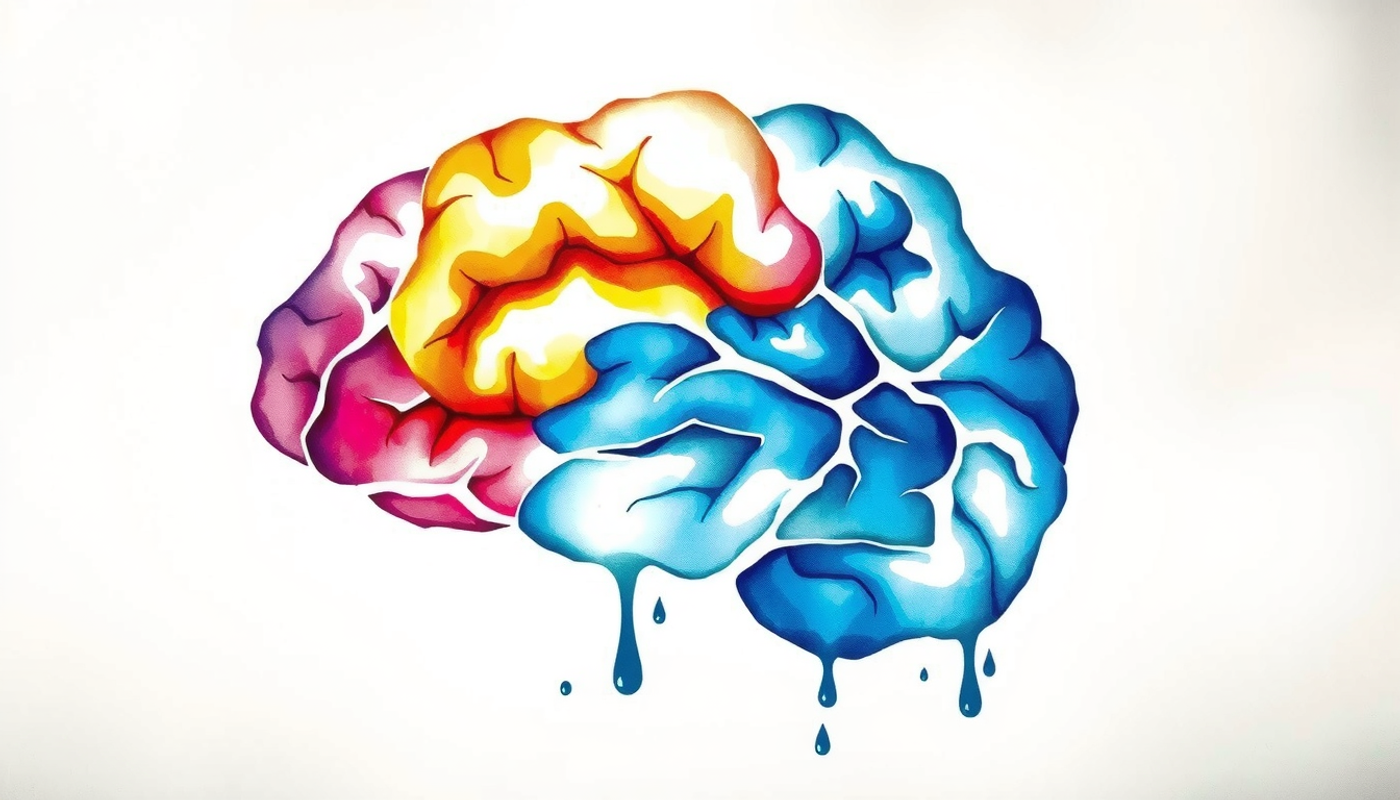
The critical region for recollection is the hippocampus, a seahorse-shaped structure buried deep in each temporal lobe. The hippocampus binds together the scattered elements of an experience, linking what happened, where it happened, and when, into a single coherent episode [10]. Damage to the hippocampus devastates recall and recollection while leaving familiarity relatively intact.
The most famous case in neuroscience history illustrates this dramatically. Henry Molaison, known as Patient H.M., had both hippocampi surgically removed in 1953 to treat severe epilepsy [11]. The surgery stopped his seizures but left him unable to form new conscious memories. He could not recall what he had eaten for breakfast. He could not remember meeting someone five minutes earlier. Yet he could learn new motor skills, suggesting that certain forms of memory survive without the hippocampus.
Later, more precise patient studies revealed the double dissociation that dual-process theory predicted. Jon Aggleton and Malcolm Brown at Cardiff University compiled evidence showing that patients with hippocampal damage show impaired recollection but relatively preserved familiarity. Meanwhile, patients with damage to the perirhinal cortex, a region of the medial temporal lobe surrounding the hippocampus, show the opposite pattern: impaired familiarity with relatively preserved recollection [12].
Andrew Yonelinas at the University of California Davis formalized this into the dual-process signal-detection model in 2002 [13]. In his model, familiarity operates as a continuous signal, like a dial that can register anything from "completely new" to "very familiar." Recollection operates as a threshold process: you either recollect or you do not. Together, these two signals combine to produce a recognition decision.
The electrophysiology confirmed it. When researchers recorded electrical brain activity using EEG during recognition tasks, they found two distinct signatures. The FN400 effect, a negative wave peaking around 300-500 milliseconds after seeing an item, appears over mid-frontal regions and tracks familiarity. The late parietal old/new effect, a positive wave around 500-800 milliseconds over left parietal regions, tracks recollection [14]. These are not abstract theoretical constructs. They are measurable electrical signals in the brain, appearing at different times, in different places, tracking different memory processes.
Not everyone agrees. Larry Squire, John Wixted, and colleagues at the University of California San Diego have argued that a single strength-based signal, varying in intensity, can explain most recognition data without invoking two separate processes [15]. They point to studies showing that hippocampal damage broadly impairs recognition, not selectively affecting one component. The debate continues, with neither side delivering a knockout blow. But the behavioral, neural, and electrophysiological evidence for at least partially separable processes remains formidable.
The Illusion of Knowing
Here is where the distinction between recognition and recall stops being academic and starts being urgent.
In 2009, Jeffrey Karpicke, Andrew Butler, and Henry Roediger III at Washington University in St. Louis surveyed 177 undergraduates about their study habits [16]. The results were striking. Eighty-four percent of students reported rereading as their primary study strategy. Only eleven percent said they practiced self-testing.
Why? Because rereading feels effective. When you reread a chapter, the material flows smoothly. Sentences feel familiar. Concepts seem clear. You close the book feeling confident. But this confidence is a mirage.
What rereading actually produces is processing fluency, a feeling of ease that your brain misinterprets as understanding. You recognize the material. You could pass a recognition test on it. But if someone asked you to recall the key concepts without the book in front of you, you would likely struggle. The fluency was an illusion. The learning was shallow.
Robert Bjork at UCLA has spent decades studying this mismatch between how learning feels and how learning actually works. He calls the key insight desirable difficulties [17]. Conditions that make learning feel hard and slow, like spacing practice over time, mixing different types of problems together, and testing yourself instead of rereading, actually produce stronger, more durable memories. Conditions that make learning feel easy, like massed repetition, blocked practice, and rereading, produce rapid improvement that fades quickly.
The mechanism is straightforward. Rereading keeps you in recognition mode. You are repeatedly exposed to information, and each exposure strengthens the familiarity signal. But familiarity is brittle. It depends heavily on context. Change the format of the question, remove the visual cues of the textbook page, add time between study and test, and the familiarity signal weakens or vanishes. What remains is only what you can recall. And if you never practiced recalling, very little remains.
Think about what this means for a medical student studying anatomy. She reads the chapter on the brachial plexus three times. The diagrams look familiar. The nerve names ring a bell. She feels ready. Then the exam asks her to draw the plexus from memory and explain the clinical consequences of an injury to the upper trunk. She cannot do it. The recognition was there. The recall was not.

The Science of Retrieval Practice
If recognition-based study fails, what works? The answer, supported by one of the most replicated findings in cognitive psychology, is retrieval practice: the act of pulling information from memory without external cues. In other words, recall.
In 2008, Jeffrey Karpicke and Henry Roediger published a paper in Science that became a landmark [18]. They had students learn 40 Swahili-English word pairs under four conditions. In all conditions, students studied until they could recall every pair at least once. Then, the conditions diverged. Some students continued studying and testing all pairs. Others continued studying but dropped successfully recalled pairs from future tests. Others continued testing but dropped successfully recalled pairs from further study. And others dropped recalled pairs from both study and testing.
The results after one week were dramatic. Students who continued testing retained about 80 percent of the pairs. Students who dropped testing retained about 35 percent. Whether they continued studying made no difference. What mattered was whether they kept retrieving.
Even more remarkable: during the learning phase, all four groups performed identically. Their confidence ratings were the same. Their judgments of how well they had learned were the same. Only the final test, one week later, revealed the enormous difference that retrieval practice had made.
Three years later, Karpicke and Janell Blunt published a follow-up in Science that pushed the finding further [19]. They compared retrieval practice with concept mapping, an elaborative study technique widely recommended by educators. Students who practiced free recall outperformed concept mappers by roughly 1.5 standard deviations on a delayed comprehension test. The effect was not small. It was massive. And once again, students' predictions about their own learning were inverted. They expected concept mapping to win.
Why does retrieval practice work so much better than restudy? The answer involves multiple mechanisms. First, retrieval strengthens the neural pathways used to access a memory, making future retrieval easier, what Robert Bjork calls retrieval-induced strengthening. Second, failed retrieval attempts, when you try to remember and cannot, generate a state of heightened attention that makes subsequent study more effective. Third, successful retrieval creates new retrieval routes to the same memory, increasing the number of cues that can trigger it in the future [1].
A 2014 meta-analysis by Christian Rowland examined 159 effect sizes from studies comparing retrieval practice to restudy [20]. The overall effect was substantial. Free recall and short-answer formats produced larger benefits (g around 0.61) than recognition-format multiple-choice tests (g around 0.50). But even multiple-choice testing outperformed simple restudy, especially when corrective feedback was provided [21].
Free Recall vs. Recognition Practice
Not all retrieval practice is created equal. The format of the test matters.
When you take a multiple-choice test, you are engaging in recognition. The correct answer is in front of you, surrounded by distractors. Your job is to identify it. When you take a short-answer or essay test, you are engaging in recall. You must generate the answer from scratch.
Research consistently shows that free recall practice produces stronger long-term retention than recognition practice. A study by Bjork and Whitten in 1974 first demonstrated this in the context of long-term free recall [22]. More recently, a study examining the relational processing hypothesis found that free recall practice strengthened inter-item associations (the connections between related concepts) more effectively than recognition practice. The researchers measured this using clustering scores and category access measures, finding both were significantly higher after free recall practice [23].
The implication is that recall forces the brain to reconstruct relationships between pieces of information. Recognition, because the answer is already present, bypasses this constructive process. And it is the construction, the effortful generation of connections, that produces lasting learning.
This does not mean multiple-choice tests are useless. Well-designed multiple-choice items with plausible distractors and corrective feedback can produce reliable learning gains. Jessica Little and Elizabeth Bjork at UCLA showed that competitive distractors can actually promote learning of related information, because evaluating wrong answers requires engaging with the material at a deeper level [24]. The key is feedback. Without feedback, multiple-choice testing can strengthen incorrect associations.
The Brain During Retrieval Practice
What happens in the brain when you practice recall versus when you simply restudy?
Neuroimaging studies have begun to answer this question. Gijsbrecht van den Broek and colleagues used fMRI to compare brain activity during Swahili-English vocabulary learning via restudy versus retrieval practice [25]. They found that successfully retrieved items activated a distinct neural network compared to restudied items, involving the striatum and supramarginal gyrus. These regions are associated with reward processing and phonological manipulation, suggesting that retrieval engages deeper processing circuits.
Wing, Marsh, and Cabeza (2013) showed that retrieval practice creates unique patterns of hippocampal-cortical connectivity that differ from those produced by restudy. The hippocampus, that critical structure for binding experiences into coherent memories, is more actively engaged during recall than during recognition. Each successful retrieval strengthens the hippocampal-cortical pathways that underlie long-term storage.
At the synaptic level, the mechanism likely involves long-term potentiation (LTP), the process by which repeated activation of a synaptic connection makes it stronger and more efficient [26]. When you recall information, you reactivate the specific neural pathways that encode it. This reactivation triggers molecular cascades, including NMDA receptor activation and CREB-mediated gene expression, that physically strengthen those synapses. Restudy, by contrast, provides external input that may bypass the need for full pathway reactivation.
Aging, Stress, and the Widening Gap
The distinction between recognition and recall is not fixed across a lifetime. It changes with age, stress, sleep, and emotion.
As the brain ages, recollection declines more steeply than familiarity [27]. Older adults show disproportionate deficits in free recall compared to recognition. A meta-analysis by Rhodes, Greene, and Naveh-Benjamin in 2019 found that the age-related decline in recall (d around 1.0) substantially exceeded the decline in recognition (d around 0.5). The hippocampus, which is critical for recollection and recall, is one of the earliest brain structures to show volume loss with aging [28]. The perirhinal cortex, supporting familiarity, is relatively spared.
Stress also selectively targets recall. Cortisol, the stress hormone, has receptors densely concentrated in the hippocampus. When cortisol levels rise, hippocampal function is temporarily impaired. Dominique de Quervain and colleagues showed in a pioneering 1998 Nature paper that stress-induced cortisol elevation selectively impairs free recall while leaving recognition relatively intact [29]. This is why students who freeze during high-stakes exams often report that they "knew the material" but could not access it. They probably did know it, in the sense that they could recognize it. But the stress shut down the hippocampal retrieval circuits needed for recall.
Sleep tells the opposite story. Sleep consolidation preferentially benefits recall and recollection over familiarity-based recognition [30]. During slow-wave sleep, the hippocampus replays recent experiences, transferring them to neocortical long-term storage through precisely timed interactions between slow oscillations, sleep spindles, and sharp-wave ripples. This replay process strengthens the associative connections that support recollection and recall. Familiarity, which depends less on these hippocampal circuits, benefits less from sleep.
Emotion adds another layer. Emotionally arousing events tend to be better recalled and better recollected than neutral events, with the amygdala modulating hippocampal consolidation [31]. The advantage of emotional memories tends to be larger for recollection than for familiarity-based recognition.
When Experts Blur the Line
There is one fascinating exception to the general rule that recall is harder than recognition. Experts in a domain can recall domain-relevant information almost as easily as they recognize it.
In 1973, William Chase and Herbert Simon at Carnegie Mellon University conducted a now-classic experiment with chess players [32]. They briefly showed meaningful game positions to chess masters, intermediate players, and beginners, then asked them to reconstruct the positions from memory. Masters recalled nearly every piece correctly. Beginners recalled only a few. But when the positions were random, with pieces placed at random rather than in game-realistic configurations, the masters' advantage disappeared. They performed no better than beginners.
The masters were not simply better at remembering. They had built up vast libraries of patterns, what Chase and Simon called chunks, through years of practice. When they saw a meaningful position, they recognized familiar patterns and recalled them as integrated units rather than individual pieces. Their recall felt like recognition because their knowledge structures had transformed the task.
Fernand Gobet and Simon later estimated that expert chess players store approximately 50,000 to 100,000 such patterns [33]. Similar chunking effects have been documented in music, medicine, sports, and programming. Expertise does not eliminate the recall-recognition distinction. It rewires memory so thoroughly that familiar patterns can be recalled with recognition-like speed and ease.
This has a profound implication for education: the path to effortless knowledge runs through effortful retrieval. Experts did not become experts by recognizing patterns. They became experts by recalling, generating, and reconstructing patterns thousands of times until the process became automatic.
Machines That Recognize but Cannot Recall
The recognition-recall distinction is not unique to biological brains. It appears in artificial intelligence as well, and understanding it illuminates both fields.
Modern classification networks, the kind that power image recognition in phones and medical diagnostics, are essentially recognition machines. They compare an input to stored patterns and report a match. Show them a cat and they output "cat." This is pattern matching. It is fast, efficient, and requires no generative capability.
Generative models, like the large language models behind modern AI assistants, operate more like recall. Given a prompt, they must produce content from internal representations without the answer being present in the input. This is computationally far more demanding. It is also far more error-prone, which is why these models can "hallucinate," generating plausible-sounding but incorrect information [34].
The parallel to human cognition is striking. Recognition is cheap. Recall is expensive. Recognition is reliable but shallow. Recall is harder but deeper. And just as students who only practice recognition fail when tested with recall, AI systems trained only on classification fail when asked to generate.
The computational difference also explains a phenomenon that frustrates every learner: you can recognize the right answer on a multiple-choice test but fail to produce it on a short-answer version. The recognition circuit fires. The recall circuit does not. They are genuinely different operations, whether running on neurons or silicon.
What This Means for How You Study
The practical implications of the recognition-recall distinction are clear, consistent, and well-supported by evidence.
John Dunlosky and colleagues reviewed ten common study techniques in 2013 in an influential paper in Psychological Science in the Public Interest [35]. They rated each technique based on its effectiveness across different learners, materials, and conditions. Practice testing (retrieval practice) and distributed practice (spacing) received the highest ratings. Highlighting, rereading, and summarization received the lowest.
The testing effect is not a laboratory curiosity. It has been replicated in medical schools, law schools, language classrooms, and corporate training programs. A systematic review of retrieval practice in health professions education found consistent benefits for long-term retention of clinical knowledge [36]. Anatomy students who practiced free recall retained significantly more than those who restudied the same material [37].
The data from Karpicke, Butler, and Roediger's 2009 survey tells the story in a single image. The vast majority of students use the least effective strategy. The small minority use the most effective one. The gap between what feels productive and what actually works is the gap between recognition and recall.
The Debate That Continues
Science is never fully settled, and the recognition-recall distinction is no exception.
The most active debate concerns whether familiarity and recollection are truly separate processes or simply different points on a single continuum of memory strength. John Wixted has argued persuasively that an unequal-variance signal detection model, where old items produce a stronger but more variable memory signal than new items, can explain most of the data attributed to dual processes [15]. Dede, Wixted, Hopkins, and Squire showed in 2013 that hippocampal damage broadly impairs both parameters of recognition performance, not selectively affecting recollection [38].
Against this, Diana, Reder, Arndt, and Park compiled multiple lines of evidence from electrophysiology, neuroimaging, and lesion studies supporting distinct processes [39]. And recent single-neuron recordings in humans by Rutishauser and colleagues have identified cells in the hippocampus whose firing patterns differentially track novelty/familiarity versus specific item identity, providing biological evidence for two separable signals [40].
The contemporary consensus, to the extent one exists, is pragmatic. Familiarity and recollection are behaviorally separable and neurally interactive. Whether they arise from one mechanism or two may depend on how precisely one defines "mechanism." The practical consequences for learning, however, are the same regardless of theoretical resolution: practicing recall produces stronger, more flexible, more durable memory than practicing recognition.

Conclusion
Recognition and recall feel like close cousins. They are not. Recognition is the easy one. It requires only a familiarity check, a match between what is in front of you and what is somewhere in your memory. Recall is the hard one. It requires you to generate information from scratch, to search, to construct, to produce.
The critical lesson from over a century of research is that the easy path is a trap. Rereading, highlighting, and passive review keep you in recognition mode. They build familiarity. They create the feeling of knowing. But when the context changes, when the exam format shifts, when months pass and the material must be retrieved for real-world application, familiarity evaporates. What remains is only what you practiced recalling.
Ebbinghaus discovered the problem. Tulving defined its architecture. Mandler mapped its components. Karpicke and Roediger measured its consequences. And the conclusion is always the same: if you want to truly know something, close the book and try to remember it. The struggle is the point.
Frequently Asked Questions
What is the difference between recognition and recall in memory?
Recognition involves identifying previously encountered information when it appears before you, like choosing the right answer on a multiple-choice test. Recall requires retrieving information from memory without external cues, like answering an open-ended question. Recognition is typically easier because the answer is already present, while recall demands active mental reconstruction.
Why is rereading notes an ineffective study strategy?
Rereading builds processing fluency, a feeling of familiarity that the brain misinterprets as understanding. Students recognize the material and feel confident, but this familiarity fades quickly. Research by Karpicke and Roediger shows that retrieval practice produces roughly double the long-term retention compared to rereading, because recall strengthens the neural pathways needed for durable memory.
What brain regions are involved in recognition versus recall?
Recognition relies on two processes supported by different brain structures. Familiarity depends on the perirhinal cortex, while recollection depends on the hippocampus. Free recall relies heavily on the hippocampus along with prefrontal regions that manage strategic memory search. This is why hippocampal damage disproportionately impairs recall while partially sparing familiarity-based recognition.
How does stress affect recall and recognition differently?
Acute stress raises cortisol levels, which selectively impairs hippocampal function. Since recall depends heavily on the hippocampus, it is more vulnerable to stress than recognition. This explains why students who feel they "knew the material" often blank during high-stakes exams. Their recognition systems are working but their recall circuits are temporarily suppressed.
Is retrieval practice better than concept mapping for learning?
Research by Karpicke and Blunt published in Science found that retrieval practice outperformed concept mapping by approximately 1.5 standard deviations on a delayed comprehension test. Free recall forces the brain to reconstruct relationships between concepts, strengthening both item-specific and relational memory. Concept mapping, while useful, primarily builds recognition-level familiarity with the material.