
INTRODUCTION
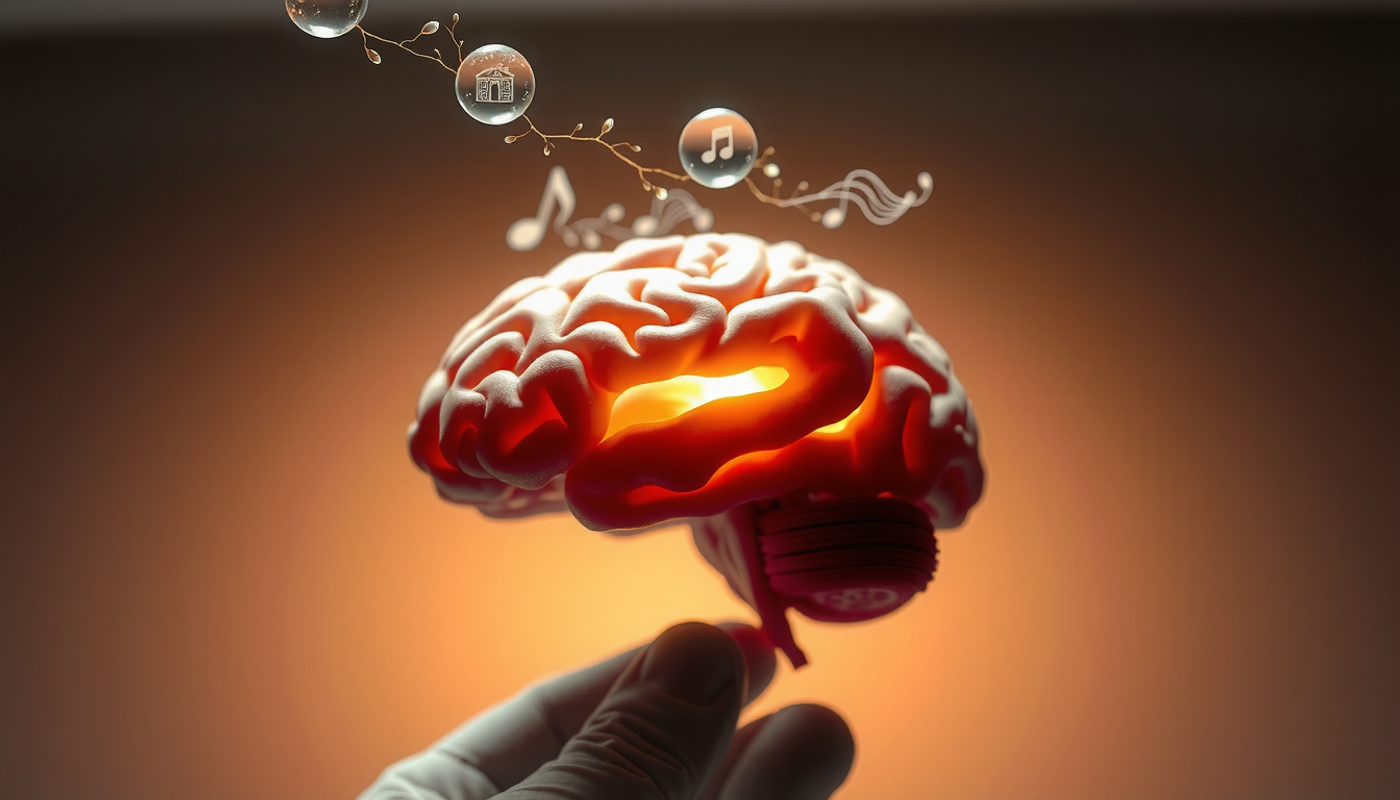
Imagine this. You walk into your childhood kitchen after twenty years. The countertop is the same. The light hits the floor the same way. And suddenly you remember a conversation you had not thought about in two decades — your mother explaining something about money, standing right there, near the stove. The memory had not disappeared. It was waiting for the right key. That key was the room itself. In 1973, a cognitive psychologist named Endel Tulving proposed one of the most counterintuitive ideas in memory science: the best retrieval cue is not the strongest or the most logical one. It is the one that was present when the memory was first formed [1]. He called this the encoding specificity principle. It shattered the dominant view that memory works like a filing cabinet — store information in, pull information out. Instead, Tulving showed that every memory is inseparable from the context in which it was born. The room. The mood. The smell. The biochemical state of the body. Change the context at retrieval, and the memory becomes harder to find. Restore the context, and forgotten things resurface. This principle has reshaped how police interview witnesses [2], how therapists treat trauma, how students study for exams, and how neuroscientists understand the hippocampus. But its implications reach further than most textbooks admit.

The Man Who Heard Both Sides of Every Argument
To understand where the encoding specificity principle came from, you have to understand the man who proposed it.
Endel Tulving was born in 1927 in a small town in Estonia that no longer exists. His childhood was consumed by the Second World War. He fled his home country at seventeen, lived in a displaced persons camp in Germany, and eventually made his way to Canada, where he would spend the rest of his career rewriting the science of human memory [3]. By the late 1960s, Tulving had already introduced one of his most famous distinctions — the difference between episodic memory and semantic memory [4]. Episodic memory is the memory of personal experiences — what happened to you, where, and when. Semantic memory is the memory of facts and knowledge — the capital of France, the boiling point of water. This distinction matters because the encoding specificity principle applies primarily to episodic memory. When you remember where you parked your car, that is episodic. When you remember that cars have engines, that is semantic. The encoding specificity principle explains why one kind of remembering depends so heavily on context, while the other mostly does not.
But in the early 1970s, the dominant theory of retrieval was something called the association hypothesis. The logic was simple and intuitive: if two concepts are strongly associated before an experiment — like "dog" and "cat" — then presenting one should always help you remember the other. Stronger associations should always produce better retrieval cues. Tulving thought this was wrong.
In 1973, together with his student Donald Thomson, Tulving published a paper in Psychological Review that would be cited over four thousand times [1]. The experiments were elegant. Participants studied pairs of words — a target word and a weak associate. For example, they might study the pair "train — BLACK." The word "train" was a weak associate of "black." Later, at retrieval, participants were given either the weak associate that had been present during encoding (train), or a strong associate that had not been present (white). The association hypothesis predicted that "white" should be a better cue for recalling "black" — after all, "white" and "black" are more strongly connected in everyone's mind than "train" and "black."
The results said otherwise. Participants recalled more target words when given the weak cue that had been present during study than when given the strong cue that had not. Even more striking: in some conditions, participants could recall a word when given the weak cue but could not even recognize the same word when it appeared on a recognition test alongside strong associates [1].
This was the recognition failure of recallable words — a paradox that should not exist if memory retrieval works by association strength alone. Tulving and Thomson's conclusion was stark: retrieval depends not on how strong the association between a cue and a target is in general, but on whether the cue was encoded together with the target at the time of learning. Memory is not about what is objectively related. It is about what was subjectively together.

Underwater Memories and the Scuba Diver Experiment
If encoding specificity is real, then the physical environment where you learn something should matter for recall. Change the environment, and recall should drop. Restore the environment, and recall should improve. Two years after Tulving and Thomson's paper, two British researchers decided to test this in the most dramatic way possible.
Duncan Godden and Alan Baddeley were at the University of Stirling in Scotland, and they had access to something unusual: a diving club [5]. In 1975, they recruited eighteen members of a university diving club and asked them to learn lists of thirty-six words. Some divers learned their lists on the beach. Others learned them ten feet underwater, hearing the words through a communication system inside their diving masks. Then each diver was tested — either in the same environment where they had learned, or in the opposite one.
The results were exactly what encoding specificity predicted. Divers who learned on dry land recalled about forty percent more words when tested on dry land than when tested underwater. Divers who learned underwater recalled about forty percent more when tested underwater than when tested on the beach. The match between encoding and retrieval environments mattered enormously. A second experiment ruled out the possibility that the disruption of moving between environments was responsible — the effect was real, and it was about context.
The scuba diver study became one of the most cited experiments in cognitive psychology. It appears in virtually every introductory textbook. But here is something most textbooks do not mention. In 2021, Jaap Murre at the University of Amsterdam attempted to replicate the experiment with sixteen divers [6]. He used a similar design, similar word lists, and an underwater speaker system. The replication failed. There was no statistically significant advantage for same-context recall. Murre noted several differences — his divers were older, the words may have been harder, and practical constraints meant all testing happened in a single day rather than across four days. The failure does not disprove context-dependent memory. A comprehensive meta-analysis by Steven Smith and Eddie Vela in 2001 analyzed dozens of studies and confirmed that environmental context effects on memory are reliable across the literature [7]. But the failed replication is a reminder that even classic findings deserve scrutiny — and that the magnitude of context effects depends on many factors.

The Vodka Experiment That Made Scientists Uncomfortable
The encoding specificity principle does not only apply to places. It applies to internal states too. If your body is in a particular biochemical state when you learn something, restoring that state later should help you remember. This is called state-dependent memory, and the most famous demonstration of it involved medical students and vodka.
In 1969 — four years before Tulving and Thomson's paper — Donald Goodwin and his colleagues at Washington University in St. Louis recruited forty-eight male medical students for an experiment that would be difficult to approve today [8]. On the first day, half the students drank enough vodka to become moderately intoxicated — their blood alcohol levels reached roughly the legal limit for driving. The other half stayed sober. All participants performed four memory tasks: an avoidance task, a verbal rote-learning task, a word-association test, and a picture recognition task.
Twenty-four hours later, they returned and were tested again — but this time, half of each group switched states. Some who had been drunk were now sober. Some who had been sober were now drunk. The experimenters compared performance across four conditions: sober-sober, drunk-drunk, sober-drunk, and drunk-sober.
The results were remarkable. For tasks that relied on recall — retrieving information from memory without any external help — performance was better when the state at retrieval matched the state at encoding. Students who had learned while intoxicated and were tested while intoxicated again performed better on recall tasks than students who had learned while intoxicated but were tested sober. This was true even though alcohol itself impairs memory. The state-dependent advantage outweighed the pharmacological disadvantage of being drunk. For recognition tasks, the effect was weaker or absent — a pattern that would later prove theoretically important.
Goodwin's study established that the internal biochemical environment of the body acts as a retrieval cue, just as the external physical environment does. Later research extended this to caffeine [9], nicotine, and emotional states. Eric Eich's work in the 1980s showed that mood itself can function as an encoding context — people who learn material in a happy mood recall it better when happy again, and people who learn in a sad mood recall it better when sad [10].
The practical implications are unsettling. If you always study while drinking coffee, your memory of that material may be slightly better when you are caffeinated during the exam. If you study while anxious, the anxiety itself becomes part of the retrieval context. The encoding specificity principle does not care whether the context is helpful or harmful. It simply says: whatever was present during encoding becomes a potential key for retrieval.

What Actually Happens in the Brain
For decades, the encoding specificity principle existed as a behavioral observation. Researchers knew it worked but could not see the neural mechanism. That changed with the discovery of place cells.
In 1971, John O'Keefe and Jonathan Dostrovsky at University College London implanted electrodes in the hippocampus of freely moving rats and discovered something startling — a hippocampal neuron is a small brain cell deep in the temporal lobe that processes spatial and memory information. Individual neurons fired selectively when the rat was in a specific location in its environment [11]. They called these neurons place cells. Different cells fired in different locations, and together, the population of place cells formed what looked like an internal map of the environment. Seven years later, O'Keefe and Lynn Nadel published a landmark book proposing that the hippocampus — a seahorse-shaped structure deep in the brain's temporal lobe that serves as the brain's memory factory — functions as a cognitive map [12].
But here is the key connection to encoding specificity. When a rat moves from one environment to a different one, its place cells do not simply adjust. They remap — the entire pattern of which cells fire and where they fire scrambles and reorganizes into a completely different map [13]. This means the hippocampus creates a unique neural fingerprint for each environment. And memories formed in one environment are bound to that particular fingerprint. Change the environment, change the fingerprint, and the memories become harder to access. This is exactly what the encoding specificity principle predicts.
Modern neuroimaging studies in humans have confirmed this picture. When people successfully remember an event, the pattern of brain activity at retrieval reinstates — partially recreates — the pattern that was active during encoding [14]. The more complete the reinstatement, the better the memory. And the hippocampus sits at the center of this process, acting as the indexing system that binds together the various sensory, emotional, and contextual features of an experience into a single retrievable memory trace.
One particularly elegant line of research comes from the field of targeted memory reactivation. Researchers have shown that presenting a scent or a sound that was associated with learning during subsequent sleep can reactivate the hippocampal memory trace and strengthen the memory [15]. The context cue does not even need to be conscious — the sleeping brain still responds to it. This finding is not just consistent with encoding specificity. It is encoding specificity operating at the neural level, during sleep, without any awareness at all.
The Forensic Revolution That Started With a Memory Principle
The encoding specificity principle might have remained a laboratory curiosity if not for two psychologists who realized it could save lives.
In the early 1980s, Ronald Fisher at Florida International University and Edward Geiselman at UCLA looked at how police officers interviewed eyewitnesses and were horrified [16]. Standard police interviews consisted of short, closed-ended questions fired in rapid succession: "What color was his shirt? How tall was he? Did he have a weapon?" Witnesses were constantly interrupted. The interview environment bore no resemblance to the crime scene. And crucial details were lost.
Fisher and Geiselman designed a new technique called the cognitive interview, built directly on two principles from memory science: the encoding specificity principle and the multi-component view of memory [17]. The cognitive interview has four core components. First, mental reinstatement of context — the witness is asked to mentally recreate the physical, emotional, and cognitive context of the crime. What was the weather? How were you feeling? What were you thinking about? This directly applies encoding specificity: by reinstating the internal and external context of the original event, retrieval cues that match the encoding context become available. Second, report everything — the witness is encouraged to recall every detail, no matter how trivial, because any detail might serve as a retrieval cue for other details. Third, recall in different orders — reversing the chronological order reduces the influence of schemas and expectations. Fourth, change perspective — imagining the event from another vantage point can unlock details that the witness's own perspective missed.
The results were dramatic. In a field test with detectives from the Metro-Dade Police Department in Florida, Fisher and colleagues trained seven experienced detectives to use the cognitive interview and compared them with nine untrained detectives [2]. The trained detectives elicited forty-seven percent more information after training than before, and sixty-three percent more than the untrained detectives. The rate of incorrect information stayed the same — the cognitive interview increased the amount of correct recall without increasing errors.
A meta-analysis by Amina Memon, Christian Meissner, and Joanne Fraser in 2010, covering twenty-five years of research, confirmed these findings across multiple countries, age groups, and crime types [18]. The cognitive interview is now standard practice in police forces across the United Kingdom, Australia, New Zealand, and parts of the United States. It is one of the clearest examples of basic memory research — a principle articulated in a 1973 academic paper — directly improving real-world outcomes.

The Rival Theory That Turned Out to Be a Cousin
Not everyone agreed with Tulving. In 1972 — one year before the encoding specificity paper — Fergus Craik and Robert Lockhart at the University of Toronto published their influential levels-of-processing framework [19]. Their argument was different from Tulving's. Craik and Lockhart proposed that memory depends on how deeply information is processed during encoding. Shallow processing — attending to the physical features of a word, like its font or its sound — produces weak memories. Deep processing — attending to meaning, making connections, generating elaborations — produces strong memories.
This was a powerful idea and it generated thousands of experiments. But it had a problem. In 1977, C. Donald Morris, John Bransford, and Jeffery Franks demonstrated something that the levels-of-processing framework could not easily explain [20]. They had participants process words either semantically (deeply) or phonemically (shallowly), and then tested them with either a standard recognition test or a rhyme recognition test. For the standard test, deep processing produced better memory — as levels of processing predicted. But for the rhyme test, shallow processing produced better memory. Processing that matched the retrieval task won, regardless of depth.
Morris, Bransford, and Franks called this transfer-appropriate processing. And its logic is almost identical to encoding specificity: memory is best when the processes used at retrieval match the processes used at encoding. The two principles — one about contextual cues, the other about processing operations — are different sides of the same coin.
Craik himself eventually acknowledged this. In a reflective article years later, he wrote that the concepts of levels of processing and transfer-appropriate processing had always seemed complementary rather than antagonistic to him [21]. Initial processing determines the nature of the encoded trace. Deeper encoding creates greater potential for retrieval. But that potential is only realized when the retrieval environment matches the trace qualitatively.
What does this mean practically? It means that studying by rereading your textbook — a form of shallow, recognition-based processing — prepares you well for multiple-choice tests but poorly for essay exams. Studying by generating explanations and testing yourself — deeper, recall-based processing — prepares you for both. The encoding specificity principle and transfer-appropriate processing together explain why the best study strategy depends on how you will be tested.

When Context Hurts Instead of Helps
The encoding specificity principle is often presented as a helpful phenomenon — restore the context and improve your memory. But it has a dark side.
Consider chronic pain. Research has shown that pain is not simply a signal from the body. It is a memory. The brain learns to associate certain contexts — a particular movement, a particular room, a particular time of day — with pain. When those contexts are encountered again, the brain can generate pain even when no physical damage is occurring [22]. The encoding specificity principle explains this: the context in which pain was originally experienced becomes a retrieval cue for the pain memory. Returning to that context re-activates the memory, and with it, the pain. This is one reason why chronic pain patients sometimes improve dramatically when they change environments — the new context does not contain the retrieval cues for the pain memories.
Post-traumatic stress disorder follows a similar logic. Trauma is encoded in a rich web of contextual cues — sounds, smells, visual scenes, body sensations, emotional states. Flashbacks occur when a retrieval cue that matches the encoding context of the trauma is encountered — a car backfiring that sounds like a gunshot, a cologne that matches the attacker's, a darkness that matches the time of day. The traumatic memory is not being deliberately recalled. It is being involuntarily retrieved because the encoding-retrieval match has been triggered [23].
This understanding has influenced therapeutic approaches. Prolonged exposure therapy, one of the most effective treatments for PTSD, works partly by breaking the tight bond between contextual cues and the traumatic memory. By repeatedly encountering trauma-related cues in a safe context, the patient creates new associations that compete with the old ones. The cue no longer retrieves only the trauma — it also retrieves the experience of safety during therapy.
Addiction operates on similar principles. Environmental cues associated with drug use — a particular street corner, a particular group of friends, the smell of a bar — become powerful retrieval cues for drug-related memories and cravings [24]. This is why recovering addicts are often advised to change their environment entirely. The advice is not just common sense. It is encoding specificity at work.

The Limits of the Principle — When Does Context Not Matter?
No scientific principle is universal, and encoding specificity has its boundaries.
The meta-analysis by Smith and Vela in 2001 identified two important moderating factors [7]. The first is overshadowing. When learners process information deeply and generate strong internal representations during encoding, the environmental context matters less. If you are deeply engaged with the material — connecting it to prior knowledge, generating explanations, testing yourself — you create rich internal retrieval cues that can substitute for external contextual cues. The environmental context is overshadowed by the quality of your encoding. The second is outshining. When strong non-contextual cues are provided at retrieval — like category names, or the tested items themselves in a recognition test — these cues outshine the ambient environmental context. This explains why context effects are typically stronger for free recall than for cued recall, and stronger for cued recall than for recognition.
Another limitation involves the cue overload principle, identified by Michael Watkins in 1975 [25]. A retrieval cue is effective only to the extent that it is uniquely associated with the target memory. If a cue is associated with too many different memories, its effectiveness as a retrieval cue drops. Think of it this way: if you always study in the same room, that room becomes associated with thousands of different study sessions. Its power as a retrieval cue for any specific session diminishes. This is why varying your study environment — counterintuitively — can sometimes improve memory. Each unique environment becomes a distinctive cue for a specific study session, rather than one overloaded cue for all sessions [26].
The medical education literature has also challenged the simple version of context-dependent memory. A study by Koens, Ten Cate, and Custers at Utrecht University Medical Center tested whether medical students learned better at the bedside or in the classroom and found no advantage for matching the learning and testing environments when the material was meaningful and deeply processed [27]. The authors cautioned that context-dependent memory effects are most reliable with arbitrary material and may diminish when learners engage in deep, meaningful processing of complex content.
These findings do not invalidate the encoding specificity principle. They refine it. Context matters most when other retrieval cues are weak — when the material is unfamiliar, when processing is shallow, and when no other route to the memory is available. Context matters least when the learner has built strong internal representations through deep engagement with the material.

Your Brain Files Memories Under Bookmarks You Cannot See
What does all this mean for someone trying to learn, remember, and perform?
The encoding specificity principle offers several practical insights that are supported by the research literature. First, when possible, study in conditions that resemble the conditions of the test. If you will take an exam in a quiet classroom, studying in a quiet environment is better than studying with music. The Grant, Heet, and Kim study in 1998 demonstrated this directly — participants who studied and were tested in matching auditory environments (both quiet or both noisy) outperformed those in mismatched conditions [28].
Second, if you cannot match the physical environment, mentally reinstate the encoding context. Close your eyes before a test and visualize the place where you studied. Recall what you were feeling, what was around you, what sounds were present. Research on mental reinstatement shows it can partially compensate for a change in physical context [7].
Third, vary your study conditions across sessions. This seems to contradict the matching principle, but it does not. By studying the same material in different rooms, at different times, and in different states, you create multiple retrieval pathways to the same information. Any future context is more likely to overlap with at least one encoding context. Smith, Glenberg, and Bjork demonstrated in 1978 that studying word lists in two different rooms produced better free recall than studying in the same room twice [26].
Fourth, test yourself. Self-testing is the most powerful study technique because it creates retrieval practice — the act of pulling information out of memory rather than passively reviewing it [29]. Each successful retrieval creates a new retrieval pathway, making the memory more accessible from more contexts. Testing does what varied encoding contexts do: it multiplies the routes to the memory.
Fifth, be aware that your internal state during studying becomes part of the memory. Caffeine, anxiety, fatigue, music — these are not neutral background conditions. They become encoded with the material. This does not mean you should always study in the same state. It means you should be aware that changing your state between study and test can create a mismatch. And if possible, study under conditions of calm alertness — a state you can reproduce on test day.
The Bilingual Window Into Encoding Specificity
One of the most striking demonstrations of encoding specificity comes from bilingual research. If memories are tied to the context in which they were formed, then language itself should function as a context — and switching languages should affect what you remember.
Viorica Marian and Ulric Neisser tested this idea in 2000 with Russian-English bilingual students [30]. They asked participants to recall autobiographical memories in response to prompt words. When the prompts were in Russian, participants recalled more memories from their time in Russia. When the prompts were in English, they recalled more memories from their time in America. The language of the prompt cued memories that had been encoded in that same language.
A follow-up study by Marian and Kaushanskaya in 2007 extended this to semantic memory — general knowledge — and found similar effects [31]. Mandarin-English bilingual students responded more readily with knowledge acquired in Mandarin when questioned in Mandarin, and with knowledge acquired in English when questioned in English.
This has real implications for bilingual education, for immigrant communities, and for clinical settings. A therapist working with a bilingual patient may find that trauma memories encoded in one language are more accessible when that language is used in therapy. A bilingual student who learns chemistry in English and is tested in English will perform better than if tested in their other language — not because they know less, but because the retrieval context does not match the encoding context.

The Future of Context — Virtual Reality and Digital Encoding
The encoding specificity principle was formulated in an era of word lists, classrooms, and underwater experiments. But what happens in a world where learning increasingly happens on screens?
Recent research has begun exploring context-dependent memory in virtual and digital environments. A systematic review by Dogan and colleagues in 2025 examined virtual reality technology and human memory, finding that VR can create contextual encoding environments that influence later recall in ways consistent with encoding specificity [32]. When participants learn material inside a specific virtual environment, returning to that same virtual environment at retrieval enhances memory — even though the participant has never physically been in that place.
This opens fascinating possibilities for education and therapy. Imagine medical students learning anatomy inside a virtual operating room and then being tested in the same virtual operating room. Or PTSD patients undergoing exposure therapy in a virtual recreation of the traumatic environment, with full control over the intensity of the contextual cues. These applications are not speculative — they are being actively developed and tested.
But digital contexts raise new questions too. If a student learns material on their phone while lying in bed, and is tested on a desktop computer in a classroom, how much context mismatch is created by the change in device? If you read a textbook chapter as a PDF on a tablet, does the visual layout of the screen become part of the encoding context? These questions are at the frontier of current research, and the answers matter increasingly as education moves online.
The Principle That Quietly Changed Everything
The encoding specificity principle is not flashy. It does not have the dramatic appeal of split-brain experiments or the clinical weight of Alzheimer's research. It sits in the background of memory science — quiet, foundational, and everywhere.
It explains why walking into your childhood home floods you with memories you thought were gone. It explains why police detectives trained in the cognitive interview extract more accurate testimony. It explains why changing your environment can help break the cycle of chronic pain or addiction. It explains why bilingual people access different memories in different languages. And it explains something profound about the nature of memory itself.
Memory is not a recording. It is not a file stored in a cabinet. It is a relationship — a relationship between the trace left by an experience and the cue present at the moment of retrieval. The trace contains not just the information you intended to learn but the entire context in which you learned it — the room, the mood, the body state, the language, the sounds, the smells. And retrieval succeeds not when you have the strongest cue, but when you have the right one. The one that was there at the beginning.
Tulving understood this fifty years ago. The science since then has confirmed it at every level — behavioral, neural, clinical, and applied. The encoding specificity principle is not just a theory about memory. It is a theory about the conditions under which the past becomes available to the present. And those conditions, it turns out, are more specific, more contextual, and more embodied than anyone imagined before 1973.
Every memory has an address. The encoding specificity principle tells you what that address looks like. And it is never just a word. It is a world.

Frequently Asked Questions
What is the encoding specificity principle in simple terms?
The encoding specificity principle states that memory retrieval is most effective when the cues available at the time of recall match the cues that were present during learning. This means the context in which you study — including location, mood, and physical state — becomes linked to the memory and helps you access it later.
How does encoding specificity differ from state-dependent memory?
State-dependent memory is a specific type of encoding specificity that focuses on internal body states like intoxication, caffeine levels, or mood. Encoding specificity is the broader principle that covers both internal states and external contexts such as physical environments, sounds, and smells.
Can I use the encoding specificity principle to study more effectively?
Yes. Research suggests studying in conditions similar to test conditions, mentally reinstating the study environment before an exam, varying study locations across sessions to create multiple retrieval pathways, and using self-testing to generate retrieval practice — all strategies rooted in encoding specificity.
Does the encoding specificity principle apply to all types of memory?
It applies most strongly to episodic memory — memory for personal experiences and events. Its effects on semantic memory are weaker because factual knowledge becomes less tied to specific contexts over time through repeated exposure in multiple contexts.
How is the encoding specificity principle used in criminal investigations?
The cognitive interview technique developed by Fisher and Geiselman uses mental reinstatement of context — a direct application of encoding specificity — to help eyewitnesses recall more details about crimes. Studies show it increases correct recall by up to sixty-three percent without increasing errors.


