
Introduction
You changed your phone password last week. You remember the new one. But every time your fingers reach for the keypad, the old password fires first. Not as a vague feeling. As a fully formed motor sequence that hijacks your hand before your conscious mind can intervene. This is proactive interference at work [1].
Proactive interference is what happens when previously learned information blocks the retrieval of newer, similar information. It is one of the most studied phenomena in the history of memory science, and one of the least understood outside the laboratory. For more than a century, researchers have debated whether forgetting is the passive fading of memory traces or the active suppression of competing ones. The answer, built across 125 years of experimental work, turns out to be far stranger than either camp imagined.
This is the story of how a series of researchers, starting in a Göttingen laboratory at the turn of the twentieth century and continuing into modern fMRI suites and MEG chambers, discovered that your memories are not stored peacefully. They compete. They fight. And the older ones usually win [2]. The clinical stakes are enormous: failure to resist proactive interference is now one of the earliest known markers of Alzheimer's disease [3]. And the educational stakes are just as real, because the techniques that work best for long-term learning, spacing, interleaving, retrieval practice, all turn out to work precisely because they train the brain to manage interference.
The 300 Pages That Started Everything
The story begins in Göttingen, Germany, in the final decade of the nineteenth century. Georg Elias Müller ran the experimental psychology laboratory there for forty years. He was exacting, combative, and tireless. The American psychologist William Krohn called his lab in 1893 "in many respects the best for research work in all Germany" [4].
Together with his doctoral student Alfons Pilzecker, Müller spent eight years on a single project. Between 1892 and 1900, they ran forty experiments using paired-associate nonsense syllables on a memory drum. The results filled a 300-page monograph titled Experimentelle Beiträge zur Lehre vom Gedächtnis, which translates as Experimental Contributions to the Science of Memory [5].
The central finding was straightforward. Participants studied List A. Then either immediately or after a six-minute pause, they studied an interfering List B. When List B followed quickly, recall of List A collapsed. When six minutes passed first, recall held up far better. The numbers in the original report: 28% versus 49%.
Müller and Pilzecker drew two conclusions. First, memory traces need time to harden. They coined the German word Konsolidierung, consolidation, a term that entered English and never left [6]. Second, new learning can wreck older memories if it arrives too soon. They called this retroactive inhibition. And buried in their monograph, almost as a footnote, was the observation that prior learning could equally disrupt the acquisition of new material. This was the first experimental hint of what would later be named proactive interference.
The monograph was never translated into English. For most of the twentieth century it was more cited than read. But its argument is the foundation stone of modern memory science. As John Wixted and Denise Cai wrote in a 2013 review, memory consolidation was first proposed by Müller and Pilzecker in 1900 to explain why intervening material disrupts recall [7].
The Man Who Killed Decay Theory
For three decades after that Göttingen monograph, the dominant explanation of forgetting in American psychology was Edward Thorndike's "law of disuse." The idea was ancient: memories are like letters carved in wax, and time slowly smooths them away. Use keeps them sharp. Neglect lets them fade. It was intuitive. It was elegant. And it was wrong.
John Alexander McGeoch killed this theory in a single paper. McGeoch was born in 1897, became a professor at the University of Arkansas at twenty-eight, and died at forty-five while chairing the psychology department at the University of Iowa [8]. In his 1932 Psychological Review paper, "Forgetting and the law of disuse," he advanced an argument that has aged with extraordinary grace [9].
His logic was philosophical as much as empirical. Time itself cannot cause anything, he argued. Only events occurring in time can. The proper question was not whether memories decay across an interval but what happens during the interval that causes forgetting.
He offered an analogy that became famous. Iron rusts over time. But time does not produce rust. Oxygen does. Forgetting, McGeoch insisted, is the rust. Competing memories and changed contexts are the oxygen.
McGeoch died before his major textbook, The Psychology of Human Learning, was published in 1942. It became the foundational text of associative learning theory for a generation. And it shaped the thinking of the man who would carry McGeoch's program to its most dramatic conclusion: a quiet, obsessive experimentalist at Northwestern University named Benton Underwood.
The Detective Who Overturned Ebbinghaus
Benton Underwood was born on February 28, 1915, and trained at the University of Iowa under McGeoch's intellectual shadow [10]. After wartime service in the Naval Aviation Psychology Branch, he joined Northwestern University in 1946 and stayed for thirty-seven years. His student Geoffrey Keppel, writing in the National Academy of Sciences biographical memoir, called him "a master at designing simple, clean, and analytical studies" [11].
In 1957, Underwood published a paper in Psychological Review that would become one of the most influential in the history of experimental psychology. The title was straightforward: "Interference and forgetting" [1]. The argument was a masterpiece of detective work.
Underwood collected published data from dozens of paired-associate learning experiments and noticed something nobody had emphasized. The participants in those experiments had typically learned many lists in succession over many days. When he plotted recall against the number of prior lists each participant had previously memorized, a striking pattern emerged. Subjects who had learned no prior lists retained roughly 75% of a single list after twenty-four hours. Subjects who had learned twenty prior lists retained roughly 25%.
Think about what this means. The famous Ebbinghaus forgetting curve, the steep memory drop-off cited in every introductory psychology textbook, was largely an artifact. Ebbinghaus had tested himself across hundreds of sessions. He had built massive proactive interference into his own data without realizing it.
The implication changed the field overnight. Most everyday forgetting, Underwood argued, is not the disappearance of memories but their suppression by competing memories acquired earlier. As a review by Roediger, Weinstein, and Agarwal from Washington University summarizes, from this landmark paper on, interference became the dominant explanation of forgetting [12]. And proactive interference moved from a footnote to the main event.
Eighteen Seconds and a Counting Task
In 1958, the British psychologist John Brown reported that consonant trigrams like "BFV" were forgotten almost completely within eighteen seconds when participants were prevented from rehearsing by counting backward. The next year, Lloyd and Margaret Peterson at Indiana University published a now-classic study using the same paradigm: twenty-four trigrams, backward counting, recall tested at intervals from three to eighteen seconds [13]. After three seconds, more than 80% of trigrams were recalled. After eighteen seconds, fewer than 10%.
The Petersons interpreted their finding as evidence for rapid decay of short-term memory. The trace simply dissolved. Geoffrey Keppel, a graduate student in Underwood's lab, was skeptical.
In a 1962 paper in the inaugural volume of the Journal of Verbal Learning and Verbal Behavior, Keppel and Underwood showed that the Peterson result was contaminated by proactive interference [14]. On the first trial of a Brown-Peterson session, when subjects had no prior trigrams to interfere, recall after eighteen seconds was nearly perfect. The dramatic forgetting only emerged on the second and third trials, as proactive interference accumulated. Decay theory, applied to short-term memory, had fallen for the same illusion Ebbinghaus had. Prior learning was masquerading as time-driven loss.
What does this mean for anyone who studies? Every time you sit down to memorize a new list, a new chapter, a new set of terms, the material you studied yesterday and the day before is already in the ring, ready to interfere. The longer your study history, the harder new material has to fight for retrieval access. This is why naive learners often outperform experienced ones on simple recall tasks, a result that baffled researchers for decades until Underwood explained it.
The Experiment That Proved Memories Have Categories
Delos Wickens was born in 1909, joined Ohio State University in 1946, and stayed until retirement in 1980 [15]. He took the Brown-Peterson paradigm one critical step further.
Wickens ran subjects through several Brown-Peterson trials using items from a single semantic category. Say, professions: lawyer, doctor, teacher. As predicted, recall deteriorated across trials as proactive interference built up. Then, on the fourth trial, he switched. Instead of professions, he presented fruits: apple, banana, grape. Recall snapped back to first-trial levels.
He called this release from proactive inhibition, and the magnitude of the release became his measure of how distinct two categories were in memory. The 1970 paper in Psychological Review, "Encoding categories of words: An empirical approach to meaning," became one of the most cited papers in cognitive psychology [16].
The implication was profound. In the 1960s, the influential Atkinson-Shiffrin model held that short-term memory used purely phonological coding. You rehearsed sounds, not meanings. But if proactive interference disappears when you switch semantic categories, then short-term memory must be doing deep semantic encoding too. Wickens had used interference as a chemical assay for the hidden structure of memory.
He went on to map what he called "encoding space" by testing category shifts along multiple dimensions: animate to inanimate, concrete to abstract, positive to negative valence. Each shift produced a measurable "release" from interference, revealing the invisible filing system that the brain uses to organize incoming information. This work connected directly to the principles behind encoding specificity, which showed that retrieval depends on matching the conditions present during learning.

Inside the Brain: Where Interference Gets Resolved
The behavioral architecture of proactive interference was well established by the mid-1990s. What remained unknown was the neural mechanism. Where in the brain does the conflict between old and new memories get settled?
The first systematic answer came in 1999. Mark D'Esposito, Bradley Postle, John Jonides, and Edward Smith published an event-related fMRI study in PNAS that isolated, second by second, where proactive interference was being resolved [17]. They used a variant of Stephen Monsell's 1978 "recent-probes" paradigm. On each trial, participants memorized four letters, held them across a brief delay, then saw a single probe letter and had to decide whether it was in the current set. The critical comparison was between probes that hadn't appeared recently in the experiment (easy rejections) and probes that had been in the previous trial's set but not the current one (hard rejections). Those "recent negative" probes produced slower responses and more errors. The brain was confusing familiarity with current relevance.
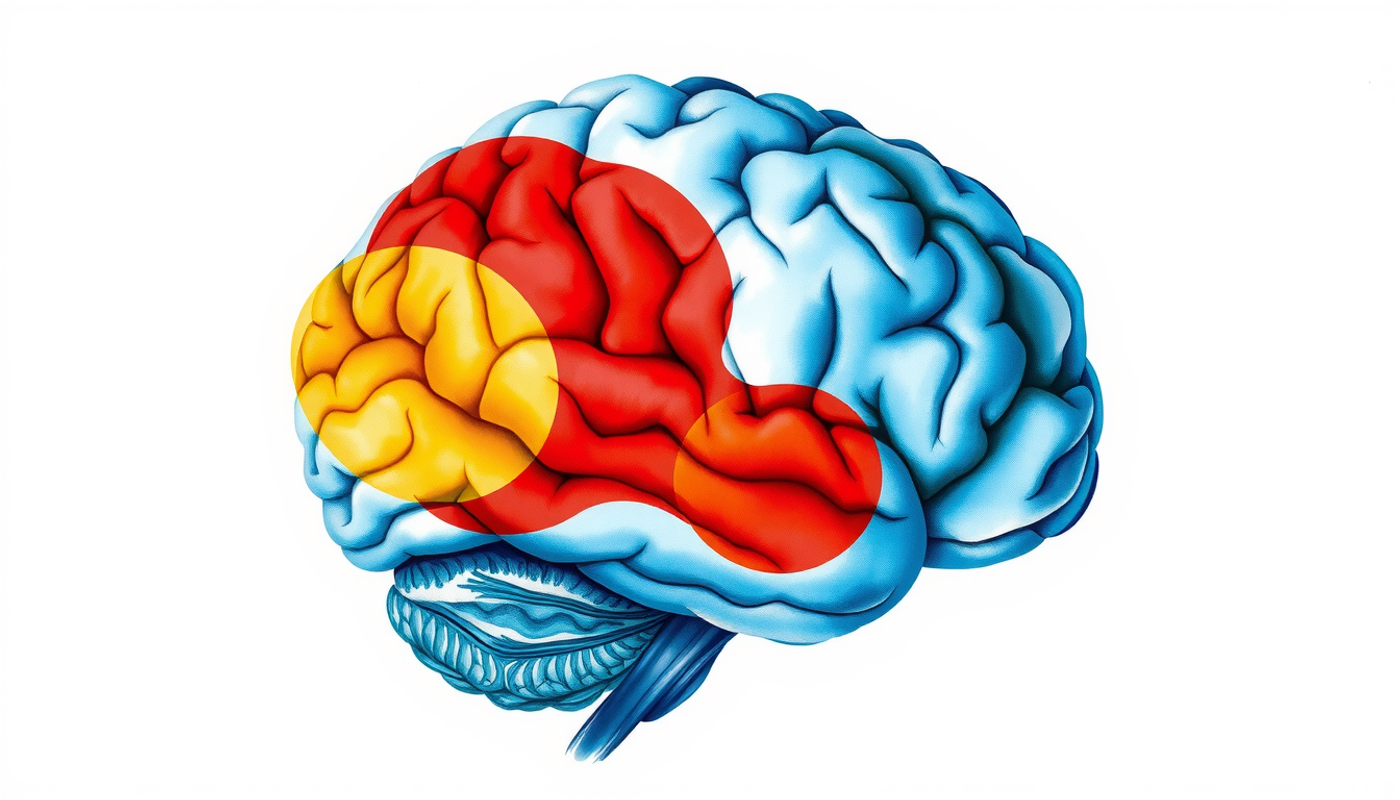
The answer pointed to a single focal region: Brodmann area 45 in the left inferior frontal gyrus, part of what neuroscientists now call the left ventrolateral prefrontal cortex. The activation appeared specifically during the probe moment, the instant of conflict, not during encoding or maintenance.
In 2006, John Jonides and Derek Nee published what remains the most-cited synthesis of this research in Neuroscience. They proposed a "biased-competition model" of interference resolution [2]. When a probe appears, two attributes compete: a familiarity code (which says "I have seen this before") and a context code (which says "but not in this trial"). The left prefrontal cortex tips the competition toward the context code, allowing the brain to reject familiar-but-irrelevant information.
David Badre and Anthony Wagner refined this picture in a 2007 Neuropsychologia paper [18]. They argued for a functional split within the left prefrontal region. The anterior portion (around Brodmann area 47) handles controlled retrieval of relevant information from long-term storage. The mid-portion (Brodmann area 45) handles post-retrieval selection, choosing among activated representations when more than one is competing. This two-process model has structured the neuroimaging literature ever since.
Convergent evidence came from neuropsychology. Thompson-Schill and colleagues showed in 2002 that patients with focal damage to the left ventrolateral prefrontal cortex exhibited dramatically increased proactive interference while other aspects of short-term memory remained relatively intact [19]. The loop between imaging, behavior, and lesion data was closed.
Why Smart People Forget More
In parallel with the brain imaging work, Randall Engle's laboratory at Georgia Tech was pursuing a question that would link proactive interference to general cognitive ability.
In a much-cited 2000 paper, Michael Kane and Engle showed that individual differences in working memory capacity translate directly into differences in susceptibility to proactive interference [20]. They used a PI-buildup task: three successive word lists, each followed by recall. Both high and low working-memory-capacity participants recalled about 60% of List 1. By List 3, low-capacity participants showed substantially more interference buildup than high-capacity ones.
The critical twist came with a divided-attention condition. When participants had to tap their fingers during encoding and retrieval, high-span individuals dropped to the low-span level. The interpretation: high working-memory individuals are not better at storing memories. They are better at deploying controlled attention to resist interference from previously stored memories. Take away that attentional control, and the advantage disappears [21].
This finding reshaped how psychologists think about intelligence and memory. Working memory capacity is not about how many items you can hold in mind. It is about how well you can suppress the ones you no longer need.
But the story got more nuanced. In 2013, Cowan and Saults found conditions under which high-capacity individuals actually show greater proactive interference, because they encode more material that can later compete [22]. The relationship between capacity and interference is conditional. More knowledge means more potential for competition. This paradox has real consequences for anyone who has ever felt that the more they learn about a subject, the harder it gets to keep the details straight.
For a deeper look at how the brain decides what information to keep and what to discard, see how we actually learn.
The Inhibition Wars
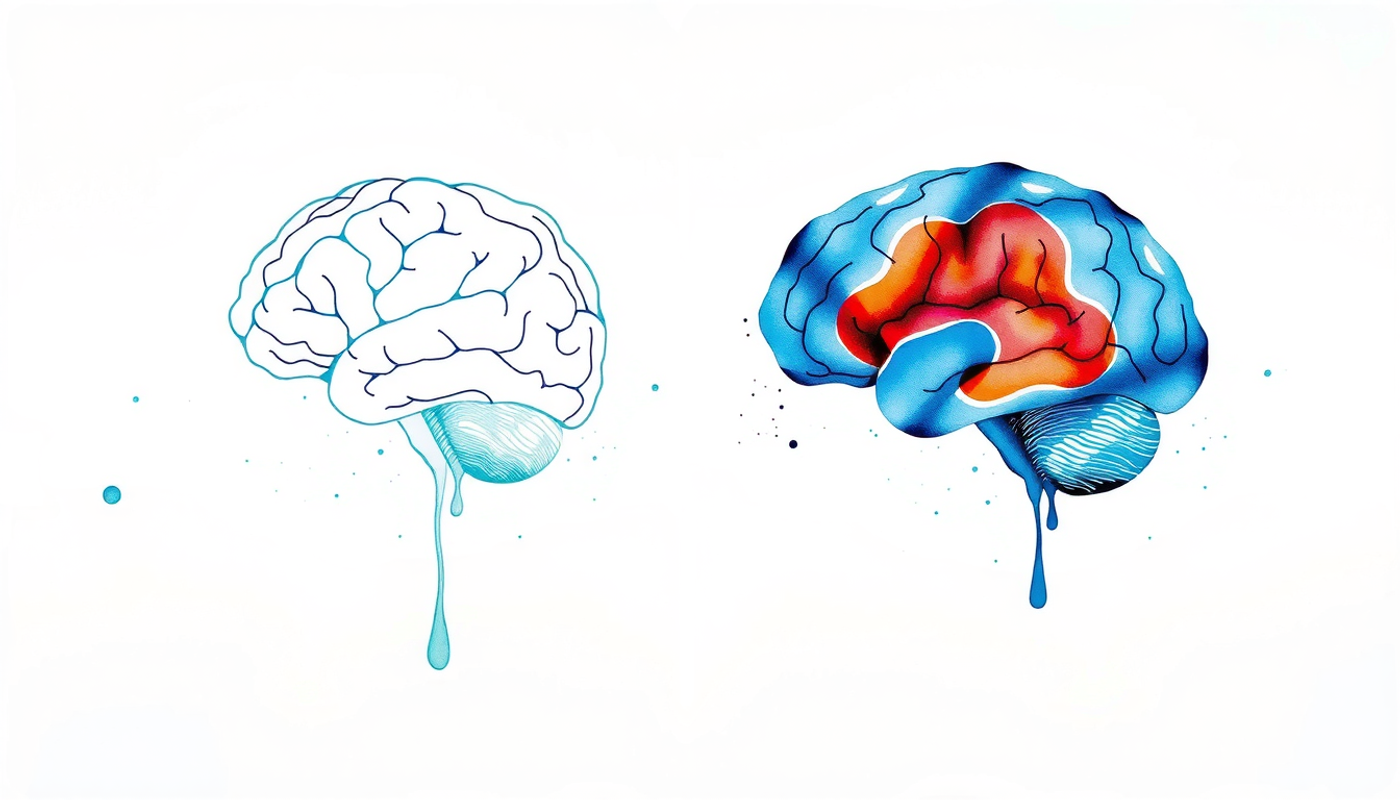
Through the late 1990s, a deeper theoretical battle was brewing. Was proactive interference merely passive competition among memory traces, or did the brain actively suppress competing memories?
Michael Anderson at the University of Oregon (now Cambridge) argued forcefully for active inhibition. In 1994, Anderson, Bjork, and Bjork introduced the retrieval-induced forgetting paradigm [23]. They showed that practicing retrieval of some items from a category caused forgetting of related, unpracticed items from the same category. The act of remembering one thing made related things harder to recall.
Anderson's 2003 manifesto in the Journal of Memory and Language, "Rethinking interference theory: Executive control and the mechanisms of forgetting," pushed the argument further. Forgetting, he wrote, is not a passive side effect of storing new memories. It results from inhibitory control mechanisms recruited to override prepotent responses [23]. Memories that compete for retrieval are actively suppressed by the same prefrontal control systems that suppress unwanted actions.
This explains the convergence between the behavioral data (Kane and Engle showing that attentional control predicts PI resistance) and the neural data (D'Esposito and Jonides showing left prefrontal activation during interference resolution). The brain is not passively overwhelmed by competing memories. It is running an active selection process, choosing winners and suppressing losers.
Not everyone agrees. Raaijmakers and Jakab have argued that some retrieval-induced forgetting effects can be explained without active inhibition, through a simpler cue-overload mechanism: when one retrieval cue becomes associated with too many items, the probability of retrieving any particular one drops mechanically [24]. As of 2025, this debate remains genuinely open. But the inhibition account has accumulated converging evidence from neuroimaging, brain stimulation, and patient studies. Anderson and Subbulakshmi's 2024 paper extended the framework by showing that deliberate suppression of memory retrieval produces measurable "amnesic shadow" intervals via systemic inhibition of the hippocampus [25].
Theta Waves and the Hippocampus
Until the 2010s, proactive interference was studied mainly as a working memory phenomenon, with the prefrontal cortex as its anatomical home. But evidence accumulated that the hippocampus plays an equally critical role, especially for episodic interference involving overlapping past experiences.
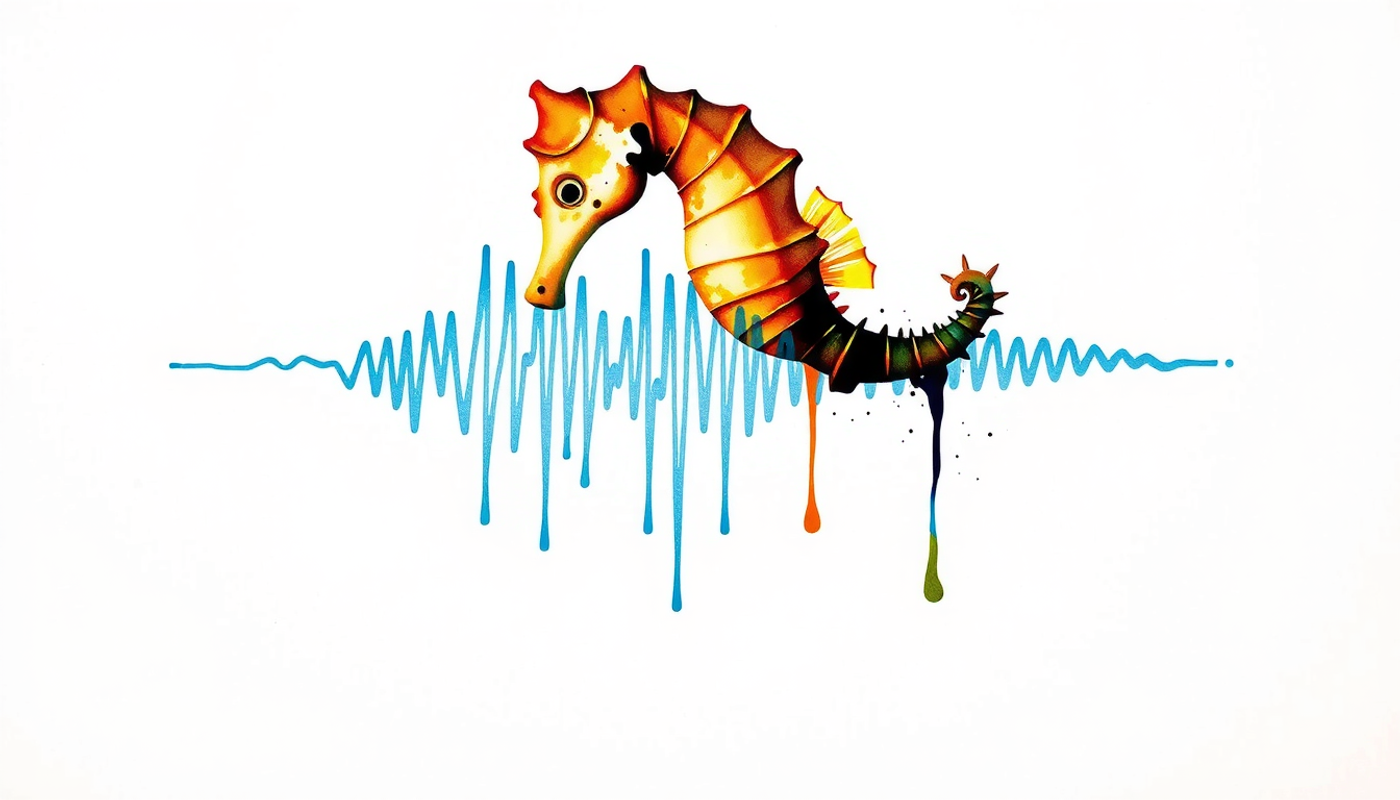
The mechanism is pattern separation. The dentate gyrus, a small region within the hippocampus with its sparse coding and ongoing generation of new neurons throughout life, is engineered to push similar input patterns toward distinct neural representations. In effect, it tags overlapping experiences with non-overlapping codes, preventing the confusion that causes interference. Favila, Chanales, and Kuhl demonstrated in Nature Communications in 2016 that learning drives hippocampal representations of similar events apart from one another, and that lower representational overlap benefits subsequent learning [26].
The most striking recent finding comes from Maria Wimber's laboratory at the University of Birmingham. In November 2022, Casper Kerrén, Sander van Bree, Benjamin Griffiths, and Wimber published a pre-registered MEG study in eLife [27]. They used a proactive interference paradigm in which a reminder word was associated with either one image (no competition) or two competing images learned on different trials. Participants had to recall the most recently learned association.
The finding was remarkable. Across repeated recalls, target and competitor memories came to be reactivated at different phases of the hippocampal theta rhythm, a slow oscillation at approximately 3 Hz. Participants who showed greater phase separation between competing memories experienced less behavioral interference. The brain was literally placing rival memories at opposite ends of an oscillatory cycle, using temporal coding to keep them from colliding.
A 2023 eLife review by Tarder-Stoll, Amer, and Davachi extended the framework, arguing that pattern separation is a multi-stage process supported by a network of brain regions rather than a hippocampal monopoly [28]. The current picture is integrative: the hippocampus separates and tags overlapping traces, the left prefrontal cortex selects among them at retrieval, and the dopaminergic midbrain gates working memory updating. Proactive interference emerges when any of these systems fails.
When Interference Signals Disease
Perhaps the most consequential modern application of proactive interference research is in the early detection of Alzheimer's disease.
David Loewenstein and Rosie Curiel-Cid at the University of Miami developed the LASSI-L, the Loewenstein-Acevedo Scales of Semantic Interference and Learning, over the past fifteen years. The test uses a cued-recall paradigm that systematically induces proactive semantic interference and measures both initial vulnerability to it and the ability to recover from it on subsequent learning trials [3].
Multiple studies have shown that failure to recover from proactive semantic interference is among the strongest behavioral markers of preclinical Alzheimer's. A 2017 paper by Loewenstein and colleagues in the Journal of Alzheimer's Disease showed that this failure correlated significantly with reduced volumes in AD-signature brain regions: hippocampus, precuneus, and rostral middle frontal cortex [29].
The clinical payoff crystallized in January 2024. Curiel Cid, Crocco, Duara, Loewenstein, and a large team of collaborators published a longitudinal study in Frontiers in Aging Neuroscience. They followed 89 older adults with amnestic mild cognitive impairment for an average of twenty-six months, with baseline amyloid PET and MRI imaging. More than 30% of the participants progressed to dementia during the observation period. The key result: failure to recover from proactive semantic interference was independently associated with a 29.5% more rapid rate of progression to dementia. Failures of semantic inhibitory control, measured by the number of intrusion errors, were associated with a 31.6% faster rate [3].
Why is interference such a sensitive marker? The likely answer: the brain regions that resolve proactive interference, hippocampus, precuneus, left prefrontal cortex, are precisely the regions targeted by early Alzheimer's pathology. Proactive interference testing is not measuring a single cognitive function. It is stress-testing an entire neural circuit. And that circuit fails early in the disease process.
Earlier work established that failure to release from PI is a feature of patients with combined memory and frontal-lobe dysfunction, including schizophrenia and focal frontal-lobe lesion patients. Thompson-Schill's 2002 study showed that patients with left prefrontal damage showed dramatically elevated interference while other working memory abilities remained intact [19].
Sleep as the Brain's Interference Filter
Müller and Pilzecker proposed in 1900 that consolidation was a key defense against interference. A century of work has confirmed it. Sleep, in particular, does real work in reducing proactive interference.
The picture became clear with Abel and Bäuml's 2013 study in the journal Memory [30]. Using paired-associate learning across a twelve-hour interval that was either filled with nocturnal sleep or daytime wakefulness, they found that sleep reduced proactive interference to the same extent it reduced retroactive interference. Their interpretation: sleep reactivates memory contents, strengthening and stabilizing them. Stabilized memories become less susceptible to competition from interfering memories at test.
The mechanism aligns with what neuroscience has learned about replay during sleep. Hippocampal sharp-wave ripples during slow-wave sleep selectively reactivate recent memories and transfer them to neocortical storage. In the process, they strengthen the distinctive context tags that bind each memory to its original learning episode. This is consolidation in Müller and Pilzecker's original sense, and it remains, 125 years later, the best-documented natural defense against proactive interference. For a detailed exploration of how sleep builds and sorts memories, see the science of sleep and memory.
What does this mean practically? A learning session followed by sleep beats a learning session followed by another learning session. Cramming two subjects back-to-back before bed maximizes interference. Studying one subject, sleeping, and studying the second subject the next day minimizes it.
The Paradox: More Knowledge, More Interference
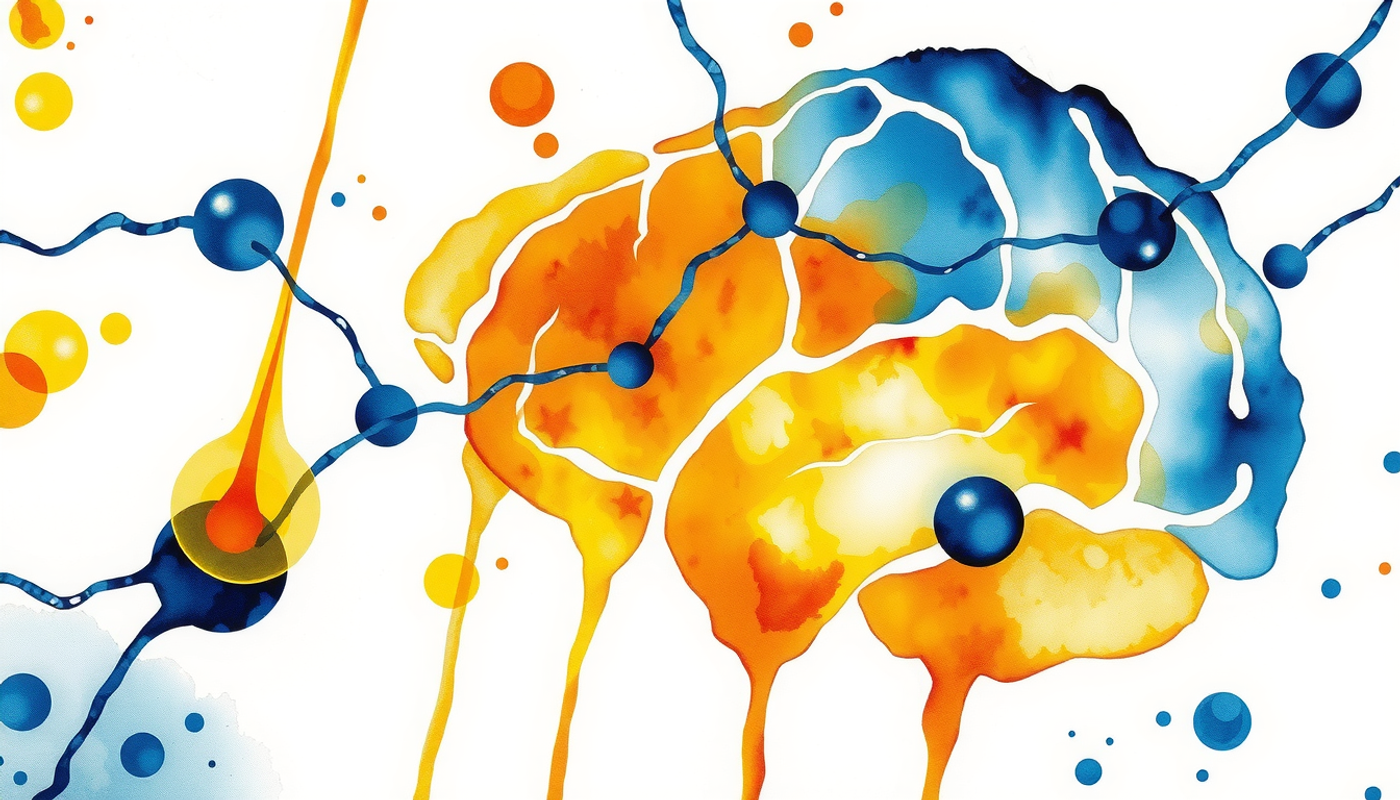
The empirical and theoretical findings converge on a paradox with real consequences for education and lifelong learning. More knowledge increases the potential for interference.
The more vocabulary you know in a foreign language, the more words compete when you try to retrieve the right one. The more legal cases a lawyer has studied, the more case names crowd into memory when searching for the relevant precedent. As Underwood demonstrated in 1957, the participants in Ebbinghaus's own studies remembered worse than novice participants would have, because they carried the weight of prior lists.
This paradox has driven the modern science of learning techniques. The methods that work best, spacing, interleaving, retrieval practice, contextual variation, all share a common mechanism. They force the brain to differentiate memories that would otherwise blur together.
Spacing distributes study sessions across time. Each session begins with lower residual activation from the previous session, sharpening the contextual distinctness of each learning episode. Spacing also allows sleep and consolidation cycles to do their work between sessions [31].
Interleaving mixes different topics or problem types within a session rather than blocking them. It feels harder. Performance during practice drops. But long-term retention and transfer improve dramatically. Why? Each retrieval requires distinguishing the current item from its neighbors, which sharpens the contextual cues that bind each memory to its distinguishing features. This is precisely what the interference-resolution circuitry in the prefrontal cortex is designed to do. Interleaving trains it.
Retrieval practice, the act of testing yourself rather than rereading, has been shown to insulate against the buildup of proactive interference specifically. Szpunar, McDermott, and Roediger demonstrated in 2008 that subjects who were tested immediately on each list recalled more target items and showed fewer prior-list intrusions than subjects who simply restudied [32]. Karpicke and Roediger's 2008 Science paper showed that repeated studying after learning had no effect on delayed recall, but repeated testing produced large positive effects [33].
The educational implication is clear. Well-designed curricula should deliberately introduce what Robert Bjork called "desirable difficulties," challenges that activate the interference-resolution machinery during learning and make memories more distinct and resilient. The discomfort of mixed practice and spaced review is a feature, not a bug.
What Remains Unknown
Several debates remain genuinely open. A responsible account of proactive interference must mark its uncertainties.
The inhibition-versus-competition question is not settled. Anderson's inhibitory framework and Raaijmakers's cue-overload framework continue to make divergent predictions in specific paradigms. The neuroscience evidence favors a hybrid model, but the field has not converged on a single computational synthesis.
The decay question, surprisingly, has not been fully retired. Wixted's 2004 Annual Review paper and subsequent work by Della Sala, Cowan, and Dewar have argued that non-specific retroactive interference from any post-learning activity does play a real role in forgetting [34]. They studied amnesic patients who showed far less forgetting when they spent delays in a dark, quiet room compared to activity-filled delays. If forgetting were purely about specific interference, reduced activity should not help. But it does. This finding revives some aspects of the consolidation-failure account.
The relationship between working memory capacity and interference is also more complex than the clean Kane-and-Engle narrative suggests. Under some conditions, high-capacity individuals show more interference, not less [22]. The boundary conditions are still being mapped.
And proactive interference is not always harmful. The same mechanisms that produce intrusion errors also enable generalization, transfer, and the integration of new knowledge with old. A medical student who confuses two similar drug names is experiencing interference. But a physician who instantly recognizes a rare disease because it resembles one seen years ago is benefiting from the very same overlap. The goal is not to eliminate interference. It is to manage it.

The Memory That Refuses to Leave
In 1900, Georg Elias Müller sat in a Göttingen laboratory and watched memory traces collide. He did not have the vocabulary to describe what he was seeing. He called it retroactive inhibition and moved on. It took another fifty-seven years for Benton Underwood to flip the direction and show that the real story was proactive interference, the past refusing to step aside for the present.
Today, 125 years later, we know that proactive interference is not a flaw. It is an inevitable consequence of having a brain that stores information by association. Every new memory enters a landscape already crowded with prior associations, and it must fight for space. The brain is not a filing cabinet. It is an arena.
The prefrontal cortex acts as the referee. The hippocampus sorts competitors onto different phases of theta oscillations. Sleep reactivates and consolidates, strengthening the context tags that keep memories distinct. Spacing, interleaving, and retrieval practice train these systems. And when the circuit fails, when the prefrontal cortex weakens and the hippocampus shrinks, interference becomes the earliest and most sensitive warning sign that something is wrong.
What feels like forgetting is, beneath the surface, an act of selection among rivals. The ghost in the machine is not decay. It is memory itself, fighting over which version of the past gets to speak.
Frequently Asked Questions
What is the difference between proactive and retroactive interference?
Proactive interference occurs when older memories block the retrieval of newer ones. Retroactive interference works in the opposite direction, where new learning disrupts recall of older material. Both involve competition between memory traces, but they differ in which direction the disruption flows. Research since Underwood's 1957 paper has shown proactive interference accounts for a larger share of everyday forgetting than previously recognized.
How does proactive interference affect studying?
When you study similar material across multiple sessions, earlier sessions create memory traces that compete with later ones during recall. This is why students who cram related topics back-to-back often confuse details between them. Spacing study sessions apart, mixing different topics within sessions, and using self-testing all reduce proactive interference by strengthening the contextual cues that distinguish each memory.
Can proactive interference be measured in a clinical setting?
Yes. The LASSI-L test developed by Loewenstein and Curiel-Cid measures vulnerability to proactive semantic interference and the ability to recover from it. A 2024 Frontiers in Aging Neuroscience study showed that patients who fail to recover from proactive interference on this test progress from mild cognitive impairment to dementia approximately 30% faster than those who recover.
Which brain regions are involved in resolving proactive interference?
The left inferior frontal gyrus, specifically Brodmann areas 45 and 47 in the ventrolateral prefrontal cortex, is the primary region for selecting among competing memories. The hippocampus supports pattern separation, creating distinct neural codes for similar experiences. The dopaminergic midbrain provides gating signals that control when working memory contents are updated.
Does sleep help reduce proactive interference?
Research published in Memory in 2013 by Abel and Bäuml demonstrated that a night of sleep reduces proactive interference as effectively as it reduces retroactive interference. During slow-wave sleep, hippocampal replay strengthens individual memory traces and sharpens the contextual boundaries between them, making memories less susceptible to competition during later retrieval.


