
Introduction
You are standing in a coffee shop you have never visited. The barista says something. The light falls at a particular angle across the counter. And suddenly you are seized by a feeling so strong it stops you mid-sentence: you have been here before. You have heard these exact words. You know what happens next. Except you don't. The feeling lasts two or three seconds and then dissolves, leaving behind only a faint unease and a question with no answer. That is déjà vu. The French term means "already seen," and roughly two-thirds of the human population report experiencing it at least once [1]. For over a century, scientists dismissed it as too fleeting and too strange to study. Philosophers linked it to reincarnation. Freud called it the echo of repressed fantasy. Pop culture turned it into evidence that we live inside a simulation. But starting in 2003, a small group of cognitive scientists decided to drag déjà vu into the laboratory. What they found overturned the popular assumption. Déjà vu is not a sign that something is wrong with your memory. It may be a sign that something is working exactly right [2].

A French Philosopher Names the Uncanny
The story of déjà vu research begins not in a laboratory but in a philosophical journal. In 1876, a French philosopher named Émile Boirac wrote a letter to the Revue philosophique de la France et de l'étranger describing a sensation he called "le sentiment du déjà vu" [3]. The experience was not new. Saint Augustine had described something similar in the fifth century, calling it a disturbance of "false memories." But Boirac gave it a name. And names have a way of making invisible things visible.
The term did not catch on immediately. Competing labels circulated for decades. French psychologist Francisque-Louis Arnaud preferred "paramnesia." British neurologist John Hughlings Jackson, working with epilepsy patients in the 1880s, described a "dreamy state" that preceded seizures, a feeling of uncanny familiarity that engulfed the patient like a wave [4]. Jackson did not use the phrase déjà vu, but he was the first to connect the phenomenon to a specific brain structure: the temporal lobe.
By the early 1900s, "déjà vu" had won the naming contest. Pierre Janet adopted it. Sigmund Freud interpreted it as unconscious fantasy leaking into consciousness. And then, for nearly a century, almost nothing happened. The phenomenon was too brief. Too unpredictable. Too difficult to trigger on demand. Scientists could not study what they could not reproduce.
That changed in 2003, when a psychologist at Southern Methodist University named Alan Brown published a review paper in Psychological Bulletin that would restart the entire field [1]. Brown catalogued over fifty proposed explanations for déjà vu, organized them into four categories (dual processing, neurological, memory, and attentional), and issued a direct challenge to cognitive scientists: stop speculating and start experimenting. It was a call to arms. And it worked.
The Epilepsy Clue
The strongest early evidence about déjà vu came from an unexpected source: epilepsy research. Patients with temporal lobe epilepsy, a condition where seizures originate in the brain's memory regions, often experience intense, prolonged déjà vu just before a seizure begins. It arrives like an aura. Everything suddenly feels overwhelmingly familiar. The patient is convinced they have lived this exact moment before.
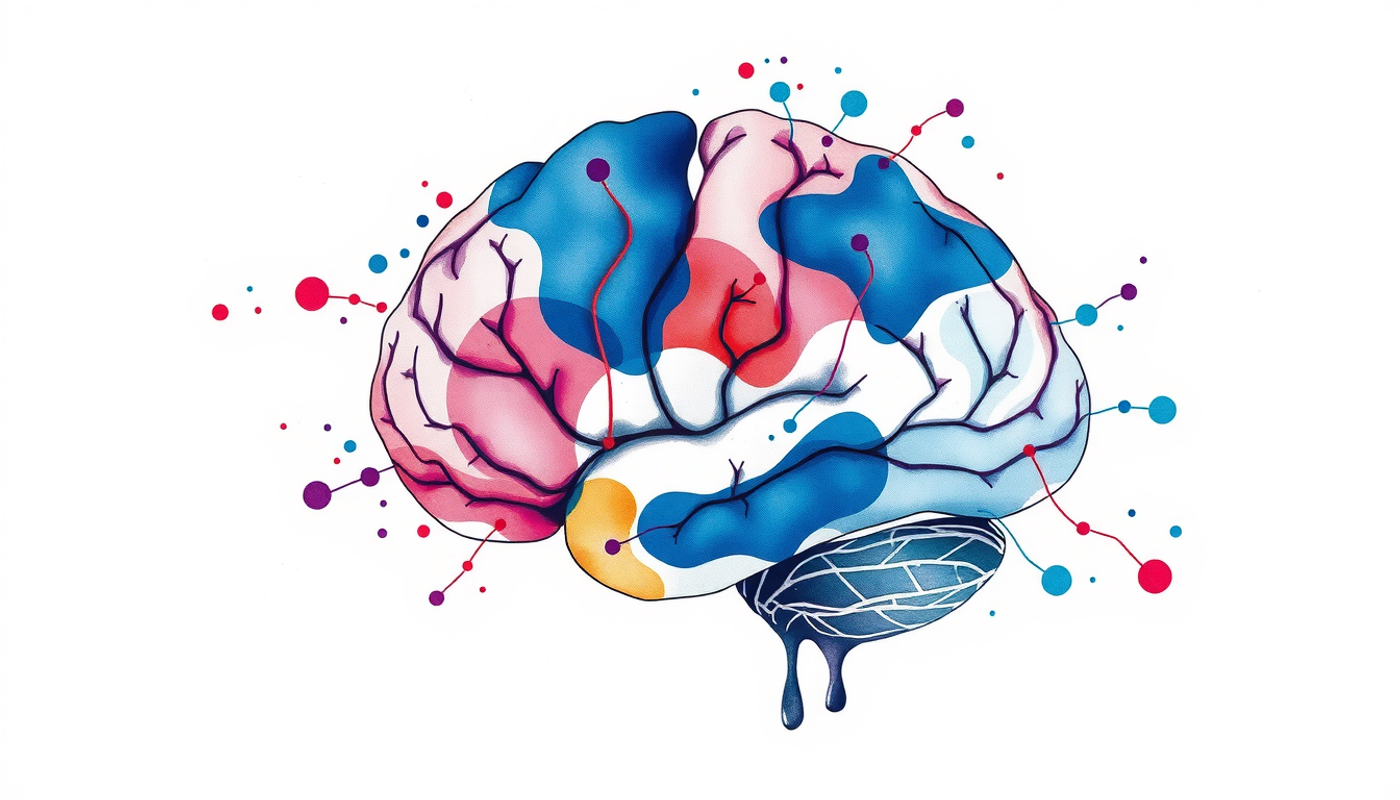
In 2004, Fabrice Bartolomei and his team at La Timone Hospital in Marseille conducted an experiment that pinpointed the source [5]. They used stereoelectroencephalography (SEEG), a technique where thin electrodes are implanted directly into the brain of epilepsy patients to locate seizure origins. When they stimulated the rhinal cortices, a pair of structures that wrap around the hippocampus and process feelings of familiarity, patients reported déjà vu more often than when any other region was stimulated. The entorhinal cortex, which acts as a gateway between the hippocampus and the rest of the cortex, and the perirhinal cortex, which specializes in determining whether something is familiar, were the two most reliable trigger zones.
A follow-up study in 2012 went deeper. Researchers recorded EEG activity from electrodes planted in the rhinal cortices, hippocampus, and amygdala of epilepsy patients while deliberately stimulating déjà vu [6]. Stimulations that successfully triggered the experience showed increased synchronized firing between the rhinal cortices and the hippocampus. In other words, déjà vu did not come from a single misfiring region. It came from an abnormal conversation between memory structures, a transient spike of correlated activity across a network that normally operates in careful sequence.
But here is the critical question: if déjà vu in epilepsy comes from electrical misfiring, what explains déjà vu in healthy people? Nobody has implanted electrodes in a healthy brain to find out. The answer had to come from a different kind of experiment entirely.
Recreating the Impossible in a Lab
Anne Cleary had spent years studying a specific puzzle of human memory: the feeling of familiarity without recall. You see someone at a party and know you have met them before, but you cannot remember where or when. That gap between recognition and retrieval fascinated her. When Alan Brown's 2003 review paper landed on her desk at Colorado State University, she saw a direct connection to déjà vu [7].
Her hypothesis was simple. Déjà vu occurs when a current scene closely resembles a scene you have actually experienced before, but you cannot retrieve that original memory. The familiarity is real. The inability to find its source is what makes it feel eerie.
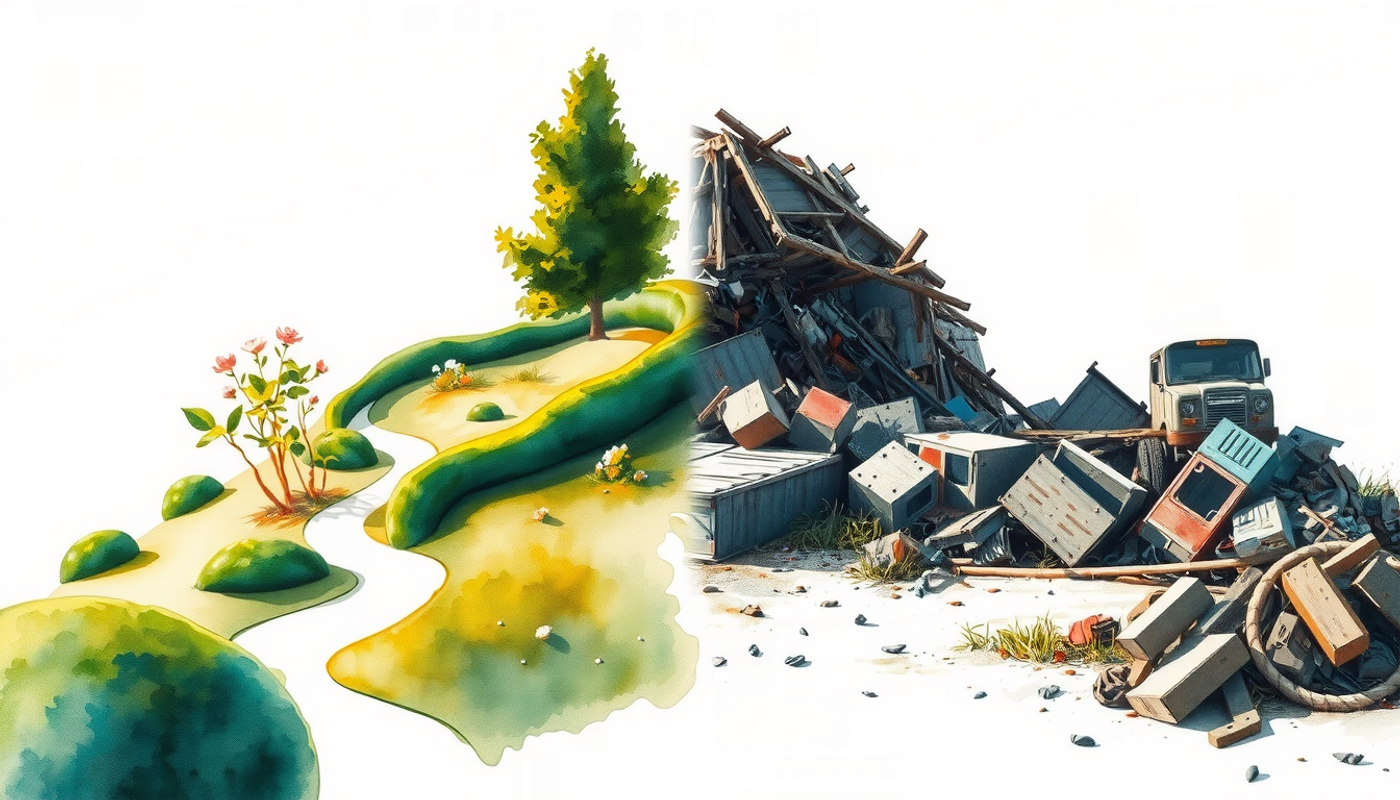
To test this, Cleary built virtual environments using The Sims, a video game that allows precise control over spatial layouts. She created pairs of scenes that were thematically different but spatially identical. A garden and a junkyard, for instance, arranged so that every bush in the garden occupied the same position as a pile of trash in the junkyard. Participants explored the first scene, then later encountered the second. When participants could not recall the original scene but recognized that the new scene felt familiar, they reported déjà vu at significantly higher rates than when scenes were completely novel [7].
The breakthrough was clear. Déjà vu could be triggered in a lab. It was reproducible. And it was tied to spatial configuration, to the geometry of a scene rather than its content. Your brain stores the layout of environments you visit. When a new environment happens to match an old layout, familiarity fires without a retrievable memory to explain it. The result is that unmistakable feeling: I have been here before.
But Cleary was not finished. In 2018, she published a study that tackled a different aspect of the phenomenon, the eerie sense that you know what is going to happen next [8]. During déjà vu episodes in virtual reality, participants reported a strong feeling that they could predict the next turn in the environment. Cleary tested whether they actually could. They could not. Their predictions were no better than chance. The sensation of premonition was powerful. But it was completely illusory. Déjà vu tricks the brain into feeling prophetic.
Seven Theories, One Mystery
More than fifty explanations for déjà vu have been proposed since 1876. Most can be grouped into a handful of major families. No single theory has won universal acceptance. But some have more experimental support than others.
The split perception theory proposes that déjà vu happens when you briefly perceive something while distracted, then perceive it again with full attention a moment later. The second perception feels familiar because it echoes the first, even though you were not consciously aware of the first pass [9]. Think of glancing at a room out of the corner of your eye while checking your phone, then looking up and feeling like you have seen it before. The problem is that this theory is difficult to test experimentally.
Hermon Sno, a Dutch psychiatrist, proposed a more exotic idea in 1990. He suggested memories are stored holographically, like a hologram where any fragment can reconstruct the whole image, just at lower resolution [10]. A small sensory cue could trigger a fuzzy reconstruction of an entire past scene, producing a vague but overwhelming sense of familiarity. The idea is elegant but has never been tested.
The most interesting development came from the conflict monitoring theory, which emerged from brain imaging studies. It suggests that déjà vu is not a memory error at all but a signal that the brain is catching one.
The Brain's Fact-Checker
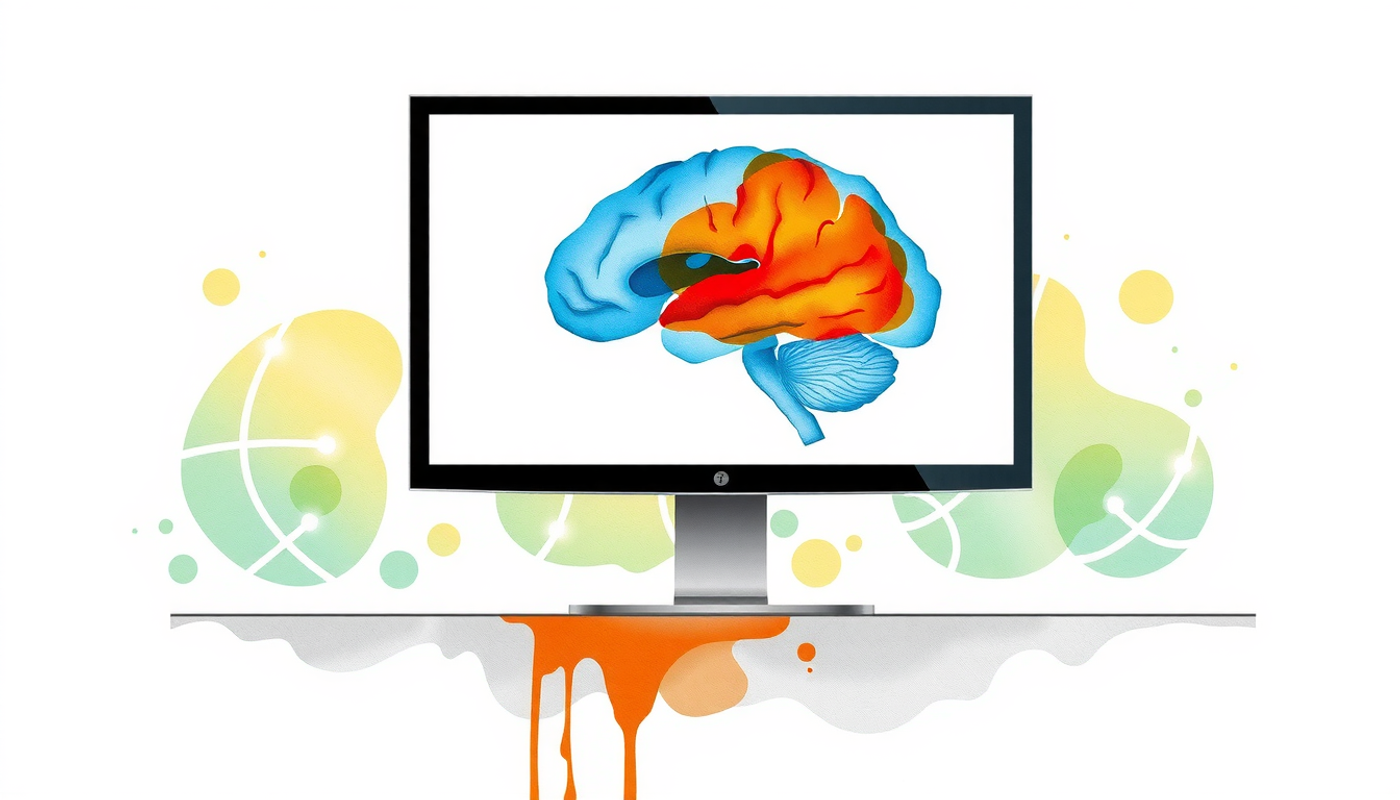
Akira O'Connor, a psychologist at the University of St Andrews in Scotland, had been studying déjà vu for years when he decided to do something nobody had done before: put people inside an fMRI scanner while they experienced it.
The challenge was obvious. You cannot make déjà vu happen on cue. So O'Connor adapted a technique from false memory research called the Deese-Roediger-McDermott (DRM) paradigm [2]. Participants heard lists of related words: bed, pillow, dream, night, blanket. The critical word, sleep, was deliberately left out. When later asked if they had heard "sleep," most participants felt a strong pull of familiarity. But some caught themselves. They knew sleep had not been on the list, yet it felt intensely familiar. That conflict, between a feeling of familiarity and the knowledge that the familiarity is wrong, is the operational definition of déjà vu.
What O'Connor found in the fMRI scans surprised everyone. During these déjà vu episodes, the hippocampus, the brain's memory formation center, was relatively quiet. The regions lighting up were in the frontal cortex, specifically areas associated with conflict monitoring and decision-making [2]. The medial prefrontal cortex, a region that evaluates whether incoming information is consistent with what you know, was particularly active.
The interpretation flipped the conventional wisdom. Déjà vu is not the hippocampus making a mistake. It is the frontal cortex catching one. The temporal lobe sends a false familiarity signal. The prefrontal cortex detects the contradiction between that signal and reality. The conscious experience of déjà vu, that uncanny feeling, is the brain's alarm system going off. It is the sound of successful error detection.
This explains one of the oldest puzzles about déjà vu: why young people experience it more often than older people. If déjà vu were a memory malfunction, you would expect it to increase with age, since memory function declines over time. But it does the opposite. It peaks between ages fifteen and twenty-five and then gradually fades [11]. O'Connor's theory explains this perfectly. Young brains have more active, more excitable neural systems and sharper frontal monitoring. They are better at catching errors. As the frontal cortex ages and slows, it catches fewer false familiarity signals. Not because there are fewer errors, but because the alarm system is less sensitive.
"For the vast majority of people, experiencing déjà vu is probably a good thing," O'Connor has said [12]. "It is a sign that the fact-checking brain regions are working well."
The Chemistry of False Familiarity
If déjà vu comes from false familiarity signals, what makes those signals fire in the first place? Part of the answer is chemical.
In 2001, a case study shook the field. A thirty-nine-year-old physician in Finland, otherwise completely healthy, began experiencing intense and repeated episodes of déjà vu. The timing was suspicious. He had just started taking two medications for the flu: amantadine and phenylpropanolamine. Both increase dopamine activity in the brain [13]. When he stopped taking the drugs, the déjà vu disappeared.
Dopamine is an excitatory neurotransmitter heavily involved in the brain's familiarity circuits. The temporal lobe, which determines whether something is familiar, is rich in dopamine receptors. If dopamine levels spike abnormally, the familiarity system becomes overexcitable. It starts tagging things as familiar when they are not. Recreational drugs that increase dopamine, such as amphetamines, are also associated with elevated reports of déjà vu [14].
This dopamine connection also helps explain why fatigue, stress, and sleep deprivation increase déjà vu frequency. When the brain is exhausted, its internal regulation weakens. Neural firing becomes less precise. The familiarity system is more likely to misfire. As O'Connor puts it: "When your brain is fatigued, your internal neuronal systems haven't had the chance to recuperate and regulate themselves. Your neuronal firing is more likely to be a bit off" [14].
Other factors correlate with higher déjà vu rates. Travel appears on multiple surveys as a predictor, likely because exposure to novel environments increases the chance that a new scene will accidentally match the spatial configuration of an old one [1]. Education level and socioeconomic status also correlate positively, though these may reflect differences in reporting rather than in actual experience.
The data above is derived from survey research compiled by Alan Brown, showing average self-reported déjà vu episodes declining steadily with age [1]. The peak at ages fifteen to twenty-four aligns with the conflict monitoring theory: younger brains have more active frontal error-detection systems.
The Anatomy Behind the Illusion
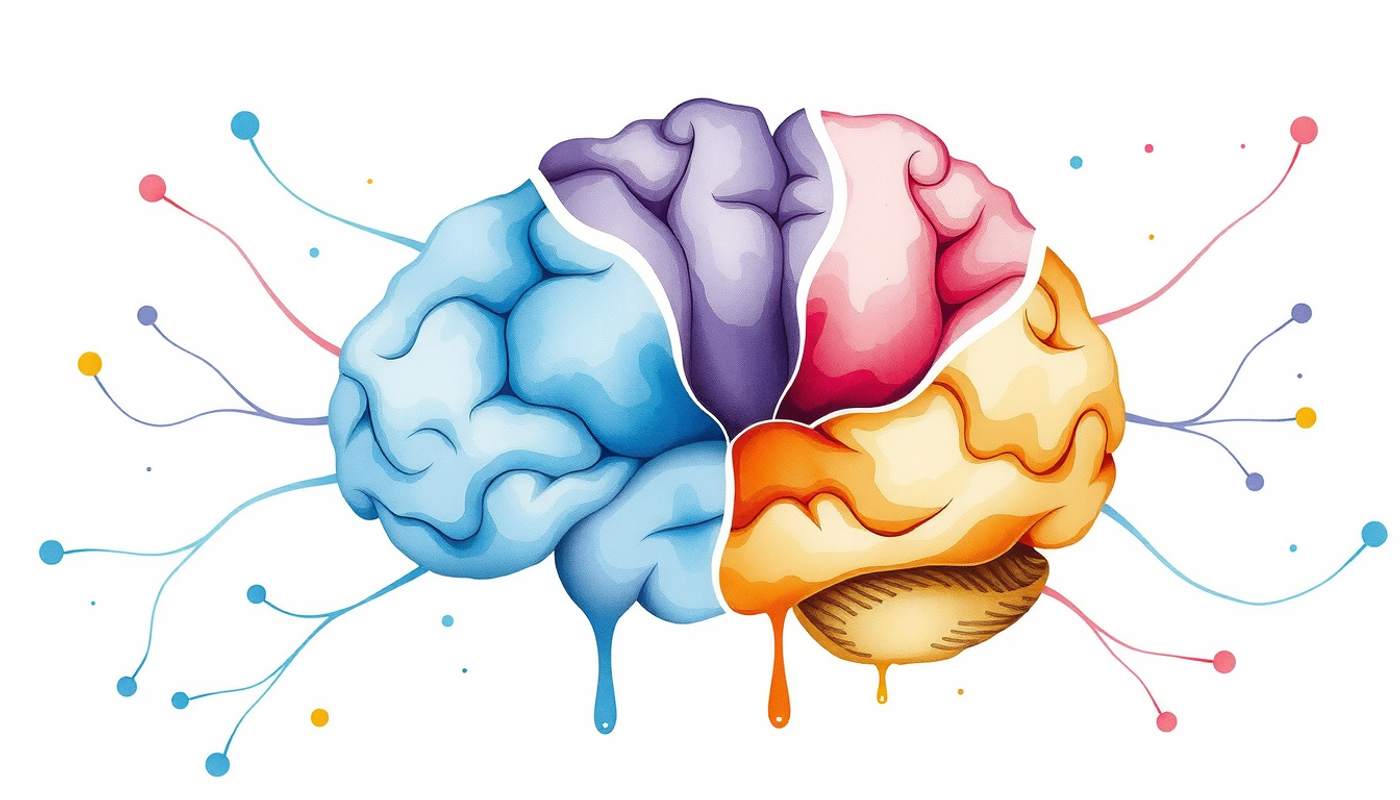
To understand déjà vu at the level of brain tissue, it helps to know the geography. The medial temporal lobe, buried deep on each side of the brain behind the temples, contains a cluster of structures that collectively handle memory formation, familiarity, and emotional tagging.
The hippocampus, shaped like a seahorse, is the central hub for forming new episodic memories. It binds together the what, where, and when of an experience. Wrapped around the hippocampus are the rhinal cortices. The perirhinal cortex processes familiarity, the feeling that something is known. The entorhinal cortex serves as a relay station between the hippocampus and the rest of the cortex. Nearby, the amygdala, an almond-shaped cluster, adds emotional weight to memories. And sitting above all of this, the medial prefrontal cortex acts as a supervisor, checking whether the signals coming from the temporal lobe are consistent with reality.
In 2012, Milan Brázdil at Masaryk University in the Czech Republic published a structural brain imaging study that added a surprising layer [15]. He compared the brains of 113 healthy people, half of whom reported frequent déjà vu and half of whom never experienced it. Using source-based morphometry, his team found that people who experience déjà vu had slightly less gray matter in several regions, including the hippocampus, parahippocampal gyri, insular cortices, and basal ganglia. A follow-up study in 2018 by Eva Pešlová confirmed these findings and showed that gray matter volume correlated inversely with déjà vu frequency [16].
The interpretation is subtle. This does not mean déjà vu is caused by brain damage. The differences are within the normal range. Instead, natural variation in the size and density of memory structures may make some people's familiarity systems more prone to false positives. A slightly smaller hippocampus might produce slightly noisier signals. The prefrontal cortex catches most of these. The ones it catches are experienced as déjà vu.
When the Mirror Breaks: Jamais Vu and Déjà Vécu
Déjà vu has relatives. They are less famous but arguably more revealing.
Jamais vu, French for "never seen," is the opposite experience. Something that should feel deeply familiar suddenly feels alien. You look at a word you have written thousands of times and it looks wrong. You walk into your own kitchen and for a flickering moment do not recognize it. The familiarity is gone.
In 2020, Chris Moulin at the Université Grenoble Alpes designed a beautifully simple experiment to induce jamais vu in the lab. He asked ninety-three participants to write a single common word, "the" or "door," over and over for up to two minutes [17]. The result: about seventy percent of participants experienced a strange dissociation. The word stopped looking like a word. Some doubted whether it was spelled correctly. Some doubted whether it was a real word at all. Over half stopped writing before the two minutes were up because the feeling was too unsettling. The average onset time for jamais vu was around thirty-three repetitions.
The study won the 2023 Ig Nobel Prize in Literature, an honor that recognizes research that "first makes people laugh, and then makes them think" [18]. But the science behind it is serious. Jamais vu appears to be the mirror image of déjà vu. Where déjà vu is false familiarity (the system says "known" when it should say "new"), jamais vu is false unfamiliarity (the system says "new" when it should say "known"). Both are errors in the familiarity circuit. Both are caught by conscious awareness. And both are signs that the brain's monitoring system is awake and paying attention.
Then there is déjà vécu, "already lived." This is not a brief flash of uncanny familiarity. It is a persistent, chronic conviction that everything happening right now has happened before. Patients with déjà vécu do not just feel familiarity. They believe it. They stop watching television because every show feels like a rerun. They refuse to read newspapers because they are convinced they have already read every article [19].
Moulin and his colleagues documented cases where déjà vécu was an early symptom of frontotemporal dementia. In these patients, the prefrontal cortex, the very region that normally catches false familiarity signals, had begun to deteriorate [19]. Without the fact-checker, false familiarity runs unchecked. The alarm system is broken. The patient does not experience déjà vu because déjà vu requires the awareness that the familiarity is wrong. Instead, they experience something worse: the complete inability to distinguish memory from reality.
A third cousin, presque vu ("almost seen"), is better known as the tip-of-the-tongue phenomenon. You know you know a word. You can feel it hovering just out of reach. The memory exists but cannot be retrieved [20]. All three phenomena, déjà vu, jamais vu, and presque vu, belong to the same family: metacognitive experiences where the brain monitors its own memory processes and notices something is off.
When Déjà Vu Warns of Something Else
For most people, déjà vu is a harmless and even interesting quirk. A few seconds of eeriness followed by a shrug. But certain patterns warrant medical attention.
If déjà vu episodes last longer than a few minutes, happen several times a week, or are accompanied by other symptoms, they may signal an underlying neurological condition. Temporal lobe epilepsy is the most common culprit. A 2024 systematic review and meta-analysis found that roughly twenty-two percent of epilepsy patients and about twenty percent of those specifically with temporal lobe epilepsy experience déjà vu as part of their seizure aura [21]. The déjà vu in epilepsy is qualitatively different from the healthy kind. It is longer, more intense, and more immersive. Sam Berkovic at the University of Melbourne, who has studied familial mesial temporal lobe epilepsy for decades, notes that in some families, intense déjà vu runs as a benign inherited trait, linked to specific genetic variants affecting the hippocampus [22].
Warning signs to watch for alongside frequent déjà vu include: a rising sensation in the stomach, unusual smells or tastes with no source, brief episodes of staring or unresponsiveness, involuntary lip-smacking or hand movements, and confusion after the episode passes [23]. Any of these paired with regular déjà vu merit a visit to a neurologist. Untreated seizures can become more frequent and harder to control over time.
Migraines with aura also trigger déjà vu in some patients, and persistent déjà vécu has been documented as an early indicator of frontotemporal dementia and Alzheimer's disease [24]. But it is essential to keep perspective. Occasional déjà vu is completely normal. Most healthy adults experience it once or twice a year, and it is more common in younger people, travelers, and those under stress [1].
The distribution above reflects self-reported déjà vu frequency in healthy adult populations based on compiled survey data [25]. Most people fall in the "few times per year" category.
Why Did the Brain Evolve This?
If déjà vu is a false signal caught by a monitoring system, why does the false signal happen at all? Why did evolution not simply eliminate it?
The most likely answer is that déjà vu is a tolerable side effect of an extremely useful system. The brain's familiarity detector is built for speed, not perfection. In evolutionary terms, rapidly recognizing a place, a predator's territory, a poisonous plant, or a safe water source was a survival priority. A system biased toward false positives (flagging something as familiar when it is not) is safer than one biased toward false negatives (failing to recognize a genuine threat) [26].
Think of it like a smoke detector that occasionally goes off when you burn toast. The false alarm is annoying. But a detector that never false-alarms also risks never detecting a real fire. Evolution chose the oversensitive detector. Déjà vu is the toast alarm. The frontal cortex recognizes it as a false alarm, you notice the eeriness, and life continues. The cost is a few seconds of strangeness. The benefit is a memory recognition system tuned for rapid pattern matching across billions of stored experiences.
This is theoretical. No experiment has directly tested the evolutionary function of déjà vu. But it aligns with what we know about how pattern recognition works in biological systems. And it answers the question that often bothers people when they learn about the phenomenon: if déjà vu is an error, does that mean something is wrong with me? No. It means your error-detection system is working. The brain that notices the mistake is a healthier brain than one that does not.

What This Means for You
Déjà vu is not a message from a past life. It is not a glitch in a simulation. It is not a sign of mental illness. And it is not a premonition, even when it feels like one.
What it is: a brief, benign metacognitive experience where your brain's familiarity system fires incorrectly and your monitoring system catches the error. The conflict between those two signals, false familiarity plus accurate fact-checking, produces the characteristic feeling of uncanny recognition.
The science of déjà vu tells a broader story about how memory works. Memory is not a recording. It is a reconstruction. Every time you remember something, your brain reassembles fragments from different storage areas, fills in gaps, smooths over inconsistencies, and presents the result as a seamless experience. Most of the time, this process works flawlessly. But it is not perfect. And the fact that your brain has a built-in system for detecting its own imperfections, for noticing when a reconstruction does not match reality, is a remarkable piece of biological engineering.
The next time you feel déjà vu, pause and appreciate what is actually happening. Your temporal lobe has just sent an incorrect familiarity signal. Your prefrontal cortex has caught it within milliseconds. You are experiencing the conscious echo of a successful fact-check.
Your brain just told itself a lie. And caught itself in the act.

Frequently Asked Questions
What is déjà vu and what causes it?
Déjà vu is a brief sensation of having already experienced a new situation. Research suggests it occurs when the brain's familiarity system in the temporal lobe sends a false signal, and the frontal cortex detects the error. It is not a memory malfunction but a sign that the brain's fact-checking system is working correctly.
Is déjà vu a sign of a medical problem?
For most people, déjà vu is completely normal and harmless. About two-thirds of the population experience it at least once. However, frequent, prolonged episodes accompanied by symptoms like confusion, unusual smells, or brief unresponsiveness may indicate temporal lobe epilepsy and should be evaluated by a neurologist.
Why do young people experience déjà vu more often than older people?
Research shows déjà vu peaks between ages fifteen and twenty-five. Younger brains have more excitable neural systems and sharper frontal cortex monitoring, making them better at detecting false familiarity signals. As the brain ages, this monitoring capacity gradually declines, reducing déjà vu frequency.
Can déjà vu predict the future?
Despite the strong feeling of premonition that accompanies déjà vu, controlled experiments by Anne Cleary at Colorado State University showed that people experiencing déjà vu could not predict upcoming events any better than chance. The sensation of knowing what will happen next is a metacognitive illusion.
What is the difference between déjà vu and déjà vécu?
Déjà vu is a fleeting feeling of false familiarity where the person knows the familiarity is incorrect. Déjà vécu is a chronic, persistent conviction of having already lived through current events. Unlike déjà vu, people with déjà vécu lose the ability to recognize the familiarity as false, and it is sometimes linked to dementia.


