
Introduction
Right now, your brain is throwing away almost everything you experience. The color of the car that passed you this morning. The face of the cashier at the grocery store. The exact words someone said to you three hours ago. Gone. Not misplaced, not buried somewhere deep. Gone. Your hippocampus (a seahorse-shaped structure tucked inside each temporal lobe, roughly the size of your little finger) made a decision about each of those moments. It decided they were not worth keeping [1].
This is not a bug. It is the brain's most important feature.
For decades, neuroscientists treated memory storage as a recording problem. How does the brain write information down? But the real question turned out to be far more interesting: how does the brain choose what to write down in the first place? Out of the millions of sensory impressions flooding in every hour, which ones get promoted to long-term storage, and which get quietly erased before you even notice they were there?
The answer, it turns out, involves electrical bursts that last less than a tenth of a second, molecular timers that unfold over weeks, a thalamic gateway that most neuroscientists had ignored for a century, and a sleep-time replay system so precise it can compress an entire maze run into a quarter-second burst of neural activity [2]. This is the story of how that system was discovered. And what it means for learning, forgetting, disease, and the strange fact that you remember your first kiss but not what you had for lunch last Tuesday.

The Man Who Lost Tomorrow
The modern understanding of how the hippocampus decides what to remember begins with a catastrophe.
On September 1, 1953, neurosurgeon William Beecher Scoville drilled into the skull of a twenty-seven-year-old man named Henry Molaison and suctioned out most of his medial temporal lobes — including both hippocampi, both amygdalae, and the surrounding entorhinal cortex. The surgery was an attempt to control Henry's devastating epileptic seizures, which had resisted every available treatment [3].
The seizures stopped. But so did something else.
Henry could remember his childhood. He could recall the layout of his old house. He knew who the president was (the president from before the surgery. But he could not form a single new conscious memory. Every conversation evaporated within minutes. Every face was a stranger's face. He read the same magazine over and over, each time with fresh surprise. He once described his condition with heartbreaking clarity: "Every day is alone in itself."
Brenda Milner, a young neuropsychologist from McGill University, studied Henry for the next five decades. Her careful testing revealed something that shattered the prevailing view of memory as a single, unified capacity [4]. Henry could not remember facts or events. But he could learn new motor skills. Given a mirror-tracing task — drawing a star while looking only at its reflection — his performance improved steadily across days, even though each day he had no memory of ever having done the task before.
Two memory systems. One dependent on the hippocampus. One not. Milner had discovered the distinction between declarative memory (facts and events, hippocampus-dependent) and procedural memory (skills and habits, dependent on the basal ganglia and cerebellum). Henry's case proved that the hippocampus is not where memories are permanently stored. It is where they are selected and processed for storage elsewhere. Without it, the selection system collapses. Everything washes away.
But if the hippocampus is the gatekeeper, what are its criteria? What makes one moment memorable and another forgettable? That question took another forty years to answer.
The Architecture of a Memory Filter
To understand how the hippocampus chooses, you first need to understand its internal plumbing.
Information about the outside world arrives at the hippocampus through the entorhinal cortex (a region that collects and integrates sensory data from across the entire neocortex. Think of it as the front desk of a hotel. Everything checks in here first. From the entorhinal cortex, signals flow through what neuroscientists call the trisynaptic circuit, a three-stage relay first described by Santiago Ramón y Cajal over a century ago [5].
Stage one: the dentate gyrus. This region has a massive number of granule cells, roughly five to ten times more than the neurons feeding into it. But only a tiny fraction fire at any given moment. The result is radical pattern separation. Two similar experiences that might otherwise blur together get transformed into two completely distinct neural codes. It is the brain's way of keeping Tuesday's parking spot separate from Wednesday's [6].
Stage two: area CA3. This region is dense with recurrent connections, neurons talking to each other in loops. It functions as a pattern completion engine. Feed it a fragment of a stored experience, and it can reconstruct the whole thing. You smell sunscreen and suddenly you are back at the beach last summer. That is CA3 at work [7].
Stage three: area CA1. This is where things get interesting for memory selection. CA1 receives two streams of input simultaneously: one from CA3 (a reconstructed memory) and one directly from the entorhinal cortex (raw current experience). It can compare the two. Is what I am experiencing right now the same as something I have seen before, or is it new? This comparison generates a novelty signal. And novelty, as we will see, is one of the hippocampus's most powerful selection criteria.
The subiculum, the hippocampus's main output station, then broadcasts the verdict to the prefrontal cortex, the nucleus accumbens, and — crucially — back to the dopamine-producing cells in the ventral tegmental area. This loop between hippocampus and VTA is one of the brain's primary mechanisms for deciding that a moment matters [8].
But the circuit architecture is only part of the story. The real selection happens in the milliseconds after an experience ends, when the hippocampus fires its most powerful weapon.
The Electrical Tags That Mark Your Memories
In the mid-1990s, Matt Wilson and Bruce McNaughton at the University of Arizona implanted arrays of tiny electrodes into the hippocampi of rats and watched what happened while the animals ran through a maze. As the rats navigated, specific neurons called place cells, fired at specific locations. Each cell had its own spot. Cell A fired when the rat turned left. Cell B fired at the water fountain. Cell C fired at the dead end. Together, they created a neural map of the maze [2].
Then the rats fell asleep.
And Wilson saw the same cells firing again. In the same order. But compressed into bursts lasting less than a hundred milliseconds. The brain was replaying the maze experience in fast-forward during sleep. It was as if a movie that took minutes to live through was being shown at twenty times speed.
These bursts happen during a phenomenon called sharp wave ripples (the most synchronous population events in the entire mammalian brain. During a ripple, up to 30% of hippocampal pyramidal neurons fire together within a single ~100-millisecond window. The frequency is high, between 150 and 250 Hz in rodents, producing an oscillation so fast it sounds like a brief chirp when converted to audio [9].
In 2009, Gabrielle Girardeau and György Buzsáki proved that these ripples are not just neural noise. They are functionally necessary. When the team selectively suppressed sharp wave ripples in sleeping rats, using precisely timed electrical pulses that disrupted the ripples without waking the animals (the rats' spatial memory suffered. They could not remember the maze [10].
But the real breakthrough came in 2024. Wannan Yang, Chen Sun, and Buzsáki, working at NYU, published a study in Science that changed the field's understanding of memory selection. They recorded from hundreds of hippocampal neurons simultaneously while mice ran repeated laps through a maze. Each lap created a slightly different pattern of neural activity (the population code drifted from trial to trial, providing a unique neural signature for each experience [11].
Here is the critical finding. When the mice paused to consume a water reward, sharp wave ripples sometimes occurred during these brief rest periods. Not always. Just sometimes. And when they did, the spike content of those waking ripples decoded the specific trial the mouse had just completed. During subsequent sleep, ripples preferentially replayed those same tagged trials. Trials that did not receive a waking ripple were essentially absent from sleep replay.
Think about what this means. The brain does not replay everything during sleep. It replays what it tagged during waking moments of rest. The tag is a sharp wave ripple. And the tagging happens in real time (the moment you pause after an experience, your hippocampus either fires a ripple and marks that experience for long-term storage, or it does not.
What determines whether a ripple fires? This is where the other selection signals: emotion, novelty, dopamine, and repetition — come in.
Why You Remember Fear but Forget Lunch
Not all memories are created equal. Some experiences are stamped into your brain with almost photographic intensity. The moment you heard terrible news. The time you narrowly avoided a car accident. Your first kiss. These memories have something in common: emotional arousal.
James McGaugh at UC Irvine spent half a century studying why emotional events are remembered better. His answer centers on the amygdala (an almond-shaped cluster of neurons sitting just in front of the hippocampus [12].
When something emotionally significant happens, the adrenal glands release epinephrine and cortisol. Epinephrine cannot cross the blood-brain barrier directly. Instead, it activates the vagus nerve, which signals the locus coeruleus in the brainstem, which floods the amygdala with norepinephrine. The amygdala, now activated, sends signals directly into the hippocampus that amplify whatever encoding process is underway.
The result: stronger synaptic changes, more powerful replay during sleep, and a memory that is far more likely to survive the selection process [13].
Girardeau and Buzsáki demonstrated this at the neural level in 2017. They recorded simultaneous activity from the amygdala and hippocampus in sleeping rats and found that after emotionally charged experiences (like encountering a threatening environment), the two structures replayed together during sharp wave ripples. The amygdala and hippocampus synchronized their replay, coordinating the emotional color of the memory with its factual content [14].
This is why trauma memories can be so persistent and so intrusive. In PTSD, the amygdala's volume control is turned too high. Every emotional experience gets maximum encoding priority. And the hippocampal context-binding (the part that says "this happened in that specific place at that specific time," is often impaired. The result: vivid emotional fragments that intrude without context, untethered from time and place.
But emotion is not the only dial the hippocampus uses for selection. There is another signal, equally powerful and far less obvious.
The Novelty Signal: Dopamine and the VTA Loop
In 2005, John Lisman and Anthony Grace proposed a model that elegantly explained why novel experiences are remembered better than familiar ones. They described a loop connecting the hippocampus to the ventral tegmental area (VTA) (a small cluster of dopamine-producing neurons deep in the midbrain [8].
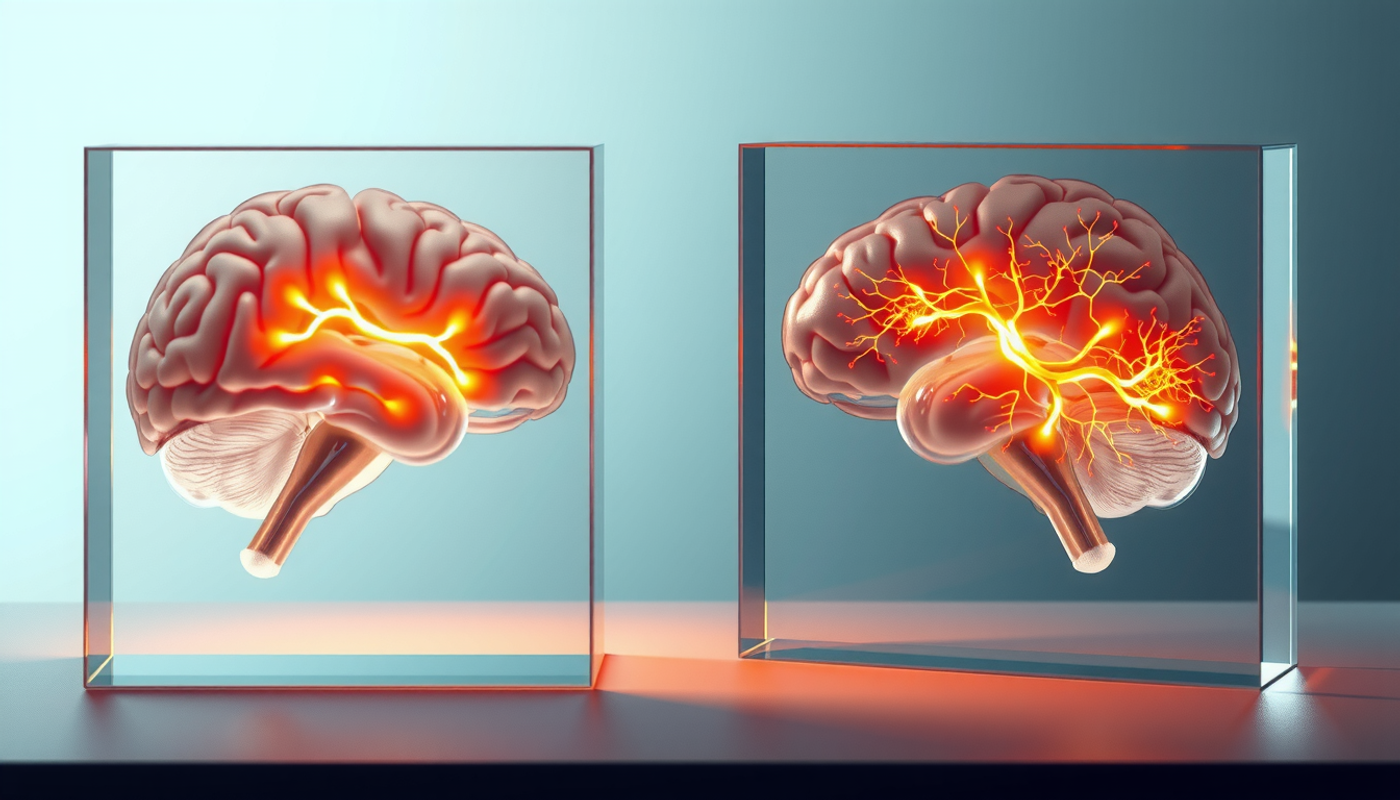
The loop works like this. When CA1 detects a mismatch between current experience and stored representations, when something is genuinely new (the signal travels from the hippocampus through the subiculum, to the nucleus accumbens, to the ventral pallidum, and finally to the VTA. The VTA responds by releasing dopamine back into the hippocampus, where D1/D5 receptors enhance the late phase of long-term potentiation (the cellular mechanism of memory strengthening.
Novelty, in other words, triggers a chemical reward signal that locks in the memory of the novel event. This is why your first day in a new city is remembered in vivid detail, but your hundredth day in your own kitchen is not. The hippocampus flagged the first day as different. The VTA agreed by releasing dopamine. The memory was promoted.
McNamara, Dupret, and colleagues at Oxford confirmed this directly in 2014 using optogenetics, genetically engineering VTA neurons to respond to light. When they activated VTA dopamine terminals in the hippocampus while mice explored a novel environment, the mice showed enhanced memory for that environment days later [15].
A complication emerged in 2016 when Takeuchi and colleagues showed that much of the dopamine reaching the hippocampus actually comes from the locus coeruleus, not the VTA (from the same norepinephrine-producing neurons involved in emotional arousal [16]. Duszkiewicz and colleagues proposed that two dopaminergic systems may serve different selection functions: the VTA system tags events that share structure with prior experience (useful generalizations), while the locus coeruleus system tags events that are truly unique (one-of-a-kind episodes) [17].
Either way, dopamine functions as a "this is worth keeping" signal. And its interaction with sharp wave ripples creates a two-factor selection system: ripples provide the when (tagging moments of rest), and dopamine provides the why (flagging novelty).
The Molecular Timers: How Memories Earn Their Permanence
Once a memory is tagged, how long does it last? For decades, neuroscientists imagined a simple binary switch (a memory is either consolidated or not, kept or discarded. A protein called CREB was the leading candidate for the switch. If CREB was activated, the memory survived. If not, it decayed.
In November 2025, Priya Rajasethupathy's laboratory at Rockefeller University published a paper in Nature that overturned this picture entirely [18].
Using a virtual reality system for mice. Here, the team could precisely control how many times each experience was repeated, and which memories the mice formed — they tracked gene expression across the hippocampus, thalamus, and cortex over weeks. What they found was not a switch. It was a cascade.
Three transcriptional regulators, active at different times and in different brain regions, form a sequential timer system that determines how long a memory persists.
The cascade works like a relay race. CAMTA1 keeps the memory alive for the first few days. If the memory is reinforced (by repetition, emotional weight, or replay), TCF4 takes over and extends the trace for weeks. If the memory continues to be relevant, ASH1L activates chromatin-remodeling programs in the cortex that essentially rewrite the genome's accessibility, locking the memory into a permanent state.
"Long-term memory is not maintained by a single molecular on or off switch," Rajasethupathy said. "It is driven by a cascade of gene-regulating programs that unfold over time."
The ASH1L finding was particularly striking. ASH1L belongs to a family of histone methyltransferases that also operate in the immune system. Here, they help cells "remember" past infections. And during embryonic development. Here, they help cells "remember" that they have become a neuron or a muscle cell. The brain appears to have repurposed an ancient cellular memory toolkit for cognitive memory [18].
This work built on an earlier 2023 paper from the same lab, published in Cell, which established that the anteromedial thalamus — long viewed as a passive relay station, is actually a functional gate that selects which hippocampal memories stabilize into cortical storage. Inhibiting it during consolidation destroyed long-term memory. Amplifying its activity rescued memories that would otherwise have been forgotten [19].
The implication is profound. Every memory starts at the bottom of a ladder. Only those repeatedly reinforced — by relevance, by emotion, by repetition, by replay, get promoted to the next rung. Memories not promoted are demoted and forgotten. The hippocampus is not a recorder. It is an editor.
The Cellular Currency: LTP, NMDA, and a New Kind of Plasticity
The physical substrate of memory selection is changes in synaptic strength. When two neurons fire together, the connection between them gets stronger. This is long-term potentiation, or LTP, first demonstrated by Tim Bliss and Terje Lømo in 1973 when they stimulated the perforant path in rabbit hippocampus and observed a lasting increase in synaptic transmission [20].
The key molecular player is the NMDA receptor (a glutamate receptor that doubles as a coincidence detector). It opens only when two conditions are met simultaneously: the presynaptic neuron releases glutamate, and the postsynaptic neuron is already depolarized enough to expel a magnesium ion blocking the channel. When both conditions are met, calcium floods in, triggering a cascade of molecular events: CaMKII autophosphorylation, AMPA receptor trafficking, gene transcription — that strengthen the synapse [21].
LTP has the right properties for memory: it is input-specific (only the activated synapse changes), associative (co-active inputs strengthen together), and persistent (it can last hours to weeks). But it has a problem. Classical LTP requires near-simultaneous pre- and postsynaptic activity, within tens of milliseconds. Many real-world memories are formed in a single trial, over seconds. The timing does not match.
In 2017, Katie Bittner, Aaron Milstein, and Jeff Magee at the Janelia Research Campus discovered a completely different plasticity rule operating in CA1 neurons. They called it behavioral timescale synaptic plasticity, or BTSP [22].
BTSP works like this. When a CA1 neuron receives a strong input from the entorhinal cortex — causing a prolonged calcium event called a plateau potential in its distant dendrites — every synapse that was active anywhere within a window of several seconds around that plateau gets potentiated. One plateau potential is enough to convert a previously silent neuron into a functioning place cell on the very next pass through an environment.
This is one-shot learning at the cellular level. And it fits the reality of episodic memory far better than classical LTP. You do not need to walk through a room twenty times to remember it. Once is enough, if the experience is salient enough to trigger a plateau potential.
In 2025, Vaidya, Li, and Magee published a follow-up in Nature Neuroscience that tracked the same CA1 neurons across seven days of learning. They found something unexpected: place cells became progressively more stable over the week, forming an expanding core of reliable, task-relevant representations. Critically, these stable cells were regenerated by BTSP each day — even "permanent" memories are re-formed by fresh plasticity each time they are retrieved [23].
Memory, at the cellular level, is not a frozen snapshot. It is a pattern that gets re-etched every time it surfaces. The hippocampus selects not just what to store, but what to keep refreshing.
Sleep: When the Brain Decides What Survives Until Tomorrow
The selection process that begins with waking sharp wave ripples continues. And intensifies — during sleep. The two-stage model of memory consolidation, first proposed by György Buzsáki in 1989, describes the basic architecture [24]. During wakefulness, the hippocampus encodes experiences rapidly. During slow-wave sleep, it replays tagged experiences and broadcasts them to the neocortex, where they are slowly integrated into existing knowledge networks.
The broadcast mechanism is a precisely timed sequence of three nested oscillations. First, the cortex generates a slow oscillation (a massive, rhythmic alternation between silence ("down state") and activity ("up state") at a frequency below 1 Hz. Second, during each up state, the thalamus generates a sleep spindle (a brief 0.5 to 2 second burst of 12 to 16 Hz activity. Third, nested inside each spindle, the hippocampus generates a sharp wave ripple [25].
This slow oscillation-spindle-ripple coupling is not just temporally coordinated. It is functionally necessary. Staresina and Mormann showed in 2023 that this precise sequence creates optimal conditions for spike-timing-dependent plasticity in cortical neurons (the cellular mechanism that gradually builds cortical memory traces [25]. Disrupting the coupling — as happens in temporal lobe epilepsy, when pathological interictal discharges hijack the spindle-ripple dialogue — impairs memory consolidation in both rats and humans [26].
The selection logic extends into sleep itself. Yang and Buzsáki's 2024 study showed that of all the ripples that occur during sleep, only those replaying experiences already tagged by waking ripples are associated with lasting memory. Sleep ripples that replay untagged experiences may serve other functions — synaptic homeostasis, planning, schema updating. But they do not preferentially consolidate the day's events.
What does this mean practically? It means the moments of quiet reflection after an experience (the pause after a lecture, the stillness after a conversation, the brief rest between study sessions — are not wasted time. They are when the tagging happens. The hippocampus needs these pauses to fire its selection signals. And sleep is when the selected experiences get transferred to permanent storage. Cutting either short — by constantly scrolling on a phone during breaks, or by sleeping too little — disrupts the selection process at different stages.
Forgetting: The Feature, Not the Bug
For most of the history of memory research, forgetting was treated as failure. A memory that faded was a memory the system had lost. But modern neuroscience has revealed a startling truth: forgetting is an active, regulated, and essential process. The hippocampus does not just choose what to remember. It actively works to erase what should be forgotten.
One mechanism is strikingly simple. In 2016, Oliver Hardt and colleagues at McGill University showed that natural forgetting of object-location memories in rats requires the active removal of AMPA receptors from hippocampal synapses. They blocked this removal using a synthetic peptide called GluA2₃Y and found that the rats stopped forgetting. Memories that would normally have decayed remained intact [27].
The implication is counterintuitive. Forgetting is not a failure of maintenance. It is a deliberate process. The brain actively strips receptors from synapses to weaken connections that are no longer needed.
A second mechanism involves neurogenesis (the birth of new neurons. The dentate gyrus is one of the few brain regions where new neurons are generated throughout life. In 2014, Sheena Josselyn, Paul Frankland, and colleagues at the Hospital for Sick Children in Toronto published a landmark paper in Science showing that neurogenesis in the dentate gyrus actively causes forgetting [28]. New neurons integrate into existing circuits and, in doing so, remodel the connections that stored older memories. Increasing neurogenesis (through exercise, for example) accelerated forgetting of old hippocampal memories. Suppressing neurogenesis in young mice — whose dentate gyrus normally has high rates of new neuron production — paradoxically extended memory retention.
This explains a long-standing puzzle: why infant memories are so fragile. Babies and young children have extremely high rates of hippocampal neurogenesis. The constant influx of new neurons may systematically overwrite old memory traces, producing what Freud called "childhood amnesia" (the near-total absence of memories from before age three or four.
Perhaps most fascinating is the work of Susumu Tonegawa's lab at MIT, which showed in 2015 that many "forgotten" memories are not actually erased. The engram cells (the specific neurons that stored the memory — are still there, but they have become "silent." Natural retrieval cues can no longer activate them. But artificial activation through optogenetics brings the memory roaring back [29].
Forgetting, then, comes in at least two flavors: true erasure (receptor removal, circuit remodeling) and retrieval failure (engram silencing). The hippocampus manages both. And both are adaptive. Without active forgetting, the brain would drown in irrelevant detail, unable to extract general principles from specific experiences. The cost of perfect memory, it turns out, would be the inability to think clearly.
The Spacing Effect: Why Distributed Practice Beats Cramming
Hermann Ebbinghaus showed in 1885 that distributing study sessions over time produces better retention than cramming the same material into one session. He did not know why. Now, with an understanding of the hippocampal selection system, the mechanism becomes clear.
Each study session re-engages the hippocampal encoding machinery. Each pause between sessions provides an opportunity for waking sharp wave ripples to tag the material. Each night of sleep allows tagged material to be replayed and transferred to cortex. The molecular timers — CAMTA1, TCF4, ASH1L — require repeated activation to promote memories from one temporal stage to the next [18].
Cramming collapses all of these stages. A single massed session produces a single encoding event, a single tagging opportunity, and one night of replay. The molecular cascade never gets the repeated kicks it needs to promote the memory past the first timer. The material feels familiar the next day but decays rapidly because it never made it past CAMTA1.
Cepeda and colleagues showed in a landmark 2009 meta-analysis that distributing practice over time, with optimal inter-session intervals, dramatically enhances long-term retention compared to massed study. The optimal gap between study sessions depends on how long you need to remember the material: longer retention intervals call for longer spacing [30].
At the molecular level, spaced training repeatedly engages the CaMKII and CREB signaling pathways with intervals matched to their biochemical kinetics. Each repetition triggers a wave of protein synthesis that builds on the previous one, producing progressively more stable synaptic changes. Massed training saturates these pathways — there is a refractory period during which additional stimulation has diminishing returns [31].
The practical lesson is straightforward: the hippocampal selection system rewards distribution. Study, pause, sleep, repeat. Each cycle is another pass through the selection filter. Each pass strengthens the trace. The memories that survive multiple selection rounds are the ones that last.
The Consolidation Debate: Three Theories, One Brain
What happens to a memory after the hippocampus has selected it? Three competing theories have shaped the field for thirty years.
The Standard Consolidation Theory, championed by Larry Squire, proposes that the hippocampus is a temporary scaffold. It holds the memory together while slow cortical learning gradually builds direct connections between the neocortical areas that represent different aspects of the experience. Eventually, the cortical representation becomes self-sufficient, and the hippocampus is no longer needed. Remote memories live in the cortex alone [32].
The Multiple Trace Theory, proposed by Morris Moscovitch and Lynn Nadel, disagrees. It argues that each time you recall a memory, the hippocampus lays down a new trace. Frequently recalled memories therefore have many hippocampal traces, making them resistant to partial hippocampal damage. But they never become fully hippocampus-independent, at least not in their vivid, detailed, episodic form [33].
The Trace Transformation Theory, developed by Moscovitch and Gordon Winocur, offers a middle ground. It proposes that memories transform over time: the detailed, context-rich episodic version remains hippocampus-dependent indefinitely, while a schematic, gist-like version is gradually extracted and stored in the prefrontal cortex. Both versions coexist. When you remember an event vaguely ("I went to Paris once"), the cortical version is enough. When you remember it vividly ("I can see the exact café table and smell the coffee"), the hippocampus is still involved [34].
Recent engram work from Tonegawa's lab has complicated all three. In 2017, Kitamura and colleagues showed that cortical engrams for contextual fear memory are actually formed at the time of encoding (not days later as Standard Consolidation predicted. But they remain "silent" for about two weeks while the hippocampal engram dominates. The cortical engram gradually matures and becomes the active retrieval pathway [35]. This points toward parallel encoding with delayed cortical maturation (a picture that does not fit neatly into any single theory.
The 2023 and 2025 Rajasethupathy papers add another wrinkle. The thalamic gateway means the transition from hippocampus to cortex is not passive diffusion but active selection at every stage. The thalamus evaluates, the molecular timers promote or demote, and only a tiny fraction of hippocampal memories earn their way into permanent cortical storage.
When the Selection System Breaks
Failures of hippocampal memory selection produce some of the most devastating neurological conditions.
In Alzheimer's disease, the pathology targets precisely the circuits that the hippocampus uses for selection. Tau protein tangles first appear in entorhinal cortex layer II (the entry point to the trisynaptic circuit — then spread through the hippocampus along the synaptic pathways described in earlier sections [36]. Place cells degrade. Sharp wave ripples become disorganized. Pattern separation fails, causing similar memories to collapse into confusion. The earliest clinical symptoms — disorientation in familiar places, inability to form new episodic memories — are direct consequences of hippocampal selection failure.
In temporal lobe epilepsy, interictal epileptiform discharges — abnormal electrical spikes originating in the hippocampus — hijack the spindle-ripple coupling that consolidation depends on. Gelinas and colleagues showed in 2016 that these pathological spikes are abnormally entrained to cortical sleep spindles, suppressing physiological ripples and preventing normal memory consolidation [26]. Epilepsy patients often report memory problems long before their seizures become severe — because the selection mechanism is already compromised.
In PTSD, the balance between hippocampal and amygdalar processing is disrupted. The amygdala's gain is turned too high, tagging every remotely threatening experience for maximum-priority consolidation. Meanwhile, the hippocampus. It normally provides the contextual binding that says "this threat happened in that specific time and place" — is impaired. The result: vivid, intrusive emotional fragments that erupt without context, without a sense of when or where they occurred.
Understanding the selection mechanism opens therapeutic possibilities. Closed-loop electrical stimulation, using implanted devices that detect pathological ripples and suppress them while boosting physiological ones — is already being tested in epilepsy patients. Targeted memory reactivation during sleep — playing specific sounds or odors associated with learning during slow-wave sleep to boost replay of specific memories — has shown promise in human laboratory studies. And pharmacological approaches targeting the CAMTA1-TCF4-ASH1L cascade could one day treat memory disorders at the molecular level.
Conclusion
The hippocampus does not record your life. It edits it. Every moment of experience passes through a multi-stage selection filter — shaped by the circuit architecture of the trisynaptic pathway, tagged by the electrical bursts of sharp wave ripples during moments of rest, modulated by the chemical signals of emotion and novelty, refined by sleep-time replay, and ultimately promoted or demoted by a cascade of molecular timers spanning the hippocampus, thalamus, and cortex.
The picture that emerges from seventy years of research (from Henry Molaison's tragic surgery to Priya Rajasethupathy's molecular timers — is not of a passive storage device. It is of an active, intelligent, ruthlessly selective system that continuously evaluates, tags, promotes, and erases. Forgetting is not its failure. Forgetting is half its job.
What survives this filter is not a faithful recording of reality. It is a curated collection — shaped by what mattered emotionally, what was novel, what was repeated, and what fit into existing frameworks of understanding. The memories you carry are not the events themselves. They are what your hippocampus decided the events meant.
Frequently Asked Questions
What is the hippocampus and what does it do for memory?
The hippocampus is a curved, seahorse-shaped structure inside each temporal lobe of the brain. It converts short-term experiences into long-term memories by selecting which moments are worth keeping, encoding them through synaptic changes, and coordinating their transfer to the neocortex during sleep for permanent storage. Without it, new conscious memories cannot form.
How do sharp wave ripples help the brain decide what to remember?
Sharp wave ripples are brief high-frequency bursts of synchronized neural activity in the hippocampus. Research published in 2024 showed that ripples occurring during quiet wakefulness "tag" specific experiences. During subsequent sleep, only tagged experiences are replayed and consolidated into long-term memory. Untagged experiences are effectively discarded.
Why are emotional memories stronger than ordinary ones?
Emotional arousal triggers the release of norepinephrine and cortisol, which activate the amygdala. The amygdala then amplifies hippocampal encoding by increasing synaptic plasticity and promoting coordinated replay during sleep. This biological priority system ensures that emotionally significant events receive preferential consolidation into long-term storage.
Is forgetting a sign that something is wrong with memory?
No. Modern neuroscience shows that forgetting is an active, regulated process essential for healthy brain function. The brain deliberately weakens unnecessary synaptic connections, and new neurons in the dentate gyrus remodel circuits storing old memories. Without active forgetting, the brain would be overwhelmed by irrelevant detail and unable to generalize from experience.
How does spaced repetition work at the brain level?
Each study session re-engages hippocampal encoding. Each pause allows waking sharp wave ripples to tag the material. Each night of sleep enables tagged memories to be replayed and transferred to cortex. The molecular timer cascade in the thalamus and cortex requires repeated activation across days and weeks to promote memories into progressively more durable forms.


