
Introduction
A woman in her eighties sits in a nursing home. She does not recognize her daughter. She cannot recall what she ate for breakfast. Her world has narrowed to a few confused minutes at a time. Then someone places headphones on her ears and presses play. Cab Calloway's voice fills her head. And something shifts. Her eyes open wider. She begins to hum. Then to sing. Words she has not spoken in months pour out, perfectly timed, perfectly remembered [1]. Music and memory share a relationship that has puzzled scientists for over a century. Why can a melody from 1955 survive in a brain where almost everything else has been erased? Why does a song you have not heard in twenty years instantly bring back the smell of your grandmother's kitchen, the color of the wallpaper, the feeling of being twelve? And why does this happen with music in a way it rarely does with photographs or written words?
The answers have arrived in waves. First from case studies and clinical observation. Then from brain imaging. And most recently, from molecular neuroscience and large-scale population data. In 2025, a study of nearly 11,000 Australians found that people who listened to music every day had a 39 percent lower incidence of dementia over a decade [2]. In the same year, researchers at Rice University showed that music does not just help retrieve old memories. It physically changes how new ones are stored [3]. This is the story of how sound reshapes the architecture of remembering.
A Brain That Lights Up Like a City
No single brain region owns music. That is the first surprise, and the most important one.
When you listen to a song, the signal enters through the cochlea and travels via the brainstem to the primary auditory cortex in the temporal lobes. But that is just the beginning. Within milliseconds, processing fans out across the entire brain. The prefrontal cortex evaluates structure and anticipates what comes next. The motor cortex and cerebellum respond to rhythm, even if you are sitting perfectly still. The hippocampus links the sound to memories of times and places. The amygdala attaches emotional weight. And the nucleus accumbens, the brain's reward center, generates the feeling of pleasure [4].
Stefan Koelsch, writing in Nature Reviews Neuroscience in 2014, described this pattern as music engaging "virtually all limbic and paralimbic brain structures." His analysis of neuroimaging data showed that music-evoked emotions modulate the amygdala, hippocampus, parahippocampal gyrus, temporal pole, insula, ventral striatum, orbitofrontal cortex, cingulate cortex, and the mediodorsal thalamus [5]. No other stimulus activates this many systems simultaneously.
Compare this to speech. Language processing is strongly left-lateralized. It runs through a relatively narrow corridor of temporal and frontal regions. Music, by contrast, is bilateral. It recruits both hemispheres and draws in motor, limbic, and reward circuits that language barely touches. This is why people with severe left-hemisphere damage from a stroke can often still sing. Their right hemisphere carries the melody even when it can no longer carry the words [6].
What does this mean for memory? Everything. The more brain regions an experience engages, the more retrieval pathways it creates. A song is not stored in one location. It is distributed across auditory, motor, emotional, and contextual networks. So when one of those networks is damaged, the others can still trigger the memory. Music creates redundancy in the brain's storage system. That redundancy is what keeps musical memories alive when other memories fail.
The Molecule That Makes Music Feel Like Love
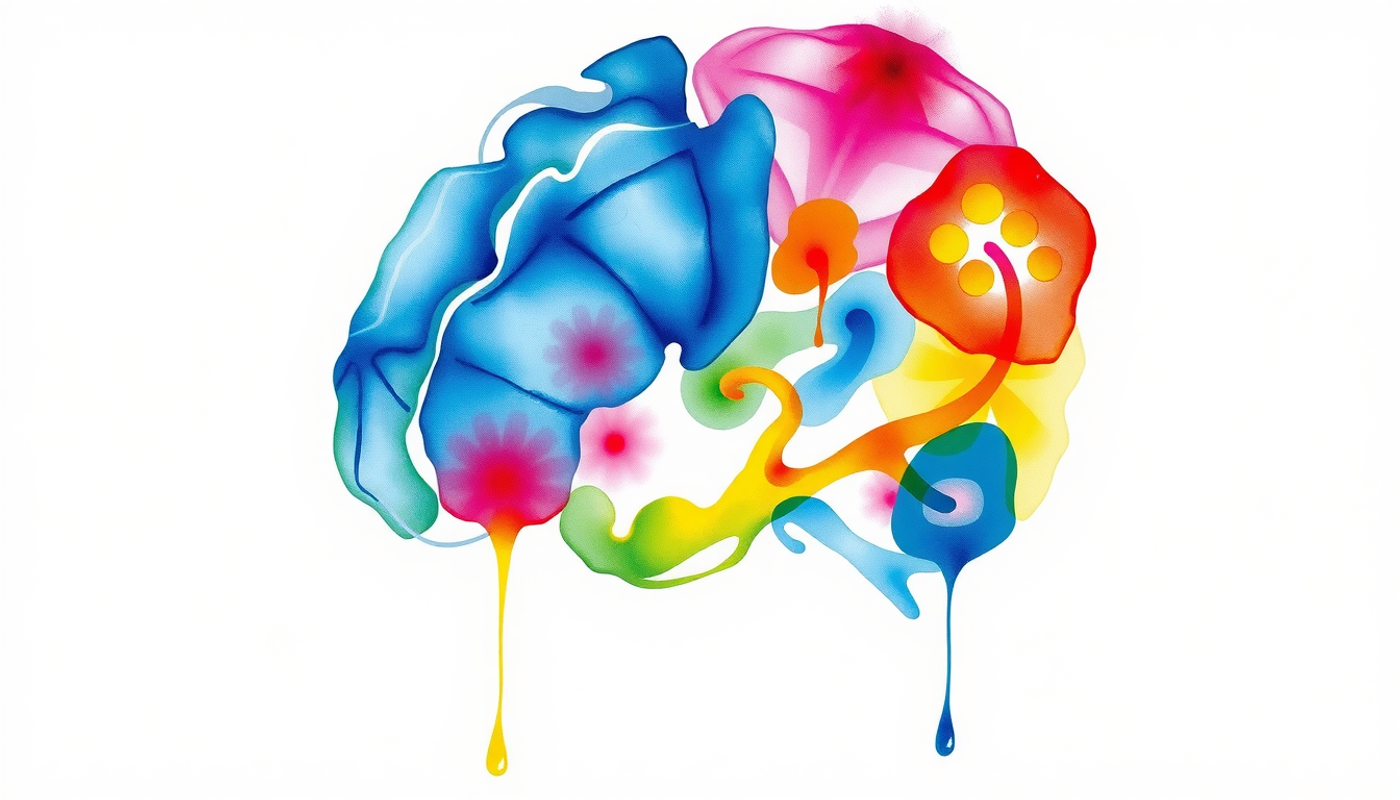
In 2011, Valorie Salimpoor, Robert Zatorre, and their colleagues at McGill University published a study in Nature Neuroscience that would change how scientists think about music and the brain. They used a combination of PET scanning and fMRI to watch what happened in real time when people listened to music that gave them chills.
The result was striking. During peak musical pleasure, the brain released dopamine in the striatum. Not metaphorically. Not as an inference. They measured it directly using a radioligand called [??C]raclopride that competes with dopamine for receptor binding [7].
But there was a twist. The dopamine release was not a single event. It happened in two distinct waves at two distinct locations. During the anticipation of a pleasurable moment, the caudate nucleus lit up. During the actual experience of peak pleasure, the nucleus accumbens took over. The brain treats a favorite musical moment the way it treats food, sex, and drugs. It craves the buildup. Then it rewards the arrival.
This was not just a correlation. In 2019, Laura Ferreri and colleagues provided causal evidence. They gave participants either levodopa (which increases dopamine), risperidone (which blocks it), or a placebo before a music listening session. Levodopa increased self-reported musical pleasure. Risperidone decreased it. The dopamine system does not simply observe musical pleasure. It generates it [8].
Why does dopamine matter for memory? Because dopamine does double duty. It produces pleasure. It also tags experiences for long-term storage. When dopamine floods the hippocampus during or after an experience, that experience is more likely to be consolidated into long-term memory. The mechanism is well established: dopamine promotes protein synthesis and synaptic strengthening through long-term potentiation [9]. So a song that triggers a dopamine response does not just feel good. It stamps the surrounding experience into your brain with chemical ink.
The Hub That Connects Sound to Self
If dopamine is the chemical that makes music memorable, the medial prefrontal cortex is the address where music meets autobiography.
In 2009, Petr Janata at the University of California, Davis, ran an elegantly simple experiment. He played thirty-second excerpts of popular songs from participants' extended childhood and young adulthood while scanning their brains with fMRI. On average, each participant recognized about seventeen of the thirty songs. Roughly thirteen of those triggered specific autobiographical memories [10].
The key finding was anatomical. The degree to which a song felt personally meaningful tracked directly with activity in the dorsal medial prefrontal cortex, specifically Brodmann areas 8 and 9. This region sits at the intersection of self-referential processing and memory retrieval. It is part of the default mode network, the brain system most active when you daydream, reflect on your past, or think about who you are.
Janata proposed that this region functions as a "hub" linking music, memory, and the sense of self. A song does not just trigger a random memory. It triggers a memory that is tied to your identity. The soundtrack of your teenage years is not incidental. It was the background music during the period when you were most actively constructing who you are.
Subsequent research confirmed this architecture. In a lesion study, patients with damage to the medial prefrontal cortex produced significantly poorer music-evoked autobiographical memories, while their image-evoked memories remained intact [11]. Music does not simply access memory through the same channels as other cues. It has its own dedicated pathway. And that pathway runs through the part of the brain that constructs the self.
What does this mean for ordinary life? It means the songs you loved between roughly ages fifteen and twenty-five are not just nostalgic. They are neurologically welded to your identity. The music of your formative years was encoded during a period of heightened emotional reactivity, rapid identity formation, and peak dopaminergic reward sensitivity. These memories are stored deeper than others. They resist erasure. And they can be summoned with ten seconds of the right melody [12].
The Reminiscence Bump: Why Your Teenage Playlist Never Dies
Ask someone over fifty to name their favorite songs. They will overwhelmingly name songs from when they were between fifteen and twenty-five years old. This pattern is so consistent across cultures and decades that researchers gave it a name: the reminiscence bump.
Krumhansl and Zupnick demonstrated this in 2013 by playing a large sample of Billboard hits from different decades to listeners of different ages. Regardless of birth year, people rated music from their adolescence and early adulthood as most memorable, most emotional, and most connected to personal events [13].
Kelly Jakubowski and colleagues at Durham University refined this finding in 2020 with a large cross-sectional study of 470 adults ages eighteen to eighty-two. They found the peak of music-related autobiographical salience corresponded to songs from when participants were roughly ten to fourteen years old, extending into the early twenties for older groups [14].
A 2024 review in Frontiers in Psychology proposed the most detailed explanation so far. The musical reminiscence bump does not reflect simple exposure frequency. It arises because adolescence combines three things that make encoding extraordinarily powerful: intense identity formation, heightened emotional reactivity, and a maturing reward system that responds especially strongly to novel stimuli [15]. The brain of a sixteen-year-old processes a favorite song with an intensity that a forty-year-old brain does not replicate, even for equally enjoyable music.
There is a practical implication here for anyone working with memory-impaired older adults. The most effective personalized playlists are not playlists of "good music." They are playlists of music from the listener's reminiscence bump, roughly the songs popular when they were between fifteen and twenty-five.
Why Alzheimer's Cannot Erase a Song
Of all the findings in the science of music and memory, this may be the most striking. People in advanced stages of Alzheimer's disease, unable to recognize their own children or remember what day it is, can often sing along word-for-word to songs from their youth.
In 2015, JÔøΩrn-Henrik Jacobsen and his colleagues at the Max Planck Institute used high-resolution 7-Tesla fMRI to identify exactly where in the brain long-term musical memory is stored. They scanned 32 young adults while they listened to well-known versus unfamiliar melodies, and pinpointed two regions: the caudal anterior cingulate cortex and the ventral pre-supplementary motor area [16].
Then they did something clever. They compared these specific regions against Alzheimer's biomarkers in a group of patients. The result was remarkable. These musical memory regions showed minimal cortical atrophy on MRI scans. They also showed minimal disruption of glucose metabolism on FDG-PET. In a brain where most structures were visibly damaged, the regions responsible for musical memory remained relatively intact [16].
The explanation lies in the nature of musical memory itself. Musical memory is not purely declarative. It has a strong procedural component, stored partly in motor circuits (the cerebellum and basal ganglia) that are spared in the early and middle stages of Alzheimer's. Singing a familiar song involves motor sequences that were rehearsed thousands of times across decades. These sequences sit outside the hippocampal system that Alzheimer's attacks first.
This finding became the scientific foundation for an entire movement. Dan Cohen, a social worker, founded the nonprofit MUSIC & MEMORY in 2010 after discovering that personalized playlists could awaken residents in long-term care facilities who had become unresponsive [1]. The 2014 documentary Alive Inside captured the most famous case: a man named Henry, withdrawn and nearly mute, who came alive upon hearing Cab Calloway, singing and talking with animation he had not shown in years. The film won the Sundance Audience Award and catalyzed the adoption of personalized music programs in care facilities across the United States.
But does music therapy for dementia actually work in controlled trials? The evidence is real but specific. A 2025 Cochrane systematic review, pooling 22 randomized trials with roughly 890 participants, concluded that music-based therapy probably improves depressive symptoms and overall behavioral problems in people with dementia. However, it is unlikely to significantly affect agitation, emotional well-being, or cognition [17]. The benefits are genuine. They are also modest and mostly short-term. Music does not reverse dementia. But it can, for the duration of a song, reconnect a person to who they were.
The Mozart Myth and What Actually Works
In 1993, Frances Rauscher, Gordon Shaw, and Katherine Ky published a short paper in Nature that would become one of the most misunderstood findings in psychology. They had thirty-six college students perform spatial reasoning tasks after ten minutes of Mozart's Sonata for Two Pianos in D Major, a relaxation tape, or silence. The Mozart group scored higher, with a temporary boost equivalent to roughly eight or nine IQ points [18].
The paper explicitly stated the effect lasted only ten to fifteen minutes and was confined to spatial tasks. The public and the media ignored both caveats. The "Mozart Effect" became a cultural phenomenon. The Governor of Georgia started sending classical music CDs to every newborn in the state. Companies sold "Baby Mozart" products promising to boost infant intelligence.
The science did not hold up. Schellenberg showed that performance improved after any enjoyable stimulus, not just Mozart. Students who preferred Schubert did better after Schubert. Students who preferred a Stephen King story did better after the story [19]. A 2010 meta-analysis by Pietschnig, Voracek, and Formann, covering nearly forty studies and over 3,000 participants, found little evidence for any specific Mozart effect [20]. The small gains were an artifact of arousal and mood. Any stimulating, enjoyable experience produced the same result.
So listening to Mozart will not make you smarter. But that does not mean music and learning have no connection. The real relationship is more nuanced. When does background music help? When the task is simple, repetitive, or requires sustained attention, preferred music can improve performance by raising arousal and reducing mind-wandering. A 2024 study in Scientific Reports found that preferred background music decreased mind-wandering, increased task focus, and sped reaction times in a sustained attention task [21].
When does it hurt? When the task involves reading, writing, or any language-heavy processing. Music with lyrics directly interferes because the brain cannot fully filter out linguistic input. Fast, loud, or unfamiliar music is also more distracting. The science is clear: for complex verbal tasks, silence or familiar, slow instrumental music is better. For repetitive work, your favorite playlist may actually help.

When Music Rewrites the Past
Until 2024, scientists thought of music primarily as a retrieval cue. You hear a song, it triggers a memory. The memory was already there, waiting. The song just opened the door.
Then Yiren Ren and Thackery Brown at Georgia Tech's MAP Lab showed something different. Music does not merely access stored memories. It can change them.
In their fMRI study, forty-four participants memorized emotionally neutral stories. The next day, they recalled those stories while listening to emotionally charged film soundtracks. Some heard happy music. Some heard sad music. A day later, they recalled the same stories again, this time in silence. The result: the emotional tone of the music had bled into the memories themselves. Stories recalled with happy music were remembered as happier than they actually were. Stories recalled with sad music became sadder [22].
This is not a retrieval bias. The memories were structurally altered. Music introduced what the researchers called "false emotional memory traces," new emotional components that were not present in the original experience. The brain had incorporated the music's emotional content into the stored memory.
The implications are significant. If music can rewrite the emotional tone of a memory after the fact, then personalized music interventions might eventually be used to help people with PTSD or depression. First-line PTSD treatment already works by reactivating traumatic memories in a safe context so the emotional charge can be reduced. Music could, in theory, serve as a tool for that reactivation, delivering a controlled emotional context during recall.
A separate Georgia Tech study confirmed that music also affects encoding. Ren, Leslie, and Brown showed that familiar, structurally predictable music improved concentration and memory formation, while unfamiliar or structurally unpredictable music impaired it [23]. The takeaway is precise: music can both help and hinder memory, depending on how familiar it is, how arousing it is, and when it is played relative to the learning event.
The Fine Print: Gist Versus Detail
In July 2025, Kayla Clark and Stephanie Leal at Rice University and UCLA published a paper in the Journal of Neuroscience that added a critical piece to the puzzle. Music does not simply boost memory. It changes what kind of memory is strengthened.
In their experiment, approximately 130 college students viewed everyday images. After viewing, some heard classical music, some heard ambient soundscapes, and some sat in silence. Later, they were tested on both the gist of the images (general content) and the specific details (peripheral elements) [3].
The type of music did not matter. What mattered was the strength of each individual's emotional response. Participants who became highly aroused by the music remembered the gist better but the details worse. Participants with moderate emotional responses remembered more details. There was a trade-off, mediated by emotional arousal and the stress hormones it triggers.
This mirrors a well-known principle in memory science. Emotional arousal enhances memory for central, gist-level information at the expense of peripheral detail. Music, by inducing arousal, triggers this trade-off. The practical implication is subtle. If you need to remember the big picture, emotionally engaging music during the consolidation window (after studying, not during) may help. If you need to remember specific facts and details, you want moderate or low arousal. The relationship between music and sleep-based memory consolidation is an active area of research, because the post-encoding rest period turns out to be an active window for memory processing, not a passive one [24].
From the Operating Room to the War Zone
Music does not only interact with memory. It has measurable effects on pain, anxiety, and recovery that extend well beyond the laboratory.
In 2015, Jenny Hole and colleagues published a meta-analysis in The Lancet that pooled data from 73 randomized controlled trials of music in surgical settings. Music produced significant reductions in postoperative pain, anxiety, and the amount of pain medication patients needed. It also increased patient satisfaction. These effects held whether the music was played before, during, or after surgery [25].
A follow-up by KÔøΩhlmann and colleagues in the British Journal of Surgery in 2018, covering 92 trials and over 7,000 patients, confirmed the pattern and added a startling finding: music played during general anesthesia still reduced postoperative pain [26]. The patient was unconscious. They could not "distract" themselves with music. Yet the pain reduction was measurable. This argues against a simple distraction mechanism and points toward a genuine physiological effect, probably through dopaminergic reward modulation and autonomic nervous system downregulation.
Beyond surgery, music has proven applications in stroke recovery. Teppo SÔøΩrkÔøΩmÔøΩ at the University of Helsinki ran a randomized trial with sixty acute stroke patients. Those assigned to listen to self-selected music daily showed verbal memory improvement of 60 percent from baseline at three months, compared to 18 percent for audiobook listeners and 29 percent for standard care [6]. The music group also had better focused attention and less depression.
Melodic intonation therapy takes this further. Patients with non-fluent aphasia, who cannot speak because of left-hemisphere damage, can often sing. Therapists exploit this by having patients sing words and phrases to a simple melody, gradually building spoken language through the intact right hemisphere [27]. The most famous case is Gabrielle Giffords, the US Congresswoman who sustained a gunshot wound through her left-hemisphere language area in 2011. She could not say the word "light." But when her therapist sang "This Little Light of Mine," Giffords sang it perfectly. Years of melodic intonation therapy contributed to her recovery [28].
A 2025 meta-analysis of music therapy for depression, published in BJPsych Open, found a large effect size (SMD of ?0.97) across randomized controlled trials [29]. The effect was consistent regardless of therapy type, delivery format, or provider. Music therapy is not a replacement for medication or psychotherapy. But it is a safe, inexpensive, and increasingly evidence-based adjunct.
Earworms: The Memory You Cannot Delete
There is another side to the music-memory bond. Sometimes a song gets stuck. It plays on repeat inside your head for hours, unwanted and seemingly unstoppable. Scientists call this involuntary musical imagery, or INMI. Everyone else calls them earworms.
Kelly Jakubowski and colleagues conducted the most systematic study of earworms to date. Drawing on tunes named by 3,000 survey respondents, they identified specific musical features that predict stickiness: earworm songs tend to have a faster tempo, a common and easy-to-sing melodic contour, and an unusual interval or rhythmic pattern that grabs attention [30]. Commonly named earworms included "Bad Romance" by Lady Gaga, "Don't Stop Believin'" by Journey, and "Can't Get You Out of My Head" by Kylie Minogue. (The last one is almost too perfect.)
Earworms are not malfunctions. They arise from the same neural machinery that makes music memorable in the first place. The dopaminergic reward system, the motor planning circuits that mentally rehearse melodies, and the hippocampal association networks that link songs to contexts all contribute. Earworms tend to surface during idle moments, low-demand tasks, or states of mind-wandering, when the default mode network is active and internal narratives run freely [31].
Tempo studies show that earworms are mentally replayed close to their actual recorded speed. Your brain does not just remember the melody. It replays the entire temporal structure with remarkable fidelity. This suggests that musical memories are stored not as static snapshots but as dynamic temporal programs, similar to the motor programs that control skilled movements.
Why Did We Evolve to Remember Music?
The deepest question in the science of music and memory is evolutionary. Why does this relationship exist at all?
Steven Pinker famously dismissed music in 1997 as "auditory cheesecake," a pleasurable byproduct that "tickles the sensitive spots of at least six of our mental faculties" but serves no adaptive purpose [32]. In Pinker's view, music hijacks circuits evolved for language, pattern recognition, and emotional processing, but was never selected for directly.
The opposing view holds that music is an adaptation. Several competing theories explain what it was selected for. Darwin proposed sexual selection: musical ability signals genetic fitness, like a peacock's tail. The social bonding theory, currently the most influential alternative, argues that music synchronizes groups, builds trust, and strengthens alliances. Cross-cultural research from Harvard's Music Lab finds that music consistently functions to form coalitions and signal group identity across every society studied [33].
A third theory focuses on mother-infant bonding. Infant-directed singing is a human universal found in every culture ever studied. Lullabies share structural features across languages. Mothers sing to regulate infant arousal, and infants respond to singing more reliably than to speech [34].
The honest answer is that the debate remains unresolved. But Pinker's pure "cheesecake" position has weakened as neuroscience has revealed how deeply music is wired into reward, emotion, and memory systems. A byproduct that engages every limbic structure, triggers dopamine release, bonds social groups, calms infants, and survives in a brain ravaged by Alzheimer's does not look entirely accidental.
What the Science Suggests You Do
The research on music and memory yields concrete, evidence-based guidance, but only when stated carefully.
For studying complex material that involves reading or language, silence or familiar, slow instrumental music without lyrics is the best choice. Lyrics compete with verbal processing. Unfamiliar or fast music demands attention that could otherwise go to the task. If you find silence oppressive, the safest option is music you have heard so many times that your brain no longer actively processes it.
For repetitive or low-demand work, preferred music of any genre can help. The benefit comes through mood and arousal, not through any magical property of a particular genre. Mozart is not better than Metallica if Metallica is what you love.
After a study session, music may actually help consolidation. The Rice University data suggests that music in the post-encoding rest period can boost gist-level memory, though at the possible cost of specific details. The emotional arousal level matters more than the genre.
For older adults, a personalized playlist of music from the reminiscence bump (roughly ages fifteen to twenty-five) is the most effective tool for triggering autobiographical memories, improving mood, and reducing agitation. This is not speculation. It is the foundation of the MUSIC & MEMORY program and is supported by multiple clinical trials [35].
For children, sustained music training produces measurable benefits in auditory processing, executive function, and brain structure. Habibi's longitudinal studies at USC, including a 2025 analysis of the ABCD dataset, found that two years of sustained training yielded greater cognitive and language gains [36]. Her earlier work documented structural brain changes including increased white matter integrity in the corpus callosum after two years of training [37].
Two caveats are important. First, the 39 percent dementia risk reduction from the Monash study is an association, not a proof of causation. It is possible that people in early cognitive decline stop listening to music, which would create the same statistical pattern without music being protective [38]. Second, music training studies are mostly non-randomized. Pre-existing differences between children who take music lessons and those who do not are hard to fully eliminate.

The Song That Remembers You
Neuroscience has revealed that the link between music and memory is not a single phenomenon but a constellation of mechanisms. Dopamine stamps musical experiences into long-term storage [7]. The medial prefrontal cortex connects those experiences to identity [10]. The motor system preserves musical memory when declarative memory fails [16]. The default mode network weaves music into autobiography [39]. And the emotional arousal that music triggers can both enhance and reshape what the brain stores [22].
The 2024-2025 research generation has moved the field from "does music affect memory?" to "how, when, and for whom?" Music can boost gist at the cost of detail. It can rewrite the emotional coloring of existing memories. It can improve encoding when familiar and predictable, or impair it when novel and distracting. It reduces pain in the operating room and depression in the nursing home. It survives in a brain where nearly everything else has been lost.
No other stimulus does all of this. No photograph. No scent. No written word. Music is the closest thing the brain has to a universal retrieval key.
Somewhere right now, an eighty-year-old woman is hearing a song she last heard at seventeen. For a few minutes, the fog lifts. She is not confused. She is not lost. She is herself. The song remembers her, even when she cannot remember it.
Frequently Asked Questions
Does music help you study better?
It depends on the type of music and the type of task. Familiar instrumental music without lyrics can help during simple or repetitive tasks by raising mood and arousal. But music with lyrics impairs reading and language-based study because the brain cannot fully ignore linguistic input. For complex verbal tasks, silence is usually better.
Why do songs from your teenage years feel so powerful?
The brain during adolescence combines heightened emotional reactivity, rapid identity formation, and peak dopaminergic reward sensitivity. Songs heard during this period are encoded with unusual depth and are tied to self-identity through the medial prefrontal cortex. This creates the "reminiscence bump," where music from roughly ages fifteen to twenty-five feels most vivid and personal.
Can music really help people with Alzheimer's disease?
Musical memory is stored partly in brain regions that Alzheimer's damages last, specifically the caudal anterior cingulate cortex and the ventral pre-supplementary motor area. Personalized playlists can trigger recognition, singing, and emotional connection even in advanced stages. Clinical evidence shows music therapy probably improves mood and reduces behavioral problems, though it does not reverse cognitive decline.
Is the Mozart effect real?
The original 1993 study found a small, temporary boost in spatial reasoning after listening to Mozart, lasting only ten to fifteen minutes. Subsequent research showed the same boost occurs after any enjoyable stimulus. A 2010 meta-analysis of nearly forty studies found little evidence for a specific Mozart effect. The small gains reflect general arousal and mood improvement, not a special property of Mozart's music.
Can music change your memories?
A 2024 Georgia Tech study showed that music played during memory recall can alter the emotional tone of stored memories. Participants who recalled neutral stories while listening to happy film music later remembered those stories as happier than they were. This suggests music does not just trigger memories but can actively reshape their emotional content, with potential applications for treating PTSD and depression.


