
Introduction
In 1885, Hermann Ebbinghaus sat alone in his apartment and memorized lists of nonsense syllables. He tested himself at different intervals. And he discovered something that would take science over a century to explain: spacing study sessions across days produced far stronger memories than cramming everything into one sitting [1]. Ebbinghaus could not say why. He only knew it worked. The forgetting curve bent differently when time separated the repetitions.
For most of the twentieth century, researchers proposed clever theories about the spacing effect. Maybe the brain encodes information differently each time. Maybe the act of retrieving a fading memory strengthens it. These explanations captured part of the truth. But they missed the engine hiding in plain sight. The engine that runs every night. The engine that turns fragile traces into lasting knowledge while you lie unconscious.
Sleep.
Today, a convergence of neuroscience, molecular biology, and behavioral research has revealed that sleep is not merely rest. It is an active memory-processing machine. And it is precisely this machine that explains why distributing study sessions across days, with nights of sleep between them, produces memories that last weeks and months longer than those formed in a single marathon session [2]. This article tells the story of that discovery: how scientists cracked the code of sleep-dependent consolidation, what happens inside the brain during those dark hours, and what it means for anyone trying to learn anything.
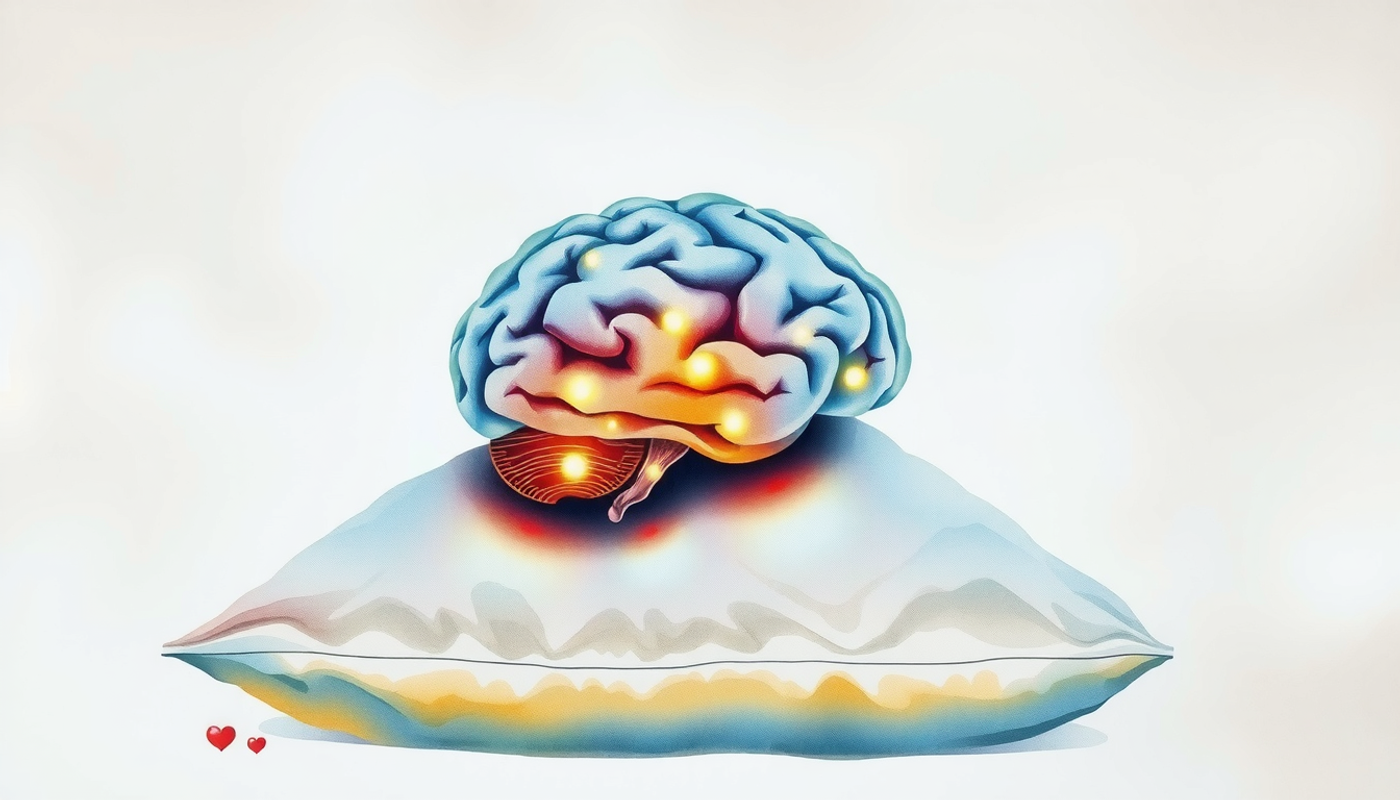
The Night They Discovered Memory Has a Second Life
For most of scientific history, sleep was considered dead time. The brain switched off. Nothing happened. Then, slowly, cracks appeared in that story.
In 1924, John Jenkins and Karl Dallenbach at Cornell University ran a simple experiment. Subjects memorized nonsense syllables, then either stayed awake for eight hours or went to sleep for eight hours. Those who slept remembered more [3]. The explanation seemed obvious: sleep protected memories from interference. While awake, new experiences trampled the fragile traces. While asleep, nothing came in to disturb them. It was a passive story. Sleep as a shield, not a sculptor.
That passive story survived for decades. Then the evidence piled up against it.
In the early 2000s, a team at the University of Lübeck, led by Jan Born and Steffen Gais, began running experiments that would demolish the old view. In one study, subjects learned pairs of words before either sleeping or staying awake for the same duration. Those who slept not only remembered more, they showed a qualitatively different pattern of brain activation during recall [4]. Sleep had not merely protected the memories. It had physically moved them. Retrieval after sleep engaged neocortical regions more and the hippocampus less. The memories had migrated.
This was the first clear behavioral evidence for what Born would later call active system consolidation. The idea was radical at the time: sleep does not passively guard memories. Sleep actively replays, reorganizes, and redistributes them from temporary storage in the hippocampus to permanent homes in the neocortex [5].
Think of it like this. The hippocampus is a notebook. Fast, flexible, but limited in capacity. The neocortex is a library. Vast, organized, but slow to absorb new entries. During the day, you scribble notes in the notebook. During the night, the brain carefully transcribes those notes into the library, cross-references them with existing knowledge, and files them where they belong.
But how? What machinery runs this transcription? The answer lies in three brain waves that perform an extraordinary symphony every single night.
Three Brain Waves That Build Your Memories
The sleeping brain produces electrical rhythms that are completely absent during wakefulness. Three of these rhythms work together in a precise temporal hierarchy to transfer memories from hippocampus to cortex. Understanding this hierarchy is the key to understanding why sleep consolidates spaced learning.
The first rhythm is the slow oscillation. Generated by vast networks of cortical neurons, it alternates between two states roughly once per second: an "up-state" in which neurons fire intensely, and a "down-state" in which they fall silent [6]. Picture a stadium doing "the wave." The slow oscillation sweeps across the cortex, starting from frontal regions and rolling backward. Each up-state opens a brief window of opportunity for plasticity.
The second rhythm is the sleep spindle. Generated by the thalamus, a relay station deep in the brain, spindles are short bursts of oscillation at about 12 to 15 cycles per second, lasting one to two seconds each. They arrive during the up-states of slow oscillations, riding the crest of the wave [7]. Spindles have a special talent: they trigger calcium influx into cortical neurons, which activates the molecular machinery of long-term synaptic change. In other words, spindles flip the switch that allows new synaptic connections to form in the cortex.
The third rhythm is the sharp-wave ripple. This one comes from the hippocampus. Ripples are extremely fast oscillations, roughly 80 to 200 cycles per second, and they last only about 50 to 100 milliseconds. But in that fraction of a second, the hippocampus compresses and replays an entire memory sequence [8]. A rat that spent ten minutes running a maze produces a ripple that replays the entire route in a tenth of a second.
Here is the critical discovery: these three rhythms nest inside each other like Russian dolls. The slow oscillation provides the global timing. The spindle rides on the up-state of the slow oscillation. And the ripple fires inside the trough of the spindle. This precise temporal coupling, confirmed by Bernhard Staresina and colleagues using intracranial recordings in human patients, creates the optimal conditions for spike-timing-dependent plasticity [9]. The hippocampal replay arrives at exactly the moment when cortical neurons are primed to form new connections.
Lisa Marshall, working with Born at Lübeck, provided causal proof that slow oscillations drive consolidation. In 2006, she applied weak electrical stimulation at 0.75 Hz to subjects' scalps during early sleep, boosting their slow oscillations. The result: significantly better recall of word pairs learned the evening before [10]. Published in Nature, it was the first demonstration that artificially enhancing a sleep rhythm directly enhances memory.
The precision of this coupling matters enormously. Randolph Helfrich, working with Matthew Walker at UC Berkeley, showed in 2018 that older adults who had lost the precise timing between slow oscillations and spindles performed worse on overnight memory tasks. Their waves still occurred. But they were no longer synchronized. The musicians were playing, but the orchestra had lost its conductor [11].
What does this mean for learning? Every night of sleep runs this oscillatory machinery. Every night, hippocampal memories get a chance to be replayed, transferred, and integrated into cortical networks. Miss a night, and you miss a cycle. And this is where the connection to spaced learning becomes inescapable.
The Rat That Dreamed of Running
Before the oscillatory machinery was understood, the question was simpler: does the brain actually replay memories during sleep? Or is sleep doing something else entirely?
The answer came from an unlikely place. Rats running mazes.
In 1994, Matthew Wilson and Bruce McNaughton at the University of Arizona implanted arrays of tiny electrodes into the hippocampi of rats. They recorded from dozens of individual neurons while the rats explored a maze. Each neuron fired at a specific location, earning these cells the name "place cells." As the rat moved through the maze, a unique sequence of neurons activated, like a bar code scanning the route [12].
Then the rats fell asleep.
Wilson watched. And in slow-wave sleep, the same sequences of neurons fired again. In the same order. But compressed into a fraction of a second. The hippocampus was replaying the maze. Not randomly. Not scrambled. The actual experiential sequence, compressed and repeated, over and over, during sleep.
This was memory replay. And it was happening spontaneously, without any external cue.
Daoyun Ji and Wilson extended the finding in 2007, showing that replay was coordinated between the hippocampus and the visual cortex. The two regions replayed simultaneously, in register, during slow-wave sleep [13]. The hippocampus was not replaying alone. It was broadcasting the replay to the cortex, exactly as the active system consolidation theory predicted.
In humans, direct evidence came from Pierre Peigneux and colleagues in 2004. Using PET brain imaging, they showed that hippocampal regions activated during a virtual-town navigation task were reactivated during subsequent slow-wave sleep. And critically, the amount of reactivation predicted how well subjects could navigate the town the next day [14].
The replay hypothesis had moved from rats to humans. But the most striking proof was yet to come.
Smelling Roses in Your Sleep
If the brain spontaneously replays memories during sleep, could you steer that replay? Could you tell the sleeping brain which memories to strengthen?
Björn Rasch, working with Jan Born, tested this idea with an experiment that was as elegant as it was simple. Subjects learned the locations of objects on a grid while smelling roses. The odor was present only during learning. Then they went to sleep. During slow-wave sleep, the researchers re-presented the rose odor through a tube near the subjects' noses [15].
The results, published in Science in 2007, were dramatic. Subjects who received the odor cue during slow-wave sleep remembered significantly more object locations the next morning compared to controls. Brain imaging showed that the odor cue triggered hippocampal activation during sleep, exactly the same region that had been active during learning. The odor was acting as a key, unlocking a specific memory for replay.
This technique became known as Targeted Memory Reactivation, or TMR. Ken Paller and colleagues at Northwestern extended it to sounds. In 2009, they paired individual spatial memories with unique sounds during learning, then selectively replayed some sounds during sleep. Only the cued memories improved [16]. You could choose which memories to strengthen, one by one, simply by playing their associated sounds while the person slept.
Thomas Schreiner and Björn Rasch pushed TMR further. They taught German-speaking subjects Dutch vocabulary, paired each word with an auditory cue, and replayed selected cues during NREM sleep. The cued words were recalled better the next morning [17]. Language learning, enhanced by whispering words to the sleeping brain.
But here is the twist that matters most for understanding spaced learning. Susanne Diekelmann, also in Born's lab, made a discovery in 2011 that revealed something fundamental about the difference between sleeping and waking memory processing. She showed that reactivating a memory during sleep immediately stabilized it against interference. The same reactivation during wakefulness did the opposite: it destabilized the memory, making it vulnerable [18].
This is the reconsolidation principle at work. When you retrieve or reactivate a memory while awake, it temporarily becomes labile, open to modification. This is why each study session in spaced learning can update and strengthen the trace. But it also means the trace is temporarily fragile. Sleep comes in and re-stabilizes it. Each cycle of reactivation-followed-by-sleep produces a stronger, more resistant memory than the last.
This is the mechanism that makes spaced learning so powerful. Not just spacing. Spacing with sleep between.
The Price of Staying Awake
Giulio Tononi and Chiara Cirelli at the University of Wisconsin-Madison looked at the problem from the opposite direction. Instead of asking what sleep builds, they asked what wakefulness costs.
Their answer was the Synaptic Homeostasis Hypothesis, known as SHY. The idea: during wakefulness, learning strengthens synapses throughout the brain. Every new experience, every conversation, every fact absorbed, ratchets up synaptic strength. By the end of a long day, synapses are saturated. The brain is "full." Signal-to-noise ratio has degraded. Energy consumption has spiked [19].
Sleep, according to SHY, performs a global renormalization. During slow-wave sleep, synaptic strength scales back down proportionally. Strong connections remain relatively strong. Weak connections weaken further or disappear. The overall level drops, but the pattern is preserved. It is like turning down the volume on all channels equally: the relative signal stays the same, but the noise floor drops.
The most striking evidence came in 2017. Luisa de Vivo and colleagues used three-dimensional electron microscopy to measure the size of 6,920 individual synapses in mouse cortex after periods of sleep and wakefulness. The result: synapses were approximately 18 percent smaller after sleep than after wakefulness. The shrinkage was proportional to synapse size, meaning the largest synapses shrank the most in absolute terms [20].
Why does this matter for spaced learning? Because the renormalization that sleep performs is not random. It preserves the memories that were tagged as important, the ones that were replayed by the hippocampal-cortical dialogue, while clearing away the noise. Each cycle of learning-then-sleeping produces a cleaner, more efficient memory trace. And when you study again the next day, you start with a brain that has been reset: synapses are ready to potentiate again, hippocampal capacity has been restored, and the previous day's learning has been safely transferred to cortical storage.
The two theories, active system consolidation and synaptic homeostasis, are not competitors. Jörn Klinzing, Niels Niethard, and Born argued in their 2019 Nature Neuroscience review that they are complementary processes embedded within the same sleep cycle [6]. Active replay selectively strengthens specific memories. Global downscaling clears the clutter. Together, they produce the net effect: memories that survive sleep are stronger, cleaner, and more integrated than they were before sleep.
Why a Night Between Study Sessions Changes Everything
Now the threads converge. The spacing effect. Active system consolidation. Synaptic homeostasis. They all point to the same conclusion: sleep is the mechanism that makes spaced repetition work.
Consider what happens when you study something twice in one day, say morning and evening, versus studying it in the evening and again the next morning. The gap is the same: twelve hours. The material is the same. The effort is the same. But the second scenario includes a night of sleep between sessions. And that changes everything.
Stéphanie Mazza and colleagues at the University of Lyon tested exactly this in 2016. Forty participants learned Swahili-French word pairs to perfection across two sessions separated by twelve hours. One group studied in the morning and again in the evening (same day, no sleep between). The other group studied in the evening, slept, and studied again the next morning (sleep between sessions) [2].
The results were striking. The sleep group needed significantly fewer repetitions in the second session to reach the same criterion. And when tested one week later, and again six months later, the sleep group retained dramatically more. Sleep between sessions had roughly halved the effort needed and roughly doubled the durability of the memory.
Why? Because the night of sleep between sessions ran a full cycle of consolidation. Hippocampal replay transferred the initial learning to neocortical networks. Synaptic downscaling cleaned up the trace. When the second study session arrived the next morning, it encountered a memory that had already been partially consolidated. The second session then re-opened the trace through reconsolidation, updated it, and tagged it for another round of sleep-dependent processing the following night.
Matthew Bell, Nour Kawadri, Patricia Simone, and Melody Wiseheart confirmed this pattern in a separate study. They showed that a twelve-hour spacing gap that included sleep produced long-term retention equivalent to a twenty-four-hour gap, while a twelve-hour gap without sleep produced significantly less [21]. The critical variable was not the length of the gap. It was whether sleep fell within it.
Paul Smolen, Yili Zhang, and John Byrne proposed a reconsolidation-based model of the spacing effect in 2016. Their framework, published in Nature Reviews Neuroscience, argues that each spaced repetition reopens the memory trace, making it transiently labile, and then sleep-dependent consolidation re-stabilizes it at a higher level [22]. Wider spacing allows more complete consolidation before the next reopening, which is why optimally spaced intervals tend to be at least one sleep cycle apart.
What Happens When You Do Not Sleep
If sleep is the engine of memory consolidation, then removing sleep should break the engine. It does.
In 2007, Seung-Schik Yoo and colleagues in Matthew Walker's lab at UC Berkeley conducted a study that became one of the most cited papers in sleep science. They kept one group of young adults awake for 35 hours while a control group slept normally. Both groups then tried to memorize a list of new facts while undergoing functional brain imaging [23].
The sleep-deprived group showed approximately 40 percent less activation in the hippocampus during encoding. Their brains were physically less capable of forming new memories. The difference was not subtle. Walker described it as comparable to trying to write new information on a saturated sponge. Without sleep to wring out the sponge, it could not absorb anything new.
But the damage is not only to new encoding. Losing sleep also prevents consolidation of what was learned before the deprivation. Soo-ah Huang and colleagues at Duke-NUS showed in 2016 that adolescents restricted to five hours of sleep per night performed worse on vocabulary retention, and that spaced learning partially protected against this deficit [24]. Even when sleep was shortened, the spacing effect persisted, but it was weakened. The full benefit of spaced repetition requires the full dose of sleep.
Molecular research has revealed why. Sleep deprivation disrupts protein synthesis in hippocampal neurons, impairs long-term potentiation (the cellular mechanism of learning), and alters the expression of genes involved in synaptic plasticity [25]. The damage cascades from behavior down to molecules. Learning without sleeping is like building a house but never letting the concrete cure.
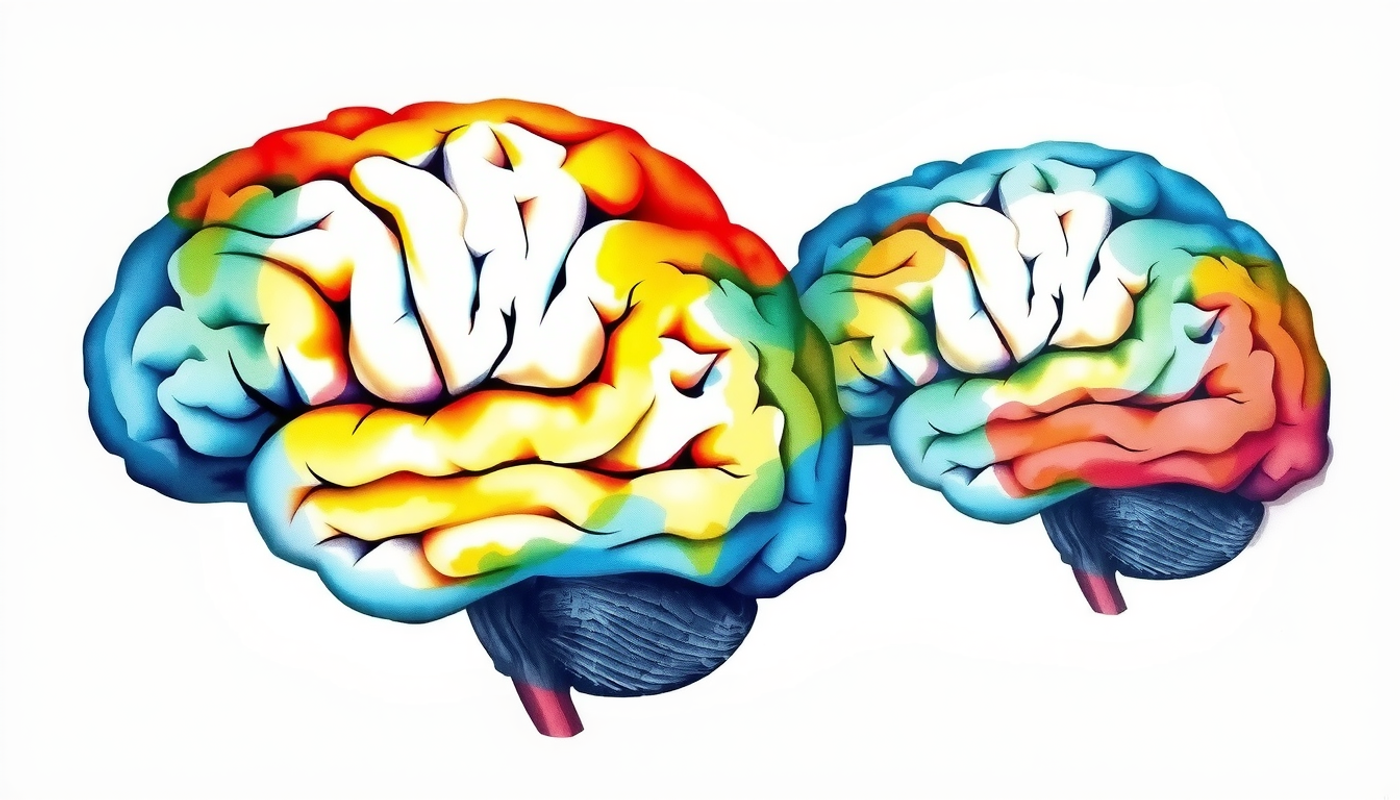
Sleep Stages Are Not All Equal
Not all sleep does the same thing. The early part of the night, dominated by deep slow-wave sleep, serves different memory functions than the late part, dominated by REM sleep.
Werner Plihal and Jan Born demonstrated this in 1997 with an experiment that has become a classic. Subjects either slept during the first half of the night (rich in slow-wave sleep) or the second half (rich in REM sleep). Those who got early-night slow-wave sleep excelled at declarative memory tasks, like recalling word pairs. Those who got late-night REM sleep excelled at procedural tasks, like mirror tracing [26].
This dissociation is not absolute. More recent research has refined the picture. Stage N2 sleep, which contains the bulk of sleep spindles, turns out to be critical for both declarative and motor memory. Sara Mednick and colleagues showed in 2013 that pharmacologically enhancing sleep spindles with zolpidem selectively improved hippocampus-dependent verbal memory without affecting procedural memory [27]. The spindle, it seems, is the workhorse of declarative consolidation.
What about REM sleep? Robert Stickgold at Harvard has argued that REM serves a different but complementary function: integrating new memories with existing knowledge, extracting rules and patterns, and processing emotional content [28]. A full night of sleep includes four to five cycles of NREM and REM, and both may be needed for complete consolidation. This is another reason why spaced learning across multiple nights outperforms cramming: each night provides multiple complete NREM-REM cycles, each contributing a different aspect of memory processing.
Sara Mednick, Ken Nakayama, and Robert Stickgold showed in 2003 that even a 60 to 90-minute nap containing both slow-wave sleep and REM produced learning gains on a visual discrimination task that were comparable to a full night of sleep [29]. The nap was not as long, but it contained a complete cycle. And a complete cycle was enough for one round of consolidation.
The Debate That Keeps Sleep Scientists Awake
Science is not a smooth story of accumulating truths. It is a messy process of arguments, failed replications, and revised claims. Sleep-dependent memory consolidation has its share of controversy.
The first tension is between the active system consolidation account and the synaptic homeostasis hypothesis. Born's camp emphasizes selective replay: sleep strengthens specific memories through targeted hippocampal-cortical dialogue. Tononi's camp emphasizes global downscaling: sleep renormalizes all synapses, and consolidation is a byproduct of selectively sparing the strongest traces. The 2019 Klinzing, Niethard, and Born review frames these as complementary, but the integration is not yet complete [6]. Some experiments produce data that fit one model better than the other.
The second controversy concerns replication. Some of the most celebrated findings in the field have proven difficult to reproduce. Closed-loop auditory stimulation, where sounds are played in synchrony with slow oscillation up-states to boost memory, showed impressive effects in early studies by Ngo and colleagues in 2013 [30]. But a 2025 meta-analysis found that effect sizes have declined over time, with blinding failures and small sample sizes contributing to inflated initial estimates [31]. The basic phenomenon appears real, but the practical magnitude may be smaller than first reported.
The third debate concerns Walker's popular claims. His 2017 book drew attention to sleep science but also attracted criticism for overstating some evidence. Several specific quantitative claims in the book have been challenged in academic critiques. The primary peer-reviewed literature, however, remains solid on the core finding: sleep benefits memory consolidation, and the benefit depends on specific sleep stages and neural oscillations.
A 2021 meta-analysis by Sven Berres and Edgar Erdfelder, pooling hundreds of studies, confirmed a moderate overall sleep benefit for episodic memory, with an effect size of approximately g = 0.44. Critically, the benefit was largest when stimuli had been learned multiple times before sleep, directly supporting the interaction between spaced repetition and sleep-dependent consolidation [32].
These debates are healthy. They sharpen the science. And they have not overturned the central conclusion: sleep transforms recently learned information into durable long-term memory through active neural mechanisms that are distinct from anything that occurs during wakefulness.

Practical Lessons from Sleeping Neurons
What does all this neuroscience mean for someone sitting at a desk trying to learn biochemistry, or a new language, or the names of 206 bones in the human skeleton?
The first implication is timing. Steffen Gais, Boris Lucas, and Jan Born showed in 2006 that high-school students who learned vocabulary in the evening, shortly before sleep, recalled more the next day than students who learned the same material in the morning, even when total waking time was equalized [33]. The proximity of learning to sleep matters. Material studied just before bed gets first access to the consolidation machinery.
The second implication is spacing across nights. The Mazza study makes this crystal clear: distributing study sessions so that each session is followed by a night of sleep produces dramatically better retention than cramming the same total study time into a single day [2]. Every night of sleep between sessions adds another full cycle of replay, transfer, and renormalization. Two nights means two cycles. Five nights means five cycles. The memory trace gets progressively stronger and more deeply integrated with each cycle.
The third implication concerns sleep duration. A 90-minute nap containing at least one cycle of slow-wave sleep and REM can provide meaningful consolidation benefits [29]. But there is no substitute for a full night. The Huang study on adolescents showed that restricting sleep to five hours significantly impaired vocabulary learning, even when the study schedule was spaced [24]. The spacing effect still helped, but it could not fully compensate for insufficient sleep.
The fourth implication is about what not to do. All-night study sessions before exams are not merely inefficient. They are counterproductive. They simultaneously prevent consolidation of previously learned material and impair the encoding of any new material studied during the sleep-deprived state. The 40 percent reduction in hippocampal function documented by Yoo and Walker is not a metaphor. It is a measured biological deficit [23].
A History That Took a Century to Complete
The story of sleep and spaced learning spans more than 130 years. It begins with a single researcher memorizing nonsense syllables in the 1880s and ends with intracranial recordings of triple-coupled neural oscillations in the 2020s. The early discoveries were behavioral. The later ones were mechanistic. And only when the two streams converged did the full picture emerge.
Ebbinghaus discovered the spacing effect. Jenkins and Dallenbach showed that sleep protects memory. Wilson and McNaughton proved the brain replays memories during sleep. Born, Rasch, Diekelmann, and Gais formalized active system consolidation. Tononi and Cirelli identified synaptic homeostasis. Mazza connected all of it to spaced learning in a single clean experiment. And Staresina revealed the precise oscillatory hierarchy that implements the transfer.
Each generation answered one question and posed the next. Why does spacing work? Because it allows consolidation between sessions. What performs the consolidation? Sleep. What does sleep do, exactly? It replays memories in compressed form while resetting synaptic capacity. How does it coordinate the replay? Through a triple-nested hierarchy of slow oscillations, spindles, and ripples. How does this hierarchy produce lasting change? Through spike-timing-dependent plasticity at cortical synapses.
The full chain, from behavioral observation to cellular mechanism, is now in place. Not every detail is settled. Not every prediction has been confirmed. But the framework is solid enough to change how people study, how educators design curricula, and how scientists think about the relationship between learning and sleep.
Where the Research Goes Next
The frontier is personalization. Can the triple-coupling hierarchy be measured in real time and enhanced for individual learners? Closed-loop stimulation techniques, where auditory or electrical stimulation is timed to individual slow oscillation phases, are being refined. Early results are promising but variable, and questions of replicability remain [34].
TMR is being adapted for real-world use. Imagine a study app that associates each flashcard with a unique auditory cue, then replays those cues through earbuds during sleep to selectively strengthen specific memories. The science supports the mechanism. The engineering challenges are formidable, including identifying sleep stages from consumer wearables, timing cues to NREM without disrupting sleep architecture, and ensuring the technique works outside controlled laboratory conditions.
Developmental neuroscience is asking how the sleep-consolidation system changes across the lifespan. Markus Hahn and colleagues showed in 2020 that the precision of slow oscillation-spindle coupling improves from childhood through adolescence, possibly explaining why teenagers who get adequate sleep can be such efficient learners [35]. At the other end of the lifespan, the deterioration of this coupling in older adults, documented by Helfrich and Walker, may contribute to age-related memory decline [11].
And the molecular details are still being filled in. Graham Diering and colleagues identified Homer1a as a protein that drives homeostatic AMPA receptor downscaling during sleep [36]. Richard Bhatt and colleagues published a meta-analysis of TMR effects in 2020, confirming the basic phenomenon but noting that NREM cueing works while REM cueing does not [37]. And a 2024 study by Josselyn and colleagues at Science demonstrated that hippocampal sharp-wave ripples actively select which experiences get consolidated, adding a selection mechanism to the replay story [38].
Conclusion
The spacing effect is not a trick. It is not a mnemonic device. It is a biological strategy that works because it recruits the most powerful memory-processing system the brain possesses: sleep.
Every night between study sessions, the sleeping brain replays the day's learning in compressed bursts, transfers it from temporary hippocampal storage to permanent cortical networks, and clears synaptic clutter to prepare for the next day. This process runs through a precisely timed hierarchy of slow oscillations, sleep spindles, and sharp-wave ripples. It cannot run without sleep. And it runs better with more nights of sleep between sessions.
The practical implications are almost embarrassingly simple. Study in the evening before sleep. Space sessions across days, not within a single day. Get enough sleep. Do not cram. These recommendations have been repeated for decades, but now we know why they work, down to the level of individual neurons and synaptic proteins. The sleeping brain is not resting. It is completing the job that waking learning started. And without it, no amount of repetition can produce memories that last.
The next time you close your eyes at the end of a study day, remember: the real learning is just about to begin.
Frequently Asked Questions
Does sleeping right after studying improve memory?
Research by Gais, Lucas, and Born (2006) showed that studying shortly before sleep improves next-day recall compared to studying in the morning. Sleep-dependent consolidation begins within the first slow-wave sleep cycle after encoding, so studying in the evening gives fresh memories immediate access to the replay and transfer machinery of deep sleep.
How many hours of sleep do you need to consolidate memories?
A full night of seven to eight hours provides multiple NREM-REM cycles, each contributing to memory consolidation. Research shows that 90-minute naps containing both slow-wave and REM sleep offer partial benefits. However, restricting sleep to five hours or less significantly impairs retention, even when study sessions are properly spaced across days.
Is spaced repetition better than cramming for long-term memory?
Decades of research confirm that spaced repetition produces stronger and longer-lasting memories than massed practice. The key reason, supported by Mazza et al. (2016), is that sleep between spaced sessions allows the brain to run a full consolidation cycle, replaying and stabilizing each session's learning before the next session builds upon it.
What brain waves are involved in memory consolidation during sleep?
Three oscillations work together: slow oscillations (under 1 Hz) provide global timing, sleep spindles (12-15 Hz) enable cortical plasticity, and hippocampal sharp-wave ripples (80-200 Hz) carry compressed memory replays. Their precise temporal nesting during NREM sleep creates optimal conditions for transferring memories from hippocampus to neocortex.
Can napping replace a full night of sleep for learning?
A 60-90 minute nap containing slow-wave sleep and REM can produce consolidation gains comparable to a full night for certain tasks, as shown by Mednick, Nakayama, and Stickgold (2003). However, naps cannot fully replace overnight sleep for cumulative learning across multiple days, as each full night provides several complete consolidation cycles.


