
Introduction
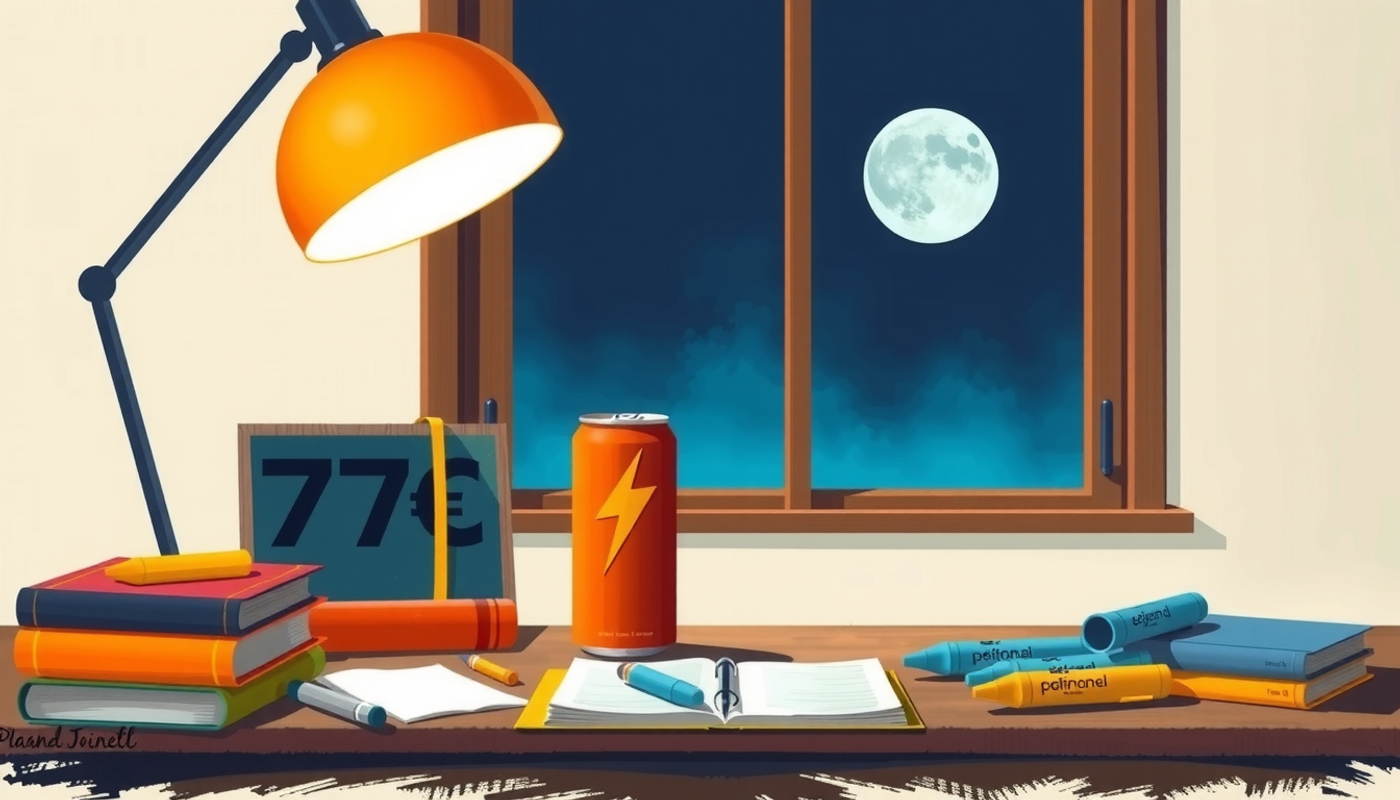
It is 2 a.m. A desk lamp throws a circle of light over a stack of notes. An energy drink sits half-finished beside a highlighter collection that has seen better days. The exam is in seven hours. Somewhere in this scene, a brain is trying to absorb three months of organic chemistry in a single night. It will not work. Not because the student is lazy or unintelligent, but because the architecture of human memory was not built for this. The neurons in that brain follow rules that were established long before universities existed, rules that no amount of caffeine can override [1].
And here is the strange part. Most students know cramming does not work well. They have felt the blank stare at an exam paper, the answers that were right there at 3 a.m. but vanished by 9 a.m. A survey of over 2,400 medical students found that 64 percent reported cramming, and their mean exam scores hovered around 50 percent [2]. In another study, 72 percent of participants believed cramming was more effective than spacing, even after the data showed the opposite [3]. The brain lies to itself about its own study habits. And in 2024, a team at New York University discovered something that rewrote the textbook explanation of why. The spacing effect, it turns out, is not just a property of neurons. It exists in kidney cells [4].
This is the story of why cramming fails. Not as a study tip, but as a journey through 140 years of memory science, from a German psychologist who memorized thousands of nonsense syllables alone in a room to a modern laboratory where non-neural cells demonstrate that the brain's preference for spaced learning is written into the basic code of life itself.
The Man Who Forgot on Purpose
The science of cramming begins with a man who set out to study forgetting. In 1885, Hermann Ebbinghaus published a monograph that would anchor memory research for the next 140 years. Working alone at the University of Berlin, he had spent two years memorizing and then testing his own recall of over 2,300 nonsense syllables. Three-letter combinations like DAX, BUP, ZOL. He chose nonsense deliberately. Real words carry meaning, associations, emotional weight. He wanted raw memory, stripped of everything that might help or hinder it [5].
What Ebbinghaus found was devastating for anyone who has ever crammed. Retention drops off a cliff. Within twenty minutes of learning, roughly 42 percent of the material is gone. Within one hour, 56 percent. Within one day, 66 percent. Within a month, nearly 80 percent. The shape of this loss is not linear. It is a steep exponential curve that flattens out over time. The forgetting curve.
For 130 years, this curve rested on the shoulders of a single subject: Ebbinghaus himself. Then in 2015, Jaap Murre and Joeri Dros at the University of Amsterdam decided to test it properly [6]. One subject, 70 hours of relearning, six retention intervals from 20 minutes to 31 days. Their results confirmed the original curve almost exactly, with one interesting addition: a small upward jump in retention at the 24-hour mark. Something had happened between the evening and the morning that partially rescued fading memories. That something was sleep.
But the forgetting curve is only the beginning of the story. It describes what happens. The question that took another century to answer is why.

Two Clocks Inside Every Memory
When you learn something new, your brain does not simply stamp it into permanent storage. The memory passes through a biological assembly line with two distinct timescales. Miss either one, and the memory dissolves.
The first clock runs in minutes to hours. James McGaugh at the University of California, Irvine, spent decades mapping this process. In his landmark review in Science, he described how every new memory begins as a fragile pattern of neural activity that must be stabilized through a cascade of molecular events [7]. The process starts when glutamate activates NMDA receptors on the postsynaptic neuron. Calcium rushes in. This triggers a signaling cascade that activates an enzyme called CREB, which is a transcription factor. CREB enters the nucleus and switches on genes that produce new proteins. These proteins physically restructure the synapse, making the connection between two neurons stronger and more durable. This is synaptic consolidation.
Block protein synthesis during this window, and the memory vanishes. Yadin Dudai at the Weizmann Institute demonstrated this repeatedly [8]. Inject a protein synthesis inhibitor into the amygdala of a rat within six hours of fear conditioning, and the animal forgets the association completely. Wait twelve hours, and the drug has no effect. The memory has already been built.
The second clock runs over days to years. Paul Frankland and Bruno Bontempi described this process in Nature Reviews Neuroscience [9]. Memories begin their life in the hippocampus, a seahorse-shaped structure buried deep in the temporal lobe that serves as the brain's temporary filing system. Over days and weeks, through a process called systems consolidation, these memories are gradually transferred to the neocortex, the brain's permanent archive. The hippocampus replays the memory during sleep. The neocortex listens. Slowly, the cortical networks build their own representation of the experience, independent of the hippocampus.
Cramming tries to skip both clocks. It shoves information into the hippocampus and then sends the student into an exam before synaptic consolidation has finished its molecular work, and long before systems consolidation has moved anything to long-term storage. The result is a memory that exists on a biological deadline it cannot meet.
The Kidney Cells That Changed Everything
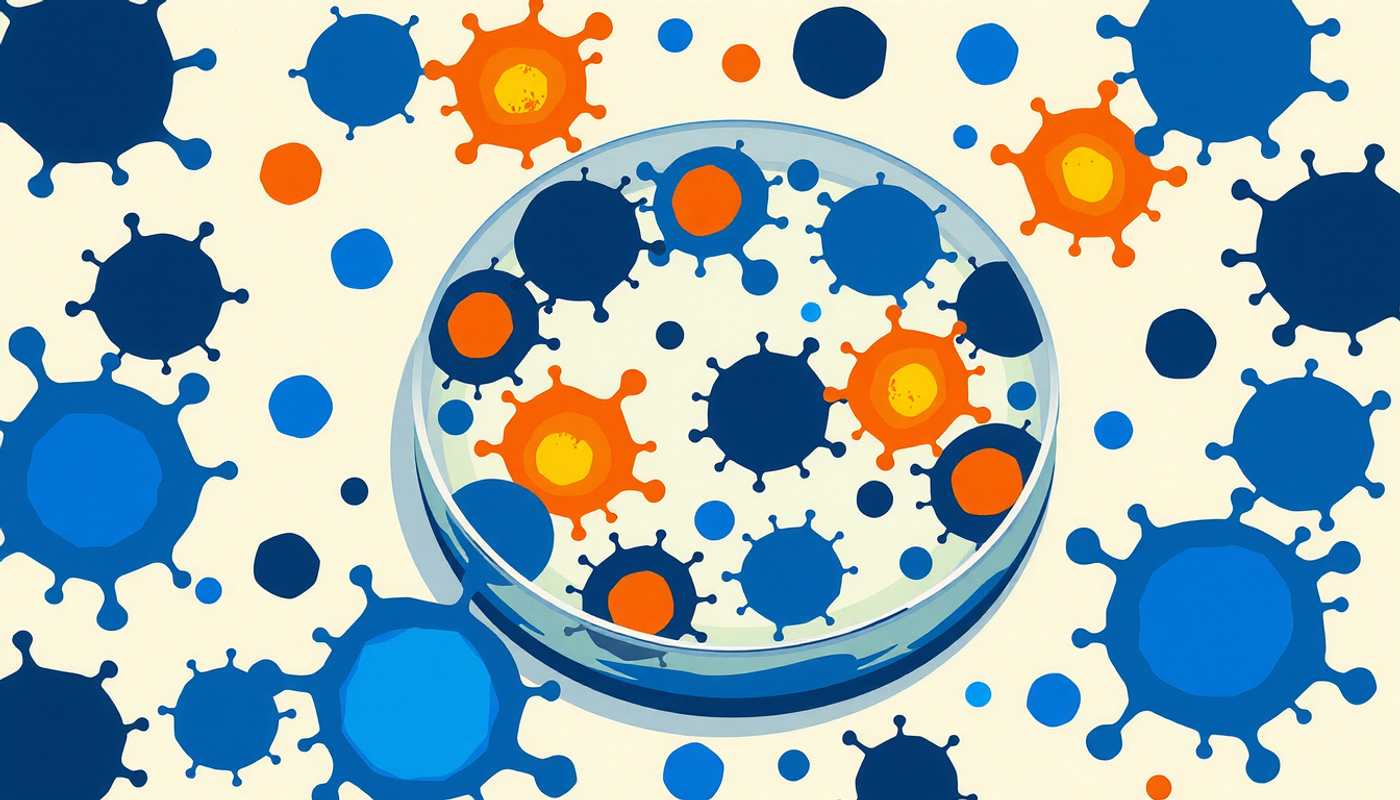
In November 2024, Nikolay Kukushkin, Robbie Carney, Tasnim Tabassum, and Thomas Carew at New York University published a result in Nature Communications that forced neuroscientists to rethink the entire spacing effect [4].
They worked with two types of human cells: HEK293 cells, which are derived from embryonic kidney tissue, and U2OS cells, derived from bone. Neither type has anything to do with the nervous system. Neither can form synapses. Neither can fire action potentials. These are, by any definition, non-neural cells.
The researchers engineered these cells to carry a CREB-driven luciferase reporter. When CREB activated, the cells glowed. Then they exposed the cells to either four spaced pulses of a chemical stimulus called forskolin, separated by rest intervals, or one continuous massed pulse of equal total duration. Same total chemical exposure. Different timing.
The spaced pulses produced dramatically stronger CREB activation, more sustained ERK phosphorylation, and greater downstream gene expression than the massed pulse. When the researchers blocked ERK or CREB, the spacing advantage disappeared. The effect was not random. It depended on the same molecular signaling pathways that neurons use to form long-term memories.
Think about what this means. The spacing effect, the reason cramming fails, is not a property of brains. It is a property of cells. The intracellular signaling machinery that distinguishes between spaced and massed stimulation predates the evolution of neurons by hundreds of millions of years. A kidney cell knows the difference between spaced practice and cramming. Not metaphorically. Biochemically.
Paul Smolen, Yili Zhang, and John Byrne at the University of Texas had predicted something like this computationally. In their Nature Reviews Neuroscience paper, they showed that the molecular machinery of long-term plasticity has frequency-tuned response characteristics [10]. It amplifies signals that arrive separated by minutes to hours and ignores signals that arrive in rapid succession. A crammer firing the same neural assembly five times in two hours is shouting at molecular machinery that has already exhausted its short-term phosphorylation reserves and stopped listening.
The Night Shift That Crammers Cancel
Every all-nighter is a double failure. It overloads the encoding machinery and then destroys the one process that could rescue the situation: sleep.
Matthew Walker and Robert Stickgold described sleep-dependent memory consolidation in their Neuron review [11]. Susumu Diekelmann and Jan Born expanded the picture in Nature Reviews Neuroscience [12]. Bjorn Rasch and Jan Born wrote the definitive synthesis in Physiological Reviews [13]. Together, these three papers describe a nocturnal assembly line of extraordinary precision.
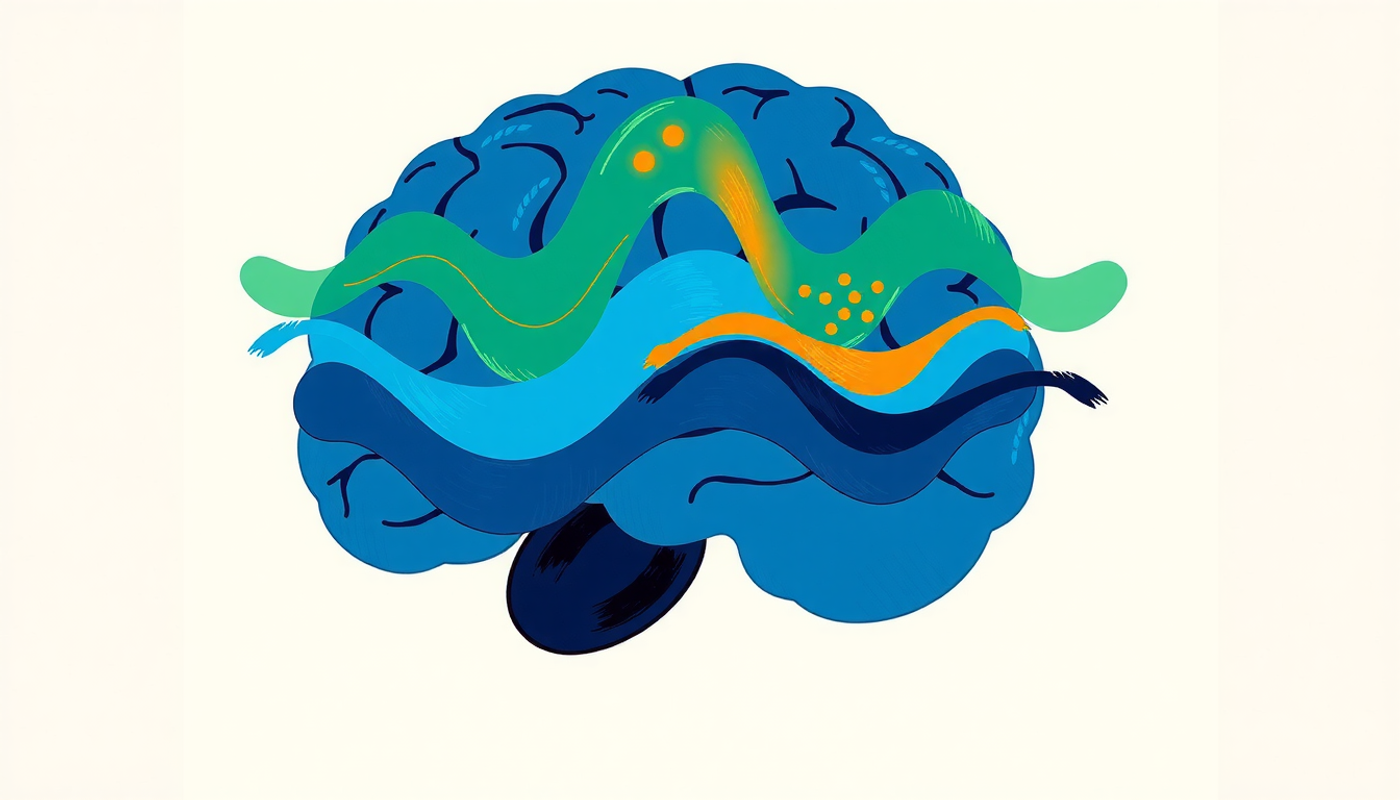
During slow-wave sleep, the deepest stage of non-REM sleep, the hippocampus generates sharp-wave ripples. These are brief bursts of very fast neural activity, around 80 to 200 Hz, that compress and replay the day's experiences at up to twenty times their original speed. These ripples do not fire in isolation. They are nested inside thalamo-cortical sleep spindles, which are themselves synchronized with cortical slow oscillations. The result is a three-level hierarchy: slow oscillation, spindle, ripple. Each level opens a window for the next. And this precise temporal coordination creates the optimal conditions for spike-timing-dependent plasticity, the cellular mechanism by which synaptic connections are selectively strengthened [14].
Two experiments tighten the case against the all-nighter. Seung-Schik Yoo and colleagues at Harvard used fMRI to scan subjects as they encoded new photographs [15]. One group had slept normally the night before. The other had been kept awake for 35 hours. The sleep-deprived group showed significantly reduced hippocampal activation during encoding. Their brains were physically less capable of forming new memories. The hippocampus of a sleep-deprived student is not just tired. It is functionally impaired.
Guang Yang and colleagues at New York University School of Medicine made the structural case even more concrete. Using two-photon microscopy, they imaged individual dendritic spines on layer-V pyramidal neurons in mouse motor cortex [16]. After motor learning, sleep promoted the formation of new spines on specific dendritic branches. Without sleep, the spines did not form. The structural trace of the memory simply failed to materialize.
The all-nighter is not merely tiring. It deprives the brain of the only window in which memories can be physically built into lasting synaptic architecture.
A Bottleneck Called Working Memory
Even if a crammer somehow avoided sleep deprivation, another wall stands in the way. Working memory has a hard ceiling, and cramming hits it repeatedly.
George Miller's famous 1956 paper proposed that short-term memory could hold about seven items. For nearly half a century, this number was treated as fact. Then Nelson Cowan at the University of Missouri published a careful reanalysis in Behavioral and Brain Sciences and argued the real limit is closer to four chunks [17]. Alan Baddeley's multicomponent model, described in Nature Reviews Neuroscience, explains the architecture behind this limit [18]. Working memory consists of a phonological loop for verbal information, a visuospatial sketchpad for spatial information, an episodic buffer that integrates both, and a central executive that directs attention. Each component has limited capacity. Overload any one of them, and new information either displaces old information or fails to encode at all.
John Sweller's cognitive load theory, first published in 1988 in Cognitive Science, formalized this into a framework for instructional design [19]. Sweller distinguished between intrinsic cognitive load, which comes from the complexity of the material itself, extraneous cognitive load, which comes from poor instructional design, and germane cognitive load, which is the productive effort of building mental schemas. Cramming maximizes all three simultaneously: the material is complex because three months of content arrives at once, the "instructional design" is nonexistent because the student is reading notes in random order at 2 a.m., and the germane processing fails because working memory is saturated.
Fred Paas and Jeroen van Merrienboer updated cognitive load theory for modern educational contexts [20]. Their central finding applies directly to the crammer: spaced practice works partly because the rest intervals allow working memory to recover. Massed practice depletes working memory resources with no recovery time. The student is trying to pour an ocean through a garden hose.

The Brain That Lies to Itself
Here is the cruelest part of the story. Cramming feels effective. That feeling is a lie.
Robert Bjork at UCLA has spent decades studying a phenomenon he calls desirable difficulties [21]. The strategies that produce the best long-term retention are the ones that feel hardest during practice. Spacing feels slow. Testing yourself feels frustrating. Interleaving different topics feels confusing. But these strategies force the brain to work harder during retrieval, and that effort strengthens the memory trace. Cramming, by contrast, produces processing fluency. The words look familiar. The diagrams seem obvious. The brain says: I know this.
But recognition is not recall. Recognizing something when you see it is easy. Producing it from memory when you are staring at a blank exam question requires a completely different neural process. And the exam tests recall, not recognition.
Nate Kornell at Williams College demonstrated this illusion directly [3]. In three flashcard experiments, spacing was more effective than massing for 90 percent of participants. Yet 72 percent of those same participants reported believing that cramming had been more effective. Their brains had evaluated their own learning and reached the wrong conclusion.
Jeffrey Karpicke and Henry Roediger at Washington University in St. Louis found the same blind spot from a different angle [22]. Students who studied foreign-language vocabulary predicted their own future recall after each study session. Their predictions were essentially uncorrelated with their actual performance. They could not tell how well they had learned.
Kornell and Bjork pushed the finding further [23]. Even when participants directly experienced the spacing benefit in their own results, they continued to rate massing as more effective. The metacognitive illusion survived direct contradictory evidence.
This is why cramming persists despite 140 years of research showing it does not work. The strategy feels productive. The brain mistakes familiarity for mastery. And by the time the exam reveals the truth, it is too late.
When Memories Collide
There is a fourth problem with cramming that receives less attention but may be just as damaging. Massed practice creates maximal interference between memories.
Michael Anderson, Robert Bjork, and Elizabeth Bjork demonstrated retrieval-induced forgetting in 1994 [21]. When subjects practiced retrieving some items from a learned category, the act of retrieval actively suppressed competing items from the same category. Remembering some things caused forgetting of related things.
Cramming compresses related material into the smallest possible time window. Chapter 3 arrives immediately before chapter 4. The French Revolution is followed instantly by the Industrial Revolution. Organic chemistry reactions pile up without breathing room. Each new block of information creates both proactive interference, where old material disrupts encoding of new material, and retroactive interference, where new material disrupts consolidation of old material. The result is a tangled mess in which similar concepts blur together and compete for the same neural resources.
Spacing separates these blocks in time. Each batch of information gets hours or days to consolidate before the next batch arrives. The interference is dramatically reduced. This is not a subtle effect. The difference between massed and spaced conditions in interference paradigms is among the largest and most reliable effects in experimental psychology [1].
The Testing Effect: What Crammers Never Do
Most crammers spend their night re-reading. Highlighting. Copying notes. These activities feel productive because they generate the fluency illusion described earlier. But they are among the least effective study strategies ever measured.
Karpicke and Roediger published the critical evidence in Science in 2008 [22]. Students learning foreign-language vocabulary were assigned to different conditions. Once an item had been correctly produced, some students continued studying it while others switched to testing themselves on it. The key finding: repeated testing without further study produced massive long-term retention benefits. Repeated study without testing produced almost none.
Karpicke and Janell Blunt extended this in 2011, again in Science [24]. They compared retrieval practice directly against concept mapping, which was widely considered the gold standard of "deep" study strategies. On delayed inference tests, which measure the ability to apply knowledge to new problems, retrieval practice outperformed concept mapping by roughly 50 percent.
John Dunlosky, Katherine Rawson, Elizabeth Marsh, Mitchell Nathan, and Daniel Willingham published the definitive ranking of study techniques in Psychological Science in the Public Interest in 2013 [25]. They reviewed decades of evidence for ten common strategies and rated each as high, moderate, or low utility. Only two techniques received "high utility" ratings: practice testing and distributed practice. Highlighting, summarization, re-reading, and imagery-for-text received "low utility" ratings.
The irony is complete. The strategies crammers rely on most heavily are the ones that perform worst. And the strategies that perform best require exactly what cramming eliminates: time between sessions and active retrieval practice.
Cortisol's Cruel Bargain
There is a final biological twist that makes cramming uniquely self-defeating. The stress of cramming and exam anxiety interact with memory in a way that feels almost deliberately hostile.
Sonia Lupien at the University of Montreal has mapped the relationship between cortisol and memory across the lifespan [26]. Her findings reveal a paradox: acute cortisol elevation enhances encoding. When stress hormones flood the hippocampus during a late-night study session, the emotional arousal actually helps stamp those memories in. The crammer at 3 a.m. is genuinely encoding material more strongly than a relaxed student reading the same material at noon.
But cortisol impairs retrieval. When the same student sits down for the exam six hours later, still running on elevated stress hormones and sleep deprivation, the hippocampus that encoded so eagerly now struggles to produce what it stored. Lupien and colleagues documented this retrieval impairment across multiple studies [27]. The effect is dose-dependent and timing-dependent. The worst scenario is exactly the one the crammer creates: encode under stress at night, retrieve under stress in the morning.
Add chronic cortisol exposure from repeated cramming episodes and the picture gets worse. Lupien's earlier work in Nature Neuroscience showed that sustained glucocorticoid elevation is associated with hippocampal volume reduction [28]. The very structure responsible for memory formation physically shrinks under chronic stress.
The Solution That Biology Already Prescribed
If cramming violates the molecular logic of memory, what respects it? The answer has been replicated more thoroughly than almost any finding in educational psychology.
Nicholas Cepeda, Harold Pashler, Edward Vul, John Wixted, and Doug Rohrer published a meta-analysis in Psychological Bulletin that synthesized 839 effect sizes from 317 experiments in 184 articles [1]. Their conclusion: longer inter-study intervals produce better delayed retention, and the optimal gap increases with the desired retention interval. Two years later, Cepeda and colleagues tested this directly in 1,354 participants studied over one year [29]. The optimal study gap turned out to be roughly 10 to 20 percent of the desired retention interval. If you want to remember something for a month, review it every three to six days. If you want to remember it for a year, review it every five to ten weeks.
Harry Bahrick and his family provided the most dramatic long-term evidence. In a nine-year longitudinal study of foreign-language vocabulary published in Psychological Science, they showed that 56-day inter-session intervals produced retention equivalent to twice as many sessions at 14-day intervals [30]. Wider spacing with fewer total sessions outperformed denser spacing with more sessions. The brain rewards patience.
Hanna Sobel, Nicholas Cepeda, and Irina Kapler confirmed this in real classrooms [31]. Fifth-grade students who studied vocabulary with one-week spacing dramatically outperformed those who received massed instruction when tested five weeks later. And a 2025 meta-analysis by Mawson and Kang, reviewing classroom-specific studies, found a moderate but reliable distributed-practice effect with an effect size of d = 0.54 [32].
Harold Pashler, Doug Rohrer, Nicholas Cepeda, and Shana Carpenter translated these findings into practical advice in Psychonomic Bulletin and Review [33]. Katherine Rawson and Walter Kintsch made the temporal logic explicit in the Journal of Educational Psychology [34]. Massed re-reading helps on immediate tests. Distributed re-reading helps on delayed tests. Cramming is a strategy optimized for an immediate test that does not exist. The real test is always at least eight hours later, after a sleep window the crammer has sacrificed.
Forgetting Is a Feature
The instinct behind cramming rests on an assumption: forgetting is a flaw. If only the brain could hold everything, cramming would work. But this assumption is wrong.
Blake Richards and Paul Frankland at the University of Toronto published a perspective in Neuron that reframed the entire enterprise [35]. Drawing on machine-learning theory, they argued that the brain's job is not to retain everything. It is to retain the right things to support future decisions. Adaptive transience prevents overfitting to specific past events and enables generalization. A brain that remembered every detail of every day would be paralyzed by irrelevant information, unable to extract general principles or respond flexibly to new situations.
The mechanisms of adaptive forgetting are active, not passive. Thomas Ryan and Paul Frankland reviewed these mechanisms in Nature Reviews Neuroscience [36]. Hippocampal neurogenesis, the birth of new neurons in the dentate gyrus, actively disrupts existing memory traces. Rac1-dependent molecular cascades actively weaken synaptic connections that have not been reinforced by retrieval. And a 2025 study in Current Biology showed that rapid memory shifts between different synaptic ensembles actively promote forgetting in Drosophila [37].
The crammer is not simply being inefficient. The crammer is fighting a 500-million-year-old design feature. The brain evolved to forget, and it does so through active, energy-consuming molecular processes. When crammed material disappears by exam time, the brain is not malfunctioning. It is functioning exactly as designed. It has evaluated the material, determined that it was encountered only once under conditions that do not signal importance, and cleared it to make room for information that might actually matter.
What the Convergent Evidence Means
The case against cramming does not rest on a single study or a single mechanism. It rests on convergence across every level of biological organization.
At the molecular level, CREB phosphorylation and protein synthesis require recovery intervals between stimulation events. Kukushkin's kidney cells proved this is not a neural quirk but a cellular universal [4]. At the synaptic level, long-term potentiation decays faster after massed stimulation than after spaced stimulation. At the systems level, hippocampal-to-cortical memory transfer requires multiple sleep cycles. At the cognitive level, working memory saturates under continuous load. At the behavioral level, the metacognitive system reliably misjudges cramming as effective. And at the hormonal level, cortisol dynamics turn the encode-at-night, retrieve-in-the-morning pattern into a self-defeating trap.
This kind of multilevel convergence is rare in psychology. The spacing effect has been called one of the most robust phenomena in all of experimental psychology [1]. The evidence spans 140 years, hundreds of studies, dozens of materials, every age group from infants to the elderly, and now even non-neural cells.
The advice that follows is not complicated. Study material across multiple sessions separated by days. Test yourself rather than re-reading. Sleep between study sessions. And trust the discomfort of feeling like you do not quite remember. That feeling, paradoxically, is the sound of long-term memory being built.
Conclusion
In 1885, Hermann Ebbinghaus sat alone in a room and discovered that the brain forgets most of what it learns within hours. In 2024, Nikolay Kukushkin sat in a laboratory and discovered that even kidney cells forget massed stimulation faster than spaced stimulation. Between those two dates, 140 years of research filled in the mechanism: consolidation requires time, sleep builds the physical architecture of memory, working memory cannot process an ocean in a night, the brain reliably misjudges its own learning, and forgetting is not a bug but a feature of an intelligently designed biological system.
Cramming does not fail because students are lazy. It does not fail because the material is too hard. It fails because it violates the molecular timing rules that every cell in the body follows. The CREB cascade needs recovery intervals. The hippocampus needs sleep to replay. The dendritic spines need offline time to grow. The cortisol system needs the stress to subside before retrieval can succeed. None of these processes can be rushed, bribed, or overridden by caffeine.
The alternative is not harder work. It is differently timed work. The same total study hours, distributed across days instead of compressed into a night, produce dramatically better retention. The same material, retrieved from memory instead of re-read, builds stronger and more durable traces. The same brain, allowed to sleep between sessions, physically grows the synaptic connections that encode lasting knowledge.
The forgetting curve is steep. But it is not a verdict. It is an invitation to work with the biology instead of against it.
Frequently Asked Questions
Why does cramming feel effective even though it does not work?
Cramming creates processing fluency, a sense of familiarity that the brain mistakes for genuine learning. When you re-read notes, the material looks familiar, and your brain interprets that ease of processing as mastery. But recognition is not the same as recall. Research shows 72 percent of students believe cramming is effective even when spacing produces better results for 90 percent of them.
How long does it take for crammed information to disappear?
According to research replicating Ebbinghaus's forgetting curve, roughly 56 percent of newly learned material is lost within one hour without reinforcement, and about 66 percent is gone within 24 hours. Crammed material follows this steep decay because it has not been consolidated through sleep or repeated retrieval practice.
What is the optimal time gap between study sessions?
Meta-analytic research involving over 1,300 participants found that the optimal study gap is approximately 10 to 20 percent of the desired retention interval. To remember material for one month, review every three to six days. To remember material for one year, review every five to ten weeks. Wider spacing with fewer total sessions can match or outperform more frequent sessions.
Does pulling an all-nighter before an exam cause lasting brain damage?
A single all-nighter does not cause permanent brain damage, but it measurably impairs hippocampal function. Brain imaging studies show reduced hippocampal activation during memory encoding after sleep deprivation. Chronic sleep deprivation from repeated cramming episodes is associated with elevated cortisol and potential hippocampal volume changes, though the clinical significance varies across individuals.
Is there any situation where cramming actually works?
Cramming can produce short-term recall that is sufficient for an immediate test taken within a few hours. Some studies show crammers perform comparably to spaced learners on tests given the same day. The difference emerges on delayed tests. After one week, crammed material shows dramatically worse retention than spaced material. For any learning that needs to last beyond 24 hours, cramming is reliably inferior.


