Introduction
You remember your first kiss. You remember where you were when you heard the news. You remember the exact words your boss used when you were fired. But you cannot recall what you ate for lunch last Tuesday. Or what shirt you wore three days ago. Or the name of the person you met at that party last month.
This is not a failure of memory. It is memory working exactly as it evolved to work. The brain does not record life like a video camera. It is a ruthless editor, and its editing criterion is emotion. Experiences that carry emotional weight get encoded with precision, consolidated with priority, and retrieved with vivid clarity. Neutral experiences fade. Sometimes within hours [1].
For three decades, neuroscientists have been dismantling this machinery piece by piece. They have identified the brain structures involved, the molecules that signal importance, and the electrical codes that distinguish a forgettable afternoon from an unforgettable moment. What they have found is not a single mechanism but a cascade. An almond-shaped cluster of neurons called the amygdala detects significance. Stress hormones flood the hippocampus. Neural circuits synchronize. Entire brain networks shift into a different operating mode. And all of this happens before you have any conscious awareness that something important just occurred [2].
This is the story of how emotions shape memory. Not a textbook chapter. A narrative built from real experiments, real researchers, and real discoveries that changed how we understand the relationship between what we feel and what we remember.
The Almond That Controls What You Keep
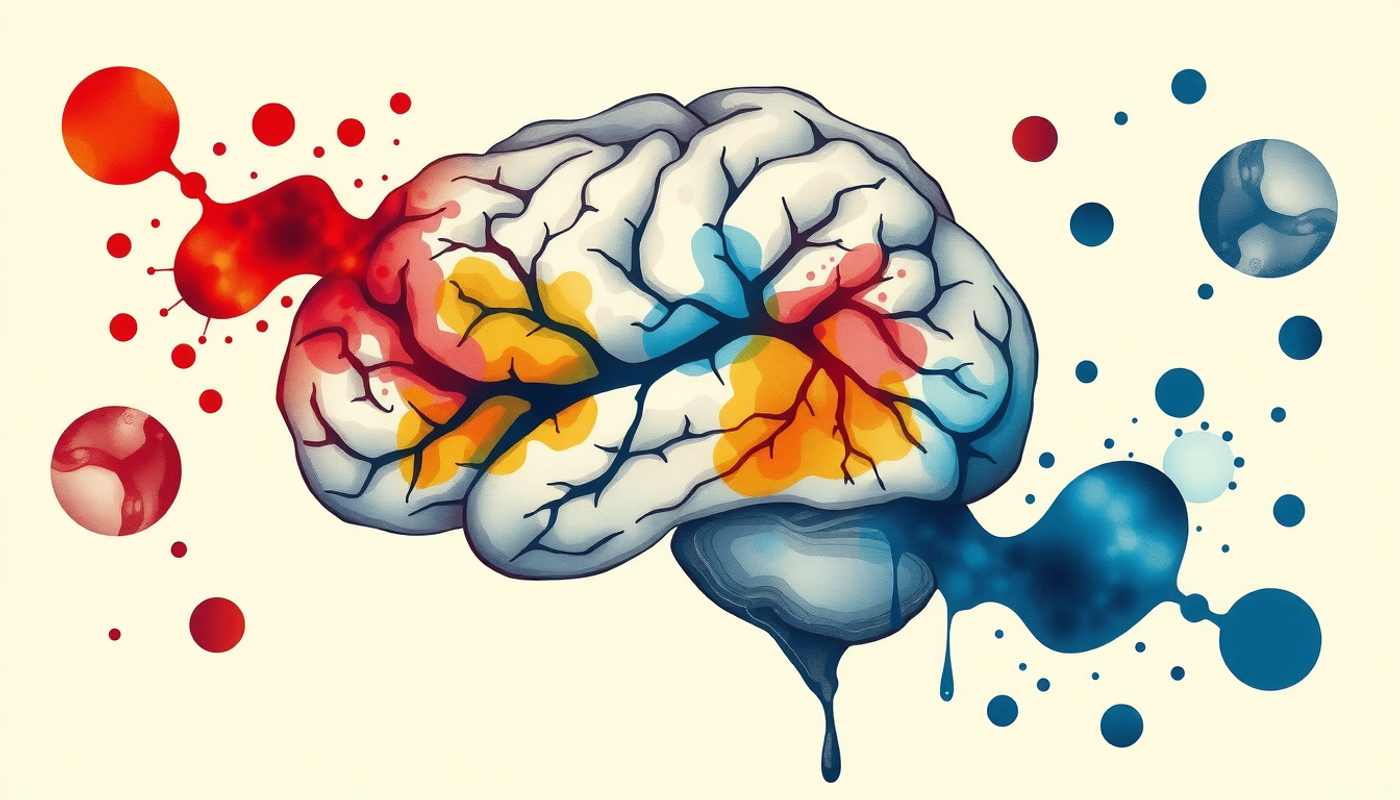
Deep inside each temporal lobe, roughly behind each ear, sits a small cluster of nuclei shaped like an almond. The amygdala. Its name comes from the Greek word for almond, and for most of the twentieth century it was known primarily as the brain's fear center. But that label turned out to be far too narrow.
The modern story of the amygdala and memory begins with a patient known as S.M. Born in 1965, S.M. had a rare genetic condition called Urbach-Wiethe disease that gradually calcified and destroyed both her amygdalae. In 1995, Larry Cahill, Ralph Babinsky, Hans Markowitsch, and James McGaugh tested her with a technique that would become famous. They showed her two stories: one neutral, one containing a disturbing scene involving a car accident and emergency surgery. Normal subjects remembered the emotional story far better than the neutral one. S.M. did not. She remembered both stories equally poorly [3].
The result was striking. S.M. could still form memories. She could still feel emotions. But the bridge between feeling and remembering was gone. Her amygdala was not storing the memory. It was not even creating the emotion. It was doing something more specific: it was telling the rest of the brain which experiences deserved to be kept.
James McGaugh at the University of California, Irvine spent decades working out exactly how this signal operates. Through hundreds of experiments in animals and humans, he built the memory modulation framework: the amygdala does not store declarative memories itself but modulates how strongly other brain regions, especially the hippocampus, encode and consolidate those memories [1]. When arousal is low, the amygdala stays quiet and the hippocampus encodes at baseline strength. When arousal rises, the amygdala activates and sends a chemical signal that says: strengthen this trace.
Think of it as a volume knob on a recording device. The hippocampus is always recording. The amygdala controls the volume. And emotional experiences turn the volume up.
Florian Dolcos, Kevin LaBar, and Roberto Cabeza at Duke University used fMRI to watch this process in real time. They scanned participants while they viewed emotional and neutral pictures, then tested memory one year later. Two findings stood out. First, amygdala activation during encoding predicted which emotional pictures would be remembered a year later. Second, the functional connectivity between the amygdala and the anterior hippocampus during encoding independently predicted retention [4]. It was not just the amygdala firing. It was the amygdala talking to the hippocampus. The conversation between these two structures determined what survived.
The Chemistry of Importance
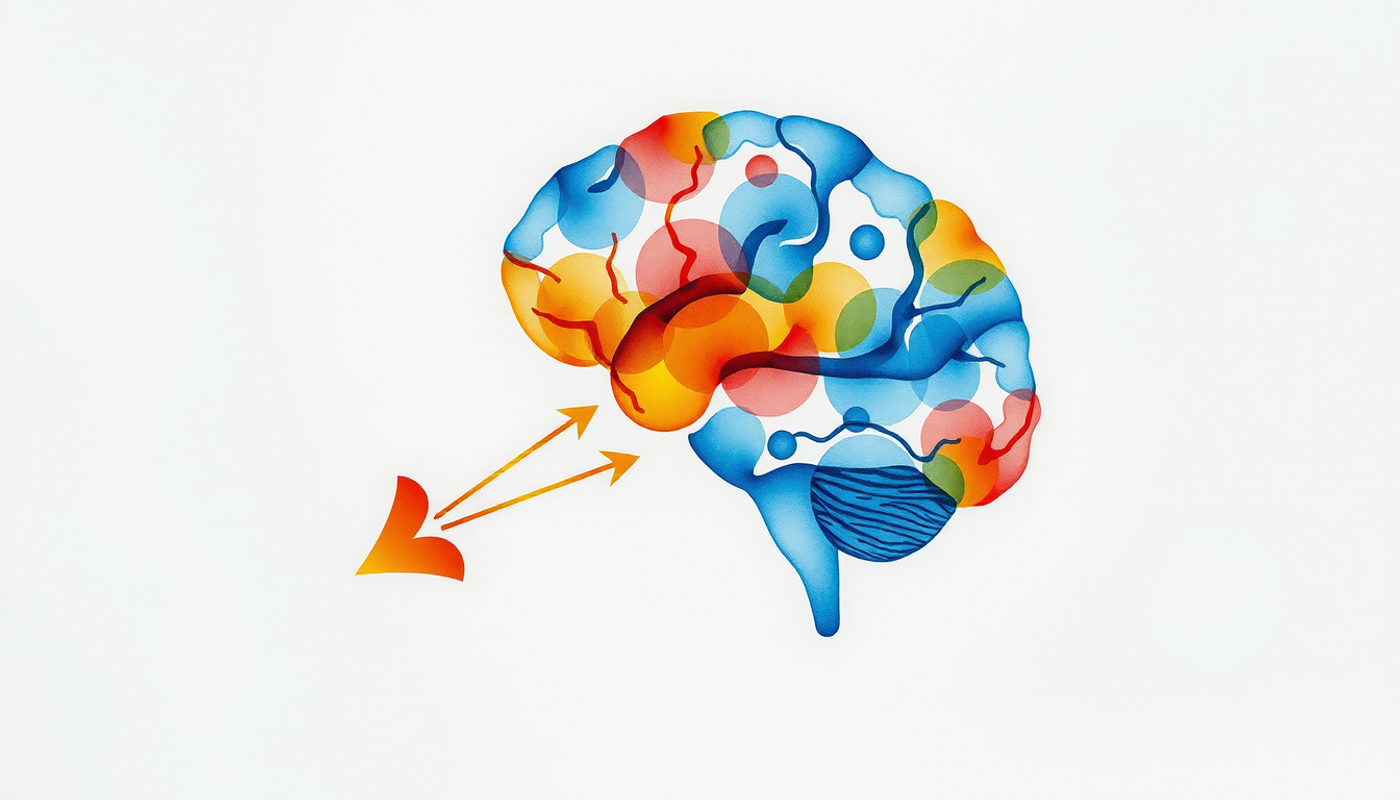
If the amygdala is the detector of significance, what is the signal it sends? The answer involves two of the most studied molecules in neuroscience: norepinephrine and cortisol.
When something emotionally arousing happens, two systems activate almost simultaneously. The locus coeruleus, a tiny nucleus in the brainstem containing only about 50,000 neurons, releases norepinephrine throughout the forebrain. At the same time, the hypothalamic-pituitary-adrenal axis, a hormonal cascade connecting the brain to the adrenal glands, releases cortisol into the bloodstream [5].
Norepinephrine arrives fast. Within seconds. It binds to beta-adrenergic receptors on neurons in the basolateral amygdala, which then modulates long-term potentiation in the hippocampus. Long-term potentiation, or LTP, is the cellular mechanism of learning: when a synapse fires repeatedly, the connection between the two neurons strengthens. Norepinephrine from the amygdala amplifies this process selectively for emotional material [6].
Cortisol arrives slower. Minutes to hours. It crosses the blood-brain barrier and binds to two types of receptors in the hippocampus: mineralocorticoid receptors and glucocorticoid receptors. Here is where the story gets interesting. The relationship between cortisol and memory is not linear. It follows an inverted U-shape. Moderate cortisol after an event enhances consolidation. But high cortisol, especially during retrieval, impairs memory. And chronic cortisol exposure actually damages hippocampal neurons [7].
Larry Cahill, Brigit Prins, Michael Weber, and McGaugh demonstrated the norepinephrine pathway directly in humans in 1994. They gave participants either propranolol, a beta-adrenergic blocker, or a placebo before showing them an emotional story. Propranolol selectively eliminated the memory advantage for the emotional parts of the story while leaving neutral memory intact [8]. Block the norepinephrine signal, and the amygdala can no longer tell the hippocampus to turn up the volume.
But norepinephrine does something even more remarkable than strengthening individual synapses. It tags them.
Synaptic Tags and the Rescue of Forgotten Moments
In 1997, Uwe Frey and Richard Morris proposed an idea that seemed almost too elegant to be true. They called it the synaptic tagging and capture hypothesis. The idea: when a synapse is activated weakly, it sets a temporary molecular "tag" at its location. This tag does not contain the memory itself. It is a placeholder. A bookmark. If, within a time window of roughly one to two hours, a strong event occurs nearby and triggers the synthesis of plasticity-related proteins, those proteins are "captured" by the tagged synapse. The weak memory is rescued. It becomes a strong memory [9].
The implications for emotional memory are profound. It means an emotional event does not only strengthen its own memory trace. It retroactively strengthens memories of nearby events that would otherwise have been forgotten.
Elizabeth Phelps and Joseph Dunsmoor at New York University tested this prediction directly in humans in 2015. Participants viewed a series of pictures belonging to two categories: tools and animals. All pictures were neutral. Then, without warning, pictures from one category began to be paired with mild electric shocks. After this emotional learning phase, participants were tested on memory for all the pictures, including the ones shown before any shocks occurred.
The result was extraordinary. Pictures from the shocked category that had been shown before the shocks were remembered better than pictures from the non-shocked category shown at the same time. The emotional learning had reached backward in time and selectively rescued memories that shared a categorical link with the threatening event [10]. Norepinephrine released during the shock phase had found the synaptic tags left by earlier encoding and captured them.
What does this mean in everyday life? When you experience something emotional, your brain does not only remember that moment. It retroactively improves your memory for the minutes leading up to it. The boring meeting that preceded the fire alarm. The routine drive before the accident. The mundane conversation before the surprising news. Emotion reaches backward.

The Electrical Code: When Neurons Sing Together
Until recently, the amygdala-hippocampus story was told primarily in the language of chemistry: norepinephrine, cortisol, beta-receptors. But starting around 2020, a new chapter opened. Researchers began reading the electrical code of emotional memory directly from the human brain.
Jessica Jimenez, a doctoral student at Columbia University working with Rene Hen, used calcium imaging in mice to record activity in the ventral CA1 region of the hippocampus during fear conditioning. She identified a subset of neurons she called "shock cells" that responded specifically to frightening experiences. These shock cells projected directly to the basal amygdala. When mice later retrieved the fear memory, something remarkable happened: a wider population of CA1 neurons became synchronized with the shock cells. The degree of synchronization predicted how strong the memory was [11].
"We saw that it is the synchrony that is critical to establish the fear memory, and the greater the synchrony, the stronger the memory," Jimenez reported. Fear memory is not stored in individual neurons. It is stored in the coordinated firing pattern of an ensemble. And the amygdala-projecting neurons act as the conductors of this ensemble.
Then came the human evidence. Salman Qasim, Urn Mohan, Joel Stein, and Joshua Jacobs at Columbia Engineering recorded intracranially from 148 epilepsy patients performing a word memory task. Each word had been rated for emotional content by independent groups. Participants remembered emotional words like "knife" and "dog" better than neutral words like "chair."
When Qasim looked at the brain recordings, he found that successful encoding of emotional words was accompanied by a surge of high-frequency activity, or HFA, in the range of 30 to 128 Hz, in both the amygdala and the hippocampus. For neutral words, or for emotional words that were later forgotten, this HFA pattern was absent [12].
But the critical test came next. In 19 patients, the researchers applied high-frequency electrical stimulation directly to the hippocampus. This stimulation selectively reduced HFA and selectively impaired memory for emotional words, without affecting neutral memory. The causal evidence was clear: high-frequency neural activity in the amygdala-hippocampus circuit is not just correlated with emotional memory. It produces it.
And there was one more finding. Nineteen patients in the study had clinical depression. These patients showed disrupted HFA patterns in the amygdala-hippocampal circuit during emotional encoding, and the disruption correlated with their bias toward remembering negative over positive material. The same circuit that gives healthy people an emotional memory advantage gives depressed people a negative memory bias.
The Brain That Conducts an Orchestra
The amygdala and hippocampus are the main characters in the emotional memory story. But they do not work alone. In 2025, a team at the University of Chicago revealed that emotional arousal reorganizes the entire brain.
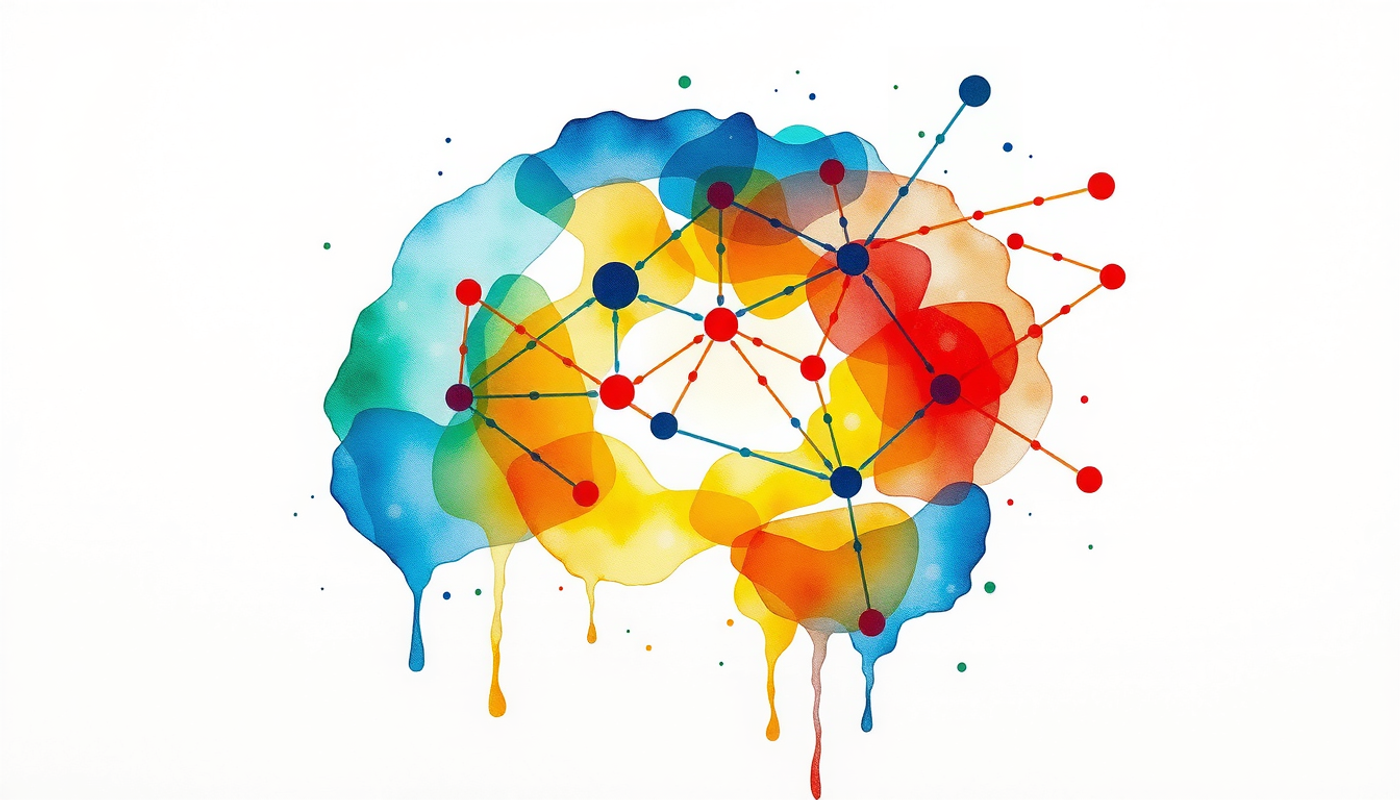
Jadyn Park, a psychology doctoral student, worked with YC Leong to analyze fMRI data from three independent experiments in which participants watched emotional movies or listened to emotional audio narratives, then freely recalled what they remembered. Using graph theory, a mathematical framework for analyzing network structure, Park measured how "integrated" or "segregated" the brain's functional networks were at each moment of the narrative [13].
The result was clear. During emotionally arousing moments, the brain shifted from a segregated state, where different networks operated independently, to an integrated state, where networks that normally work separately began working together. The salience network, default mode network, and frontoparietal control network all became more cohesive during emotional peaks. And this integration directly predicted which scenes participants later recalled with accuracy.
"We can think of emotional experiences as sticky," Leong explained. "These experiences tend to stay with us for a long time, often becoming the milestones of our lives."
The finding extends the amygdala-hippocampus model into whole-brain territory. Emotion does not merely strengthen a local circuit. It reorganizes the operating mode of the entire brain. It shifts from distributed, parallel processing to coordinated, focused processing. Like an orchestra that normally warms up with each section playing independently, then snaps to attention when the conductor raises the baton.
This research also connected to work by Erno Hermans at Radboud University, who had shown in 2011 that acute stress causes the salience network to expand while executive control networks contract. Norepinephrine drives the initial expansion. Cortisol later restores executive control [14]. The brain reallocates resources dynamically based on what the emotional situation demands.
When Music Rewrites the Architecture of Memory
Memory is not a continuous recording. It is organized into episodes, like chapters in a book. The brain segments the flow of experience at "event boundaries," moments when context, goals, or surroundings change. Walk through a doorway into a new room, and the brain files the old room as one episode and starts a fresh file for the new one.
But in 2023, Mason McClay, Matthew Sachs, and David Clewett at the University of California, Los Angeles asked a question no one had previously tested rigorously: do shifts in emotional feeling also create these boundaries?
They composed custom musical pieces designed to evoke dynamic shifts in valence, the pleasantness or unpleasantness of feeling, and arousal, the intensity of feeling. Participants listened to this music while viewing a stream of neutral images. Later, they were tested on which images they recognized and whether they could remember the order in which images appeared [15].
Two findings reshaped the field. First, large or negative emotional shifts split the experience into separate memory episodes. Images on opposite sides of a negative valence shift were remembered as further apart in time and showed weaker order memory. The emotional shift had acted like a doorway, creating a boundary.
Second, positive emotional shifts did the opposite. They bound sequential images together into a shared episode, making them feel closer in time and improving order memory.
What this means is startling. The architecture of your autobiographical memory, the structure of how your life story is organized into episodes and chapters, is sculpted by the rise and fall of your emotions. A moment of joy stitches consecutive experiences together. A moment of fear or sadness cuts between them. Your emotional life literally shapes the structure of your remembered life.
The Inverted U: When Feeling Too Much Destroys Memory
There is a dark side to emotional memory. The same system that makes important events unforgettable can, when pushed to extremes, shatter memory into fragments.
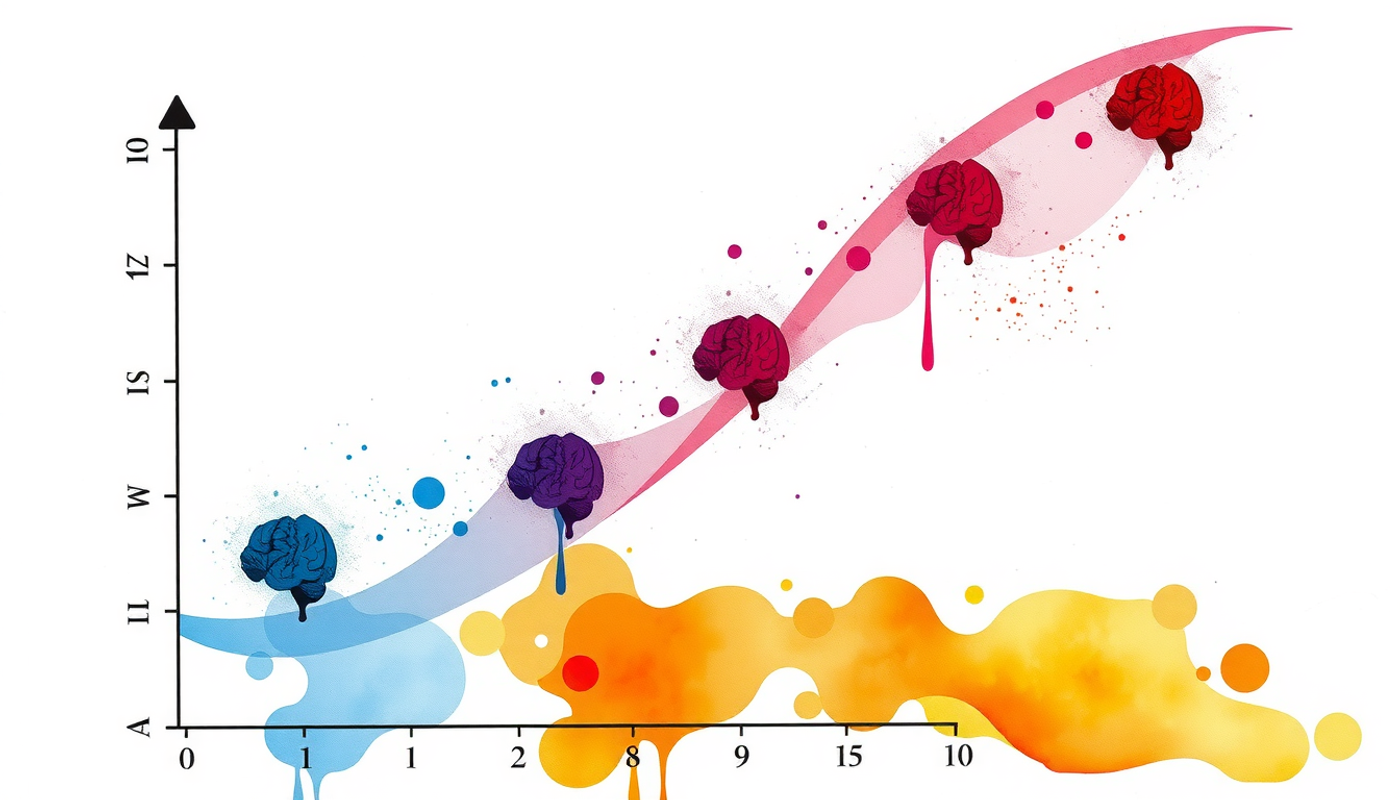
In 1908, Robert Yerkes and John Dodson published an experiment with mice that would later lend its name to one of psychology's most cited principles. They found that moderate stimulation improved learning, but strong stimulation impaired it. The relationship between arousal and performance follows an inverted U. Moderate is best. Too little or too much is worse [16].
The neural basis of this curve has been progressively mapped. John Easterbrook proposed in 1959 that rising arousal narrows the beam of attention. At moderate levels, this narrowing is helpful: you focus on what matters and ignore distractions. But at extreme levels, the beam becomes so narrow that important contextual details fall outside it. This is the weapon focus effect: witnesses to armed crimes accurately remember the weapon but fail to encode the face of the person holding it [17].
At the cellular level, David Diamond and colleagues at the University of South Florida built a temporal dynamics model that ties together the inverted U, cortisol receptor pharmacology, and hippocampal LTP. Moderate cortisol occupies high-affinity mineralocorticoid receptors and enhances LTP. High cortisol additionally occupies low-affinity glucocorticoid receptors and suppresses LTP. The same molecule, at different concentrations, produces opposite effects [18].
Sonia Lupien at the University of Montreal followed a group of elderly adults for five years, measuring cortisol levels annually and testing hippocampal volume with MRI. Those with chronically elevated cortisol showed progressive hippocampal atrophy and accelerating memory decline. High stress did not merely impair memory temporarily. It physically shrank the brain structure responsible for memory [19].
This has direct implications for how stress and cortisol affect memory in students, professionals, and anyone living under chronic pressure. The brain that is trying hardest to remember may be the brain least able to do so.
Flashbulb Memories: The Illusion of Perfect Recall
Almost everyone over thirty remembers where they were on September 11, 2001. They remember who told them, what the weather was like, what they were wearing. These memories feel photographic. Permanent. Perfect.
Roger Brown and James Kulik first described this phenomenon in 1977, studying memories of the assassination of John F. Kennedy. They proposed that emotionally shocking events trigger a special neural mechanism, a kind of "Now Print!" command, that creates an unusually detailed and permanent memory record [20].
The idea was elegant. And it was mostly wrong.
Jennifer Talarico and David Rubin at Duke University ran a clever prospective study. On September 12, 2001, they recruited students and had them write down their memory of hearing about the attacks. They also had them write down a recent ordinary memory. Then they tested both memories repeatedly over the next year. The results undermined the "Now Print" hypothesis from every angle. Consistency of the flashbulb memories declined over time at exactly the same rate as ordinary memories. Details changed. Facts were added, removed, or altered. But there was one critical difference: confidence in the flashbulb memories remained high. People were just as sure of their 9/11 memories after a year as they were the next day, even though the memories had changed [21].
William Hirst, Elizabeth Phelps, and the 9/11 Memory Consortium confirmed this in a multi-city longitudinal study tracking nearly 3,000 participants. Errors accumulated rapidly in the first year, then stabilized. But once an error entered the memory, it was faithfully reproduced at every subsequent test. People did not remember the event itself. They remembered their last retrieval of the event, errors included [22].
Flashbulb memories are not photographs. They are reconstructions that feel like photographs. Emotion enhances the sense of reliving and the confidence associated with a memory without proportionally enhancing its accuracy. This is perhaps the most dangerous property of emotional memory: it makes us trust our recall precisely when our recall may be wrong.

Fear, Extinction, and the Memory That Can Be Rewritten
In the late 1990s, Joseph LeDoux at New York University mapped the circuit of fear conditioning in exquisite detail. A neutral stimulus, a tone, is paired with an aversive stimulus, a shock. After a few pairings, the tone alone triggers freezing. The critical site of this learning is the lateral nucleus of the amygdala, where sensory inputs converge and synaptic potentiation encodes the association [23].
But fear memories can be reduced through extinction. Repeated exposure to the tone without the shock gradually reduces the fear response. Critically, extinction is not erasure. The original fear memory persists. Extinction creates a new, competing memory that suppresses the old one. This new memory depends on the infralimbic region of the medial prefrontal cortex, which sends inhibitory projections to the central amygdala [24].
The problem with extinction is that it is context-dependent. Learn to extinguish your fear in the therapist's office, and you may still freeze when you encounter the trigger in the parking lot. The original fear memory can return through renewal, in a new context, reinstatement, after re-exposure to the unconditioned stimulus, or spontaneous recovery, with the passage of time [25].
But in 2000, Karim Nader, Glenn Schafe, and LeDoux discovered something that opened a new therapeutic door: reconsolidation. When a consolidated memory is reactivated, it briefly becomes unstable again and must be re-stabilized through protein synthesis. During this reconsolidation window, roughly four to six hours, the memory can be modified or even weakened [26].
Merel Kindt at the University of Amsterdam exploited this window in humans. Participants underwent fear conditioning. The next day, their fear memory was reactivated with a single reminder. Immediately after reactivation, they received propranolol. The result: the fear response was eliminated. Not merely suppressed, as in extinction, but gone. Testing days later showed no spontaneous recovery, no reinstatement, no renewal [27].
The memory of the event remained. Participants remembered the experiment. But the emotional charge, the visceral fear response, had been stripped away. The content survived. The feeling did not.
This has enormous implications for treating post-traumatic stress disorder. PTSD is, in essence, a disorder of emotional memory. The traumatic memory is over-consolidated, resistant to extinction, and triggered by contexts and cues far removed from the original event. Reconsolidation-based therapies offer a way to reach into the memory and edit the emotional tag without erasing the biographical record [28].
The Mood That Colors What You Remember
Emotion at the moment of an event shapes how strongly the memory is encoded. But emotion at the moment of retrieval shapes what comes to mind.
In 1981, Gordon Bower at Stanford University published a landmark study using hypnotically induced moods. Participants learned lists of words while happy or sad, then recalled them while happy or sad. Two effects emerged. Mood-congruent memory: happy participants recalled more positive words, sad participants recalled more negative words, regardless of the mood during encoding. And mood-state-dependent memory: material learned in a happy state was recalled better when participants returned to a happy state [29].
Bower explained both effects through an associative network model. Emotion nodes in memory are connected to all experiences encoded in that emotional state. Activating the emotion node spreads activation to connected memories, making them easier to retrieve.
The clinical implications are severe. In depression, a persistently sad mood activates negative memory networks, making negative autobiographical memories disproportionately accessible. This creates a vicious cycle: mood-congruent memory feeds rumination, and rumination deepens the depressed mood, which further amplifies the negative memory bias [30].
J. Paul Hamilton and Ian Gotlib at Stanford showed with fMRI that depressed participants had exaggerated amygdala responses and stronger amygdala-caudate-hippocampus coupling specifically during encoding of negative pictures that were later remembered [31]. The emotional memory machinery works correctly in depression. It simply runs with the wrong settings.
Sleep: The Editor That Separates Content From Feeling
The story of emotional memory does not end when you go to sleep. In some ways, it only begins.
Matthew Walker at the University of California, Berkeley, proposed the "Sleep to Forget, Sleep to Remember" model, or SFSR. During REM sleep, the stage characterized by rapid eye movements and vivid dreaming, emotional memories are reactivated in the hippocampus-amygdala-cortex network. But there is a critical chemical difference: norepinephrine, the stress neurotransmitter that tagged the memory for priority storage, drops to nearly zero during REM. This creates a unique neurochemical environment in which the memory's content can be replayed and consolidated while the emotional charge is gradually reduced [32].
Els van der Helm provided direct evidence for this model. Participants who slept between two viewings of emotional images showed significantly reduced amygdala reactivity the second time. And the degree of reduction was predicted by REM sleep quality [33].
But in 2025, Cigdem Yuksel, Daniel Denis, and colleagues published a study that complicated the picture. Using targeted memory reactivation during naps, where specific sounds associated with memories are replayed during sleep to selectively reactivate those memories, they found that slow-wave sleep, not just REM, contributed significantly to emotional memory consolidation. In some conditions, reactivation during REM actually impaired memory [34].
The emerging picture is that REM and slow-wave sleep cooperate. Slow-wave sleep may stabilize the memory trace through hippocampal-cortical dialogue coordinated by slow oscillations, spindles, and sharp-wave ripples. REM sleep may then process the emotional tone. The content and the feeling are handled by different sleep stages, in a sequence, across a single night.
When this process breaks down, as it does in PTSD, the emotional charge remains locked to the memory. PTSD patients show disrupted REM architecture, increased norepinephrine during sleep, and a failure to reduce emotional reactivity across sleep. The night that should heal becomes another source of distress [32].
The Prefrontal Brake: How Thinking Changes Feeling, and Feeling Changes Memory
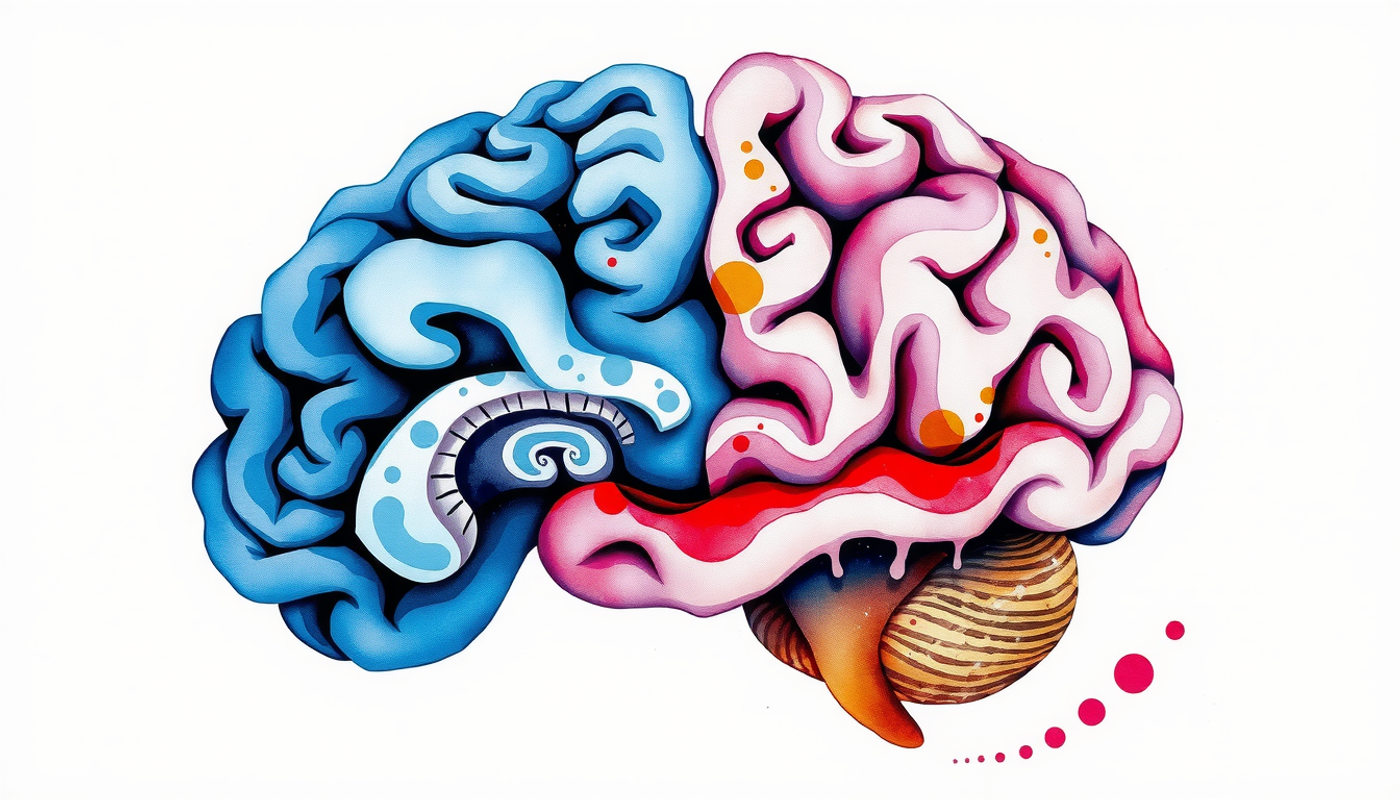
The amygdala may detect significance. But the prefrontal cortex decides what to do about it.
Kevin Ochsner, Silvia Bunge, James Gross, and John Gabrieli demonstrated in 2002 that when participants are instructed to reappraise an emotional image, to reinterpret it in a less emotional way, the dorsolateral and ventrolateral prefrontal cortex activate while the amygdala quiets. This top-down regulation directly changes the emotional experience [35].
But it also changes the memory. Material that has been cognitively reappraised is later remembered with less emotional intensity. The prefrontal cortex, by dampening the amygdala signal during encoding, effectively turns down the volume knob that McGaugh described.
Yi Liu and colleagues showed in 2016 that this prefrontal control becomes harder over time. Twenty-four hours after encoding, suppressing an emotional memory required greater prefrontal engagement and shifted from hippocampal to neocortical representations. Consolidated emotional memories become more resistant to cognitive control. Yesterday's pain is harder to reframe than today's [36].
The practical implication: the best time to regulate the emotional impact of an experience is close to when it happens. Reappraising an emotional event shortly after it occurs can shape both how strongly it is encoded and how the memory will feel when recalled later. Waiting makes the memory progressively more entrenched and harder to modify.
Why Pain Fades Faster Than Joy
If the brain remembers emotional events with priority, why do old negative memories seem to hurt less over time? The answer involves one of the most consistent findings in autobiographical memory research: the fading affect bias.
W. Richard Walker and John Skowronski documented across dozens of studies, in cultures from the United States to Ghana to Germany, that the emotional intensity associated with negative autobiographical memories fades faster than the intensity associated with positive ones. Joy persists. Pain diminishes [37].
The mechanism likely involves several processes working together. Social rehearsal tends to emphasize positive interpretations. Cognitive reappraisal gradually reframes negative events. And sleep, through the SFSR mechanism described above, progressively decouples the content of a negative memory from its emotional charge. The memory of what happened survives. The sting fades.
But this bias breaks down in depression, anxiety, and PTSD. Individuals with these conditions show a reduced or absent fading affect bias. Negative emotions cling to their memories with abnormal persistence. The night editor fails. The prefrontal brake weakens. And the emotional memory system that evolved to protect us begins to imprison us.
The Evolutionary Logic: Why Feeling Is the Price of Remembering
Why did the brain evolve to tie memory so tightly to emotion? The answer is survival.
James Nairne at Purdue University tested this directly. He asked participants to rate words for their relevance to a survival scenario: being stranded in grasslands with predators and needing to find food, water, and shelter. He compared recall of these words to words processed under every other known "deep processing" condition, including pleasantness rating, self-reference, and imagery generation. Survival processing produced the best memory of all [38].
The result has been replicated across cultures, age groups, and methodologies. The brain has a built-in priority channel for fitness-relevant information. And the amygdala-norepinephrine-hippocampus circuit is the likely substrate. Organisms whose memory consolidation tracked the salience signals of their stress response systems would more reliably remember which berry made them sick, which path led to a predator, which face belonged to a friend.
Emotional memory is not a luxury. It is not a glitch. It is the core design principle of a memory system built for survival. Every time you remember a moment that made you afraid, or proud, or ashamed, or grateful, you are using a system that kept your ancestors alive long enough to have you.
The cost of this system is that it can malfunction. PTSD, depression, anxiety disorders, and phobias are all, in different ways, disorders of emotional memory regulation. The volume knob gets stuck on maximum. The prefrontal brake fails. The sleep editor skips its shift. And memories that should fade continue to burn.
But the same plasticity that makes these disorders possible also makes them treatable. Reconsolidation offers a window to edit fear. Cognitive reappraisal offers a brake to dampen arousal. Sleep hygiene offers a nightly opportunity for emotional recalibration. And understanding the science of how emotions shape memory is, itself, a form of metacognitive defense. When you know that your most vivid memory may not be your most accurate one, you begin to hold your certainties with appropriate humility.

What the Science Does Not Yet Know
The field of emotional memory has advanced enormously. But honest science requires honest uncertainty.
The Yerkes-Dodson "law" is a useful description, not a precise psychophysical model. The original 1908 data measured task difficulty under shock, not arousal per se. Some modern studies show monotonic rather than inverted-U relationships between arousal and memory [16].
Much of the causal evidence for amygdala-hippocampus interaction comes from rodent fear conditioning, which models a narrow slice of human emotional experience. Intracranial human recordings come from epilepsy patients, whose brains may not be fully representative. The Park and Leong 2025 study uses existing fMRI datasets and draws strong conclusions from correlational data; prospective replication with concurrent neurophysiology is needed.
Reconsolidation-based therapies have shown promising but inconsistent results in clinical PTSD. Not all reactivation conditions reliably destabilize memory. The boundary conditions, which memories can be reopened and which resist interference, are still being mapped.
Sleep's role is more complex than any single model suggests. The Yuksel 2025 data challenge the strict REM-only framework that dominated the field for a decade. And several findings that seem solid in the laboratory, such as propranolol's reconsolidation effect, have proved difficult to translate into reliable clinical protocols.
These gaps are not weaknesses of the science. They are its growing edge. The brain did not evolve to be easy to understand. It evolved to keep you alive. And the machinery it uses to do that, the machinery that ties what you feel to what you remember, is exactly as complex as that task demands.
Frequently Asked Questions
How do emotions affect memory formation?
Emotions trigger the release of norepinephrine and cortisol, which activate the amygdala. The amygdala then modulates encoding and consolidation in the hippocampus, strengthening the memory trace for emotionally significant events. Moderate arousal enhances this process, while extreme stress can impair it by overwhelming hippocampal function.
Are flashbulb memories accurate?
Research by Talarico, Rubin, and the 9/11 Memory Consortium shows that flashbulb memories lose accuracy at roughly the same rate as ordinary memories. However, people maintain unusually high confidence in these memories. The emotional intensity enhances the feeling of vividness without proportionally improving factual accuracy.
Can emotional memories be changed or erased?
Emotional memories can be modified during a reconsolidation window that opens when the memory is reactivated. Studies by Kindt and colleagues show that administering propranolol during this window can eliminate the fear response while preserving the factual content of the memory. This approach shows promise for PTSD treatment.
Why do negative memories seem to fade over time?
The fading affect bias, documented across cultures by Walker and Skowronski, shows that negative emotional intensity fades faster than positive emotional intensity in autobiographical memory. This likely involves social rehearsal, cognitive reappraisal, and sleep-dependent emotional processing during REM sleep.
What role does sleep play in emotional memory?
Sleep consolidates emotional memories through a dual process. Slow-wave sleep stabilizes the memory trace through hippocampal-cortical replay. REM sleep, occurring in a low-norepinephrine environment, preserves the content of the memory while gradually reducing its emotional charge. Both stages cooperate across a single night.