INTRODUCTION
Here is a number that should stop you mid-scroll. The World Health Organization estimates that stress-related cognitive impairment costs the global economy roughly one trillion dollars per year and twelve billion lost working days [1]. That is not just a workplace statistic. The same biological mechanism that eats into employee productivity is the one that wipes your memory clean the night before an exam.
But here is where things get strange. Cortisol — the hormone responsible for this cognitive destruction — is the exact same molecule that sears traumatic memories into permanent storage [2]. One hormone. Simultaneously destroying memory and strengthening it. The difference comes down to timing and the type of information involved. This paradox sits at the center of six decades of neuroscience research, and the answer to it changes everything from how exams should be designed to how post-traumatic stress disorder is treated.
When Your Brain Hits the Alarm Button
Picture yourself sitting in an exam hall. You open the paper and read the first question. Your heart rate climbs. Your palms sweat. Your mind goes blank. This is not random. Your brain is running the exact same program that was designed a hundred thousand years ago to escape a predator.
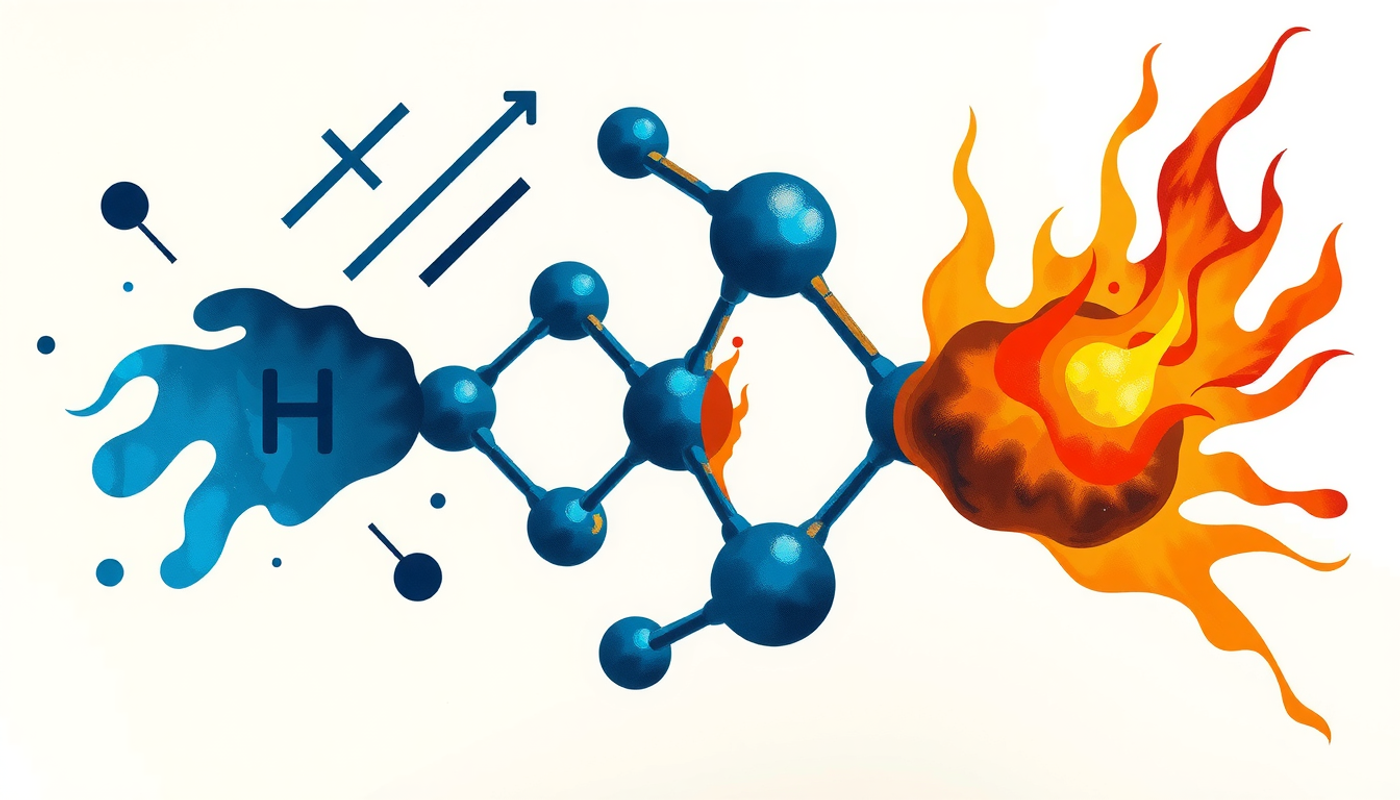
The system controlling this reaction is called the hypothalamic-pituitary-adrenal axis, or HPA axis. When the amygdala — the brain's threat detection center — identifies danger, it signals the hypothalamus. The hypothalamus releases corticotropin-releasing hormone, which triggers the pituitary gland to secrete ACTH into the bloodstream. ACTH travels to the adrenal glands sitting on top of the kidneys and commands them to produce cortisol. The entire cascade takes about twenty-five minutes to reach peak cortisol levels [3], [4].
Hans Selye — a Hungarian-Canadian physiologist — was the first to describe this system in 1936, in a one-page letter to Nature. He identified the stress triad in rats: adrenal cortex enlargement, thymus and lymph node atrophy, and gastric erosions [5]. Selye published over fifteen hundred articles and thirty-two books, and gave the world the words "stress," "eustress," and "distress" [6].
The critical distinction between acute and chronic stress lies in feedback regulation. In acute stress, cortisol sends its own shutdown signal and the cascade stops. In chronic stress, this feedback loop breaks down. Glucocorticoid receptors become resistant, the diurnal cortisol curve flattens, and the system enters a state of persistent dysregulation that promotes neuroinflammation and structural brain changes [7].
Two Receptors, Two Fates
This is where the story gets genuinely interesting. The brain contains two distinct receptor types for cortisol, and each one does the opposite of the other.
Mineralocorticoid receptors, or MRs, have roughly ten times higher binding affinity for cortisol than glucocorticoid receptors, or GRs [8]. This means that even at baseline cortisol levels, MRs are nearly saturated. These receptors concentrate in the hippocampus and amygdala, and their job is threat appraisal and response selection.
GRs have lower affinity and only become substantially activated at stress-level cortisol concentrations. They are distributed throughout the brain, with especially high density in the prefrontal cortex.
This differential affinity creates the foundation for the inverted-U relationship: at moderate cortisol levels, predominant MR activation enhances memory performance. At high cortisol levels, GR saturation impairs it [8]. Put simply: a little stress helps you learn better. Too much destroys you.
The Hippocampus: Ground Zero for Cortisol Damage
The hippocampus — a seahorse-shaped structure deep in the temporal lobe — has the highest density of cortisol receptors in the entire brain [9]. This is the region that builds new memories and transfers information from short-term to long-term storage. And precisely for this reason, it is the most vulnerable part of the brain to chronic stress.
The damage is measurable. A meta-analysis of MRI brain scans from depressed patients found that left hippocampal volume was on average eight percent smaller and right hippocampal volume ten percent smaller than in healthy controls [10]. In people with PTSD, another meta-analysis of thirteen studies with 215 patients and 325 controls reported 6.9 percent smaller left hippocampus and 6.6 percent smaller right hippocampus [11]. In victims of childhood sexual abuse with PTSD, that number reached sixteen percent [12].
Robert Sapolsky at Stanford built the mechanistic framework. In a landmark 1990 primate study, he implanted cortisol pellets directly into vervet monkey hippocampi and showed that damage occurred selectively in the CA3 region: dendritic atrophy, soma shrinkage, and cell death [13]. Sapolsky proposed the "glucocorticoid cascade hypothesis": cortisol-induced hippocampal damage impairs HPA negative feedback, leading to higher cortisol, which causes more damage. A vicious cycle [14].
But here is the good news. The damage is reversible. When patients with Cushing's syndrome — who have chronically elevated cortisol — were treated, their hippocampal volume increased by up to ten percent. The magnitude of recovery correlated significantly with the degree of cortisol reduction [15]. The brain can heal. Chronic stress is not a life sentence.
Bruce McEwen and the Architecture of Stress in the Brain
Bruce McEwen at Rockefeller University — who lived from 1938 to 2020 — made the foundational discovery of adrenal steroid receptors in the hippocampus in 1968 and spent five decades mapping how stress reshapes neural architecture.
His most striking finding: twenty-one days of chronic restraint stress causes reversible shortening of dendrites and loss of spine synapses in hippocampal pyramidal neurons. But the same chronic stress produces dendritic growth in the basolateral amygdala — the exact opposite direction [16]. This bidirectional remodeling explains the stress paradox: why stress simultaneously weakens contextual memory while strengthening emotional memory.
McEwen coined the term "allostatic load" with Stellar in 1993 — the cumulative wear and tear on the body from repeated or chronic stress [17]. He identified four pathological patterns: repeated hits from multiple stressors, failure to habituate, prolonged response due to delayed shutdown, and inadequate response triggering compensatory hyperactivity [18], [19].
Three Stages of Memory, Three Opposite Reactions
The single most important discovery in stress-memory research is that stress affects the three stages of memory — encoding, consolidation, and retrieval — in fundamentally different and sometimes opposite ways.
Dominique de Quervain's 1998 paper in Nature was the first to demonstrate that glucocorticoids specifically impair memory retrieval. Rats given footshock thirty minutes before a retention test showed impaired spatial memory. But when footshock was given two minutes or four hours before testing, no impairment occurred. The effect tracked circulating corticosterone levels precisely, and blocking corticosterone synthesis with metyrapone abolished it [20].
Marian Joëls at Utrecht University proposed the critical "timing hypothesis": norepinephrine creates a hypervigilant state that facilitates memory encoding, and this effect is enhanced when cortisol arrives at the amygdala simultaneously. But cortisol rises not synchronized with norepinephrine actually suppress its beneficial effect [2], [21]. In plain language: stress during learning strengthens memory. Stress before or after learning destroys it.
The most comprehensive meta-analysis in this field analyzed 113 independent studies with 6,216 participants and the results were unambiguous. Stress before encoding impaired memory — unless the delay was very short and the materials were directly related to the stressor. Post-encoding stress enhanced consolidation. And stress at the point of retrieval significantly impaired memory across all studies and paradigms [22].
Think about what this means. The examination system creates exactly the conditions — stress at the moment of retrieval — that are neurobiologically the worst possible scenario for demonstrating knowledge.
Lars Schwabe and colleagues integrated these findings into a "dual-mode model": stress causes a shift from flexible hippocampal memory (cognitive learning) to rigid striatal memory (habit learning). Stressed individuals default to rote, inflexible responses [23], [24].
Choking Under Pressure: Why the Best Students Suffer Most
Here comes one of the most counterintuitive findings in the entire field.
Sian Beilock at the University of Chicago showed that performance pressure selectively harms individuals with high working memory capacity — the very people who normally perform best. Without pressure, high-capacity individuals outperformed others by about half a standard deviation. Under pressure, this advantage completely vanished [25]. Pressure consumes the working memory resources that high-capacity individuals normally rely upon for superior performance. Beilock identified two distinct choking mechanisms: "distraction" — pressure creates task-irrelevant worries that hijack attention — and "explicit monitoring" — pressure prompts excessive attention to skill execution, disrupting automatized performance [26].
Math anxiety is a textbook example of this mechanism. It functions as a "dual-task" condition: preoccupation with math-related fears operates like a resource-demanding secondary task, disrupting central executive processes and producing measurably smaller working memory spans [27]. A meta-analysis of 57 studies found the correlation between math anxiety and math performance to be approximately −0.30 to −0.34, with working memory significantly mediating the relationship [28].
And this goes beyond math. Students with higher salivary cortisol levels immediately before a written final exam scored significantly lower [29]. During high-stakes testing weeks, student cortisol rose by an average of roughly fifteen percent, with male students showing spikes of around thirty-five percent. Students from the most disadvantaged neighborhoods showed the largest cortisol changes and the worst test scores [30]. A 2025 study using hair cortisol — a chronic stress biomarker — found that cumulative cortisol nearly doubled from a non-exam month to an exam month [31].
How big is the problem? Meta-analytic estimates indicate 25 to 40 percent of students experience test anxiety, with 12 to 18 percent reporting severe levels [32]. The weighted mean prevalence of non-specific anxiety among university undergraduates — across 89 studies with roughly 130,000 participants — is 39.65 percent [33].
The Burnout Epidemic in Medical Students
If you think test anxiety is just a passing discomfort, look at medical students.
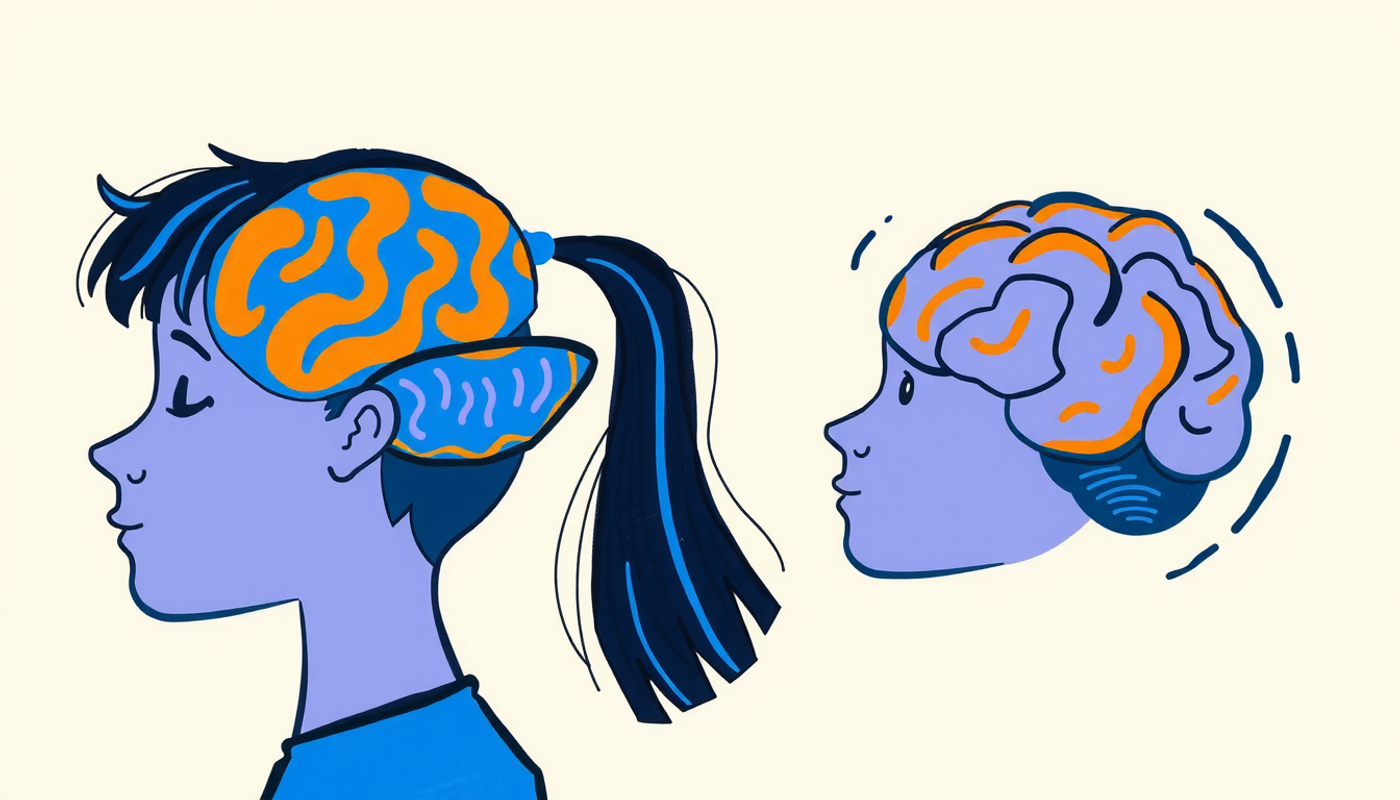
A meta-analysis of 42 studies with roughly 27,000 medical students worldwide reported overall burnout prevalence of 37.23 percent. Emotional exhaustion hit 38.08 percent and depersonalization 35.07 percent [34]. A 2024 systematic review of 64 studies found prevalence ranging from 5.6 to 88 percent depending on country [35]. Most alarming: a 2025 US study found that 73.5 percent of first-year medical students reported work-related burnout symptoms and 44.2 percent reported depression symptoms [36].
Burnout is not just tiredness. It has measurable cognitive consequences. A meta-analysis of 17 studies with 730 burnout patients and 649 controls found that attention and processing speed were 0.43 standard deviations worse, executive function 0.39 standard deviations worse, and episodic memory 0.36 standard deviations worse. The most troubling part: cognitive deficits persisted for several years after treatment despite clinical improvement in other burnout symptoms [37].
The Inverted-U Curve: Elegant, Influential, and Probably Too Simple
Let us talk about the law that almost everyone in psychology has heard of: the Yerkes-Dodson law.
The original 1908 paper by Robert Yerkes and John Dodson used Japanese dancing mice learning a discrimination task with electric shock. For easy tasks, performance improved linearly with increasing shock intensity. The inverted-U appeared only for difficult tasks [38]. The paper was cited only about ten times in the next fifty years before being rediscovered through Donald Hebb's arousal concept.
But is the law actually correct? Teigen in 1994 traced its history and found it has been reinterpreted to apply to punishment, reward, motivation, drive, arousal, anxiety, tension, or stress upon learning, performance, or memory — "a law for all seasons" applied so broadly that its explanatory power may be illusory [38].
David Diamond and colleagues proposed a more nuanced two-phase model in 2007. In phase one, strong emotional experience rapidly activates hippocampal and amygdalar plasticity via catecholamines. In phase two, within minutes, the hippocampus enters a refractory period and new synaptic strengthening is suppressed [39]. This explains why stress enhances memory for the stressful event itself — flashbulb memories — while impairing memory for information encountered shortly afterward.
A clean experimental confirmation came in 2010. Rats trained in a hippocampus-dependent water maze at three stress levels showed that the moderate-stress group made significantly fewer errors. But the inverted-U was specific to hippocampus-dependent spatial learning — no differences emerged for non-hippocampal tasks [40]. A 2024 review in Trends in Cognitive Sciences revisited the inverted-U and showed the actual relationship is more complex than a simple curve, depending on task type, individual differences, and social context [41].
The Vicious Cycle of Sleep, Stress, and Memory
Now let us talk about the sleep you are missing the night before your exam.
The cortisol nadir during early slow-wave sleep is critical for hippocampus-dependent declarative memory consolidation. During slow-wave sleep, slow oscillations, sleep spindles, and hippocampal sharp-wave ripples coordinate to transfer memories from hippocampus to neocortex. Experimentally increasing cortisol during early slow-wave sleep impaired declarative memory [42].
But here is the real problem: sleep deprivation itself raises cortisol. After partial and total sleep deprivation, evening plasma cortisol levels were 37 and 45 percent higher, respectively. Even six consecutive nights of four-hour sleep restriction slowed the cortisol decline rate roughly sixfold [43]. This creates a physiological trap: stress prevents sleep, sleeplessness raises cortisol, elevated cortisol disrupts memory consolidation, and the student shows up to the exam with a brain that is both exhausted and hormonally dysregulated.
The PTSD Paradox: When the Brain Remembers Too Much and Too Little at the Same Time
Post-traumatic stress disorder is the most dramatic illustration of stress's paradoxical effects on memory.
People with PTSD simultaneously have two opposite problems: intrusive flashbacks of emotional trauma details alongside an inability to place the trauma in time and context. A research team in 2020 used a mouse model to demonstrate that contextual amnesia — forgetting the context of trauma — is causally involved in the formation of flashbacks, not just a side effect. When the researchers re-exposed mice to all trauma-related contextual cues, treating the amnesia, the overactive emotional memory was also cured [44].
There is another paradox too. Despite PTSD being a stress disorder, many patients show lower-than-normal baseline cortisol — the exact opposite of what chronic stress models predict. This may reflect HPA axis sensitization rather than exhaustion, and it remains actively debated [45].
COVID: The Global Natural Experiment in Stress and Cognition
The pandemic provided unprecedented population-level data on what stress does to the brain.
The largest study to date was published in the New England Journal of Medicine in 2024 and found that ICU-admitted patients showed cognitive deficits equivalent to roughly minus 0.63 standard deviations — approximately 9 IQ points. Even patients with unresolved persistent symptoms showed minus 0.42 standard deviations and 2.4 times higher probability of moderate cognitive impairment [46]. A meta-analysis of 81 studies found that 22 percent of individuals exhibited cognitive impairment twelve weeks or more after COVID [47].
But more striking than the virus itself: a 2025 UK Biobank neuroimaging study found that the pandemic accelerated brain aging by an average of 5.5 months even in healthy, uninfected individuals — attributable purely to psychosocial stress [48].
When Stress Helps: Findings That Challenge the Damage Narrative
By this point you might think stress is purely destructive. The data tells a more complicated story.
Cortisol enhances emotional memory consolidation. But only in emotionally aroused animals. In calm animals, no enhancement occurred [49]. The beta-adrenergic antagonist propranolol completely blocked corticosterone-induced memory enhancement. Neither glucocorticoids alone nor noradrenergic arousal alone is sufficient — both must co-occur [50].
Glucocorticoids in the prefrontal cortex simultaneously enhance memory consolidation and impair working memory through the same neural mechanism — membrane-bound steroid receptor activation and noradrenergic-dependent signaling [51].
Another remarkable finding: oral propranolol administered before fear memory reactivation in humans erased the behavioral expression of conditioned fear twenty-four hours later and prevented fear return. But declarative memory of the fear association remained intact — only the emotional charge was eliminated [52]. A meta-analysis of 14 studies with 478 participants confirmed an effect size of minus 0.51 for propranolol-induced reconsolidation impairment [53].
Rewriting the Stress Narrative: Interventions That Actually Work
Now let us talk about what can be done.
Perhaps the most powerful finding comes from a 2016 study in Science. People who learned material through retrieval practice — practice testing — showed no memory impairment under acute laboratory stress. The stressed retrieval-practice group actually outperformed the non-stressed restudy group: 10.3 items recalled versus 8.7. The senior author stated: "It was as if stress had no effect on their memory" [54]. A survey of 1,408 students found that 72 percent reported retrieval practice reduced their test nervousness [55].
Ten minutes of expressive writing — writing about test-related worries immediately before an exam — significantly improved performance. Highly anxious students who wrote scored B+ compared to B- for highly anxious students who did not. The mechanism: writing offloads worries from working memory, freeing cognitive resources [56].
When people were told "stress helps your performance," it actually did. In a classroom randomized controlled trial, students receiving stress reappraisal instructions scored significantly higher on math exams [57]. A 2024 meta-analysis of 44 effect sizes confirmed that stress reappraisal interventions produce a significant 0.23 standard deviation improvement in task performance, with mixed interventions reaching 0.45 [58].
Exercise, Mindfulness, and Social Support: Evidence From Randomized Trials
Vigorous exercise before stress exposure dampens cortisol. A randomized controlled trial with 83 healthy men showed that exercise at 70 percent of heart rate reserve produced a dose-dependent reduction in cortisol response to a subsequent stressor: lower total cortisol, diminished reactivity, and faster recovery [59]. A meta-analysis of 10 RCTs confirmed that physical activity significantly reduces cortisol with an effect size of minus 0.37 [60].
Mindfulness has strong evidence too. A meta-analysis of 5 RCTs with 190 participants found mindfulness-based interventions produced significant cortisol reduction with effect size 0.41, and standard MBSR programs showed a larger effect of 0.81 [61]. Another meta-analysis found a medium-sized effect of 0.62 on blood cortisol across 10 RCTs [62]. And a landmark meta-analysis of 111 RCTs with 9,538 participants showed that mindfulness-based interventions had small-to-moderate effects on working memory accuracy, executive attention, and cognitive inhibition [63].
Social support matters as well. A double-blind RCT demonstrated that social support from a close friend significantly suppressed cortisol during psychosocial stress. The combination of intranasal oxytocin plus social support produced the lowest cortisol concentrations and the highest subjective calmness [64].
Epigenetics: When Stress Gets Written Into DNA
One of the most exciting research frontiers involves epigenetic mechanisms — changes that alter gene expression without changing the DNA sequence itself.
Two key genes have been identified: FKBP5 and NR3C1, the glucocorticoid receptor gene. Childhood abuse in carriers of FKBP5 risk alleles causes an average 12.3 percent decrease in DNA methylation at specific sites, leading to glucocorticoid receptor resistance [19]. Aging and psychosocial stress lower FKBP5 methylation, increase its expression, and drive inflammation [65].
Perhaps the most provocative finding involves transgenerational effects: Holocaust survivors show altered FKBP5 methylation, and their offspring — who did not experience the trauma directly — show an inverse methylation pattern [66]. Higher NR3C1 methylation has been found in the hippocampi of suicide victims with childhood abuse histories, producing reduced glucocorticoid receptor expression [67]. Critics note that offspring outcomes could reflect postnatal environment rather than true epigenetic inheritance. Animal models support germline transmission, but human evidence remains correlational.
Digital Stress: The New Frontier
A 2025 RCT published in PNAS Nexus demonstrated that blocking mobile internet for two weeks improved sustained attention, anxiety, and depression symptoms [68]. A UAE study found that 75.3 percent of participants were classified as smartphone addicts and 45.4 percent showed likely cognitive impairment, with a significant association between addiction and cognitive decline [69].
Digital technology itself has become a chronic stressor with measurable cognitive consequences. This is a field that will attract enormous research attention in the years ahead.
Real-Time Neural Decoding of Stress
Research from 2024 proposed real-time decoding of neural stress signatures to predict memory effects, identifying elevated corticosteroids, increased amygdala activity, and dampened medial prefrontal cortex activity as the biological substrates of stress's arousal, affective, and cognitive components [70]. A 2024 review highlighted that chronic stress impairs cognitive flexibility, behavioral inhibition, and working memory through mechanisms that current therapies fail to adequately address — pointing to a significant treatment gap [71].
CONCLUSION
The research assembled here tells a more nuanced story than the popular narrative that stress is bad for your brain. Stress is a sculptor, not a wrecking ball. It carves memory systems toward emotional salience and away from contextual detail, toward habit and away from flexibility, toward vigilance and away from reflection. This remodeling is adaptive when threats are real and temporary — and devastating when chronic, uncontrollable, or experienced during vulnerable developmental windows.
Perhaps the most actionable finding for education policy is the phase-specific nature of stress effects: stress during learning can enhance consolidation, but stress at the point of retrieval — the exact condition of high-stakes testing — impairs recall. Examination systems are neurobiologically designed to produce the worst possible conditions for demonstrating knowledge.
The interventions with the strongest evidence — retrieval practice, stress reappraisal, expressive writing, exercise, and mindfulness — all work by either buffering the cortisol response or building stress-resilient memory traces. And perhaps the most important message is this: chronic stress changes the brain, but the brain can heal. Hippocampi that shrank under pressure grow back when cortisol drops. The enemy is not always ignorance. Sometimes the enemy is the pressure that prevents you from showing what you know.
Frequently Asked Questions
Is stress always bad for learning?
No. Moderate stress during learning actually strengthens memory consolidation. The problem begins when stress is chronic or occurs at the moment of information retrieval. This timing distinction is the basis of the Yerkes-Dodson inverted-U curve and has been confirmed by meta-analyses of over a hundred studies.
How long does it take for chronic stress to damage the brain?
Animal studies show that twenty-one days of chronic stress is sufficient to cause structural changes in hippocampal dendrites. In humans, meta-analyses report hippocampal volume reductions of six to sixteen percent in individuals with chronic stress histories including depression and PTSD.
Is brain damage from stress reversible?
Yes, at least partially. Cushing's syndrome patients showed hippocampal volume increases of up to ten percent after treatment and cortisol reduction. Evidence suggests the brain has significant repair capacity, provided the source of stress is reduced.
Why do some people perform better under pressure?
Research shows that stress reappraisal — believing that a racing heart and arousal are signs of the body preparing for performance rather than signs of failure — improves cardiovascular response and cognitive performance. Genetics and prior experience also play roles in individual resilience.
What is the best evidence-based method for combating test anxiety?
Three interventions have the strongest evidence: frequent retrieval practice which makes memories stress-resistant, ten-minute expressive writing before exams which offloads worries from working memory, and stress reappraisal which reframes anxiety as a performance tool rather than a threat.