Introduction
Every night, somewhere around two thousand bursts of electrical activity sweep through your hippocampus while you sleep. Each burst lasts less than a tenth of a second. And each one carries a verdict: this experience stays, that one goes [1]. You will never know which memories were saved. You will never know which ones were deleted. The decision happened without your permission, without your awareness, and without any conscious effort on your part.
This is the science of memory tagging — the collection of biological mechanisms that determine how the brain decides what to remember and what to forget. It is not one system. It is many, operating at different scales and different timescales. Some work at the level of individual synapses, marking them with molecular flags that last only minutes. Others work across entire brain regions, coordinating electrical patterns that replay the day's events during sleep. And a newly discovered set of molecular timers in the thalamus acts like a series of gates, promoting some memories into permanent storage and quietly demoting others into oblivion [2].
What makes this story fascinating is not just the science — it is what the science reveals about who we are. Your identity is built from the memories your brain chose to keep. And the vast majority of your life was discarded.
The Paradox That Started It All
The year was 1997. In a laboratory at the Federal Institute for Neurobiology in Magdeburg, Germany, a neuroscientist named Uwe Frey was staring at data that did not make sense.
The problem was straightforward but profound. Everyone knew that long-term potentiation — LTP, the strengthening of connections between neurons — required new proteins to be built. Without protein synthesis, a temporary boost in synaptic strength would fade within a few hours. The proteins were necessary to make the change permanent. But here was the puzzle: those proteins were manufactured in the cell body, far from the synapses where they were needed. And the cell body could not possibly know which of its thousands of synapses had just been activated. So how did the right proteins get to the right synapses?
If the proteins just floated everywhere, then every synapse on the neuron would get strengthened — not just the ones that had been active. That would be a disaster. Memory depends on specificity. The brain needs to strengthen only the connections that were involved in a particular experience, not every connection on the cell.
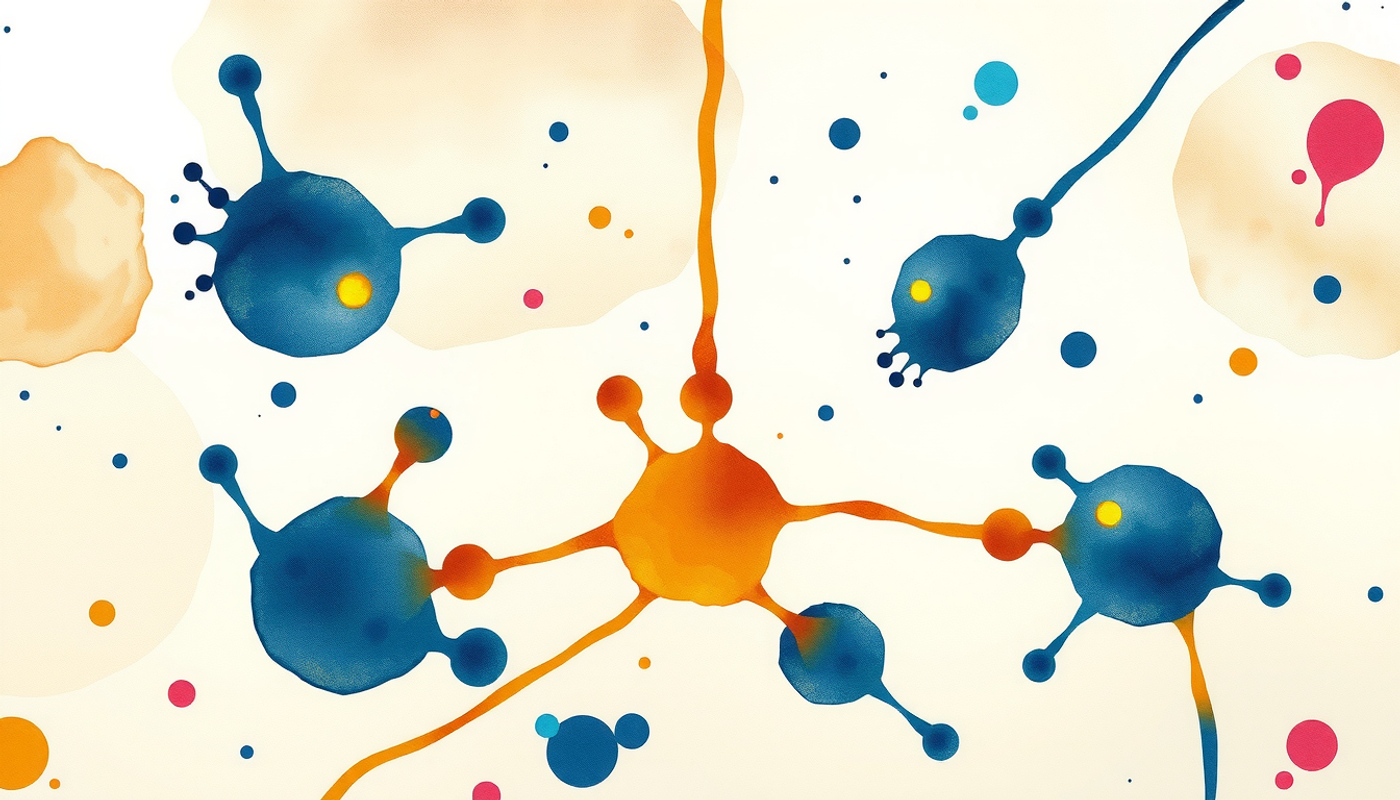
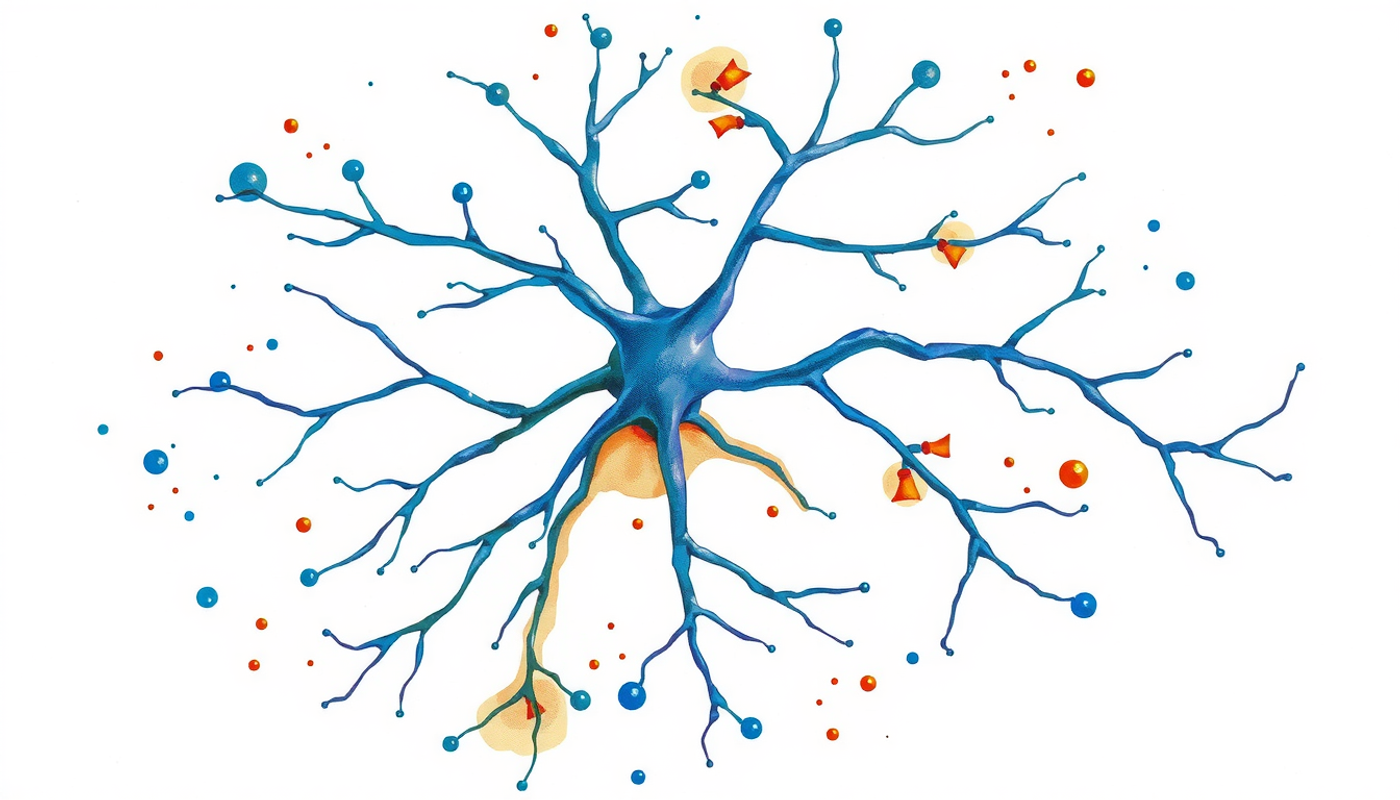
Frey, together with Richard Morris at the University of Edinburgh, proposed a solution that was elegant in its simplicity. They called it the synaptic tagging and capture hypothesis [3]. The idea: when a synapse is activated strongly enough, it does not immediately get the proteins it needs. Instead, it sets a temporary molecular mark — a tag. This tag is like a flag waving in the wind, saying "I was active — send supplies here." The tag is cheap to make. It does not require protein synthesis. It just marks the location.
Meanwhile, if the neuron receives a strong enough signal from any source, protein synthesis kicks in at the cell body. The newly made plasticity-related proteins — PRPs — then travel through the cell. But they only stick at the synapses that have been tagged. Untagged synapses ignore them. Tagged synapses capture them. And once captured, the temporary change becomes permanent.
Think of it like this. A construction crew arrives at an apartment building with materials to renovate. But they do not renovate every apartment. They only work on the ones that have put a "renovate me" sign on the door. The sign is the tag. The construction materials are the PRPs.
A Tag That Changes Everything
The beauty of the synaptic tagging and capture model — STC for short — is that it explains something that no previous theory could: how weak experiences can become permanent memories.
Here is what Frey and Morris showed in their original experiments, published in Nature [3]. They stimulated one pathway in a hippocampal slice with a weak signal — just enough to produce early-phase LTP, the kind that fades within three hours. On its own, this weak stimulation would never produce a lasting change. But if a second, separate pathway on the same neuron received a strong stimulation within a time window of about one to two hours, something remarkable happened. The weak pathway also became permanent.
Why? Because the strong stimulation triggered protein synthesis. The weak pathway had already set its tag. And when the proteins arrived, the tagged weak synapse captured them just as effectively as the strong one. Two different inputs. Two different strengths. But both converted into lasting memories — because one provided the tag and the other provided the proteins.
This was not just a clever finding about cellular biology. It had direct implications for how we learn. It meant that a boring lecture (weak encoding) could become a lasting memory if something exciting happened around the same time (strong encoding that triggers protein synthesis). The exciting event provides the molecular resources. The boring lecture had already set its tag. And the two become linked.
A 2011 review in Nature Reviews Neuroscience by Victor Redondo and Richard Morris refined the hypothesis further [4]. They showed that the tagged state and the expression of LTP are actually dissociable — you can have a tag without potentiation, and potentiation without a tag. Structural changes at the synapse (growing new receptor slots, reorganizing the actin skeleton) follow partly different rules from functional changes (stronger electrical transmission). This distinction matters because it means memory formation is even more layered than originally thought.
What are the molecular components of the tag? Research points to several candidates: reorganization of actin filaments that form the structural skeleton of the synapse, persistent activation of enzymes called CaMKII and ERK, and the atypical protein kinase PKMzeta [5]. Srisai Sajikumar and colleagues showed in 2011 that BDNF — brain-derived neurotrophic factor — is essential for the capture process, while PKMzeta specifically establishes the tag for strengthening [5].
The most recent comprehensive review, published in 2024 in the Philosophical Transactions of the Royal Society B, synthesizes twenty-seven years of follow-up work [6]. It documents how neuromodulators like dopamine and noradrenaline influence both tag setting and protein synthesis, and how the STC framework applies to disease states including Alzheimer's and age-related memory decline.
The Brain's Fireworks Show
If synaptic tags explain what happens at individual connections, sharp wave ripples explain what happens at the network level. And they are, by any measure, the most dramatic electrical event in the mammalian brain.
Gyorgy Buzsaki first heard one in 1981. He was a postdoctoral researcher at the University of Western Ontario, listening to the brain activity of anesthetized rodents through a loudspeaker. He had spent years getting used to the smooth, rhythmic oscillations of the awake brain. Then the animal fell asleep, and the speaker emitted a sudden, explosive burst — a "bong" that startled him. Then another. And another.
What Buzsaki was hearing were sharp wave ripples — SPW-Rs. Brief, violent eruptions of coordinated neural activity in the hippocampus, lasting about fifty to one hundred milliseconds and oscillating at roughly 140 to 200 hertz in rodents [7]. During each ripple, approximately fifteen percent of all hippocampal pyramidal neurons fire nearly simultaneously [8]. In a structure containing hundreds of thousands of neurons, that means each ripple involves the coordinated firing of tens of thousands of cells within a fraction of a second.
Buzsaki had proposed as early as 1989 that these ripples might serve a memory function. His "two-stage model" suggested that the brain operates in two modes: an acquisition mode during wakefulness (dominated by theta oscillations during active exploration) and a consolidation mode during rest and sleep (dominated by sharp wave ripples that replay recent experiences) [9].
But the breakthrough came in March 2024, when Wannan Yang — a doctoral student in Buzsaki's lab at New York University — published a paper in Science that changed how we think about memory selection [1]. Yang recorded up to five hundred neurons simultaneously in mice running mazes. She tracked what happened during rest periods between runs — moments when the mice paused to drink sugar water.
What she found was stunning. During those rest periods, some maze experiences triggered a flurry of sharp wave ripples. Others triggered few or none. And the experiences that were replayed most during waking ripples were the same ones replayed during subsequent sleep. The ones that were not replayed while awake were not replayed during sleep either.
The implication was clear: sharp wave ripples during wakefulness are how the brain decides what to remember. They are the tagging mechanism at the network level. An experience followed by five to twenty ripples during a subsequent rest period gets flagged for consolidation. An experience followed by few or no ripples is left to fade [8].
Buzsaki put it directly: sharp wave ripples are the physiological mechanism the brain uses to decide what to keep and what to discard.
What does this mean in practice? It means rest matters. Not sleep — rest. The moments between tasks. The coffee break. The walk after a study session. These are not wasted time. They are the moments when your hippocampus is running its selection algorithm, deciding which of your recent experiences are worth saving. A related study on the importance of sleep and memory can be found at Mindomax's exploration of the sleeping brain.
An earlier study by Fernandez-Ruiz and colleagues, published in Science in 2019, had shown that longer-duration ripples are associated with better memory performance [10]. Optogenetically prolonging spontaneous ripples improved maze learning. Disrupting them impaired it. The duration of the ripple, not just its occurrence, matters.
And the numbers during sleep are extraordinary. While awake rest might produce a handful of ripples per pause, sleep generates them continuously — estimates suggest the rate is roughly thirty to two hundred events per minute during non-REM sleep [11]. Over a full night, that means thousands of replay events, each one reinforcing the memories that were tagged during the day.
Molecular Timers: The Discovery That Rewrites the Textbook
Until November 2025, the dominant model of long-term memory was essentially binary. A memory either made it through hippocampal consolidation or it did not. Like a light switch: on or off. Saved or deleted.
Priya Rajasethupathy's laboratory at The Rockefeller University demolished that model.
In a paper published in Nature, Andrea Terceros, Celine Chen, and colleagues described a cascade of molecular timers that operate across three brain regions — hippocampus, thalamus, and cortex — to determine not just whether a memory survives, but for how long [2].
The team used an inventive experimental approach. They built a virtual-reality system for mice — immersive environments that could be precisely controlled and repeated. By varying how many times a mouse experienced a particular context, they could manipulate the "importance" of different memories. Then they looked inside the brain to see what happened to memories of different strengths over time.
Three transcriptional regulators emerged as gates. The first, called Camta1, operates in the thalamus — a deep brain structure that sits between the hippocampus and the cortex like a relay station. Camta1 and its molecular targets ensure that a memory persists beyond its initial formation. Think of it as the first checkpoint.
The second, Tcf4, also in the thalamus, activates next. It provides structural support — cell-adhesion molecules and scaffolding proteins that physically strengthen the connections carrying the memory.
The third, Ash1l, operates in the anterior cingulate cortex — a region of the prefrontal cortex involved in decision-making and attention. Ash1l recruits chromatin-remodeling programs that lock the memory into long-term cortical storage [12].
Here is what is remarkable about this system: these three regulators are not necessary for forming the memory in the first place. They are only necessary for maintaining it. Disrupt Camta1, and the memory forms normally but fades within days. Disrupt Tcf4, and it fades within weeks. Disrupt Ash1l, and it never makes it into the cortical long-term store.
Even more striking: when the researchers enhanced these regulators — using gain-of-function manipulations — memories that would normally have been forgotten were rescued and consolidated.
Rajasethupathy described the system this way: what we choose to remember is a continuously evolving process, not a one-time flip of a switch. Unless a memory gets promoted onto each successive timer, it is primed to be forgotten [13].
This finding built on earlier work from the same lab. In 2023, Rajasethupathy's team had identified the anteromedial thalamus as a critical hub for memory selection, showing that it helps route memories from the hippocampus to the cortex for long-term stabilization [14].
When Behavior Tags Memory
The synaptic tagging hypothesis was born in brain slices — isolated pieces of hippocampal tissue kept alive in a dish. But does the same principle operate in a living, behaving animal?
Diego Moncada and Haydee Viola at the University of Buenos Aires answered that question in 2007 [15]. Their experiment was simple but its implications were enormous. They gave rats a weak training experience — an inhibitory avoidance task calibrated to produce only a short-term memory that would be forgotten within hours. On its own, this weak training would leave no lasting trace.
But if the rats explored a novel open field within a one-hour window around the training, the weak memory became permanent. It lasted at least twenty-four hours — the threshold for long-term memory in rodents. If the open field was familiar rather than novel, nothing happened. The memory faded as expected.
The explanation mapped directly onto STC. The weak training set a "learning tag" in the hippocampus. The novel experience — which is biologically arousing because the brain treats novelty as potentially important — triggered the synthesis of plasticity-related proteins. The tagged synapses captured those proteins. And the weak memory was converted into a lasting one.
Moncada and Viola called this behavioral tagging. In 2009, Ballarini and colleagues generalized it across multiple memory paradigms, showing it works for spatial recognition, contextual fear, and taste aversion [16]. The group further showed that the effect depends on dopamine D1/D5 receptors and beta-adrenergic receptors in the hippocampus — specifically for the protein-synthesis step, not for setting the tag itself [17].
A later study by Tomaiuolo and colleagues added another twist: the tagging window extends much later than originally thought. Novelty exposure up to eleven hours after weak training could still promote memory consolidation, through a "maintenance tag" that depends on the immediate early gene Arc in the dorsal hippocampus [18].
What does this mean for everyday life? It suggests that what happens after you learn something matters almost as much as the learning itself. A student who studies a weak topic and then immediately does something novel and engaging — takes a walk, has an interesting conversation, encounters a surprising fact — may consolidate that weak memory better than one who immediately moves on to the next chapter. The novelty provides the biological resources the learning tag needs to capture.
The Emotional Stamp
Not all memories are created equal. Ask anyone where they were on September 11, 2001. If they are old enough to remember, they can probably describe the scene in vivid detail — who told them, what room they were in, how the light fell through the window. But ask them what they had for lunch three days before, and they draw a blank.
James McGaugh, a neuroscientist at the University of California, Irvine, spent decades studying why emotional events produce such durable memories. His work, synthesized in a landmark 2004 review in the Annual Review of Neuroscience [19], revealed the mechanism: the amygdala — an almond-shaped structure deep in the temporal lobe that processes fear, threat, and emotional significance — acts as an amplifier for memory consolidation.
When something emotionally arousing happens, the adrenal glands release stress hormones: epinephrine and cortisol. These hormones activate noradrenergic receptors in the basolateral amygdala — the BLA. The BLA then sends signals to the hippocampus and cortex that say, in effect: strengthen this memory. Make it last. And the effect is specific. Block noradrenergic receptors in the BLA with a drug like propranolol, and the emotional memory enhancement disappears. The event is still remembered, but the vivid, high-definition quality fades to something ordinary [20].
The phenomenon was first described in a different form by Roger Brown and Robert Kulik in 1977. They coined the term "flashbulb memory" to describe the vivid, snapshot-like recollections people have of emotionally significant public events [21]. In their study, about ninety percent of participants recalled detailed circumstances of learning about the assassination of President John F. Kennedy. Later research showed that flashbulb memories are not literally photographic — confidence in their accuracy rises faster than actual accuracy — but their durability and vividness are real and well-documented.
Emotional tagging is essentially another layer of the same system. The amygdala does not store the emotional memory itself. It modulates the consolidation process in other regions. It turns up the volume on the molecular machinery that converts short-term traces into long-term ones. McGaugh himself called this "creating, selectively, lasting memories of our more important experiences" [20].
Dopamine: The Novelty Signal
Every tagging system needs a trigger — something that tells the brain "this is worth saving." For emotional memories, the trigger is stress hormones acting through the amygdala. But what about everyday experiences that are not particularly emotional but still important? What about the new restaurant you discovered, the shortcut you found on your commute, the name of a person you just met at a conference?
The answer involves dopamine. And the story is more complicated than most people think.
The traditional view, proposed by John Lisman and Anthony Grace in 2005, centers on the hippocampal-VTA loop [22]. The hippocampus detects novelty — a mismatch between what it expects and what it receives. This mismatch signal travels through a relay involving the nucleus accumbens and ventral pallidum to the ventral tegmental area — the VTA — a small midbrain structure that is the brain's main dopamine factory. VTA neurons then release dopamine back into the hippocampus, lowering the threshold for long-term potentiation. In effect, dopamine tells the hippocampus: this is new, pay attention, store this.
But a 2016 paper in Nature by Tomonori Takeuchi, Adrian Duszkiewicz, and Richard Morris at the University of Edinburgh rewrote part of this story [23]. They discovered that the locus coeruleus — a tiny brainstem nucleus traditionally associated with the noradrenaline system — actually co-releases dopamine into the hippocampus. And locus coeruleus neurons project more densely to the hippocampus than VTA neurons do. When they optogenetically activated locus coeruleus neurons, it mimicked the effect of novelty on memory. When they blocked the dopamine receptors, the novelty-memory boost disappeared.
A 2019 review proposed that the VTA and locus coeruleus constitute two parallel novelty-detection systems [24]. The VTA handles "common novelty" — events that share structural features with past experience and support the gradual extraction of schemas and generalizations. The locus coeruleus handles "distinct novelty" — entirely new events that need to be remembered as vivid, specific episodes. Together, they determine which of your experiences get the dopaminergic stamp that promotes consolidation.
This connects directly to the behavioral tagging literature. Remember how novelty was the key ingredient that rescued weak memories in Moncada and Viola's experiments? Dopamine was the molecule responsible. Block dopamine D1/D5 receptors in the hippocampus, and novelty no longer rescues weak training. The tag is still there, but the proteins never arrive [17].
Which Neurons Win the Competition?
There is another dimension to memory tagging that operates at the level of individual neurons. Not every eligible neuron in the hippocampus participates in every memory. Only a small fraction gets recruited. So what determines which neurons "win" the right to store a particular experience?
The answer involves a protein called CREB — cyclic AMP response element-binding protein. Sheena Josselyn at the Hospital for Sick Children in Toronto and Alcino Silva at UCLA independently showed that neurons with higher levels of CREB activity are preferentially recruited into memory traces — what neuroscientists call engrams [25].
The mechanism is elegant. CREB increases the intrinsic excitability of a neuron — how easily it fires in response to input. Neurons that are more excitable at the moment of learning are more likely to be activated during encoding, and therefore more likely to be incorporated into the engram. It is a competition. And the winners are the neurons that are, quite literally, most ready to fire.
In 2012, Xu Liu, Steve Ramirez, and Susumu Tonegawa's group at MIT provided the most dramatic demonstration of engram reality. They used optogenetics — a technique that allows specific neurons to be controlled with light — to tag the neurons active during a fear-conditioning experience in mice. Days later, they reactivated only those tagged neurons with light. The mice froze in fear, even though they were in a completely different environment [26]. The memory was not in a brain region. It was in a specific set of cells. And activating those cells was sufficient to recall the memory.
The co-allocation principle extends this further. When two events occur close together in time — within a window of a few hours — the post-training excitability window means many of the same neurons get recruited for both memories. The memory traces overlap. And this overlap can cause the two memories to be recalled together, even if they have nothing in common [27]. This may explain why events that happen near each other in time feel connected in memory, even when logic says they should not.
Sleep: When the Tags Get Processed
All of these tagging mechanisms — synaptic tags, sharp wave ripples, dopaminergic signals, emotional stamps, CREB-driven neuronal allocation — would be useless without a consolidation phase. And that phase is sleep.
The relationship between sleep and memory is one of the most robust findings in all of neuroscience. Matthew Walker and Robert Stickgold's influential 2004 review documented the evidence systematically [28]. Sleep improves declarative memory, procedural memory, and emotional memory — but through different stages and different mechanisms.
During non-REM sleep — particularly slow-wave sleep — the hippocampus replays the day's experiences through sharp wave ripples. These ripples are temporally coordinated with two other brain oscillations: slow oscillations (about 0.5-1 Hz) generated by the cortex, and sleep spindles (12-15 Hz bursts) generated by the thalamus. The three oscillations nest together like Russian dolls: slow oscillations frame the spindles, spindles frame the ripples, and ripples carry the specific memory content. This triple-nested coupling is now considered the canonical mechanism of sleep-dependent declarative memory consolidation [29].
REM sleep — the stage associated with vivid dreaming — appears to serve different functions. It strips emotional charge from memories. Van der Helm and colleagues showed in 2011 that REM sleep reduces amygdala reactivity to previously encountered emotional stimuli [30]. Walker has described this as "overnight therapy" — sleep preserves the content of an emotional memory while diluting its emotional sting.
One of the most striking demonstrations of sleep's power came from Ullrich Wagner and colleagues in 2004. They had subjects learn a mathematical task with a hidden shortcut rule. After a night of sleep, sixty percent of subjects discovered the rule. After an equivalent period of wakefulness, only twenty-two percent did [31]. Sleep had not just consolidated the memory — it had reorganized it, extracting a pattern that was invisible during waking study.
What about sleep deprivation? The evidence is devastating. Seung-Schik Yoo and colleagues showed in 2007 that a single night of total sleep deprivation reduces hippocampal encoding capacity by roughly forty percent compared to well-rested controls [32]. The hippocampus simply could not form new memories as effectively. For more on how sleep shapes what we remember, see this exploration of spaced repetition and memory.
The Economics of Forgetting
There is a reason the brain does not remember everything. It cannot afford to.
The human brain represents roughly two percent of body mass but consumes about twenty percent of the body's resting energy — approximately twenty watts of continuous power, or about 260 kilocalories per day [33]. It is, gram for gram, roughly ten times more metabolically expensive than muscle tissue. In infants, brain energy consumption can approach fifty percent of total body energy, which partly explains why babies sleep so much — their brains are working overtime.
Building and maintaining memories is not free. Every new synapse needs structural proteins. Every molecular tag requires enzymatic activity. Every replay event during sleep consumes metabolic resources. The brain is constantly performing a cost-benefit analysis: is this experience worth the energy it would take to store it? For the vast majority of daily experience, the answer is no.
Hermann Ebbinghaus documented this in 1885 with his famous forgetting curve — one of psychology's oldest and most replicated findings [34]. Without any review, memory of newly learned material drops to roughly fifty-eight percent within twenty minutes, forty-four percent within an hour, about thirty-three percent within a day, and around twenty-one percent within a month. These numbers come from nonsense syllables — meaningful material decays more slowly — but the qualitative shape of the curve is remarkably consistent.
Cognitive scientist Art Markman at the University of Texas at Austin has framed this in economic terms. In a 2024 column, he described memory as a cost-benefit calculation [35]. The brain invests energy in building a new memory only when it estimates that having that memory will reduce the amount of cognitive work needed in the future. Remembering where the nearest pharmacy is reduces future search time. Remembering a random stranger's outfit does not. The forgetting curve is not a bug. It is the brain's way of being frugal.
What the Science Tells Us About Learning
Every mechanism described in this article has practical implications. Not in a vague, inspirational way. In a specific, evidence-based way.
Rest after learning. Michaela Dewar and colleagues showed in 2012 that a ten-minute period of quiet, eyes-closed rest after learning improved memory recall both fifteen minutes later and seven days later [36]. This was not rehearsal — a follow-up study confirmed the effect works even with non-recallable material [37]. The mechanism is likely sharp wave ripple replay during the rest period. A 2019 meta-analysis across ten studies found a moderate but reliable effect [38].
Test yourself, do not re-read. Henry Roediger and Jeffrey Karpicke showed in 2006 that students who took free-recall tests after studying remembered substantially more on delayed tests than students who re-studied the same material the same number of times [39]. The mechanism is likely related to behavioral tagging: each retrieval attempt is a partially novel encoding event that re-tags and re-strengthens the memory.
Sleep after studying. The evidence is overwhelming. Sleep consolidates tagged memories through coordinated replay. Sleep deprivation reduces hippocampal encoding capacity. One night of sleep can reveal hidden patterns that were invisible during waking study. For students, the implication is blunt: studying until 3 AM and sleeping four hours is worse than studying until 11 PM and sleeping seven hours.
Pair weak learning with novelty. The behavioral tagging literature suggests that encountering something genuinely novel near the time of learning can boost consolidation of otherwise weak memories. This does not mean flashy stimulation — it means genuine novelty that activates the dopaminergic system. A walk through an unfamiliar neighborhood. A conversation about an unexpected topic. An encounter with a surprising fact.
The Debate: Is Memory Tagging Too Clean a Story?
Science is never as tidy as narratives make it seem. The memory tagging framework presented in this article is the dominant model in 2026, but it is not without critics.
Jerome Siegel at UCLA has long argued that the evidence for sleep's role in memory consolidation is overstated [40]. He points out that dolphins and some birds can survive on remarkably little sleep, that sleep deprivation studies often confound tiredness with memory impairment, and that several large replication attempts have yielded mixed results. A 2022 review by Dastgheib and colleagues asked bluntly whether the role of sleep in memory consolidation is overrated [41].
Behavioral tagging in humans has also proved difficult to replicate cleanly. Schomaker and colleagues attempted virtual-reality translations of the rodent paradigm and found inconsistent results. The mechanism is well-established in rats, but the exact time windows and conditions for human behavioral tagging remain unsettled.
The sharp wave ripple story, while compelling, is based primarily on rodent data. Equivalent recordings in humans are limited to rare cases of patients with implanted electrodes for epilepsy treatment. Whether the ripple-based selection mechanism operates identically in the much larger human hippocampus is an open question.
And the molecular timer discovery from Rajasethupathy's lab is only months old. Camta1, Tcf4, and Ash1l are the current best account, but replication and extension studies are ongoing.
None of this invalidates the tagging framework. It enriches it. The history of neuroscience is full of models that were roughly right in their broad outlines but wrong in their details. The tagging story is probably no exception. What matters is that it captures something real: the brain does not passively record experience. It actively evaluates, selects, and decides. Every moment. Every synapse. Every night.
The Architecture of Remembering
Step back and look at the full picture. What emerges is not a single tagging mechanism but a layered architecture of selection that operates across multiple scales and multiple timescales.
At the molecular level, synaptic tags and plasticity-related proteins determine which individual connections get strengthened. At the network level, sharp wave ripples select which experiences get replayed during rest and sleep. At the circuit level, dopaminergic and noradrenergic signals from the VTA and locus coeruleus modulate which replay events lead to lasting consolidation. At the cellular level, CREB-driven excitability determines which neurons get recruited into engrams. At the systems level, Rajasethupathy's molecular timers in the thalamus and cortex govern which consolidated memories persist for weeks and which fade after days. And the amygdala operates as an emotional amplifier across all these levels, boosting the consolidation of experiences that carry biological significance.
Every one of these systems is asking the same question, at its own scale: is this worth keeping? And the default answer, at every level, is no. Forgetting is the brain's natural state. Remembering is the exception that requires active biological investment.
That might sound depressing. It is not. It is liberating. The ninety percent of your experience that vanishes is not lost potential. It is the brain working exactly as evolution designed it — clearing away the noise so the signal can survive.
Your memories are not a complete record of your life. They are a curated collection, assembled by molecular editors working through the night, selecting the few experiences that earned the right to persist. And that curation is what makes you, you.

Frequently Asked Questions
How does the brain decide which memories to keep?
The brain uses overlapping tagging systems operating at different biological scales. At individual synapses, molecular tags mark active connections for strengthening. At the network level, sharp wave ripples in the hippocampus during rest select which experiences get replayed during sleep. Dopamine, noradrenaline, and emotional arousal further modulate which tagged memories receive the biological resources needed for permanent consolidation.
What are sharp wave ripples and why do they matter for memory?
Sharp wave ripples are brief bursts of coordinated electrical activity in the hippocampus, lasting about 50 to 100 milliseconds. During each ripple, roughly fifteen percent of hippocampal neurons fire nearly simultaneously. Research published in Science in 2024 showed that experiences followed by these ripples during waking rest are preferentially replayed during sleep and consolidated into long-term memories.
Can you improve memory retention by resting after learning?
Yes. Studies show that ten minutes of quiet rest after learning improves recall both immediately and up to seven days later. This effect is not driven by conscious rehearsal — it works even with material that cannot be deliberately reviewed. The mechanism likely involves sharp wave ripple replay during the rest period, which tags recent experiences for later sleep-dependent consolidation.
Why do emotional memories last longer than ordinary ones?
Emotional arousal triggers stress hormones that activate noradrenergic receptors in the basolateral amygdala. The amygdala then sends signals to the hippocampus and cortex that amplify the consolidation process. This does not create a separate memory system — it turns up the volume on existing tagging and consolidation mechanisms, making emotional experiences more likely to survive the brain's selection process.
What role does sleep play in memory consolidation?
Sleep provides the consolidation window during which tagged memories become permanent. During non-REM sleep, sharp wave ripples replay the day's tagged experiences in coordination with cortical slow oscillations and thalamic sleep spindles. REM sleep appears to strip emotional charge from memories and extract hidden patterns. Sleep deprivation can reduce hippocampal encoding capacity by roughly forty percent.