Introduction
Try to remember your second birthday. Not the photographs. Not the story your mother tells. The actual event, from the inside.
You cannot. Almost nobody can. This blank stretch at the beginning of every human life has a name, infantile amnesia, and it covers roughly the first three years of everyone reading this sentence. The strange part is not that the memories are gone. The strange part is that the child who lived those years was learning faster than they would ever learn again. Walking. Talking. Recognising faces. Building a working model of physics and other minds. All of it recorded by a brain that was demonstrably paying attention, and almost none of it available later.
For more than a century the assumption was that the infant brain simply could not record. In March 2025 a team at Yale slid twenty-six awake babies into an MRI scanner and found something that complicates that story badly [1]. The memories were being written. What happened afterwards is the real question, and it is a question that reaches from Freud's consulting room to optogenetics laboratories where researchers have switched forgotten infant memories back on in mice.
This is the story of what happened to the first three years of your life.
The Question Nobody Thought To Ask Until 1895
Science took a remarkably long time to notice that everyone is missing the same three years.
The first formal report came from Caroline Miles, an American psychologist who in 1895 published a survey in the American Journal of Psychology asking adults to describe their earliest recollection [2]. Five years later Victor and Catherine Henri ran a larger survey and found the average earliest memory landed at three years and one month. In 1904 G. Stanley Hall described the same gap in his book on adolescence. None of them could explain it. They had simply established that it was real, that it was universal, and that it was oddly consistent from person to person.
More than a century of follow-up work has confirmed those Victorian numbers with better methods. When adults are asked to date their first memory, the mean falls somewhere in the first half of the third year of life, and a large stratified sample of Danish adults put the average at roughly three and a half years [3]. David Rubin, analysing the distribution across many studies, showed the shape is not a simple decay curve. Memories do not thin out gradually as you go back. They stop [4].
The boundary is not a wall, though. It is more like a fog bank with a dense core.
Harlene Hayne and Fiona Jack, working at the University of Otago, argued that what people call infantile amnesia is really two phenomena stacked on top of each other [5]. There is a period of near total blankness covering roughly the first two to three years. Then there is a longer stretch, from about three to seven, where memories exist but are sparse, fragmented and far fewer than the normal adult forgetting rate would predict. Autobiographical memory only reaches an adult-like density somewhere around five or six.
Getting the boundary to sit still turned out to be its own problem. JoNell Usher and Ulric Neisser tried anchoring the question to verifiable events, asking adults about the birth of a sibling, a hospital stay, a family move or a death in the family, so that the date could be checked independently [6]. Martin Eacott and Ros Crawley pushed on the same problem by testing memory for a sibling's birth in people whose exact age at the time was documented [7]. Darryl Bruce and colleagues took another angle, distinguishing fragmentary early images from genuinely narrative personal memories and finding that the two have different onset ages [8].
The picture that emerged is a transition, not a switch. Which raises the obvious question of what is actually transitioning.
The chronology of how the field answered that question spans one hundred and thirty years and four separate scientific revolutions.
Almost every popular account of this topic still starts at the third entry on that list, and stops there.
Freud Named It And Then Got It Wrong
Sigmund Freud gave the phenomenon its name in his Three Essays on the Theory of Sexuality in 1905. He also gave it an explanation that has shaped public understanding ever since and that the evidence does not support.
Freud's account was repression. Early childhood memories, in his view, were intact and stored, but actively pushed out of conscious reach because their content was emotionally and sexually unacceptable to the developing mind. The memories were not lost. They were buried, and psychoanalysis could dig them up.
Two things about this deserve to be said clearly, because most articles on this subject blur them together.
The first is that Freud's observation was correct and genuinely original. He noticed a real, universal pattern that nobody had adequately described, and he took it seriously as a problem requiring explanation rather than dismissing it as ordinary forgetting.
The second is that his explanation has not survived contact with the evidence. Hayne and Jack's review put it bluntly: a century of empirical work has confirmed many of Freud's descriptions while rejecting his mechanism [5]. The decisive problem is comparative. Rats, mice, guinea pigs and degus all show the same accelerated early forgetting [9]. A mouse does not repress its infancy for psychosexual reasons. Whatever is happening is biological and shared across mammals, which rules out an explanation that depends on uniquely human conflict.
This distinction matters more than it might seem, because it is the point where popular coverage of infantile amnesia most often goes wrong. Infantile amnesia is not repressed memory. It is not dissociative amnesia. It is not trauma blocking recall. It is a normal developmental process that happens to every healthy human and to most mammals, on schedule, regardless of what did or did not happen to them.
Trauma memory is a separate topic with its own separate evidence base, and conflating the two does real harm. Someone who cannot remember being two is not carrying a hidden wound. They are carrying a completely ordinary brain. The question of how trauma reshapes memory in later childhood and adulthood involves different mechanisms entirely.
What replaced repression was not one theory but a competition between several, and that competition is still running.
Babies Who Remembered A Mobile
If infants could not form memories at all, the problem would be solved. They can, and the person who proved it built her career on a piece of string.
Carolyn Rovee-Collier spent decades at Rutgers running a task of elegant simplicity. A ribbon runs from a mobile hanging over a crib to an infant's ankle. Kick, and the mobile moves. Babies as young as two months learn this quickly and kick enthusiastically. The measure of memory is whether they kick at the sight of the same mobile days or weeks later.
They do. And the length of time they hold on to it scales cleanly with age. When Kimberly Hartshorn and Rovee-Collier pooled standardised training data across infants from two to eighteen months, retention duration increased steadily with age, and that increase was not explained by older infants simply learning the task better to begin with [10].
Then comes the experiment that should have ended the storage debate on its own. Rovee-Collier, Hartshorn and Michelle DiRubbo trained two-month-olds and then delivered a nonverbal reminder every three weeks. Those infants still showed significant retention four and a half months later. Most still remembered at five and a quarter months, the point at which they outgrew the task entirely. Untrained control infants showed nothing at any delay. The authors concluded that periodic reminders can maintain a memory formed at two months across a substantial stretch of development, which cuts directly against the claim that preverbal infants cannot hold long-term memories because their brains are too immature or because they cannot rehearse an event in words [11]. The memory does not evaporate. It becomes hard to reach, and a well-timed cue reaches it.

A second research tradition arrived at the same conclusion by a different route. In the elicited imitation paradigm, an experimenter demonstrates a short sequence of actions with props, and the child's memory is scored by whether they reproduce the sequence later, in the right order [12]. It works from around six months, before language, and it measures something close to declarative memory for a specific event. Patricia Bauer built much of her programme on it.
What both traditions establish is that the infant brain encodes, stores and retrieves specific experiences. Not vaguely. Specifically, in sequence, and over intervals of weeks to months.
A recent review from Lillian Behm, Nicholas Turk-Browne and Melissa Kibbe went further, arguing that episodic-like memory is not a rare or marginal capacity in infancy but a common one that has been systematically underestimated because the standard tests for it require language [13].
So the memories are made. Which means the interesting failure happens after encoding, and the first place to look for it is in the rate at which those memories disappear.
A Forgetting Curve That Runs Too Steep
Everyone forgets. The question is whether children forget in the ordinary way, just from further back, or whether something different is happening.
Patricia Bauer and Marina Larkina ran the study that answers this, and it is the single most quotable piece of evidence in the entire field. Mothers discussed unique events with their children when the children were three years old. Different subgroups of those children were then tested for recall of the same events at five, six, seven, eight and nine years of age. The result was a cliff. Children aged five, six and seven remembered sixty percent or more of the early-life events. Children aged eight and nine remembered fewer than forty percent [14].
Read that again, because it inverts most people's intuition. Childhood amnesia does not set in during early childhood. It sets in around the ages of seven and eight, years after the events themselves. Seven-year-olds can still access a substantial portion of their third year. One year later, most of it is gone.
Bauer and Larkina's follow-up work tracking autobiographical memories prospectively over four years in children and adults confirmed that children shed early memories at a rate adults do not [15]. Their earlier cue-word study mapped the same distribution in a different way, showing how sparsely memories from the earliest years are represented compared to what a standard decay function would predict [16].
This is the finding that connects infantile amnesia to learning science generally. The forgetting curve that Ebbinghaus described in adults is steep at first and then flattens into a long tail. Early childhood forgetting does not flatten in the same way. It keeps cutting. Bauer's own theoretical account frames this as a race between the rate at which a young brain consolidates a memory and the rate at which it degrades, with consolidation losing for the first few years [17].
What does that mean in practice? It means the thing that fails is not attention, not interest, not the initial recording. A three-year-old genuinely remembers their second birthday. The memory is real and reportable at the time. It is the long-term durability that is missing, and durability is a property of the machinery that stabilises memories after they are made, not of the machinery that makes them.
Which is exactly what a scanner full of babies would go on to confirm.
Twenty-Six Babies In A Scanner
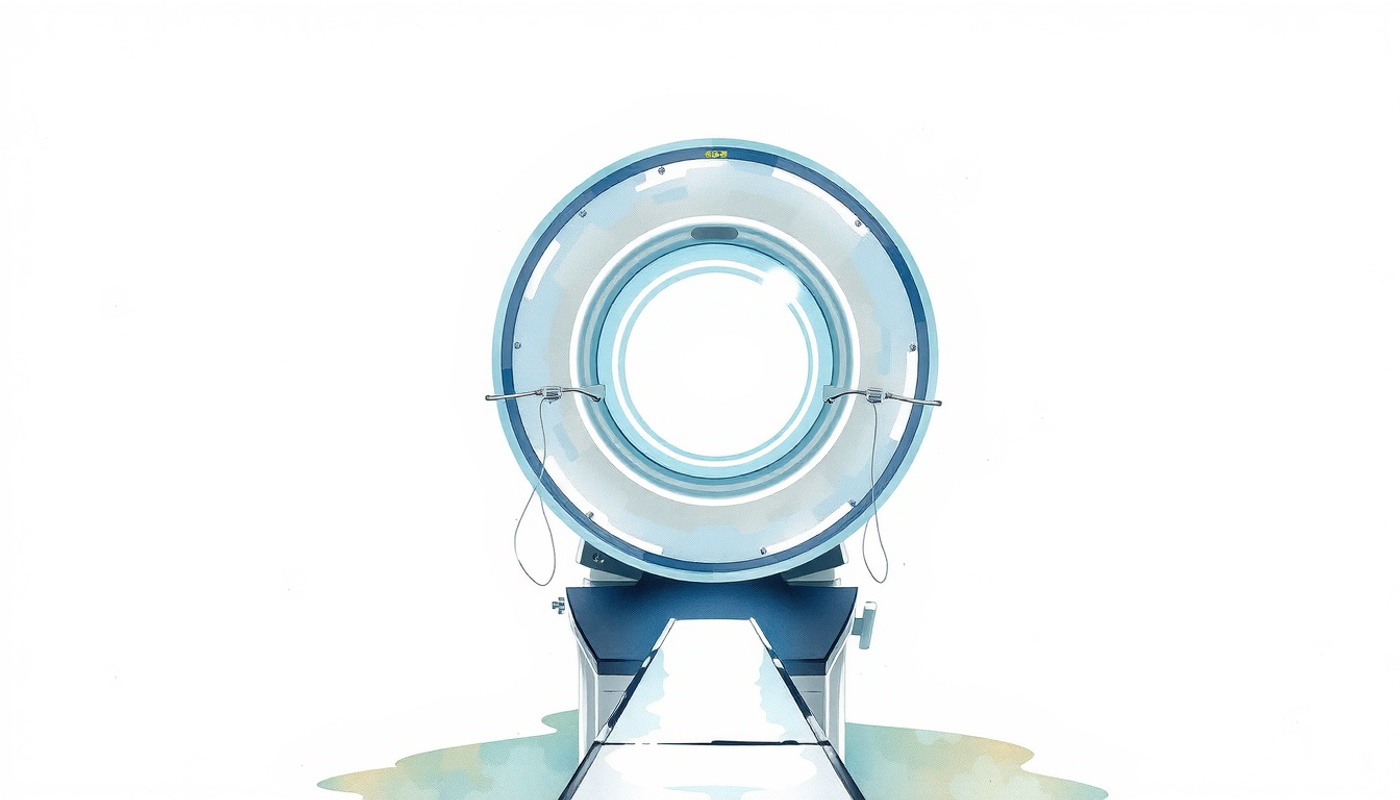
Getting an awake baby to hold still inside an MRI machine is roughly as difficult as it sounds. The Turk-Browne lab at Yale spent about a decade solving it before they could ask the question they actually wanted to ask.
The methods paper came first, in 2020, laying out how to run task-based functional imaging on awake, behaving infants who cannot follow instructions, cannot stay still and have famously short attention spans [18]. In 2021 the lab used it to test whether the infant hippocampus does anything at all. It does. Hippocampal activity increased when infants viewed object sequences containing learnable regularities compared with random sequences, which is statistical learning, the extraction of structure from the world [19].
One detail from that study deserves more attention than it got. Despite the hippocampus roughly doubling in anatomical volume across infancy, learning-related activity bore no relationship to age [19]. The structure everyone had been calling too immature to work was working from at least three months.
Then came March 2025. Tristan Yates, then a doctoral candidate with Turk-Browne and now at Columbia, ran a subsequent memory task on twenty-six infants ranging from 4.2 to 24.9 months, split evenly into a group under twelve months and a group between twelve and twenty-four months. Inside the scanner each baby saw a stream of unfamiliar faces, objects and scenes, two seconds each. Between twenty and a hundred seconds later, each image reappeared alongside a brand new one, and eye tracking measured how long the infant looked at each.
The logic rests on a well established infant behaviour. Babies look longer at things they recognise. So looking time becomes a memory readout in a participant who cannot be asked anything.
The result: the more a baby's hippocampus activated during the first viewing of an image, the longer that baby later looked at it. When the hippocampus was quiet during encoding, no looking preference emerged. The effect appeared in the posterior hippocampus, the same subregion adults use for episodic encoding, and it was strongest in infants older than twelve months [1].
The authors drew the conclusion carefully. If encoding mechanisms for episodic memory are available during a period of life that is later missing from the autobiographical record, then post-encoding mechanisms, the ones that determine whether a memory stays reachable, are the more likely culprits [1]. The accompanying commentary in the same issue of Science framed it as babies forming memories that turn out to be fleeting [20].
It is a genuinely important result. It is also considerably more limited than the headlines suggested.
The Caveats That Did Not Make The Headlines
Here is what the study did not show, and this section exists because almost no popular coverage included it.
It did not show that infants form episodic memories in the full sense of the word. Preferential looking measures recognition. Recognition is a feeling of familiarity. Episodic memory, the thing you lose in infantile amnesia, is the conscious re-experiencing of a specific event located in a specific time and place, and looking longer at a photograph does not demonstrate that. The study measured the neural signature of successful encoding. It did not measure recollection.
It did not show that those memories persist into adulthood, or into childhood, or past the following minute. The retention interval was between twenty and a hundred seconds. Everything said about whether infant memories survive to be inaccessible later is inference, not measurement. Turk-Browne's team is currently testing whether children can recognise home videos shot from their own infant perspective, with pilot results that the researchers themselves describe as tentative.
The sample was twenty-six infants, and the results varied a great deal between them. Some babies under twelve months showed more encoding activity than some older ones. Nora Newcombe, a developmental psychologist at Temple University who has worked on this problem for decades, made the obvious point in Science's own news coverage of the paper: nobody knows yet whether the infants with stronger hippocampal encoding will turn out to have better memory as adults. Her own review of this literature had already warned how readily partial evidence about early memory gets read as a finished answer [68].
There is also the matter of what awake infant imaging costs in data. The Yale group published an analysis in 2026 drawing on more than seven hundred and fifty scanning sessions, which gives an honest picture of how much usable data survives motion, fussiness and early termination in this kind of work [21]. Infant fMRI is not broken. It is simply expensive in attrition, and small samples are the consequence rather than the choice.
None of this makes the finding wrong. It makes it a first result rather than a settled one. The retrieval-failure interpretation is now the best-supported reading of the human evidence, and it is still an interpretation.
Fortunately, the animal literature has been testing the same hypothesis for a decade with tools that can do what a scanner cannot.
New Neurons That Scramble Old Addresses
The first serious biological answer came from an unlikely direction: the discovery that the infant brain is too busy building itself to keep good records.
In 2012 Sheena Josselyn and Paul Frankland, working at the Hospital for Sick Children in Toronto, laid out what they called the neurogenic hypothesis [22]. The dentate gyrus, a subregion of the hippocampus, keeps producing new neurons after birth, and in early life it produces them at a furious rate. Every new neuron has to be wired into existing circuits. Their argument was that this constant rewiring degrades the circuits that already hold memories. Not by erasing the memory, but by changing the addresses that lead to it.
Two years later they tested it directly, and the design is worth describing because it cuts both ways at once [23]. In adult mice, artificially increasing neurogenesis after a memory had formed was sufficient to induce forgetting. In infant mice, where neurogenesis is naturally high and memories are rapidly lost, decreasing neurogenesis after memory formation reduced that forgetting.
Then came the comparative test that makes the hypothesis hard to dismiss. In precocial species, animals born relatively mature, most dentate granule cells are generated before birth rather than after. Infant guinea pigs and degus, which fit that profile, did not show infantile amnesia at all. And when the researchers artificially raised neurogenesis in those same animals after memory formation, infantile amnesia appeared [23].
That is close to a mechanism with a switch on it. Frankland, Stefan Köhler and Josselyn later folded the finding into a broader argument that neurogenesis-driven forgetting is a normal and probably useful feature of hippocampal function rather than a defect [24]. A brain that kept every detail of every day would be a brain that could not generalise. Related work on active forgetting points in the same direction. Reviews of how memory persistence and specificity develop across early life put the same trade-off at the centre [64], and the wider account of how memories reorganise between hippocampus and cortex over time supplies the frame it sits in [67].
Now the complication, and it is a large one.
The whole neurogenic story assumes that human hippocampal neurogenesis works roughly the way rodent neurogenesis does. In 2018 that assumption fell apart in public. Shawn Sorrells and colleagues at the University of California San Francisco published evidence in Nature that new neuron production in the human dentate gyrus drops sharply during childhood and is undetectable in adults [25]. Weeks later, Maura Boldrini's group at Columbia published the opposite conclusion in Cell Stem Cell, reporting that human hippocampal neurogenesis persists throughout aging [26].
Same organ. Same question. Opposite answers, from two strong laboratories, within a month of each other.
Gerd Kempermann and a group of senior researchers in the field published a joint response acknowledging that the disagreement was real and mostly methodological, turning on tissue handling, fixation times and which molecular markers count as evidence of a young neuron [27]. Later work using single-nucleus sequencing to profile human hippocampal immature neurons across the lifespan added detail without fully settling it [28].
Where does that leave the neurogenic hypothesis? On firm ground in rodents and on contested ground in humans. It is a real mechanism for infantile amnesia in mice. Whether it is the mechanism in people is not currently answerable, and any article that tells you otherwise is overselling.

A Window That Opens And Then Closes
While the Toronto group was working on neurogenesis, Cristina Alberini's laboratory at New York University was building a different explanation, and it produced the single most striking result in this literature.
Alberini's group trained infant rats on an experience during the period when their memories are normally lost within a day or two. The memory disappeared on schedule. Then, much later, the researchers gave the animals a reminder. The memory came back, and it came back as a strong, context-specific, long-lasting memory [29].
The interpretation is that the infant hippocampus does store the experience, but stores it as what Alberini called a latent memory trace. Something is written. It is simply not yet in a form the animal can use on its own.
The mechanism turned out to look like a developmental critical period, the same kind of process that governs binocular vision or birdsong learning. It has a sharp temporal boundary. It requires the hippocampus. And it runs through the machinery critical periods normally use, including a switch in the composition of NMDA receptor subunits from the GluN2B type to the GluN2A type, along with dependence on brain-derived neurotrophic factor and metabotropic glutamate receptor 5 [29]. A correction to one figure axis was published the following year and did not affect the conclusions [30].
Alberini and Alessio Travaglia then reframed the whole phenomenon. In their account, infantile amnesia is not a bug in an immature system. It is the visible side effect of a critical period during which the hippocampus is learning how to learn, establishing the rules it will use for the rest of the animal's life [31]. The early memories are the training data. They are consumed by the process rather than preserved by it.
Follow-up work extended the same critical-period mechanisms to object location learning in infant rats, showing the effect was not confined to a single task [32].
What does this mean if you are not a rat? It means the first years may be doing something that requires the memories to be temporary. A hippocampus that locked in every early representation would be a hippocampus that could not tune itself. The forgetting is the price of calibration, and the way the hippocampus later decides what to keep is a skill it acquires during exactly this window.

Broader reviews of hippocampal maturation support the same timeline, showing memory shifting from generalised to specific as hippocampal subfields develop [33], with subfield volumes in young children tracking their memory precision [34] and converging imaging evidence tying those structural changes to episodic memory in early childhood [66] and comparative anatomy explaining why the circuitry takes so long to assemble [35].
If a latent trace really is sitting there, someone should be able to find it and turn it back on. Someone did.
Switching Lost Memories Back On
In 2018 Axel Guskjolen, working with Josselyn and Frankland, did something that reads like science fiction and is now a standard technique.
The method is optogenetics. When a mouse forms a memory, the specific population of neurons active during that experience can be genetically tagged so that they later become responsive to light. Those tagged cells are the engram, the physical trace of that particular memory [36]. A later review followed those same populations through encoding, consolidation, retrieval and forgetting across the whole life of a memory [65]. Shine light on them through an implanted fibre and you reactivate the trace directly, bypassing whatever normal retrieval route has failed.
Guskjolen tagged dentate gyrus engram cells while infant mice learned a context. He then waited until the memory was, by every behavioural measure, gone. Then he switched the light on. The mice behaved as though they remembered. This worked up to ninety days after training [37].
The memory had not been erased. It had been sitting there, intact and unreachable, for three months of a mouse's life.
In 2023 Tomás Ryan's group at Trinity College Dublin pushed this further and found something nobody predicted [38]. Working with maternal immune activation models, a standard rodent model related to autism spectrum conditions, they found that male offspring in these models did not experience infantile amnesia at all. Their infant memories simply persisted. Maternal immune activation had altered engram ensemble size and dendritic spine plasticity. In neurotypical mice, the team recovered apparently forgotten infant memories by optogenetically reactivating dentate gyrus engram cells, and then went further, permanently reinstating those memories by artificially updating the engram. Their conclusion was that infantile amnesia is a reversible process driven by a modifiable forgetting switch.
Then, in January 2026, the same laboratory identified a cellular mechanism for that switch [39]. Microglia are the brain's resident immune cells, and one of their normal developmental jobs is pruning synapses. Stewart and colleagues showed that inhibiting microglial activity during a specific postnatal window prevents infantile amnesia for a contextual fear memory in mice. The forgetting is not passive decay. It appears to be an active process carried out by immune cells reshaping the circuit while the memory sits inside it.
This is the newest finding in the field and it has not yet reached most public coverage of the topic.
Put the mechanisms together and a coherent picture emerges, though it is still a picture assembled mostly from rodents.
Before anyone gets excited about recovering their own infancy, note the obvious. Optogenetics requires genetic modification before the memory forms and a fibre optic implant in the brain. There is no version of this that applies to humans, and there is unlikely to be one. What the animal work establishes is a principle, not a therapy.
Six Theories And What Each One Explains
No single account covers the evidence. What follows is the state of the competition, including what each explanation gets right and where each one breaks.
One row there has not been given its due yet. Mark Howe and Mary Louise Courage argued in the early nineties that autobiographical memory cannot start until a child has a stable sense of self to attach experiences to [69]. A memory of something happening to me requires a me. Their follow-up set out how that cognitive self emerges around the second birthday and how its arrival changes what the memory system is able to file [70]. The timing is suggestive. Toddlers begin recognising themselves in mirrors, begin using their own name and begin using the word mine at roughly the point where the first durable memories appear.
Read across the rows and the pattern is clear. The biological theories explain why the memories become unreachable. The cognitive and social theories explain why the boundary sits where it does in a given person. They are answering different questions, and the field has slowly stopped treating them as rivals.
The two remaining rows deserve their own sections, because both contain evidence that almost no popular account of infantile amnesia includes.
Words That Arrive Too Late
If a memory is encoded before you have language, can you ever say it out loud?
Gabrielle Simcock and Harlene Hayne built an experiment to find out, and it involved a machine that appeared to shrink things. Children of twenty-seven, thirty-three and thirty-nine months watched an object go into the machine and a smaller version come out. Their vocabulary was recorded at the time of the event. Six months and a year later they were tested on what they could describe.
The finding was stark. In no instance did a child verbally report information about the event using words that had not been part of their productive vocabulary at the time of encoding [40]. The children could demonstrate the memory nonverbally. They could not narrate a part of it they had lacked the words to encode.
This became one of the most cited results in the field, and for good reason. It suggests memory is filed in the format available when it was made, and later linguistic ability does not retroactively unlock it.
It is also not the whole story, and honesty requires the follow-up.
In 2015 Jonna Dahl, Osman Kingo and Peter Krøjgaard at Aarhus University replicated the shrinking machine study with one change. They made the original props available during recall, giving children strong contextual support. With the props present, children did verbalise aspects of preverbal memories, which the original design had not allowed [41]. Verbal accessibility is a real constraint, but it is a softer one than the first result implied, and retrieval support can partly overcome it.
The most direct test of long-term verbal recall came from the same Otago group. Fiona Jack, Simcock and Hayne followed up children six years after the shrinking machine event. Of forty-six children who had experienced it between twenty-seven and fifty-one months of age, nine could still verbally recall it after six years, and two of those nine had been under three years old at the time [42].
Two children. Verbally recalling, at nine or ten years old, an event from before their third birthday. Rare, but not zero, which is exactly what a fog bank rather than a wall would predict. Karen Tustin and Hayne mapped the same boundary across a wide age range and found it shifts depending on how old the person doing the remembering is [43].
Language matters, then, but it is not a gate that locks. And the strongest evidence that the boundary is movable comes from a completely different source: the culture you happen to grow up in.

Why Māori Adults Remember Earlier Than Anyone
Here is a fact that should be much better known than it is. The age of your earliest memory depends partly on the language and culture you were raised in, and the size of the effect is measured in years.
Shelley MacDonald, Kimberly Uesiliana and Harlene Hayne asked adults from three cultural backgrounds in New Zealand to describe and date their earliest personal memory. Adults of Asian background reported significantly later memories than New Zealand Europeans, an effect driven almost entirely by very late memories among Asian women. Māori adults, whose traditional culture places a strong emphasis on the past, reported significantly earlier memories than either of the other groups. Across all three cultures, women's memories contained more information than men's [44]. The Māori figure sits around two and a half years, the earliest group average recorded anywhere.
The East Asian side of this pattern has been replicated repeatedly. Mary Mullen's demographic analysis found the offset difference in the early nineties [45]. Qi Wang at Cornell has spent a career on it, showing that Chinese adults report earliest memories roughly six months later than their Western counterparts, and connecting the difference to culturally distinct constructions of the self [46][47]. Her later work with European American and Taiwanese young adults found the same divergence in what the memories are about, not only when they start [48], and the pattern shows up in grade school children as well as adults [49].
These are group averages drawn from separate studies rather than one harmonised dataset, and individual variation within each group is far larger than the difference between groups. The pattern is reliable. The precise numbers should be read as approximate.
What causes it? The leading answer is how adults talk to children about the past.
Robyn Fivush and Katherine Nelson built the social cultural developmental theory around this, arguing that autobiographical memory emerges from the interaction of basic memory ability, language, narrative skill, an understanding of self and others, and crucially the conversations adults have with children about what happened [50][51]. Fivush's later review laid out the developmental evidence in full [52].
Parents differ in reminiscing style. Some are elaborative, asking open questions, adding detail, treating the child as a co-author of the story. Others are repetitive, asking the same closed question until they get the expected answer. Elaine Reese at Otago has spent decades measuring this difference.
The prospective test is the convincing one. Jack, MacDonald, Reese and Hayne followed children from early childhood into adolescence and found that maternal reminiscing style during early childhood predicted the age of those children's earliest memories years later [53]. How your mother talked to you at three shifted where your personal history begins.
One honest wrinkle. Reese, Hayne and MacDonald's study of Māori and Pakeha mother-child birth stories did not fully confirm the assumption that Māori mothers reminisce more elaboratively, which means the mechanism behind the Māori finding is not as neatly established as the finding itself [54].
There is a further complication worth stating. Martin Conway, Qi Wang and colleagues compared groups from Japan, China, Bangladesh, England and the United States and found highly similar lifespan memory retrieval curves, with the period of childhood amnesia looking much the same across cultures even though memory content differed [55]. Bauer and Larkina's data added another caution: overall maternal narrative style predicted how much children contributed to conversations at age three, but did not show cross-lagged relations to their memory for those events at ages five through nine [14].
So the culture effect on the offset is real and replicated, and its size and mechanism are still being argued about. That is what an active research question looks like.

First Memories That Never Happened
There is one more possibility that has to be taken seriously. Perhaps some of what people report as their earliest memory was never a memory at all.
In 2018 Shazia Akhtar, Lucy Justice, Catriona Morrison and Martin Conway ran a very large survey, collecting first memory descriptions along with the age each respondent believed they had been. The original paper reported 6,641 respondents, a mean age at encoding of 3.2 years, 2,487 memories dated to age two or younger, and 893 dated to age one or younger [56].
Those are the numbers that circulated everywhere. They were later corrected. A corrigendum published in Psychological Science in 2020 revised the analysis to 6,313 usable responses, with a mean age at encoding of 3.15 years, 2,479 memories dated to age two or younger, and 887 dated to age one or younger, which is 14.1 percent of the sample [57]. The corrected figures are the ones to use. Most secondary coverage still quotes the originals.
The argument is straightforward. Given everything established above about when autobiographical memory becomes possible, a memory genuinely encoded at eleven months is extremely improbable. Conway's team proposed that these are reconstructions, assembled later from family photographs, repeated retellings and general knowledge about what infancy looks like, then experienced with the full subjective quality of a real memory.
The rebuttal came quickly, and it is a good one.
Patricia Bauer, Lynne Baker-Ward, Peter Krøjgaard, Carole Peterson and Qi Wang, five of the most experienced researchers in this specific area, published a comment arguing that the fiction interpretation goes too far [58]. Their case is that people are systematically bad at dating their own memories, and that a real memory from age three misdated to age one is a dating error, not a fabrication. Calling it fictional overstates what the data support.
That objection has direct empirical backing. Wang and Peterson tracked children's dating of their own earliest memories over time and found the children systematically postdated them, placing the events later and later as they grew older [59]. A follow-up confirmed the same telescoping pattern [60]. Carole Peterson's two-year follow-up of children's earliest memories found the boundary itself is less stable than adult surveys imply [61]. If children postdate, adults recalling from childhood may also be misplacing events, and the true offset could sit earlier than the conventional three and a half years.
Both things can be true at once. Some early memories are misdated real events. Some are almost certainly constructed. The reconstructive nature of memory is not a defect specific to infancy, and the mechanisms by which false memories form operate throughout life.
The practical implication is uncomfortable and worth stating plainly. A vivid, emotionally detailed memory of being a baby is not evidence that the event happened as remembered, or that it happened at all. This matters in clinical settings and it matters in legal ones, where the reliability of very early childhood recollection has been examined at length [62].

What Stays After The Memory Goes
The final piece of this is the strangest. Losing the memories does not mean losing their effects.
Alberini's group made this point in the framing of their critical-period work: early experiences influence adult behaviour even though the episodes themselves cannot be recalled [29]. The latent trace concept is one explanation for how. Something remains encoded and continues to shape the circuit even while remaining inaccessible to deliberate retrieval.
The clinical literature has been circling this for decades. Adverse experience in the first years of life is associated with measurable differences in adult brain structure and elevated risk for several psychiatric conditions, and structural imaging work has examined hippocampal and amygdala volumes in adults reporting childhood maltreatment [63]. The person cannot narrate what happened. The consequences are present anyway.
This needs careful handling, because it is exactly where popular writing tends to slide into something unsupported.
It does not mean that hidden infant memories are driving adult behaviour in the psychoanalytic sense, waiting to be uncovered. It does not mean that adult difficulties can be traced to specific forgotten events. And it does not license reading backwards from a symptom to an inferred infancy. What the evidence supports is much narrower and much more interesting: early environment shapes the developing circuit, and a circuit shaped early stays shaped, whether or not any episode from that period is retrievable.
The parallel with how the brain rebuilds itself throughout life is direct. Structure carries history that consciousness cannot read.
There is a gentler version of the same principle, and it applies to almost everyone. The years you cannot remember are the years in which you learned your first language, learned that faces mean something, learned that dropped objects fall and that a particular voice means safety. None of that arrives as a retrievable episode. All of it arrived. The reason a two-year-old's day feels like it vanished is not that it failed to matter. It is that it was absorbed into the architecture rather than filed in the archive.
Which is a reasonable place to ask what the whole picture now looks like.
Conclusion
For a hundred and twenty years the default explanation for infantile amnesia was absence. The baby brain could not record, so there was nothing to find.
That explanation is now the weakest one on the table. Rovee-Collier's infants remembered a mobile for weeks and could hold it across the entire amnesic period with the right reminders. Bauer's children could still access sixty percent of their third year at age seven. Alberini's rats gave back a memory that had been gone for months when handed a cue. Guskjolen's mice gave one back when handed a pulse of light. And in 2025, twenty-six babies in a Yale scanner showed hippocampal encoding signatures that predicted what they would later recognise. The trace is written. Something happens to the route.
What that something is remains genuinely open. Neurogenesis remodelling the circuit is well demonstrated in rodents and unresolved in humans, since the field cannot yet agree whether adult human brains make new hippocampal neurons at all. The critical-period account explains the latent trace elegantly and rests almost entirely on rats. The microglial pruning result from 2026 is the freshest mechanism on offer and is one paper old. Language, the emerging self, and the way adults talk to children about the past are all doing real work at the cognitive level, and they explain why the boundary moves by years between a Māori childhood and a Chinese one without explaining why a mouse forgets its infancy too.
The honest summary is that infantile amnesia has stopped being a mystery about storage and become a puzzle about access, with at least four plausible mechanisms and no consensus about how they combine.
There is something worth sitting with in that. The first three years are not missing from your brain in the way a deleted file is missing from a drive. They are more like a room in a building whose corridor was demolished during renovation. The room is still in there, load-bearing, holding up everything above it. You built the rest of yourself on top of it, and you will never get the door open.
Frequently Asked Questions
At what age do most people's earliest memories begin?
Most adults date their earliest memory to somewhere between three and three and a half years. A large stratified sample put the average near three and a half. Fragmentary images may come from earlier, but continuous autobiographical memory usually reaches adult-like density around five or six.
Why can't I remember anything before age three?
Not because your infant brain failed to record. Awake infant brain scans show real memory encoding from around twelve months. The current view is that early memories become unreachable afterwards, through circuit remodelling that includes new neuron growth and immune cell pruning of synapses.
Do babies form memories at all?
Yes, and the evidence is strong. Infants as young as two months learn and retain a trained response for days, and older infants hold it for weeks. Given the right reminders, an infant memory can survive across the entire period usually described as amnesic.
Is infantile amnesia the same as repressed memory?
No. Infantile amnesia is a normal developmental process affecting every healthy human and most mammals on a predictable schedule. Repression and dissociative amnesia describe proposed trauma-related mechanisms in specific individuals. Freud coined the term but his repression explanation is not supported by current evidence.
Can lost childhood memories ever be recovered?
In mice, yes. Researchers have reactivated forgotten infant memories using light-sensitive proteins implanted in engram cells. That method requires genetic modification and brain implants and has no human equivalent. There is no validated technique for recovering genuine human memories from infancy.