
Introduction
Picture a crime scene. A witness steps forward. She is certain. She saw the man's face. She remembers the jacket, the angle of the streetlight, the sound of his shoes on wet pavement. She would stake her life on it. And she is wrong. This scenario is not rare. It is routine. According to the Innocence Project, mistaken eyewitness identification contributed to roughly 69 percent of the wrongful convictions later overturned by DNA evidence in the United States [1]. Understanding how false memories form is not an academic exercise. It is a matter of human freedom.
A false memory is not a lie. It is not forgetting. It is the genuine, confident recollection of something that never happened, or happened differently than you remember. And it happens to everyone. The brain does not store experiences the way a camera records video. Each time you recall an event, you rebuild it from fragments, filling gaps with inference, expectation, and emotion. That rebuilding process is exactly what makes you creative, adaptive, and intelligent. It is also what makes you unreliable [2].
This article traces the science of false memory from its earliest experiments to its latest frontiers. From a British psychologist who proved memory was fiction in 1932, to MIT neuroscientists who planted a fake fear in a mouse's brain in 2013, to researchers who showed in 2024 that AI-edited videos can manufacture memories you never had.
The Psychologist Who Proved Memory Is Fiction
The scientific story of false memory begins in Cambridge, England, in 1932. Frederic Bartlett, a psychologist at the University of Cambridge, had grown skeptical of the dominant view that memory worked like a filing cabinet. The prevailing assumption was straightforward: an experience goes in, gets stored, and comes back out more or less intact. Bartlett suspected otherwise.
He designed an experiment that was simple in execution and devastating in its implications. He asked British university students to read an unfamiliar Native American folk tale called "The War of the Ghosts." Then he asked them to retell it. Not once. Multiple times, over weeks and months [3].
What happened was remarkable. With each retelling, the story changed. Students dropped details that did not fit their cultural expectations. They added elements that made the narrative more logical to a British audience. Supernatural events were rationalized. Unfamiliar names were replaced with familiar ones. The story became shorter, simpler, and more "British" with every recall.
Bartlett coined a term for the mental frameworks that drove these distortions: schemas. The brain does not passively record an experience. It interprets the experience through existing knowledge and expectations, then reconstructs it each time it is recalled. Memory, Bartlett wrote, is "an imaginative reconstruction" built from "the relation of our attitude towards a whole active mass of organised past reactions or experience" [3].
This was 1932. Almost nobody listened. Behaviorism dominated psychology. Memory research focused on memorizing nonsense syllables. Bartlett's ideas about reconstruction were largely ignored for four decades. But he had identified the fundamental mechanism behind every false memory that would later be studied: the brain does not replay. It rebuilds. And every rebuild is an opportunity for error.
The Lawyer's Question That Changed Everything
In 1974, Elizabeth Loftus and John Palmer at the University of Washington ran an experiment that would become one of the most cited studies in the history of psychology [4]. They showed 45 students a short film of a car accident. Afterward, they asked one simple question: "About how fast were the cars going when they _____ each other?"
The blank was filled with different verbs for different groups. Some heard "contacted." Others heard "hit," "bumped," "collided," or "smashed." Same accident. Same film. Different word.
The results were striking. Students who heard "smashed" estimated the cars were traveling at about 40.8 miles per hour. Those who heard "contacted" estimated 31.8 mph. A single word in a question shifted speed estimates by nearly 30 percent.
But the real finding came a week later. Loftus brought the students back and asked: "Did you see any broken glass?" There was no broken glass in the film. Yet students in the "smashed" group were more than twice as likely to "remember" seeing it. The question had not merely biased their response. It had altered their memory.
Loftus called this the misinformation effect, and she spent the next five decades proving it was everywhere. In 1995, she and Jacqueline Pickrell published the now-famous "Lost in the Mall" study [5]. They gave 24 participants booklets containing three true childhood memories provided by relatives and one fabricated event: being lost in a shopping mall at age five, crying, and eventually being rescued by an elderly stranger. About 25 percent of participants came to "remember" the event. Some added vivid details: the old woman's flannel shirt, the smell of the food court. In 2023, a preregistered replication with 123 participants found an even higher rate: 35 percent developed false memories of the made-up event [6].
Loftus's work did not merely demonstrate that memory is imperfect. It showed that memory can be edited by other people without the owner's awareness. A question, a suggestion, a photograph shown at the right moment. That was enough. The implications for courtrooms, therapy, and everyday life were enormous, and still unfolding.
Words You Never Heard
In 1995, the same year Loftus published her mall study, Henry Roediger III and Kathleen McDermott at Washington University in St. Louis introduced a laboratory paradigm that let researchers manufacture false memories in minutes [7]. It was elegant in its simplicity.
Participants listened to a list of 15 related words: bed, rest, awake, tired, dream, wake, snooze, blanket, doze, slumber, snore, nap, peace, yawn, drowsy. Notice that the word "sleep" is not on the list. Every word is associated with sleep, but sleep itself was never presented.
On an immediate free recall test, about 40 percent of participants confidently "remembered" hearing "sleep." On a recognition test, false alarm rates for the critical lure exceeded 80 percent for the strongest lists. Participants did not merely guess. They reported vivid recollection. They would insist they heard the word [7].
The paradigm was built on earlier work by James Deese from 1959, and it became known as the DRM paradigm (Deese-Roediger-McDermott). Stadler, Roediger, and McDermott later published norms for 36 word lists, finding that the strongest lists produced false recall in over 60 percent of subjects and false recognition exceeding 80 percent [8].
What made the DRM paradigm so powerful was its ability to demonstrate false memories under controlled, repeatable conditions. No deception. No confederates. No misleading questions. Just a list of words and a brain that automatically extracts meaning, stores the gist, and later mistakes that gist for a specific memory of an event that never occurred.

Two Traces, One Brain
Why does the brain so reliably produce these errors? The most developed answer comes from Fuzzy Trace Theory, proposed by Charles Brainerd and Valerie Reyna in the early 1990s [9].
The theory's core claim is that each experience creates two independent memory traces in parallel. The first is a verbatim trace, which captures specific surface details: the exact words, the precise image, the literal features. The second is a gist trace, which captures meaning, essence, and pattern. You hear "bed, rest, awake, tired, dream" and your verbatim trace records those specific words. But your gist trace records something broader: "things related to sleep."
Here is the critical insight. Verbatim traces decay faster than gist traces [10]. Over time, the specific details fade but the meaning persists. This means false memories can actually outlast true ones. A week after the DRM study, you might have forgotten whether "drowsy" was on the list, but you still feel certain about "sleep," because the gist trace for sleep is stronger than ever.
The theory also explains a counterintuitive developmental finding. In DRM tasks, children under seven or eight produce fewer false memories than adults [11]. This sounds backward. But young children rely more heavily on verbatim traces. They remember specific words rather than extracting abstract gist. As the brain matures and becomes better at extracting meaning, it also becomes better at generating meaning-based errors. The smarter the brain gets at abstraction, the more false memories it produces.
This is not a defect. It is a design feature. Gist extraction allows you to understand categories, see patterns, and generalize from experience. These are the foundations of intelligence. The price is that the same mechanism sometimes generates memories of things that never happened but fit the pattern.
The Brain's Reconstruction Engine
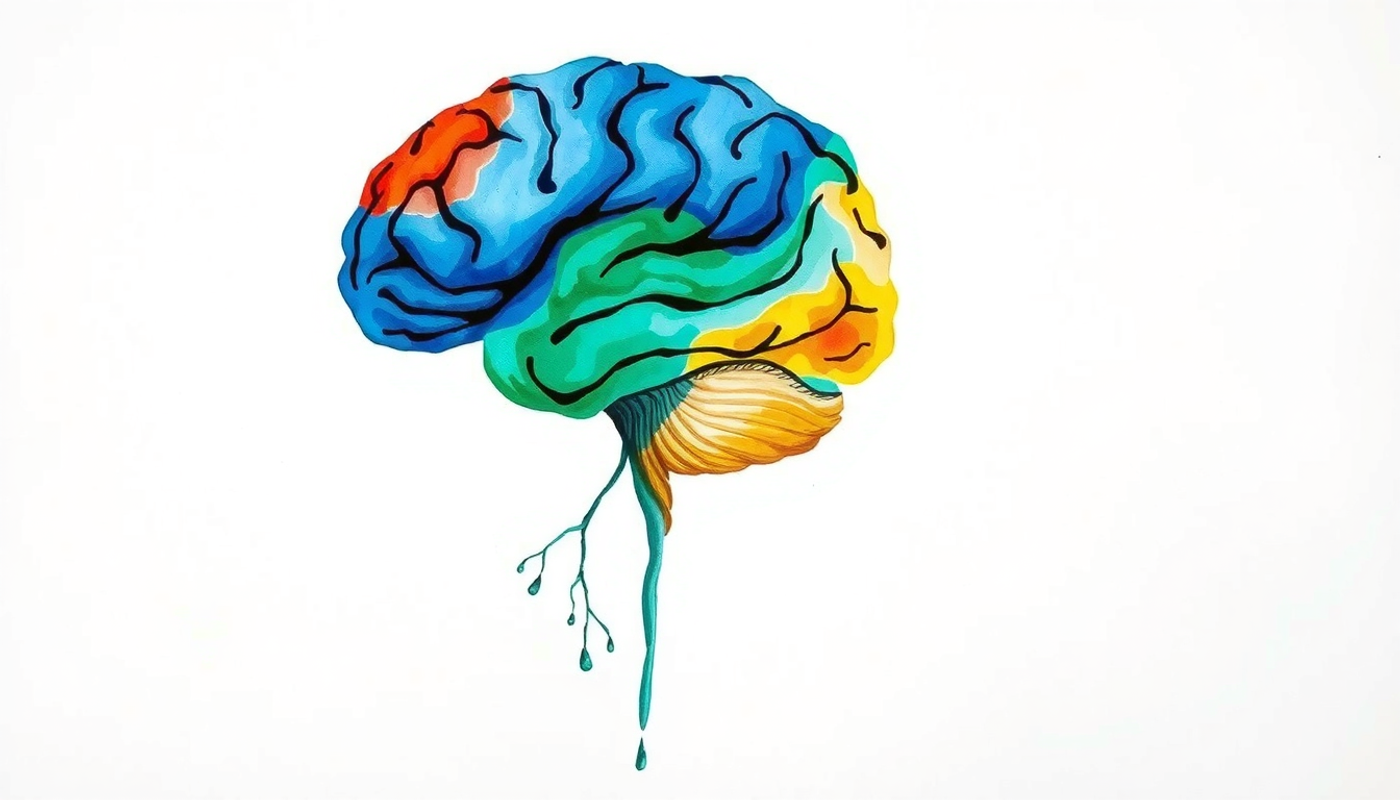
The neuroscience of false memory begins in the hippocampus, a seahorse-shaped structure buried deep in the medial temporal lobe. The hippocampus is the brain's primary hub for binding together the separate elements of an experience: the place, the time, the objects, the emotions, the sensory details. When you recall an event, the hippocampus reassembles these elements from fragments stored across the cortex [12].
Two opposing processes within the hippocampus determine whether a memory comes back accurately or distorted. The first is pattern separation, carried out mainly by the dentate gyrus, a region with an unusually large population of granule cells. Pattern separation takes similar inputs and assigns them distinct neural codes. It is the reason you can distinguish Tuesday's lunch from Wednesday's lunch even though both happened in the same cafeteria [13].
The second process is pattern completion, carried out mainly by the CA3 region. Pattern completion does the opposite. It takes a partial or degraded cue and fills in the rest of the original pattern. You smell a certain perfume and suddenly you are back in your grandmother's kitchen. CA3 took a fragment and reconstructed the whole scene [14].
False memories emerge when pattern completion runs ahead of pattern separation. When two experiences are similar enough, the dentate gyrus fails to keep them distinct. CA3 then grabs the wrong stored pattern and completes it confidently. The result: you recall an event with vivid detail, fully convinced it happened, while your brain has actually assembled pieces from two or three different experiences into one convincing hybrid.
Above the hippocampus sits the prefrontal cortex, the brain's fact-checker. Marcia Johnson at Yale University developed the Source Monitoring Framework to explain how the brain decides whether a memory came from perception, imagination, a dream, or something someone told you [15]. The prefrontal cortex evaluates qualities like perceptual vividness, spatial detail, and the cognitive operations associated with the memory. When these qualities are ambiguous, or when the prefrontal cortex is impaired by fatigue, stress, or aging, source-monitoring errors occur. You remember something vividly, but you cannot tell whether you saw it, imagined it, or heard about it on the news.
The amygdala adds another layer of complexity. This almond-shaped cluster deep in the temporal lobe is the brain's emotional alarm system. Emotional arousal during encoding narrows attention through a process described by Easterbrook's cue-utilization hypothesis [16]. The central detail of an emotional event, such as a weapon during a robbery, gets burned into memory. But peripheral details, like what the robber was wearing, get lost. This is why emotional states distort what we remember: strong feelings sharpen the center and blur the edges, creating gaps the brain later fills with plausible fiction.
When Retrieval Rewrites the File
For most of the twentieth century, neuroscience assumed that once a memory was consolidated, it was stable. Stored. Permanent. The filing cabinet model. In 2000, Karim Nader, Glenn Schafe, and Joseph LeDoux at New York University overturned this assumption with a single experiment published in Nature [17].
Nader trained rats to associate a tone with a mild foot shock, creating a fear memory. He waited 24 hours for the memory to consolidate. Then he played the tone again, reactivating the memory. Immediately after reactivation, he injected anisomycin, a protein synthesis inhibitor, into the amygdala. If the consolidated memory was truly stable, the drug should have had no effect. But it did. The rats forgot their fear. The consolidated memory was gone.
The control was crucial. Rats that received anisomycin without memory reactivation kept their fear memories intact. The drug only worked when the memory was actively being recalled. This meant that retrieval did not simply play back a stable trace. It destabilized it. The memory had to be rebuilt, reconsolidated, using new protein synthesis. And during that vulnerable window, it could be altered, weakened, or contaminated with new information [17].
Reconsolidation is the molecular explanation for why memories drift over time, absorb misinformation, and blend with other experiences. Every time you remember something, you are not reading a file. You are rewriting it. And every rewrite introduces the possibility of error. This connects directly to Loftus's misinformation effect: post-event information contaminates memory precisely because retrieval opens a biochemical window for editing.
The implications extend beyond the laboratory. Every conversation about a shared experience is a potential editing session. Every time you tell a story, you subtly reshape it. As Daniel Schacter of Harvard described in The Seven Sins of Memory, these distortions are not bugs but unavoidable byproducts of a memory system built for flexibility rather than fidelity [18].
The Mouse That Feared a Room It Was Never Shocked In
In 2013, Susumu Tonegawa and his team at MIT's Picower Institute for Learning and Memory did something that had been considered science fiction. They created a false memory in a living brain [19].
The technique relied on optogenetics, a method that uses genetically modified neurons activated by light. Tonegawa's team engineered mice so that hippocampal neurons in the dentate gyrus would produce channelrhodopsin-2, a light-sensitive protein, whenever those neurons were active during a new experience. This let the researchers "tag" the exact neurons that encoded a specific memory.
The experiment had three steps. First, the mouse explored a safe room, Context A. The dentate gyrus neurons that fired during this exploration were tagged with the light-sensitive protein. Second, the mouse was placed in a completely different room, Context B, and given a mild foot shock. But simultaneously, the researchers used blue light to reactivate the tagged Context A neurons. Third, the mouse was returned to Context A, the safe room where nothing bad had ever happened.
The mouse froze in fear. It "remembered" being shocked in a room where it had never received a shock. A false fear memory had been created by artificially linking a real context representation with a real emotional response that occurred in a different place [19].
Tonegawa stated the core finding bluntly: "Whether it's a false or genuine memory, the brain's neural mechanism underlying the recall of the memory is the same" [20]. The false memory activated the same downstream fear circuits, triggered the same behavioral response, and was context-specific, just like a real memory.
A word of caution: what was implanted was a contextual fear association, not a rich autobiographical narrative. No one can implant a detailed life story in a brain. But the experiment proved something profound. The cellular machinery that builds true memories is the same machinery that builds false ones. There is no special tag, no watermark, no neural signature that separates real from fabricated. The brain treats both identically.

Sleep: The Overnight Editor
Sleep does not merely rest the brain. It transforms memories. During slow-wave sleep, the hippocampus replays the day's experiences in compressed bursts called sharp-wave ripples, gradually transferring information to the neocortex for long-term storage [21]. This process strengthens important memories. But the same consolidation machinery can also distort them.
In 2008, Susanne Diekelmann and colleagues at the University of Lübeck showed that sleep deprivation at the time of retrieval significantly increased false memories in a DRM task. The effect was abolished by administering caffeine before the recall test, pointing to adenosinergic mechanisms and impaired prefrontal monitoring as the cause [22]. When the prefrontal cortex is exhausted, it stops checking sources. The brain accepts gist-based reconstructions without scrutiny.
The relationship between sleep and false memory is more nuanced than a simple "sleep causes false memories" claim. Some studies find that post-learning sleep increases DRM false recall, particularly for short lists. Others find the opposite. A 2023 registered report with 488 participants found that sleep increased critical-lure false memories but reduced random intrusions overall [23]. And on a narrative-based suggestibility test, sleep had no effect at all [24].
The most defensible summary is this: sleep transforms memories by extracting gist and integrating new information into existing schemas. This transformation strengthens the useful, general meaning of an experience. But it also strips away the verbatim details that could have prevented a false memory. The overnight editor improves the story. Sometimes it improves it into fiction.
The Monopoly Man's Monocle
Does the Monopoly Man wear a monocle? Most people say yes. He does not. He has never worn one.
Does the Fruit of the Loom logo feature a cornucopia? Many people would swear it does. It never has.
Does Pikachu have a black-tipped tail? Millions of fans remember it that way. The real Pikachu's tail is solid yellow.
These are examples of the Mandela Effect, a phenomenon named after the widespread false memory that Nelson Mandela died in prison in the 1980s. He was released in 1990 and died in 2013. The term was coined in 2009 by Fiona Broome, a paranormal researcher who found that thousands of people shared her false recollection [25].
In 2022, Deepasri Prasad and Wilma Bainbridge at the University of Chicago conducted the first rigorous scientific study of what they called the Visual Mandela Effect [26]. Across four experiments, they tested whether people consistently misremember specific visual features of well-known cultural icons. The results were striking. For seven out of 40 tested icons, participants chose the correct version at or below chance, around 33 percent. And they consistently chose the same wrong version with high confidence.
The seven icons: C-3PO (people add a silver leg he does not have in most films), the Fruit of the Loom logo, Curious George (people add a tail), the Monopoly Man, Pikachu, the Volkswagen logo (people remove the gap), and Waldo from Where's Waldo [27].
Schema theory partly explains this. We associate monocles with wealthy old men. We associate tails with monkeys. The brain fills in what "should" be there based on its categorical knowledge. But Bainbridge found that schema alone cannot explain all cases. The Fruit of the Loom cornucopia, for instance, was chosen over a more schema-plausible plate. Something intrinsic to these specific images triggers false memory in most people, and researchers do not yet know why.
What is remarkable is that these errors are shared across thousands of people who have never communicated about it. The brain's reconstruction process produces the same mistakes in different brains exposed to similar cultural inputs. False memory is not random. It is patterned. And the patterns are consistent enough to study scientifically.
When False Memory Sends Innocents to Prison
The consequences of false memory extend far beyond laboratory curiosities. In courtrooms across the world, people have been convicted, sentenced, and imprisoned based on confident eyewitness testimony that turned out to be wrong.
Ronald Cotton spent 11 years in a North Carolina prison for a rape he did not commit, convicted largely on the confident identification of the victim, Jennifer Thompson. Thompson was certain she had memorized her attacker's face during the assault. She picked Cotton from a lineup. She testified with unwavering conviction. She was wrong. DNA evidence eventually exonerated Cotton and identified the actual perpetrator [28].
Cotton's case is not unusual. The Innocence Project reports that more than 60 percent of their clients were wrongfully convicted based on eyewitness misidentification [28]. Cross-racial identification errors account for approximately 42 percent of these cases [29]. The data is unambiguous: human memory is not reliable enough to serve as the sole basis for criminal conviction.
The 1990s saw the eruption of the so-called "Memory Wars," a bitter conflict between clinicians who believed in recovered memories of childhood abuse and researchers like Loftus who demonstrated that suggestive therapeutic techniques could implant entirely false memories of traumatic events [30]. Hypnosis, guided imagery, and repeated questioning were shown to produce vivid "memories" of events that never occurred. The False Memory Syndrome Foundation received inquiries from over 25,000 families by the end of the decade [31].
This debate remains sensitive, and both sides carry legitimate concerns. Suggestive therapy can implant false memories. Dismissing all recovered memories as false can silence genuine victims of abuse. The science calls for caution in both directions: neither instant belief nor instant skepticism serves truth [32].
Fake Videos, Real Memories
In 2024, Pat Pataranutaporn, Elizabeth Loftus, and Pattie Maes at the MIT Media Lab published a study that brought false memory research into the age of artificial intelligence [33]. They showed 200 participants four types of content: unedited images, AI-edited images, AI-generated videos, and AI-generated videos based on AI-edited images.
The results were alarming. AI-generated videos of AI-edited images produced 2.05 times more false recollections than the unedited control condition. Confidence in these false memories was 1.19 times higher than baseline. Participants did not just incorrectly recall details. They constructed vivid narratives around events that were digitally fabricated [34].
Labeling the content as "AI-enhanced" did not help. Even when participants knew the material might be manipulated, they still formed false memories at elevated rates. The mere exposure was enough.
A separate 2023 study by Gillian Murphy at University College Cork tested whether deepfake videos of fabricated film scenes could implant false memories of those scenes. They could. But here was the nuance: plain text descriptions of the same fabricated scenes were nearly as effective as deepfakes [35]. This is an important corrective to AI-panic narratives. Deepfakes are concerning, but text-based misinformation has been manufacturing false memories since long before AI existed. The mechanism is the same: exposure to plausible misinformation during a vulnerable period contaminates the reconstruction process at retrieval.
Research on COVID-19 misinformation confirmed this pattern. Participants formed false memories for entirely fabricated pandemic events. Those with stronger conspiracy beliefs and weaker analytical thinking were most susceptible [36]. The illusory truth effect, where repetition makes claims feel true, feeds directly into false memory formation. Social media amplifies repetition. Repetition amplifies false confidence. And confidence makes the false memory feel indistinguishable from a real one.

The Default Mode Network and Why Your Brain Tells Stories
There is a deeper reason why the brain is so prone to false memories. The same neural network that reconstructs the past also imagines the future.
In 2007, Daniel Schacter and Donna Rose Addis at Harvard proposed the constructive episodic simulation hypothesis [37]. They argued that episodic memory is not a playback system. It is a simulation engine. The brain recombines stored elements, flexibly assembling past fragments into new configurations. This ability is what allows you to plan a vacation, rehearse a job interview, or imagine what might happen if you say the wrong thing at dinner.
The neural seat of this simulation is the default mode network, or DMN, a set of brain regions including the medial prefrontal cortex, posterior cingulate, and hippocampal formation that becomes active when you are not focused on external tasks [38]. When you daydream, remember the past, or imagine the future, the DMN is running. And it uses the same recombinatory machinery for all three.
This is why patients with hippocampal damage who cannot remember their past also cannot vividly imagine their future. The hardware is shared. And because the same system that builds true memories also builds hypothetical scenarios, the possibility of false memories is built into the architecture itself. The brain's ability to generate fiction is not a malfunction. It is the same ability that generates memory. They are the same process, aimed at different time points.
What Does This Mean for Everyday Life?
The science of false memory does not mean that all memories are unreliable. Most memories, most of the time, are accurate enough for daily life. You remember where you live, what you had for breakfast, and the name of your closest friend. These are robust, frequently reinforced memories.
The risk rises with specific conditions. Memories that are old, emotional, infrequently retrieved, or contaminated by post-event information are most vulnerable. The way you study and retrieve information affects the accuracy of what you store. Memories formed under stress may capture the emotional center but lose the peripheral details. Memories reconstructed after conversations with others may absorb their version of events.
What can you do? First, recognize that confidence is not accuracy. The most dangerous false memories are the ones held with the greatest certainty. Talarico and Rubin showed that flashbulb memories of September 11 declined in accuracy at the same rate as ordinary memories, but confidence remained high for years [39]. Feeling sure does not make you right.
Second, be cautious with repeated recall in social settings. Every retelling is a potential editing session. Every conversation about a shared event may subtly alter what each participant remembers.
Third, write things down. External records, notes, photos, and journals are more reliable than biological memory. The brain is built for meaning, not for precision. When precision matters, do not rely on recall alone.

Conclusion
False memories are not rare oddities. They are a predictable consequence of how the brain works. The same reconstruction process that lets you plan tomorrow, learn from yesterday, and understand a metaphor also lets you remember things that never happened. Pattern completion fills in gaps. Gist traces outlast verbatim ones. Reconsolidation rewrites memories every time you retrieve them. The prefrontal cortex sometimes fails to catch the error.
A century of research, from Bartlett's Cambridge laboratory to Tonegawa's optogenetic mice, from Loftus's courtroom testimony to Bainbridge's Pikachu drawings, tells a consistent story. Memory is not a record. It is a reconstruction. And reconstruction, by its nature, is creative, approximate, and fallible. Understanding this does not make memory less valuable. It makes it more honest.
Frequently Asked Questions
Can false memories feel as real as true memories?
Yes. Research shows that false and true memories activate the same brain regions, including the hippocampus. Susumu Tonegawa's 2013 study demonstrated that even implanted false memories trigger identical neural mechanisms to genuine ones. People report vivid sensory details and high confidence for memories of events that never occurred.
What is the Mandela Effect and what causes it?
The Mandela Effect describes shared false memories held by large groups. Named after the widespread false belief that Nelson Mandela died in prison, it arises from schema-driven reconstruction and gist-based memory. Prasad and Bainbridge's 2022 study found that seven cultural icons consistently trigger the same wrong memory across hundreds of participants.
How reliable is eyewitness testimony?
Eyewitness testimony is often unreliable. The Innocence Project reports that mistaken identification contributed to about 69 percent of wrongful convictions later overturned by DNA. Factors like stress, cross-racial identification, post-event suggestion, and time delay all degrade eyewitness accuracy while leaving confidence intact.
Can sleep deprivation cause false memories?
Yes. Diekelmann and colleagues showed in 2008 that sleep deprivation at the time of recall significantly increased false memories in laboratory tests. The effect was reversed by caffeine, suggesting that impaired prefrontal monitoring during exhaustion allows the brain to accept gist-based reconstructions without proper source checking.
Can AI-generated content create false memories?
Yes. A 2024 MIT Media Lab study found that AI-generated videos of AI-edited images produced 2.05 times more false memories than unedited content. Labeling material as AI-enhanced did not prevent false memory formation. Even text-based misinformation can create false memories at comparable rates when the content is plausible.


