
Introduction
You tied your shoes this morning. You do not remember doing it. You drove to work, parked in the same spot, walked the same hallway, made the same coffee. None of it required thought. None of it felt like a decision. And that is the point.
Somewhere between a third and a half of everything you do on any given day is habitual. Not a rough guess. A number backed by experience-sampling diary studies in which participants logged their behavior every hour [1]. These are not minor actions. They include how you eat, how you commute, how you respond to stress, even how you think about problems. Your brain quietly took over these routines and removed them from the burden of conscious control.
But how? How does a deliberate, clumsy action you once had to think about become something your brain runs in the background like a piece of well-tested software? The answer sits deep inside your skull, in ancient brain structures called the basal ganglia, a set of nuclei that evolved long before humans walked upright. It involves dopamine, synaptic plasticity, and a remarkable process in which your cortex, the seat of deliberation, gradually hands control to circuits that operate without it.
This is the story of that handover. A story with real characters, from the MIT neuroscientist who watched neurons reorganize as rats learned to run mazes, to the London psychologist who proved the "21-day habit" myth wrong, to the Yale team that showed in 2025 that once a habit is truly learned, even shutting down the cortex does not stop it.
The Rat That Stopped Thinking
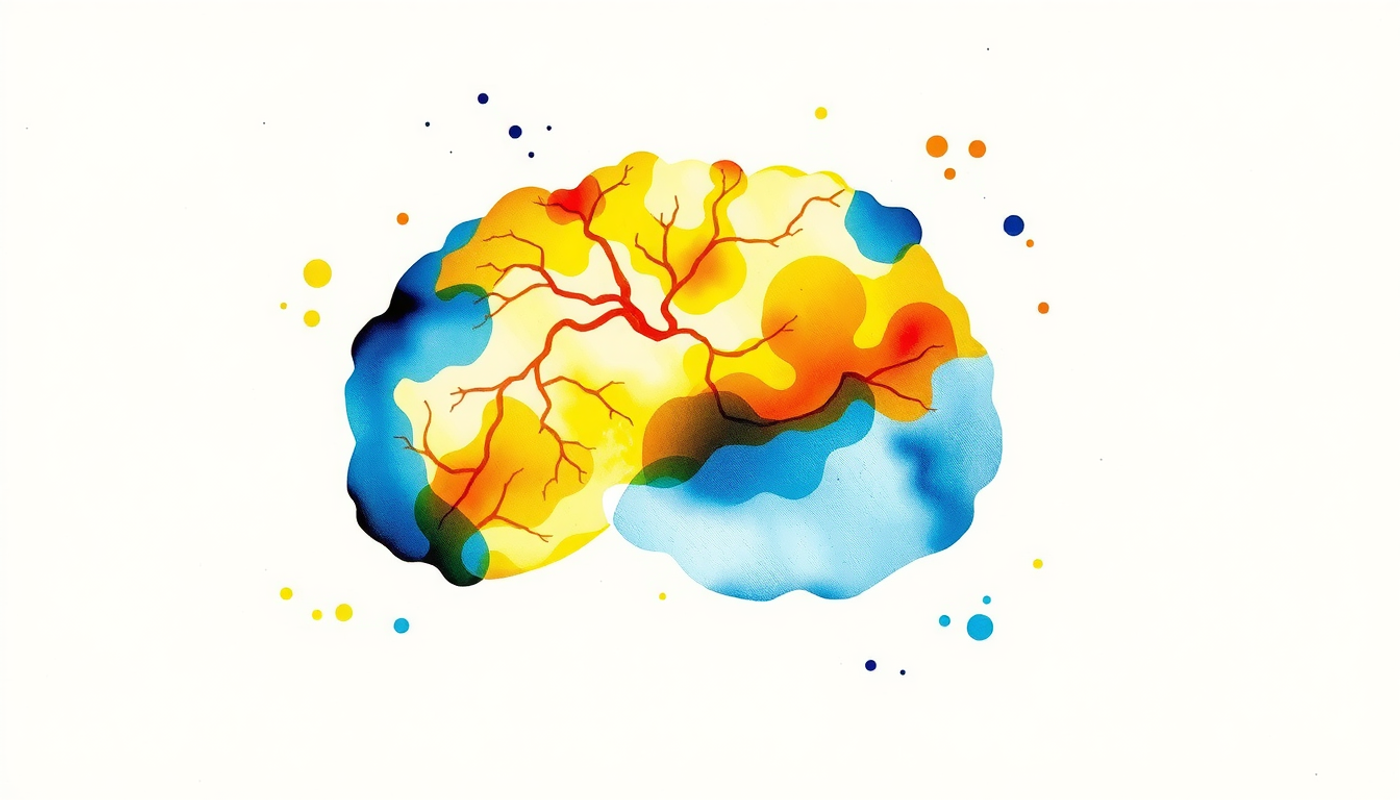
The story begins at MIT, in the laboratory of Ann Graybiel.
Graybiel is a neuroscientist at the McGovern Institute for Brain Research. She has spent four decades studying the striatum, the largest structure in the basal ganglia, a cluster of neurons buried beneath the cortex. In the late 1990s, she made a discovery that changed how scientists think about habits [2].
Her team implanted tiny electrodes in the striata of rats and trained them to run a simple T-maze. A click sounded. A gate opened. The rat ran down the corridor and turned left or right depending on which direction held a chocolate reward. Simple enough. But what happened inside the brain was not simple at all.
During the first few runs, neurons across the striatum fired constantly. The entire run, every step, every sniff, every hesitation, produced activity. The brain was working hard, evaluating everything, making decisions moment by moment.
Then something shifted.
As the rat learned the maze, the firing pattern changed. Neurons began firing strongly at the beginning of the run. Then they went quiet during the middle. Then they fired again at the end. Graybiel called this "task-bracketing." The brain was chunking the entire sequence into a single unit, bookmarking the start and the finish, and letting the middle run on autopilot [3].
Think of it like this. When you first learned to drive, every action was separate. Check mirror. Press clutch. Shift gear. Release clutch. Steer. Now you do all of it in one smooth motion triggered by a single cue (the need to change speed) and ending with a single outcome (the car moving faster). The individual steps still happen. But your brain has packaged them into a chunk and no longer monitors each one.
Graybiel published a landmark review in the Annual Review of Neuroscience in 2008, showing that this chunking pattern is the neural signature of habit. When the task-bracketing pattern forms, the habit is set. When it disappears through extinction, the habit weakens. And once formed, these patterns are remarkably stable. They can survive weeks without practice and snap back into action the moment the cue returns [3].
In 2018, Natasha Martiros, Aaron Burgess, and Graybiel herself published new results confirming that these bracketing patterns emerge specifically in the dorsolateral striatum, the region associated with automatic behavior, and that they are tightly linked to the development of habitual responding [4].
Two Roads Inside the Striatum
If Graybiel showed what habit formation looks like in the brain, it was Henry Yin and Barbara Knowlton who showed where it happens, and why location matters more than anyone expected.
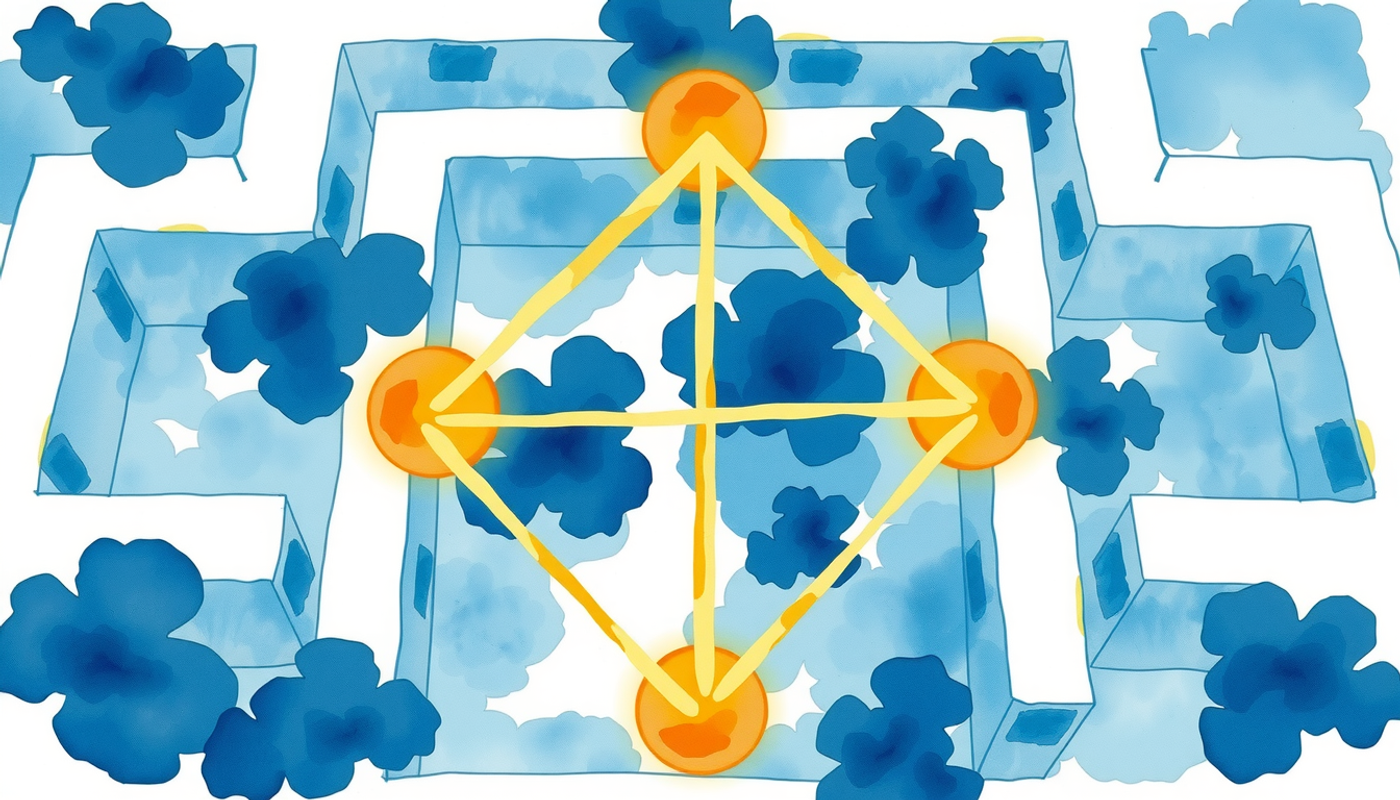
In 2006, Yin and Knowlton published a paper in Nature Reviews Neuroscience that became the foundational framework for modern habit neuroscience [5]. Their argument was deceptively simple: the dorsal striatum is not one thing. It contains two functionally distinct systems.
The dorsomedial striatum (DMS), which corresponds roughly to the caudate nucleus in the human brain, handles goal-directed behavior. It stores associations between responses and their outcomes. When you try a new restaurant because you read a good review, that is your DMS. It cares about what will happen next.
The dorsolateral striatum (DLS), which corresponds to the putamen, handles habits. It stores associations between stimuli and responses. When you reach for your phone every time it buzzes, without thinking about why, that is your DLS. It does not care about outcomes. It cares about triggers.
Yin and Knowlton defined this distinction with surgical precision. A habit, they wrote, is "instrumental behaviour that is impervious to changes in the value of the outcome and in the causal contingency between action and outcome" [5]. Translation: you keep doing it even when the reward is gone.
How did they prove it? Through a technique called outcome devaluation, first developed by Anthony Dickinson at Cambridge in 1985 [6]. Train a rat to press a lever for sugar pellets. Then make the sugar pellets disgusting (pair them with nausea). Now test the rat. If the rat stops pressing, its behavior was goal-directed. It knew the reward was now bad and adjusted. If the rat keeps pressing anyway, its behavior was habitual. The reward's value no longer mattered.
The critical finding: lesions to the DMS made rats habitual prematurely. They stopped caring about outcome changes much earlier than normal. Lesions to the DLS did the opposite: they kept rats goal-directed even after extensive training. The two regions were competing for control, and the balance between them determined whether behavior was deliberate or automatic.
A 2022 study in the Journal of Neuroscience added another layer. Researchers found that when the DMS was damaged, rats actually learned action sequences faster. The goal-directed system, it turned out, was not just an alternative to the habit system. It was actively competing with it, slowing it down [7]. The DMS was not just "not yet habitual." It was anti-habitual.
The 66-Day Question
How long does it take for a new behavior to become automatic?
Popular culture says 21 days. Self-help books repeat it endlessly. The number traces back to a 1960 book called Psycho-Cybernetics by Maxwell Maltz, a plastic surgeon who noticed patients took about 21 days to adjust to a new face. Maltz was not a psychologist. He was not studying habits. And his observation was anecdotal. But the number stuck.
The real answer came in 2010, from Phillippa Lally and her colleagues at University College London [8].
Lally recruited 96 volunteers. Each chose a single new health behavior, something like drinking a glass of water with lunch, eating fruit every day, or doing a 15-minute run before dinner. For 84 days they performed the behavior and filled out the Self-Report Behavioural Automaticity Index, a scale measuring how automatic the action felt. Could they do it without thinking? Did it feel natural? Did they have to remind themselves?
The results destroyed the 21-day myth.
Time to reach 95% of each person's plateau of automaticity ranged from 18 to 254 days. The average was about 66 days. But that average hid enormous variation. Simple behaviors like drinking water became automatic in weeks. Harder behaviors like exercise took months. And some participants had not reached full automaticity even after the 84-day study period ended, meaning the 254-day figure was actually an extrapolation [8].
One reassuring finding: missing a single day did not reset progress. The curve of automaticity was not fragile. Skip a day and you pick up where you left off. The all-or-nothing thinking ("I missed a day, I've failed") turned out to have no neurological basis.
Gardner, Lally, and Wardle later published a clinician's guide summarizing the practical implications: the path to habit is not a cliff edge at 21 days. It is a slow, forgiving curve that rewards consistency over perfection [9].
How Dopamine Writes the Script
The shift from goal-directed to habitual does not happen by accident. It is driven by a molecule: dopamine.
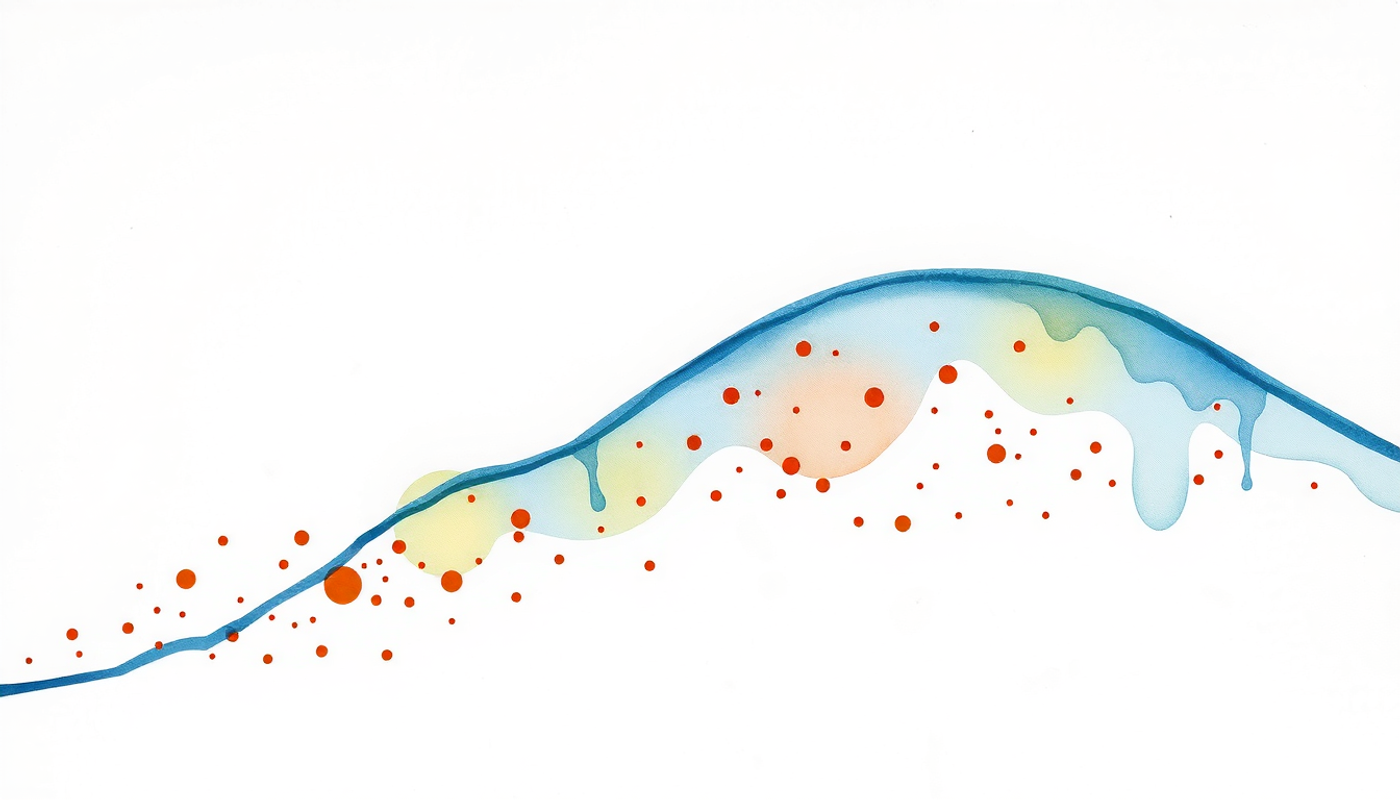
In 1997, Wolfram Schultz, Peter Dayan, and Read Montague published a paper in Science that redefined how neuroscience thinks about learning [10]. They showed that dopamine neurons in the midbrain do not simply fire when a reward arrives. They fire when a reward is better than expected. They stay quiet when a reward is exactly as predicted. And they decrease their firing when a reward is worse than expected.
Schultz later described this in precise terms: "Most dopamine neurons in the midbrain signal a reward prediction error; they are activated by more reward than predicted, remain at baseline activity for fully predicted rewards, and show depressed activity with less reward than predicted" [11].
What does this have to do with habits?
Everything. In the early stages of learning, when rewards are still surprising, dopamine floods the ventral striatum (the nucleus accumbens, roughly). This signal says "pay attention, something good happened." As learning continues and the reward becomes predictable, the dopamine signal shifts. It migrates from the ventral striatum to more dorsal regions, eventually reaching the DLS, the habit center [12].
Barry Everitt and Trevor Robbins at Cambridge described this progression in a famous 2005 paper and updated it a decade later. They called it a "devolution" of control, from the prefrontal cortex to striatal circuits, and from ventral to dorsal striatum, mediated by the spiral architecture of dopaminergic pathways [12]. In plain terms: dopamine teaches the brain where to expect reward. As those expectations solidify, the teaching signal moves deeper into the habit circuitry, cementing the stimulus-response bond.
One important caveat. A recent study tracking dopamine dynamics across ten weeks of habit development in rats found that regional dopamine levels remained surprisingly stable rather than migrating as the framework predicts [13]. The ventral-to-dorsal migration story may be more complex than the clean narrative suggests. Science is honest about its uncertainties, and this is one of them.
The Synapse That Remembers
Dopamine tells the brain what to learn. But the actual learning happens at synapses, the tiny gaps between neurons where chemical signals pass from one cell to the next. Two forms of synaptic change make habits possible: long-term potentiation (LTP) and long-term depression (LTD).
Paolo Calabresi and his colleagues at the University of Perugia spent years mapping how these changes work in the striatum. In 2007, they showed that both LTP and LTD occur at corticostriatal synapses, the connections between cortical neurons and the medium spiny neurons (MSNs) that make up 95% of the striatum, and that both depend on dopamine receptor activation [14].
The details matter. D1 dopamine receptors, found predominantly on MSNs in the "direct pathway" (which promotes movement), support LTP. D2 receptors, found on MSNs in the "indirect pathway" (which inhibits movement), support LTD. When both forms of plasticity work together, the striatum can selectively strengthen some behavioral responses while weakening others. That is how a habit gets "written" into the brain's wiring.
Verena Pawlak and Jochen Kerr at the Max Planck Institute confirmed this at the single-synapse level in 2008. They showed that the precise timing of neural spikes relative to cortical input determined whether a synapse strengthened (LTP) or weakened (LTD), and that blocking D1/D5 dopamine receptors prevented both [15].
Calabresi's 2014 reappraisal in Nature Neuroscience added nuance: when both LTP and LTD are lost in the striatum, no change in motor state can be induced [16]. The ability to form new habits, and break old ones, depends on the brain's capacity for bidirectional synaptic plasticity. Lose that plasticity, and you are stuck.
Context Is the Trigger
Wendy Wood spent her career at the University of Southern California asking a deceptively simple question: if habits are automatic, what triggers them?
Her answer: context. Not willpower. Not motivation. Not intention. The physical, temporal, and social environment in which a behavior occurs.
In a series of studies, Wood showed that habitual behaviors are remarkably tied to their settings. Change the setting, and the habit weakens. Keep the setting constant, and the habit persists even when you would rather it didn't [17].
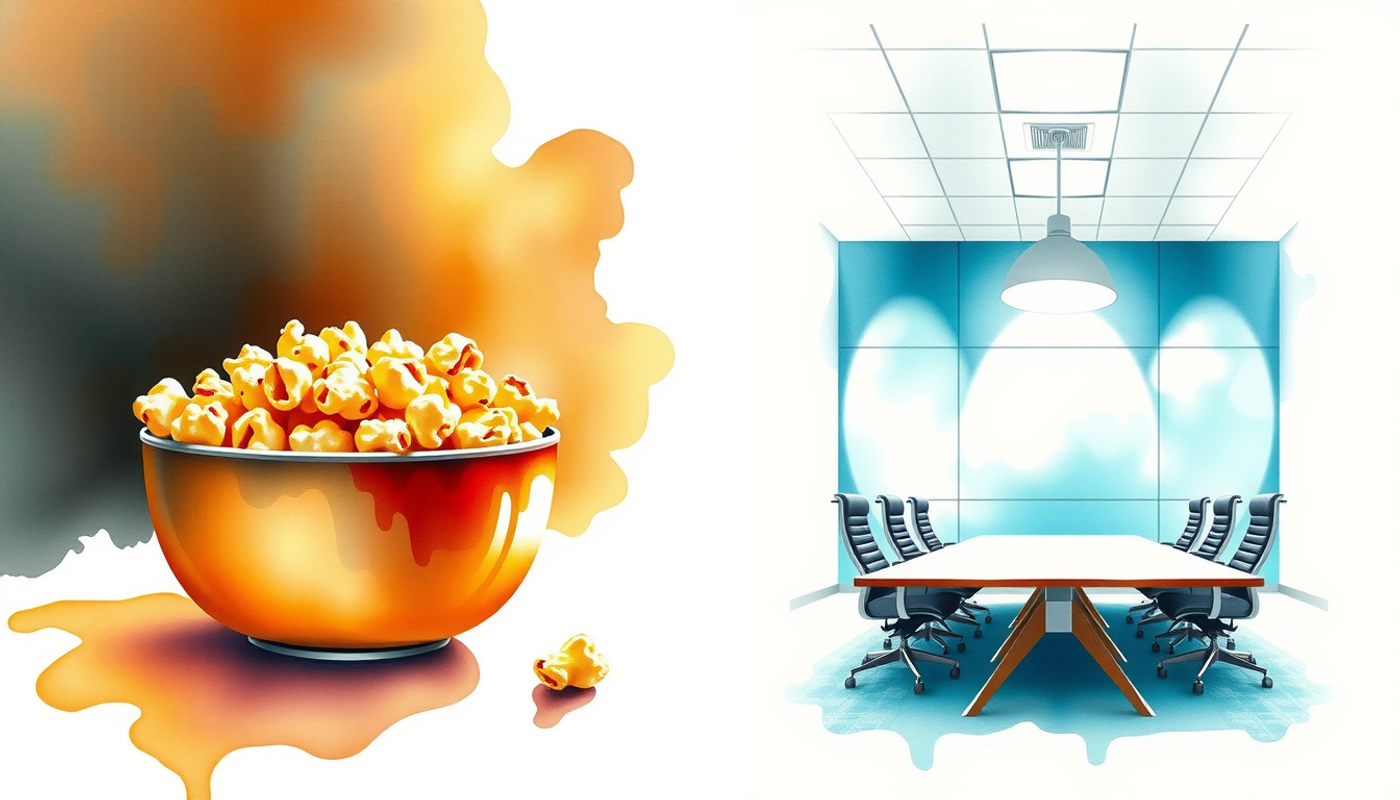
The most vivid demonstration came from a 2011 study by David Neal, Wendy Wood, and colleagues. They gave moviegoers popcorn, either fresh or stale (deliberately made to taste bad, left for a week). People with weak popcorn habits ate less stale popcorn than fresh, as you would expect. But people with strong popcorn habits ate just as much stale popcorn as fresh. The taste did not matter. The cinema was the trigger, and the habit fired regardless of the reward's quality [18].
The twist: when the same strong-habit participants were given the stale popcorn in a different context, a meeting room where they watched music videos instead of a movie, they ate less. Remove the cue, and even a deeply ingrained habit loses its grip.
Wood's 2005 research on people who moved to new cities showed the same pattern at a larger scale. Major life transitions, moving house, changing jobs, starting college, disrupted habits because they disrupted the environmental cues that triggered them [19]. This is why the first few weeks in a new city feel exhausting. Your brain has lost its autopilot. Every action requires conscious attention again.
In 2024, Wood published a new paper arguing that effective behavior-change interventions work through three mechanisms: building new habit-reward associations, disrupting context cues of old habits, and adding friction to unwanted behaviors [20]. Willpower, she noted, barely appears in the research.
When the Cortex Lets Go
For decades, neuroscientists debated a fundamental question: does the cortex stay involved once a habit forms, just less actively? Or does it truly hand off control?
A 2025 paper in the Proceedings of the National Academy of Sciences (PNAS) provided the most direct answer yet. Researchers at Yale showed that stereotyped movement sequences, once they have become habitual, need the cortex only during the learning phase. After learning, the cortex can be inactivated, and the movement still executes perfectly [21].
The habit, in other words, no longer lives in the cortex. It has migrated to a loop entirely within the basal ganglia: from the DLS to the substantia nigra pars reticulata (SNr), to the parafascicular thalamus (PF), and back to the DLS. This loop, sustained by thalamostriatal synaptic plasticity, runs the habit independently.
This finding has a profound implication. When people say "I can't stop this habit even though I know I should," they are describing something neurologically real. The knowing happens in the cortex. The doing happens in a subcortical circuit the cortex no longer controls.
Earlier evidence pointed in this direction. F. Gregory Ashby and colleagues had shown in 2010 that cortical activity during automated behavior does not simply decrease. It redistributes. Prefrontal and parietal "attentional control" areas disengage while premotor and motor cortical areas remain active [22]. The picture is not "less brain activity." It is a different kind of brain activity.
The Endocannabinoid Gate
Here is something most habit articles never mention: the endocannabinoid system, the same molecular system affected by cannabis, is directly involved in whether a behavior becomes habitual.
In 2016, Christina Gremel and colleagues published a remarkable study in the journal Neuron. They deleted CB1 cannabinoid receptors specifically from the projections running from the orbitofrontal cortex (OFC) to the dorsal striatum. The result: rats could not form habits [23]. They remained stubbornly goal-directed, adjusting their behavior every time the reward was devalued. The shift from deliberate to automatic never happened.
The mechanism is elegant. Endocannabinoids act as retrograde messengers at corticostriatal synapses. When a postsynaptic MSN fires, it releases endocannabinoids backward across the synapse. These molecules bind to CB1 receptors on the presynaptic (cortical) terminal and suppress further glutamate release. This suppression produces a form of LTD that weakens the goal-directed OFC input to the striatum [24].
In Gremel's framework, endocannabinoid-mediated LTD at OFC-striatal synapses does not just strengthen the habit system. It actively weakens the competing goal-directed system. The emergence of habits depends on turning down the volume on the circuits that would otherwise keep behavior flexible.
This has clinical relevance. Chronic cannabis use impairs endocannabinoid function through tolerance. One study showed that cannabinoid tolerance disrupts DLS plasticity, impairing habit formation and the ability to run behaviors automatically [25].
Automaticity Is Not Compulsivity
There is a question that hovers over every discussion of habits: when does automatic become pathological?
The answer requires distinguishing between two things that look similar on the surface but differ at a fundamental level. Automaticity is efficient. It frees cognitive resources. And it can be overridden. You reach for your phone out of habit, but if someone tells you the building is on fire, you stop. The cortex can interrupt.
Compulsivity is different. In compulsive behavior, the goal-directed system has weakened to the point where it can no longer override the habitual system. The person continues the behavior even when it causes obvious harm. Even when punishment follows.
Claire Gillan and colleagues demonstrated that OCD patients show excessive habit formation. On outcome-devaluation tasks, they continued responding as if the reward still mattered even after it was devalued, significantly more than healthy controls [26]. Brain imaging revealed frontostriatal hypoactivation during goal-directed planning, suggesting the neural circuits for deliberate control were underperforming [27].
The spectrum runs: goal-directed, habitual, compulsive. The same circuits. Different balances. The Lipton, Gonzales, and Citri review in Frontiers in Systems Neuroscience laid this out clearly in 2019 [28]. Addiction follows the same trajectory: initial drug use is goal-directed (seeking pleasure), chronic use becomes habitual (stimulus-driven), and compulsive use reflects a broken override system (prefrontal cortex can no longer stop it) [12].
When Habit Circuits Break Down
The clearest evidence that the basal ganglia run habits comes from what happens when they are damaged.
Parkinson's disease destroys dopaminergic neurons in the substantia nigra, starving the dorsal striatum of dopamine. Patients struggle not only with movement but with procedural learning, the kind of learning that produces habits. On the Serial Reaction Time Task (SRTT), a standard measure of implicit sequence learning, Parkinson's patients show deficits compared to healthy controls [29]. They can often acquire new procedural knowledge, but less efficiently and with poorer retention [30].
Huntington's disease attacks the striatum itself, destroying MSNs in the caudate and putamen. The result is even more severe: patients show marked impairments in implicit learning, visuomotor adaptation, and the formation of stimulus-response associations [31]. A meta-analysis confirmed that procedural learning deficits are consistent across multiple conditions involving basal ganglia dysfunction [32].
Then there is Tourette syndrome. People with Tourette's produce involuntary motor and vocal tics that share features with habits: they are repetitive, partially automatic, triggered by sensory or internal cues, and difficult to suppress. A 2018 paper in Brain conceptualized tics as "habits gone awry," implicating the same basal ganglia circuits but in a dysregulated state [33]. One study found that unmedicated Tourette patients showed increased propensity for habitual behavior on outcome-devaluation tasks, suggesting a bias toward the habit system [34].
The therapeutic implication: Habit Reversal Training (HRT), one of the most effective treatments for Tourette's, works by teaching patients to detect the cue that precedes a tic and substitute a competing response. It is, in essence, reprogramming the habit loop.
Why the Brain Automates
Why would evolution build a brain that removes behaviors from conscious control? The answer is metabolic.
The human brain weighs about 1.4 kilograms, roughly 2% of body weight. Yet it consumes approximately 20% of the body's total oxygen and caloric intake. Marcus Raichle and Debra Gusnard established these figures in a foundational 2002 paper in PNAS [35]. Neural signaling is expensive. Every deliberate decision, every conscious evaluation, every moment of focused attention burns glucose and oxygen.
Habits solve this problem. By shifting well-learned behaviors to efficient, low-energy subcortical circuits, the brain frees its limited conscious resources for novel situations. Graybiel's chunking mechanism is the neural implementation of this efficiency. Instead of cortical neurons monitoring every step of a routine, the striatum packages the routine into a single unit and runs it with minimal cortical involvement [3].
Wood, Quinn, and Kashy found evidence for the psychological side of this efficiency. In their experience-sampling studies, participants reported lower stress during habitual behaviors compared to non-habitual ones [1]. Habits are not just metabolically cheaper. They feel easier.
An important caveat: no study has directly proven that brains evolved habits specifically to conserve energy. The efficiency argument is an inference supported by the metabolic data and the demonstrated resource savings, but it remains an interpretive hypothesis rather than a demonstrated causal chain.
What This Means for Building and Breaking Habits
Everything in this article points toward a few practical truths supported by the research.
First, context matters more than willpower. The popcorn study, Wood's relocation research, and the neuroscience of stimulus-response associations all point the same direction. To build a new habit, anchor it to a consistent cue in a consistent environment. Same time. Same place. Same preceding action. Peter Gollwitzer's work on implementation intentions, "if X happens, then I will do Y," shows that explicitly linking a behavior to a situational cue produces medium-to-large effects on follow-through [36].
Second, repetition matters, but not on a fixed schedule. The Lally data shows wide individual variation. Do not expect a magic number of days. Expect a curve. The curve is forgiving. Missing a day does not reset it. But missing weeks will.
Third, reward matters early but fades. Dopamine's reward prediction error signal is strongest when outcomes are unexpected. As a behavior becomes predictable, the dopamine signal migrates and the behavior becomes increasingly stimulus-driven rather than reward-driven. Early in habit formation, make the reward salient and immediate. Later, it becomes less necessary.
Fourth, to break a habit, disrupt the cue. Wood's research is clear: the most effective interventions change the environment, not the person's resolve. Remove the cue, add friction to the routine, or replace the routine with an alternative that satisfies the same craving.
Fifth, understand the limits of conscious override. Once a behavior has been written into the DLS, cortical intention alone may not be enough. This is not a moral failing. It is a neurological reality. The 2025 PNAS paper showed that habitual motor programs can run without any cortical involvement at all [21]. Changing deeply encoded habits requires changing the inputs (cues, contexts) and building competing habits, not simply "deciding" to stop.
Study apps that schedule reviews automatically serve exactly this function. They remove the need for conscious decisions about when and what to review, turning spaced repetition into a cue-triggered routine rather than a daily negotiation with willpower. A guide to the best study apps for students covers tools that build these review habits through automated scheduling, focus blocking, and progress tracking.

What Remains Unknown
Honest science admits its gaps. Several important questions about habit automaticity remain open.
The debate between the "dual-system" model (DMS vs DLS as separate competing systems) and "single-system" models (automaticity as a continuum within one system) is not fully resolved. A 2018 study found that five different experimental paradigms all failed to induce habits in humans using the standard devaluation test, raising questions about how well the animal model translates to human behavior [37]. Habits in rats pressing levers for sugar may not be the same psychological entity as habits in humans reaching for their phones.
The brain imaging data is also mixed. Some studies show decreased cortical activity as habits form. Others show increases in premotor regions. Others show redistribution without clear net changes [22]. The simple story of "less thinking, more automation" is an oversimplification, even if the underlying principle is sound.
The measurement of habits in humans remains difficult. The Self-Report Habit Index (SRHI), developed by Verplanken and Orbell in 2003, is widely used but fundamentally subjective [38]. A newer approach, the "making habits measurable" framework, attempts to ground habit measurement in associative dual-process models rather than self-report [39]. But the field does not yet have a behavioral gold standard for measuring human habits in real-world settings.
Conclusion
The story of how habits become automatic is, at its core, a story about efficiency and loss of control. Efficiency because the brain genuinely performs better when well-learned routines run without conscious interference. Loss of control because the transfer is real. Once the DLS takes over, once task-bracketing patterns are etched into striatal circuits, once synaptic plasticity has cemented the stimulus-response bond, the behavior runs independently of your intentions.
This is not a design flaw. For most of human history, it was a survival advantage. The hunter who had to consciously think about each step of tracking prey would have been slower than the one whose tracking skills ran on autopilot, freeing the cortex to scan for predators, read the wind, and plan ahead.
But in a world full of engineered cues, from notification sounds to store layouts to social media feeds designed to trigger compulsive engagement, the same system that once kept us alive can work against us. Understanding the neuroscience does not automatically solve this. But it reframes the problem. A bad habit is not a failure of character. It is a feature of neural architecture. And the science increasingly shows that changing it requires changing the architecture's inputs, the cues, contexts, and environments that trigger the automatic response.
The brain that automated your morning routine did so for good reason. The challenge is making sure the routines it chooses to automate are the ones you actually want.
Frequently Asked Questions
How long does it take for a habit to become automatic?
Research by Phillippa Lally at UCL found that the time to automaticity ranged from 18 to 254 days, with an average of about 66 days. The 21-day figure popular in self-help literature has no scientific basis. Simple behaviors automate faster than complex ones, and missing a single day does not reset progress.
What part of the brain controls habits?
The dorsolateral striatum (DLS), part of the basal ganglia, is the primary region controlling habitual behavior. Early in learning, the dorsomedial striatum (DMS) and prefrontal cortex manage goal-directed behavior. With repetition, control shifts to the DLS, which stores stimulus-response associations and runs behaviors without conscious oversight.
Can habits run without conscious awareness?
Yes. A 2025 PNAS study showed that once a habit is fully learned, the cortex can be inactivated and the habitual motor sequence still executes perfectly. The habit runs on a subcortical basal ganglia loop (DLS to SNr to thalamus and back), independent of cortical control.
What is the difference between a habit and a compulsion?
Habits are automatic but can be overridden by conscious effort when needed. Compulsions, seen in OCD and addiction, persist despite negative consequences because the goal-directed system (prefrontal cortex and DMS) is impaired and can no longer override the habitual system. Same circuits, different balance of control.
Why are habits so hard to break?
Habits are encoded in the dorsolateral striatum through long-term potentiation at corticostriatal synapses. These synaptic changes are durable. The behavior becomes triggered by environmental cues rather than by conscious intention, and the cortex gradually disengages. Breaking a habit requires disrupting the cues, changing the context, and building competing neural pathways through repeated alternative behaviors.


