
Introduction
You see someone at a conference. You know that face. You remember the conversation you had six months ago, the conference room, even the coffee she was holding. But her name? Gone. Completely. You smile, wave, and spend the next five minutes hoping she does not introduce you to anyone.
This is not a personal failing. It is one of the most universal and most misunderstood experiences in human cognition. The mismatch between face memory and name memory has been the subject of serious scientific inquiry since the 1980s, and the answers turn out to be far stranger than "faces are just easier." In fact, when psychologists at the University of York tested faces and names on equal terms, names actually won [1]. The real story is not about what your brain stores better. It is about two completely different memory tasks, two separate neural highways, and a naming system that evolution never designed you to use.
This article traces the science of face and name memory from its roots in 1980s cognitive psychology through modern neuroimaging, from a disorder that steals your ability to recognize your own mother to a rare gift that lets London police officers identify suspects from blurry CCTV footage. The story crosses primate evolution, infant perception, courtroom errors, and even cultural differences in how people look at faces. And it ends with evidence-based techniques, grounded in the same spacing effect that governs all durable learning, for making names stick.
The Machine That Reads Faces in a Tenth of a Second
Before you know a name, you know a face. And you know it fast.
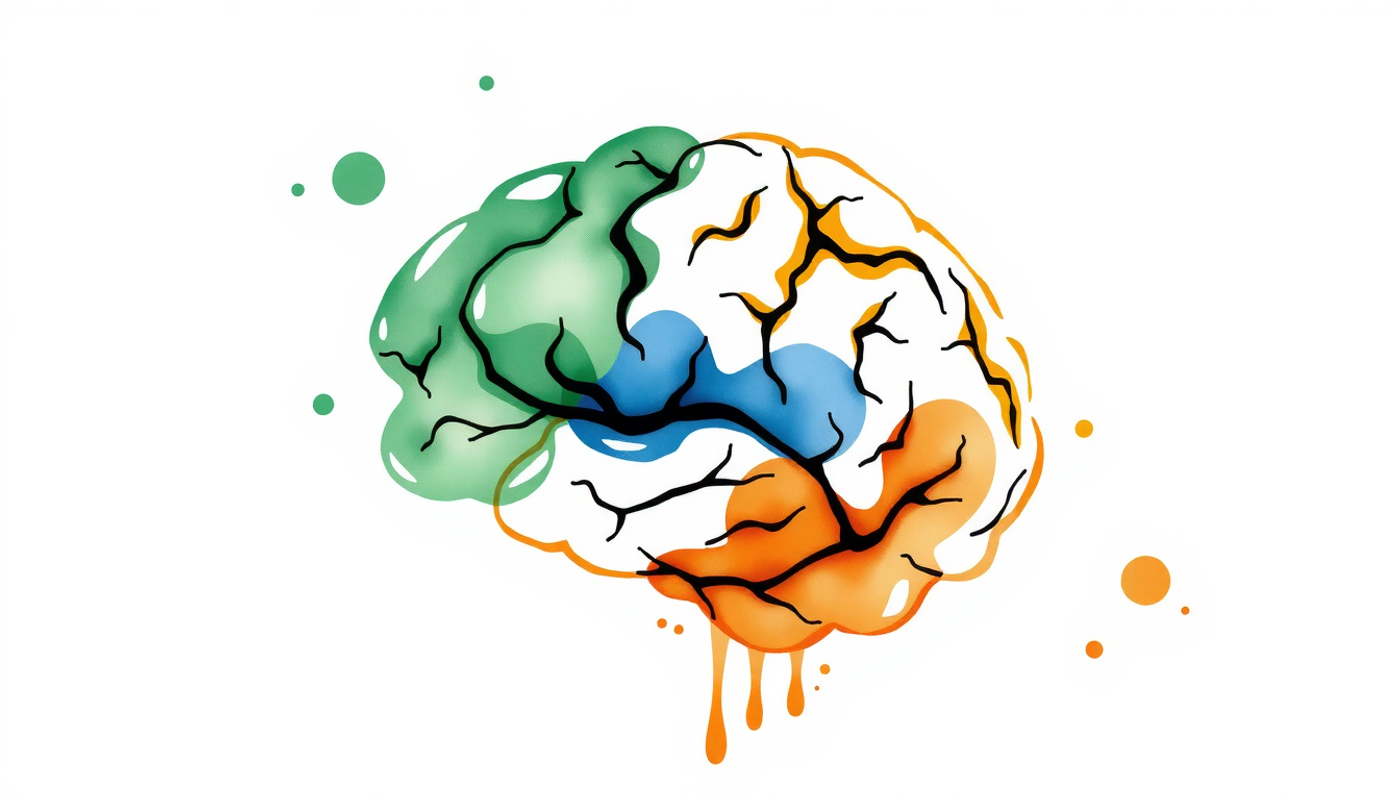
In 1992, a neuroscientist named Justine Sergent used PET scanning to show that a specific patch of the temporal lobe lit up when people looked at faces but not when they looked at objects. Five years later, Nancy Kanwisher, Josh McDermott, and Marvin Chun at MIT pinned it down with fMRI. They found a region in the fusiform gyrus, a fold of cortex tucked along the bottom of the temporal lobe, that responded selectively to faces in twelve of fifteen subjects [2]. They called it the fusiform face area, or FFA.
The FFA does something no other brain region does for any other category of object: it processes faces as unified wholes rather than collections of parts. Two eyes, a nose, a mouth. Those features matter, but what the FFA really encodes is their spatial arrangement, the distances and proportions that make your sister's face different from your neighbor's. This is called holistic processing, and it explains a curious trick: turn a face upside down and recognition collapses, even though all the same features are visible. The spatial relationships scramble, and the FFA cannot reassemble them [2].
But the FFA is not alone. It sits inside a network that Haxby, Hoffman, and Gobbini mapped in 2000, splitting face processing into a core visual system and an extended system [3]. The core system has three nodes. First, the occipital face area (OFA), located in the inferior occipital gyrus, handles early structural encoding. It decides, within roughly 100 milliseconds, whether what you are looking at is even a face [4]. Second, the FFA extracts the stable identity features. Third, the posterior superior temporal sulcus (pSTS) handles the changeable aspects: expression, gaze direction, lip movement [5].
From this core, signals fan out into the extended system. The hippocampus binds the face to episodic memory, to the where and when of past encounters. The amygdala, that almond-shaped cluster of neurons deep in the temporal lobe, tags the face with emotional significance. And at the very end of the chain, the left anterior temporal lobe and temporal pole handle something the rest of the system cannot: retrieving the person's name [6].
This last step is where everything falls apart.
The Name at the End of a Very Long Road
In 1986, Vicki Bruce and Andrew Young published a model of face recognition that has shaped every study since [6]. Their model laid out a sequence. First, the brain builds a structural description of the face. Then it compares this description against stored face recognition units, or FRUs, one for each person you know. A match triggers a feeling of familiarity. Next, the person identity node, or PIN, activates and retrieves semantic information: where you know them from, what they do, how you feel about them. And only after all of that, in a final separate step, can the name be generated.
The name is the last station on the line. Not second to last. Last.
This sequential architecture makes a specific prediction: you should be able to recognize a face and recall biographical details about the person while still failing to retrieve their name. That is, you should be able to say "She's the woman from the marketing department, she just got back from Tokyo, she always brings those lemon cookies" and still not produce "Sarah." And that is exactly what happens. Young, Hay, and Ellis confirmed this in diary studies during the 1980s: subjects reported hundreds of instances of recognizing a face and accessing semantic information but failing to produce the name. The reverse, knowing a name but not recognizing the face, almost never occurred [6].
Why? The answer came from a computational version of the model. In 1990, Andrew Burton, Vicki Bruce, and Nick Johnston built the Interactive Activation and Competition model, or IAC [7]. In this model, PINs connect to both semantic information units (SIUs) and name recognition units (NRUs). The critical difference is connectivity. A semantic fact like "works in marketing" connects to many PINs, because many people work in marketing. Activation converges from multiple directions. But a name like "Sarah Chen" typically connects to only one PIN. There is one Sarah Chen in your life. One link, one route, one fragile thread.
Burton and Bruce made this explicit in a 1992 paper with a title that became famous: "I recognize your face but I can't remember your name: a simple explanation?" [8]. The explanation was network architecture. Names are not stored in a worse place. They are not processed by weaker machinery. They simply have fewer incoming connections, which means less converging activation, which means a higher chance of retrieval failure.
Think of it like a city's road system. Semantic facts are like downtown, reachable by highways from every direction. A name is like a cabin at the end of a single dirt road. If that road washes out, there is no alternative route.
The Experiment That Flipped the Story
For decades, everyone assumed faces are simply easier to remember than names. Then in 2018, three psychologists at the University of York, Mike Burton, Rob Jenkins, and David Robertson, ran an experiment that upended this assumption [1].
The problem, they realized, was that everyday life gives faces and names unfair tests. When you see someone at a party, you are doing recognition: the face is right in front of you, and your brain just has to match it against stored templates. But when you need to produce a name, you are doing recall: generating information from scratch with no cue except the face itself. Recognition is always easier than recall. Always. For any kind of information. Asking "which is harder, faces or names?" without controlling for the task is like asking "which is heavier, a kilogram of feathers weighed on a bathroom scale or a kilogram of steel weighed on a laboratory balance?" The comparison is meaningless.
Burton, Jenkins, and Robertson designed a fair test. Participants studied unfamiliar faces and unfamiliar names, then were tested on both using recognition, the same task for both. They even made the test realistic: faces were shown in different photos with different lighting and hairstyles, and names appeared in different typefaces and sizes. Across three experiments, the result was consistent and clear: participants recognized names significantly more accurately than faces [1].
Rob Jenkins put it bluntly: "While many people may be bad at remembering names, they are likely to be even worse at remembering faces. This will surprise many people as it contradicts our intuitive understanding" [9].
The reason we never notice this is simple: we only discover we have forgotten a name after we have already recognized a face. We never confront the thousands of faces we walk past on the street without recognizing. The failure is invisible. We castigate ourselves for forgetting names because the evidence of face success is always right in front of us, while the evidence of face failure is permanently hidden.
A Word Called Baker and a Man Named Baker
There is a classic demonstration that captures the name problem in a single experiment. Give one group of people a photograph and tell them "This man is a baker." Give another group the same photograph and tell them "This man's name is Baker." Test both groups later. The group told he is a baker remembers far better than the group told his name is Baker [10].
Same word. Same face. Completely different memory performance.
Gillian Cohen first reported this Baker/baker paradox in 1990, and it has been replicated many times since [10]. The explanation maps perfectly onto the IAC model. "Baker" the occupation activates a web of associations: ovens, flour, white hats, early mornings, bread. The word sits inside a rich semantic neighborhood. "Baker" the surname activates nothing. It is an arbitrary label, an island of meaning connected to this face and only this face. When retrieval time comes, the occupation has dozens of pathways back. The surname has one.
This arbitrariness is the first of four reasons names are genuinely hard to recall, independently of the recognition-versus-recall confound. David Ludden, drawing on work by Lise Abrams and Danielle Davis [11], catalogued them: names are arbitrary (no semantic content), names lack synonyms (you cannot substitute a close alternative), names are low-frequency words (you hear "Sarah Chen" far less often than "marketing" or "Tokyo"), and names often contain multiple components (first name plus family name plus sometimes a title). Each factor makes the phonological form harder to retrieve.
The tip-of-the-tongue phenomenon, that excruciating state where you know you know the word but cannot produce it, occurs disproportionately with proper names. Burke, MacKay, Worthley, and Wade showed in 1991 that proper names of acquaintances not recently contacted are the single most common category of tip-of-the-tongue targets, especially in older adults [12]. The mechanism is a failure at the phonological level: the semantic representation is intact, the "I know this person" feeling is strong, but the sound pattern of the name will not come.
Five Thousand Faces and Counting
How many faces does a single human brain actually store? Until 2018, nobody had a reliable answer.
Rob Jenkins and his colleagues at the University of York designed a method to find out [13]. They asked 25 participants to spend an hour listing every person they could recall from their own lives: family, friends, colleagues, schoolmates, acquaintances. Then participants went through thousands of photographs of famous people and flagged every face they recognized. The personally known faces averaged around 362, with a range of 167 to 524. The famous faces added thousands more. Combining both, the average person knew roughly 5,000 faces, with a range from about 1,000 to 10,000.
Five thousand. And no ceiling was found. Jenkins speculated that media exposure in the modern world fills spare capacity that evolved for much smaller social groups.
Compare that 5,000 to Dunbar's number, the roughly 150 stable social relationships that the anthropologist Robin Dunbar predicted based on primate neocortex ratios [14]. Our face-recognition system massively over-delivers for the social world it evolved in. A hundred-person hunter-gatherer band needed maybe 200 to 300 face files. We carry 5,000. The hardware was built for a village. Modern life filled it with a city.
Why Evolution Built a Face Machine but Not a Name Machine
Face recognition is ancient. Really ancient.
Macaque monkeys have face-selective neurons in their temporal cortex. Doris Tsao and Winrich Freiwald mapped entire "face patches" in macaques using fMRI, patches that are homologous to the human FFA and OFA [2]. Sheep recognize other sheep by their faces. Even wasps in some species use facial markings to identify individuals. Face individuation is not a human invention. It is a solution to a universal problem in social species: telling allies from strangers.
For our primate ancestors, recognizing a face instantly was the difference between being welcomed back to the group and being attacked. The selection pressure was enormous, sustained over tens of millions of years, and it built dedicated neural circuitry: the FFA, the OFA, the pSTS, and the white-matter pathways connecting them.
Language, by contrast, is recent. Estimates for the emergence of fully modern language range from 100,000 to 500,000 years ago, and those estimates are hotly debated. Proper names are younger still. There is no dedicated "name area" in the brain. Names are processed by general-purpose language machinery, the same temporal and frontal regions that handle any word. They ride on neural circuits designed for a different job.
The name is a cultural overlay on a biological system. It is like running a smartphone app on a calculator's processor. The hardware works, but it was not built for this.

When the Face Machine Breaks
About 2 to 3 percent of the population lives with developmental prosopagnosia, a lifelong inability to recognize faces despite normal vision and normal intelligence [15]. The term was coined by the German neurologist Joachim Bodamer in 1947, from the Greek prosopon (face) and agnosia (not knowing). People with prosopagnosia can see perfectly well. They can describe the shape of a nose. They know what a face is. But they cannot match a face to an identity. Their own spouse, their own child, their own reflection can look unfamiliar.
The neurologist and author Oliver Sacks lived with severe developmental prosopagnosia his entire life. He described arriving at his apartment building and being unable to identify his doorman, recognizing friends only by their gait or hairstyle, and once apologizing to a large potted plant because he thought it was a person [16]. His brother shared the condition, suggesting a genetic basis.
What prosopagnosia reveals is the modularity of the face system. People with prosopagnosia can recognize objects, read words, identify emotions in voices. The deficit is specific to faces. This supports the Bruce and Young model's claim that face recognition uses dedicated, specialized hardware rather than general-purpose visual processing [17].
At the opposite end of the spectrum are super-recognizers: people with extraordinary face memory who can identify someone from a brief glimpse years earlier. London's Metropolitan Police have recruited super-recognizers to scan CCTV footage, and they have identified suspects that facial recognition software missed.
And then there is Capgras syndrome, perhaps the strangest face-related disorder of all. Patients with Capgras recognize a loved one's face perfectly but become convinced the person is an impostor, a look-alike replacement. V.S. Ramachandran and William Hirstein proposed in 1997 that Capgras results from a disconnection between the visual face-recognition pathway and the emotional response system [18]. The face is recognized, but the "that feels like them" signal from the amygdala is missing. Without emotional confirmation, the brain generates a delusional explanation: this must be someone else. Evidence supports this: Capgras patients show reduced skin-conductance responses to familiar faces, the physiological signature of emotional recognition absent even when visual recognition is intact [19].
Prosopagnosia strips face recognition but leaves emotional response. Capgras strips emotional response but leaves face recognition. Together, they reveal that "knowing a face" is not one thing. It is at least two parallel processes that usually agree.

Not All Faces Are Created Equal
Your brain does not treat all faces the same way. One of the most replicated findings in face recognition research is the own-race effect: people recognize faces of their own racial group more accurately than faces of other groups.
Christian Meissner and John Brigham published a meta-analysis in 2001 covering 39 studies and nearly 5,000 participants [20]. The effect was robust: more accurate hits and fewer false alarms for own-race faces, with an effect size of d = 0.30. The pattern held across Caucasian, African American, and Asian samples.
The mechanism is still debated, but the leading explanation involves perceptual expertise. You are best at distinguishing faces in the category you have had the most exposure to. This is supported by the contact hypothesis: people with more cross-race contact show a smaller own-race bias. A 2022 meta-analysis by Singh, Mellinger, Correll, and colleagues found a contact-bias correlation of r = -0.15, and the effect was strongest when cross-race contact occurred during childhood [21].
Infant studies reveal how early this narrowing begins. David Kelly and colleagues showed in 2007 that three-month-old Caucasian infants could distinguish faces of all racial groups equally well. By six months, they could only distinguish Caucasian and Chinese faces. By nine months, only own-race faces [22]. The pattern was replicated with Chinese infants [23]. The other-race effect emerges in the first year of life, shaped by the faces the infant sees most.
Culture also shapes how people look at faces. Caroline Blais, Roberto Caldara, and colleagues used eye tracking to compare how Western Caucasian and East Asian participants scanned faces [24]. Western observers made triangular fixation patterns, looking at both eyes and the mouth. East Asian observers concentrated fixations on the center of the face, around the nose. Both groups achieved comparable recognition accuracy, but their visual strategies were fundamentally different.

A Brain That Gets Better Until Thirty-Four
Face recognition does not mature like other cognitive abilities. It takes a remarkably long time.
Kalanit Golarai and Kaori Grill-Spector at Stanford found in 2007 that the FFA in adults was substantially larger than in children, and that FFA volume correlated with face recognition memory performance [25]. Later work showed this growth continues well into adolescence [26]. The FFA appears to expand into surrounding cortex as face expertise develops.
Laura Germine, Bradley Duchaine, and Ken Nakayama pushed this further with a massive online study of over 44,000 participants [27]. They found that the ability to learn new upright faces does not peak until age 30 to 34. Inverted-face memory and name memory peaked in the early twenties, like most cognitive abilities. But upright face learning showed a unique late peak, suggesting that face-specific mechanisms continue to develop for years after general cognitive development has plateaued.
Not everyone agrees. Kate Crookes, Elinor McKone, and colleagues have argued that face-specific mechanisms (holistic processing, configural sensitivity) mature by age five to seven, and that later improvements reflect general cognitive development [28]. This debate remains unresolved. What is clear is that face recognition has an unusually long developmental trajectory, and that aging eventually erodes it, particularly through hippocampal decline that weakens face-name binding [29].
Alzheimer's disease hits this system especially hard. The disease attacks medial temporal structures early, disrupting exactly the hippocampal-temporal pole circuitry that binds faces to names. Proper-name retrieval may be one of the earliest cognitive signs of Alzheimer's-related decline [30].
Emotion, Attention, and the Cocktail Party Problem
The circumstances under which you encounter a face and hear a name matter enormously.
Emotional faces are remembered better. The amygdala enhances encoding and consolidation of emotionally significant encounters. An intracranial EEG study by Inman, Kragel, and colleagues in 148 patients found that high-frequency activity in the amygdala and hippocampus rose during successful emotional memory encoding [31]. The face of someone who frightened you, impressed you, or attracted you gets a stronger memory trace.
But emotion has a complication. Strong negative arousal can actually impair associative binding, including word-face associations [32]. The face is remembered vividly, but the details attached to it, including the name, can be lost. Emotion boosts the face trace while weakening the associative links, exactly the opposite of what you need to remember a name.
Then there is the attention problem. Names are typically heard once, spoken quickly during an introduction, at a moment filled with social anxiety, competing conversations, and self-monitoring. Divided attention devastates name encoding. The cocktail party effect, first described by Colin Cherry in 1953, shows that attention is selective and capacity-limited. At a party with many introductions, working memory overflows, and names are never encoded in the first place. The failure is not forgetting. It is never learning.
Context matters too. A face encountered in its usual setting is recognized easily. The same face "out of context," your dentist at the grocery store, triggers familiarity without identification. In Bruce and Young's terms, the FRU fires but the PIN fails to activate completely. You know you know this person. You just cannot place them.
Evidence-Based Strategies for Making Names Stick
Knowing why names are hard suggests how to make them easier. Each strategy targets a specific bottleneck.
The most powerful technique, supported by the strongest evidence, is spaced retrieval practice. Instead of repeating a name once and hoping it sticks, you test yourself on it at expanding intervals: ten seconds after hearing it, then a minute, then five minutes, then an hour. Katherine Cherry and colleagues demonstrated that spaced-retrieval training reliably teaches face-name associations even in patients with Alzheimer's disease, with benefits lasting six months when booster sessions are added [33]. A 2023 meta-analysis in the European Psychologist confirmed the effectiveness across populations [34]. Digital delivery works: an algorithmic spaced-retrieval app for early-stage Alzheimer's patients showed no decay after a week-long break, with 80 percent adherence [35].
The mechanism is clear in IAC terms: each effortful retrieval attempt strengthens the weak NRU-to-PIN connection. You are literally paving that single dirt road to the cabin.
Second, the face-name mnemonic. Transform the name into a visual image and link it to a distinctive facial feature. "Sarah" becomes a Sahara desert; you imagine sand dunes on her prominent cheekbones. Gopi, Wilding, and Madan found that the name-transformation component of this technique produced significant advantages over uninstructed learning [36]. The classic work by Yesavage, Rose, and Bower showed effectiveness in older adults [37]. This strategy directly counters the Baker/baker problem by converting an arbitrary label into a semantically connected image.
Third, repeat the name aloud during the introduction. "Nice to meet you, Sarah." This defeats the cocktail party failure mode by ensuring the name actually enters working memory instead of being immediately overwritten. Using the name again within the conversation, casually and naturally, creates miniature spaced retrievals in real time.
Fourth, elaborative encoding. Attach meaning. Connect the name to something you already know. "Sarah Chen, like Sarah from college, but Chen, like the character in that movie." Each association adds a route to the isolated name node, making the network denser and retrieval more reliable, exactly what the IAC model predicts.
What the Courtroom Gets Wrong
The practical consequences of face-memory science extend beyond cocktail party embarrassment. In the criminal justice system, eyewitness misidentification is the single leading cause of wrongful convictions later overturned by DNA evidence. According to the Innocence Project, mistaken eyewitness identification was a factor in approximately 69 percent of the first 375 DNA exonerations in the United States [38].
The own-race effect is part of this problem. Cross-race identifications are significantly less reliable than same-race identifications. The Meissner and Brigham meta-analysis documented both higher miss rates and higher false-alarm rates for other-race faces [20]. Jurors, however, are often unaware of this bias and treat eyewitness testimony as highly reliable regardless of racial match.
Understanding that face memory is fallible, that recognition is not the same as recall, and that confidence in a memory does not equal accuracy, these are not academic distinctions. They are differences that determine whether the right person goes to prison.
The Name That Evolution Never Planned
The science of face and name memory tells a story about mismatched systems. Your brain inherited a face-recognition machine refined over tens of millions of years of primate social life. It is fast, automatic, parallel, and remarkably capacious. It can hold 5,000 faces, recognize each in under a fifth of a second, and do all of this without any conscious effort.
Names ride on completely different hardware. They enter through the auditory system, get processed by general-purpose language circuits, and must be actively linked to the face through hippocampal binding and retrieved from the left temporal pole through a sparsely connected network. The name is the last node on the chain, the most isolated, the most fragile.
The everyday experience of "I know that face but not that name" is not a failure of memory. It is the predictable outcome of a system where two fundamentally different processes, recognition and recall, are applied to two fundamentally different types of information, visual identity and arbitrary verbal labels, through two fundamentally different neural pathways that converge at a single fragile junction.
And there is a final irony. When Burton and Jenkins tested faces and names on equal footing, names won. The system is not biased against names. We just ask names to perform a harder task, every single time, and then blame them for failing.
The next time you forget a name, do not blame your memory. Blame evolution for building a face machine 30 million years before anyone thought to invent a name.

Frequently Asked Questions
Why is it easier to recognize faces than to remember names?
Faces are processed by dedicated brain regions like the fusiform face area, which uses fast, automatic visual pattern matching. Names require effortful recall from language circuits. In daily life, faces are tested by recognition (easier) while names are tested by recall (harder). When both are tested the same way, names actually perform better.
Is it true that we remember faces better than names?
Not exactly. Research by Burton, Jenkins, and Robertson (2018) showed that when faces and names are tested under the same conditions using recognition tasks, participants recognized names more accurately than faces. The everyday impression that faces are easier comes from comparing two different tasks, not two different memory abilities.
What part of the brain recognizes faces?
The fusiform face area (FFA) in the temporal lobe is the primary region for identifying faces. It works with the occipital face area for early visual processing and the superior temporal sulcus for reading expressions. Names are retrieved from a separate region, the left anterior temporal lobe, at the very end of the processing chain.
What is prosopagnosia and how common is it?
Prosopagnosia, or face blindness, is the inability to recognize faces despite normal vision and intelligence. Developmental prosopagnosia affects about 2 to 3 percent of the population. People with this condition may fail to recognize close family members. It reveals that face recognition uses specialized neural hardware separate from general object recognition.
How can I get better at remembering names?
The most effective evidence-based technique is spaced retrieval practice: test yourself on the name at expanding intervals after hearing it. Other strategies include creating a vivid mental image linking the name to a facial feature, repeating the name aloud during introduction, and building semantic associations. Each strategy strengthens the weak neural connections that make names fragile.


