
Introduction
You are reading this sentence right now. That means your brain has already made a decision: these words matter more than the background noise in your room, the temperature of your skin, or the slight itch on your left ankle you just became aware of. That decision is attention. And without it, you will remember nothing from this page.
Attention and memory have been treated as separate topics for most of the history of psychology. Attention researchers studied how people filter information. Memory researchers studied how people store it. But over the past two decades, neuroscience has demolished that wall. In 2021, a team at Princeton discovered that the same neurons in the prefrontal cortex that direct attention to things you see also select items from your working memory [1]. Three years earlier, researchers at the NIH found that attention improves memory not by turning the volume up, but by turning the noise down [2]. And a landmark 1996 study proved what students have long suspected: if you split your attention while studying, your memory for that material drops off a cliff. But if you split your attention while trying to remember, almost nothing changes [3].
This article traces the science of that relationship. From William James in 1890 to single-neuron recordings in 2021, the story of attention and memory is the story of how your brain decides what is worth keeping.
The Gatekeeper and the Vault
Think of attention as a bouncer at a nightclub. The club is your memory. Thousands of sensory signals line up at the door every second. Your retina alone sends roughly ten million bits per second to the brain [4]. But the club has a strict capacity limit. Only a handful of items can get in at any one time. Attention decides who passes the rope.
This is not a metaphor. It is a description of a real biological bottleneck.
The psychologist William James wrote about it in 1890. In his Principles of Psychology, he defined attention as "the taking possession by the mind, in clear and vivid form, of one out of what seem several simultaneously possible objects or trains of thought" [5]. He also made the connection to memory explicit: an object attended to will remain in the memory, while one inattentively allowed to pass will leave no trace behind. More than a century of science has confirmed him right.
But attention is not one thing. Psychologists now distinguish at least four types, and each one affects memory differently.
Sustained attention is the ability to stay focused on a task over time. It is the foundation of effective learning. Without it, information never stays in focus long enough for the brain to encode it properly. Selective attention is the ability to focus on one thing while filtering out distractions, the skill that determines which of many competing signals gets deep processing. Divided attention is what happens when you try to do two things at once. And executive attention is the top-down control system, governed by the prefrontal cortex, that decides where to aim the spotlight and when to shift it.
Each of these interacts with memory in distinct, measurable ways.

What Happens When You Split the Spotlight
In 1996, Fergus Craik and his colleagues at the University of Toronto ran the experiment that would become one of the most cited in memory science [3]. They asked people to learn lists of words while simultaneously performing a secondary task, like tracking sequences of digits. Then they tested their memory. The results were dramatic.
Dividing attention at encoding, the moment when you are first learning something, caused memory performance to drop sharply. Free recall fell by nearly half. But here was the surprise: dividing attention at retrieval, the moment when you are trying to remember something you already learned, barely affected performance at all. The secondary task was just as hard in both cases. But the cost to memory was almost entirely front-loaded. The moment of learning is when focus matters most.
This finding has been replicated dozens of times. It is one of the most reliable results in cognitive science. And it has a simple biological explanation: encoding requires the brain to build new neural connections and tag them for long-term storage. That process demands focused resources. Retrieval, by contrast, reactivates patterns that already exist. It is more automatic, less hungry for attention.
What does this mean for real life? If you are studying while checking your phone, you are not just slowing down. You are building weaker, more fragmented memory traces. The information that gets encoded under divided attention is thinner, less connected to meaning, and more likely to fade along the forgetting curve.
The data pattern is striking. Splitting attention during encoding cut recall almost in half. Splitting it during retrieval caused only a minor dip. This asymmetry has held up across multiple experiments and decades of follow-up research.
Four Seconds That Decide Everything
How long does it take for attention to make or break a memory? Less time than you think.
Nelson Cowan, one of the most influential working-memory researchers alive, has spent decades measuring the capacity of conscious attention. His conclusion, published in a 2001 landmark paper, revised one of psychology's most famous numbers [6]. George Miller's 1956 classic "The Magical Number Seven, Plus or Minus Two" had proposed that short-term memory holds about seven items [7]. But Miller's estimate included the effects of chunking and rehearsal. When Cowan controlled for those strategies, the true capacity of the focus of attention shrank to about three to five items.
Three to five. That is all.
This tiny window is not just a quirk of mental architecture. It is the bottleneck through which every durable memory must pass. Information that enters this focus gets elaborated, connected to existing knowledge, and tagged for consolidation. Information that stays outside the focus fades within seconds.
Cowan's embedded-processes model describes working memory not as a separate box in the brain, but as the currently activated portion of long-term memory, with a small "focus of attention" at its center [6]. In this view, attention literally is the active core of working memory. The two are not partners. They are the same process viewed from different angles.
The Neurons That Do Both Jobs
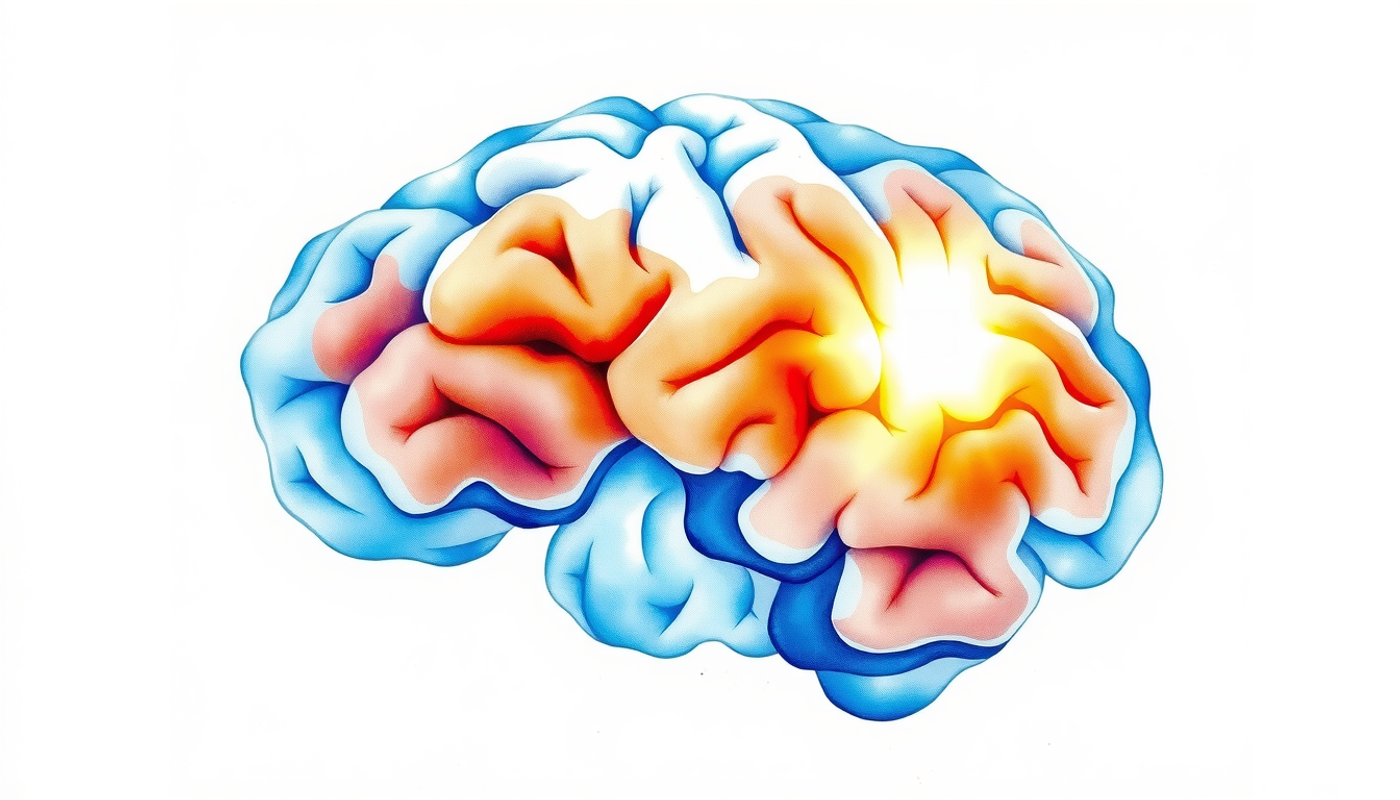
For decades, attention and memory lived in separate departments of neuroscience. Attention researchers studied the prefrontal cortex and parietal lobes. Memory researchers studied the hippocampus and medial temporal lobes. Then, in 2021, Matthew Panichello and Timothy Buschman at the Princeton Neuroscience Institute showed that the boundary was artificial [1].
They trained monkeys to perform two tasks. In one, the animal had to attend to a specific colored square on a screen. In the other, it had to hold two colors in working memory and then select one of them when cued. While the monkeys worked, the researchers recorded from individual neurons in the prefrontal cortex, parietal cortex, and visual cortex.
The result was startling. In the prefrontal cortex, the exact same neurons that directed attention to visual stimuli also selected items from working memory. As Buschman put it: "When we act on sensory inputs we call it attention. But there is a similar mechanism that can act on the thoughts we hold in mind."
This was not true everywhere. In visual cortex and parietal cortex, the two functions used different neural populations. The shared mechanism was specific to the prefrontal cortex, the brain's executive control center.
The discovery gave biological substance to what Cowan had proposed theoretically: the focus of attention and the active core of working memory are not just related. They share neural hardware.
Quieter Noise, Sharper Signal
If attention helps memory, how does it do it at the level of individual neurons? The obvious answer would be: it makes neurons fire harder. Louder signal, better memory. But the truth is more interesting.
In 2018, Kareem Zaghloul and his team at the National Institute of Neurological Disorders and Stroke published a finding that changed the picture [2]. They recorded from neurons in epilepsy patients (who had electrodes implanted for clinical monitoring) while the patients performed a verbal memory task. They found that attention in service of memory triggered a preparatory suppression of neural activity in the anterior temporal lobe, a region involved in semantic processing and memory formation.
The neurons did not fire more. They fired less, and more consistently.
The technical measure is the Fano factor, a ratio of variance to mean in neural firing. When attention was engaged, the Fano factor dropped. The spiking became more reliable. Less noise. Sharper signal. And this suppression predicted which words would later be successfully remembered. The brain was not turning up the volume. It was clearing static from the channel.
When the researchers examined patients who later had this brain region surgically removed (as treatment for epilepsy), they found that memory impairment was specifically worse for words that had been attended to, compared to unattended words. The region was not just involved. It was necessary.
This counterintuitive finding aligns with a broader principle in neuroscience: the brain often improves processing not by adding excitation, but by removing interference. Attention cleans the signal so memory can read it.

The Chemistry of Focus and Storage
Three molecules sit at the intersection of attention and memory, each tuning the system in a different way.
Acetylcholine works like a switch. Michael Hasselmo at Boston University has spent decades showing that high acetylcholine levels bias the brain toward encoding, the absorption of new information [8]. When acetylcholine is high, cortical and hippocampal circuits favor incoming sensory data over stored representations. When it drops, as it does during deep sleep, the balance flips toward consolidation. The brain stops taking in and starts filing away. This is why anticholinergic drugs (found in some allergy medications and sleep aids) can cause memory problems. They suppress the chemical that tells the brain to pay attention and encode [9].
Norepinephrine controls arousal along the Yerkes-Dodson curve, an inverted-U relationship between arousal and performance first described in 1908 [10]. Too little norepinephrine means drowsiness, wandering attention, poor encoding. Too much means anxiety, tunnel vision, impaired working memory. The sweet spot sits in the middle: alert but calm. This is why moderate stress can sharpen memory (you remember important events vividly) while extreme stress can destroy it (trauma survivors often have fragmented recollections). The curve also explains why caffeine helps some people focus but makes others jittery and forgetful.
Dopamine tags events as worth remembering. The dopaminergic midbrain projects directly to the hippocampus, and dopamine release there strengthens synaptic plasticity [11]. Events that are surprising or rewarding trigger dopamine release, which marks those memories for stronger encoding and consolidation. This is the neurochemical basis of a simple observation: you remember what you care about.
The Invisible Gorilla and Other Failures of Attention
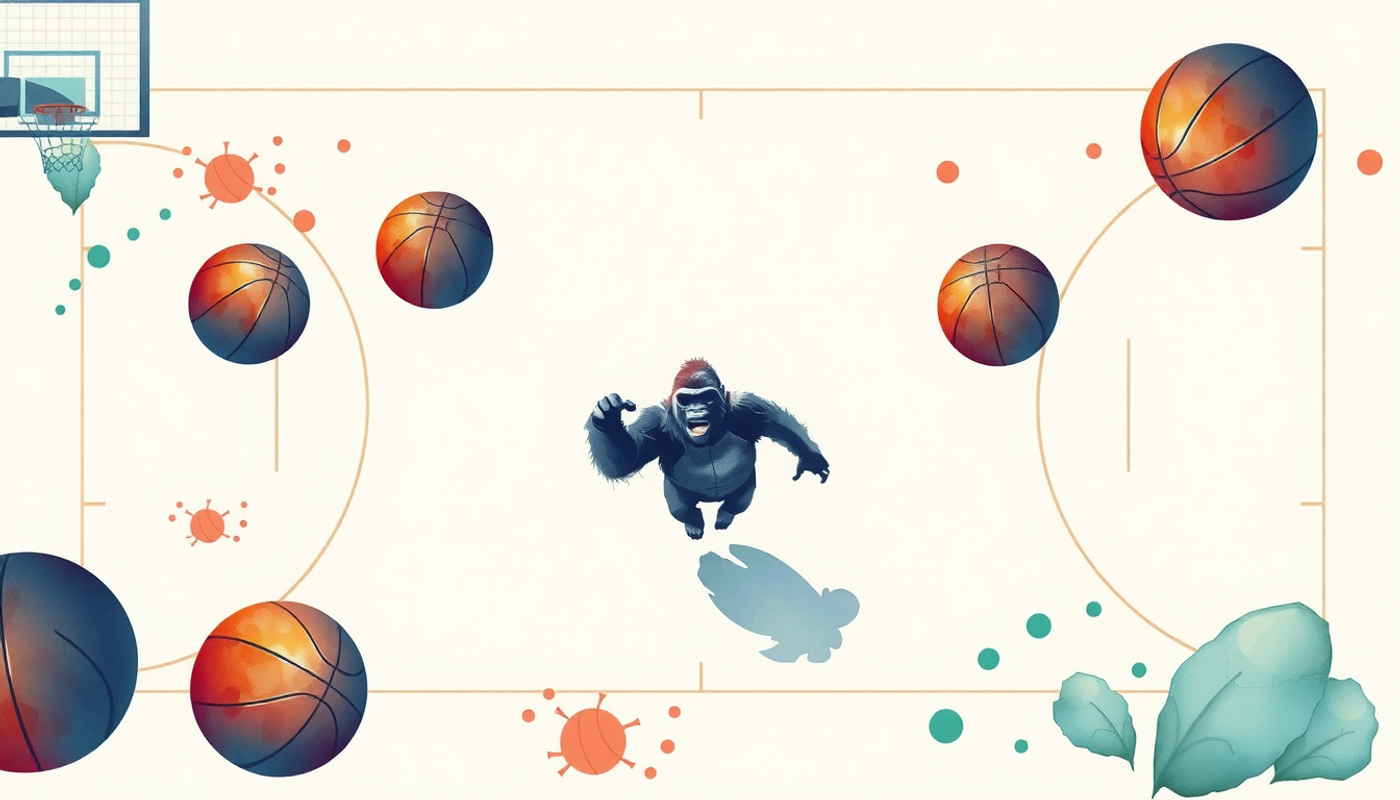
In 1999, Daniel Simons and Christopher Chabris ran an experiment that became one of the most famous demonstrations in all of psychology [12]. They showed volunteers a video of six people passing basketballs and asked them to count the number of passes made by the team in white shirts. Midway through the video, a person in a gorilla suit walked into the scene, thumped their chest, and walked off.
Forty-six percent of observers did not see the gorilla.
The experiment demonstrated inattentional blindness: when attention is focused on one task, even highly salient, unexpected events can go completely unnoticed. And if they go unnoticed, they leave no memory trace. The gorilla was there. It was visible. But for nearly half the participants, it simply did not exist in their experience of the event.
This connects to a deeper point. We tend to believe that we perceive and remember much more of the world than we actually do. Inattentional blindness shows that perception without attention is remarkably thin. And memory without attention is often nonexistent.
Earlier, in 1972, Fergus Craik and Robert Lockhart had proposed a framework that explained why some attended information sticks better than others [13]. Their levels-of-processing theory argued that memory durability depends on how deeply you process information at the time of encoding. Shallow processing, like noticing the font a word is printed in, produces fragile traces. Deep processing, like thinking about what the word means or how it relates to your own experience, produces strong ones.
Deep processing requires focused attention. You cannot extract meaning from material while simultaneously scrolling through social media. Shallow processing is what happens by default when attention is split.
Your Phone Is Stealing Your Memories
The science of divided attention has new urgency in the age of smartphones.
In 2020, Kevin Madore and Anthony Wagner at Stanford published a study in Nature that brought the attention-memory connection into the era of real-time neural measurement [14]. They recorded EEG and pupil diameter from 80 young adults during a memory task. They found that moment-to-moment lapses of sustained attention, indexed by increases in posterior alpha power and decreases in pupil diameter, predicted which items would later be forgotten. The relationship was precise: higher alpha power in the second before an item appeared meant that item was less likely to be remembered (beta = -0.46, p < 0.001).
The study also found that people who reported heavier media multitasking (frequently switching between screens, apps, and devices) showed lower memory discriminability, more lapses on sustained-attention tasks, and greater variability in alpha and pupil signals during the memory task. Trait-level attention lapsing statistically mediated the link between media multitasking and poor memory.
The researchers were careful about causation. As Madore wrote: "We cannot say that heavier media multitasking causes difficulties with sustained attention and memory failures." The relationship could run in either direction, or both could reflect a shared underlying trait. But the correlation was robust.
A separate line of research has examined the mere presence of phones. Adrian Ward and colleagues at the University of Texas at Austin reported in 2017 that simply having a smartphone nearby reduced working-memory performance, even when participants successfully resisted the urge to check it [15]. Participants whose phones were in another room scored higher on working-memory tasks than those with phones on the desk (mean difference = 4.67, p = 0.008).
A caution: a 2022 preregistered replication by Ruginski and colleagues failed to reproduce this phone-proximity effect [16]. The size and reliability of the "brain drain" remain debated. But the broader point stands: every time attention is pulled away from learning material, the encoding of that material degrades.
When the Spotlight Flickers: ADHD, Aging, and Attention Failure
When attention systems fail, memory suffers in predictable ways.
ADHD is the most studied case. A 2005 meta-analysis by Willcutt and colleagues, drawing on 83 studies with roughly 6,700 participants, found medium-range effect sizes (0.46 to 0.69) across all executive-function tasks in children with ADHD, with the strongest deficits in response inhibition, vigilance, and working memory [17]. Martinussen and colleagues reported larger effects for spatial than verbal working memory (spatial d = 1.06 vs. verbal d = 0.43) [18]. Estimates suggest 62 to 85 percent of children with ADHD exhibit measurable working-memory deficits.
The everyday consequences are direct. Forgetting instructions. Losing track of steps in a sequence. Starting tasks but not finishing them. These are not primarily memory problems. They are attention problems that produce memory failures downstream.
Aging tells a similar story. Older adults show reduced ability to maintain sustained attention and, critically, reduced ability to filter out irrelevant distractions [19]. Because divided attention hurts encoding more than retrieval, and because older adults have fewer attentional resources to spare, they are especially vulnerable to memory loss in distracting environments. A noisy study room that barely affects a twenty-year-old can devastate a seventy-year-old's ability to encode new information.
The good news: attention can be trained.
Michael Mrazek and colleagues at UC Santa Barbara showed in 2013 that just two weeks of mindfulness training improved both GRE reading-comprehension scores and working-memory capacity while reducing mind-wandering [20]. The Association for Psychological Science reported the gain as equivalent to a 16-percentile-point boost on the GRE. And the improvement was mediated by reduced mind wandering, not by some general "brain boost." Mindfulness is, at root, training in sustained, non-distracted attention. The memory benefits follow naturally from better attention.
The Night Shift: Sleep, Attention, and Consolidation
Attention does not stop shaping memory when you close your eyes. What attention prioritizes during the day, sleep helps consolidate at night.
During non-REM sleep, three brain rhythms work in a precise sequence to transfer memories from the hippocampus to the cortex for long-term storage. Slow oscillations (0.5 to 4 Hz) set up windows of cortical excitability. Sleep spindles (7 to 15 Hz) ride on top of those slow waves. And hippocampal sharp-wave ripples (80 to 150 Hz) nest inside the spindles, replaying the day's experiences in compressed time [21].
Rudi Huber and colleagues at the University of Wisconsin-Madison demonstrated that this process is local, not global. After subjects learned a visuomotor task that engaged the right parietal cortex, slow-wave activity increased specifically in that region during subsequent sleep [22]. The brain sleeps more deeply in the areas that worked hardest during the day.
But which memories get consolidated? Not all of them. Memories that were well-attended during encoding, that received deep processing and emotional or motivational tagging, are preferentially reactivated during sleep [23]. Weakly encoded memories, the ones formed under divided attention, are less likely to survive the night.
This creates a compounding effect. Poor attention during learning produces weak initial traces. Those weak traces are then less likely to be consolidated during sleep. The memory deficit from inattention is not just immediate. It cascades forward in time.
From Laboratory to Life: What the Science Means for Learning
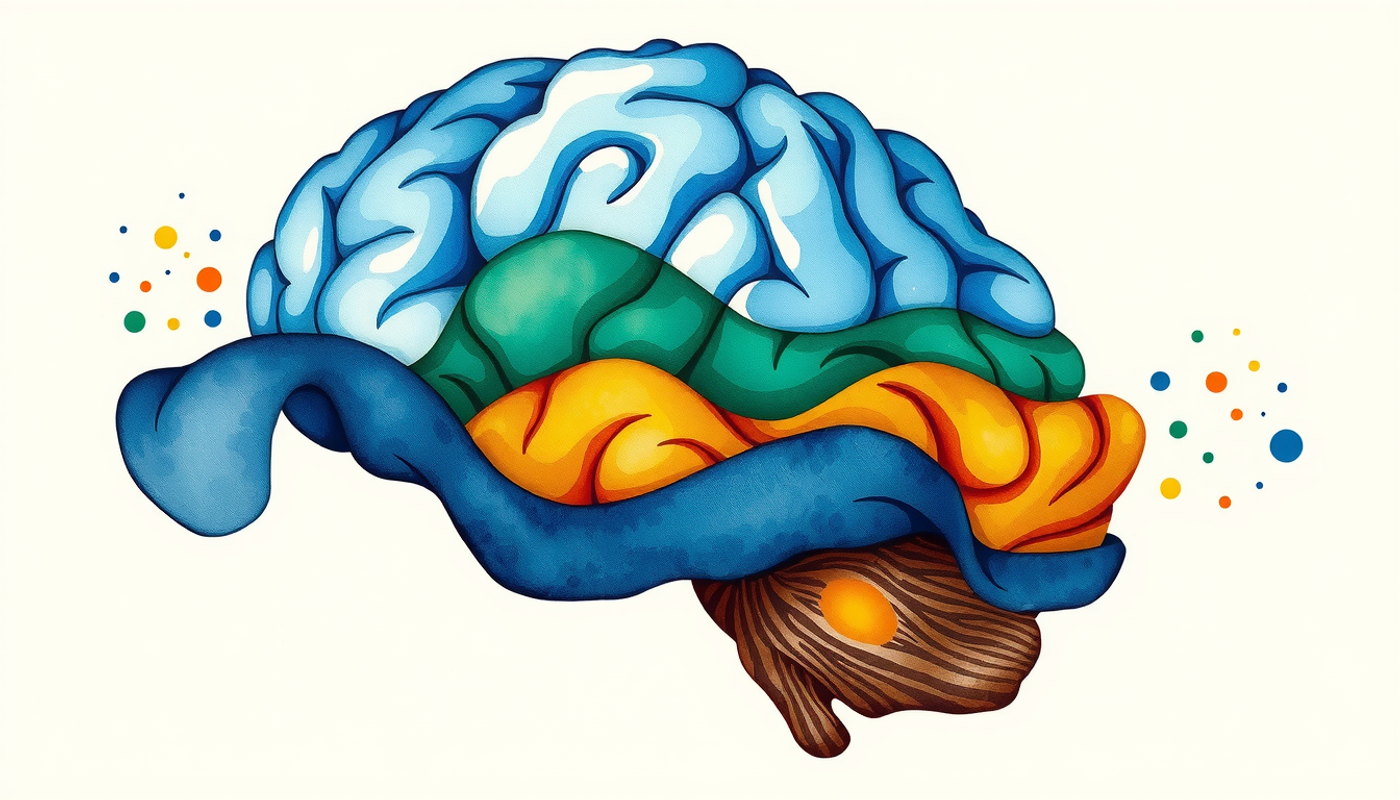
The research reviewed in this article points to a set of clear, evidence-based principles for anyone trying to learn.
First, protect the encoding moment. The Craik et al. finding that divided attention devastates encoding but barely touches retrieval means the highest-leverage intervention is eliminating distraction while studying. Not while reviewing. While studying. Silence notifications. Remove the phone from the room, not just from your hand. Create the conditions for deep, sustained focus during the initial encounter with new material.
Second, engage with meaning, not surface features. The levels-of-processing framework shows that deep semantic processing, thinking about what information means, how it connects to what you know, why it matters, produces far stronger memory than shallow processing. This kind of engagement requires focused attention. It cannot happen in the margins of a divided mind.
Third, use retrieval practice instead of rereading. Roediger and Karpicke showed in 2006 that students who tested themselves after studying recalled 56 percent of material after one week, compared to 42 percent for those who restudied [24]. In a second experiment, students who studied once and tested three times recalled 61 percent after a week, versus 40 percent for those who studied four times. Retrieval practice forces full attentional engagement. It is inherently deep processing.
Fourth, respect the Yerkes-Dodson curve. Some arousal helps. Too much hurts. Complex material needs a calm environment. Rote drilling tolerates more intensity. If you feel anxious and blank out during study, you are past the peak. Lower the pressure.
Fifth, sleep after learning. Post-study sleep is not optional. It is part of the memory process itself. Pulling an all-nighter sacrifices the consolidation that turns fragile traces into durable knowledge.

The Debate That Will Not Die
Not every scientist agrees on how tightly attention and memory are linked.
Some researchers argue that certain forms of memory can form without conscious attention at all. Implicit learning, the kind that produces priming effects and procedural skills, appears to operate partly outside attentional control. Turk-Browne and colleagues showed in 2005 that statistical regularities in a visual stream were learned only for attended items, not unattended ones, suggesting attention gates even implicit learning [25]. But other studies have found sub-threshold learning that seems to bypass attention entirely [26].
There is also debate about the direction of the relationship. Memory guides attention just as much as attention guides memory. Chun and Turk-Browne reviewed this bidirectional loop in 2007, showing that past experience biases where you look and what you notice, which in turn determines what new memories you form [27]. The hippocampus, traditionally the "memory" structure, is now known to be recruited during attention-demanding tasks [28]. The distinction between "attention regions" and "memory regions" in the brain is blurring rapidly.
The capacity debate continues too. Cowan's estimate of three to five items has not gone unchallenged. Some researchers argue for higher limits under certain conditions; others argue for lower ones. And the relationship between capacity, processing speed, and attentional control is still being untangled.
What is not debated: when attention fails, explicit memory suffers. That much is settled.

A Century of Converging Science
The timeline below traces the key milestones in the science of attention and memory, from the earliest psychological observations to modern neural recordings.
The Bottom Line
Attention and memory are not two separate mental faculties that happen to cooperate. They are deeply intertwined biological processes that share neurons, share brain regions, and share neurochemical regulation. Attention determines what enters working memory. It gates what reaches long-term storage. It biases what gets consolidated during sleep. And when it fails, whether from distraction, fatigue, ADHD, or aging, memory fails with it.
The practical message is simple: if you want to remember something, give it your full, undivided attention at the moment you encounter it. Everything else, spaced repetition, retrieval practice, sleep, builds on that foundation. Without the foundation, there is nothing to build on.
And the scientific message is equally clear: the old textbook division between "attention" as one chapter and "memory" as another is overdue for retirement. The brain does not recognize that boundary. Neither should we.
Frequently Asked Questions
Does attention affect long-term memory or only short-term memory?
Attention affects both, but the impact on long-term memory encoding is especially strong. Dividing attention while learning reduces the quality and durability of long-term memory traces. Short-term or working memory also depends on attention, since the focus of attention is effectively the active core of working memory according to Cowan's embedded-processes model.
Can you form memories without paying attention?
Some implicit memories can form with minimal conscious attention, such as procedural skills and priming effects. However, explicit memories, the kind you can consciously recall, require focused attention during encoding. Research by Turk-Browne and colleagues showed that even statistical learning, a form of implicit memory, was limited to attended stimuli.
How does multitasking affect memory?
Multitasking divides attention during encoding, which reduces memory performance substantially. The 2020 Stanford study by Madore and Wagner found that heavier media multitaskers showed lower memory accuracy and more attention lapses. Every task switch disrupts the encoding process and produces weaker memory traces.
What brain region controls both attention and memory?
The prefrontal cortex is the primary region that controls both. A 2021 study by Panichello and Buschman at Princeton found that the same prefrontal neurons that direct external attention also select items from working memory. The hippocampus, traditionally associated with memory, is also recruited during attention-demanding tasks.
Can mindfulness meditation improve memory?
Yes. A 2013 study by Mrazek and colleagues found that two weeks of mindfulness training improved working-memory capacity and reading comprehension while reducing mind-wandering. Since mindfulness trains sustained attention, and sustained attention supports memory encoding, the memory benefits follow directly from improved attentional control.


