
INTRODUCTION
A flashcard app that generates cards from a PDF is not the same as one that schedules those cards at the right intervals. That distinction separates best AI study apps from glorified note converters. According to the HEPI Student Generative AI Survey 2025, 92 percent of UK undergraduates now use some form of AI. Yet most default to ChatGPT for everything and skip the retrieval practice that actually moves facts into long-term memory. A review by Dunlosky et al. (2013) in Psychological Science in the Public Interest evaluated ten popular study techniques and gave only two a "high utility" rating: practice testing and distributed practice. Spaced repetition combines both. The fifteen best AI study apps below automate the process, each with different tradeoffs. After the tool list, the second half of this article covers the research behind them, so the choice is informed, not guesswork.
1. Thea — Free Adaptive Quizzes From Any Upload
Thea was started in 2023 by a high school student and has since passed one million learners worldwide. Upload notes, PDFs, lecture videos, or YouTube links and the AI builds flashcards, study guides, practice quizzes, and a test simulation mode. The "Smart Study" engine adapts question difficulty based on performance, drilling weak spots harder. Gamified learning modes like Stacker and Definition Match keep sessions from feeling repetitive. Eighty-plus languages are supported. The free tier is one of the most generous tested — full functionality without a subscription during its extended beta period. The limitation: the spaced repetition algorithm is proprietary and undocumented, so long-term retention claims remain unverified.
2. Knowt — The Best Free Quizlet Replacement
Knowt has grown beyond seven million students by offering what Quizlet increasingly gates behind paywalls: free learn mode, free practice tests, and free spaced repetition. Upload notes, PDFs, or lecture videos and the AI generates flashcards and quizzes. A Chrome extension imports Quizlet sets in one click. The AI chat assistant Kai answers questions grounded in uploaded materials. The free tier includes unlimited flashcard creation, quiz generation, and study tracking. Premium costs roughly five dollars per month. The scheduling algorithm adapts review frequency but does not implement a documented FSRS or SM-2 model, which makes it stronger for short-term exam prep than multi-year retention.
3. Mindomax — AI Flashcards From PDFs, Audio, and Images
Mindomax addresses the biggest reason students quit spaced repetition: building cards takes too long. Upload a PDF, record a lecture, or photograph handwritten notes and the AI produces flashcards in seconds. A LaTeX formula editor, pronunciation support in fourteen languages, and over 450,000 pre-made cards for USMLE, MCAT, GRE, and foreign language exams are built in. Scheduling relies on a proprietary model called the Windcatcher Theory. The free plan includes one box with unlimited cards and three daily AI requests. Premium at $5.99 per month unlocks ninety daily requests and the full AI pipeline. As a late-2025 launch, its community is still growing and Anki import is not yet available. For a broader comparison of study apps across categories, the Mindomax blog covers fifteen tools side by side.
4. RemNote — Where Notes Turn Into Flashcards
RemNote bridges the gap between note-taking and spaced repetition. A keyboard shortcut converts any bullet point into a flashcard linked to its original context. The app supports both SM-2 and the newer FSRS algorithm, PDF annotation with highlight-to-card conversion, image occlusion, and a knowledge graph. AI features on the higher tier generate cards from PDFs and include a lecture recorder. Pro costs eight dollars per month, with a student rate at six dollars. Desktop apps exist for Windows, macOS, and Linux. The learning curve is steeper than single-purpose flashcard tools, and AI credits on the standard plan can run out quickly during heavy study weeks.
5. Jungle AI — Case-Based Questions, Not Just Definitions
Jungle AI (formerly Wisdolia) takes a different angle on flashcard generation. Instead of producing simple term-and-definition pairs, it generates case-based and scenario questions from slides, PDFs, webpages, YouTube videos, and handwritten notes. Automatic image occlusion is included in the free tier, which is rare. The app identifies knowledge gaps and provides personalized feedback. Over one million students use the Chrome extension. The limitation is that the scheduling algorithm is proprietary and has not been independently benchmarked against SM-2 or FSRS implementations. Students who need a documented, transparent scheduler should pair Jungle AI's generation with a separate review tool.
Download: Chrome Extension · Web
6. StudyFetch — An AI Tutor Built on Your Notes
StudyFetch pairs flashcard generation with Spark.E, an AI tutor grounded in uploaded course materials rather than generic internet knowledge. Upload a PDF, lecture video, or notes, and the platform creates flashcards in multiple formats (term-definition, multiple choice, fill-in-blank, audio), practice quizzes, and audio recaps. The tutor explains concepts when a card stumps the learner. The free tier limits uploads. Pro starts at roughly ten dollars per month. The honest caveat: the subscription is pricier than competitors with comparable features, and the algorithm behind card scheduling is not disclosed.
7. Google NotebookLM — Source-Grounded Research Assistant
Google NotebookLM solves a different problem. It does not generate flashcards or schedule reviews. Instead, it creates an AI assistant that answers questions strictly from uploaded sources, reducing hallucination risk. Upload lecture PDFs, research papers, or textbook chapters and the Studio panel generates Audio Overviews (podcast-style conversations), study guides, mind maps, quizzes, and summaries, all grounded in the source material. The free tier allows fifty sources per notebook and one hundred notebooks. NotebookLM Plus is bundled into Google AI subscriptions starting at roughly eight dollars per month, with a student rate available for US users. No offline mode exists.
Download: Web
8. Mochi — Markdown-Native Flashcards With FSRS
Mochi is built for people who think in plain text. Cards and notes are written in Markdown with full LaTeX support. The interface is deliberately minimal: no gamification, no social features, no visual clutter. Image occlusion and cloze deletions are built in. Linked cards form a network of related concepts. The optional FSRS scheduler uses machine learning to personalize review intervals. Mochi runs natively on macOS, Windows, and Linux, with mobile apps for iOS and Android. The free tier supports offline study with up to one hundred cards. Pro at five dollars per month adds cloud sync. The main limitation is a tiny ecosystem: no shared deck library and no pre-made content.
Download: iOS · Android · Desktop / Web
9. Gizmo — Gamified Flashcards for 13 Million Learners
Gizmo takes the opposite approach from Mochi. Streaks, leaderboards, hearts, and competitive elements drive daily engagement. AI imports from Quizlet, Anki, YouTube, PDF, and PowerPoint formats. An "Explain like I'm 5" tutor mode breaks down concepts in simple terms. Founded by Cambridge alumni and backed by a $3.5 million seed round from NFX, the app has crossed thirteen million users across 120 countries. The limitation is that gamification can mask weak retention. Feeling productive during a study session and actually retaining information long term are not the same thing. The underlying scheduling algorithm is not published.
10. Khanmigo — The Socratic AI Tutor
Khanmigo is Khan Academy's GPT-4-powered tutor that never gives direct answers. It guides students toward solutions through Socratic questioning, asking follow-up questions that expose gaps in reasoning. A writing coach provides essay feedback. The entire Khan Academy content library is integrated. Four dollars per month for individual learners, nine dollars for families. Free for teachers. The limitation is that the system is tied to Khan Academy's existing curriculum. Students cannot upload their own course materials. Non-English language support is weaker than English, and humanities coverage does not match math and science depth.
Download: Web · iOS (via Khan Academy)
11. Studdy — Whiteboard Math Tutoring From a Photo
Studdy solves a specific problem: math and science homework. Snap a photo of a problem, and the AI walks through the solution step by step on an interactive whiteboard, explaining the reasoning at each stage. Video lessons and one-on-one AI sessions cover algebra, calculus, physics, and chemistry. The free plan allows up to thirty scans per day. A Y Combinator-backed startup, Studdy reports over 500,000 users. The caveat: vendor-reported GPA improvement claims ("average 1.3 point increase") are unverified and should be treated as marketing. The app also has limited coverage outside STEM.
12. Brainscape — Confidence-Based Repetition
Brainscape asks learners to rate their confidence on a 1-to-5 scale after each card, then adjusts review frequency accordingly. This is Confidence-Based Repetition, a simplified alternative to algorithmic scheduling. AI Flashcard Copilot generates cards from PDFs and PowerPoints. A library of expert-certified decks covers medical, legal, language, and certification topics. Pro starts at roughly ten dollars per month. The limitation is that CBR is less precise than FSRS or SM-2 for learners with large card volumes. Self-assessment accuracy varies between students, and overconfident ratings lead to premature graduation of cards.
13. Zorbi — Free Flashcards That Sync With Notion
Zorbi was built by students and stays free. The standout feature is native Notion integration: write notes in Notion toggles, and Zorbi converts them into flashcards with synced collaboration. A Chrome extension makes cards from any PDF or website. The spaced repetition algorithm predicts when each card is about to be forgotten. Gamification elements like streaks and leaderboards encourage consistency. The free tier is usable for most students. Pro adds image occlusion, text-to-speech, and learning profiles. The tradeoff is fewer advanced features than RemNote or Mochi: no LaTeX, limited image occlusion options, no AI-powered card generation.
14. Consensus — Evidence-Based Answers From 200 Million Papers
Consensus does not create flashcards. It answers questions by searching over 200 million academic papers and displaying a "consensus meter" showing how much the research agrees. For students writing research papers, preparing literature reviews, or fact-checking study materials, this is a time saver. The free tier includes ten pro analyses per month, refreshed monthly. Premium costs roughly ten dollars per month, with a 40 percent student discount. The limitation: Consensus searches published papers only. It will not help with proprietary textbook content or course-specific material that has not been published.
Download: Web
15. Structured — Visual Day Planner for Focused Study
Structured does not generate flashcards or quiz users. It is an ADHD-friendly visual day planner that turns a chaotic schedule into a clean vertical timeline. The GPT-4o AI assistant (Pro tier) suggests time blocks, reschedules tasks automatically when plans change, and scans physical planners to import them digitally. Calendar sync pulls in class schedules and deadlines. Free version covers basic planning. Pro costs roughly six dollars per month or twenty dollars per year. The limitation: the AI assistant is not available on the web version, and the app is most polished on Apple devices. Android support is functional but less refined.

Why Most Study Methods Do Not Work — And Why the Best AI Study Apps Do
The educational research on study techniques is clear but ignored by most students. Dunlosky et al. (2013) evaluated ten common techniques across hundreds of experiments. Highlighting, rereading, and summarizing — the methods students rely on most — all received "low utility" ratings. Only practice testing and distributed practice earned "high utility" marks. These are not marginal findings. The effect sizes are large and consistent across age groups, subjects, and testing conditions.
Practice testing is the formal name for active recall. When a student sees a question and retrieves the answer from memory before checking, the retrieval itself strengthens the neural trace. Roediger and Butler (2011) demonstrated in Trends in Cognitive Sciences that retrieval practice produces stronger long-term retention than any form of restudy. A meta-analysis by Rowland (2014) confirmed the finding with a mean effect size of g = 0.50 across 159 comparisons. Adesope et al. (2017) found g = 0.61 in their meta-analysis of 272 effect sizes. And Karpicke and Blunt (2011) showed in Science that retrieval practice produced 50 percent more learning than elaborative concept mapping.
The reason is biological. Each successful retrieval modifies the memory trace, making future retrieval easier and more durable. Passive exposure, no matter how many times it is repeated, does not produce the same effect. Flashcard apps that force retrieval before showing the answer exploit this mechanism directly.
The Forgetting Curve and Why Spacing Matters
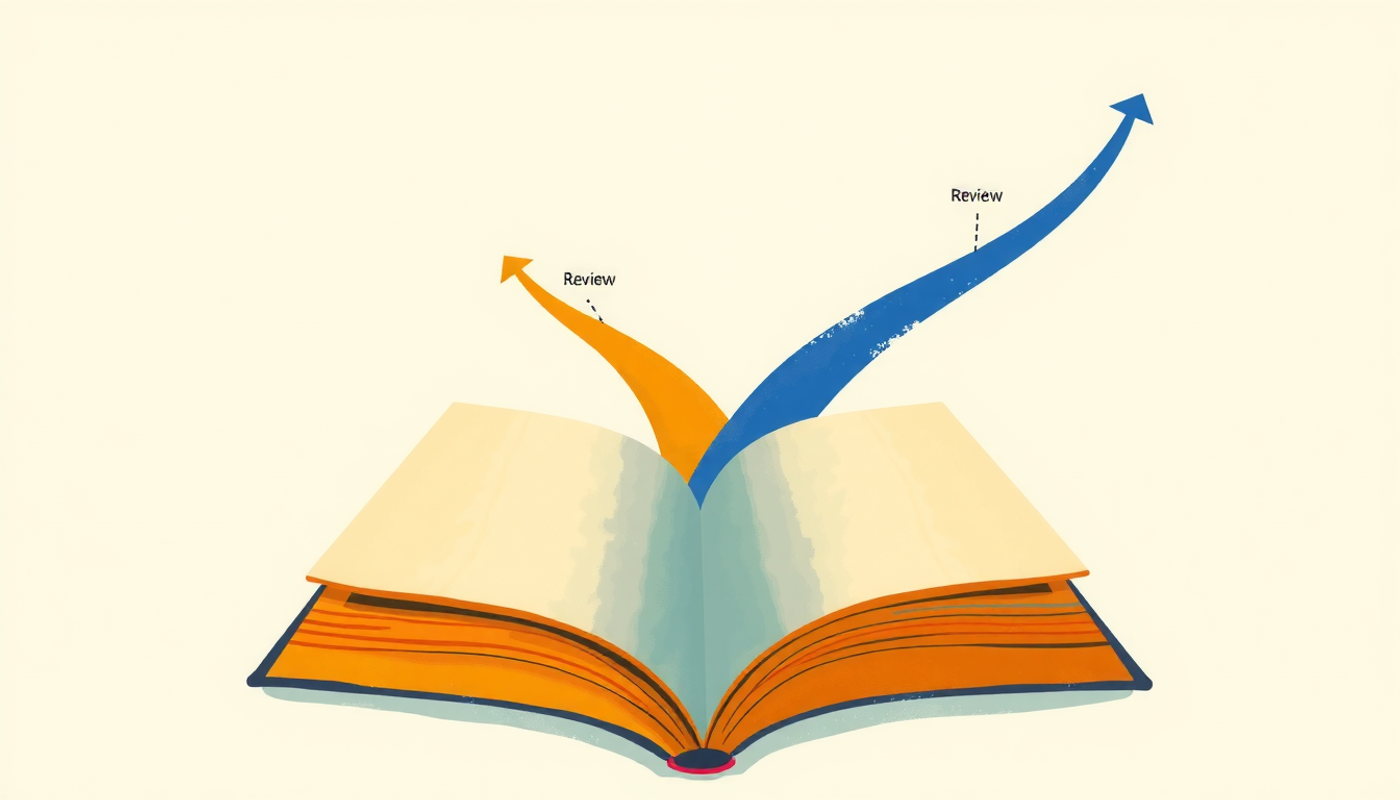
In 1885, Hermann Ebbinghaus showed that memory decays steeply after initial learning. A replication by Murre and Dros (2015) confirmed that most people lose fifty to seventy percent of newly learned information within twenty-four hours when no review happens. But each retrieval at the right moment flattens the curve. This is the principle behind spaced repetition.
Kang (2016) confirmed in Policy Insights from the Behavioral and Brain Sciences that spacing produces substantially better long-term learning than massing study into a single session. Cepeda et al. (2006) analyzed 254 effect sizes across 317 experiments and found that distributed practice consistently outperformed massed practice, with optimal spacing intervals depending on the desired retention period.
More recent data makes the case even stronger. A 2025 classroom meta-analysis by Mawson and Kang (2025) in Behavioral Sciences screened over 3,000 articles, analyzed 31 effect sizes from 22 reports (N > 3,000 students), and found a moderate effect favoring distributed practice over massed practice: d = 0.54, 95% CI [0.31, 0.77]. The effect was strongest at higher education levels and with longer retention intervals. In medical education, Maye et al. (2026) published a meta-analysis of 14 studies involving 21,415 learners in The Clinical Teacher. The standardized mean difference in favor of spaced repetition on objective exams was 0.78 (95% CI 0.56–0.99, p < 0.0001).
When an algorithm calculates the right moment to show a card — just before the learner would forget it — and the learner retrieves the answer successfully, the forgetting curve resets at a higher baseline. Each cycle extends the retention interval. This is the mechanism that the best AI study apps automate. A card that starts with a one-day gap might stretch to three days, then a week, then a month, then six months. That is why spaced repetition is not just "reviewing more." It is reviewing at calculated intervals that match individual forgetting rates.
How AI Changes the Study Process
The cognitive science behind retrieval practice and spaced repetition has been settled for over a decade. What changed between 2024 and 2026 is that AI removed the biggest friction point: card creation. Making high-quality flashcards from a ninety-page textbook chapter used to take hours. The best AI study apps now do it in under two minutes. That time savings is the real innovation. The best AI study apps are not valuable because of the AI itself, but because they remove the barrier between knowing what works and actually doing it.
But speed creates a new risk. Kornell (2009) showed in Applied Cognitive Psychology that the act of creating flashcards contributes to learning — the "generation effect." When a student manually formulates a question and answer, that encoding strengthens the memory trace before any review begins. AI-generated cards skip this step entirely. Butler (2010) found that retrieval practice with feedback produced superior transfer compared to restudying, reinforcing that the quality of the retrieval attempt matters more than the card format.
The practical takeaway: AI-generated cards save significant time but should not be used unreviewed. Editing AI output, rephrasing questions in personal language, and removing inaccurate cards are not busywork. They are encoding steps that contribute to learning. Students who upload a PDF, generate a deck, and start reviewing without checking the cards are trading one problem (slow card creation) for another (studying wrong information).
A Harvard experiment provides the strongest evidence so far for AI tutoring done right. Kestin, Miller et al. (2024) ran a crossover study with 194 physics students. Those using a GPT-4-based tutor with pedagogical constraints learned more than twice as much as the active-learning control group, in less time. The effect size was significant at p < 10⁻⁸. But the tutor was carefully designed: it had the answer key, it asked Socratic questions, and it refused to give direct answers. Off-the-shelf chatbots that simply hand over solutions can harm learning. Pan and Rickard (2018) showed in Educational Research Review that repeated retrieval with expanding intervals produces optimal long-term retention only when the difficulty level matches the learner.
Algorithm Transparency Separates the Best AI Study Apps
Not every app that claims "AI spaced repetition" uses a real scheduling algorithm. SM-2, created by Piotr Wozniak in 1987, adjusts intervals based on a fixed ease factor that shifts with each review rating. It treats all learners identically. FSRS, developed by Junyao Ye and colleagues, uses machine learning trained on roughly 700 million reviews from about 20,000 users. It personalizes the shape of the forgetting curve to individual recall patterns. Anki adopted FSRS as its default scheduler in 2025. Community benchmarks show FSRS reduces daily reviews by twenty to thirty percent at equivalent retention compared to SM-2.
Upadhyay et al. (2021) showed in npj Science of Learning that ML-based scheduling helped students retain content roughly sixty-nine percent longer in a large-scale randomized experiment. The evidence is clear: documented, benchmarked algorithms produce better outcomes than vague "adaptive learning" claims.
Among the fifteen best AI study apps listed above, only RemNote and Mochi support FSRS. Anki, while not on this list, also uses FSRS as its default. Knowt, Thea, Jungle AI, StudyFetch, Gizmo, and Brainscape use proprietary algorithms that are not publicly documented. That does not mean they perform poorly. It means students cannot independently verify whether the scheduling is optimal. The practical advice is simple: any spaced system outperforms no system. The differences between algorithms are real but smaller than the gap between using spaced repetition at all versus cramming the night before.
For more detail on how different spaced repetition apps compare on algorithms and features, a separate breakdown covers ten options with their scheduling models.

CONCLUSION
The research is settled. Retrieval practice combined with spaced intervals produces stronger long-term memory than any other study method with empirical support. What changed in 2025 and 2026 is the tooling. AI now handles the grunt work of card creation in seconds. Open-source algorithms like FSRS personalize review schedules to individual forgetting patterns. And fifteen credible best AI study apps offer modern interfaces, mobile-first design, and free tiers that make evidence-based studying accessible to any student. Tools like Thea, Knowt, Mindomax, RemNote, and others on this list reduce the friction between reading a textbook and retaining its contents. The right choice depends on the learner. But the worst choice, by a large margin, is not using spaced repetition at all.
Frequently Asked Questions
Do AI study apps actually improve grades?
The tools themselves do not improve grades. The learning methods they automate do. Practice testing and spaced repetition have "high utility" ratings from decades of research. AI study apps reduce the setup time for these methods from hours to minutes, making students more likely to use them consistently.
Are AI-generated flashcards as good as manually created ones?
AI-generated cards save time but typically need editing. The act of creating cards manually is itself a learning step (the generation effect). Most students get the best results by letting AI do the first draft, then reviewing and rephrasing cards in their own words before studying.
Which algorithm is better: SM-2 or FSRS?
FSRS uses machine learning to personalize review intervals based on individual forgetting patterns. Community benchmarks show it reduces daily reviews by twenty to thirty percent compared to SM-2 at equivalent retention. SM-2 works well but treats all learners identically. Both outperform no algorithm at all.
Can these apps replace a human tutor?
For factual memorization and practice testing, yes. For nuanced essay feedback, complex reasoning, and emotional support during academic struggles, not yet. Khanmigo and Studdy come closest by using Socratic questioning, but a Harvard study found the best results came from AI tutors with carefully designed pedagogical constraints.
What is the best free AI study app for students on a budget?
Among the best AI study apps for budget-conscious students, Thea, Knowt, and Zorbi all offer strong free tiers. Google NotebookLM is entirely free for up to fifty sources per notebook. Anki remains free on desktop and Android. Among these, Knowt offers the most complete free package: unlimited flashcards, quizzes, and spaced repetition without a subscription.
How many flashcards should a student review per day?
Most evidence suggests fifteen to thirty minutes of daily review maintains strong retention across several hundred active cards. Consistency matters more than volume. Daily short sessions outperform occasional long cramming sessions. Starting with twenty new cards per day is a sustainable baseline for most students.
Is it safe to upload course materials to AI study apps?
Check each app's privacy policy. The best platforms sandbox user data and do not train global AI models on uploaded content. RemNote, Mochi, and NotebookLM have clear data policies. Smaller or newer apps may not. Never upload content containing personal information beyond course material.
Do these apps work for medical students preparing for boards?
Several apps have specific medical content. Mindomax includes over 450,000 USMLE and MCAT pre-made cards. Brainscape has expert-certified medical decks. RemNote supports image occlusion for anatomy diagrams. However, community-built Anki decks like AnKing remain the largest peer-reviewed resource for board prep.
How do AI study apps handle subjects with complex formulas?
RemNote, Mochi, and Mindomax support LaTeX rendering for mathematical and scientific notation. Studdy uses an interactive whiteboard for step-by-step math problem solving. Most other apps on this list do not handle formula input well and are better suited for text-based subjects.
Why do some apps not disclose their scheduling algorithm?
Proprietary algorithms are a business decision. Publishing the algorithm would allow competitors to copy it. The tradeoff for students is that they cannot independently verify whether the scheduling is optimal. Apps using documented algorithms like FSRS or SM-2 offer more transparency and have been tested against public benchmarks.


