
INTRODUCTION
A meta-analysis published in January 2026 in The Clinical Teacher pooled fourteen studies and over twenty-one thousand learners. The result: spaced repetition produced a standardized mean difference of 0.78 on objective knowledge tests compared to standard study methods [1]. That is a large effect by any standard in education research. Meanwhile, a landmark review by Dunlosky et al. (2013) rated only two study techniques as "high utility" out of ten evaluated: practice testing and distributed practice. Spaced repetition combines both. The problem has never been the science. It has been the tools. Card creation took hours. Scheduling required manual discipline. In 2025 and 2026, a new generation of AI-powered apps broke that bottleneck. This article covers the latest spaced repetition research 2026 findings, five modern apps that apply them, and the neuroscience that explains why spacing works at the cellular level.

1. MintDeck - FSRS-Powered AI Cards From PDFs
MintDeck launched on iOS in late 2025 and brought FSRS scheduling to a consumer-friendly interface. Upload a PDF or paste a URL and the AI generates flashcards with question-answer pairs ready for review. The app supports full Anki .apkg import including scheduling history, so migration preserves existing progress. Text-to-speech covers five languages natively. Pricing uses a pay-as-you-go credit model starting at $9.99 with no monthly subscription required. The honest limitation: MintDeck is iOS-only with no Android or web version, which locks out a large portion of students.
Download: iOS
2. Laxu AI - Multi-Format Input With AI Tutoring
Laxu AI accepts PDFs, audio recordings, images, and pasted text, then converts them into flashcards, quizzes, and study notes. An AI tutor answers follow-up questions when a card stumps the learner. The spaced repetition engine uses an adapted SM-2 algorithm with mastery-based adjustments. Pro costs $4.99 per month. A weekly trial is available at $1.99. The main caveat is that Laxu AI does not use FSRS or any open-source scheduler, so its interval predictions cannot be independently verified or benchmarked against published data.
3. Mindomax - LaTeX, Pronunciation, and 450K Pre-Made Cards
Mindomax tackles card creation from multiple angles. Upload a PDF, photograph handwritten notes, or record a lecture and the AI produces flashcards in seconds. A LaTeX formula editor serves STEM students. Pronunciation support covers fourteen languages. The app ships with over 450,000 pre-made flashcards across subjects including USMLE, MCAT, GRE, and foreign language vocabulary. Free allows one box with unlimited cards and three AI requests daily. Premium at $5.99 per month unlocks ninety daily AI requests. As a late-2025 launch, it has a smaller user community than legacy platforms, and there is no Anki import feature yet.
4. Cramd - Notes to Flashcards in One Step
Cramd focuses on speed. Paste notes, upload a PDF, or drop in a video link, and the AI generates flashcards plus quizzes plus active recall sessions. The workflow targets students who want to go from raw material to a study-ready deck in under two minutes. Spaced review scheduling runs automatically. The interface is clean and beginner-friendly. The limitation is that Cramd does not disclose which scheduling algorithm it uses, and its science-section blog content leans promotional rather than independently sourced.
Download: Web
5. LectureScribe - Audio-First Flashcard Generation
LectureScribe launched in May 2025 and targets students who learn primarily from lectures. Record or upload audio and the AI transcribes, summarizes, and generates flashcards automatically. Built-in spaced repetition scheduling queues cards for review at expanding intervals. The app removes the biggest friction point for lecture-heavy programs like medicine, law, and engineering. Free allows one upload. The honest trade-off: LectureScribe does not publish its scheduling algorithm, and the platform is web-only with no native mobile apps.
Download: Web
What the 2026 Meta-Analysis Actually Found
The most significant piece of spaced repetition research 2026 produced is the Maye et al. systematic review and meta-analysis published in The Clinical Teacher [1]. The authors screened 542 records, included fourteen studies in the review and thirteen in the quantitative synthesis, covering 21,415 learners across undergraduate and postgraduate medical education.

The pooled standardized mean difference was 0.78, with a 95% confidence interval of 0.56 to 0.99 and a p-value below 0.0001. For context, educational interventions rarely exceed an effect size of 0.50. This result places spaced repetition among the most effective study methods ever measured in medical education. Interventions in the pooled studies ranged from faculty-built Anki decks to email-delivered MCQs and classroom-based spaced quizzes.
How does this compare to earlier evidence? The foundational Cepeda et al. meta-analysis in 2006, which synthesized 839 effect-size contrasts across 317 experiments, found a median effect size of d = 0.60 for spacing versus massing [3]. The jump from 0.60 to 0.78 likely reflects the medical education context, where content is heavily factual and retention intervals are long. Spaced repetition excels precisely in those conditions. The underlying mechanism is the forgetting curve: memory decays steeply without review, and each well-timed retrieval flattens that curve.
Why Spacing Works at the Molecular Level
The reason spacing produces stronger memories than cramming is not psychological. It is cellular. When two neurons fire together repeatedly, the synapse connecting them strengthens through a process called long-term potentiation, or LTP. Kramar and colleagues at UC Irvine demonstrated in 2012 that theta-burst stimulation applied to rat hippocampal slices at sixty-minute intervals produced additional LTP that bursts separated by only minutes could not [5]. The synapse has a refractory window. It needs time to reset before it can strengthen further.
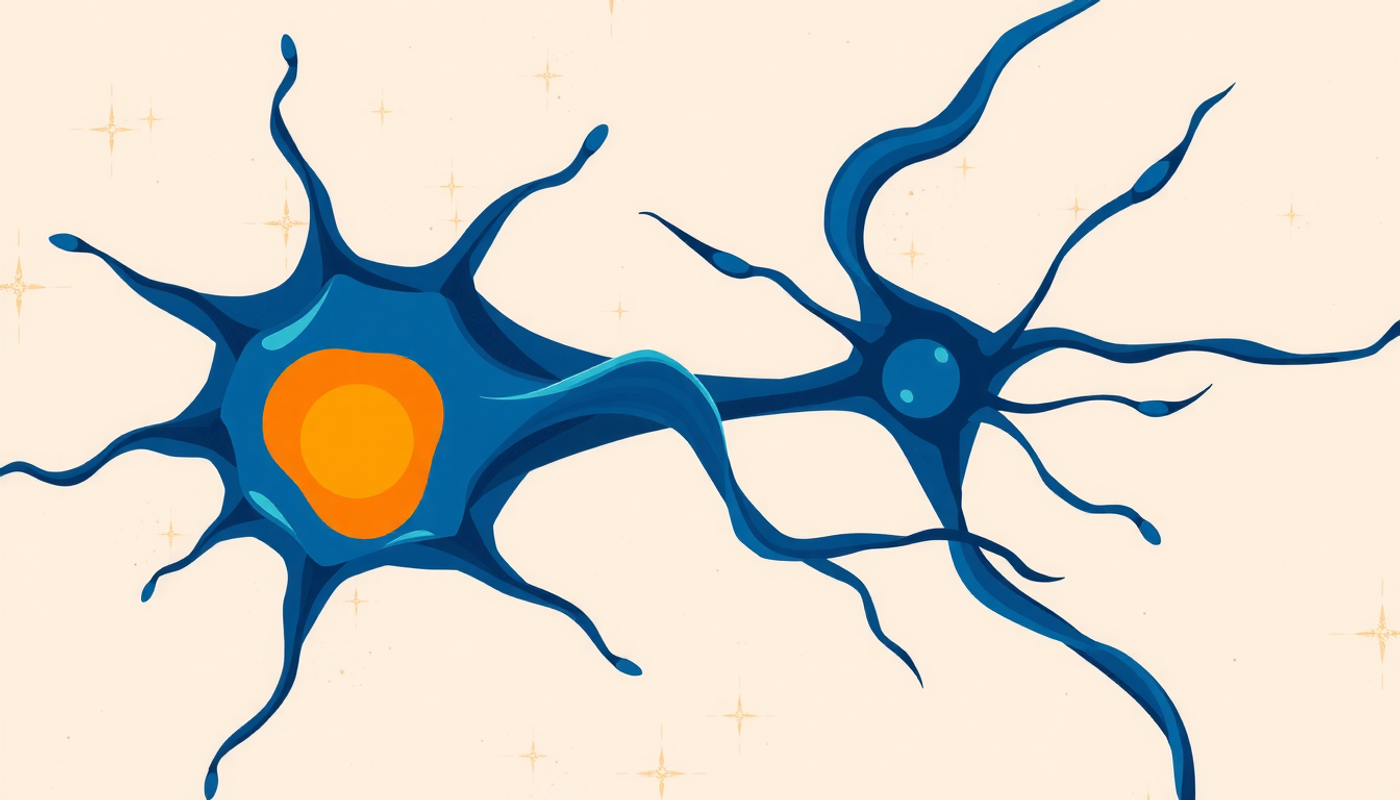
A 2016 review by Smolen, Zhang, and Byrne in Nature Reviews Neuroscience explained the molecular cascade in detail [6]. The PKA and MAPK signaling pathways that trigger late-phase LTP (the kind lasting days to weeks, requiring new protein synthesis) have refractory periods. Massed stimulation triggers the initial cascade but exhausts the pathway before proteins can be built. Spaced stimulation lets each wave of signaling complete before the next one begins.
Then in 2024, Comyn and colleagues published a breakthrough in eLife identifying PKCdelta as a key mediator of the spacing effect in Drosophila [7]. After spaced training, dopaminergic signaling activated PKCdelta in mushroom-body neurons, which then translocated to mitochondria and upregulated pyruvate metabolism for several hours. The brain literally budgets more energy for memories formed through spacing. This mechanism was conserved across species from sea slugs to mice, suggesting it operates in human brains as well.
Testing as Prediction Error Learning
For decades, the testing effect (the finding that retrieval beats restudy for long-term retention) and the spacing effect were studied as separate phenomena. In 2025, Chen, Hauspie, Verguts and colleagues published an fMRI study in PNAS that unified them under one framework [8].
Their computational model showed that testing activates the ventral striatum, insula, and midbrain, which are canonical reward-prediction-error regions. When a learner tries to retrieve something and succeeds, the brain registers a positive prediction error. When retrieval fails, a negative prediction error drives updating. Passive restudy generates neither signal. This is why testing beats rereading. It is not just harder. It sends a molecular signal that the information matters.
Combined with spacing, the effect compounds. Each retrieval attempt after a gap generates a stronger prediction error because the memory has partially decayed. The brain responds with stronger consolidation. This is the mechanism behind the Cepeda temporal ridgeline: the optimal gap between study sessions is roughly ten to twenty percent of the desired retention interval [4].
How Modern Algorithms Apply the Science
The shift from SM-2 to FSRS represents the biggest algorithmic change in spaced repetition since Wozniak published SM-2 in 1987. FSRS-6 shipped as the default scheduler in Anki 25.07 in July 2025. It models three variables per card: stability, difficulty, and retrievability. Where SM-2 uses one fixed ease factor for all learners, FSRS trains on individual review histories using seventeen optimizable parameters plus a newer w[20] parameter that adjusts the shape of each user's forgetting curve [9].
Benchmark data from the open-spaced-repetition project shows FSRS-6 outperforms SM-2 on log loss for 99.6% of users across 9,999 Anki collections containing roughly 350 million reviews [10]. In practical terms, users report needing twenty to thirty percent fewer reviews to maintain the same retention level. That is not a marginal improvement. For a medical student doing 300 reviews a day, it means sixty to ninety fewer reviews daily with no loss in recall.
On March 31, 2026, SuperMemo launched a public API exposing SM-20, the first version of the SuperMemo algorithm where all parameters are computed by machine learning rather than hand-tuned heuristics [11]. The early-access free tier allows 100 repetitions per day and a one-time import of up to 10,000 historical repetitions.
CONCLUSION
The spaced repetition research 2026 story is defined by three developments. First, the Maye et al. meta-analysis delivered the strongest pooled evidence yet that spaced repetition works at scale, with an effect size of 0.78 across 21,415 medical learners. Second, molecular research from Comyn et al. and the Chen/Verguts fMRI study revealed why it works at the cellular and neural level. Third, FSRS-6 and the SuperMemo SM-20 API made adaptive scheduling available to any developer. Tools like MintDeck, Laxu AI, Mindomax, Cramd, and LectureScribe now make the underlying science accessible without requiring technical expertise. The science is no longer the bottleneck. Applying it consistently is.
Frequently Asked Questions
What is the strongest evidence for spaced repetition in 2026?
The Maye et al. 2026 meta-analysis in The Clinical Teacher pooled fourteen studies with 21,415 learners and found a standardized mean difference of 0.78 favoring spaced repetition over standard study methods. This is considered a large effect size in education research and confirms decades of laboratory findings at scale.
How does FSRS compare to the SM-2 algorithm?
FSRS uses machine learning trained on individual review histories to personalize scheduling, while SM-2 applies a fixed formula to all users. Benchmark data across 9,999 Anki collections shows FSRS-6 outperforms SM-2 on prediction accuracy for 99.6% of users, typically reducing reviews by twenty to thirty percent.
Why does spacing produce better memory than cramming?
At the molecular level, the signaling pathways that strengthen synapses (PKA, MAPK, PKCdelta) have refractory periods. Massed study exhausts these pathways before protein synthesis can complete. Spaced study lets each wave of signaling finish, producing stronger and more durable long-term potentiation.
Can spaced repetition work for subjects beyond flashcard-based memorization?
Yes, but with limits. Spaced repetition works best for discrete, testable facts: vocabulary, formulas, anatomy, drug names. For procedural skills or complex conceptual understanding, spacing the practice itself helps, but the material needs to be broken into testable components first.
How many daily reviews are sustainable for long-term spaced repetition?
Most evidence and user reports suggest fifteen to thirty minutes of daily review maintains strong retention across several hundred active cards. Consistency matters far more than session length. Missing a day is fine with adaptive algorithms, which simply reschedule. Missing a month causes review pileups.


