
Introduction
A chimpanzee named Sultan sat in a cage on the island of Tenerife in 1917. A banana dangled from the ceiling, too high to reach. Boxes and sticks lay scattered across the floor. Sultan tried jumping. Failed. Tried reaching with a stick. Failed. Then he stopped. He sat still. And after a pause that the German psychologist Wolfgang Köhler described as a moment of apparent contemplation, Sultan stacked the boxes, grabbed a stick, climbed up, and swiped the banana in one fluid motion [1]. The solution arrived whole. Not piece by piece. Not through trial and error. Whole.
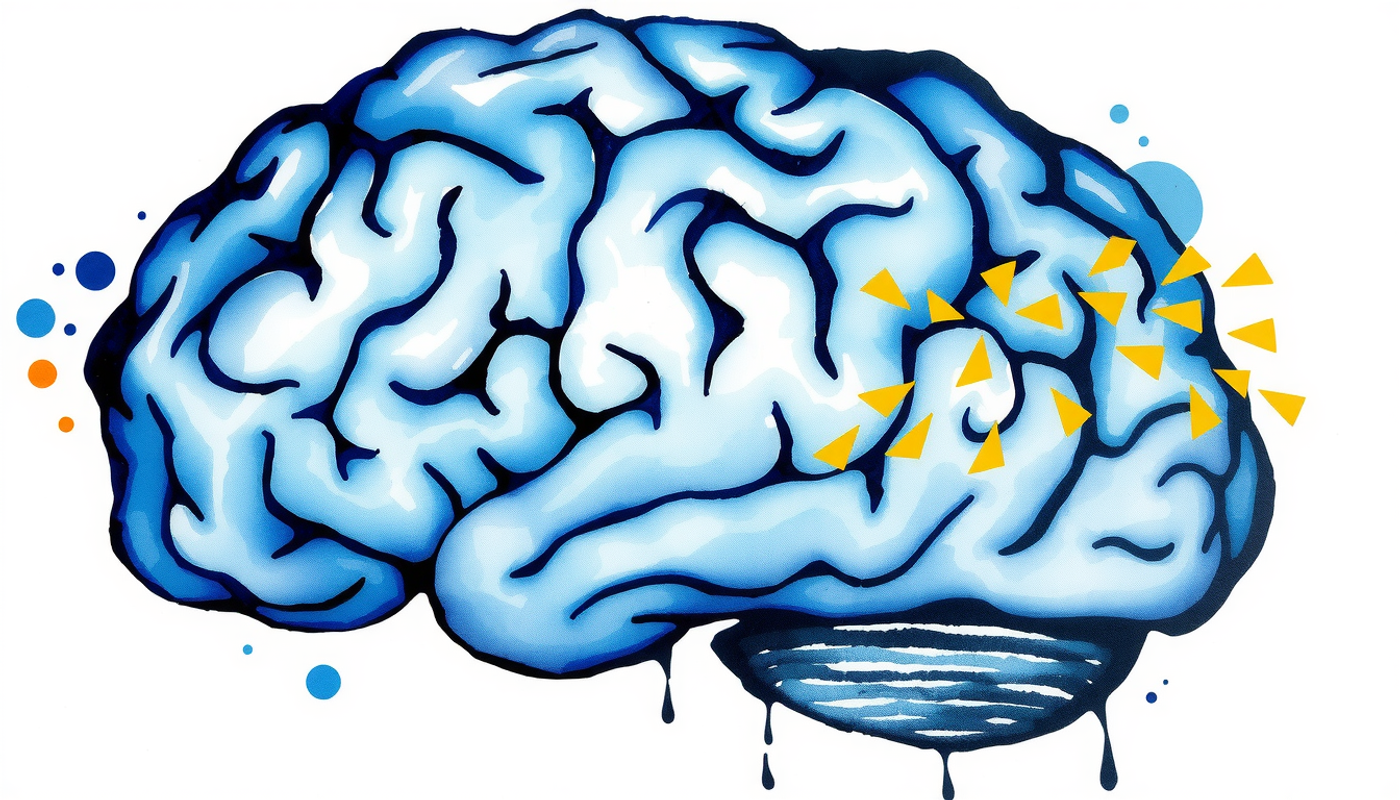
That moment, which Köhler called *Einsicht*, became the founding observation of insight research. And more than a century later, neuroscientists can now watch it happen inside the brain. When a person solves a problem through sudden insight and aha moments, a burst of high-frequency gamma waves fires in the right temporal lobe approximately 0.3 seconds before the answer reaches conscious awareness [2]. Just before that burst, the visual cortex goes quiet. The brain literally dims the outside world to hear its own internal signal.
This is not mysticism. It is measurable neuroscience. And it changes how we think about thinking itself.
The Word That Started It All
Before Köhler's apes, there was a German linguist who gave the experience a name.
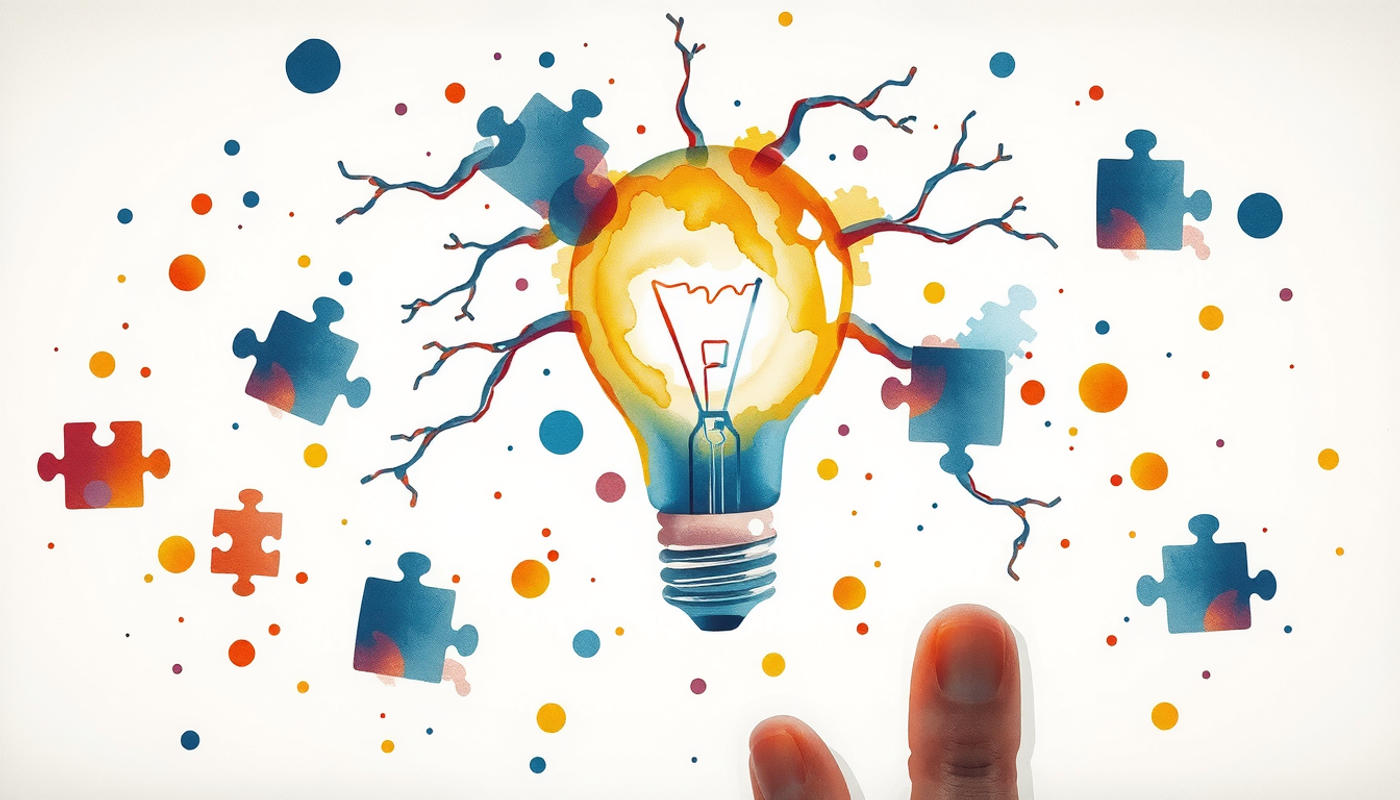
In 1907, Karl Bühler was a young researcher at the University of Würzburg studying what happens in the mind during abstract thought. His method was simple: give people difficult logic puzzles, then ask them to describe their mental experience while solving them. What Bühler heard, again and again, was a recurring description of a sudden shift. A moment when confusion dissolved into clarity. He coined a German term for it: *Aha-Erlebnis*. The "Aha experience" [3].
The term triggered one of psychology's earliest methodological fights. Wilhelm Wundt, the father of experimental psychology, attacked Bühler's introspective approach as unscientific. How could you trust people's descriptions of their own mental states? The quarrel was vicious enough to make headlines in German academic circles. But the phenomenon Bühler named outlived the methodological dispute by more than a century.
Köhler's contribution was to show that insight was not limited to human introspection. Animals could do it too. His 1917 monograph *Intelligenzprüfungen an Menschenaffen* (published in English as *The Mentality of Apes* in 1925) documented dozens of cases where chimpanzees solved novel problems through what appeared to be sudden reorganization rather than gradual learning [4]. Sultan connecting two short sticks to make a long one. Grande stacking three boxes to reach a suspended fruit. These were not random attempts that happened to succeed. The solutions arrived after periods of apparent inaction, then emerged complete and purposeful.
Köhler's work was a direct challenge to Edward Thorndike's dominant theory that all animal learning was trial-and-error. Thorndike had put cats in puzzle boxes and watched them thrash around until they accidentally hit the right lever. Learning, he argued, was just the gradual stamping-in of successful responses. Köhler said: sometimes learning is not gradual at all. Sometimes the animal just sees the answer.
His Gestalt psychology colleagues extended the idea. Max Wertheimer published *Productive Thinking* in 1945, arguing that genuine understanding requires restructuring the problem, not just memorizing solutions. Karl Duncker created what became the most famous insight problem in psychology: the candle problem [5]. Given a candle, a box of thumbtacks, and matches, how do you attach the candle to a wall so wax does not drip on the floor? The answer: empty the box, tack it to the wall, and use it as a platform. Duncker found that when the tacks were presented inside the box, far fewer people solved the problem than when the box was empty beside the tacks. He called this blindness *functional fixedness*. You see the box as a container, and you cannot see it as a shelf [6].

The Moment Insight Became Measurable
For decades after Duncker, insight research stalled. The cognitive revolution of the 1960s favored information-processing models that treated thinking as sequential computation. Insight, with its mysterious suddenness, did not fit neatly into flowcharts. It was too messy. Too subjective.
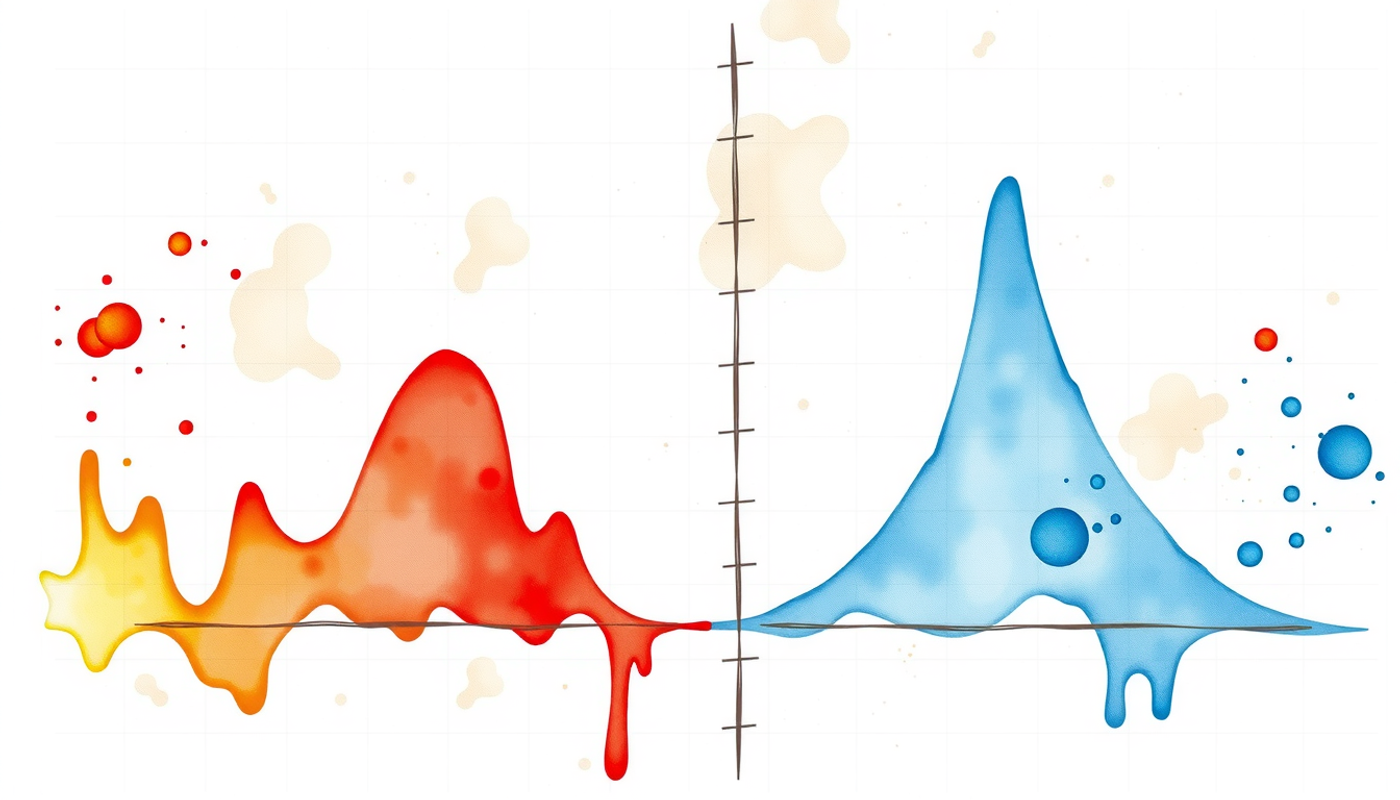
The revival came in 1987. Janet Metcalfe and David Wiebe at Indiana University designed an elegant experiment that became a turning point [7]. They gave participants two types of puzzles. Some were incremental, like algebra problems, where you work toward the answer step by step. Others were classic insight puzzles where the answer, if it comes at all, tends to arrive suddenly.
Every fifteen seconds, participants rated their "feeling of warmth," estimating how close they felt to solving the problem. For algebra problems, warmth ratings climbed steadily. People could feel themselves approaching the answer. For insight problems, warmth ratings stayed flat, flat, flat, then jumped to maximum in the final interval. People felt stuck right up until the instant they were not.
This was the first clean empirical evidence that insight and analytical problem-solving are genuinely different cognitive processes, not just different words for the same thing. The subjective experience is discontinuous. You are not approaching the answer gradually. The answer arrives all at once.
A Burst of Gamma in the Right Hemisphere
The real breakthrough came from two researchers at two different universities who decided to look at what happens inside the skull at the exact moment of an aha experience.
Mark Jung-Beeman at Northwestern University and John Kounios at Drexel University designed a study that was published in 2004 in PLoS Biology and changed insight research permanently [2]. They used compound remote associates problems. Each puzzle gives three words, say *crab*, *pine*, and *sauce*, and asks for a single word that can combine with all three. The answer is *apple* (crabapple, pineapple, applesauce). These puzzles are useful because some people solve them through deliberate searching and others through sudden insight, and participants can reliably self-report which strategy they used.
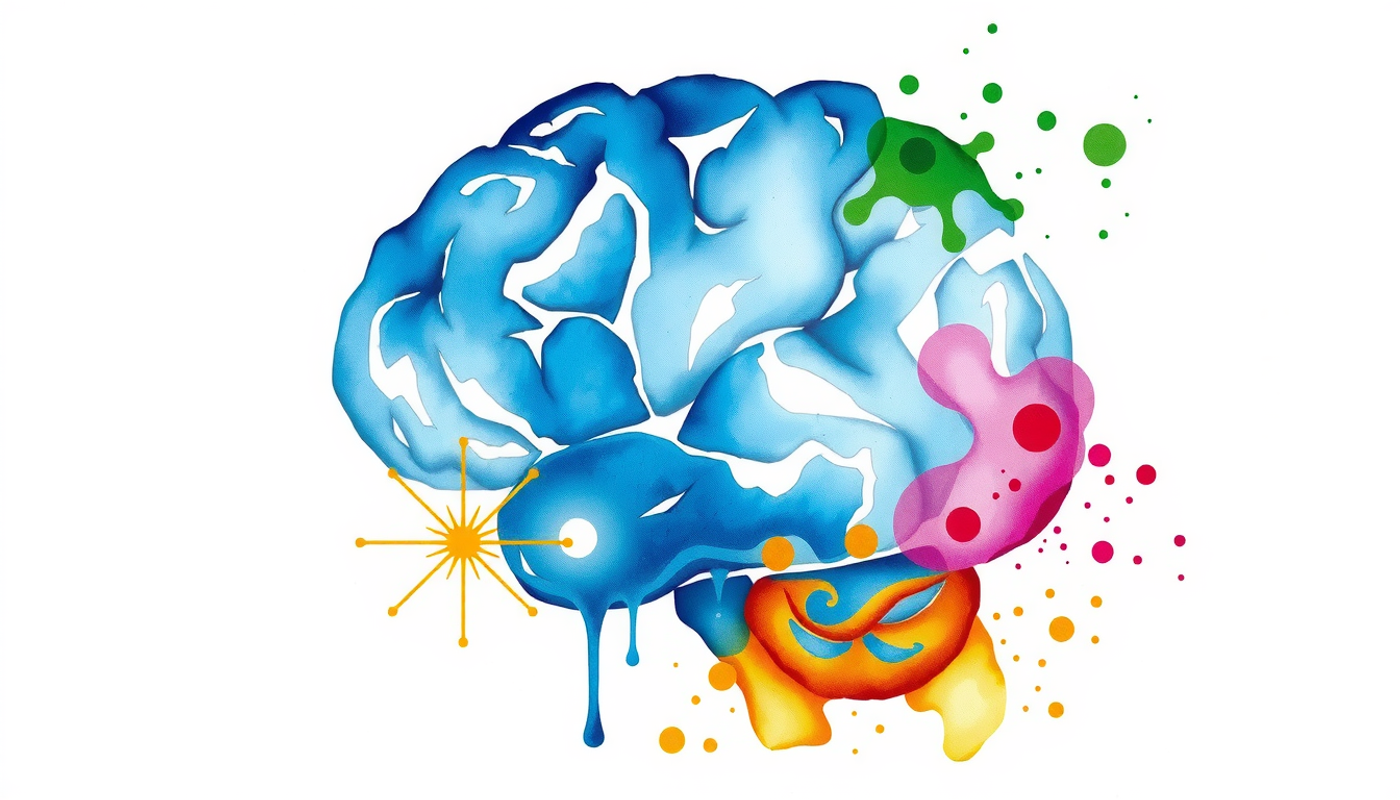
Using both fMRI and EEG, they found two critical things. First, fMRI showed that insight solutions produced greater blood flow in the right anterior superior temporal gyrus, a region near the right ear that is known for processing distant semantic relationships, the kind of loose associations that connect *crab* and *sauce* to *apple*. Second, EEG revealed a sudden burst of high-frequency gamma-band activity (around 40 Hz) over the same right temporal region, beginning approximately 300 milliseconds before participants pressed the answer button.
Three hundred milliseconds is roughly the time needed to plan and execute a button press. So the gamma burst marks the moment the solution becomes consciously available. The brain finds the answer, the gamma fires, and then the finger moves.
But here is the part that surprised everyone. About 1.5 seconds *before* the gamma burst, something else happened. Alpha-band activity (8 to 13 Hz) increased over the right visual cortex [8]. Alpha waves are understood as an inhibitory rhythm. When alpha increases over the visual cortex, it means the brain is reducing visual input. Dimming the lights. Turning inward.
Carola Salvi, working with Jung-Beeman's group, later confirmed this with eye-tracking data [9]. People literally blink more and avert their gaze in the seconds before solving a problem by insight. The brain is not paying closer attention to the outside world. It is paying less attention, so it can amplify a faint internal signal.
Think of it like trying to hear someone whispering in a noisy room. You do not turn up the whisper. You quiet the room.
The Reward Circuit Lights Up
If insight has a distinct neural signature, does it also have a distinct emotional signature? The answer is yes.
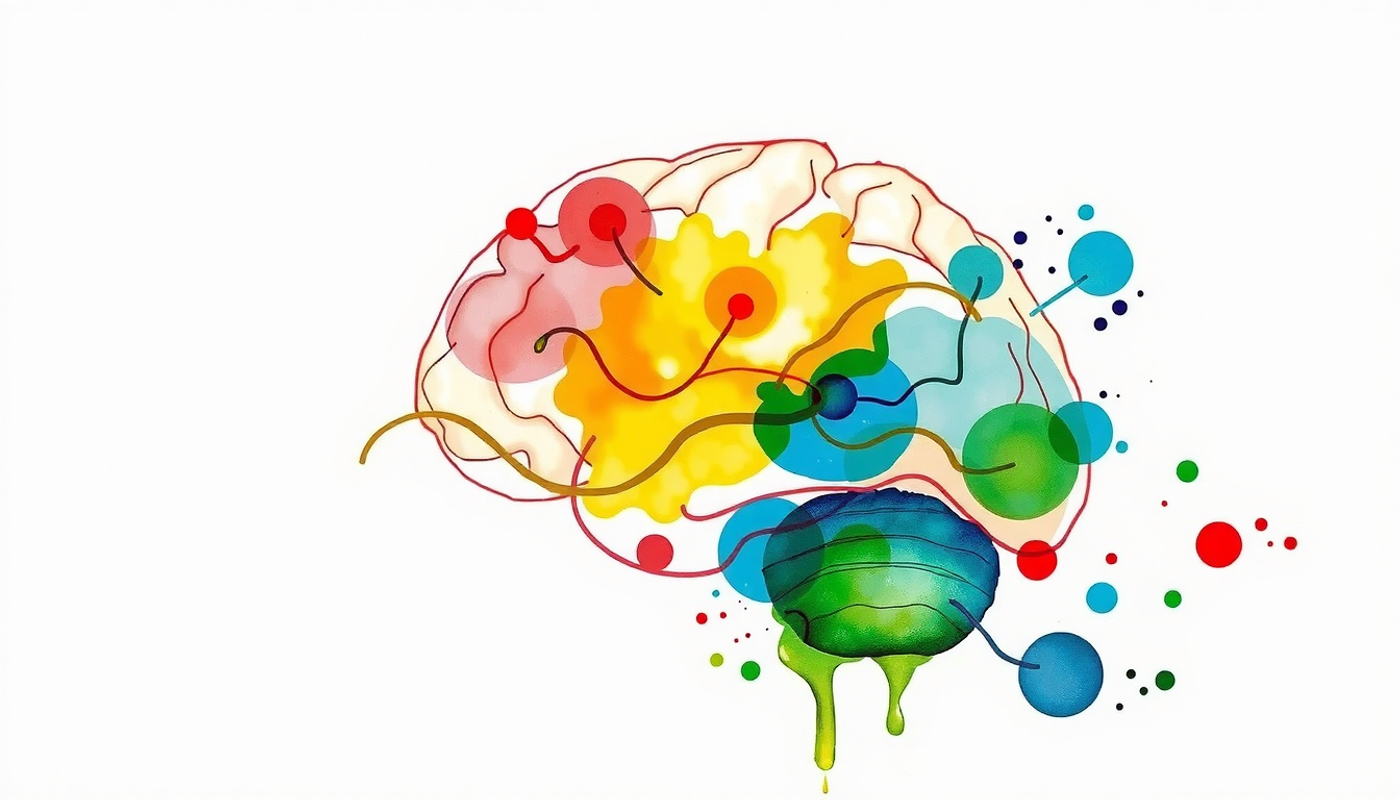
In 2018, Martin Tik and colleagues at the Medical University of Vienna used an ultra-high-field 7-Tesla fMRI scanner, which provides far more detailed images than the standard 3-Tesla machines used in most brain imaging [10]. They replicated the Jung-Beeman paradigm and confirmed the cortical findings in the right temporal lobe. But the 7T scanner revealed something standard machines had missed: robust activation in subcortical structures deep in the brain. The ventral tegmental area. The nucleus accumbens. The hippocampus. The thalamus.
These are the brain's reward and memory circuits. The ventral tegmental area is where dopamine neurons originate. The nucleus accumbens is the primary target of dopaminergic reward signaling, the same circuitry activated by food, sex, music, and drugs. The hippocampus is the memory formation center.
In other words: when you have an aha moment, your brain gives itself a dopamine hit. Nature rewards you for finding the answer. And because the hippocampus is activated at the same moment, the insight gets encoded into memory with extra strength.
This explains something that researchers had noticed for years but could not fully account for: insight solutions are remembered better than analytical solutions. Anika Danek and colleagues at Ludwig Maximilian University of Munich tested this directly [11]. Fifty participants solved 34 magic tricks. Two weeks later, they remembered 64.4% of the tricks they had solved with an aha moment, compared to only 52.4% of tricks solved without one. The aha itself stamps the memory deeper.
Danek and Jennifer Wiley later decomposed this memory advantage and found it is driven by three factors: the solution being correct, the subjective certainty that accompanies it, and the pleasurable emotional response [12]. Remove any one of these three, and the advantage shrinks.
Why Your Best Ideas Come in the Shower
Everyone knows the cliché. You struggle with a problem for hours at your desk. Nothing works. You give up, take a shower, and the answer hits you while you are rinsing shampoo out of your hair.
The cliché is backed by hard data.
The scientific term is *incubation*. In 2009, Ut Na Sio and Thomas Ormerod at Lancaster University published a meta-analysis of 117 incubation studies spanning several decades [13]. The overall effect was positive: stepping away from a problem reliably improves the chances of solving it later (mean Cohen's d = 0.29). But three critical moderators emerged. The benefit was largest for divergent thinking tasks. Longer preparation periods before the break produced stronger effects. And the incubation break worked best when filled with an undemanding activity, not with rest alone and not with a demanding task.
That last point matters. If you spend your break doing something cognitively demanding, like answering emails or solving a different hard problem, incubation does not work as well. The break needs to be light. Washing dishes. Walking. Showering. Activities that occupy your hands but leave your mind free to wander.
Why does this work? The leading theory involves the Default Mode Network, a set of brain regions including the medial prefrontal cortex, posterior cingulate, and angular gyrus that become active during rest and mind-wandering [14]. This is the same network that researchers have linked to reduced cognitive load and spontaneous idea generation. When you stop deliberately working on a problem, the Default Mode Network takes over and begins generating spontaneous associations between loosely connected ideas, exactly the kind of connections that insight requires.
Jonathan Schooler at UC Santa Barbara showed this directly. In 2012, his team gave participants the Unusual Uses Test (a creativity measure), then assigned them to one of four conditions: a demanding task, an undemanding task, rest, or no break at all. Only the undemanding-task group, the one most likely to produce mind-wandering, showed a significant improvement on the creativity test afterward, a boost of 41% compared to the other conditions [15].
And then there is sleep.

Sleep: The Insight Multiplier
The single most dramatic demonstration of sleep's effect on insight comes from a 2004 study published in Nature.
Ullrich Wagner, Steffen Gais, Hilde Haider, Rolf Verleger, and Jan Born at the University of Lübeck taught participants the Number Reduction Task, a math-like problem that has a hidden shortcut. Participants did not know the shortcut existed. They just practiced the task, then either slept for eight hours, stayed awake during the night, or stayed awake during the day [16].
After eight hours, 59% of the sleep group discovered the hidden shortcut. In the two wakefulness groups? Only about 23% each. Sleep more than doubled the rate of insight.
This was not just rest. People who rested but stayed awake did not gain the advantage. Something specific about the sleeping brain reorganized the task representation in a way that revealed the hidden pattern.
Later research by Jan Born's group and others localized the effect to early-night slow-wave sleep, and connected it to the hippocampal replay mechanisms that are now understood to underlie memory consolidation. During slow-wave sleep, the hippocampus replays recently encoded information at compressed speeds, and this replay interacts with the neocortex to restructure memory representations [17].
A separate line of research linked REM sleep, the dreaming stage, to creative remote associations. Denise Cai and Sara Mednick at UC San Diego showed that a period of REM sleep primed participants to solve Remote Associates Test problems that involved previously unseen connections between items studied before sleep [18]. REM did not help with problems that could be solved by simple memory. It specifically helped with problems requiring new integrations. New associations. The raw material of insight.
How Mood Opens the Door
Alice Isen's research in the late 1980s produced one of the most striking findings in the entire creativity literature, and it connects directly to insight.
In 1987, Isen, Daubman, and Nowicki gave participants the Duncker candle problem. But before the task, one group watched a five-minute comedy clip. The other group did not [19]. In the control group, 13% solved the problem. In the comedy group, 75% solved it. A short burst of positive emotion increased the solution rate nearly sixfold.
This is not a small effect. This is one of the largest effect sizes in experimental psychology.
Why does positive mood help? The broaden-and-build theory proposed by Barbara Fredrickson offers one answer: positive emotions broaden the scope of attention and cognition, making people more likely to notice peripheral information and distant associations. But Kounios and Jung-Beeman's group provided the neural mechanism. Karuna Subramaniam showed that participants in a positive mood had greater activity in the anterior cingulate cortex and medial prefrontal cortex during the preparation period *before* a problem even appeared [20]. Their brains were already primed for broader, more diffuse processing. Already set up for insight.
Anxiety does the opposite. It narrows attention to the most salient, obvious features of a problem. Exactly the kind of narrow focus that reinforces functional fixedness and prevents the restructuring that insight demands.
The practical implication is direct. If you want to solve a hard creative problem, do not start with stress. Start with something that puts you in a good mood. Five minutes of comedy. A walk outside. A favorite song. The neurological setup for insight is not concentration. It is relaxed openness.

When the Brain Lies: False Insights and Overconfidence
Insight feels true. That is part of its definition. But is it always true?
Mostly, yes. Carola Salvi's research demonstrated that insight solutions are correct about 94% of the time for verbal puzzles, compared to 78% for analytical solutions [21]. The reason is structural: insight solutions do not arrive until the unconscious computation is finished. Analytical guesses, by contrast, can be rushed and incomplete.
But "mostly" is not "always." And the feeling of certainty that insight carries is exactly what makes false insights dangerous.
Ruben Laukkonen and colleagues at the University of Melbourne ran a study in 2022 that exposed this vulnerability [22]. They induced aha experiences in participants using solvable puzzles, then immediately presented unrelated factual claims (some true, some false) and asked participants to rate their truth. Participants who had just experienced an aha moment rated the subsequent claims as more true, regardless of whether the claims were actually true. The aha feeling spilled over into unrelated judgments.
This is the dark side of insight. The subjective certainty that accompanies an aha moment is a signal, not a guarantee. It evolved to flag solutions that are likely correct. But like any heuristic, it can be fooled. In contexts where people are already inclined toward a particular belief, a false insight can lock in a wrong conclusion with unshakeable confidence.
The lesson for learners is clear. Trust your aha moments. They are more often right than analytical guesses. But verify them afterward. The feeling of certainty is not the same as actual certainty.

Insight in the Classroom: Why Struggle Comes Before the Spark
The insight literature has direct implications for education, and they run counter to how most teaching is designed.
Manu Kapur, then at the National Institute of Education in Singapore, introduced a concept he called "productive failure" in 2008. He let students attempt complex math problems *before* receiving instruction on the methods needed to solve them. The students struggled. Most failed. But when instruction followed, the productive-failure group showed significantly better transfer to novel problems than students who received instruction first [23].
Why? Because the struggle created exactly the conditions that insight research predicts will be effective. Students built a rich representation of the problem space. They reached an impasse. They became aware of what they did not understand. And when the correct framework was introduced, it clicked into place with the force of restructuring, not just memorization.
This connects to Robert and Elizabeth Bjork's framework of "desirable difficulties" in learning [24]. Generation effects, spacing, interleaving, and retrieval practice all create the short-term challenge and long-term benefit that insight requires. Retrieval practice, in particular, forces the brain to reconstruct information from memory rather than passively review it, creating exactly the kind of cue-restructuring environment where spontaneous integrations can occur.
And there is a memory bonus. Salvi's 2024 research showed that factual information encoded near an aha moment is remembered better than information encoded near an analytical solution [25]. If a teacher designs a lesson so that the key concept arrives at the moment of restructuring, the emotional charge of the insight will stamp that concept deeper into memory.
The formula is not complicated. Present the problem first. Let students struggle. Let them reach impasse. Then deliver the framework. The aha moment becomes a pedagogical tool, not an accident.
Crows, Cockatoos, and the Evolution of Insight
Is insight uniquely human? Köhler thought his chimpanzees had it. Modern comparative cognition has pushed the question much further.
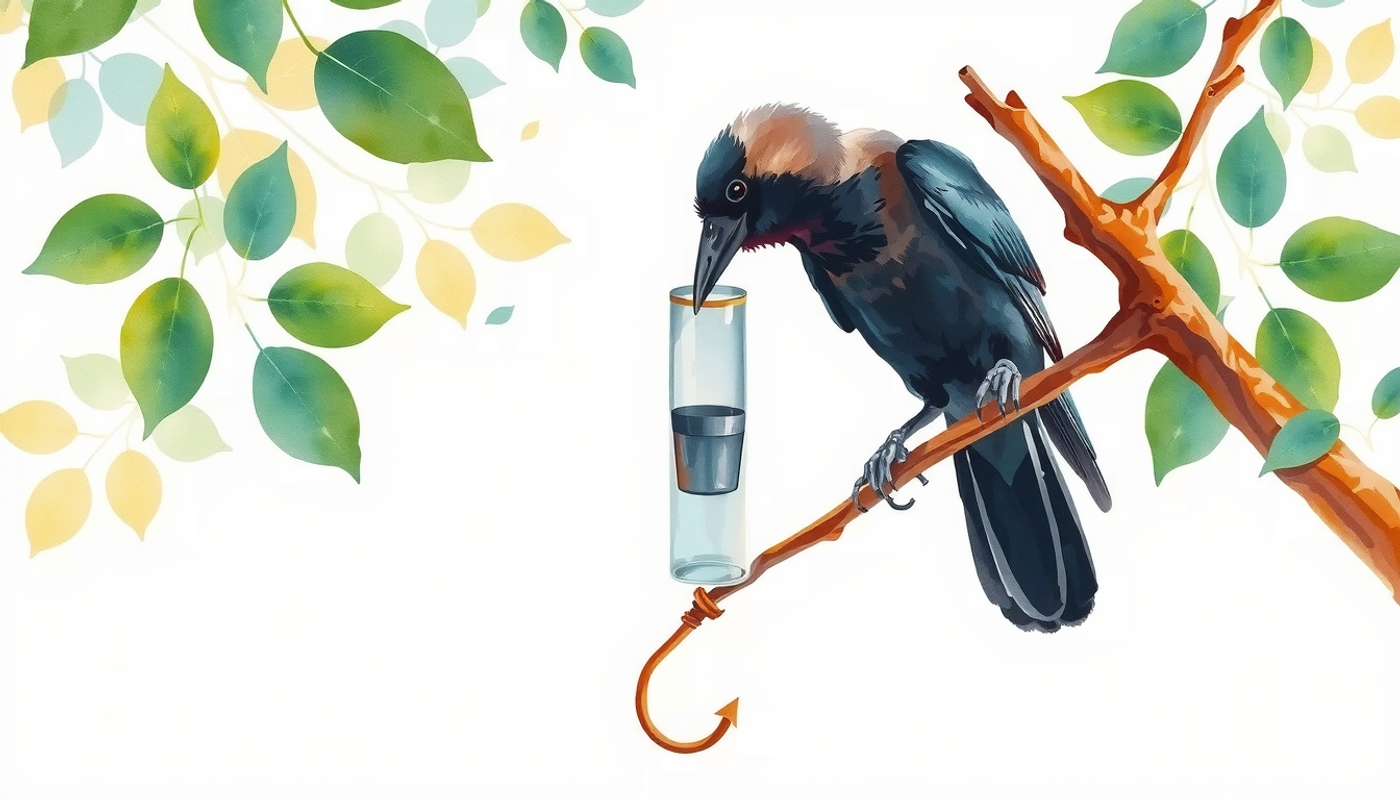
In 2002, a captive New Caledonian crow named Betty astonished researchers at Oxford University. Given a straight piece of wire and a small bucket of food at the bottom of a vertical tube, Betty spontaneously bent the wire into a hook and used it to retrieve the bucket [26]. No training. No demonstration. No trial and error. She saw the problem, appeared to assess the situation, then modified the tool to fit her needs.
New Caledonian crows are known tool users in the wild. But Betty's behavior went beyond using existing tools. She *created* a novel tool for a novel problem. That is the hallmark of insight: generating a solution that did not exist before.
Rooks, a species that never uses tools in the wild, showed similar flexibility. Nathan Emery and Nicola Clayton demonstrated that captive rooks could spontaneously drop stones into a tube of water to raise a floating worm to within reach, an Aesop's Fable problem that orangutans also solved [27]. If a species that does not use tools in nature can solve novel tool problems in the lab, the capacity for flexible problem-solving may be far more widespread than anyone suspected.
What does animal insight tell us about human cognition? It suggests that insight is an evolved strategy for dealing with novel environmental challenges. It sits on top of the associative learning system that Thorndike correctly identified. Both systems coexist. The question is when the brain switches from one to the other, and what conditions favor the switch. In humans, that switch appears to be governed by the anterior cingulate cortex, which detects when the analytical approach has failed and biases the system toward broader, more diffuse processing [28].
Can You Train Yourself to Have More Aha Moments?
The honest answer: partly.
Some components of insight capacity appear to be trait-like. Kounios and colleagues showed in 2008 that people who solve more problems by insight have different resting-state brain activity even before they see any problems [29]. High-insight solvers show more right-hemisphere alpha and gamma at rest, suggesting broader, more diffuse baseline attention. This may reflect stable personality differences. Openness to experience, the Big Five trait most associated with creativity, correlates with insight problem-solving.
But the conditions that promote insight can be cultivated deliberately.
Mindfulness meditation, particularly the open-monitoring variety where attention is broad and non-directive, has shown reliable effects. Ren and colleagues found that just 20 minutes of mindful breathing increased solutions to previously failed insight problems [30]. Colzato, Ozturk, and Hommel at Leiden University showed that open-monitoring meditation specifically enhanced divergent thinking, while focused-attention meditation did not [31]. The distinction matters: it is the broad, receptive quality of open monitoring, not concentration per se, that feeds the insight process.
Nature exposure is another documented enhancer. Ruth Ann Atchley and colleagues sent 56 Outward Bound hikers into the wilderness for four days with no electronic devices. Before and after the trip, participants took the Remote Associates Test. After four days in nature, performance improved by 50% [32]. That is a full standard deviation of improvement. Disconnection from technology, immersion in natural environments, and reduction of cognitive load appear to prime exactly the kind of diffuse, wandering attention that insight needs.
Even transcranial brain stimulation has been explored. Chi and Snyder applied cathodal stimulation to suppress the left anterior temporal lobe while exciting the right and tripled solution rates on a matchstick arithmetic problem [33]. Santarnecchi and colleagues applied gamma-frequency alternating current stimulation over the right temporal lobe and found increased CRA accuracy [34]. But these results have been inconsistent across labs, and brain stimulation is far from a practical tool for everyday use.
The more realistic recipe: cultivate positive mood before creative work. Build in incubation breaks. Get enough sleep. Practice open-monitoring meditation. Spend time in nature. And when you are stuck, stop pushing. Walk away. Let the Default Mode Network do its job. The aha moment is not something you force. It is something you allow.
The Frontier: Machines, Models, and Prediction Errors
Where is insight research going?
One of the most provocative recent developments comes not from psychology labs but from artificial intelligence. In January 2025, the Chinese AI lab DeepSeek released R1, a large language model trained with reinforcement learning. During training, the model spontaneously developed what the developers called an "aha moment," a point where it began inserting self-reflective tokens into its reasoning chains, re-evaluating its earlier steps, and extending its thought process [35].
Whether this constitutes genuine insight is contested. From a cognitive science perspective, it lacks the defining features of human insight: the subjective experience of suddenness, the positive affect, the dopaminergic reward signal, and the alpha-gamma temporal sequence. Liu and colleagues pointed out that aha-like keywords already existed in the base model's training data [36]. The AI's "insight" may be a useful engineering metaphor rather than a genuine cognitive analog. But it raises interesting questions about whether the computational principles underlying insight, particularly Bayesian model reduction, might be formalizable in ways that bridge biological and artificial intelligence.
On the theoretical side, Karl Friston and colleagues proposed in 2017 that insight can be understood through the lens of active inference [37]. In their framework, the brain constantly generates predictions about the world. Insight occurs when the brain suddenly prunes its generative model, finding a simpler, more accurate structure that better explains the evidence. This pruning produces a prediction error, and the surprise of that error, combined with its resolution, is what generates the aha feeling. Laukkonen and colleagues extended this into a "Eureka heuristic" model, proposing that the implicit model reduction generates a higher-order prediction error that is precision-weighted by dopamine, producing both the confidence and the pleasure of insight [38].
The most recent synthesis comes from Mark Becker and Roberto Cabeza at Duke University, who published a 2025 review in Trends in Cognitive Sciences arguing that the insight memory advantage is mediated by midbrain-dopaminergic enhancement of hippocampal encoding [39]. This unifies the phenomenological evidence (suddenness, certainty, pleasure), the neural evidence (gamma burst, VTA and nucleus accumbens activation), and the memory evidence (superior recall of insight solutions) into a single coherent framework.
Insight research is converging. After a century of being treated as mysterious, the aha moment is becoming one of the most precisely characterized events in cognitive neuroscience. The mystery has not been eliminated. But it is being replaced by something better: understanding.

What It All Means
The science of insight and aha moments tells us something that runs against the grain of modern productivity culture. The best ideas do not come from working harder. They come from working differently.
The brain that produces insight is not the brain that is grinding through problems under deadline pressure. It is the brain that has done the preparation, encountered the impasse, and then stepped away. It is the brain in the shower, on the walk, in the moment between waking and rising. It is the brain during slow-wave sleep, when the hippocampus replays the day's unsolved problems and restructures them into forms where hidden patterns become visible.
The practical recipe that emerges from a century of research is specific and actionable. Invest real effort upfront. Do not skip the preparation. Reach the impasse honestly, not by giving up too early, but by genuinely exhausting your current approach. Then walk away. Do something light. Sleep on it. Come back with a fresh perspective and a willingness to see the problem differently.
And when the answer arrives, sudden and certain and pleasurable, trust it. It is probably right. But check it anyway. Because the same mechanism that produces brilliant insight can occasionally produce confident error. Metacognitive awareness, the ability to think about your own thinking, is the safety net that distinguishes productive insight from unchecked intuition.
The aha moment is not magic. It is a precisely timed burst of gamma waves in the right temporal lobe, preceded by an alpha blink over the visual cortex, accompanied by a dopamine surge in the brain's reward circuitry, and followed by enhanced hippocampal memory encoding. It is biology. And biology can be understood, cultivated, and put to work.
Frequently Asked Questions
What happens in the brain during an aha moment?
A burst of gamma-band activity around 40 Hz fires over the right anterior superior temporal gyrus approximately 300 milliseconds before the solution reaches conscious awareness. This is preceded by an alpha-wave increase over the visual cortex that reduces sensory input, and accompanied by dopamine release in the brain's reward circuits.
Are insight solutions more accurate than analytical ones?
Research by Carola Salvi showed that insight solutions are correct about 94% of the time for verbal puzzles compared to 78% for analytical solutions. Insight answers emerge only when unconscious processing is complete, whereas analytical guesses can be rushed and incomplete, especially under time pressure.
Can you train yourself to have more aha moments?
Partially. Open-monitoring meditation, positive mood induction, nature immersion, and incubation breaks all measurably increase insight rates. Sleep, particularly slow-wave sleep, more than doubles the probability of discovering hidden patterns. Positive mood alone increased candle problem solutions from 13% to 75% in classic research.
Why do aha moments often happen in the shower or during walks?
Light undemanding activities allow the Default Mode Network to activate. This brain network generates spontaneous associations between loosely connected ideas. Research shows incubation works best when the break involves undemanding activity rather than rest alone or demanding tasks, because mind-wandering feeds the associative process insight requires.
Is the feeling of certainty during an aha moment always reliable?
Not always. Research by Laukkonen and colleagues showed that an aha experience can spill over into unrelated judgments, making people rate false claims as true immediately after experiencing insight. The feeling of certainty is a heuristic signal that is usually accurate but should be verified afterward.


