
Introduction
In 2006, two psychologists at Washington University in St. Louis asked a question that sounds almost too simple. What if testing yourself is not just a way to measure what you know, but actually the best way to learn? Henry Roediger and Jeffrey Karpicke divided college students into groups. Some studied a passage four times. Others studied it once and then tried to recall it three times, with no notes in front of them. Two days later, the cramming group remembered more. But one week later, the results flipped. The students who had practiced pulling information from memory, a technique scientists call retrieval practice, remembered 61 percent of the material. The students who only re-read it remembered 40 percent [1]. That single experiment launched a wave of research that continues today. Hundreds of studies have since confirmed the finding across ages, subjects, and formats [2]. But confirming that retrieval practice works was only the beginning. The deeper question, the one that took neuroscience another fifteen years to start answering, was: what is the brain actually doing differently when you pull a memory out compared to when you just look at the page again?
This article tells the story of that search. It begins in the psychology lab and moves into the scanner room. It tracks the signals from hippocampus to prefrontal cortex to the dopamine neurons deep in the brainstem. And it arrives at a conclusion that would have surprised Ebbinghaus himself: remembering is not a readout. It is reconstruction. And every reconstruction changes the building.
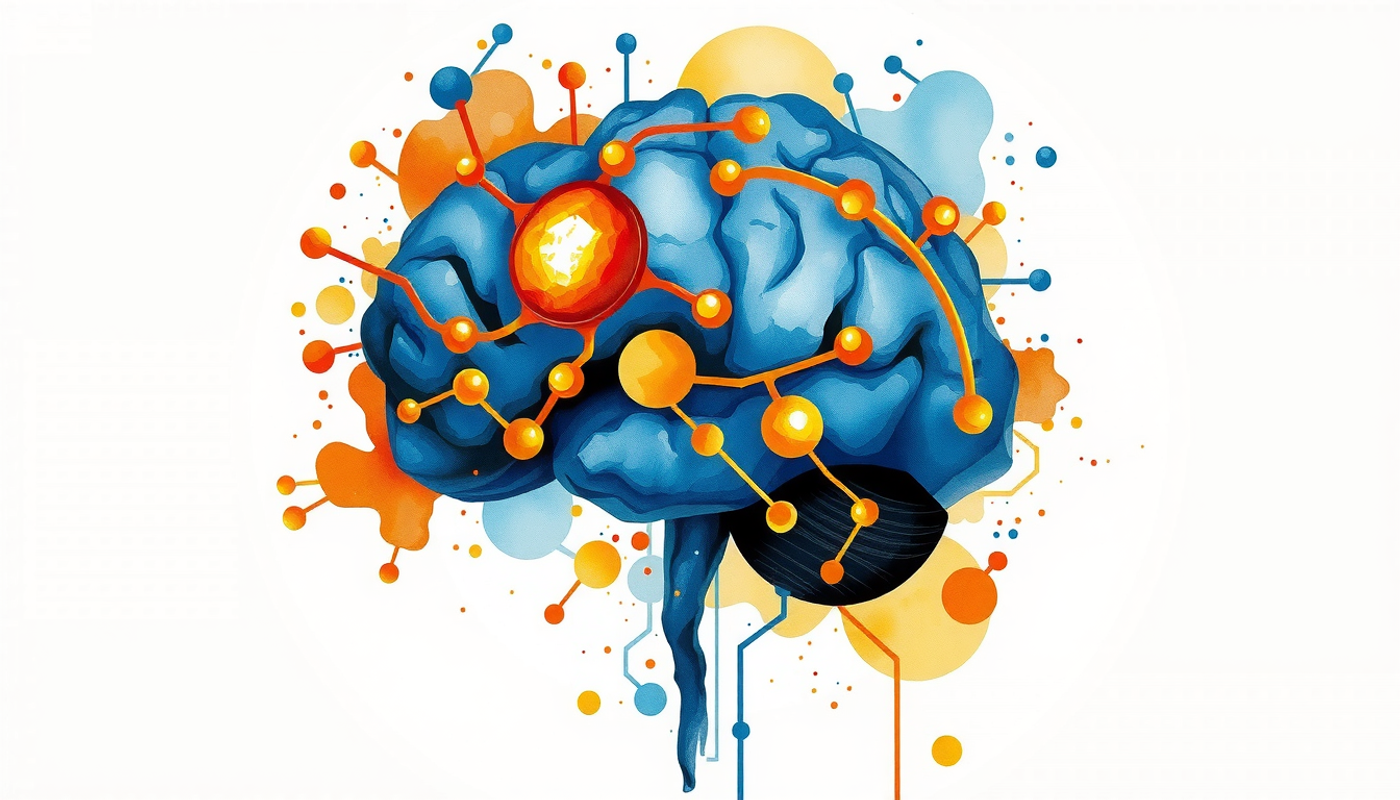
The Experiment That Shook a Century of Assumptions
The idea that testing helps learning is not new. In 1917, Arthur Gates at Columbia University asked children to spend different proportions of their study time reading versus reciting from memory. Children who spent more time reciting remembered more [3]. In 1939, Herbert Spitzer tested over 3,500 sixth-graders in Iowa and found that a single test given shortly after reading dramatically slowed forgetting [4]. And in 1967, Endel Tulving showed something strange: students who took repeated tests without any restudying in between performed just as well as students who alternated study and test [5]. The test itself was doing the teaching.
But these findings lived in psychology textbooks. They did not cross over into neuroscience. For decades, the dominant assumption was simple: learning happens when information goes in. Encoding is what matters. Retrieval is just a readout, a playback of what was stored. Like opening a file on a computer.
That assumption was wrong.
The Roediger and Karpicke study in 2006 was not the first to demonstrate the testing effect. But its design was clean, its results were stark, and its timing was right. Functional magnetic resonance imaging had become widely available. Researchers could now watch the brain while it retrieved. And what they saw did not look anything like a passive readout.
The timeline above traces a century-long journey. For most of that century, the question was whether retrieval practice works. Only in the last two decades has the question shifted to how the brain makes it work. That shift is where the real story begins.

Two Hippocampi Working in Tandem
The hippocampus is a curved structure buried deep in the temporal lobe, roughly the size and shape of a seahorse. It is the brain's memory gateway. Nothing gets stored permanently without passing through it first. But the hippocampus is not a single uniform organ. Its front end (the anterior portion) and its back end (the posterior portion) do different things [6].
The posterior hippocampus specializes in detailed, specific memories. Think of it as the brain's archivist, filing away the exact context of an experience: where you were sitting, what the page looked like, the sound of the professor's voice. The anterior hippocampus does something different. It strips away details and extracts patterns. It builds generalized knowledge, the kind of understanding that lets you recognize a new problem as similar to one you solved before.
In 2021, a team led by Carola Wiklund-Hörnqvist and Lars Nyberg at Umeå University in Sweden put these two regions to the test [7]. They taught 24 university students Swahili-Swedish word pairs and varied how many times each pair was successfully retrieved during training. One week later, the students came back for a memory test inside an fMRI scanner.
The results told a precise story. Posterior hippocampus activity increased in a straight line with the number of successful retrievals during training. More successful recalls on day one meant more posterior hippocampal engagement on the test a week later. But anterior hippocampus activity followed a different pattern. It only appeared for items that had been retrieved many times, not for items retrieved just once or twice.
The researchers called this "dual action." Retrieval practice does not just stamp in a memory. It builds two kinds of representation simultaneously. The posterior hippocampus strengthens the specific episodic trace, the detailed record of what was learned. The anterior hippocampus, once enough successful retrievals accumulate, begins extracting the gist, the generalizable pattern. One region preserves the tree. The other maps the forest.
What does this mean in practical terms? A single successful recall is useful. It strengthens the specific memory. But the deeper benefit, the kind that transfers to new situations and survives across weeks, only kicks in after multiple retrievals. The brain needs repetition not because it failed to record the memory, but because the anterior hippocampus requires several passes before it begins its pattern-extraction work.
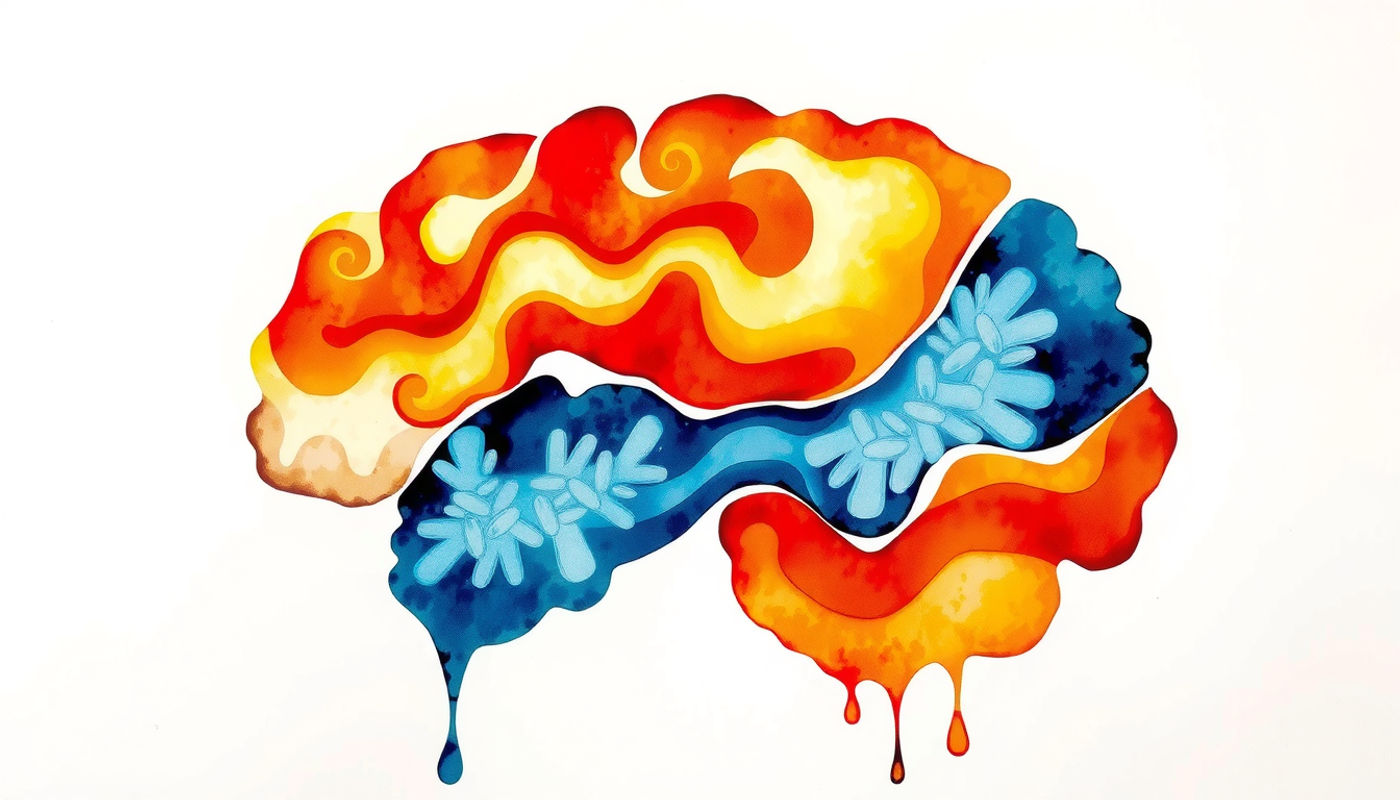
A Memory That Rebuilds Itself Every Time You Remember
For most of the twentieth century, scientists assumed memories were like photographs. Once developed, they sat in storage unchanged until you looked at them again. Retrieval was a passive act. You opened the drawer, pulled out the photo, and put it back.
In 2000, Karim Nader, Glenn Schafe, and Joseph LeDoux at New York University shattered this assumption [8]. They trained rats to fear a tone by pairing it with a mild shock. Once the fear memory was consolidated, meaning the rats had slept on it and the memory was stable, the researchers reactivated it by playing the tone again. Immediately after reactivation, they injected a protein synthesis inhibitor called anisomycin into the amygdala, the brain's fear center, an almond-shaped cluster of neurons that processes fear and emotional memories. If memories were truly stable files, the drug should have done nothing. The memory was already saved.
But the rats forgot. The fear was gone. The act of retrieving the memory had made it unstable again, and without new protein synthesis to restabilize it, the memory dissolved. Nader and colleagues had demonstrated reconsolidation: the process by which a retrieved memory must be actively rebuilt using fresh molecular machinery, or it degrades [9].
This discovery changed everything about how neuroscientists think about retrieval. Every time you remember something, the memory trace becomes temporarily fragile. New proteins must be synthesized. NMDA receptors, a type of glutamate receptor critical for synaptic plasticity, must be activated. The old synaptic architecture is partially disassembled and new architecture is built in its place [10].
Here is why this matters for retrieval practice specifically. Re-reading a passage reactivates the memory weakly. It does not force the kind of effortful reconstruction that triggers full destabilization and restabilization. But actively pulling the information from memory, struggling to recall it, forces the brain through the entire reconsolidation cycle. The memory is taken apart, updated, and reassembled with stronger molecular bonds.
Antony, Ferreira, Norman, and Wimber crystallized this insight in a 2017 review in Trends in Cognitive Sciences [11]. They proposed that retrieval acts as a "fast consolidation" event. During sleep, the brain replays memories and transfers them from the hippocampus to the neocortex for long-term storage. Retrieval practice appears to trigger the same kind of hippocampal-neocortical rebinding, but in seconds rather than hours. Every quiz is a miniature sleep cycle for the targeted memory.
The Prefrontal Cortex Learns to Step Aside
If retrieval practice strengthens memory, one might expect the brain to work harder with each retrieval. More effort, more activation, stronger memory. But the fMRI data tell a more nuanced story.
In 2015, Linnea Karlsson Wirebring and colleagues at Umeå University scanned students during three rounds of retrieval practice on Swahili-Swedish word pairs, and then again at a test one week later [12]. They found that activity in the left inferior frontal gyrus, a region of the prefrontal cortex involved in controlled, effortful retrieval, decreased across repeated tests. The brain was working less hard to pull the same information out. This is consistent with what neuroscientists call the neural efficiency hypothesis: as a skill becomes practiced, the brain automates it and frees up frontal resources.
But the surprise came from the parietal cortex, the region at the upper back of the brain involved in representing retrieved content. Using multivoxel pattern analysis, a technique that examines the spatial pattern of brain activity rather than just its overall level, Karlsson Wirebring found that parietal representations became more variable across repeated tests. The brain was not stamping the same pattern over and over. It was creating slightly different representations each time. And here was the key result: items with greater parietal variability across the three training tests were remembered better one week later.
This is counterintuitive. Stability sounds like it should be good for memory. But the data suggest the opposite. Flexible, variable representations, built through slightly different retrieval contexts each time, produce memories that are more durable and more accessible from multiple cues.
van den Broek and colleagues reviewed ten neuroimaging studies of the testing effect in 2016 [13]. Their synthesis captured the emerging consensus: retrieval practice reduces frontal control demands over time (the prefrontal cortex steps aside) while simultaneously increasing the richness and flexibility of posterior representations. The brain does not just get stronger at remembering. It gets more efficient.
The table above summarizes the regional brain changes that retrieval practice produces. The picture that emerges is not of a single "memory area" getting stronger. It is of a distributed network reorganizing itself, with some regions dialing down and others dialing up, to produce a representation that is both efficient and resilient.
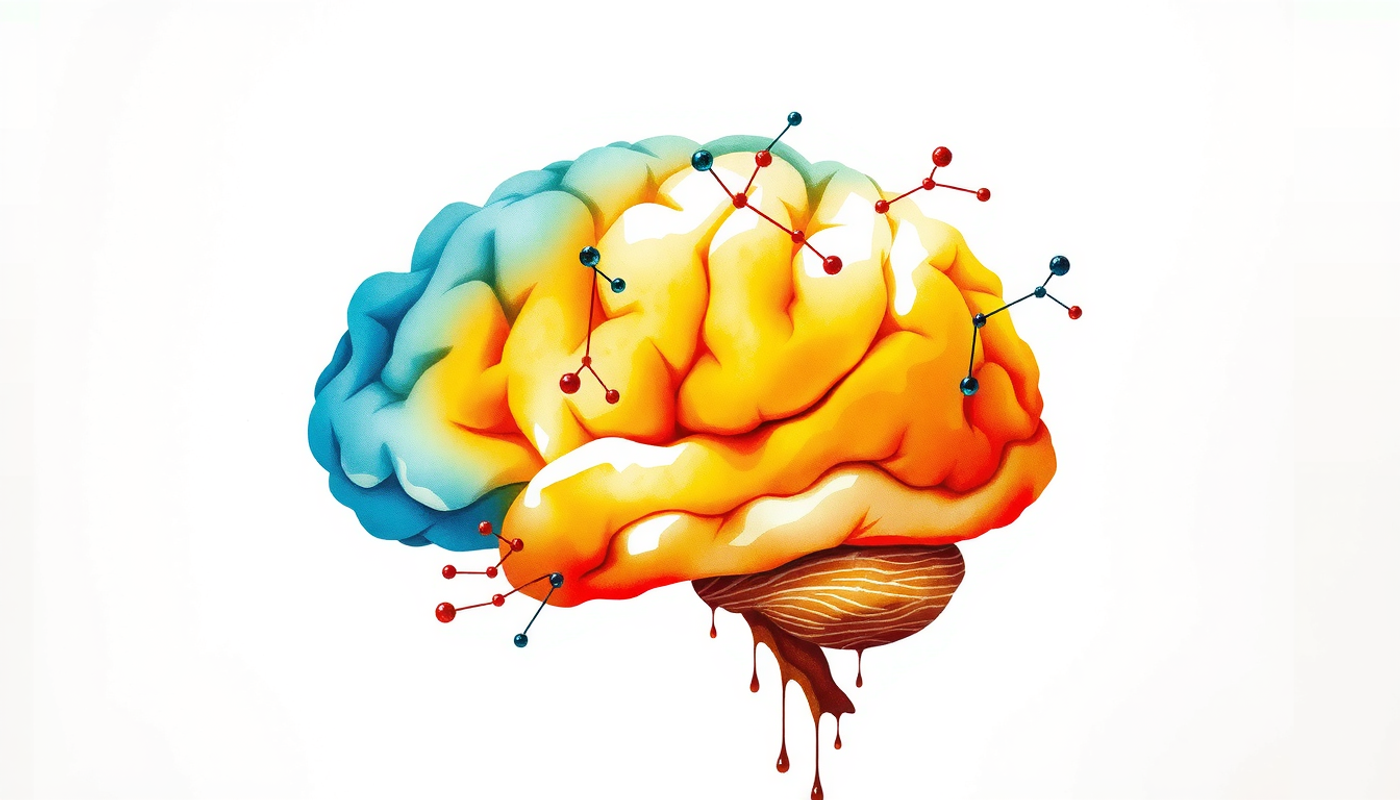
The Small Reward of Remembering
Why does retrieval feel satisfying? Think about the last time you struggled to recall a name or a fact, and then it suddenly came to you. That small flush of satisfaction is not just psychological. It has a neural signature.
The ventral striatum, including a structure called the nucleus accumbens, is part of the brain's reward circuitry. It responds to food, social approval, monetary gains, and, it turns out, to successful memory retrieval. van den Broek and colleagues found activation in the ventral striatum and midbrain during successful retrieval in their 2013 fMRI study [14]. Wiklund-Hörnqvist and colleagues confirmed this in 2017, showing that bilateral ventral striatum lit up during the first successful retrieval of each word pair, then gradually quieted as the item became well-learned [15].
This reward signal traces back to dopamine neurons in the ventral tegmental area (VTA) and substantia nigra, structures deep in the brainstem that serve as the brain's primary dopamine factories. Lisman and Grace proposed in 2005 that the hippocampus and VTA form a loop: novel or surprising information detected by the hippocampus signals the VTA, which releases dopamine back to the hippocampus, enhancing synaptic plasticity and prioritizing the novel information for long-term storage [16].
Curiosity amplifies this loop. Gruber, Gelman, and Ranganath at the University of California, Davis, scanned 19 students while they anticipated answers to trivia questions they had rated for curiosity level [17]. High-curiosity states produced midbrain and nucleus accumbens activation and enhanced memory not only for the trivia answers but also for unrelated faces shown during the anticipation period. Curiosity had turned on the dopaminergic system, and everything encountered during that window got a memory boost.
For retrieval practice, the implication is direct. Each retrieval cue creates a small knowledge gap. Each successful recall fills that gap. The pattern of gap-then-resolution, repeated across dozens or hundreds of cards, generates a steady stream of small dopaminergic events. The brain is not just storing information. It is being rewarded for the act of remembering, which makes it more likely to engage in remembering again.
When Remembering Makes You Forget
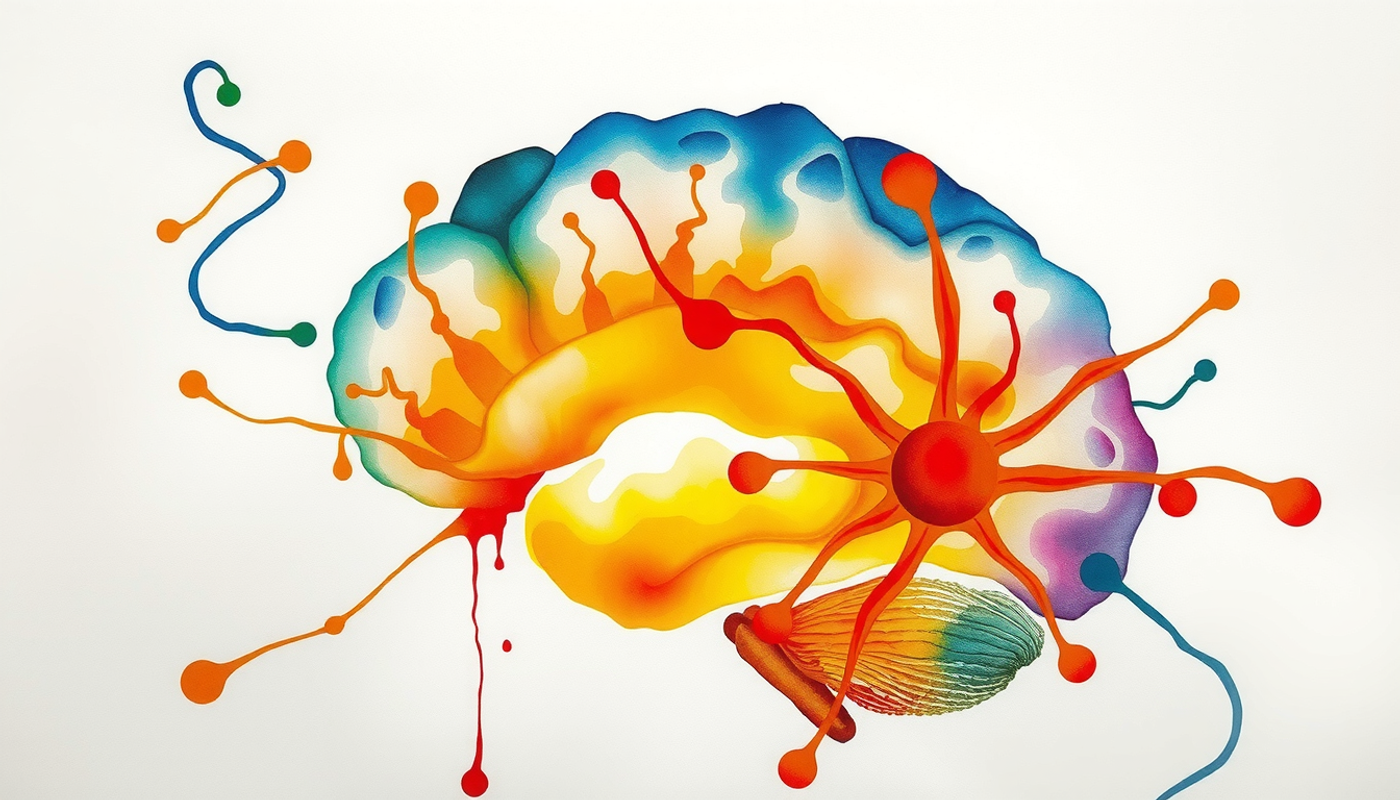
Retrieval is not entirely benign. The same neural machinery that strengthens retrieved memories can weaken related memories that go unretrieved.
In 2015, Maria Wimber and colleagues at the University of Birmingham published a study in Nature Neuroscience that tracked this process at the level of neural representations [19]. Participants learned associations between a cue and two different images. Then they practiced retrieving only one of the two associations. Using multivoxel pattern analysis, Wimber tracked what happened to the cortical representation of the unpracticed item. It was suppressed. With each round of selective retrieval, the neural pattern corresponding to the competitor became weaker and harder to detect. Prefrontal control activity predicted how much suppression occurred.
This is retrieval-induced forgetting (RIF), and it has real consequences for learning. If a student practices retrieving only half the material from a chapter, the unpracticed half may become harder to remember, not just because it was neglected, but because it was actively suppressed during retrieval of the practiced material [20].
There is a second risk. Retrieval can create false memories. Zhuang and colleagues published the most direct neural evidence for this in 2022 in Nature Human Behaviour [21]. Across eight rounds of retrieval practice, they tracked multivoxel representations in both the medial temporal lobe and the posterior parietal cortex. Long-term retention gains were predicted by progressively increasing representational distinctiveness in PPC. But false-memory rates at both 30 minutes and 24 hours were predicted by unstable medial temporal lobe representations. The same reorganization that drove learning also opened a window for schema-consistent intrusions to slip in.
The practical lesson is not to avoid retrieval practice. The benefit-to-cost ratio is overwhelmingly positive. But the lesson is to retrieve broadly. Do not practice only a subset of the material. Cycle through everything. And be aware that when retrieval practice operates on material rich in semantic associations, some distortion is a natural byproduct of the same flexibility that makes the technique so powerful.

Why Struggling to Remember Beats Easy Recall
Not all retrieval is equal. The harder the retrieval, the more the brain benefits. But only if the retrieval succeeds, or if feedback follows a failure.
Robert and Elizabeth Bjork at UCLA formalized this idea as "desirable difficulties" in the 1990s [22]. They distinguished between retrieval strength (how easily you can access a memory right now) and storage strength (how durably it is encoded). Conditions that reduce retrieval strength in the moment, like longer delays between study and test or removing helpful cues, can increase storage strength in the long run. The difficulty has to be "desirable," meaning the learner must still succeed, or at least receive corrective feedback after a failure.
The neural basis for this comes from several sources. Hippocampal engagement scales with retrieval difficulty when retrieval is successful [23]. Easy retrieval, the kind where the answer pops into mind instantly, recruits little hippocampal plasticity. Hard retrieval, the kind where you pause, search, and eventually find the answer, forces the hippocampus through a full cycle of pattern completion, reconsolidation, and restabilization.
Even failed retrieval has value when followed by feedback. Kornell, Hays, and Bjork showed in 2009 that unsuccessful retrieval attempts followed by the correct answer produced better later memory than simply studying the correct answer without attempting retrieval first [24]. The search process itself, the effortful activation of related concepts and the eventual dead end, primes the brain to encode the correct answer more deeply when it arrives.
The neural correlate of this priming appears in the anterior cingulate cortex (ACC), a midline frontal structure involved in error monitoring and conflict detection [25]. Metcalfe, Butterfield, Habeck, and Stern showed that high-confidence errors produce strong ACC activation and are subsequently corrected more easily than low-confidence errors [26]. The surprise of being wrong, mediated by ACC and linked to dopaminergic prediction-error signals [27], creates a powerful encoding opportunity. This is the "hypercorrection effect." It explains why the sting of getting a flashcard wrong often leads to that card being remembered perfectly on the next round.
Sleep Finishes What Retrieval Started
Retrieval practice and sleep are not independent processes. They are sequential stages of the same consolidation pipeline.
During deep non-REM sleep, the hippocampus generates sharp-wave ripples: brief, intense bursts of neural activity at 140 to 200 cycles per second. These ripples coincide with compressed replay of waking experiences. Matt Wilson and Bruce McNaughton first observed this in 1994, when they recorded hippocampal place cells in rats and found that the same firing sequences that occurred during maze-running replayed during subsequent sleep [28]. The brain was re-running the day's experiences at high speed, strengthening the synaptic connections involved.
These ripples do not act alone. They are nested inside a precise three-layer oscillation hierarchy. First comes the cortical slow oscillation, a large wave sweeping across the cortex roughly once per second. Riding on the slow oscillation is the sleep spindle, a thalamocortical burst at 7 to 15 Hz lasting one to two seconds. And nested inside the spindle is the hippocampal ripple. Staresina and colleagues demonstrated this temporal coupling in 2015 [29], and Helfrich and colleagues extended it in humans [30]. This precise nesting creates the optimal window for spike-timing-dependent plasticity: the cellular mechanism by which synapses strengthen when two neurons fire in close temporal sequence. The hippocampal replay feeds into cortical networks at exactly the moment when cortical neurons are most receptive to forming new connections.
Antony and colleagues proposed in 2017 that retrieval practice acts as the "online" version of this same process [11]. During waking retrieval, the brain performs the same hippocampal-neocortical rebinding that sleep replay produces, but at the timescale of seconds. This means retrieval practice before sleep effectively double-dips. First, the waking retrieval triggers fast consolidation. Then, during subsequent sleep, the already-strengthened trace gets replayed and further stabilized.
Empirical support for this comes from studies showing that retrieval practice before sleep yields larger overnight memory gains than restudy before sleep [31]. The interaction is additive: retrieval practice alone helps, sleep alone helps, and the combination helps more than either one. This connects directly to the forgetting curve. Each retrieval event flattens the curve, and each subsequent sleep period flattens it further. The optimal study schedule, from a neuroscience perspective, involves spaced retrieval sessions with sleep windows in between. The science behind spaced repetition rests on exactly this neural foundation.

A Brain That Benefits at Every Age
One of the most persistent questions about retrieval practice is whether it works differently for different kinds of brains. The answer, from a growing body of evidence, is reassuring: the core benefit generalizes widely.
Wiklund-Hörnqvist and colleagues addressed the question of motivation directly in a 2022 study published in Frontiers in Psychology [32]. They tested 274 upper-secondary school students on Swahili-Swedish word pairs, with half learned through retrieval practice and half through restudy. Students were also measured on Need for Cognition, a personality trait reflecting the tendency to enjoy effortful thinking. One week later, the retrieval-practice advantage was identical for high-NFC and low-NFC students, both behaviorally and in fMRI activation patterns. Retrieval practice does not require a student to be naturally inclined toward hard thinking. It works anyway.
Bertilsson and colleagues confirmed this in 2021 across 151 participants, finding that the testing effect was not moderated by Grit, Need for Cognition, or working-memory capacity [33].
Age is another variable. Ankudowich, Pasvanis, and Rajah directly compared 30 younger adults (ages 20 to 30) with 25 older adults (over 50) in a 2022 fMRI study [34]. Both groups showed comparable retrieval-practice benefits. The neural correlates, activity in medial prefrontal cortex, temporal pole, and superior temporal gyrus, were similar across age groups. Earlier behavioral work by Tse, Balota, and Roediger had already shown that retrieval practice benefits older adults at least as much as younger adults [35].
The clinical evidence is equally striking. Sumowski, Chiaravalloti, and DeLuca showed in 2010 that retrieval practice substantially improved memory in patients with multiple sclerosis compared to spaced restudy [36]. Sumowski and colleagues extended this to survivors of traumatic brain injury in 2014, finding that retrieval practice produced larger memory gains than either massed or spaced restudy, with effects persisting one week later [37]. One notable caveat: patients with significant prefrontal cortex damage may show reduced benefits [38], suggesting that the prefrontal control processes required for effortful retrieval search are a necessary component of the mechanism.
What the Neuroscience Actually Tells Us to Do
The brain science converges on a small set of principles. None of them are complicated. All of them run counter to how most students actually study.
The first principle is to replace re-reading with recall. Re-reading does not trigger the reconsolidation machinery. It does not force pattern completion in the hippocampus. It does not produce the ACC error signals or the dopaminergic reward signals that tag memories for long-term storage. Retrieval does all of these things. The Roediger and Karpicke data make the behavioral case: 61 percent retention versus 40 percent [1]. The Karlsson Wirebring data make the neural case: retrieval produces durable changes in parietal and hippocampal representations that re-reading does not [12].
The second principle is to space retrieval sessions and include sleep. Spacing increases the effort required at each retrieval, which engages more hippocampal plasticity. And spacing provides multiple sleep windows for offline consolidation through sharp-wave ripple replay.
The third principle is to aim for effortful but successful retrieval. The desirable-difficulties framework and the hippocampal engagement data both predict that moderately difficult retrieval maximally strengthens storage strength. If retrieval is too easy, little plasticity occurs. If it is too hard and consistently fails without feedback, no learning results.
The fourth principle is to give feedback, and consider delaying it slightly. Butler, Karpicke, and Roediger showed that both immediate and delayed feedback improve learning, with delayed feedback sometimes producing stronger results [39]. Foerde and Shohamy found a neural dissociation: immediate feedback engages the striatum for procedural learning, while delayed feedback shifts processing toward the hippocampus for declarative, flexible learning [40]. For material that needs to be understood rather than merely automated, brief delays before feedback may produce more flexible memory.
The fifth principle is to interleave related but distinct material. Interleaving forces the hippocampal dentate gyrus to perform pattern separation, distinguishing similar memories from one another, while CA3 recurrent collaterals perform pattern completion on each retrieval cue [41]. The result is better discrimination between similar concepts [42].
The sixth principle is to retrieve everything, not just a subset. The Wimber data on retrieval-induced forgetting show that selectively practicing only some material from a related set can actively suppress the rest [19]. Complete retrieval avoids this trap.
And the seventh principle, perhaps the most surprising, is not to fear failure. Failed retrieval attempts followed by feedback produce stronger learning than correct answers alone [24]. The ACC error signal and dopaminergic surprise signal that accompany a high-confidence error are potent encoding catalysts. Getting it wrong and then learning the right answer is one of the most effective sequences the brain can experience.
The Limits of What We Know
The neuroscience of retrieval practice is young, and several important caveats apply.
Most fMRI studies of retrieval practice have small sample sizes. The Wiklund-Hörnqvist dual-action study scanned 24 participants [7]. The Karlsson Wirebring parietal-variability study scanned a similar number [12]. These are correlational designs. They show which brain regions covary with later memory, but they cannot prove causation. The causal evidence comes mostly from rodent reconsolidation studies using protein synthesis inhibitors and from a small number of human transcranial magnetic stimulation experiments. Large-scale, pre-registered human imaging studies of retrieval practice remain rare.
Material specificity is another concern. The vast majority of neuroimaging work on the testing effect uses paired-associate vocabulary. Behavioral studies have demonstrated retrieval-practice benefits with complex prose, concept maps, and problem-solving [43], but neural data on complex materials remain sparse.
The reconsolidation window, approximately six hours in the rat amygdala, has not been precisely mapped in human declarative memory. Educational claims that hinge on hour-by-hour timing exceed the current evidence.
And some popular interpretations overreach. Claims that retrieval practice "grows new neurons" or "physically rewires the brain" in a way visible to the learner on a daily timescale lack direct support. The neuroscience supports synaptic-level changes and fMRI-detectable shifts in activation patterns. These are real and meaningful. But they are not the macro-structural transformations that popularizers sometimes imply.
What the evidence does support, with confidence, is this: retrieval practice engages a fundamentally different set of neural processes than passive restudy. It activates reconsolidation machinery, builds dual hippocampal representations, recruits dopaminergic reward circuits, generates adaptive parietal variability, cooperates with sleep-based consolidation, and benefits brains across ages and ability levels. No other study technique has this breadth of neural evidence behind it.
Conclusion
The story of retrieval practice and the brain started with a behavioral observation: testing yourself works better than re-reading. It could have stayed there, a useful study tip without a mechanism. Instead, neuroscience opened the hood and found something remarkable. Retrieval is not a readout. It is an act of reconstruction. Each time the brain pulls a memory from storage, the memory is temporarily destabilized, molecularly rebuilt, and stored with updated, strengthened connections. The hippocampus writes two versions of the memory simultaneously, one detailed and one generalized. The prefrontal cortex learns to step aside as retrieval becomes automatic. The parietal cortex builds flexible representations that resist rigid, single-cue dependence. Dopamine neurons deliver small rewards that keep the system engaged. And sleep, arriving hours later, replays and further stabilizes what retrieval began.
None of this happens when you simply re-read your notes. Re-reading is safe, comfortable, and neurally passive. Retrieval is effortful, uncertain, and neurally transformative. The discomfort of struggling to remember is not a sign that learning is failing. It is the feeling of the reconsolidation machinery doing its work.
A century after Gates showed that recitation beats re-reading, the brain has finally explained why.
Frequently Asked Questions
What is retrieval practice and how does it work in the brain?
Retrieval practice is the act of actively recalling information from memory rather than passively re-reading it. In the brain, each retrieval triggers reconsolidation, a process where the memory trace is temporarily destabilized and then rebuilt with stronger synaptic connections. This engages the hippocampus, prefrontal cortex, and dopamine reward circuits simultaneously.
Does retrieval practice change the physical structure of the brain?
Retrieval practice produces measurable changes in brain activation patterns detected by fMRI. It strengthens hippocampal representations, reduces prefrontal control demands over time, and increases parietal representation variability. These are synaptic-level changes, not macro-structural rewiring visible to the naked eye, but they are real and functionally significant.
Is retrieval practice effective for older adults and people with brain injuries?
Yes. Studies show that retrieval practice benefits older adults as much as younger adults, with similar neural activation patterns across age groups. It also improves memory in patients with multiple sclerosis and traumatic brain injury. However, people with significant prefrontal cortex damage may show reduced benefits.
Can retrieval practice cause false memories?
Research shows that retrieval practice can occasionally produce false memories, particularly for material with strong semantic associations. The same neural reorganization that strengthens correct memories can allow schema-consistent intrusions. Practicing retrieval broadly across all material and checking answers with feedback minimizes this risk.
Why does struggling to remember something make you learn it better?
Effortful retrieval engages more hippocampal plasticity than easy recall. When retrieval is hard but eventually successful, the brain's reconsolidation process runs more completely. Even failed retrieval attempts followed by feedback activate error-monitoring circuits in the anterior cingulate cortex, which prime stronger encoding of the correct answer.


