
Introduction
Try this experiment. Read the following sequence once, then close your eyes and repeat it: 8, 3, 7, 1, 9, 4, 2, 6, 5. Most people fail around the sixth or seventh digit. Not because they are stupid. Because their working memory, the mental workspace where all conscious thinking happens, can only hold about four independent chunks of new information at once [1]. That single constraint shapes everything about how humans learn, from why lectures feel exhausting to why some textbooks work and others do not.
Cognitive load theory, first formalized by the Australian educational psychologist John Sweller in a 1988 paper published in Cognitive Science [2], took this architectural limitation and turned it into a design principle. If working memory is the bottleneck, Sweller argued, then every instructional decision should be evaluated by a single question: does this help or hurt the learner's limited processing capacity? The answer, it turned out, predicted learning outcomes with surprising precision.
In the nearly four decades since, cognitive load theory has generated more than a dozen replicated experimental effects, inspired Richard Mayer's multimedia learning principles, shaped medical education curricula worldwide, and attracted sharp criticism from researchers who say it ignores emotion, motivation, and everything neuroscience has learned since the 1980s. A January 2026 paper in Brain Sciences even proposed a successor framework [3]. This article tells the full story.

The Number That Started Everything
The story begins in 1956, not with John Sweller, but with George Armitage Miller at Harvard. Miller's paper in Psychological Review, titled "The Magical Number Seven, Plus or Minus Two," remains one of the most cited articles in the history of psychology [4]. Miller had noticed something strange. Across entirely different tasks, absolute judgment experiments, immediate memory tasks, attention span tests, the same number kept appearing. Humans could reliably handle about seven items. Sometimes five. Sometimes nine. But always in that range.
Miller was careful to say the number was partly rhetorical. He was pointing at a pattern, not declaring a law. But the idea stuck. For decades, "seven plus or minus two" became the accepted capacity of short-term memory.
Then Nelson Cowan challenged it.
In 2001, Cowan published a target article in Behavioral and Brain Sciences titled "The Magical Number 4 in Short-Term Memory" [1]. He argued that Miller's seven included items maintained through rehearsal and chunking strategies. Strip those away, block rehearsal, prevent recoding, and the true capacity limit drops to about three to five items. Most estimates converge around four. Visual change detection studies by Luck and Vogel confirmed this in 1997 [5]. A person can track about four colored squares in a briefly flashed display, no more, regardless of how motivated or intelligent they are.
The second piece of the puzzle came even earlier. In 1959, Lloyd and Margaret Peterson published a distractor-task experiment that showed short-term memory traces decay astonishingly fast [6]. Participants heard a three-consonant trigram, then counted backward by threes to prevent rehearsal. After just 18 seconds, recall dropped below 10 percent. Without active maintenance, information in working memory vanishes almost completely in under 20 seconds.
Four items. Eighteen seconds. That is the workspace every human being has to learn anything new. Every algebra lesson, every medical school lecture, every driver's education course must fit through this narrow window or fail.

Chess Players and the Secret of Chunking
If working memory holds only four items, how do experts perform feats that seem to demand dozens? How does a chess grandmaster glance at a board for five seconds and reproduce the position of every piece?
William Chase and Herbert Simon answered this in 1973 [7]. They showed chess masters and novices two kinds of positions: real game configurations and random arrangements. Masters demolished novices when the positions came from real games, reproducing twenty or more pieces after a five-second glance. But with random positions? Masters performed no better than beginners. Both groups recalled about four to six pieces.
The explanation was chunking. Masters did not have bigger working memories. They had bigger chunks. Years of practice had built extensive knowledge structures, patterns stored in long-term memory that let them encode "a Sicilian Defense pawn structure" as a single unit instead of eight separate pieces. Their working memory still held about four chunks. But each chunk contained far more information.
This is the bridge between working memory limits and expertise. Learning, in the cognitive load framework, is precisely the process of building these knowledge structures, which Sweller calls schemas. A schema is an organized knowledge unit stored in long-term memory. When a schema becomes automatic through repeated use, it can be processed without consuming working-memory capacity at all. A fluent reader does not "decode" each letter. The word is one chunk, processed instantly.
The Man Who Turned a Bottleneck into a Theory
John Sweller was not studying memory. He was studying problem solving.
In the early 1980s at the University of New South Wales, Sweller noticed something puzzling in his algebra experiments. Students who spent time solving conventional math problems, working toward a specific answer, did not learn the underlying principles any better than students who had not practiced at all. Problem solving was keeping them busy without teaching them anything [2].
Why? Because conventional problem solving requires means-ends analysis: comparing the current state with the goal state, finding the biggest difference, selecting an operator to reduce that difference, applying it, and repeating. Each of these operations eats working-memory capacity. By the time a novice has juggled the goal, the current state, the difference between them, and the operator, there is no capacity left for noticing the underlying structure of the problem. The student solves the problem but learns nothing transferable.
Sweller's insight was radical in its simplicity. If the bottleneck is working memory, then any instructional element that consumes working memory without contributing to learning is wasted. Worse than wasted. It is actively harmful because it takes capacity away from the processes that do contribute to learning: building schemas.
In 1985, Sweller and Graham Cooper published an experiment that became one of the theory's founding studies [8]. They gave algebra students either conventional problems to solve or worked examples, fully solved problems to study. The worked-example group took roughly half the time and made about one-fifth the errors on subsequent test problems. They learned more by studying solutions than by solving problems.
This was counterintuitive. The educational establishment had spent decades arguing that active problem solving was superior to passive study. Sweller showed that for novices, the opposite was true, not because activity is bad, but because the wrong kind of activity overwhelms the bottleneck.

Three Loads, One Bottleneck
Between 1991 and 1998, Sweller and his collaborators built the three-load framework that became cognitive load theory's signature contribution.
Intrinsic cognitive load comes from the material itself. Some things are inherently complex. Learning that "cat" means a small furry animal is low in intrinsic load because the concept has few interacting elements. Learning how to balance a chemical equation is high in intrinsic load because you must simultaneously consider reactants, products, coefficients, and conservation rules. Chandler and Sweller introduced this distinction in 1991 [9]. Intrinsic load depends on the learner's prior knowledge. A chemistry professor finds equation balancing easy because schemas compress many elements into a few chunks.
Extraneous cognitive load comes from bad instructional design. When a geometry textbook places a diagram on one page and the explanation on another, the learner must flip back and forth, holding pieces of each in working memory and mentally integrating them. That integration consumes working-memory capacity without contributing to schema building. It is pure waste. Chandler and Sweller demonstrated this with the split-attention effect: integrated formats, where text and diagrams are physically combined, consistently outperform separated formats [10].
Germane cognitive load was introduced by Fred Paas and Jeroen van Merriënboer in 1994 [11]. It refers to the working-memory resources devoted to actual schema construction, the productive part of learning. The idea was that instruction should minimize extraneous load and maximize germane load, redirecting freed capacity toward meaningful processing.
The three loads were assumed to be additive. Total load equals intrinsic plus extraneous plus germane, and learning fails when the sum exceeds working-memory capacity.
This framework was elegant. It was also, as critics would later point out, hard to measure. How do you distinguish germane from intrinsic load in a running experiment? Sweller himself acknowledged the problem. In a 2010 paper in Educational Psychology Review, he reframed all three loads in terms of a single underlying concept: element interactivity [12]. Intrinsic load is the element interactivity inherent in the material. Extraneous load is unnecessary element interactivity introduced by the instructional format. Germane load was effectively absorbed into intrinsic load, treated as the productive processing of intrinsic elements rather than a separate category.
What does this mean practically? Every time a teacher adds a decorative animation to a slide, every time a textbook separates an explanation from its diagram, every time a training video includes background music with narration, extraneous load increases and learning capacity shrinks. The theory predicts this. Experiments confirm it.
What the Brain Actually Does Under Load
Cognitive load theory was built on behavioral evidence and cognitive models. But in the decades since Sweller's original paper, neuroscience has provided biological confirmation for its core claims.
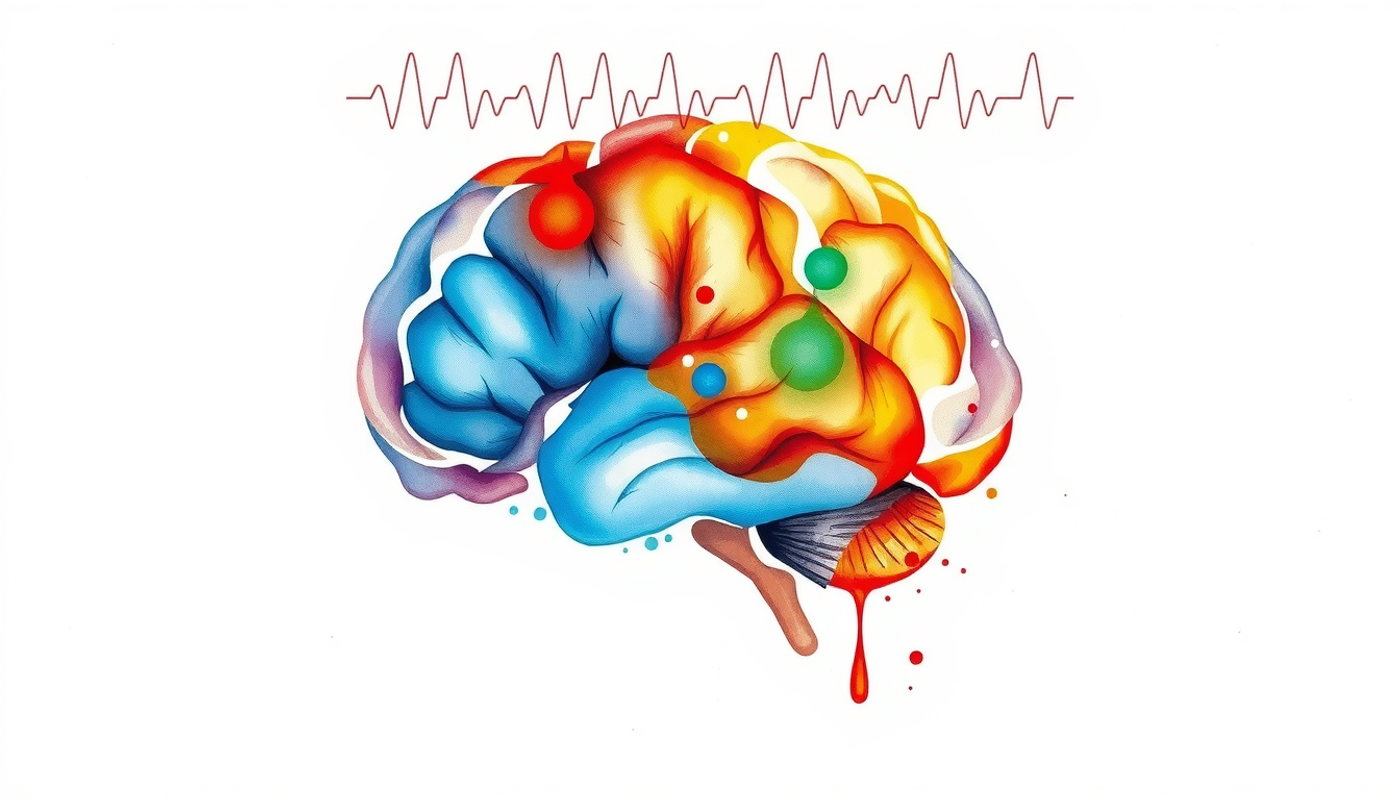
The dorsolateral prefrontal cortex, or dlPFC, a region behind the forehead critical for holding and manipulating information, shows a striking pattern under increasing working-memory demands. Braver, Cohen, Nystrom, Jonides, Smith and Noll demonstrated this in a 1997 fMRI study using the N-back task [13]. As participants held more items in working memory, from one-back to two-back to three-back, dlPFC activation increased linearly. More items in the mental workspace, more blood flow to the prefrontal cortex. The brain was literally working harder.
But there is a ceiling. When load exceeds capacity, prefrontal activation does not just plateau. It drops. McKendrick and colleagues showed in 2019 that BOLD responses follow a curvilinear pattern: rising with moderate load, then falling sharply under extreme load [14]. This is the neural signature of cognitive overload. The system gives up.
Something equally revealing happens in the brain's default mode network, or DMN. This network, centered on the posterior cingulate cortex and medial prefrontal cortex, is most active when the mind is wandering, daydreaming, or at rest. When a demanding cognitive task begins, the DMN deactivates. The harder the task, the stronger the deactivation. Anticevic and colleagues showed in 2012 that DMN suppression scales with working-memory load [15]. Newton and colleagues confirmed that this pattern extends beyond the classical DMN to additional brain networks [16].
Think of it as a seesaw. When working memory goes up, mind-wandering goes down. The brain cannot do both at full strength. Failure to suppress the DMN during demanding tasks has been linked to cognitive difficulties in ADHD, schizophrenia, and Alzheimer's disease.
Electroencephalography, or EEG, tells a complementary story through brain oscillations. Wolfgang Klimesch's foundational 1999 review in Brain Research Reviews established that frontal-midline theta waves between 4 and 7 Hz increase in power with working-memory demand, while upper alpha waves between 10 and 12 Hz decrease [17]. Theta up, alpha down. This pattern has been replicated across dozens of studies using Sternberg memory tasks, N-back paradigms, and mental arithmetic. A 2024 study in Biological Psychology confirmed that this theta enhancement matures from childhood to adulthood and predicts how efficiently learners handle increasing memory demands [18].
The Pupil That Measures Thought
Perhaps the most elegant biological marker of cognitive load comes not from inside the skull but from the eye. Pupil diameter tracks mental effort with remarkable fidelity.
Eckhard Hess and James Polt discovered in 1964 that pupils dilate during mental multiplication. Daniel Kahneman and Jackson Beatty refined this in 1966 [19], showing that pupil dilation begins 200 to 500 milliseconds after a cognitive event and peaks between 500 and 1500 milliseconds. Harder problems produce larger dilations. When load exceeds capacity, the dilation plateaus or reverses.
The mechanism runs through the locus coeruleus, a tiny brainstem nucleus that releases norepinephrine throughout the cortex. The locus coeruleus drives both pupil dilation and cortical arousal, making pupil diameter a peripheral readout of central cognitive effort. Jackson Beatty's 1982 review in Psychological Bulletin formalized pupillometry as a general index of processing load [20].
A 2025 meta-analysis published by ACM integrating 21 studies and 34 comparisons reported that pupil dilation increased significantly under high cognitive load, with a Cohen's d of 0.72 and a 95 percent confidence interval from 0.37 to 1.07 [21]. In plain terms: the effect is real, consistent, and moderate-to-large. Your eyes betray your mental effort. And researchers can measure it with nothing more than an infrared camera.
Amy Arnsten's work at Yale has shown why this system is so fragile [22]. The prefrontal cortex neurons that sustain working memory fire persistently during delay periods, and this persistent firing depends on optimal levels of dopamine D1 and noradrenergic alpha-2A receptor stimulation. Too little arousal and the network disconnects. Too much, as happens during stress, and the network floods and shuts down. This explains a daily experience that cognitive load theory predicts but rarely discusses: why anxiety destroys working-memory performance. A stressed brain is a brain with reduced working-memory capacity.
Schemas and the Hippocampus: Where Cognitive Load Meets Neurobiology
Cognitive load theory's central claim is that learning means building schemas. For decades, this was a cognitive metaphor. But neuroscience has now identified the biological process.
In 2007, Dorothy Tse and colleagues in Richard Morris's laboratory at the University of Edinburgh published a landmark study in Science [23]. They trained rats to learn flavor-place associations within a spatial schema, a mental map of where different flavors could be found in an arena. Once the schema was established, rats could learn new associations within it astonishingly fast. A single exposure was enough. And the new memories became independent of the hippocampus, the brain's memory formation center, within 48 hours. Normally, this consolidation into neocortex takes weeks.
What does this mean? If a pre-existing schema exists, new information that fits within it is rapidly absorbed and stabilized in long-term memory with minimal demand on hippocampal processing. Without a schema, the hippocampus must do all the heavy lifting, and the process is slow and fragile. This is precisely what cognitive load theory predicts: prior knowledge, stored as schemas, reduces the working-memory demand of new learning.
Recent work has added nuance. A 2025 study in Nature Neuroscience by Zong and colleagues showed that schema representations form in the orbitofrontal cortex in parallel with hippocampal processing, not just sequentially after it [24]. The brain builds schemas through a distributed network, not a single pipeline.
The practical implication is direct. Every stage of memory consolidation, from initial encoding to sleep-dependent replay to long-term storage, is shaped by the presence or absence of prior schemas. When schemas exist, new learning is fast and efficient. When they do not, each new fact taxes working memory as if encountered for the first time.
The Effects: Twelve Experiments That Changed Instruction
Between 1985 and 2003, cognitive load theory generated a catalog of instructional effects, each demonstrated through controlled experiments and replicated across domains and learner populations. These effects are not theoretical predictions. They are laboratory findings.
The worked-example effect was the first [8]. Novices who study fully worked solutions learn more efficiently than novices who solve equivalent problems. This has been replicated in algebra, physics, programming, and medical diagnosis.
The split-attention effect showed that when learners must mentally integrate information from two physically separated sources, a diagram and a textual explanation on different parts of a page, learning suffers [10]. Physically integrating the two sources eliminates the split-attention demand and improves outcomes. Chandler and Sweller demonstrated this in 1992.
The redundancy effect revealed something even more counterintuitive. Adding information that is redundant, such as on-screen text that duplicates spoken narration, actually harms learning [25]. Kalyuga, Chandler and Sweller showed this in 1999. The redundant channel competes for working-memory resources and adds extraneous load.
The modality effect showed that presenting visual information alongside spoken narration is more effective than visual information with written text [26]. Moreno and Mayer demonstrated this in 1999. The explanation lies in Baddeley's model of working memory, which posits separate subsystems for visual and auditory information. Using both channels distributes the load.
The expertise reversal effect was perhaps the most important for practice [27]. Kalyuga, Ayres, Chandler and Sweller showed in 2003 that instructional techniques that help novices can actively harm experts. Worked examples benefit beginners but become redundant for advanced learners, whose existing schemas make the step-by-step guidance unnecessary clutter. The implication: instruction must adapt to the learner's level. What helps at one stage hurts at another.
Additional effects include the completion-problem effect, where partially solved problems with gaps to fill combine worked-example benefits with active engagement (Paas, 1992) [28]; the imagination effect, where advanced learners benefit from imagining procedures rather than studying them (Cooper et al., 2001) [29]; and the isolated-elements effect, where breaking complex material into isolated components before combining them reduces initial overload (Pollock, Chandler and Sweller, 2002) [30].

Why Spacing and Testing Work: Cognitive Load Meets Memory Science
There is a connection between cognitive load theory and two of the most powerful learning techniques ever documented, spaced repetition and active recall. The connection is not obvious, and the two research communities have worked largely in parallel. But the logic is straightforward.
Spaced repetition works because each review session encounters material at a lower intrinsic load than the original learning session. Schemas built during previous exposures compress multiple elements into single chunks. What was once a seven-element problem becomes a two-element problem. Working memory can handle it easily. Robert Bjork's framework of desirable difficulties names spacing, interleaving, and retrieval practice as conditions that slow short-term performance but accelerate long-term retention [31].
Retrieval practice, the testing effect documented by Roediger and Karpicke in 2006 [32], works because retrieving a memory from long-term storage strengthens the schema that contains it. Each successful retrieval consolidates the schema, making it more automatic and less dependent on working-memory capacity in the future.
But there is a critical boundary condition. Chen, Castro-Alonso, Paas and Sweller showed in 2018 that desirable difficulties become undesirable when element interactivity is already high [33]. If the material is so complex that working memory is already near capacity, adding retrieval demands or interleaving pushes the learner over the edge. The difficulty stops being productive and becomes destructive. This explains why testing effects are robust for vocabulary learning, where each item is independent, but often fail to replicate for complex mathematical proofs or clinical reasoning, where element interactivity is extreme.
The molecular basis supports this picture. Kramar and colleagues showed in 2012 that spaced theta-burst stimulation recruits additional dendritic spines that single bouts cannot reach [34]. Smolen, Zhang and Byrne's 2016 review in Nature Reviews Neuroscience described how protein synthesis and CREB-mediated gene transcription, both required for late-phase long-term potentiation, need hours to complete [35]. This is the cellular reason massed practice plateaus. The synaptic machinery needs time between sessions to build new structures.
Multimedia and Medicine: Where the Theory Saved Lives
Cognitive load theory is not just a laboratory finding. It has changed how real institutions teach real people.
Richard Mayer at the University of California, Santa Barbara, built an entire research program translating cognitive load principles into multimedia design. His Cognitive Theory of Multimedia Learning, published across multiple editions of his textbook and handbook [36], operationalized cognitive load theory into twelve design principles: multimedia, modality, redundancy, coherence, signaling, spatial contiguity, temporal contiguity, segmenting, pre-training, personalization, voice, and embodiment. A 2025 meta-analysis in Educational Psychology Review on the seductive-details effect drew on 177 effect sizes from 50 studies and confirmed that irrelevant interesting content, what Mayer calls "seductive details," harms learning with a small but significant negative effect [37]. Those decorative animations in corporate training slides? They are measurably destructive.
In medical education, cognitive load theory has become foundational. Van Merriënboer and Sweller's 2010 paper in Medical Education [38] argued that clinical training should follow a progression from low to high element interactivity: simple cases first, complex cases later, with worked examples and completion problems before unsupervised practice. The BEME Guide No. 53 by Sewell and colleagues in 2019 synthesized 47 studies and confirmed measurable effects of cognitive load management on clinical performance [39].
A 2023 study at Harvard Medical School reported that when preparatory materials for a flipped classroom were redesigned using cognitive load principles, reducing extraneous information and segmenting content, study time decreased without any reduction in performance among approximately 170 first-year medical students [40]. Students learned the same amount in less time because less of their mental effort was wasted on bad design.
The Forty Percent Myth and the Real Cost of Multitasking
A statistic circulates widely in productivity literature: multitasking reduces productivity by up to 40 percent. The number traces to the work of Joshua Rubinstein, David Meyer and Jeffrey Evans, published in 2001 in the Journal of Experimental Psychology: Human Perception and Performance [41]. They showed that switching between tasks involves two measurable costs: a goal-shifting stage ("I need to do task B now") and a rule-activation stage ("the rules for task B are..."). Both consume working-memory capacity. Under repeated switching, the overhead can accumulate to consume a substantial fraction of productive time. Meyer's subsequent interviews and APA summaries cited the 40 percent figure.
From a cognitive load perspective, frequent context-switching is pure extraneous load. Every switch forces working memory to dump the current schema, load a new one, and reorient. The capacity consumed by switching is capacity unavailable for learning or productive work. The American Psychological Association's summary of this research, which remains one of the most widely cited resources on task-switching costs, underlines the point [42]: the human brain does not multitask. It switches, and every switch has a price.
Evolution, Biology, and the Sweller Update
In 2008 and 2019, Sweller made a major theoretical move. Drawing on David Geary's work in evolutionary educational psychology [43], he proposed that cognitive load theory applies primarily to biologically secondary knowledge: the culturally transmitted information that schools exist to teach, such as reading, mathematics, history, and science. Biologically primary knowledge, the skills humans evolved to acquire automatically such as spoken language, face recognition, and basic social interaction, does not impose significant cognitive load because the brain has dedicated, efficient processing systems for it.
This distinction explains a puzzle. Why can a three-year-old learn spoken language effortlessly but struggle with reading at age six? Because spoken language is biologically primary. Reading is biologically secondary. The working-memory bottleneck constrains secondary knowledge acquisition but not primary.
Sweller, van Merriënboer and Paas formalized this in their 2019 update, "Cognitive Architecture and Instructional Design: 20 Years Later" [44]. The paper integrated five principles borrowed from evolutionary biology: information store, borrowing and reorganizing, randomness as genesis, narrow limits of change, and environmental organizing and linking. Working memory's narrow capacity, in this view, is not a design flaw. It is a feature. A system that changed stored knowledge too easily in response to new input would be dangerously unstable. The bottleneck protects the integrity of the knowledge base.
Not everyone agrees. A 2024 paper by Davis in Educational Philosophy and Theory argued that the primary-secondary distinction is "educationally, philosophically, and neurobiologically questionable" [45]. Davis contends that the boundary between primary and secondary knowledge is far less clear than Sweller and Geary assume, and that using evolutionary categories to justify instructional methods risks ideological overreach.

What the Critics Say
Cognitive load theory is among the most cited frameworks in educational psychology. It is also among the most criticized.
The sharpest early critique came from Ton de Jong in 2010, published in Instructional Science [46]. De Jong identified three categories of problems. First, conceptual: the distinction between intrinsic and extraneous load is theoretically clear but empirically slippery. How do you determine, in a running experiment, which elements are intrinsic to the content and which are imposed by the format? Second, methodological: the dominant measurement tool, a single-item nine-point subjective rating scale developed by Paas in 1992 [28], asks learners to rate their perceived mental effort after a task. It is reliable but unidimensional. It cannot distinguish the three load types. Third, practical: cognitive load theory ignores motivation, emotion, metacognition, and social context. A learner who finds material boring will process it differently from one who finds it fascinating, even if the "load" is identical.
Schnotz and Kurschner attacked the additivity assumption in 2007 [47]. They argued that the claim "total load equals intrinsic plus extraneous plus germane" is untestable because the three types cannot be independently measured. Sweller's 2010 element interactivity reformulation was partly a response to this critique.
The most recent challenge came in January 2026 from Sortwell, Gkintoni, Diaz-Garcia and colleagues, who published "Beyond Cognitive Load Theory: Why Learning Needs More than Memory Management" in Brain Sciences [3]. They proposed the Neurodevelopmental Informed Holistic Learning and Development Framework, or NIHLDF, which integrates cognitive science, developmental psychology, neuroscience, and health sciences. NIHLDF emphasizes cognitive reserve and brain endurance training rather than simply minimizing load. It treats cognitive resources as adaptable and context-sensitive rather than fixed. And it explicitly incorporates metacognition, motivation, and social-emotional factors that cognitive load theory has historically ignored.
A companion 2025 paper by Gkintoni, Antonopoulou, Sortwell and Halkiopoulos in the same journal argued for AI and machine-learning extensions to cognitive load theory [48], suggesting that adaptive learning systems should estimate cognitive load in real time and adjust instruction accordingly.
These critiques are serious. They are also, so far, largely conceptual. NIHLDF has not yet been tested in controlled experiments. Its value lies in highlighting what cognitive load theory leaves out, not in replacing its experimental record. The major CLT effects, from worked examples to split attention to expertise reversal, remain among the most robustly replicated findings in instructional design research.

What This Means for Anyone Who Learns
The science of cognitive load theory, stripped of jargon, offers a handful of principles that apply to anyone who studies, teaches, or designs information.
Working memory is tiny. About four new chunks at a time, for about 18 seconds without rehearsal. Every learning session must respect this limit. Cramming thirty new concepts into an hour-long lecture violates the architecture. Breaking those concepts into five groups of six, with practice between groups, works with it.
Bad design wastes mental effort. When information is split across sources, when decorative images distract from content, when redundant narration duplicates on-screen text, working memory burns capacity on integration and filtering instead of learning. Removing the waste does not just make learning easier. It makes more learning possible.
Prior knowledge is not optional. Schemas compress many elements into single chunks, effectively expanding working-memory capacity for familiar domains. A novice and an expert looking at the same material experience completely different cognitive loads. Instruction that ignores this, treating all learners identically, will overload novices and bore experts.
Difficulty is sometimes good and sometimes bad. Spaced retrieval and testing create productive difficulty that strengthens schemas. But only when the material is within working-memory reach. When element interactivity is already high, adding difficulty pushes learners over the edge. The line between productive struggle and destructive overload depends on what the learner already knows.
Stress shrinks the workspace. Anxiety floods the prefrontal cortex with catecholamines that disrupt the persistent neural firing needed for working-memory maintenance. A calm, focused learner has more effective working-memory capacity than an anxious one studying the same material. Environment matters.
And sleep consolidates. The schemas built during waking learning are stabilized during sleep through hippocampal replay and synaptic consolidation. Staying up all night to study destroys the very process that would have turned fragile new connections into durable knowledge.
The Unfinished Story
Cognitive load theory is not finished. It is nearly forty years old, and its core insight, that working-memory limits constrain learning, has proven durable. But the framework needs updating. Measurement remains its weakest link. The field still relies too heavily on subjective ratings when objective measures like pupillometry and frontal theta power are available. The theory says almost nothing about emotion, motivation, or individual differences. And the evolutionary upgrade, while intellectually powerful, rests on a primary-secondary distinction that some scholars find more ideological than empirical.
What seems clear is that any successor framework will not abandon the core claim. Working memory is small. Long-term memory is vast. The transfer between them is the bottleneck. Understanding that bottleneck, and designing instruction that respects it, remains one of the most practical insights cognitive science has produced.
The brain did not evolve to learn algebra or read MRI scans or program computers. But it can do all of those things, if the information arrives in the right format, at the right pace, in the right sequence, with the right support. That is what cognitive load theory taught us. The rest is engineering.

Frequently Asked Questions
What is cognitive load theory in simple terms?
Cognitive load theory says that working memory, the part of the brain that handles new information, can only process about four items at once. If instruction puts too much demand on this limited workspace, learning fails. Good teaching reduces unnecessary mental effort so that more capacity remains for actual understanding.
What are the three types of cognitive load?
Intrinsic load comes from the complexity of the material itself. Extraneous load comes from poor instructional design, such as confusing layouts or irrelevant details. Germane load is the productive mental effort spent building lasting knowledge structures. Effective instruction minimizes extraneous load while supporting germane processing.
How is cognitive load measured?
The most common method is a subjective rating scale where learners rate perceived mental effort after a task. Objective methods include pupillometry, which tracks pupil dilation as a marker of effort, and EEG, which measures frontal theta brain waves that increase with working-memory demand. Each method has strengths and limitations.
Why do worked examples reduce cognitive load?
Worked examples show learners the complete solution process step by step instead of requiring them to solve problems independently. For novices, this eliminates the working-memory cost of means-ends problem solving, freeing mental resources for understanding the underlying principles and building reusable knowledge structures.
Is cognitive load theory still relevant in 2026?
Yes. While recent critiques argue it ignores emotion, motivation, and individual neural differences, its core experimental effects remain among the most replicated findings in educational psychology. A January 2026 paper proposed a successor framework, but this has not yet been experimentally tested. The foundational insight that working memory limits constrain learning remains well supported.