
Introduction
A student reads a chapter three times. She feels confident. The material seems familiar, almost easy. She walks into the exam and fails. Another student reads the same chapter once, closes the book, and tries to recall everything from memory. He struggles. The experience feels uncomfortable, even discouraging. He walks into the exam and scores near the top. The difference between these two students is not intelligence. It is not study time. It is metacognition, the ability to accurately monitor and regulate one's own thinking [1]. The first student was fooled by fluency. The second student trusted effort over comfort. And the science behind this difference reaches from a Stanford developmental psychologist in 1976 all the way to a neuroscientist at University College London who discovered, in 2010, that your ability to know what you know is physically encoded in the structure of your prefrontal cortex [2]. This is the story of how researchers uncovered the brain's capacity to observe itself, why that capacity fails spectacularly in predictable ways, and what it means for anyone trying to learn anything.

The Psychologist Who Named Thinking About Thinking
Before 1976, psychology had no word for the mind watching itself.
Researchers knew children got better at remembering things as they grew older. They knew adults could estimate their own memory limits. But nobody had a name for this capacity, and nobody studied it as a distinct phenomenon. Then John Flavell changed that. Flavell was a developmental psychologist at Stanford University, and his interest started with a deceptively simple question: do children know what they know?
In the early 1970s, Flavell and his colleagues ran a series of experiments with children of different ages [1]. They showed children a set of items and asked them to predict how many they could remember. Preschoolers were wildly overconfident. They predicted they could remember seven, eight, even ten items, then actually recalled two or three. Older children were more accurate. Their predictions closely matched their actual performance. Something was developing between ages four and eight that allowed children to assess their own cognitive abilities with increasing precision.
Flavell called it metacognition. He defined it as cognition about cognition, or more precisely, the active monitoring and regulation of one's own cognitive processes in relation to some goal [1]. The term appeared in print for the first time in his 1976 chapter "Metacognitive aspects of problem solving" in Lauren Resnick's edited volume *The Nature of Intelligence*. By 1979, in a landmark paper in *American Psychologist*, Flavell had expanded his framework into a four-part model: metacognitive knowledge (what you know about your own cognition), metacognitive experiences (the feelings that arise during cognition), goals and tasks, and strategies.
The impact was immediate. Within a decade, metacognition had become one of the most studied constructs in cognitive and educational psychology. But Flavell had opened a door without fully mapping what lay behind it. That would take another researcher, working from a very different angle.

The Two Floors of the Mind
In 1990, two psychologists at the University of South Florida published a chapter that gave metacognition its architectural blueprint.
Thomas Nelson and Louis Narens proposed a model so clean and so powerful that it still dominates the field more than three decades later [3]. They imagined the mind as a building with two floors. The ground floor is the object level. This is where cognition happens: encoding, retrieval, problem-solving, reading, calculating. The upper floor is the meta level. This floor contains a model of what the ground floor is doing. And information flows between the two floors in two directions.
Upward flows monitoring. The object level sends signals to the meta level about how things are going. "This feels easy." "I cannot recall this word." "I think I know this answer." These are not random feelings. They are data, and the meta level uses them to build a running estimate of cognitive performance.
Downward flows control. The meta level sends instructions to the object level based on its monitoring data. "Spend more time on this item." "Switch strategies." "Stop studying and take the test." Control decisions determine how a person allocates cognitive resources.
Nelson and Narens mapped specific metacognitive judgments onto specific stages of learning. Before studying, ease-of-learning judgments predict how difficult material will be. During study, judgments of learning estimate how well something has been encoded. During retrieval, feeling-of-knowing judgments estimate whether an unretrieved item could be recognized if seen again. After retrieval, confidence judgments rate certainty about given answers [3].
This framework matters because it makes a prediction that turned out to be both true and deeply important: if monitoring is inaccurate, control will be wrong. A student who mistakenly feels she knows something (bad monitoring) will stop studying it too early (bad control). A doctor who feels certain about a diagnosis (bad monitoring) will not order additional tests (bad control). The entire architecture is only as good as the accuracy of the upward signal.
What does this mean for everyday learning? Every time a student decides whether to keep studying or stop, whether to reread or self-test, whether to move on or review, that decision is a control process driven by monitoring. If the monitoring signal is distorted, the decision will be wrong. And as decades of research would show, in most people, the monitoring signal is distorted far more often than anyone expected.

The Taxonomy That Organized Everything
Gregory Schraw was not the flashiest researcher in the metacognition literature. But his 1998 paper "Promoting general metacognitive awareness" in *Instructional Science* may have done more than any other single publication to make metacognition usable for teachers and curriculum designers [4].
Schraw took the sprawling body of research that Flavell and Nelson-Narens had created and compressed it into a two-by-three grid. Knowledge of cognition breaks into three types. Declarative knowledge is knowing about yourself as a learner: "I am better at visual material than auditory." Procedural knowledge is knowing how to execute strategies: "I know how to create a concept map." Conditional knowledge is knowing when and why to apply a strategy: "Concept maps help me in biology but not for memorizing vocabulary."
Regulation of cognition also breaks into three types. Planning means setting goals and choosing strategies before starting a task. Monitoring means tracking comprehension and performance during a task. Evaluating means assessing results and strategy effectiveness after a task.
Schraw and Dennison also created the Metacognitive Awareness Inventory (MAI), a 52-item self-report questionnaire that became the most widely used measure of metacognitive skills in educational research [5]. The MAI has been translated into dozens of languages and used in hundreds of studies. Its simplicity is its strength: it gives teachers and researchers a fast way to assess whether students possess the metacognitive building blocks that underlie effective learning.
But self-report measures have a fundamental problem. They ask people to report on the very capacity they may lack. Someone with poor metacognition might not accurately report their own metacognitive skills. This tension between metacognitive self-report and metacognitive performance became one of the field's central methodological challenges, and it would take a neuroscientist to crack it open.

The Brain Region That Knows What You Know
In September 2010, a paper appeared in the journal *Science* that changed how researchers thought about metacognition forever.
Stephen Fleming, then a young neuroscientist at University College London working with Ray Dolan and Geraint Rees, asked a question that nobody had precisely answered before: is metacognitive accuracy encoded in brain structure [2]? Not metacognitive beliefs. Not metacognitive self-reports. Actual metacognitive precision, measured trial by trial.
Fleming designed an elegant experiment. Thirty-two healthy volunteers performed a simple visual task: two briefly flashed screens of visual noise, one containing a slightly brighter patch, and participants had to say which screen contained it. After each trial, they rated their confidence. The task was deliberately calibrated so that everyone performed at roughly the same accuracy level. This was critical. It meant that any differences in metacognitive accuracy could not be explained by differences in perceptual ability.
Some participants were highly metacognitively accurate: when they said they were confident, they were almost always right, and when they expressed low confidence, they were often wrong. Other participants showed little relationship between their confidence and their performance. Their monitoring signal was noisy.
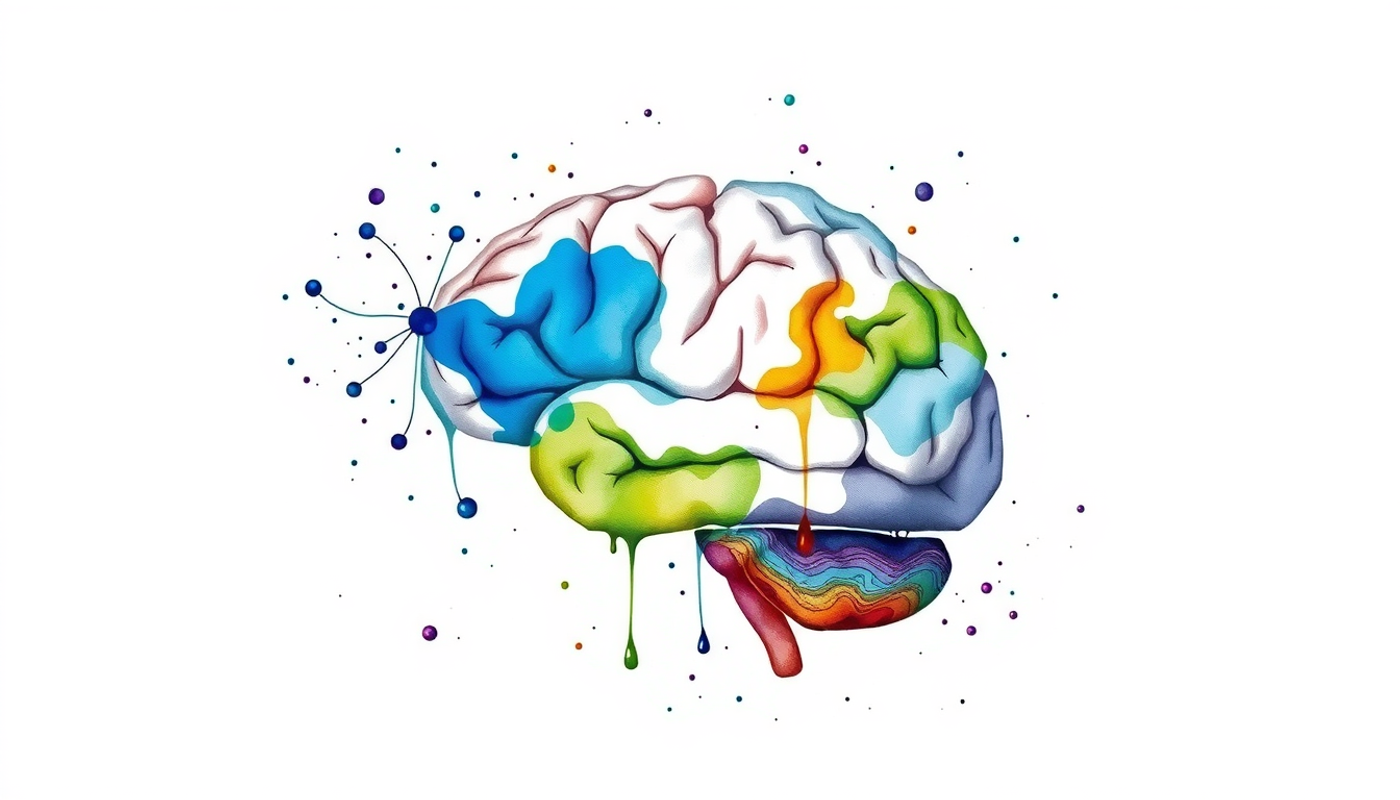
Fleming then scanned their brains using structural MRI. The result was striking. Individual metacognitive accuracy correlated with the volume of gray matter in a specific region: the right anterior prefrontal cortex, Brodmann area 10, also called the frontopolar cortex. The peak of the correlation sat at MNI coordinates [24, 65, 18] [2]. Metacognitive accuracy also correlated with the microstructure of white-matter tracts connecting this region to other prefrontal areas. And critically, none of these correlations existed for first-order perceptual accuracy. The brain had separate hardware for doing the task and for knowing how well the task was being done.
This was the first demonstration that metacognitive ability has a distinct neural substrate, physically separable from the cognitive ability it monitors. Brodmann area 10 is the most anterior part of the human prefrontal cortex. It is also one of the most recently evolved brain regions in primates, disproportionately expanded in humans compared to great apes [6]. The implication was provocative: the capacity to know what you know may be one of the things that makes the human brain uniquely human.
Subsequent work confirmed and extended the finding. Vaccaro and Fleming's 2018 coordinate-based meta-analysis of 47 neuroimaging studies identified consistent activation across metacognitive paradigms in medial and lateral prefrontal cortex, with right dorsolateral PFC particularly implicated in perceptual metacognition and left dorsolateral PFC plus parahippocampal cortex in metamemory [7]. Fleming and colleagues also showed, in a 2014 study published in *Brain*, that patients with lesions specifically in the anterior prefrontal cortex had impaired metacognitive accuracy for perception but preserved memory metacognition, suggesting that metacognitive circuits are at least partially domain-specific [8].
In 2021, Fleming published *Know Thyself: The Science of Self-Awareness* (Basic Books), a book that brought this neuroscience to a general audience. By 2024, his review in the *Annual Review of Psychology* synthesized the field around the concept of "propositional confidence," a computational framework that treats metacognition as a form of probabilistic inference about one's own internal states [9].
When Dolphins and Monkeys Know They Do Not Know
The neuroscience of metacognition raised a question that might seem philosophical but turned out to be deeply empirical: is metacognition uniquely human?
In 1995, J. David Smith, Jeffrey Schull, and their colleagues at the University at Buffalo published a study in the *Journal of Experimental Psychology: General* that opened an entirely new field [10]. They trained a captive bottlenose dolphin named Natua to classify sounds as either high or low pitch. When the sounds were clearly high or clearly low, Natua performed well. But when the sounds were near the perceptual threshold, right at the boundary between categories, something remarkable happened. Natua began using a third response: an "uncertain" option that the researchers had made available. The dolphin was not just classifying sounds. She was monitoring her own uncertainty and choosing to opt out when she did not know.
Six years later, Robert Hampton at Emory University showed that rhesus monkeys display a similar capacity in the domain of memory [11]. Hampton's monkeys performed a delayed matching-to-sample task: see an image, wait, then pick it from an array. Critically, they were given the option to decline the test on any trial. If they declined, they received a small guaranteed reward instead of risking a wrong answer. The monkeys selectively declined trials on which their memory was weak, as if they could assess the strength of their own memory trace before testing it.
Smith and Washburn's (2005) review in *Current Directions in Psychological Science* concluded that at least some non-human species possess "functional features of or parallels to human metacognition" [12]. Great apes and some monkey species show consistent uncertainty monitoring. Rats and pigeons generally do not, though the evidence is mixed. The pattern suggests that metacognition has deep evolutionary roots but is not universal across the animal kingdom. It may require a threshold of prefrontal cortical complexity that only some lineages have crossed.
What does this mean? Metacognition is not a cultural invention. It is not an academic skill taught in schools. It is a biological capacity with a phylogenetic history, wired into the brains of at least some species by millions of years of natural selection. And in humans, it has been elaborated to a degree that allows not just uncertainty monitoring but full-blown reflection on one's own beliefs, strategies, and knowledge states.

The Fifty-Percentile-Point Delusion
If metacognition is a biological capacity, it should work well. Evolution should have tuned it. And for many people in many contexts, it does work reasonably well. But there is a spectacular failure mode, and in 1999, two psychologists at Cornell University put a number on it.
Justin Kruger and David Dunning ran four studies testing students on humor, grammar, and logical reasoning [13]. After each test, participants estimated their own performance relative to their peers. The results were startling. Students in the bottom quartile, scoring around the 12th percentile on average, estimated themselves to be at the 62nd percentile. A fifty-percentile-point gap between reality and self-assessment.
The top performers showed the opposite error, but smaller: they slightly underestimated themselves. Kruger and Dunning framed this explicitly as a metacognitive problem. The skills needed to produce correct answers, they argued, are the same skills needed to recognize what a correct answer looks like. Without those skills, people lack the tools to evaluate their own incompetence. The deficit is double: poor performance plus inability to recognize the poor performance [13].
The Dunning-Kruger effect became one of the most cited findings in psychology, sometimes oversimplified into a meme about stupid people not knowing they are stupid. But the original insight is more nuanced and more useful. It is not about intelligence. It is about metacognitive calibration: the match between confidence and accuracy. And the implications extend far beyond classrooms. In medicine, poorly calibrated physicians are more likely to miss diagnoses because they feel certain when they should feel doubtful. In finance, overconfident traders take risks they cannot accurately assess. In everyday life, the illusion of competence governs study decisions, career choices, and interpersonal judgments.
The data in the table above come directly from Kruger and Dunning's 1999 Study 1 (logical reasoning). The pattern has been replicated across domains and cultures, though some researchers argue that regression to the mean explains part of the effect. The metacognitive interpretation remains the dominant explanation in cognitive psychology.
Why Rereading Feels Good and Fails Badly
The Dunning-Kruger effect is a dramatic example of metacognitive failure. But there is a quieter, more pervasive form that affects virtually every student on earth: the illusion of fluency.
In 2008, Jeffrey Karpicke and Henry Roediger III at Washington University in St. Louis published a study in *Science* that should have changed how every student studies. It did not, because the finding contradicts what studying feels like [14].
They had university students learn Swahili-English word pairs using four different study schedules. Some schedules included repeated study. Others included repeated testing. The key finding: on a final test one week later, students who had been repeatedly tested recalled about 80% of the pairs. Students who had repeatedly studied but not tested recalled about 36%. Testing was more than twice as effective as restudying. But here is the metacognitive twist: students' predictions of their own performance showed no difference between conditions. Students who restudied felt just as confident as students who tested. Their metacognitive monitoring was blind to the most important variable in their own learning.
Dunlosky, Rawson, Marsh, Nathan, and Willingham confirmed the broader pattern in their 2013 review of ten learning techniques published in *Psychological Science in the Public Interest* [15]. The two most popular student strategies, rereading and highlighting, received low utility ratings. The two highest-rated strategies, practice testing and distributed practice, are precisely the ones that feel the most difficult.
Asher Koriat's cue-utilization theory (1997) explains why [16]. Metacognitive judgments are not direct read-outs of memory strength. They are inferences based on cues. When you reread a passage, the text feels familiar. Processing is smooth. These cues of processing fluency feed upward through Nelson and Narens' monitoring channel and create a judgment of learning that says: "I know this." But fluency is a terrible predictor of long-term retention. It tells you that you can recognize the material now. It tells you nothing about whether you can recall it from memory next week.
Retrieval practice, by contrast, feels hard. You close the book and try to remember. The experience is effortful, sometimes frustrating. The cues it sends upward are signals of difficulty. Paradoxically, those signals are far more accurate predictors of durable learning. Difficulty during study, as Robert Bjork, John Dunlosky, and Nate Kornell argued in their 2013 *Annual Review of Psychology* paper, is often a "desirable difficulty" that creates deeper encoding [17].
This is the core connection between metacognition and effective studying. Every decision about how to study is a metacognitive control decision driven by monitoring. If the monitoring signal confuses ease with learning, the student will choose strategies that feel productive but are not. Understanding this single principle changes how people allocate their study time and explains why some learners consistently outperform others with less total effort.

The Broken Mirror: When Metacognition Fails in Mental Illness
Metacognition is not just an academic concept. When it breaks down, the consequences can be devastating.
In schizophrenia, metacognitive deficits are not peripheral symptoms. They sit at the center of the disorder. Paul Lysaker and his colleagues at the Indianapolis VA Medical Center have spent two decades documenting how people with schizophrenia struggle not just with cognition but with the capacity to form integrated representations of themselves, their mental states, and the mental states of others [18]. Lysaker developed the Metacognition Assessment Scale-Abbreviated (MAS-A) and a manualized therapy called Metacognitive Reflection and Insight Therapy (MERIT) specifically targeting these deficits. Meta-analyses show significant associations between metacognitive abilities and psychosocial functioning across schizophrenia samples.
A separate line of work led by Steffen Moritz at the University of Hamburg produced Metacognitive Training (MCT) for psychosis, targeting specific cognitive biases such as jumping to conclusions and bias against disconfirmatory evidence. MCT is freely available in 33 languages through clinical institutions and has been adopted internationally [19].
In obsessive-compulsive disorder (OCD), metacognition takes a different pathological form. Adrian Wells and Costas Papageorgiou showed in 1998 that metacognitive beliefs, particularly beliefs about the importance and danger of intrusive thoughts, predict OCD symptoms after controlling for other variables [20]. The metacognitive model of OCD holds that the problem is not the intrusive thought itself (everyone has those) but the meta-belief that having the thought is dangerous, meaningful, or morally equivalent to acting on it. This "thought-action fusion" is a metacognitive distortion.
Wells extended this framework into a complete therapeutic system: Metacognitive Therapy (MCT). His 2009 book *Metacognitive Therapy for Anxiety and Depression* (Guilford Press) laid out the Self-Regulatory Executive Function (S-REF) model [21]. The central idea: psychological disorders are maintained by a transdiagnostic Cognitive Attentional Syndrome (CAS) consisting of perseverative worry and rumination, threat-focused attention, and maladaptive coping strategies, all driven by dysfunctional metacognitive beliefs. MCT targets the beliefs, not the content of thoughts.
How effective is it? Normann and Morina's 2018 systematic review and meta-analysis of 25 MCT studies reported an effect size of Hedges' g = 2.06 compared to waitlist controls and g = 0.69 compared to cognitive-behavioral therapy at post-treatment [22]. These are large effects by any standard. Multiple randomized controlled trials have shown MCT to be at least as effective as CBT for generalized anxiety disorder and major depression, with several head-to-head trials favoring MCT.
In Alzheimer's disease, metacognitive failure takes the form of anosognosia, clinical unawareness of one's own cognitive decline. Up to half of patients with Alzheimer's dementia display anosognosia, which complicates diagnosis, caregiving, and treatment compliance. Cosentino and colleagues (2016, *Cortex*) demonstrated that the accuracy of online predictions for memory performance is specifically lower in individuals with anosognosia compared to aware patients, independent of global cognition or memory performance [23]. The deficit is in the monitoring system, not in the memory system itself.

A Child Learns to Watch Her Own Mind
When does metacognition emerge?
The developmental timeline is one of the most fascinating aspects of the field, and it shows that the capacity to monitor one's own cognition builds slowly across childhood, with different components maturing at different rates.
At age three to four, children begin showing the earliest signs of metacognitive monitoring. They can distinguish between "knowing" and "guessing" in simple tasks, though their predictions of their own performance remain poor [1]. Flavell, Friedrichs, and Hoyt's classic 1970 study showed that preschoolers wildly overestimate their memory span, while older children's predictions are increasingly calibrated.
At age five to seven, theory of mind consolidates. Children pass false-belief tasks, demonstrating the ability to represent other people's mental states as different from their own. The metacognitive vocabulary expands: children reliably use and understand words like "remember," "forget," "think," "know," and "guess." Flavell (1999) and Misailidi (2010) argued that theory of mind provides the conceptual scaffolding on which metacognition is built [24].
At age eight to ten, reliable judgments of learning emerge. Children begin allocating study time differentially, spending more time on harder items, a sign that monitoring is becoming functionally connected to control. Comprehension monitoring also improves, though it remains immature.
During adolescence, metacognitive regulation matures alongside the anterior prefrontal cortex, which has the most protracted developmental trajectory of any cortical region in humans. Planning, strategy selection, and self-evaluation become more sophisticated. But even adults show systematic calibration errors, as the Dunning-Kruger literature demonstrates.
Can metacognition be trained? The evidence is unambiguous. Multiple meta-analyses have shown that explicit metacognitive instruction reliably improves both metacognitive skill and academic performance. De Boer, Donker, Kostons, and van der Werf (2018) meta-analyzed 48 metacognitive strategy instruction interventions and found a Hedges' g of 0.50 at post-test, rising to 0.63 at follow-up [25]. Donker and colleagues (2014) found effects ranging from g = 0.36 for reading to g = 1.25 for writing [26]. A 2025 meta-analysis by Hidayat, Saad, and Wewe in *Cogent Education* reported an overall effect size of 1.11 standard deviations for mathematics achievement [27].
The message from these data is hard to miss. Metacognitive training does not just help a little. It produces some of the largest effect sizes in the entire educational intervention literature. And the benefits persist or grow at follow-up, suggesting that what students learn is not a trick but a transferable skill.

The Dissenting Voices and Open Questions
No scientific story is complete without its skeptics, and metacognition has several legitimate debates still unresolved.
The first concerns measurement. The Metacognitive Awareness Inventory and similar self-report scales conflate beliefs about cognition with actual monitoring accuracy. Signal-detection measures like meta-d prime (meta-d'), developed by Maniscalco and Lau and refined by Fleming and Lau (2014) in *Frontiers in Human Neuroscience* [28], are more rigorous but limited to perceptual and memory paradigms. Rahnev's 2025 systematic assessment in *Nature Communications* evaluated dozens of metacognition metrics and found substantial disagreement between them [29]. The field still lacks a gold-standard measure that works across domains.
The second debate concerns the Dunning-Kruger effect itself. Krueger and Mueller (2002) and subsequent statistical critiques have argued that much of the Dunning-Kruger pattern can be explained by regression to the mean and the better-than-average effect, without requiring a special metacognitive explanation. The strong metacognitive interpretation survives most challenges, but the picture is more nuanced than the popular narrative suggests.
The third question is domain generality. Is metacognition a single, domain-general capacity, or are metacognitive skills domain-specific? Fleming's 2014 lesion study showed that anterior PFC lesions impaired perceptual metacognition but not memory metacognition [8]. This suggests at least partial domain specificity. But Veenman, Van Hout-Wolters, and Afflerbach (2006) found evidence for a "mixed model" in which metacognition is partly general and partly domain-specific [30]. The debate continues.
The fourth open question concerns animal metacognition. The uncertainty-monitoring experiments with dolphins and monkeys are suggestive, but some researchers argue that the behavior could be explained by lower-level associative learning rather than genuine internal-state monitoring. The distinction matters philosophically but may be impossible to resolve empirically, since we cannot ask animals about their subjective experience.
These debates do not undermine the core science. They refine it. The fact that metacognition is difficult to measure precisely does not mean it is not real. The fact that the Dunning-Kruger effect has statistical complications does not mean that poorly calibrated confidence is not a genuine problem. And the fact that we cannot be sure whether dolphins are truly introspecting does not diminish the evidence that the human capacity for self-monitoring is what separates expert performance from novice fumbling.

Metacognition Meets Artificial Intelligence
The rapid rise of large language models has reopened an old question in a new form: can machines think about their own thinking?
In 2022, Kadavath and colleagues at Anthropic published a study titled "Language Models (Mostly) Know What They Know" [31]. They found that larger language models are reasonably well-calibrated on multiple-choice questions when formatted correctly: their stated probability of being correct correlated with their actual accuracy. They could also evaluate the probability that their own open-ended answers were correct. In a computational sense, these models were performing a form of monitoring.
Yin and colleagues (2023) extended this to the harder problem of recognizing unanswerable questions and found that language models remain substantially worse than humans at recognizing what they do not know [32]. Instruction-tuning improved this metacognitive recognition relative to baseline, but the gap persisted.
Does this count as metacognition? That depends on how strict a definition one uses. If metacognition means accurate calibration between confidence and correctness, then yes, some LLMs display something functionally analogous. If metacognition requires phenomenal awareness, a subjective sense of knowing or not knowing, then no current AI system qualifies. The distinction matters for safety: a system that can reliably flag its own uncertainty is safer than one that is uniformly overconfident. The cognitive-science literature on human calibration provides a natural template for evaluating and improving AI reliability.
Hoven and colleagues published a 2025 review in *Nature Reviews Psychology* integrating cognitive neuroscience and clinical perspectives on metacognitive mechanisms [33]. Their framework explicitly bridges the gap between human metacognition research and computational approaches, suggesting that the monitoring-control architecture Nelson and Narens described in 1990 maps naturally onto the "generate-evaluate-revise" loop that engineers are building into modern AI systems.
Seven Strategies That Actually Work
The science of metacognition is not just interesting. It is actionable. Five decades of research have identified specific, evidence-based practices that improve metacognitive accuracy, and by extension, learning effectiveness.
First, replace rereading with retrieval practice. Every time a learner closes the book and attempts to recall information from memory, two things happen simultaneously: the memory trace strengthens (the testing effect), and the monitoring signal becomes more accurate (the metacognitive benefit). Roediger and Karpicke (2006) demonstrated that retrieval practice produced roughly twice the long-term retention of repeated study [34].
Second, use delayed judgments of learning instead of immediate ones. Koriat's cue-utilization research showed that judgments made immediately after study are heavily contaminated by fluency cues. Judgments made after a delay are far more accurate because they must rely on actual memory retrieval rather than residual activation [16].
Third, practice confidence calibration explicitly. Before answering a practice question, write down a 0 to 100 percent confidence rating. After grading, plot confidence against correctness. A well-calibrated learner shows a diagonal line: 70% confident answers are correct 70% of the time. Most learners show systematic overconfidence. Seeing the mismatch graphically is itself a metacognitive training exercise.
Fourth, use exam wrappers. After every test or practice session, answer three questions: What mistakes did I make and why? Which study strategy worked best? What will I do differently next time? This structured reflection, sometimes called a "wrapper" because it wraps around the learning event, forces the kind of evaluative metacognition that Schraw identified as the third component of cognitive regulation [4].
Fifth, distribute practice across time. Spaced repetition is the practical implementation of two metacognitive principles: difficulty creates learning (the desirable-difficulties framework), and accurate monitoring requires separating fluency from actual retrieval strength. Modern spaced repetition algorithms adjust review intervals based on individual performance, operationalizing the Nelson-Narens control loop in software.
Sixth, self-explain while studying. When encountering new information, pause and explain it to yourself in your own words. Self-explanation forces active processing and immediately reveals gaps in understanding that passive reading masks.
Seventh, teach it. The protégé effect shows that preparing to teach material produces deeper processing and better monitoring accuracy than preparing to be tested on it. Teaching requires organizing knowledge, anticipating questions, and filling gaps, all of which are metacognitive operations.

Conclusion
Metacognition is not a study hack. It is not a self-help buzzword. It is a biologically grounded cognitive capacity with a specific neural substrate, a developmental trajectory, an evolutionary history, and a measurable impact on human performance that ranks among the largest effects in educational science. From Flavell's preschoolers who could not predict their own memory spans to Fleming's MRI scanner revealing the frontopolar cortex as the seat of introspective accuracy, from dolphins opting out of uncertain judgments to Kruger and Dunning documenting the fifty-percentile-point gap between actual and perceived competence, the science of thinking about thinking has matured into one of the most productive research programs in cognitive science.
The practical implication is straightforward. Every learner, every teacher, every clinician, and every engineer building intelligent systems should pay attention to the accuracy of the monitoring signal. Trust effort over fluency. Test yourself instead of rereading. Make your confidence explicit and check it against reality. The discomfort of not knowing is not a sign of failure. It is a signal that your metacognitive system is working exactly as it should.
Frequently Asked Questions
What is the difference between cognition and metacognition?
Cognition refers to mental processes like remembering, reasoning, and problem-solving. Metacognition is the awareness and regulation of those processes. If cognition solves a problem, metacognition evaluates how well the solving is going and decides whether to change strategy. Nelson and Narens (1990) modeled this as two levels exchanging information through monitoring and control.
Can metacognition be improved through training?
Yes. Multiple meta-analyses show that explicit metacognitive instruction produces medium-to-large improvements in academic performance. De Boer et al. (2018) reported effect sizes of g = 0.50 at post-test and g = 0.63 at follow-up across 48 intervention studies. Effective training methods include self-questioning, retrieval practice, exam wrappers, and structured reflection.
Which brain region is most associated with metacognitive accuracy?
The anterior prefrontal cortex, specifically Brodmann area 10, is the region most consistently linked to metacognitive accuracy. Fleming et al. (2010) showed that gray-matter volume in this region correlates with introspective precision on perceptual tasks, independent of first-order task performance.
What is the Dunning-Kruger effect and how does it relate to metacognition?
The Dunning-Kruger effect is the finding that people with the lowest skill levels tend to overestimate their performance the most. Kruger and Dunning (1999) showed that bottom-quartile performers estimated themselves at the 62nd percentile despite scoring at the 12th. This reflects a metacognitive monitoring deficit: lacking the skills to produce correct answers also means lacking the skills to recognize incorrect ones.
Do animals have metacognition?
Some animals display behaviors consistent with metacognition. Dolphins and rhesus monkeys can monitor their own uncertainty and choose to decline difficult trials, suggesting they evaluate the reliability of their own cognitive states. Rats and pigeons generally do not show this pattern. The evidence suggests metacognition has deep evolutionary roots but requires a threshold of prefrontal cortical complexity.


