
Introduction
A medical student spends four hundred hours memorizing biochemistry. She passes the exam with a near-perfect score. Six months into clinical rotations, a patient presents with symptoms that connect directly to a metabolic pathway she once knew cold. She does not recognize the connection [1]. The knowledge is there. It sat in her memory long enough to ace the test. But it will not travel. It stays stuck in the context where she first learned it, pinned to flashcards and lecture slides, invisible when a real patient is lying in front of her.
This is the problem of transfer of learning. And it is not a small problem. It is, arguably, the central problem of all education. Everything we study, practice, and memorize is supposed to serve a future moment we cannot predict. Yet the research on transfer paints a sobering picture. Most of what people learn does not transfer at all [2]. Not because they forgot it. Because it was encoded in a way that locked it to one context, one format, one set of cues. The knowledge became what philosopher Alfred North Whitehead called, back in 1929, "inert." Present but useless.
For over a century, psychologists have tried to understand why some learning travels and some does not. The story starts with Edward Thorndike training people to estimate the area of rectangles in 1901, passes through underwater dart-throwing experiments and rats building cognitive maps, and arrives at an fMRI scanner in Stockholm where a team watched the striatum light up at the precise moment transfer occurred [3]. This article tells that story. Not as a textbook summary, but as the intellectual detective case it actually is.
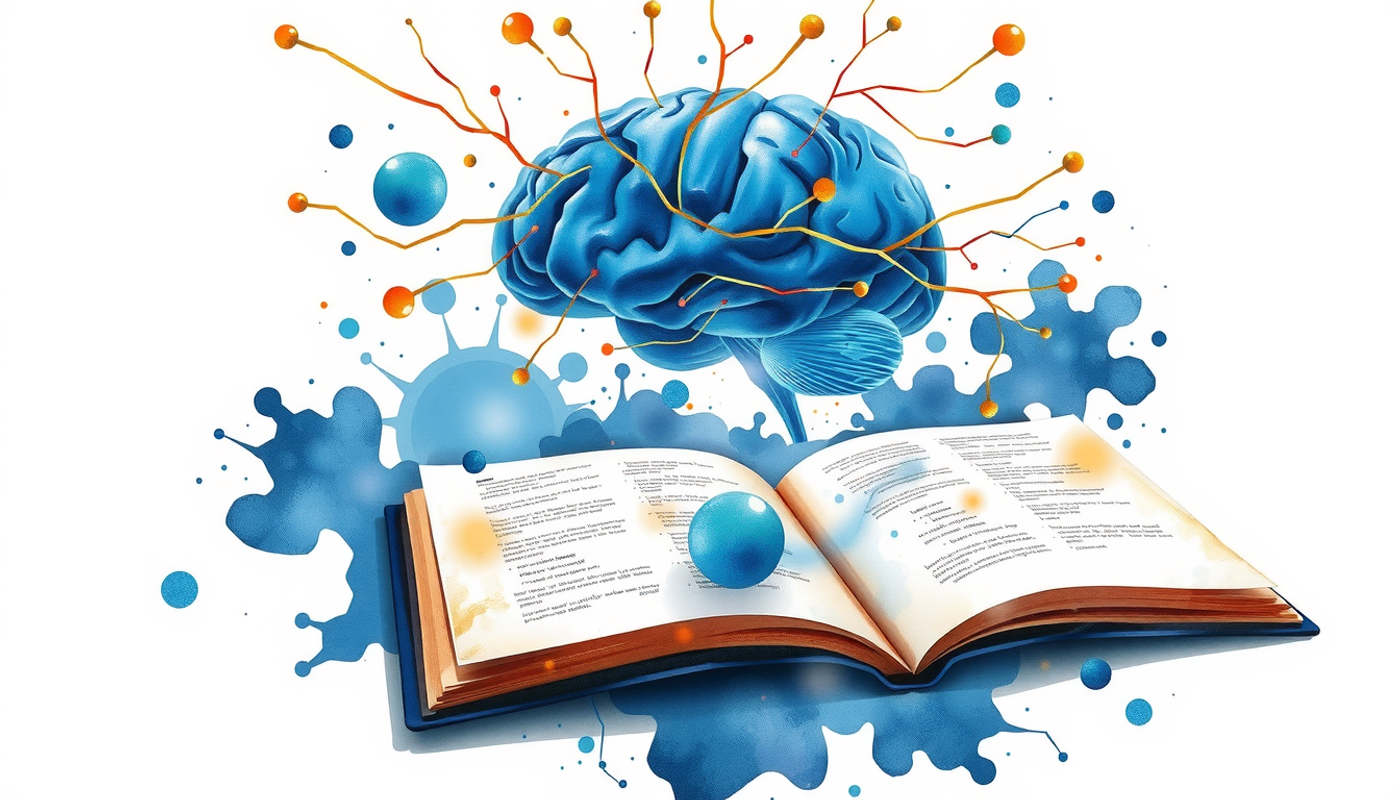
The Rectangle Problem That Started Everything
In 1901, Edward Thorndike and Robert Woodworth published a paper in Psychological Review that quietly demolished the foundation of Western education [4].
The prevailing belief at the time was called "formal discipline." The idea was simple and attractive: studying rigorous subjects like Latin, Greek, or Euclidean geometry would train the mind itself. Not just teach content, but strengthen mental faculties. Logic. Reasoning. Concentration. These strengthened faculties would then transfer to any domain. A student who mastered Latin grammar would become a better thinker in general.
Thorndike did not buy it. He ran a straightforward experiment. Train people to estimate the area of rectangles. Then test whether that training improved their ability to estimate the area of triangles, circles, or irregular shapes. The result was clear. Training on rectangles helped with rectangles. It did almost nothing for other shapes.
From this and a series of follow-up studies, Thorndike proposed his "identical elements" theory: transfer happens only when the original learning and the new situation share specific stimulus-response elements. No shared elements, no transfer. The mind is not a general muscle that gets stronger with exercise. It is a collection of specific habits, and those habits are stubbornly local.
The educational establishment was not pleased. If Thorndike was right, the entire rationale for a classical curriculum collapsed. Why force students through Latin if it only taught them Latin?
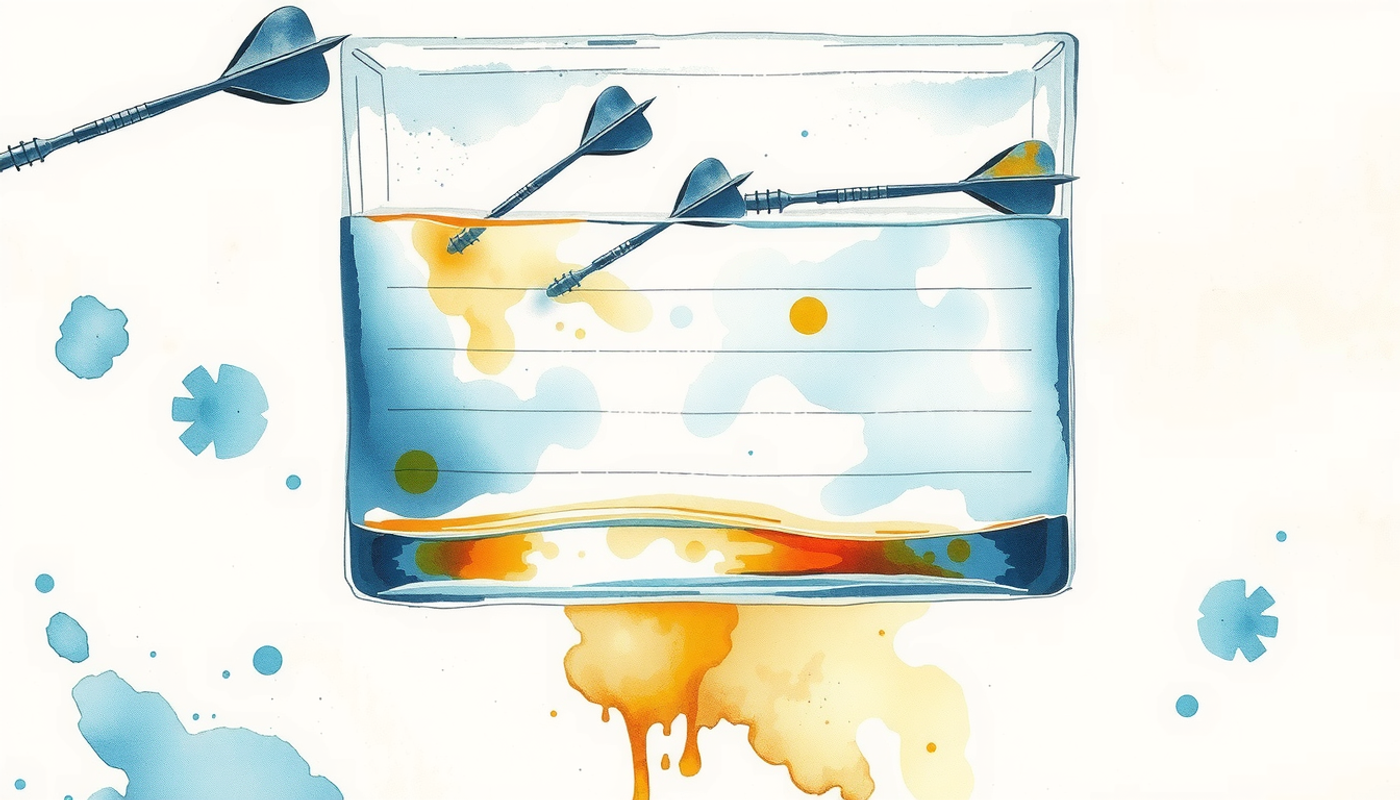
But within seven years, a crack appeared in Thorndike's wall. Charles Judd, working at Yale, designed an experiment involving boys throwing darts at underwater targets [5]. One group was taught the principle of refraction, how light bends when it passes from air to water. The other group just practiced. When the water depth changed, the boys who understood the principle adjusted quickly. The practice-only boys struggled.
Judd's conclusion was the opposite of Thorndike's. Transfer depends not on identical surface elements but on understanding abstract principles. Teach the rule, and the rule travels. Teach the procedure, and the procedure stays put.
This tension, between Thorndike's elements and Judd's principles, would define the next hundred years of transfer research. And neither side was entirely wrong.
A Hundred Years of Searching
The century between Thorndike and brain imaging was not empty. It was full of arguments, clever experiments, and at least two moments of genuine surprise.
The first surprise came from Mary Gick and Keith Holyoak at the University of Michigan in 1980 [6]. They gave participants a story about a military general who needed to capture a fortress. The general could not send his entire army down one road because it was mined, so he split his forces into small groups that converged from multiple directions. Then participants received Duncker's radiation problem: a doctor must destroy a tumor with radiation, but a full-dose beam would kill healthy tissue. The structural solution is the same. Split the radiation into weak beams that converge on the tumor.
Almost nobody transferred the military solution to the tumor problem spontaneously. Even though they had just read the answer. Even though the structural parallel was obvious in hindsight. Without an explicit hint ("think about the general story"), transfer rates were below 20%.
In 1983, Gick and Holyoak found the fix [7]. When participants read two different convergence analogies and were asked to compare them, extracting the shared schema, transfer jumped dramatically. The key was not reading one example. It was comparing multiple examples and pulling out the abstract principle.
David Perkins and Gavriel Salomon at Harvard organized this messy body of research in 1989 [8]. They proposed two distinct routes of transfer. "Low-road" transfer is automatic and reflexive. It happens when a well-practiced skill meets a situation that looks and feels similar. A person who drives cars can drive a van without thinking about it. "High-road" transfer requires deliberate effort. The learner must consciously abstract a principle from one context and apply it to a context that looks nothing like the original. A chess player who applies strategic thinking to business negotiations is attempting high-road transfer. And it is hard.
Perkins and Salomon also proposed two teaching strategies to promote each type. "Hugging" makes the practice context resemble the real context as closely as possible, promoting low-road transfer. "Bridging" asks learners to explicitly identify the underlying principle and imagine where else it might apply, promoting high-road transfer.
By 2002, the field had accumulated enough contradictory evidence that Susan Barnett and Stephen Ceci published a landmark taxonomy in Psychological Bulletin [2]. They showed that studies disagreed about whether transfer "existed" largely because they were measuring different things. Their taxonomy specified nine dimensions, three of content and six of context, on which any transfer episode could be located. Most published demonstrations of successful transfer turned out to be "near" on at least three of six context dimensions. True far transfer, where both content and context are distant, was extremely rare in the evidence.
Then in 1999, John Bransford and Daniel Schwartz proposed a reframing that changed how the field thought about measuring transfer [9]. The standard paradigm, which they called "sequestered problem-solving," gives a learner a novel problem and watches whether they apply prior learning, cold, without help. This drastically underestimates real-world transfer, they argued. In real life, people encounter new situations with access to resources, collaborators, and time to learn. A better measure is "preparation for future learning": does prior learning make you faster and more effective at picking up new information when you get the chance?
The Brain Scanner That Caught Transfer in the Act
For most of the twentieth century, transfer of learning was a purely behavioral concept. You could measure whether it happened. You could not see where it happened inside the brain.
That changed in 2008 when Erika Dahlin, Lars Nyberg, and their colleagues at Umeå University in Sweden published a study in Science that gave transfer a neural address [3].
The design was clean. Twenty-three young adults trained on a letter-memory updating task, a working memory exercise where participants must continuously track which letters are most recent in a stream. They trained five times per week for five weeks while undergoing fMRI before and after training. Then they were tested on two untrained tasks: a 3-back task, which also requires working memory updating, and a Stroop task, which requires inhibition but not updating.
The behavioral result was sharp. Transfer occurred to the 3-back task. Not to the Stroop task.
The neural result was sharper. Transfer was mediated specifically by the striatum, a subcortical structure deep in the brain that sits at the junction of motor planning and cognitive control. The critical finding was that the same striatal region was activated by both the trained task and the 3-back task before training even began. When training strengthened that shared circuit, the benefit flowed to any task that used the same circuit. Tasks that did not share the circuit got nothing.
One more finding sealed the argument. Older adults, whose striatal response was already attenuated, showed neither the training gain nor the transfer [3]. The biological hardware for transfer was weaker, and transfer failed.
Tobias Salminen and colleagues replicated this in 2016 using dual n-back training [10]. Transfer to an untrained updating task was again predicted specifically by change in striatal activation, not by activity in the broader frontoparietal network. The conclusion is now the consensus: transfer requires overlapping process-specific circuits. No circuit overlap, no transfer.
This is why "brain training" games rarely produce real-world cognitive benefits. The trained game and real-world cognition do not share the same specific neural circuits.
Two Systems for One Job
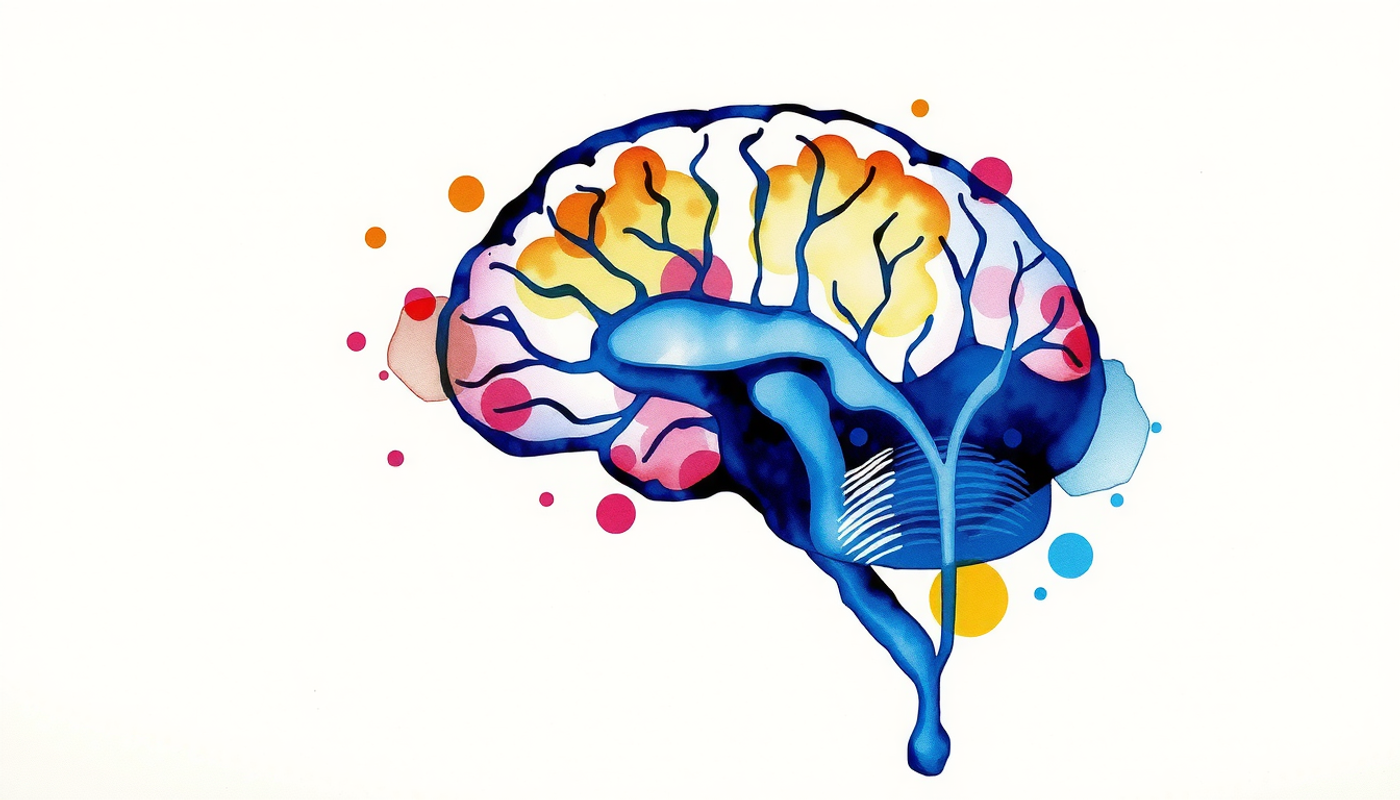
The striatum handles procedural transfer, the kind that happens when two tasks share processing machinery. But there is a second transfer system in the brain. This one handles the extraction of abstract structure from experience.
In 2007, Dorothy Tse, Richard Morris, and their colleagues at the University of Edinburgh published a remarkable experiment in Science [11]. They trained rats for weeks on a paired-associate task: specific flavors were always found at specific locations in an arena. Over time, the rats built what the researchers called a "schema," a structured mental model of which flavor goes where.
Then the researchers introduced entirely new flavor-location pairs. In rats with an established schema, these new pairs were learned in a single trial and consolidated within 48 hours, a process that normally takes weeks. The schema acted as a scaffold. New information that fit the existing structure was absorbed almost instantly.
The brain regions involved were the hippocampus and medial prefrontal cortex (mPFC). Inbal Bethus, Tse, and Morris showed in 2010 that this rapid schema-based learning required functional NMDA receptors in the hippocampus [12]. Block those receptors, and one-trial learning disappeared. The schema was still there, but the door for new entries was locked.
In 2022, Veronika Samborska and colleagues at Oxford published the clearest picture yet of how the two brain regions divide the labor [13]. Recording from mice solving structurally identical but physically different problems, they found that mPFC neurons maintained the same abstract representation across all problems. The structure was preserved. Meanwhile, hippocampal CA1 neurons re-coded the specifics of each problem fresh. The details changed. The researchers described it as complementary roles: prefrontal cortex abstracts the common structure among related problems, and hippocampus maps that structure onto the specifics of the current situation.
Human fMRI research tells a consistent story. Dagmar Zeithamova, Alison Preston, and their group at the University of Texas showed that during overlapping encoding of related memories, the degree to which prior memories were reactivated in the hippocampus predicted later novel inference, transfer to relationships that participants had never directly experienced [14].
What does this mean for studying? When you learn something new that connects to something you already know, your hippocampus reactivates the old memory and links it to the new one. That linking is the neural mechanism of transfer. And it only happens if you already have a schema to link to. Isolated facts do not connect to anything.
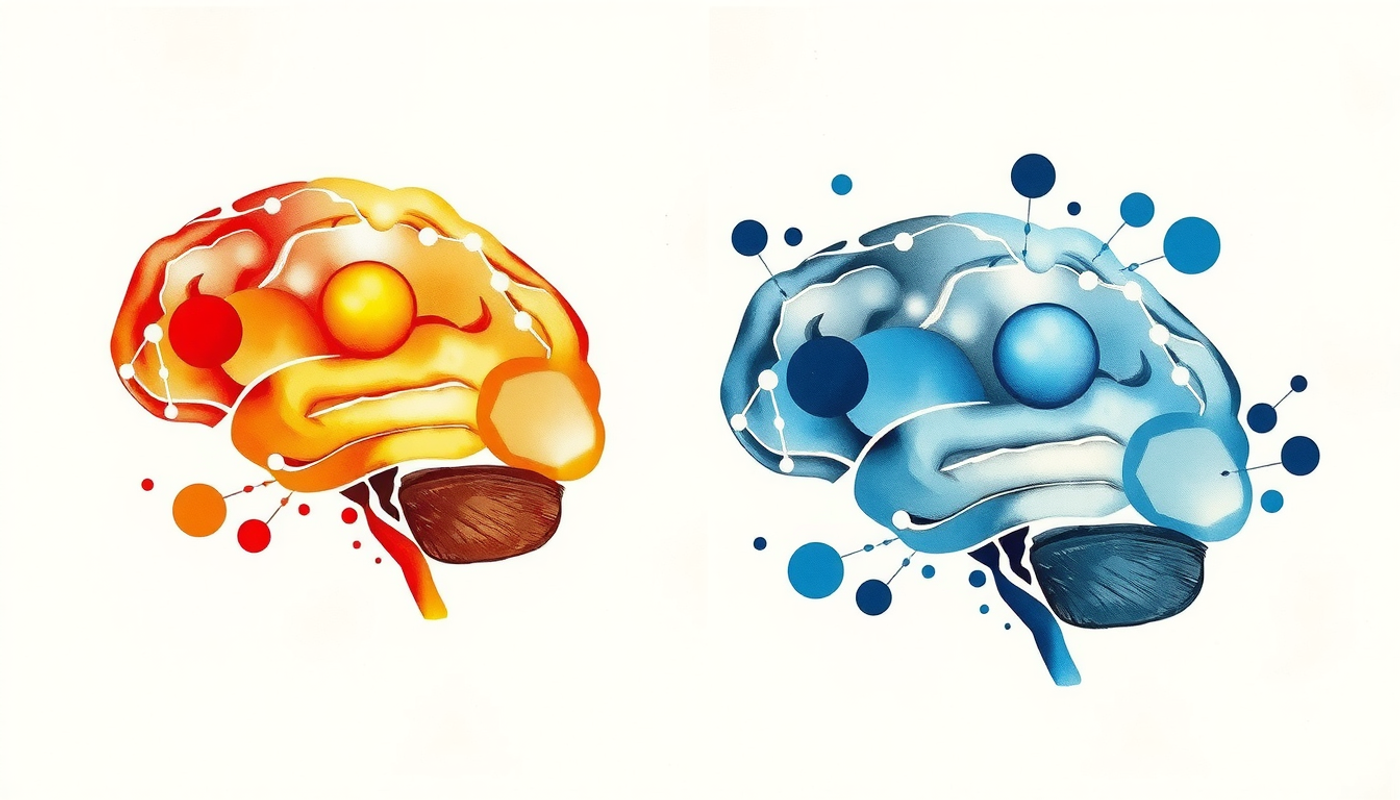
The Chemistry Under the Hood
Three neurotransmitters matter for transfer of learning, and each does a different job.
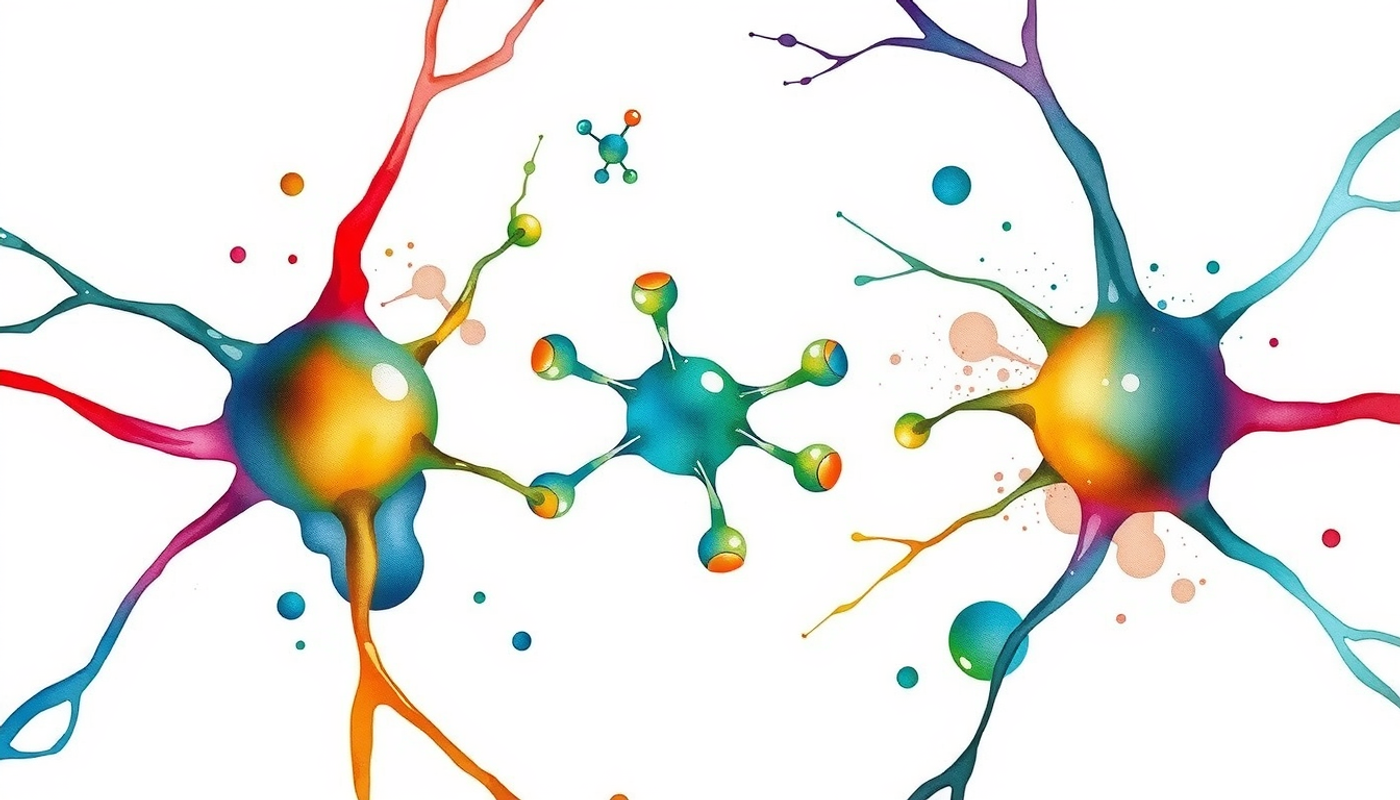
Dopamine acts as a gate. Computational models from Frank, O'Reilly, and colleagues propose that phasic dopamine bursts from the ventral tegmental area to the prefrontal cortex control when working memory gets updated [15]. Too little dopamine, and the gate stays shut. Old information persists. New information cannot enter. Too much, and the gate is too loose. Everything floods in, nothing is maintained. The sweet spot allows selective updating, precisely the operation that Dahlin linked to transfer.
GABA, the brain's primary inhibitory transmitter, sets the threshold for plasticity. Charlotte Stagg and Heidi Johansen-Berg at Oxford used magnetic resonance spectroscopy to show that GABA levels in primary motor cortex drop during motor learning [16]. The size of that drop predicted how much people learned. Think of GABA as a brake. Learning requires releasing the brake so that synapses can strengthen. Kolasinski and colleagues confirmed this at 7-tesla resolution in 2019 [17], finding that higher baseline GABA predicted worse learning. People whose cortical brakes were harder to release had more trouble picking up new skills.
Glutamate, working through NMDA receptors, is the molecular mechanism of long-term potentiation, the cellular process that strengthens synaptic connections [12]. This is the final step. Dopamine opens the gate. GABA releases the brake. Glutamate builds the new connection. Block any one of the three and learning stalls. Block NMDA receptors specifically, as Bethus and colleagues did, and schema-based transfer vanishes.
Why Most Knowledge Stays Trapped
If the brain has dedicated systems for transfer, why does transfer fail so often?
The answer has several layers. The first is encoding. Most learning is encoded with too many contextual details and too few abstract features. When you study organic chemistry in a specific room, with a specific textbook, using a specific set of practice problems, your memory of the material becomes tangled with those details [7]. Change the room, the format, or the question style, and the retrieval cue is gone. The knowledge is technically still in your brain. You simply cannot find it.
Whitehead diagnosed this in 1929 as "inert knowledge," ideas that are technically known but never spontaneously deployed. John Bransford and colleagues at Vanderbilt spent the 1990s studying this problem and found it pervasive. Students could define Newton's laws perfectly but failed to use them when analyzing a real-world motion problem that was not labeled as a "physics question."
The second layer is that people are terrible at noticing structural similarities across different surface features. Holyoak and Koh showed in 1987 that even when participants had just read a perfect analog to a problem, they almost never noticed the analogy unless the surface features also matched [18]. We are surface-matchers by default. Deep structure is invisible unless we are trained to look for it.
The third layer is the most uncomfortable. Far transfer may genuinely be rare. Giovanni Sala and Fernand Gobet published a second-order meta-analysis in 2019, pooling 14 independent first-order meta-analyses, 332 studies, 1,555 effect sizes, and 21,968 participants [19]. The question was whether cognitive training, working memory games, chess, music lessons, video games, produces transfer to untrained cognitive abilities. After correcting for active-control comparisons and publication bias, the far-transfer effect was essentially zero. Gobet and Sala stated it plainly in 2023: cognitive training "is a field in search of a phenomenon" when it comes to general intelligence gains [20].
Does this mean transfer is impossible? No. It means transfer is specific. It follows rules. And those rules are now understood well enough to be exploited.
The Study Techniques That Actually Produce Transfer
If transfer depends on how knowledge is encoded, then the study technique matters more than the study hours. Several techniques have been shown to produce genuine transfer, and they share one feature: they all feel harder than the alternatives.
Robert Bjork at UCLA named this the desirable difficulties framework [21]. Conditions that slow learning during practice but improve retention and transfer in the long run. The word "desirable" is critical. Not all difficulty helps. Difficulty that forces deeper processing does. Difficulty that merely confuses does not.
Retrieval practice is the best-documented transfer technique. Steven Pan and Timothy Rickard published the definitive meta-analysis in 2018 in Psychological Bulletin [22], analyzing 122 experiments with 192 transfer comparisons. The overall transfer effect of testing versus restudy was d = 0.40 (95% CI [0.31, 0.50]). Three factors made it stronger: high initial test accuracy, congruence between practice format and final test format, and elaborated retrieval where learners explained why the answer was correct instead of just stating it.
Henry Roediger and Andrew Butler had already shown in 2011 that repeated testing produced better transfer than repeated studying, specifically on inferential questions that required applying knowledge to new situations [23]. Jeffrey Karpicke and Janell Blunt published a striking result in Science the same year: retrieval practice outperformed concept mapping by 1.5 standard deviations on transfer questions [24]. And concept mapping is already an active strategy.
The mechanism is straightforward. When you retrieve information, you do not simply replay a recording. You reconstruct it. That reconstruction process creates new associations, connects the material to the retrieval context, and builds the kind of flexible representation that can be accessed from multiple routes later.
Interleaving: the Technique Nobody Likes
Interleaving, mixing different types of problems or categories during practice instead of blocking them, is one of the most effective strategies for building transferable knowledge. It is also one of the most hated.
Kelli Taylor and Doug Rohrer showed in 2010 that fourth-grade students who practiced interleaved math problems scored 77% on a delayed test versus 38% for students who practiced in blocks [25]. The effect size was 1.21. Nate Kornell and Robert Bjork found the same pattern for learning to identify painters by style [26]. Interleaving produced better classification of new, never-seen paintings. And yet roughly 78% of participants believed blocking had been more effective.
Brunmair and Richter meta-analyzed 59 studies in 2019 and confirmed a moderate overall interleaving benefit of g = 0.42 [27]. The effect was strongest for visual categorization tasks (g = 0.67) and smaller for math (g = 0.34).
Why does interleaving help transfer? Because it forces discrimination. When you practice one type of problem in a block, you know the solution method before you read the problem. The only question is execution. When problems are interleaved, you must first identify which type of problem you are looking at. That act of identification, comparing the current problem to other recent problems and selecting the right approach, is exactly the kind of abstract structural analysis that Gick and Holyoak showed is necessary for transfer.
Interleaving builds the discriminative contrast that allows learners to tell categories apart. Blocking builds familiarity within a category but does nothing for between-category discrimination. And it is between-category discrimination that you need when a new situation arrives and you must figure out which prior knowledge applies.
Spacing: Time as a Transfer Tool
Spacing practice across days and weeks does more than slow forgetting. It changes how knowledge is stored. Nicholas Cepeda and colleagues synthesized 317 experiments on distributed practice in 2006 and found that the optimal gap between study sessions grows as the target retention interval grows [28]. Studying for a test next week? Review after one day. Studying for an exam next month? Space reviews three to five days apart. Studying for knowledge you want to keep for years? Space reviews weeks apart.
The connection to transfer is neural. Spaced rehearsal allows time-dependent consolidation processes to run. During sleep and quiet rest, the hippocampus replays recent memories and gradually transfers abstract structure to the medial prefrontal cortex [13]. This is precisely the process Samborska described: hippocampus holds the details, mPFC extracts the structure. Spacing gives these offline consolidation mechanisms time to do their work. Massed practice does not.
The practical implication for a self-directed learner is clear. If you study everything in one long session, you build high retrieval strength, the information feels available right now, but low storage strength, it will not last and it will not transfer [21]. Bjork and Bjork's "New Theory of Disuse" distinguishes these two strengths explicitly. Only storage strength supports transfer. And storage strength is built through spaced, effortful retrieval.
The Self-Explanation Bridge
There is one more technique with strong evidence for promoting transfer: self-explanation. When learners pause after reading a worked example or solving a problem and explain to themselves why each step works, they build the abstract understanding that Judd identified in 1908 as the unit of transfer.
John Dunlosky and colleagues reviewed ten study techniques in 2013 and rated self-explanation as "moderate utility" for transfer [29]. Donoghue and Hattie's meta-analysis in 2021 estimated the effect at d = 0.54 [30], which is respectable and meaningful.
Self-explanation works because it forces you to articulate the principle. Not the procedure. The principle. When you ask yourself "why does this step follow from the previous one?" you are doing exactly what Gick and Holyoak showed was necessary for analogical transfer: extracting the abstract schema that connects examples.
Combined with retrieval practice and interleaving, self-explanation creates a study system that encodes knowledge for transfer by default. Retrieve the information. Explain why it works. Practice it interleaved with other information. Space the sessions. Each component attacks a different barrier to transfer. Retrieval builds flexible access routes. Explanation builds abstract schemas. Interleaving builds discriminative contrast. Spacing allows offline consolidation.
What Honest Science Says About the Limits
Any article about transfer of learning that does not discuss limitations is not telling the whole story.
The first limitation is that most published transfer effects are near transfer dressed up as far transfer. Barnett and Ceci showed this clearly. When you measure transfer using questions that look different on the surface but use the same deep structure, you are measuring near transfer, even if it feels like far transfer to the learner [2].
The second limitation is the rodent-to-human gap. Tse's schema experiments in rats and Samborska's mPFC recordings in mice are biologically precise and deeply informative. But citing them as if they directly prove that a student studying calculus can transfer to physics involves a leap. The neural mechanisms are likely conserved across mammals. The specific conditions for triggering those mechanisms in a human classroom are not yet mapped.
The third limitation is individual differences. Transfer is moderated by motivation, prior knowledge, working memory capacity, and age [31]. Dahlin's older adults showed no transfer because their striatal hardware was weaker. Students with low prior knowledge struggle to build schemas because they have nothing to anchor new information to. A study technique that works for experts may fail for beginners.
The fourth limitation is that effect sizes vary by domain. Pan and Rickard's d = 0.40 for retrieval-based transfer is an average. Some experiments find larger effects. Some find none [22]. The transfer benefit of retrieval practice is strongest for verbal and declarative learning. For procedural and motor skills, the picture is less clear.
None of this means transfer is hopeless. It means transfer is conditional. And the conditions are now understood well enough to be deliberately created.

Seven Principles for the Self-Directed Learner
What does the research say to someone studying alone, without a teacher designing curriculum? Here are the principles that have the strongest evidence.
First, replace rereading with retrieval. Every time you finish a section, close the source and write what you remember. Then check. Karpicke and Blunt's 1.5 standard deviation advantage was over concept mapping, not over passive reading [24]. The advantage over rereading is even larger.
Second, interleave your practice. When studying a topic with multiple related subcategories, mix the problems. Do not practice all integration-by-parts problems, then all partial fractions, then all trigonometric substitutions. Mix them. Expect it to feel worse during practice [26].
Third, space your sessions. Even 24 hours between attempts produces large gains over massed practice [28]. Use a spaced repetition system, but treat each review as a prompt to explain, not just a prompt to recognize.
Fourth, force yourself to articulate the principle. After every worked example, every solved problem, every read chapter, ask: "What is the underlying rule here? Under what conditions would it fail?" This is the desk-side version of Judd's underwater-dart insight.
Fifth, practice with varied examples. Two structurally different problems with explicit comparison beat ten variations of the same problem [7]. Variety builds the abstract representation. Repetition builds the surface representation.
Sixth, test yourself with transfer-formatted questions. If the eventual use requires explanation of a novel case, your practice should require explanation of a novel case. Pan and Rickard's response-congruency moderator means that how you practice retrieval determines how you can deploy the knowledge [22].
Seventh, treat performance during practice as a misleading signal. This is the hardest principle. Fluent recall during a study session feels like learning. It predicts almost nothing about transfer. Use delayed self-testing with novel questions as your actual gauge [21].

Conclusion
Transfer of learning is not magic. It is not a general talent. And it is not automatic. It is a specific set of brain processes, involving the striatum for procedural transfer and the hippocampus-mPFC circuit for schema-based generalization, that activate only under specific conditions. Those conditions are now well characterized: deep initial encoding, abstract principle extraction, varied practice contexts, retrieval-based study, interleaved formats, and spaced sessions with time for offline consolidation.
The hundred-year debate between Thorndike and Judd was never fully resolved because both were partly right. Transfer does depend on shared elements, as Thorndike argued, but those elements can be abstract structural principles, as Judd argued, not just surface stimulus-response pairs. The brain builds both kinds of representations, in different circuits, through different mechanisms, at different timescales.
What the research makes unmistakably clear is that studying to pass a test and studying to transfer knowledge are two different activities. One requires retrieval strength. The other requires storage strength [21]. They are built by different practices and they feel different during study. The practices that build transfer feel harder, slower, and less productive. This is not a side effect. It is the mechanism.
Frequently Asked Questions
What is transfer of learning in psychology?
Transfer of learning refers to the process by which knowledge, skills, or strategies learned in one context are applied in a different context. Psychologists distinguish between near transfer, where the original and new situations are similar, and far transfer, where they differ substantially. Research shows near transfer is common, while genuine far transfer is rare and requires deliberate effort during initial learning.
What is the difference between near and far transfer?
Near transfer occurs when the learning context and application context share surface features, such as solving similar math problems with different numbers. Far transfer occurs when the contexts differ substantially, like applying physics principles to economic modeling. Meta-analyses show near transfer is reliably produced by good study techniques, while far transfer from cognitive training approaches zero in controlled studies.
Does retrieval practice improve transfer of learning?
Yes. A 2018 meta-analysis by Pan and Rickard found that testing oneself on material produces a transfer benefit of d = 0.40 compared to restudying. The effect is stronger when initial retrieval accuracy is high, when practice format matches the target format, and when learners explain their answers rather than simply stating them. Retrieval practice builds flexible memory representations.
Why does interleaving improve transfer?
Interleaving mixes different problem types or categories during practice, forcing learners to identify which approach applies before solving each problem. This builds discriminative contrast, the ability to distinguish between similar concepts. A 2019 meta-analysis found an overall interleaving benefit of g = 0.42, with the strongest effects for visual categorization tasks and moderate effects for mathematics.
Can brain training games improve general intelligence?
The current evidence says no. A 2019 second-order meta-analysis pooling 14 prior meta-analyses, 332 studies, and nearly 22,000 participants found that after controlling for active comparison groups and publication bias, the far-transfer effect of working memory training, video game training, and music training on general cognitive abilities was close to zero.


