
INTRODUCTION
Quizlet moved its Learn mode behind the Plus paywall on August 1, 2022. The free tier still lets students flip basic flashcards, but the adaptive study engine that made Quizlet famous now costs $35.99 per year. Even the paid plan meters usage: three tests, twenty Learn rounds, and three solutions per month. The unlimited version runs $44.99 annually. That pricing shift sent millions of students searching for a Quizlet Learn alternative that restores adaptive study without the subscription wall. A landmark 2013 review by Dunlosky et al. in Psychological Science in the Public Interest found that only two study methods earned a "high utility" rating: practice testing and distributed practice. The tools below combine both. Whether they match Quizlet's convenience while fixing its new limitations is the question this article answers.
1. Knowt — The Free Quizlet Replacement Students Found First
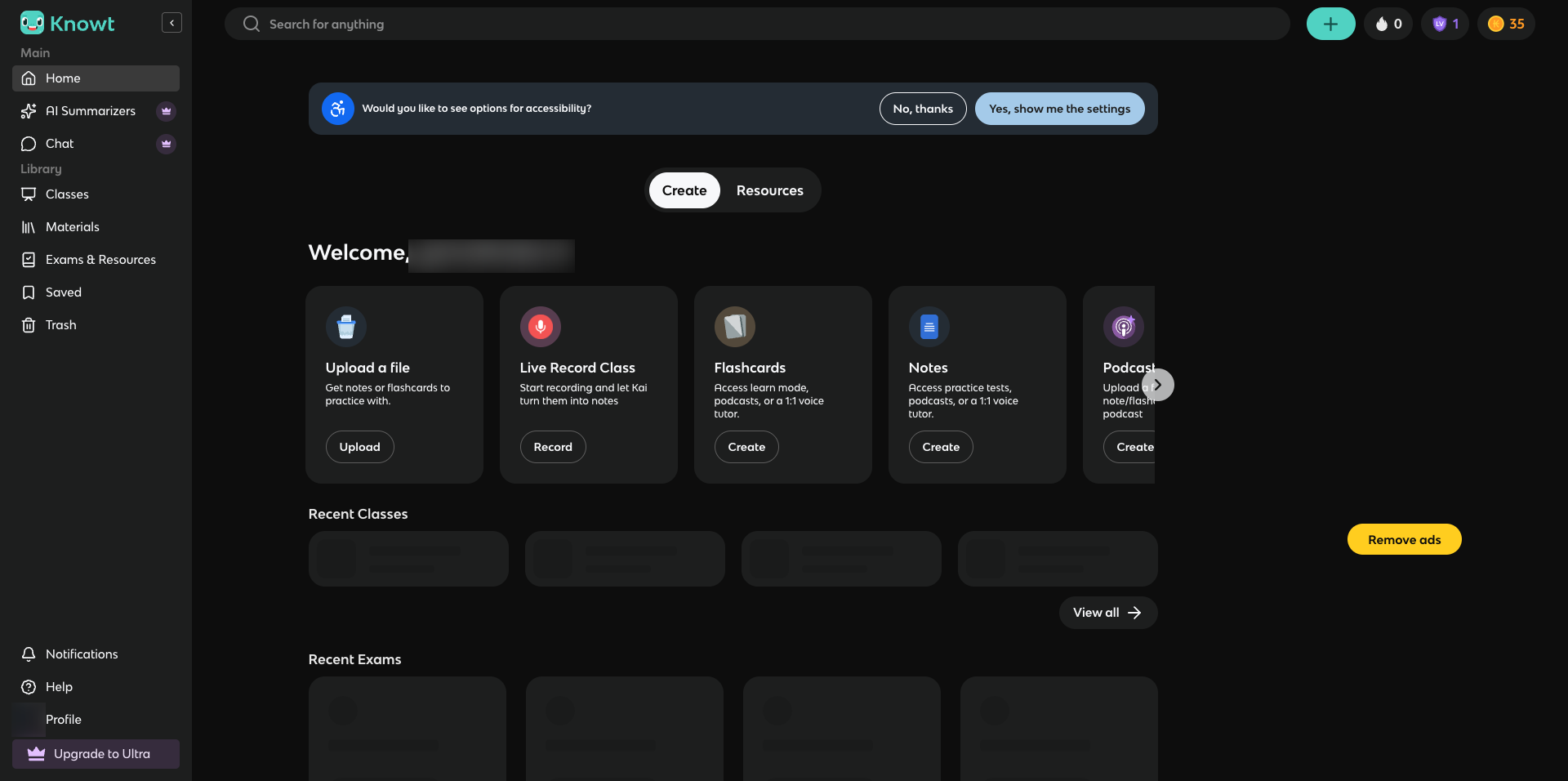
Knowt grew past five million users by offering what Quizlet locked away: free learn mode, free practice tests, and free spaced repetition. Upload notes, PDFs, or lecture videos and the AI generates flashcards and quizzes automatically. A Chrome extension imports existing Quizlet sets in one click, making migration painless.
The AP Exam Hub with curated study materials for nearly every AP subject makes it a strong choice for high school students. The honest caveat: Knowt's spaced repetition algorithm is a basic adaptive system, confirmed not to use FSRS or SM-2. That makes it better for short-term cramming than long-term retention. The free tier runs ads, and the Ultra plan at $9.99 per month billed annually is among the pricier options.
Download: iOS · Android / Web
2. Gizmo — Gamified AI Flashcards With 13 Million Users
Gizmo raised $22 million in Series A funding in April 2026 and now serves over 13 million learners across 120 countries. Founded by Cambridge alumni, it wraps active recall in a Duolingo-style gamification layer: XP points, hearts, streaks, and friend leaderboards. The Magic Import feature converts Quizlet sets, Anki decks, YouTube videos, PDFs, and photographed handwritten notes into flashcards. One million pre-made public decks cover most common subjects. Built-in spaced repetition and quizzing modes keep sessions short and engaging. The limitation is pricing. The free tier is restricted, and the paid plan costs roughly $13 per week with no monthly option, making it one of the most expensive apps in this category.
3. Mindomax — AI Flashcards From PDFs, Audio, and Images
Mindomax attacks the biggest friction point in spaced repetition: card creation takes too long. Upload a PDF, record a lecture, or photograph handwritten notes and the AI generates flashcards in seconds. The app includes a LaTeX formula editor, pronunciation in fourteen languages, and over 450,000 pre-made flashcards covering USMLE, MCAT, GRE, and multiple foreign language decks.
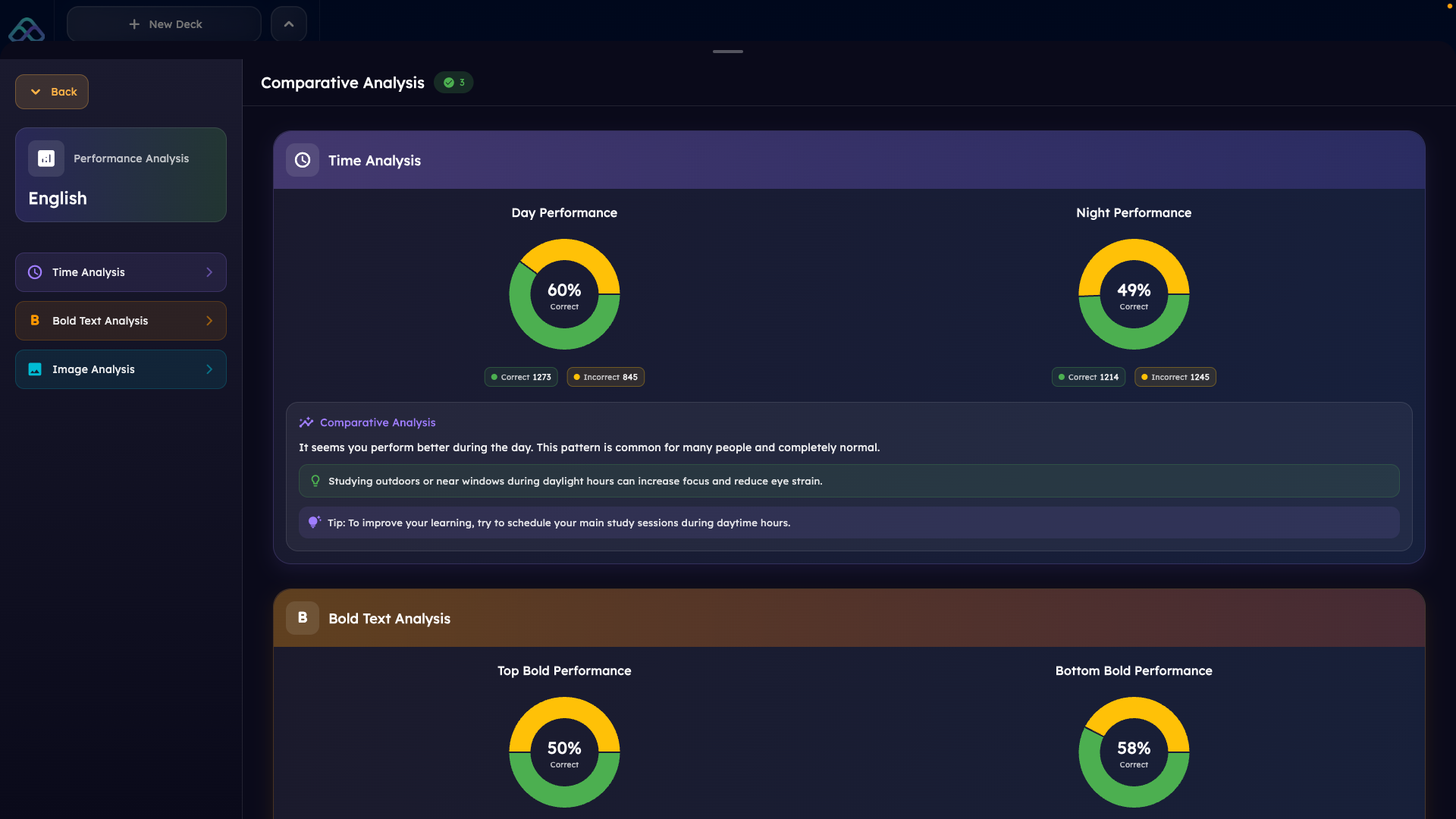
Scheduling uses a proprietary algorithm called the Windcatcher Theory. The free plan allows one box with unlimited cards and three AI requests daily. Premium costs $5.99 per month and unlocks ninety daily AI requests. The honest limitation: as a late-2025 launch, the community is still smaller than established alternatives and there is no Anki import feature yet.
4. Lexie — Real FSRS Spaced Repetition From a Photo
Lexie takes a different approach. Photograph a textbook page, lecture slide, or handwritten notes, and the app generates a full study set with six question types: flashcards, multiple choice, fill-in-the-blank, matching, typed recall, and open-ended practice exams. The standout technical detail is the algorithm. Lexie uses FSRS, the same machine-learning scheduler adopted by Anki in October 2023. FSRS typically reduces total reviews by twenty to thirty percent at the same retention level compared to older algorithms. AI-evaluated practice exams score written answers and provide scaffolded feedback. Three free study sets with all modes unlocked. Pro starts at €4.99 per month billed annually. The main gap: no direct Quizlet import and no desktop app.
5. Scholarly — Source-to-Study With Anki Export
Scholarly is built around a source-first workflow. Upload a lecture PDF, paste notes, add a website URL, or use a YouTube video, and the AI converts it into editable flashcards. The spaced repetition engine uses an SM-2 inspired algorithm that schedules each card individually based on recall confidence. Quiz mode generates multiple-choice, true/false, and short-answer questions automatically. What sets it apart from most competitors is data portability: free export to Anki (.apkg) and Quizlet CSV format, so cards leave when the student does. Focus Mode strips away distractions during study sessions. The free tier is ad-free but has generation limits. The limitation: the platform is still building its library of shared community decks, which remains small compared to established tools.
Download: Web

What Quizlet Learn Actually Does and Why Students Left
Understanding what made Quizlet Learn valuable explains why students care about finding a replacement. Learn mode was an adaptive study engine. It cycled through flashcard terms using multiple-choice, true/false, and written-answer questions, tracking which cards a student struggled with and repeating them more often. The experience felt personalized. It was the closest thing to guided tutoring that a free flashcard app offered.
When Quizlet moved Learn behind the paywall, the free experience shrank to basic card-flipping with ads. A 2024 meta-analysis by Setiawan and Wiedarti in Frontiers in Psychology found that Quizlet produced moderate effects on vocabulary achievement (effect size g = 0.62) and retention (g = 0.74). The tool worked. But in February 2026, Quizlet acquired Coconote, a viral AI note-taker, signaling a pivot toward AI-assisted study coaching on paid tiers. The free Quizlet Learn alternative most students want is one that restores this adaptive loop without locking it behind a subscription.
The Science Behind Why These Alternatives Work
Every tool on this list builds on the same two principles. The first is active recall. When a flashcard appears and the learner retrieves the answer from memory before checking, that retrieval strengthens the memory trace. Roediger and Butler (2011) showed in Trends in Cognitive Sciences that this is among the most reliable methods for building durable retention. Karpicke and Blunt (2011) demonstrated in Science that retrieval practice produced an effect size of d = 1.50, outperforming concept mapping and rereading by a wide margin.
The second principle is spaced practice. Hermann Ebbinghaus mapped the forgetting curve in 1885. A 2015 replication by Murre and Dros in PLOS ONE confirmed that most people forget fifty to seventy percent of new information within a day without review. But each successful retrieval at the right moment flattens the decay. Kang (2016) confirmed in Policy Insights from the Behavioral and Brain Sciences that spacing produces substantially better long-term learning than massed practice.
A 2025 applied meta-analysis by Mawson and Kang further validated the distributed practice effect in real classroom settings. What makes this relevant to choosing a Quizlet Learn alternative: the difference between apps is largely about how well they implement these two evidence-based principles. An app with true interval scheduling that adapts to individual forgetting patterns will outperform one that simply shuffles cards in a random order, even if both call themselves "spaced repetition."

How Algorithms Differ Across These Alternatives
Not all spaced repetition is equal. The algorithms powering these apps range from research-grade schedulers to basic adaptive shuffles, and no competitor ranking for "quizlet learn alternative" currently explains this difference.
FSRS, developed by Junyao Ye and colleagues, uses machine learning trained on roughly 700 million reviews from 10,000 users. According to the open-spaced-repetition benchmark, FSRS outperforms SM-2 in approximately 99.5 percent of tested collections. That does not mean apps without FSRS are useless. Kornell (2009) showed in Applied Cognitive Psychology that any algorithmically spaced review significantly outperforms self-paced study. The practical gap between a good algorithm and a great one is real but incremental compared to the massive gain from using spaced repetition at all.
CONCLUSION
The science has not changed. Retrieval practice plus spacing produces stronger long-term memory than any other study method with empirical backing. What changed is access. Quizlet locked the adaptive engine behind a subscription wall, and a wave of alternatives rushed to fill the gap. Knowt, Gizmo, Mindomax, Lexie, and Scholarly each solve a piece of the puzzle differently. Some prioritize free access. Others focus on algorithm quality or AI generation speed. The right choice depends on what a student values most: price, retention science, or convenience. But the evidence from Dunlosky et al. (2013) is clear. The worst study strategy is not picking the wrong app. It is skipping spaced repetition entirely.
Frequently Asked Questions
Is Quizlet Learn mode still free in 2026?
Quizlet Learn mode is behind the Plus paywall since August 2022. Free accounts can start a limited trial session per study set, but full adaptive Learn access requires Quizlet Plus at $35.99 per year or Plus Unlimited at $44.99 per year. The free tier is limited to basic flashcard flipping with ads.
What is the best free alternative to Quizlet Learn?
Knowt is the most direct free replacement, offering free learn mode, practice tests, and spaced repetition without a subscription. Scholarly also offers a free ad-free tier with export options. The best choice depends on whether short-term exam prep or long-term retention matters more.
Do Quizlet alternatives use real spaced repetition?
Not all of them. Lexie uses FSRS, a research-backed algorithm also adopted by Anki. Scholarly uses an SM-2 inspired scheduler. Knowt and Gizmo use proprietary adaptive systems without published algorithm details. The distinction matters for long-term retention over weeks and months.
Can Quizlet flashcards be imported into other apps?
Yes. Knowt imports Quizlet sets directly via URL. Gizmo supports Quizlet and Anki imports through its Magic Import feature. Scholarly accepts Quizlet CSV exports. Migration typically takes under two minutes per set.
How effective are AI-generated flashcards compared to manual ones?
AI-generated cards save significant time but usually need some editing. Quality depends on source material clarity. Most tools handle straightforward factual content well, while nuanced or conceptual material benefits from human review after generation.


