Introduction
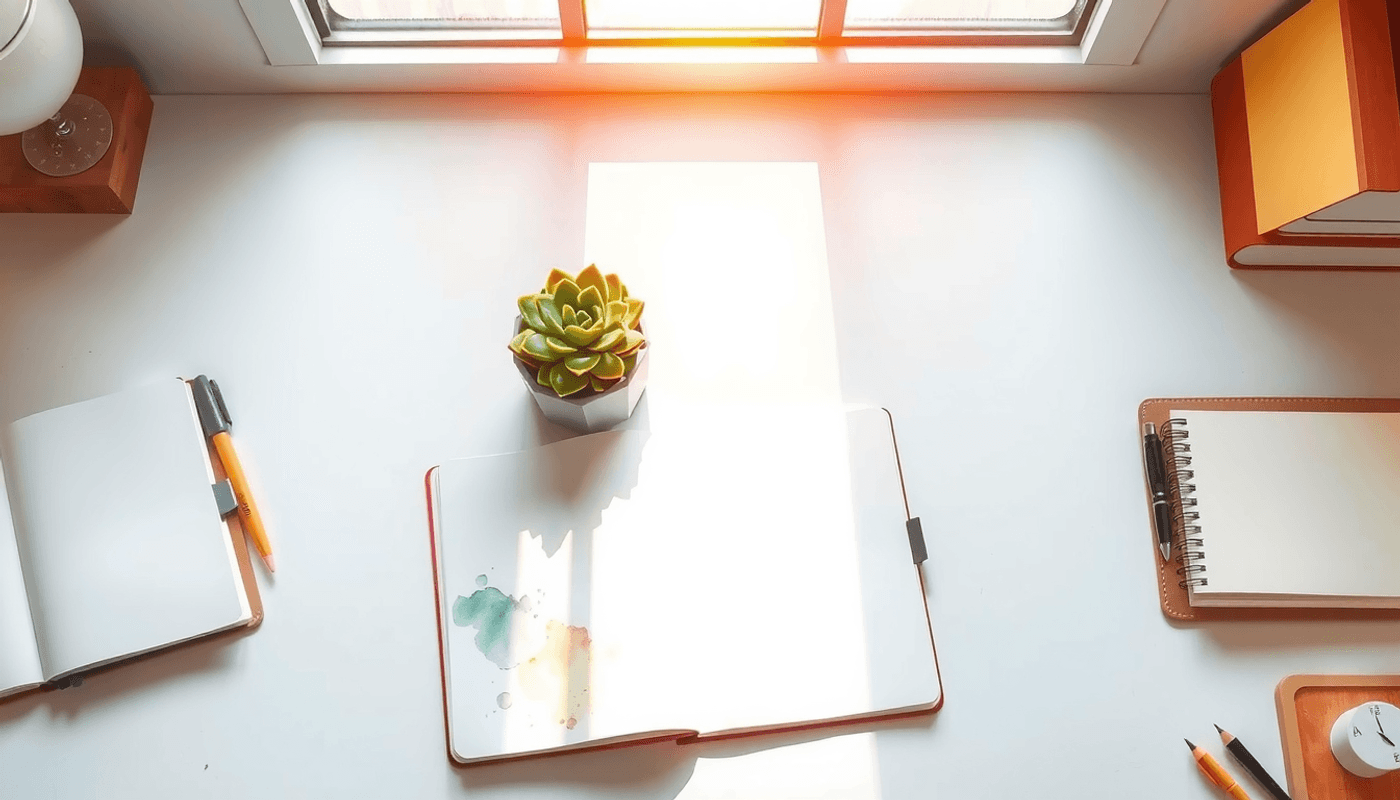
A desk lamp. A chair. A window. A phone face-down. It looks like a study space. But behind the apparent simplicity, every object in the room is pulling at the same limited pool of mental resources you need for learning. The light is too dim, and your prefrontal cortex works harder to maintain alertness. The temperature climbs past 26 degrees Celsius, and your working memory shrinks. Carbon dioxide drifts past 1,000 parts per million in a poorly ventilated lecture hall, and cognitive test scores drop by 15 percent [1]. That phone, even turned off, even ignored, occupies a slice of attention you could have used for the chemistry problem in front of you [2].
Distraction-free learning environments are not a matter of personal discipline. They are a measurable, designable, researchable set of physical and digital conditions that either support or undermine the neuroscience of focused attention. The evidence spans half a century: from Glass and Singer's 1972 discovery that uncontrollable noise leaves a hidden cognitive residue, through Peter Barrett's 2015 HEAD project showing that light, temperature, air quality, color, and visual complexity together explain as much variance in academic progress as teacher quality, to Gloria Mark's finding that a single interruption costs an average of 23 minutes and 15 seconds of full recovery time [3].
This article traces the science behind every variable that makes a learning space either a cognitive ally or a cognitive tax collector.
The Four-Item Bottleneck
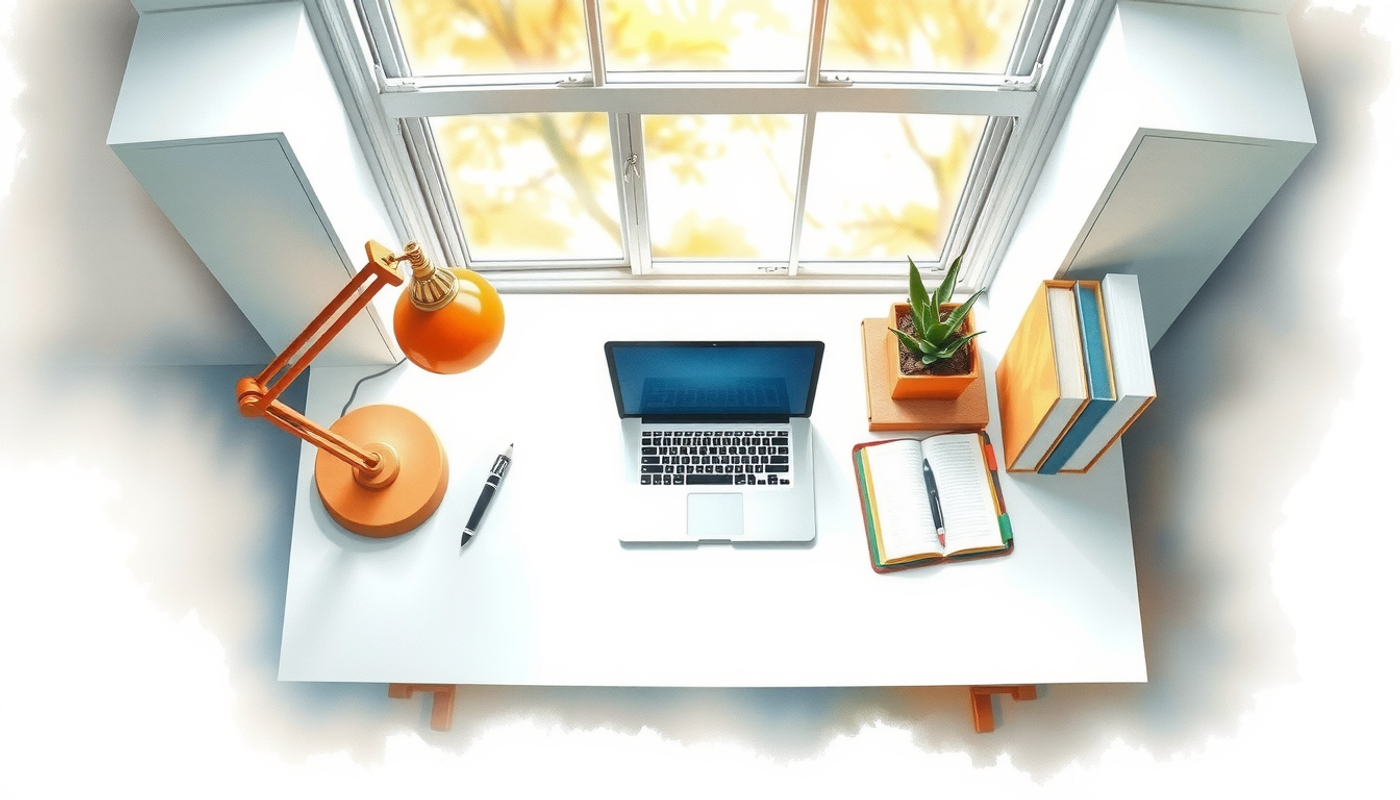
Why does the environment matter at all? The answer sits in a constraint so fundamental that every distraction-free design principle traces back to it.
In 1956 George Miller published his famous paper estimating that working memory holds about seven items. But that number was generous. Nelson Cowan's careful experiments at the University of Missouri in 2001 revised the estimate downward to roughly four chunks [4]. Four. That is the entire workspace your brain has for holding new information, manipulating it, and connecting it to what you already know.
John Sweller formalized the implications for learning in 1988 with Cognitive Load Theory [5]. He drew a distinction that matters enormously for environment design. Intrinsic load comes from the difficulty of the material itself. Germane load is the good work of building new mental schemas. And extraneous load is everything else: poorly designed instructions, confusing layouts, and, critically, environmental noise, temperature extremes, flickering lights, and digital notifications. Every irrelevant stimulus that enters your sensory channels competes for the same four slots.
Nilli Lavie at University College London added an important wrinkle. Her load theory of attention, tested across dozens of experiments and meta-analyzed by de Fockert in 2013, showed something counterintuitive [6]. When working memory load is already high, your ability to filter out distractions actually gets worse. The gatekeeper weakens at the worst possible moment. A student struggling with organic chemistry is more susceptible to the conversation in the next room than a student doing easy review. The environment matters most when learning is hardest.
What does this mean for you? Every object on your desk, every sound from the hallway, every notification you resist but notice, every degree above the comfortable range is stealing from those four precious slots. The goal of environment design is not comfort. It is cognitive protection.
Sound: The Oldest Enemy of Concentration
Noise is the most thoroughly studied environmental distraction. And the evidence is brutal.
The largest investigation came from the RANCH project, a cross-national study funded by the European Commission. Stansfeld, Clark, and colleagues measured the effects of chronic aircraft noise on 2,844 children aged nine and ten near three major airports: Heathrow in London, Schiphol in Amsterdam, and Barajas in Madrid [7]. After controlling for socioeconomic status, mother's education, and air pollution, the results showed a clear linear relationship. For every five-decibel increase in aircraft noise at school, reading comprehension dropped measurably. This was not a threshold effect. It was a dose-response curve. More noise, less learning.
Staffan Hygge at the University of Gävle in Sweden ran a more controlled version in 2003 [8]. He exposed 1,358 adolescents to 15 minutes of 66-decibel aircraft or road traffic noise while they read text passages. One week later he tested their recall and recognition. The students who had studied in noise remembered significantly less than those in quiet conditions. Fifteen minutes of background noise. A full week of impaired memory.
Bridget Shield and Julie Dockrell at London South Bank University and UCL spent decades documenting what happens inside real classrooms. Their measurements, summarized with Connolly in a 2019 paper in the Journal of the Acoustical Society of America, found that comprehension decrements appear once classroom noise reaches about 64 to 70 decibels [9]. For context, the average unoccupied English secondary school classroom already sits near that range.
But not all noise is equal. Glass and Singer's 1972 experiments established a principle that still holds: uncontrollable and unpredictable noise is far more damaging than equally loud predictable noise [10]. Steady rain on a window? Manageable. A construction drill that starts and stops randomly? Devastating. The explanation connects back to working memory: unpredictable noise forces the brain to maintain a monitoring process, consuming cognitive resources even when the noise itself stops.
The World Health Organization and the ANSI/ASA S12.60 standard recommend a maximum of 35 decibels for unoccupied classrooms. For individual study, research suggests that steady low-level white or pink noise around 50 to 55 decibels can mask intrusive speech without itself becoming a distractor. Söderlund and colleagues found in 2010 that white noise at moderate levels actually improved performance in children with attention difficulties [11].
What does this mean? If you are studying in a coffee shop with unpredictable conversation around you, your brain is silently burning resources to monitor those sounds, even if you feel like you have tuned them out. You have not. Your working memory has simply absorbed the cost.
Light: The Signal Your Brain Cannot Ignore
Light does more than help you see your textbook. It regulates alertness, mood, and the hormonal rhythms that determine when your brain is ready to learn.
The most ambitious field study on daylighting in schools came from the Heschong Mahone Group in 1999. Using multivariate regression on data from more than 21,000 students across three American school districts, Capistrano in California, Seattle in Washington, and Fort Collins in Colorado, they found that students in classrooms with the most daylight progressed 20 percent faster in math and 26 percent faster in reading than peers in the least-lit rooms [12]. The original study drew criticism for possible confounding between school quality and daylight availability. But subsequent controlled studies confirmed a smaller but consistent benefit.
Michael Mott and colleagues at the University of Mississippi ran a tighter test in 2012. Eighty-four third graders studied under two conditions: standard classroom lighting at roughly 500 lux and 3,000 Kelvin warm white, and focus lighting at approximately 1,000 lux and 6,500 Kelvin cool blue-enriched white [13]. Students in the focus lighting condition showed significantly greater growth in oral reading fluency. The biological mechanism is straightforward. Blue-enriched light suppresses melatonin production through intrinsically photosensitive retinal ganglion cells, the specialized cells discovered in 2002 that connect the eye directly to the brain's circadian clock rather than to the visual cortex.
For evening study, the calculus reverses. Mohamed Boubekri and colleagues at the University of Illinois found in 2014 that office workers with access to windows received 173 percent more white light exposure during work hours and reported sleeping 46 minutes longer per night than windowless peers [14]. More daytime light, better nighttime sleep, better next-day cognition.
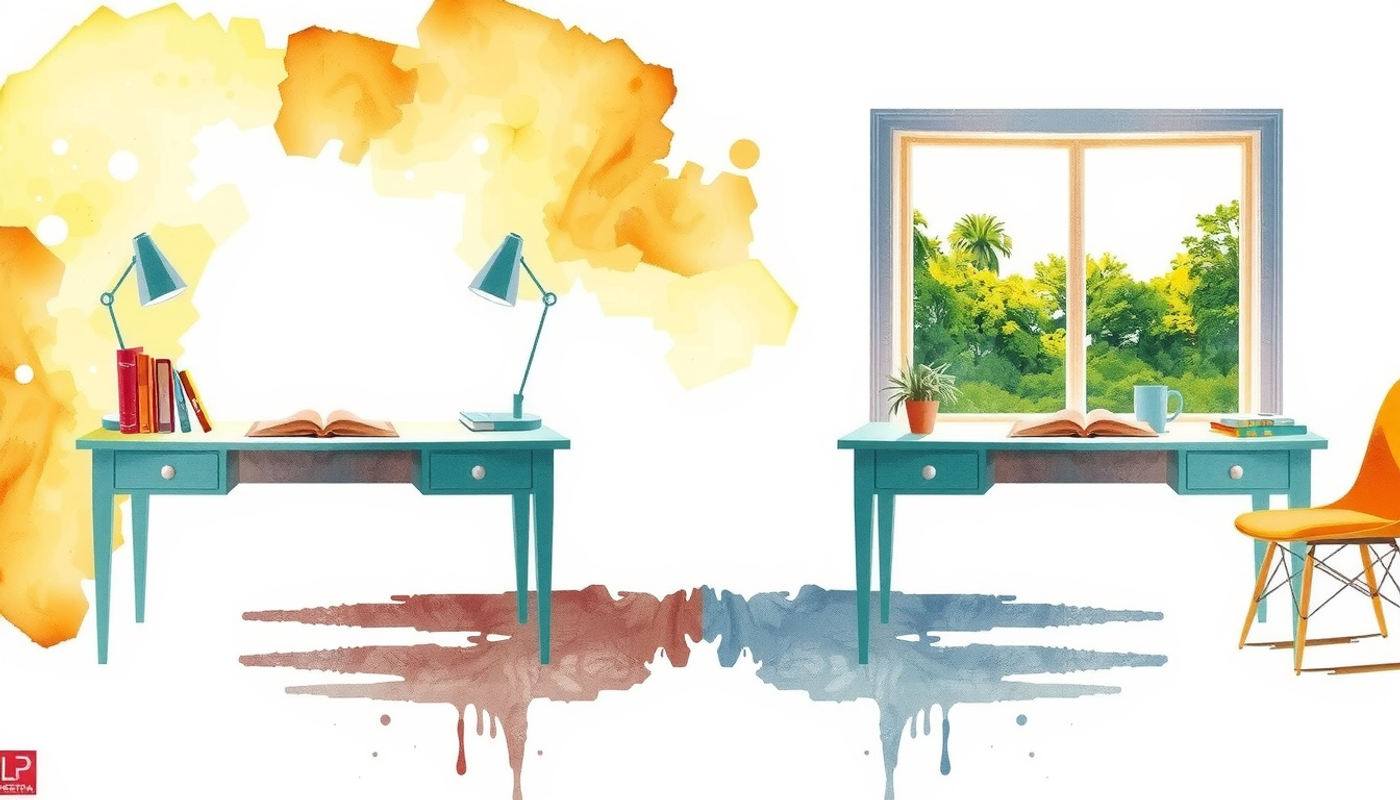
The practical targets for a study space converge across the literature. Ambient illuminance of 300 to 500 lux for general study. Task lighting bringing the page or screen area to 750 to 1,000 lux. Color temperature of 4,000 to 6,500 Kelvin during daytime focus sessions. Below 3,000 Kelvin in the evening to protect the circadian cycle.
The Invisible Gas That Makes You Dumber
Temperature and air quality operate as silent performance modifiers that most students never think about.
Two large meta-analyses mapped the relationship between temperature and cognitive performance. Pilcher, Nadler, and Busch analyzed 515 effect sizes from 22 studies in a 2002 paper published in Ergonomics [15]. They found that hot exposure above roughly 32 degrees Celsius produced a mean 14.9 percent performance decrement on reasoning, learning, and memory tasks. Cold exposure below about 10 degrees Celsius produced an even larger 18 percent decrement. Hancock, Ross, and Szalma extended the analysis in 2007 with 528 effect sizes from 49 studies, confirming the inverted-U curve and identifying inflection points around 25.7 and 35.2 degrees Celsius [16].
The optimal band for cognitive work sits approximately between 20 and 25 degrees Celsius, though Kingma and van Marken Lichtenbelt reported in Nature Climate Change in 2015 that women prefer temperatures about three to four degrees warmer than men.
Air quality is equally consequential. The CogFx study led by Joseph Allen at the Harvard T.H. Chan School of Public Health provided the most controlled evidence. Twenty-four office workers spent six full workdays in environmentally controlled rooms with blinded manipulations of carbon dioxide and volatile organic compound levels [1]. Cognitive function scores on a validated simulation tool dropped approximately 15 percent at 945 parts per million CO2 and roughly 50 percent at 1,400 parts per million, relative to a 550 ppm baseline. Many real classrooms routinely exceed 1,000 ppm by mid-afternoon. Bakó-Biró and colleagues found in 2012 that improving classroom ventilation alone raised student attention task performance by 5 to 7 percent [17].
These numbers explain why so many students feel mentally foggy in afternoon lectures. It is not laziness. It is the air they are breathing.
The Brain Drain in Your Pocket
Of all the environmental variables studied in the last decade, none has attracted more public attention than the smartphone.
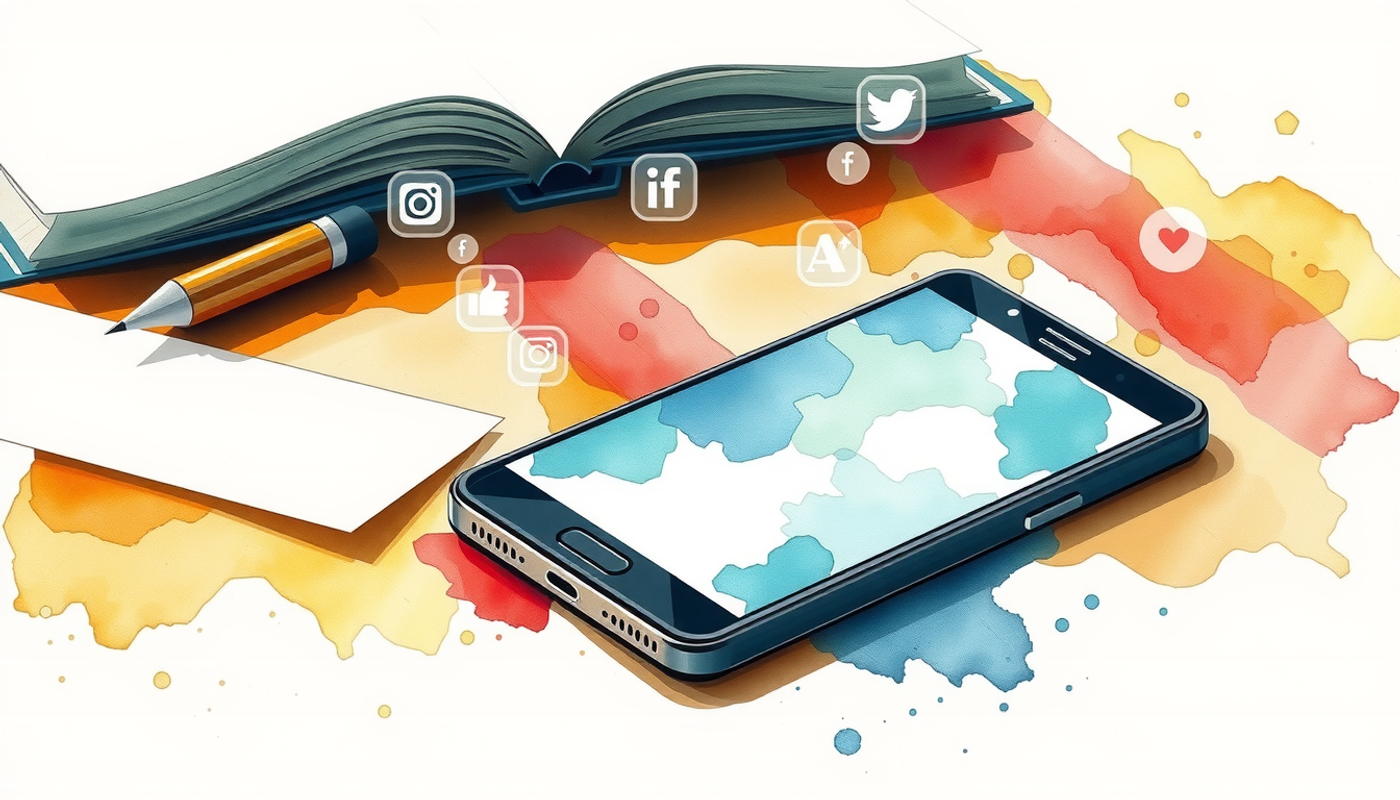
In 2017 Adrian Ward, Kristen Duke, Ayelet Gneezy, and Maarten Bos at the University of Texas at Austin published a study with nearly 800 participants titled "Brain Drain" in the Journal of the Association for Consumer Research [2]. They randomly assigned people to leave their phone in one of three places during a cognitive test: face down on the desk, in a pocket or bag, or in a completely different room. The results showed a clear gradient. People whose phone was in another room scored significantly higher on working memory and fluid intelligence tasks than those whose phone was on the desk. Even when the phone was turned off. Even when no notifications arrived. Even when participants reported not thinking about it.
Ward and colleagues proposed an explanation rooted in attention regulation. The phone's mere presence imposes a small but continuous supervisory cost: the brain must actively inhibit the impulse to check it, and that inhibition consumes working memory resources.
The finding generated enormous media coverage. But science is a self-correcting process. In 2022 Ruiz Pardo and Minda published a pre-registered direct replication with a larger sample and failed to reproduce the effect [18]. A 2023 meta-analysis by Skowronek and colleagues found a small average effect that was more context-dependent and smaller in magnitude than the original study suggested. The honest reading of the evidence in 2026 is this: the brain drain effect is probably real for some people in some situations, but the original 2017 magnitudes represent an upper bound. The safest strategy remains removing the phone from the room entirely, not because the science demands panic, but because the cost of doing so is zero.
What the phone research does confirm unambiguously is the cost of actual notifications. Gloria Mark's program at UC Irvine, spanning field studies and laboratory experiments from 2005 to the present, established three durable findings [3]. Workers and students switch tasks roughly every three minutes on average. After a genuine interruption, full return to the original task takes a mean of 23 minutes and 15 seconds. And people compensate for interruptions by working faster, but at the cost of significantly higher stress and more errors. Learning, unlike office productivity, cannot be rushed. A concept half-understood is worse than a concept not yet encountered, because the half-understanding creates an illusion of mastery that blocks genuine retrieval practice.
The Twenty-Three Minute Tax
The 23-minute recovery time deserves its own closer look because it is one of the most frequently cited and most frequently misunderstood numbers in the distraction literature.
The figure originates from Mark, Gudith, and Klocke's 2008 paper presented at CHI, the ACM Conference on Human Factors in Computing Systems [3]. In a field study of information workers, they found that after an interruption, people did not simply pause and resume. They typically engaged in two to three intervening tasks before returning to the original work. The total elapsed time from interruption to full resumption averaged 23 minutes and 15 seconds.
Subsequent work has added nuance. Iqbal and Horvitz at Microsoft Research found return times ranging from 11 to 25 minutes depending on task complexity and interruption type [19]. Self-interruptions, where a person voluntarily checks email or social media, produced faster recovery than external interruptions, but they occurred more frequently, creating a larger cumulative cost.
Larry Rosen and colleagues at California State University Dominguez Hills provided the most directly relevant data for learning contexts. In 2013 they directly observed 263 middle-school, high-school, and college students studying at home for 15 minutes [20]. On average, students spent only 9.65 of those 15 minutes actually on task. The average focus block before an off-task behavior lasted less than six minutes. And 56 percent of off-task episodes involved communication technology. The students who accessed Facebook during the study period had measurably lower GPAs.
The Multitasking Illusion
Few cognitive myths are as persistent or as damaging to learners as the belief that multitasking works.
The foundational study came from Stanford. In 2009 Eyal Ophir, Clifford Nass, and Anthony Wagner developed the Media Multitasking Index and compared the heaviest and lightest quartiles of media multitaskers among 262 students [21]. The results inverted every expectation. Heavy media multitaskers were significantly worse at filtering irrelevant information. They were worse at switching between tasks. They were worse at suppressing irrelevant memory representations. The very people who believed they were best at juggling multiple streams were measurably the worst at every component of attentional control.
Uncapher, Thieu, and Wagner extended the findings to working memory and long-term memory in 2016 [22]. Uncapher and Wagner's 2018 review in Pediatrics summarized the field: habitual media multitasking is associated with poorer cognitive control, greater impulsivity, and reduced gray matter volume in the anterior cingulate cortex, a brain region critical for conflict monitoring and error detection [23].
For students, the consequences are concrete. Kuznekoff and Titsworth at Ohio State ran a controlled experiment in 2013 with 145 undergraduates watching a 12-minute lecture under three conditions: no phone, occasional texts, and frequent texts [24]. Students without phones wrote down 62 percent more lecture details, scored roughly a full letter grade and a half higher on multiple-choice tests, and produced more organized notes. Their 2015 follow-up showed that content-relevant messages did not impair learning, but irrelevant ones cost 10 to 17 percent on letter-grade scoring [25].
When Schools Banned the Phone
The most direct test of whether removing phones from learning environments improves outcomes comes from quasi-experimental school-wide bans.
Louis-Philippe Beland and Richard Murphy published the most cited study in 2016 in Labour Economics. Using administrative data from England's National Pupil Database covering 91 schools in Birmingham, Leicester, London, and Manchester from 2001 to 2013, they applied a difference-in-differences design to compare exam results before and after phone bans [26]. The average effect was an increase of 6.4 percent of a standard deviation in GCSE exam performance, roughly equivalent to adding an extra hour of school per week. But the distribution of benefits was dramatic. The lowest-achieving quintile of students gained 14.23 percent of a standard deviation. The highest-achieving quintile showed no change.
The interpretation is intuitive. High-achieving students can self-regulate around phone presence. They have stronger working memory, better inhibitory control, and more developed metacognitive strategies. Low-achieving students, who typically have weaker executive functions, benefit most from environmental interventions that do the regulating for them. Phone bans are an equity policy disguised as a technology policy.
Abrahamsson's 2024 Norwegian replication and a 2025 NBER analysis by Figlio and Ozek of statewide bans in the United States corroborated the direction and approximate magnitude of Beland and Murphy's findings [27].
Open Plan Versus Quiet: The Collaboration Trap
A surprising source of evidence about distraction-free environments comes from corporate office design.
In 2018 Ethan Bernstein and Stephen Turban at Harvard published a study in the Philosophical Transactions of the Royal Society B that tracked two Fortune 500 companies before and after they transitioned from cubicles to open-plan offices [28]. They used sociometric badges to measure face-to-face interaction and tracked email and instant messaging volume. The results contradicted every assumption driving the open-plan trend. Face-to-face interaction fell approximately 70 percent. Email volume rose by 22 to 56 percent. Instant messaging rose by 67 percent. The open office, designed to encourage collaboration, instead drove people into digital shells.
The mechanism is privacy-seeking behavior. When people feel observed, they retreat to channels where they cannot be overheard. They shift to shallow, safe communication. They avoid the kind of extended, unstructured conversation that generates new ideas. And they experience chronic low-level arousal from constant visual and auditory stimulation, which accumulates into fatigue.
For learning environments, the implication is direct. Shared study halls with no partitions and constant foot traffic may look sociable, but they systematically punish deep cognitive work. The students most affected are what Albert Mehrabian's 1976 work called "non-screeners": people with poor automatic filtering of irrelevant stimulation. These are often the same students who score lower on working memory tests.
The design solution is not silence for everyone. It is choice. The ability to opt into a quiet, private space for deep study and opt out into a collaborative space when interaction is the goal. The best libraries have always known this. The worst modern coworking spaces have forgotten it.
Nature: The Reset Button
If distraction depletes directed attention, what replenishes it?
Stephen and Rachel Kaplan at the University of Michigan proposed the answer in their 1989 book The Experience of Nature. Their Attention Restoration Theory identifies four qualities of environments that restore depleted directed attention: being away (psychological distance from the usual setting), fascination (stimuli that capture attention involuntarily and effortlessly), extent (a sense of scope that allows the mind to wander), and compatibility (alignment between what the person wants to do and what the environment affords) [29]. Natural environments score high on all four.
Marc Berman, John Jonides, and Stephen Kaplan at the University of Michigan tested this directly in 2008. In two experiments published in Psychological Science, participants who took a 50-minute walk through the Ann Arbor Arboretum showed approximately 20 percent improvement on backward digit span and the Attention Network Task, compared to those who walked the same duration on a busy urban street [30]. Even viewing photographs of nature, without any physical movement, produced statistically significant gains.
The HEAD project provided supporting evidence from school environments. Barrett and colleagues found that their "Links to Nature" parameter, which included natural light, views of greenery, and indoor plants, was particularly important for writing-task performance [31]. Raanaas and colleagues at the Norwegian University of Life Sciences showed in 2011 that indoor plants improved attention-task scores in a working-population sample [32]. Even a single plant on a desk or a view of trees through a window can serve as a micro-restoration point during breaks between study sessions.

Visual Clutter: The Tax You Cannot See
Sabine Kastner's neuroscience program at Princeton has spent two decades demonstrating that visual clutter is not merely distracting. It is neurologically expensive.
Using functional MRI, Kastner and Ungerleider showed in 2000 that when multiple objects appear in the visual field, they compete for neural representation in extrastriate visual cortex [33]. The brain resolves this competition through top-down attentional selection, a biasing signal from the prefrontal cortex. But maintaining this bias costs metabolic and cognitive resources. McMains and Kastner found in 2011 that clutter reduced neural response amplitudes even in V1, the earliest visual processing area, suggesting the cost is paid before any conscious filtering occurs.
Todd Vogel and colleagues at the University of Oregon showed in 2005 that individuals with low working memory capacity admit more irrelevant items into their mental workspace [34]. Clutter therefore widens individual differences: the students who struggle most with attention are the most harmed by messy environments.
The practical prescription is conservative. Clear desks. Neutral walls in the immediate foreground. Removal of task-irrelevant objects during study sessions. This is not minimalism for aesthetic reasons. It is cognitive load management.
Color: A Real But Modest Effect
The relationship between wall color and cognition is real but smaller and more nuanced than popular articles suggest.
Ravi Mehta and Rui Zhu published a series of experiments in Science in 2009 showing that red backgrounds enhanced detail-oriented, memory-heavy, and proofreading tasks, while blue backgrounds enhanced creative association tasks [35]. The proposed mechanism is that red activates avoidance motivation, promoting vigilance, while blue activates approach motivation, promoting exploration. Xia and colleagues replicated and clarified the pattern in 2016 in Frontiers in Psychology [36]. Effect sizes are modest, typically in the range of Cohen's d 0.2 to 0.4, and context-dependent.
For study environments, the safest choices are low-saturation, mid-luminance walls. Off-white, soft blue-green, warm beige. These impose minimal extraneous load while avoiding the arousal effects of saturated colors.
From Aristotle's Stoa to the Smartphone Era
The concern with where learning happens is older than psychology itself. In the fourth century BCE, Plato's Academy and Aristotle's Lyceum convened students in walled gardens with porticoes, quiet shaded spaces deliberately separated from the noise of the Athenian agora [37]. The architecture encoded a pedagogical principle: serious thought requires separation from distraction.
Medieval European scriptoria, typically northwest-facing for steady glare-free daylight, were designed around silence. The Rule of Saint Benedict prescribed silence during writing, and many monastic communities developed hand-sign systems so that scribes would not be interrupted by speech. These were distraction-free learning environments avant la lettre.
The industrial revolution replaced the contemplative model with the regimented schoolhouse: rows of bolted desks, uniform overhead lighting, and bell-driven schedules. The environment was designed to manage bodies, not to support cognition. It took a century of reformers, from Maria Montessori's prepared environment to the Reggio Emilia approach's emphasis on the classroom as the "third teacher," to reassert that physical space shapes mental space.
Environmental psychology emerged as a formal discipline in the 1970s through David Canter, Irwin Altman, and Roger Barker's concept of behavior settings. Glass and Singer's 1972 experiments on urban stress provided the first rigorous demonstration that environmental conditions leave cognitive residues even after exposure ends. The Kaplans' Attention Restoration Theory in 1989 completed the theoretical foundation. And then the smartphone arrived in 2007 and created an entirely new category of environmental distraction: one that travels with the learner everywhere.
Flow: The State That Distraction Destroys
Everything discussed so far converges on a single concept that Mihaly Csikszentmihalyi described in 1990.
Flow is the state of complete absorption in a task. Time distortion. Loss of self-consciousness. Effortless concentration. Csikszentmihalyi identified three prerequisites: a clear goal, immediate feedback, and a balance between challenge and skill. But there is a fourth, often unstated condition: uninterrupted concentration [38].
Flow is fragile. A single notification, a single question from a roommate, a single glance at a phone screen can break the state. And re-entry takes the full 23-minute recovery tax. This means that for a student trying to achieve deep understanding of a difficult concept, the environment must protect not just moment-to-moment attention but the continuity of attention across time.
Cal Newport's popular synthesis of this evidence in Deep Work (2016) highlighted that roughly four hours per day is the upper limit of high-quality concentrated cognitive work for most adults [39]. The argument is not for longer study sessions but for shorter, fully protected ones. Ninety minutes of genuine flow produces more lasting learning than four hours of fragmented attention. Spaced repetition research confirms this: distributed, focused practice beats massed, distracted practice by a wide margin.

The Posture Nobody Thinks About
Ergonomics is rarely discussed in the context of learning environments. But physical discomfort is a distraction, and its effects on sustained study are measurable.
Panagiotopoulou and colleagues reported in Applied Ergonomics in 2004 that more than 80 percent of school furniture mismatches student anthropometrics [40]. Students sit in chairs too high or too low, at desks that force them to hunch or stretch. The resulting musculoskeletal discomfort creates a slow-burn distraction that erodes focus over sessions longer than 30 minutes.
The practical targets for a study space are standard ergonomic guidelines: eyes 50 to 70 centimeters from the screen, top of the screen at or slightly below eye level, elbows at roughly 90 to 110 degrees, feet flat or supported, lumbar support maintained. These are not performance-enhancing measures. They are pain-prevention measures. And pain prevention is distraction prevention.
Honest Limitations
The evidence base for distraction-free learning environments is substantial, but it carries several caveats that any responsible reader should keep in mind.
Replication is an ongoing concern. The Ward et al. 2017 brain drain effect is the most prominent example of a high-profile finding that a pre-registered replication failed to confirm [18]. The Heschong daylight studies, while directionally supported, reported effect sizes that subsequent controlled experiments have moderated. The 23-minute recovery figure comes from field observations and interview data rather than tightly controlled experiments, and other studies place the number anywhere between 11 and 25 minutes depending on context.
Confounding is pervasive in observational architecture studies. Schools with better daylight may also have better funding, better teachers, and more engaged parents. Quasi-experimental designs like Beland and Murphy's phone ban study are more credible but still rely on the assumption that no other relevant variable changed at the same time as the policy.
Individual differences are enormous. Tolerance for noise, optimal temperature, sensitivity to visual clutter, and susceptibility to phone distraction all vary with working memory capacity, ADHD status, age, gender, and cultural background. A study environment optimized for one person may be suboptimal for another. The goal is not a single universal design but the removal of well-documented sources of extraneous cognitive load combined with meaningful individual choice over the remaining variables.
And environmental factors interact. The joint optimum for noise, temperature, light, and air quality is not necessarily the simple sum of individual optima. A quiet room with poor air quality may produce worse outcomes than a moderately noisy room with excellent ventilation. The field needs more research on these interactions, which are difficult and expensive to study.
The Room Is Never Neutral
The central insight from five decades of research on distraction-free learning environments is disarmingly simple. The room you study in is never neutral. Every lux of light, every decibel of sound, every degree of temperature, every part per million of carbon dioxide, every object in your peripheral vision, every notification that arrives or might arrive is either helping your four-item working memory or taxing it.
Barrett's HEAD project showed that classroom design explains 16 percent of the variance in student progress. That is not a small number. It is comparable to the estimated effect of teacher quality. And unlike teacher quality, the physical environment can be modified with paint, blinds, ventilation, and a drawer for the phone.
The research does not prescribe a single ideal study space. It prescribes a set of evidence-supported principles. Keep background noise below 50 decibels. Get daylight or blue-enriched artificial light during the day. Maintain temperature between 20 and 25 degrees Celsius. Ventilate to keep CO2 below 1,000 parts per million. Clear the desk of task-irrelevant objects. Remove the phone from the room. Take brief nature breaks between focus blocks. And protect your concentration for 25 to 90 uninterrupted minutes at a time.
None of these interventions requires technology. None costs significant money. What they require is the recognition that learning is not just a cognitive act. It is a physical act, embedded in a physical environment, shaped by forces that most learners never notice and most educators rarely measure. The room you study in is not the background of your learning. It is part of the learning itself.
Frequently Asked Questions
How does room temperature affect studying?
Research shows cognitive performance peaks between 20 and 25 degrees Celsius. Temperatures above 26 degrees impair working memory and reasoning. Meta-analyses of over 500 effect sizes confirm that heat above 32 degrees causes roughly 15 percent performance decline on learning and memory tasks.
Does background music help or hurt learning?
Evidence is mixed and depends on the individual and the task. Steady instrumental music at low volume may mask distracting speech, but music with lyrics competes with reading for phonological loop resources. For most learners, silence or low-level white noise produces better recall outcomes.
Why does clutter on a desk reduce focus?
Visual clutter forces the brain to engage top-down attentional filtering in visual cortex, consuming the same limited working memory resources needed for learning. Neuroscience research shows that irrelevant objects compete for neural representation even before conscious awareness, reducing cognitive capacity.
How long does it take to refocus after checking a phone?
Field research by Gloria Mark at UC Irvine found that returning to full task engagement after an interruption takes an average of 23 minutes. Other studies place the range between 11 and 25 minutes depending on task complexity and interruption type.
Can plants in a study room improve concentration?
Yes. Multiple studies show that indoor plants and views of nature improve attention task performance and reduce stress. This aligns with Attention Restoration Theory, which proposes that natural elements provide effortless fascination that allows depleted directed attention to recover.