Introduction
A sixty-year-old man walks into an emergency room with crushing chest pain and sweat dripping down his face. The attending physician looks at him for three seconds and thinks: heart attack. No checklist. No algorithm. Just a flash of recognition that took less time than reading this sentence. Across the hall, a thirty-year-old woman presents with chronic abdominal pain, joint stiffness, and unexplained weight loss. The same physician slows down. Pulls out a mental list. Runs through possibilities one by one. Two patients. Two completely different thinking modes. Same brain.
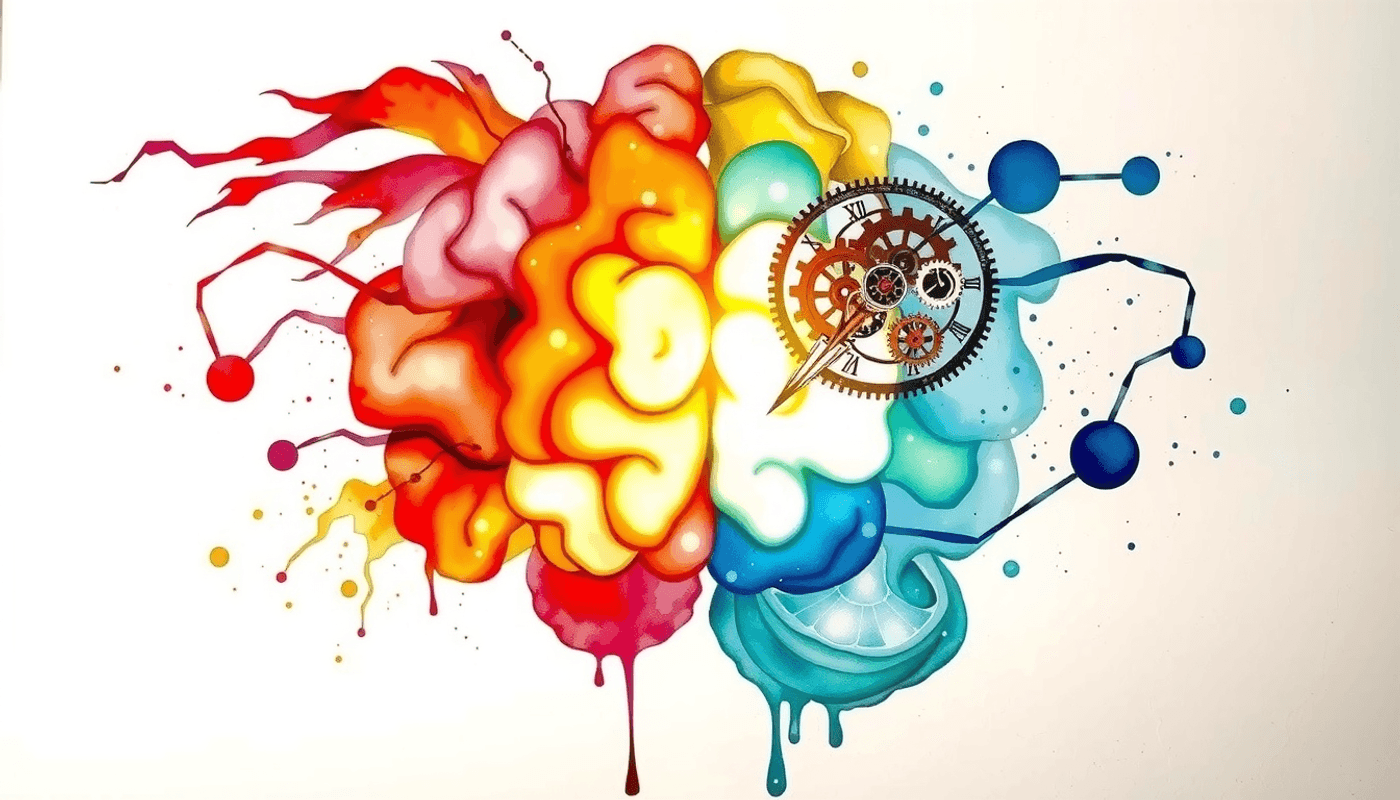
This split is not random. It is the central prediction of dual process theory in medicine, a framework that has become the dominant model for understanding how clinicians reason through diagnoses and make decisions at the bedside [1]. The theory proposes that human cognition runs on two fundamentally different tracks. One is fast, automatic, and built on pattern recognition. The other is slow, deliberate, and powered by working memory. Both are essential. Both can fail. And the failures of each produce different kinds of mistakes, some of which cost patients their lives.
Roughly five percent of outpatient encounters in the United States involve a diagnostic error [2]. That translates to about twelve million adults every year receiving the wrong diagnosis. In emergency departments, a 2022 systematic review estimated 7.4 million diagnostic errors annually, contributing to approximately 250,000 deaths [3]. Cognitive factors are implicated in roughly 74 percent of these failures [4]. Understanding how doctors think is not an academic exercise. It is a patient safety imperative.
The Birth of Two Minds
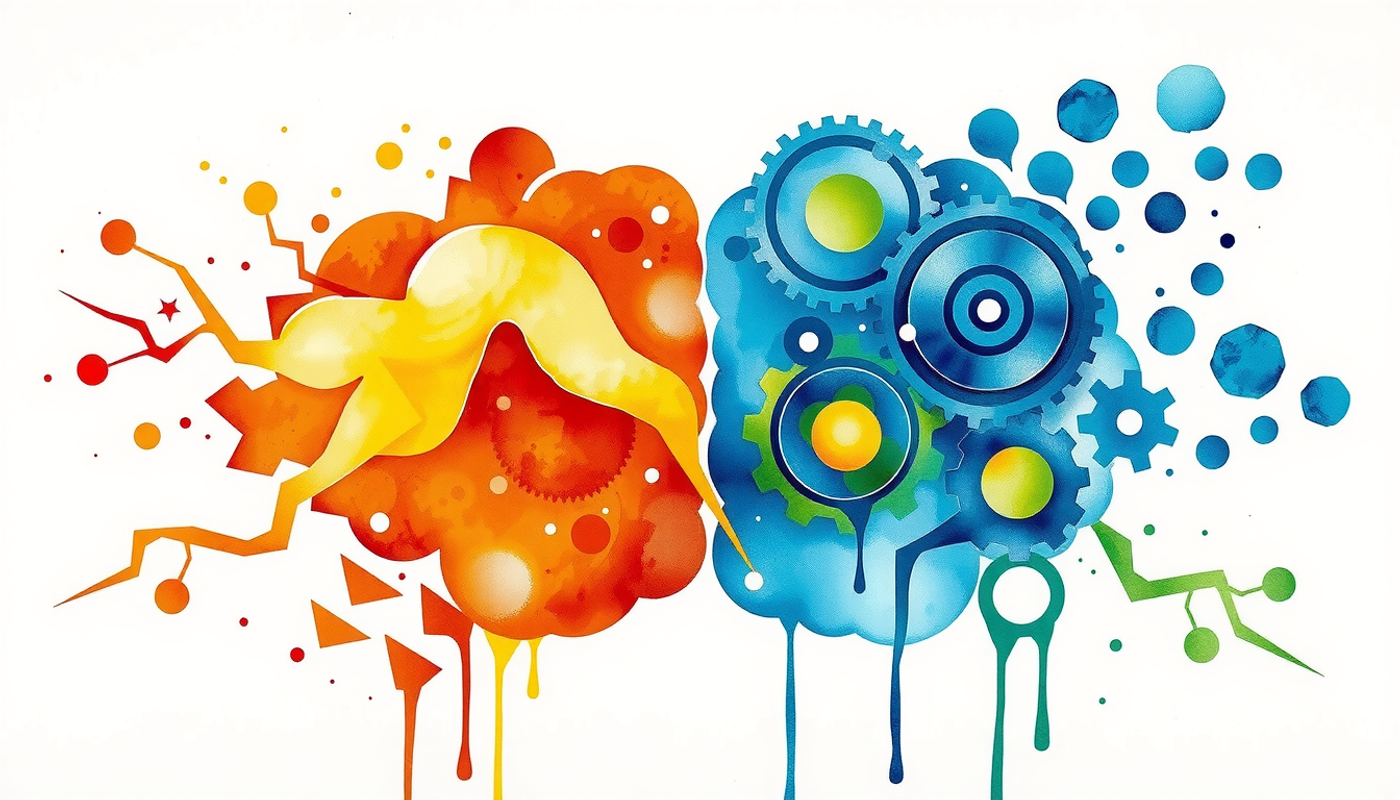
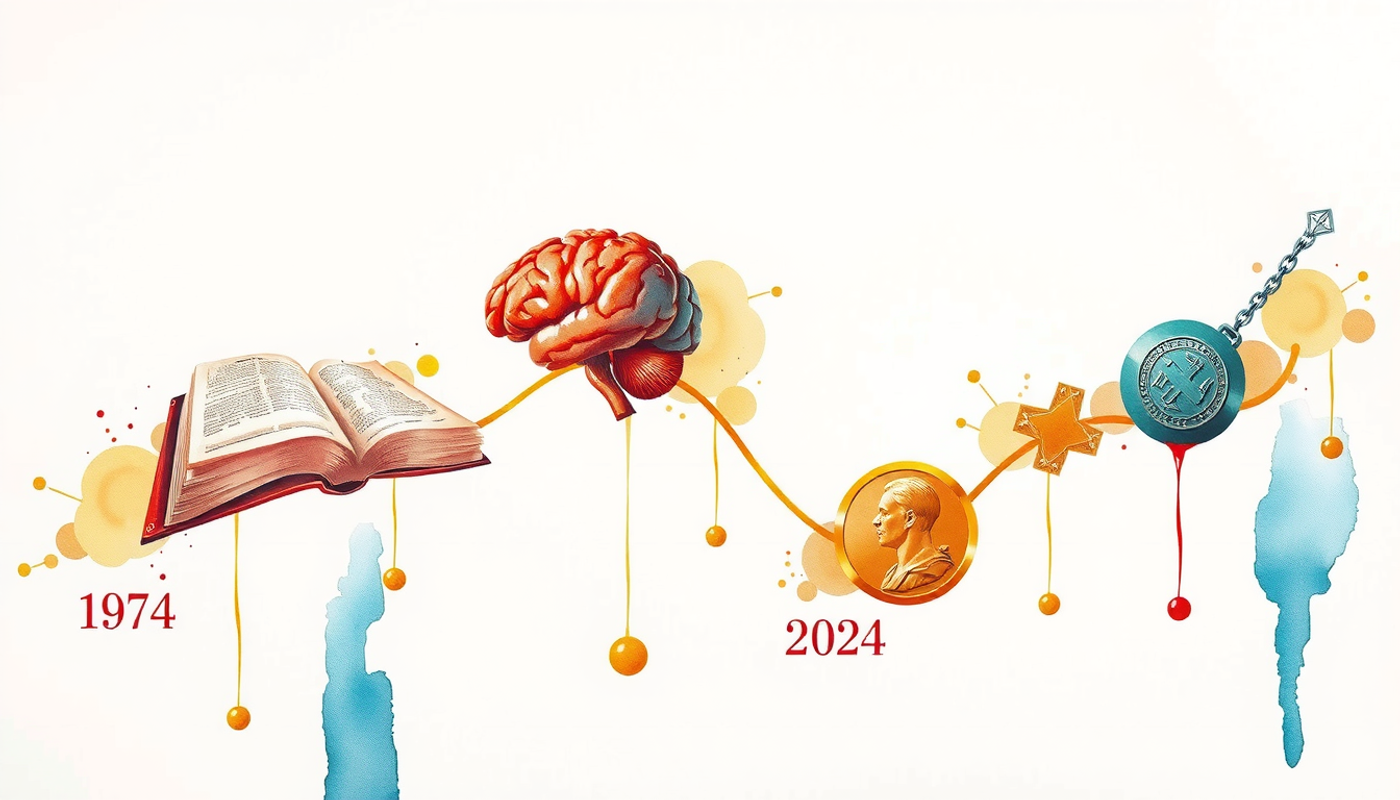
The story begins not in a hospital but in a psychology laboratory in Jerusalem. In 1974, Amos Tversky and Daniel Kahneman published a paper in Science that would reshape how we understand human judgment [5]. They described three mental shortcuts, or heuristics, that people use when making decisions under uncertainty: representativeness, availability, and anchoring. These shortcuts are fast and usually helpful. But they also produce predictable, systematic errors.
The paper launched the heuristics-and-biases research program. Hundreds of experiments followed. In 2002, Kahneman won the Nobel Memorial Prize in Economics for this work (Tversky had died in 1996 and was not eligible).
But the specific idea that the mind houses two qualitatively different thinking modes took shape through several parallel lines of research. Jonathan Evans at the University of Plymouth developed the heuristic-analytic theory of reasoning starting in 1984 [6]. He proposed that fast, pre-attentive heuristic processes select what seems relevant, and slower analytic processes then evaluate or override that initial framing. Seymour Epstein at the University of Massachusetts built what he called Cognitive-Experiential Self-Theory, pairing a fast experiential system with a slower rational one [7]. Kenneth Hammond proposed the Cognitive Continuum Theory, arguing cognition sits on a spectrum from pure intuition to pure analysis rather than being a simple binary [8].
Then came the labels everyone knows. In 2000, Keith Stanovich and Richard West proposed the neutral terms "System 1" and "System 2" as an umbrella for these different theories [9]. Kahneman adopted the labels and brought them to a global audience in his 2011 bestseller Thinking, Fast and Slow. Later, Stanovich himself recommended replacing "System" with "Type" to avoid the misleading impression that two discrete neural systems exist in the brain [10]. The distinction between the two modes is about processing style, not brain anatomy.
The migration of dual process theory into medicine was gradual. For two decades after Arthur Elstein published his hypothetico-deductive model in 1978, clinical reasoning research focused on how physicians generate and test diagnostic hypotheses [11]. It was Pat Croskerry, an emergency physician at Dalhousie University in Halifax, who built the bridge. Starting in 2002, Croskerry began publishing on cognitive errors in emergency medicine and how dual process theory could explain them [12]. In 2009, he published what became the field's most cited framework: a universal model of diagnostic reasoning [1].
Inside the Two Systems
What exactly happens inside the mind when a physician sees a patient? Croskerry's 2009 model offers the clearest map.
When a patient's presentation enters the diagnostic process, it first passes through what Croskerry calls a "pattern processor." If the pattern is recognized, it triggers Type 1 processing. This is the fast track. A senior cardiologist who sees ST-elevation on an electrocardiogram does not reason through what it might mean. The pattern fires instantly and the diagnosis is there before conscious thought catches up. Recognition. Match. Done.
If the pattern is not recognized, or if it is ambiguous, Type 2 processing takes over. This is the slow track. The physician explicitly generates hypotheses, gathers data, weighs probabilities, and tests each possibility against the evidence. A medical student seeing the same ECG might need to consciously recall which leads correspond to which coronary arteries, compare the tracing against textbook examples, and reason through the differential diagnosis step by step.
Neither mode works in isolation. They toggle back and forth, sometimes within a single case. An experienced physician might recognize a presentation instantly (Type 1) but then catch an inconsistency and deliberately slow down to re-examine (Type 2). Croskerry calls this a "rational override." The reverse also happens. A physician working through a case analytically (Type 2) might be overridden by a gut feeling that leads them astray. Croskerry calls this a "dysrationalia override," and it is often driven by overconfidence [1].
Several features of these two modes matter for understanding medical errors. Type 1 is not a single process. It lumps together perception, well-learned motor skills, emotional reactions, language comprehension, and expert pattern matching [10]. Calling all of this "one system" is a simplification. Type 2 depends heavily on working memory, which has hard limits. Most people can hold about four chunks of information in working memory at once. When a case exceeds that capacity, analytical reasoning breaks down even if the clinician is trying hard to think carefully [13].
The dominant theoretical architecture today is the "default-interventionist" model proposed by Evans [6]. A Type 1 response is generated automatically as the default. Type 2 may or may not intervene to monitor, override, or replace it. Whether Type 2 intervenes depends on several factors: cues that something is wrong, available time and attention, motivation, and metacognitive skill. In a busy emergency department at 3 a.m. with six patients waiting, the odds that Type 2 will intervene drop sharply.
How Expertise Rewires the Balance
Medical students think slowly. Expert physicians think fast. But the story is more interesting than that.
Henk Schmidt, Geoff Norman, and Henny Boshuizen at McMaster University and Erasmus University spent decades studying how medical expertise develops [14]. They proposed that expertise follows three phases. First, students accumulate biomedical knowledge. They learn biochemistry, anatomy, pathophysiology. This knowledge is detailed and mechanistic. Second, through clinical exposure, that biomedical knowledge gets "encapsulated" into more compact clinical concepts. A medical student might think through every step of the renin-angiotensin-aldosterone system. A resident just thinks "volume overload." Third, these encapsulated concepts consolidate into what Schmidt and colleagues called illness scripts, compact narrative knowledge structures that include a disease's typical enabling conditions, its pathophysiology (fault), and its expected signs and symptoms (consequences) [15].
Illness scripts are the building blocks of Type 1 clinical reasoning. When an expert sees a patient whose presentation matches a stored script, recognition happens instantly. The diagnosis comes "from nowhere." But it is not from nowhere. It is from thousands of prior patients whose patterns have been encoded into memory.
Custers, Boshuizen, and Schmidt confirmed this in interview studies published in 1998 [15]. Intermediate-level clinicians described diseases using enabling conditions and biomedical mechanisms. Experts used more compact, prototype-like representations and drew heavily on memories of specific past patients. The shift from Type 2 to Type 1 is not a choice. It is a consequence of knowledge organization.
This is why telling a novice to "trust your gut" is dangerous. Their gut has nothing in it yet. And telling an expert to "slow down and think carefully" may not help much either, as we will see.

When Thinking Goes Wrong
Croskerry has catalogued more than 100 cognitive and affective biases relevant to clinical decision-making [16]. But a handful appear repeatedly in studies of diagnostic error.
Anchoring bias is the tendency to fixate on an initial piece of information and fail to adjust adequately. A 2023 study in JAMA Internal Medicine showed that when a visit reason mentioned congestive heart failure, physicians were significantly less likely to test for pulmonary embolism, even when the clinical picture warranted it [17]. The label in the chart became an anchor.
Availability bias means judging a diagnosis as more likely because similar cases come easily to mind. Mamede and colleagues demonstrated this experimentally in a 2010 JAMA study [18]. After internal medicine residents encountered cases of a particular disease, they were more likely to misdiagnose subsequent patients as having that same disease, even when the presentation was different. Recent vivid cases distort judgment.
Premature closure is the most common cognitive error in diagnostic failures. It means settling on a diagnosis too early and stopping the search for alternatives. Graber, Franklin, and Gordon analyzed 100 cases of diagnostic error in internal medicine and found premature closure was the single most frequent cognitive failing [4].
Confirmation bias is the tendency to seek evidence that supports a working hypothesis while ignoring evidence that contradicts it. Once a physician thinks "pneumonia," they notice the findings that fit pneumonia and discount those that do not.
Overconfidence is a systemic problem. Physicians' confidence in their diagnoses generally exceeds their actual accuracy, especially when feedback is delayed or absent [19]. You cannot correct errors you do not know you are making.
A Japanese self-reflection survey of physicians found that each remembered diagnostic error involved an average of 3.08 cognitive biases, with anchoring (60%), premature closure (58.5%), and availability bias (46.2%) the most commonly reported [20]. The errors cluster. They reinforce each other.
But here is where the story gets complicated. The simple narrative that Type 1 causes errors and Type 2 corrects them has not held up.

The Staggering Cost of Getting It Wrong
The numbers are sobering. Singh, Meyer, and Thomas synthesized data from three large studies in a 2014 BMJ Quality and Safety paper and estimated that diagnostic errors occur in about 5.08 percent of outpatient encounters in the United States, affecting approximately 12 million adults every year [2]. About half of these errors were judged potentially harmful.
In hospitals, two foundational studies from the 1990s estimated that diagnostic errors contributed to between 6.9 and 17 percent of adverse events [21]. The 2015 National Academy of Medicine report Improving Diagnosis in Health Care adopted this range and elevated diagnostic error to a national patient-safety priority [22].
Emergency departments tell the most alarming story. A December 2022 systematic review by Newman-Toker and the Johns Hopkins Evidence-based Practice Center, commissioned by the Agency for Healthcare Research and Quality, analyzed data from multiple prospective studies [3]. They estimated that 5.7 percent of all U.S. emergency department visits involve at least one diagnostic error. Extrapolated to 130 million annual ED visits, that implies 7.4 million diagnostic errors, 2.6 million harms, and roughly 250,000 deaths per year. (These extrapolations have been debated by the American College of Emergency Physicians, but the core finding that ED misdiagnosis is a major safety problem is not disputed.)
Newman-Toker's team also analyzed malpractice data. In a 2019 analysis of over 55,000 closed claims, diagnostic errors accounted for 21 percent of all claims and 34 percent of those resulting in death or permanent disability [23]. Three categories dominated: vascular events (stroke, heart attack, aortic dissection), infections (sepsis, meningitis, spinal abscess), and cancers (lung, breast, colorectal). Together these "Big Three" accounted for 74.1 percent of high-severity diagnostic error harms. Clinical-judgment factors contributed to 85.7 percent of these claims.
What drives these errors in the real world? Contextual stressors amplify cognitive vulnerability. Fatigue and sleep deprivation preferentially impair Type 2 monitoring while leaving Type 1 pattern recognition relatively intact [16]. Time pressure, interruptions, high cognitive load, and emotional intensity all push clinicians toward Type 1 reliance while simultaneously degrading Type 2 capacity. Croskerry calls this the "double jeopardy" of acute care cognition.
What the Brain Actually Does
Kahneman warned against treating System 1 and System 2 as neuroanatomical structures. They are characters in a narrative, not brain regions. But neuroimaging has begun to map their correlates during clinical reasoning.
Durning, Costanzo, and colleagues used functional MRI to compare how expert and novice physicians think through clinical multiple-choice questions [24]. Both groups activated overlapping neural networks. But experts showed greater processing efficiency in prefrontal regions during pattern-based reasoning, consistent with less effortful Type 1 processing.
Hruska and colleagues imaged second-year medical students and senior gastroenterologists while they reasoned through sixteen clinical cases [13]. Novices showed increased activation in the left anterior temporal cortex on both easy and hard cases, plus significant prefrontal activation on hard cases. Experts engaged right parietal cortex and bilateral prefrontal regions on hard cases but not on easy ones. Easy cases for experts engaged almost no additional resources beyond what was needed for reading. Their brains handled familiar patterns automatically.
A broad neural sketch consistent with dual process theory looks like this. Type 2 effortful reasoning recruits the dorsolateral prefrontal cortex (the brain's executive control center), the anterior cingulate cortex (conflict monitoring), and parietal cortex. Type 1 automatic recognition depends more on basal ganglia (habit and pattern systems), amygdala (rapid emotional appraisal), and overlearned cortical representations. The Default Mode Network, a set of brain regions active during rest and self-referential thought, shows up more strongly in novice clinical reasoning, possibly reflecting effortful "filling in" with personal narrative when illness scripts are not yet available [25].
These findings should be read with caution. Sample sizes in clinical fMRI studies are small. The neural correlates of reasoning are highly task-dependent. And "expert non-analytic reasoning" looks neurally different from "novice non-analytic reasoning," which itself complicates any simple two-system mapping.
Can We Debias the Doctor?
Once dual process theory took hold in medicine, researchers rushed to develop interventions. If Type 1 is error-prone, the logic went, teach doctors to switch to Type 2 more often. Slow down. Think harder.
The results have been humbling.
Croskerry organized debiasing strategies into three categories: educational (teach about biases), workplace-structural (change the environment), and forcing-function (force a switch from Type 1 to Type 2). Cognitive forcing strategies, described in his 2003 Annals of Emergency Medicine paper [26], are mental routines that deliberately interrupt fast thinking. "What else could this be?" "What diagnosis cannot be missed?" "Is there anything that does not fit?"
Diagnostic checklists provide structured cognitive support. Ely, Graber, and Croskerry proposed checklists for common chief complaints that prompt consideration of alternatives [27]. Sibbald and colleagues showed that knowledge-retrieval checklists improved expert ECG interpretation [28]. Pure debiasing checklists, by contrast, were less effective.
Structured reflection, developed by Silvia Mamede and Henk Schmidt at Erasmus University Rotterdam, is a stepwise procedure [29]. The clinician lists features supporting the leading diagnosis, lists features refuting it, lists expected features that are absent, and repeats for two alternative diagnoses. Their 2010 JAMA paper showed that structured reflection improved diagnostic accuracy and counteracted availability bias [18]. A Lambe and colleagues' 2016 systematic review in BMJ Quality and Safety concluded that guided reflection was the most consistently effective intervention [30].
But then came the trials that complicated the picture.
In 2014, Norman, Sherbino, and Dore at McMaster University ran a controlled experiment [31]. Residents were randomly assigned to two conditions. One group was told to answer diagnostic cases quickly and efficiently. The other group was told to be "careful, thorough, and reflective." The result? The careful group took 30 percent longer. Their accuracy was identical. Simply telling people to think harder did not make them think better.
Monteiro and colleagues found similar results in 2015 [32]. Interruptions and explicit instructions to use analytical reasoning had limited impact on diagnostic accuracy. Staal and colleagues' 2022 meta-analysis of cognitive reasoning tools found small effects of marginal practical significance in workplace settings [33].
The emerging consensus is uncomfortable but important. Teaching doctors about cognitive biases is probably useful. Structured reflection shows real effects in controlled experiments, particularly for complex cases. But the simple instruction to "slow down" does not improve accuracy. And no debiasing intervention has been convincingly demonstrated to work in real clinical environments with long-term follow-up.

The Knowledge Revolution
The most significant challenge to traditional dual process thinking in medicine came in 2024.
Geoffrey Norman, Thierry Pelaccia, Peter Wyer, and Jonathan Sherbino published a review in the Journal of Evaluation in Clinical Practice that argued for a fundamental reframing [34]. Their central claim: errors arise less from which system a clinician uses and more from gaps in organized clinical knowledge. Both Type 1 and Type 2 can produce errors. Both can produce correct answers. The distinguishing factor is whether the right illness script, the right knowledge structure, is available and retrievable at the moment of diagnosis.
This argument draws on fifty years of evidence. Early studies by Barrows and colleagues in the 1970s had already shown that when clinicians thought of the correct diagnosis early in the encounter, they had a 96 percent chance of arriving at the right answer. When they did not, their chances plummeted. The quality of the initial hypothesis, not the depth of subsequent analysis, predicted accuracy [1].
Norman and colleagues also challenged the persistent belief that Type 1 is the main source of error and Type 2 is the corrective. They showed that errors derive from both processing modes. A Type 1 error might come from activating the wrong pattern. But a Type 2 error might come from applying correct reasoning to incorrect or incomplete information. A physician who systematically works through a differential diagnosis but lacks the knowledge to include the correct disease on the list will be systematically wrong, no matter how carefully they think.
The educational implication is profound. The most powerful "debiasing strategy" is not a checklist or a timeout or a metacognitive trick. It is more knowledge. Better-organized knowledge. More illness scripts. More exposure to varied clinical presentations. More feedback on diagnostic outcomes. More deliberate practice with informative feedback over years.
This does not mean cognitive forcing strategies and structured reflection are useless. They are real tools, particularly under conditions known to degrade Type 2 monitoring, like fatigue, time pressure, or emotional stress. But they are supplements to expertise, not substitutes for it.
What Medical Schools Are Getting Wrong
If knowledge is the central variable, then medical education is the primary lever. But most medical schools do not teach clinical reasoning explicitly until the clinical years, and even then, instruction is often informal.
The traditional model works roughly like this. Preclinical years focus on biomedical science. Clinical clerkships expose students to patients. Residency builds expertise through volume. The assumption is that clinical reasoning develops naturally through exposure. For most trainees, it does. But the process is inefficient, poorly measured, and leaves some clinicians with dangerous blind spots.
Contemporary clinical reasoning curricula are beginning to change. Programs at McMaster, Maastricht, Harvard, and several other institutions now teach dual process theory explicitly [13]. Students learn to recognize when they are using Type 1 versus Type 2 processing, to identify situations where pattern recognition might mislead, and to practice structured reflection techniques.
Simulation-based training with deliberate practice has the largest evidence base for clinical-skills education. McGaghie and colleagues' 2011 meta-analysis in Academic Medicine showed clear superiority over traditional clinical education for skill acquisition [35]. Virtual-patient platforms allow learners to encounter rare presentations they might not see for years in clinical training. Each simulated encounter builds a new illness script.
The trajectory of expertise, as documented by Schmidt, Boshuizen, and others, follows a roughly four-phase arc [14]. Phase one: acquisition of biomedical knowledge. Phase two: initial encapsulation through clinical exposure. Phase three: script formation during clerkships and residency. Phase four: script refinement and consolidation over years of practice. Across this arc, the dominant reasoning mode shifts from analytical (because few scripts are available) to recognition-based (because rich scripts handle most encounters), with Type 2 reserved for the unusual or high-stakes.
The problem is that this trajectory depends on volume and feedback. A dermatologist who sees fifty rashes a day builds scripts faster than one who sees five. A surgeon who receives outcome data on every operation can refine scripts that one without feedback cannot. Medical education, at its best, compresses this natural process through high-volume, feedback-rich clinical exposure. At its worst, it leaves learners to figure it out on their own.
The Honest Debate
No model of clinical reasoning is perfect, and dual process theory has its critics.
The first critique is empirical. Norman and colleagues have repeatedly shown that the predicted relationship between reasoning mode and error does not hold cleanly. In their 2014 trial, forcing Type 2 did not improve accuracy [31]. In a 2017 Academic Medicine review, Norman, Monteiro, and Sherbino concluded that "although it is possible to experimentally induce cognitive biases, particularly availability bias, the extent to which these biases actually contribute to diagnostic errors is not well established" [36].
The second critique is conceptual. "System 1" lumps together perception, overlearned skills, emotional reactions, and expert pattern matching. These are very different cognitive phenomena. Stanovich and Evans argue that the defining contrast is not fast versus slow but autonomous versus working-memory-dependent processing [10]. Pelaccia and colleagues have pushed back against three persistent myths: that intuition is unreliable for novices, that experts can deliberately switch off intuition, and that intuition is an inferior reasoning mode [37].
The third critique targets the debiasing agenda. If the primary driver of diagnostic error is knowledge gaps rather than processing failures, then investments in metacognitive training may yield lower returns than investments in clinical exposure, feedback, and deliberate practice. This is not a rejection of dual process theory. It is a sharpening. The framework remains useful for describing the appearance of reasoning. But the cause of error is upstream, in the knowledge base.
Alternative and complementary models exist. Hammond's Cognitive Continuum Theory treats cognition as a spectrum rather than a dichotomy [8]. Klein's Recognition-Primed Decision Making model, from naturalistic decision-making research, emphasizes how experts recognize situations and mentally simulate possible actions [38]. Bayesian models formalize diagnosis as probabilistic reasoning under uncertainty. None has displaced dual process theory, but together they enrich the picture.
What This Means for the Future
Dual process theory, despite its limitations, remains the dominant pedagogic and conceptual scaffold in medical education. And for good reason. It captures something real about how clinicians experience their own thinking. It gives educators a shared vocabulary. It integrates naturally with patient-safety frameworks.
What has changed is the framing. The early Croskerry-era literature treated Type 1 as the villain and Type 2 as the hero. The post-2017 Norman-era literature treats both as outputs of underlying knowledge structures. The most effective debiasing strategy turns out to be more knowledge, better organized, with more feedback. Cognitive forcing strategies, checklists, second opinions, and timeouts remain useful, particularly under conditions that degrade Type 2 monitoring. But they are tools, not solutions.
The future likely lies in integration. Artificial intelligence-powered clinical decision support may eventually serve as an external Type 2 system, flagging inconsistencies and suggesting alternative diagnoses that a fatigued clinician's Type 2 might miss [3]. Feedback systems that show physicians their diagnostic accuracy over time can drive illness-script refinement in ways that current practice does not. Simulation platforms can expose trainees to rare diseases at scale, compressing the years normally needed to build rich scripts.
But the core insight will endure. Every diagnosis is the product of a mind that can think fast and think slow. Understanding when each mode helps, when each mode fails, and what determines the quality of both is not just a research question. For the twelve million patients misdiagnosed every year in outpatient clinics alone, it is a matter of life and death.
Conclusion
The story of dual process theory in medicine is the story of a question that sounds simple but is not: how do doctors think? The answer, built over fifty years of research from Jerusalem to Halifax to Rotterdam to Hamilton, is that they think in two modes. One is fast, automatic, and built on pattern recognition earned through thousands of patient encounters. The other is slow, deliberate, and limited by the hard constraints of working memory.
Both modes are essential. A physician who relies only on pattern recognition will miss the atypical case. A physician who reasons through every case from first principles will be too slow to practice. The art of medicine is knowing when to trust the flash of recognition and when to stop, question it, and work through the evidence step by step.
But the most recent chapter of this story is perhaps the most important. The primary determinant of diagnostic accuracy is not which system a clinician uses. It is the knowledge they bring to the encounter. Rich, well-organized illness scripts produce accurate fast thinking and effective slow thinking. Sparse or poorly organized knowledge produces errors in both modes. The implication is clear: the best investment in diagnostic safety is not a poster about cognitive biases on the break room wall. It is the slow, unglamorous work of building clinical knowledge through exposure, practice, and feedback.
For the patient lying on the gurney, none of this is abstract. Whether the physician recognizes the pattern in three seconds or reasons through it in thirty minutes, what matters is getting the answer right. Dual process theory does not guarantee that outcome. But it illuminates why it sometimes fails, and that illumination is the first step toward making it fail less often.
Frequently Asked Questions
What is dual process theory in medicine?
Dual process theory proposes that clinical reasoning operates through two modes: Type 1 (fast, automatic, pattern-based) and Type 2 (slow, deliberate, analytical). Physicians switch between these modes depending on whether they recognize a clinical presentation. The framework helps explain both expert diagnostic speed and the cognitive origins of diagnostic errors.
What are the most common cognitive biases in clinical diagnosis?
The most frequently identified biases in diagnostic errors include anchoring (fixating on initial information), premature closure (stopping the diagnostic search too early), availability bias (overweighting recent cases), confirmation bias (seeking only supporting evidence), and overconfidence (certainty exceeding actual accuracy). Studies show each diagnostic error typically involves multiple biases simultaneously.
Does slowing down improve diagnostic accuracy?
Research suggests that simply slowing down does not improve accuracy. A 2014 controlled trial by Norman and colleagues found that physicians told to be careful and reflective took 30 percent longer but achieved the same accuracy as those told to work quickly. Structured reflection techniques show more promise than general instructions to slow down.
How do diagnostic errors affect patient safety?
Diagnostic errors affect roughly 5 percent of outpatient encounters in the United States, impacting about 12 million adults annually. A 2022 systematic review estimated 7.4 million emergency department diagnostic errors per year. These errors contribute to significant morbidity and mortality, with cognitive factors implicated in approximately 74 percent of cases.
Can cognitive debiasing strategies reduce diagnostic errors?
Evidence for debiasing is mixed. Structured reflection shows the strongest effects, particularly for complex cases and after exposure to biasing material. Diagnostic checklists and cognitive forcing strategies provide some benefit. However, no intervention has been convincingly demonstrated to work consistently in real clinical environments with long-term follow-up.