Introduction
Try to picture cholesterol. Not the word. The molecule. Four fused rings, a hydroxyl group dangling off one end, a hydrocarbon tail snaking off the other. If that mental image came easily, your brain just performed one of the most demanding cognitive feats in all of science education. If it did not, you are in good company. Memorizing molecular structures is the single task that derails more premedical and organic chemistry students than any equation or reaction mechanism [1]. And the reason has nothing to do with intelligence. It has everything to do with how the brain encodes three-dimensional spatial information, and why the standard approaches to studying chemistry ignore almost everything cognitive science has learned in the last forty years.
This article tells the story of that science. It starts with neurons and ends with amino acids. Along the way it passes through a 1956 psychology paper that changed how we think about mental capacity, a Greek poet who invented the world's oldest memory trick, a University of Waterloo lab that proved drawing beats writing every time, and a Swiss team that trained ordinary people to remember like world champions. No product recommendations. No study-app lists. Just the research, the researchers, and what their work means for anyone who has ever stared at a benzene ring and thought: how am I supposed to remember this?
Your Brain Sees Molecules the Way It Sees Buildings
When a student looks at a wedge-dash diagram of alanine, two enormous processing pipelines fire simultaneously in the visual cortex. Neuroscientists call them the ventral stream and the dorsal stream. The ventral stream runs from the primary visual cortex down through the temporal lobe. It answers the question "what is this?" Shape, category, identity. The dorsal stream runs upward into the parietal cortex. It answers "where is this, and how do I interact with it?" Position, orientation, spatial relationships [2].
For a molecule to become a memory, both streams need to engage. A student who only reads the name "alanine" activates the ventral stream weakly and the dorsal stream barely at all. A student who draws the structure, rotates a physical model, or mentally manipulates the three-dimensional shape activates both streams at full power. The difference matters. It is the difference between recognizing a city on a map and knowing how to walk its streets.
The hippocampus sits at the convergence of these streams. This seahorse-shaped structure deep in the medial temporal lobe binds together the separate features of a molecular memory: what the functional groups look like, where they attach, how the carbon backbone bends. Damage the hippocampus and new spatial memories become impossible. The famous patient H.M., whose hippocampi were surgically removed in 1953 to treat epilepsy, could no longer form new declarative memories of any kind [3]. The hippocampus does not store the memory permanently. It assembles it. And for molecular structures, that assembly process is fundamentally spatial.
Here is where the story gets interesting. In 2003, Eleanor Maguire at University College London published a study in Nature Neuroscience that upended assumptions about exceptional memory [4]. She scanned the brains of ten of the world's top memory competitors, including multiple World Memory Championship medalists, and compared them with matched controls. The results were striking. The memory athletes had no structural brain differences. No larger hippocampi. No unusual cortical thickness. Their IQs were normal. What set them apart was a strategy: nine of the ten used the method of loci, a spatial memory technique dating back to ancient Greece. And during memorization, their brains showed heightened activity in the medial parietal cortex, retrosplenial cortex, and right posterior hippocampus. The same regions that activate when you navigate a familiar neighborhood.
The implication for chemistry students is direct. Exceptional memorization is not a genetic gift. It is a trainable spatial skill.
The Mental Rotation Problem That Experts Learned to Skip
Roger Shepard and Jacqueline Metzler published one of the most cited experiments in cognitive psychology in 1971 [5]. They showed participants pairs of three-dimensional block figures and asked whether the two figures were the same object rotated in space. Response times increased linearly with the angle of rotation. The brain was literally rotating the object, degree by degree, inside its own neural workspace. The parietal cortex and premotor regions lit up on later fMRI studies, confirming a frontoparietal network dedicated to spatial manipulation [6].
This is exactly what happens when a chemistry student tries to determine whether two structural formulas represent the same molecule drawn from different angles. Or whether two mirror-image molecules are enantiomers. The student mentally rotates one structure to see if it superimposes on the other. And it is slow, effortful, error-prone work that floods working memory.
But here is the twist. Expert chemists do not do this.
Mike Stieff at the University of Maryland demonstrated in 2007 that experienced organic chemists bypass mental rotation almost entirely [7]. Instead, they use rule-based analytical shortcuts. To determine chirality, an expert assigns priorities to substituents using Cahn-Ingold-Prelog rules and reads the configuration directly. No rotation needed. To compare two Newman projections, an expert looks at the dihedral angles between substituents rather than trying to spin the molecule in imagination.
Stieff called this the "analytic strategy." Novices rotate. Experts analyze. And the transition from one to the other happens when the student builds enough stored chemical knowledge that the rules become automatic. The goal of studying molecular structures, then, is not to become better at mental rotation. It is to build the conceptual scaffolding that makes rotation unnecessary.
Four Chunks Is All You Get
In 1956, George Miller published a paper in Psychological Review that became one of the most famous in all of psychology: "The Magical Number Seven, Plus or Minus Two" [8]. He argued that short-term memory could hold about seven items. But the real insight was not the number. It was the concept of the chunk. Miller showed that the capacity limit applies to chunks, not raw elements. A phone number like 4-9-2-7-3-8-1 is seven items. But "492" as a single unit, "738" as another, and "1" as a third reduces the load to three chunks.
Nelson Cowan revised this estimate downward in 2001 [9]. When chunking is carefully controlled, the true capacity of working memory drops to about three to four items. Not seven. Not five. Three to four.
Think about what this means for a molecule like glucose. Six carbon atoms, twelve hydrogen atoms, six oxygen atoms, multiple hydroxyl groups, a ring form, an open-chain form, alpha and beta anomers. If a student tries to hold all of those details as separate items, working memory overflows before the second hydroxyl group.
But chunking changes everything.
William Chase and Herbert Simon showed this in their legendary chess experiments of 1973 [10]. Chess masters could reproduce a mid-game board position almost perfectly after a five-second glance. Novices could place only a few pieces correctly. But when the pieces were arranged randomly, masters performed no better than novices. Their advantage came entirely from recognizing familiar configurations, from castled king positions and pawn chains and knight forks, that served as chunks.
Chemistry has its own chunks. They are called functional groups. A hydroxyl group (–OH) is one chunk. A carboxyl group (–COOH) is one chunk. An amino group (–NH₂) is one chunk. A benzene ring is one chunk. Once a student has internalized these units so thoroughly that each one fires as a single recognition event, the effective complexity of any molecule drops dramatically. Glucose stops being twenty-four atoms. It becomes a six-carbon ring with five hydroxyl groups and a hemiacetal linkage. Three chunks. Maybe four.
Zhilin and Tkachuk demonstrated this directly in chemistry [11]. Expert chemists reproduced valid chemical equations far better than novices after brief exposure, but showed no advantage on randomly shuffled chemical symbols. The pattern was identical to Chase and Simon's chess finding. Expertise in chemistry is, at its foundation, an expanded library of structural chunks.
The practical advice writes itself. Do not try to memorize twenty amino acids as twenty separate molecules. Learn the five families first: nonpolar aliphatic, aromatic, polar uncharged, positively charged, negatively charged. Then learn the variations within each family. The chunk vocabulary must come before the individual structures.
Two Codes Are Better Than One
Allan Paivio spent decades developing and testing a theory so simple it almost sounds obvious, and so powerful it reappears in virtually every learning study since 1971 [12]. He called it dual coding theory. The core claim: the brain maintains two distinct but interconnected representational systems. One handles verbal information (words, names, propositions). The other handles nonverbal imagery (pictures, spatial layouts, sensory impressions). When the same information is encoded in both systems simultaneously, it creates two independent retrieval pathways. Either one can support recall. Together, they make forgetting much harder.
Paivio and Csapo demonstrated in 1973 that pictures are recalled roughly twice as well as their verbal labels in free recall [13]. Nelson, Reed, and Walling named this the picture superiority effect in 1976 [14]. The effect is not subtle. It is enormous. And it replicates across cultures, age groups, and content domains.
For molecular structures, dual coding means: always learn a structure with both its visual form and its verbal description simultaneously. Seeing the side chain of histidine while simultaneously saying "imidazole ring, positively charged at physiological pH, found in enzyme active sites" creates a richer, more redundant memory trace than either image or words alone. Richard Mayer's cognitive theory of multimedia learning, which builds on Paivio's work, formalized this as the multimedia principle: people learn more deeply from words and pictures together than from words alone [15].
Drawing Beats Everything
In 2016, Jeffrey Wammes, Melissa Meade, and Myra Fernandes at the University of Waterloo published a paper that should be required reading for every chemistry student who owns a highlighter [16]. Across seven experiments, they showed that words participants drew were recalled far better than words they wrote. Not marginally better. Substantially better. And the advantage held up across different encoding times, different list lengths, and comparisons against deep-processing controls like writing definitions or imagining the object.
The researchers called it the drawing effect. And they showed it could not be reduced to any single mechanism. It was not just about visual imagery, because imagining a picture without drawing it produced weaker results. It was not just about elaboration, because writing a detailed description also fell short. The drawing effect emerged from the integration of three codes simultaneously: semantic processing (understanding what the object is), visual processing (creating a mental image), and motor processing (physically moving the pen). Three memory traces woven into one.
Why does this matter for molecules? Because drawing a molecular structure is not busywork. It is one of the most powerful encoding strategies that cognitive science has ever documented.
Audrey van der Meer and Ruud van der Weel confirmed the motor component in a 2024 high-density EEG study [17]. They compared thirty-six university students writing by hand versus typing on a keyboard. Handwriting produced widespread theta- and alpha-band connectivity across parietal and central brain regions. The exact frequency bands associated with memory encoding and consolidation. Typing produced nothing comparable. The pen, it turns out, really is mightier than the keyboard.
Schmeck, Mayer, Opfermann, Pfeiffer, and Leutner tested this directly in a science learning context in 2014 [18]. Students who drew diagrams while reading scientific text significantly outperformed students who only read, on both retention and transfer tests. Drawing quality predicted test performance.
The message for molecular memorization is clear: draw every structure by hand. Multiple times. Across multiple days. Do not just look at the textbook figure and hope it sticks.
The Greek Poet's Trick That Rewires Brains
Around 500 BCE, the Greek poet Simonides of Ceos attended a banquet that ended in disaster. While he was outside, the building's roof collapsed, crushing the guests beyond recognition. According to the story told by Cicero and others, Simonides was able to identify every body by remembering where each person had been sitting. The position in space unlocked the identity [19].
From this grim origin came the method of loci, the oldest known memory technique. Place the items you want to remember at specific locations along a familiar route. Then mentally walk the route to retrieve them. The technique has been used by orators, scholars, and memory athletes for over two millennia. But until recently, no one understood why it worked so well.
Maguire's 2003 study with memory champions, discussed earlier, showed the neural answer: the method of loci recruits the hippocampal spatial navigation system [4]. The brain encodes the to-be-remembered items as if they were real objects in real places. This is not metaphorical. It is literal. The same neurons that fire when you walk through your house fire when you mentally walk through a memory palace.
Martin Dresler and colleagues sharpened this in a 2017 study published in Neuron [20]. They trained fifty-one memory-naive participants in three groups: method of loci training (forty sessions of about thirty minutes over six weeks), working memory training (n-back), or no training. The loci group roughly doubled their recall. Their brain connectivity patterns, measured with resting-state fMRI, shifted measurably toward the patterns seen in memory champions. And the benefits persisted up to four months after training ended.
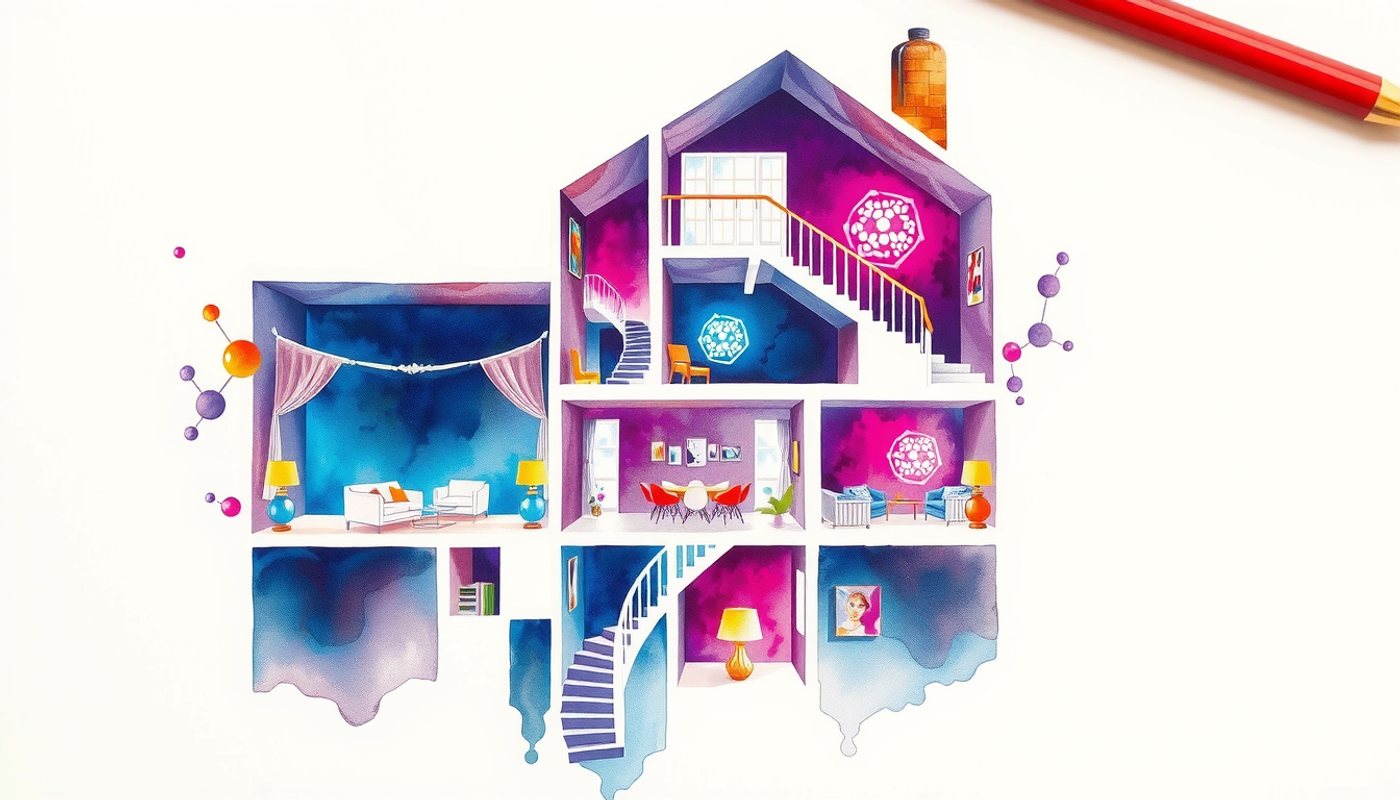
For molecular structures, the method of loci adapts naturally. Each amino acid gets a room in an imagined house. Glycine, the simplest, goes in the entrance hall. Just a hydrogen for a side chain. Nothing there. Tryptophan, with its bulky indole ring, gets the attic. Big and complicated, tucked away at the top. Arginine, with its positively charged guanidinium group, gets the kitchen. Always energetic. Always buzzing.
The technique sounds whimsical. The neuroscience behind it is anything but.
When the Brain Runs Out of Desk Space
John Sweller proposed cognitive load theory in 1988 [21], and it became one of the most influential frameworks in educational psychology. The core insight is simple. Working memory is tiny. If the demands of a learning task exceed its capacity, learning fails. Not because the material is too hard in principle. Because the presentation overwhelms the hardware.
Sweller distinguished three types of cognitive load. Intrinsic load comes from the material itself, from the number of elements that must be held in mind simultaneously. A single hydrogen atom has almost zero intrinsic load. A steroid ring system with four fused rings, multiple stereocenters, and branching side chains has enormous intrinsic load. Extraneous load comes from how the material is presented. Cluttered diagrams, redundant labels, split-attention effects (where the student must mentally integrate information from two physically separated sources) all add extraneous load without adding learning. Germane load is the working memory devoted to building new schemas, which is the actual goal [22].
The implications for chemistry are concrete. When a textbook diagram shows a Krebs cycle intermediate with full curved-arrow electron pushing, explicit hydrogen atoms, formal charges, color-coded lone pairs, and three different representation styles on the same page, a novice student's working memory overflows before the carbonyl group registers.
The solution is not to make students smarter. It is to design instruction that fits within the three-to-four-chunk bottleneck. Segment complex structures into subunits. Introduce functional groups before whole molecules. Use worked examples before problem sets. And strip diagrams down to essentials, adding complexity only after the baseline schema is secure.
Spacing, Retrieval, and the Molecular Clock Inside Your Neurons
Hermann Ebbinghaus locked himself in a room in 1885 and memorized 2,300 nonsense syllables. From that obsessive self-experiment came the forgetting curve, which showed that roughly half of newly learned material vanishes within an hour and about two-thirds within twenty-four hours [23]. The curve has been replicated with modern methods by Murre and Dros in 2015, confirming its shape with striking precision.
The antidote to forgetting has also been known for over a century. Spaced repetition distributes review sessions across time instead of cramming them together. Cepeda, Pashler, Vul, Wixted, and Rohrer conducted a meta-analysis of 184 articles and 317 experiments in 2006 and found that distributed practice produces ten to thirty percent better long-term retention than massed practice [24]. The effect holds across age groups, content types, and retention intervals.
But spacing alone is not enough. What you do during each session matters even more than when you do it.
Henry Roediger and Jeffrey Karpicke published a landmark paper in Science in 2006 showing that retrieval practice, actively pulling information from memory rather than passively reviewing it, produced about 150% better long-term recall than repeated study [25]. They called it the testing effect. And Karpicke and Roediger's 2008 Science paper confirmed that the critical ingredient was the act of retrieval itself, not the feedback [26].
For molecular structures, this means: do not stare at the textbook image of lysine. Close the book and draw lysine from memory. Get it wrong. Check. Try again tomorrow. Each retrieval attempt strengthens the memory trace through a process neuroscientists call reconsolidation, in which a retrieved memory briefly becomes labile and is restabilized in a stronger form [27].
In medical education, these findings translate directly to exam performance. Multiple studies have shown that spaced retrieval practice predicts USMLE Step 1 scores and reduces the decay of biochemistry knowledge across multi-year retention intervals [28]. A 2021 study published in the Journal of Graduate Medical Education showed that spaced instruction improved biochemistry knowledge retention by a statistically significant margin compared to traditional lecture-only approaches [29].
Molecules You Can Touch (and Spin, and Zoom Into)
Decades of research confirm that students struggle to translate between two-dimensional structural drawings and three-dimensional molecular reality. Wu and Shah reviewed the evidence in a 2004 paper in Science Education and identified this translation failure as a primary bottleneck in chemistry learning [1]. Harle and Towns extended the analysis in 2011, reviewing the spatial-ability-chemistry literature and showing that spatial visualization ability is one of the strongest predictors of organic chemistry grades [30].
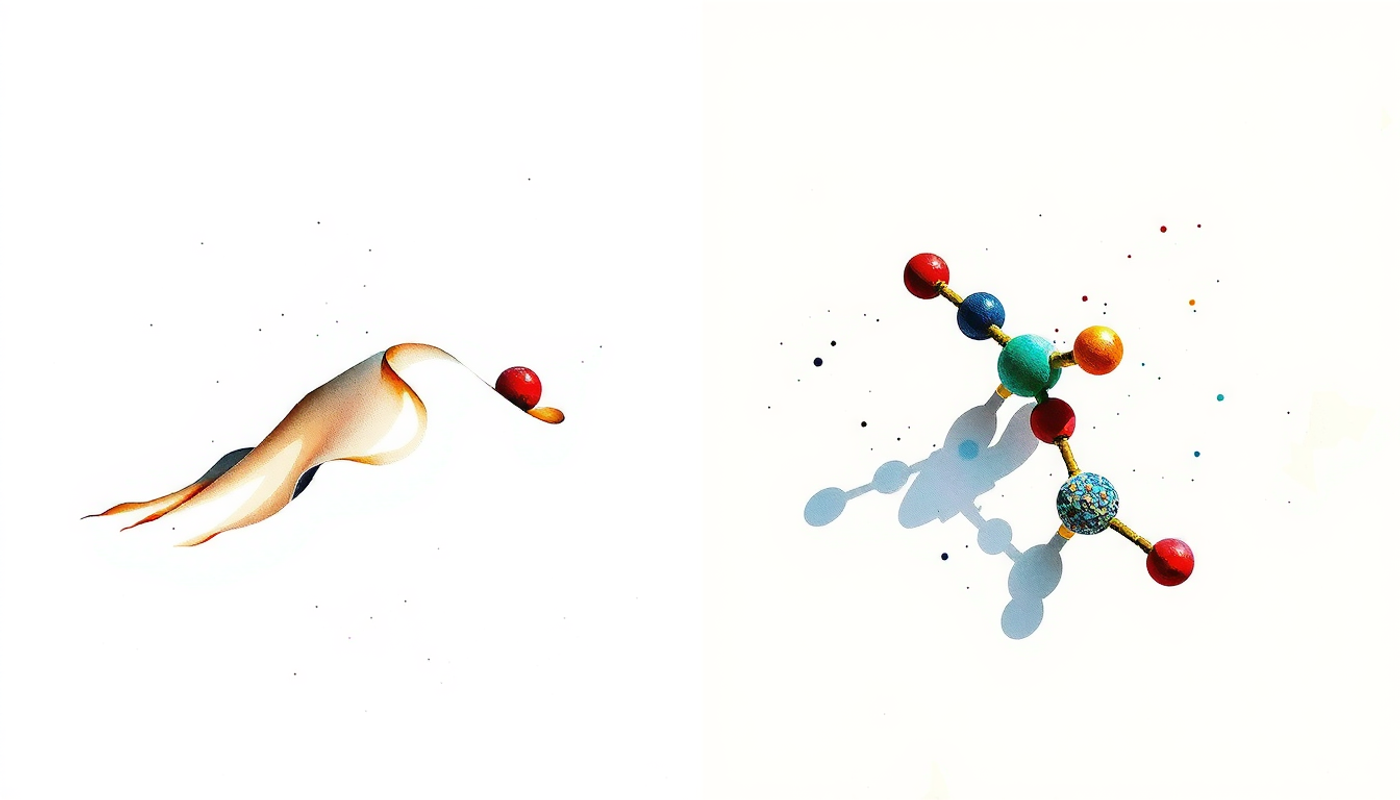
Physical ball-and-stick models were the original solution. They externalize mental rotation by letting the student physically turn the molecule. This reduces cognitive load by offloading spatial manipulation from working memory to the hands [31]. But physical models are limited. They cannot show electron density. They cannot animate conformational changes. And they do not scale to large biomolecules.
Augmented reality (AR) and virtual reality (VR) address these limitations. Garzón and Acevedo's 2019 meta-analysis of sixty-four quantitative studies (N = 4,705) found a medium effect size for AR on student learning gains (d = 0.68, p < .001) [32]. A larger meta-analysis by Garzón and colleagues in 2022, covering 134 quasi-experimental studies from 2012 to 2021, confirmed benefits across knowledge, skill, and performance outcomes [33]. Cai, Wang, and Chiang showed that AR-based chemistry instruction improved both conceptual understanding and science interest [34].
A VR study with eighty students found significant learning gains when molecular visualization was combined with lab simulations [35]. And a pilot study with thirty-two medical students showed significant pre-to-post improvement in pharmacology knowledge after a VR module [36].
Critically, three-dimensional tools benefit low-spatial-ability students disproportionately. Carlisle, Tyson, and Nieswandt showed in 2015 that physical and digital models narrow the achievement gap between students with high and low spatial ability [37]. This is spatial scaffolding. The tool does the rotation that the novice brain cannot yet do efficiently.
But VR is not magic. Motion sickness affects roughly twenty percent of users. Novelty effects fade. And the best-controlled studies show that the gains are clearest when the VR experience is integrated into a broader study program that also includes retrieval practice and spaced review. Technology that replaces active engagement with passive viewing produces little lasting benefit.
Mix It Up: Why Interleaving Outperforms Blocking
There is a natural temptation, when studying amino acids, to learn all the nonpolar ones first, then all the polar ones, then all the charged ones. Block by block. Category by category. It feels organized. It feels efficient.
It is not.
Eglington and Kang published a series of four experiments in 2017 showing that interleaved practice, mixing different categories together in random order, produced superior categorization of novel chemistry exemplars on a test two days later compared to blocked practice [38]. The interleaving advantage appeared for both simple hydrocarbons and more complex organic categories. A 2023 study with eighth-graders learning science categories found accuracy nearly twice as high after interleaved instruction, with an effect size of d = 1.05 [39].
Why? Interleaving forces the brain to discriminate between similar categories on every trial. When you see glycine followed by tryptophan followed by aspartate followed by valine, your brain must actively notice what makes each one different from the last. Blocking lets you coast. You see five nonpolar amino acids in a row and start pattern-matching passively without ever confronting the boundaries between categories.
The practical recommendation is nuanced: block during initial exposure (learn what the nonpolar family looks like as a group), then interleave aggressively during review (mix all families together and practice identifying which is which).
What Curiosity Does to Your Hippocampus
Matthias Gruber, Bernard Gelman, and Charan Ranganath published a study in Neuron in 2014 that changed how neuroscientists think about motivation and memory [40]. They showed participants trivia questions that varied in how curious the participants felt about the answers. While participants waited for the answer to a high-curiosity question, fMRI revealed increased activity in the midbrain (substantia nigra and ventral tegmental area), the nucleus accumbens, and the hippocampus. The dopaminergic reward circuit was firing.
The surprise came next. During the waiting period, the researchers flashed random faces on the screen. Faces that had nothing to do with the trivia. And participants remembered those faces better when they appeared during a high-curiosity state. Curiosity did not just enhance memory for the desired answer. It opened a window of enhanced encoding for everything.
Gruber and Ranganath formalized this in the PACE framework in 2019 [41]: Prediction, Appraisal, Curiosity, Exploration. When the brain predicts an answer, fails, appraises the gap as interesting (rather than threatening), and becomes curious, dopamine flows and the hippocampus encodes more efficiently.
For chemistry, this suggests framing structural learning around questions, not lists. "Why does histidine appear in so many enzyme active sites?" is a curiosity trigger. "Memorize the structure of histidine" is not. The structure is the same. The encoding depth is not.
Stress: The Double-Edged Sword
Test anxiety does not just feel bad. It measurably impairs the exact cognitive systems needed for molecular recall.
Vytal, Cornwell, Letkiewicz, Arkin, and Grillon showed in 2013 that experimentally induced anxiety disrupted spatial working memory across all difficulty levels [42]. Verbal working memory was more resilient. Spatial working memory was hit hardest. This is precisely the system that processes molecular geometry.
But the relationship between stress and memory is not simple. A 2023 Yale study by Goldfarb and colleagues found that hydrocortisone administration actually enhanced hippocampal connectivity and improved associative memory for emotionally arousing material [43]. Acute, moderate stress can sharpen encoding. Chronic, sustained stress degrades it. Kim and Diamond's reviews of glucocorticoid effects on hippocampal function describe this as an inverted-U curve: too little arousal and the brain is unfocused, too much and the hippocampus shuts down, but a moderate level enhances the very circuits needed for structural memory [44].
The practical implication: a small amount of pre-exam nervousness is actually helpful. But chronic sleep deprivation, sustained anxiety, and relentless pressure damage hippocampal function and undermine the spatial-mnemonic circuits that molecular memorization depends on. The study routine matters as much as the study technique.
The Structures That Matter Most
Not all molecular structures deserve equal study time. The MCAT, for example, tests biochemistry in roughly twenty-five percent of both the Chemical and Physical Foundations section and the Biological and Biochemical Foundations section [45]. Organic chemistry contributes an additional fifteen percent or more of the Chem/Phys section. A well-prepared test-taker will encounter dozens of structure-based questions on exam day.
The highest-yield targets, based on AAMC content outlines and decades of instructor experience, fall into four categories.
The twenty standard amino acids. Every medical student needs to know all twenty by name, three-letter code, one-letter code, side-chain structure, charge at physiological pH, and family membership. Grouping by family (nonpolar aliphatic, aromatic, polar uncharged, acidic, basic) and learning the families before the individual members exploits chunking. The mnemonic "PVT TIM HALL" encodes the ten essential amino acids [46].
Glycolytic and Krebs cycle intermediates. The metabolic pathways tested on the MCAT are best learned as spatial stories. Glycolysis takes a six-carbon glucose and breaks it into two three-carbon pyruvates. The Krebs cycle spins each two-carbon acetyl-CoA through eight steps. Chunking by carbon count (C6 to two C3s to two C2s) and by reaction type (oxidation, substrate-level phosphorylation, decarboxylation) reduces the apparent complexity.
Nucleotide structures. The five bases divide cleanly into two chunks: pyrimidines (one ring: cytosine, thymine, uracil) and purines (two rings: adenine, guanine). Remembering which is which is trivial once a student notices that the longer word (pyrimidine) has the shorter molecule (one ring).
Steroid and lipid structures. The four-ring steroid backbone and the basic architecture of fatty acids, phospholipids, and cholesterol appear repeatedly in MCAT passages.
Custers and ten Cate reviewed long-term retention of basic science knowledge in physicians and found that doctors retain roughly seventy-five percent of the biomedical knowledge of current medical students [47]. Knowledge decay is real but not catastrophic. The first twenty-four months show minimal loss. After that, the curve steepens. The students who used spaced retrieval during their training retained more.
The Limits of What We Know
No responsible account of this science should pretend the evidence is seamless. Several caveats deserve mention.
Most of the effect sizes discussed in this article come from laboratory studies with controlled materials and brief retention intervals. Real classroom results tend to be smaller, more variable, and dependent on implementation quality. A student who draws once in a notebook and never draws again will not see the drawing effect. A student who builds a memory palace but never revisits it will not see the loci effect. These techniques require sustained, deliberate practice.
The AR and VR enthusiasm in chemistry education research comes partly from short-duration studies where novelty effects may inflate apparent learning gains. Garzón and colleagues' 2022 meta-analysis explicitly flagged treatment duration as a moderator [33]. Multi-week studies with controlled comparisons remain rare.
The relationship between test anxiety and exam performance is also more complicated than it appears. Theobald and colleagues published a 2022 study with German medical students suggesting that prior knowledge fully mediates the anxiety-performance relationship [48]. In other words, students with high anxiety who also have high knowledge perform fine. The anxiety only hurts when knowledge is weak. This does not diminish the importance of managing chronic stress. But it does suggest that building solid knowledge is the best anxiety reduction strategy.
Memory reconsolidation, the idea that retrieved memories become temporarily labile and can be updated, is well established in fear conditioning paradigms [27]. Its direct application to educational settings is less certain. Not every retrieval event triggers reconsolidation, and the boundary conditions remain under investigation [49].
Finally, the MCAT content percentages cited here come from AAMC outlines that explicitly state percentages are approximations. Specific question counts on any given administration will vary.
Conclusion
The science converges on a single point. Memorizing molecular structures is best treated as a multimodal, spaced, generative, spatially organized activity. Not as a feat of willpower. Not as passive staring at textbook diagrams.
The brain that memorizes molecules well is the same brain that navigates cities, recognizes faces, and remembers where it left the keys. It uses the hippocampal spatial system, the ventral and dorsal visual streams, motor cortex, and prefrontal working memory in concert. Every technique described in this article, from chunking to dual coding to drawing to the method of loci to spaced retrieval, works by engaging more of these systems simultaneously. More codes. More retrieval pathways. More redundancy against forgetting.
The research is not perfect. Effect sizes from laboratories do not automatically transfer to lecture halls. AR goggles are not substitutes for pencil and paper. And no mnemonic trick can replace the slow, patient work of building genuine chemical understanding. But the direction of the evidence is clear and remarkably consistent. Students who draw structures by hand, organize them spatially, test themselves from memory at increasing intervals, interleave across molecular families, and approach the material with genuine curiosity will remember more, remember longer, and perform better on the exams that matter.
The most expensive study technique is the one that does not work. And cognitive science has been telling us for decades which ones do.
Frequently Asked Questions
How long does it take to memorize all 20 amino acids?
With chunking by family and daily spaced retrieval practice, most students can recognize all twenty amino acid structures within two to three weeks. Drawing each structure by hand daily, grouped by chemical property, accelerates the process compared to passive review of flashcards or textbook images.
Does mental rotation ability predict chemistry grades?
Multiple studies show a moderate to strong correlation between spatial visualization ability and organic chemistry performance. However, expert chemists bypass mental rotation by using analytical rules. Students with low spatial ability benefit most from three-dimensional models and augmented reality tools that externalize rotation.
Is the method of loci effective for scientific material?
Yes. Dresler and colleagues showed in a 2017 Neuron study that six weeks of method of loci training roughly doubled recall in untrained participants. The technique recruits hippocampal spatial navigation circuits and produces brain connectivity changes that persist for months after training ends.
Why does drawing help memory more than writing?
Drawing integrates three encoding channels simultaneously: semantic processing, visual imagery, and motor action. This creates a richer, more redundant memory trace than writing, which primarily engages semantic and motor codes. The drawing effect has been replicated across seven experiments by Wammes and colleagues.
How often should I review molecular structures to retain them?
Research suggests reviewing at expanding intervals: one day after initial study, then three days, then one week, then two weeks. Cepeda and colleagues' meta-analysis found that distributed practice produces ten to thirty percent better retention than massed practice across hundreds of studies.