Introduction
Sit in a chair. Put the phone in another room. No book, no music, no window worth staring at. Within a couple of minutes something starts to itch, and it is not physical. It is the pressure to do almost anything else.
That pressure has a name, and for most of scientific history nobody took it seriously. Boredom was treated as a complaint from children and idle workers, not a legitimate object of study. Then in 2012 a team led by John Eastwood at York University in Toronto proposed a definition that reorganised the whole field. Boredom, they argued, is the aversive state of wanting but being unable to engage in satisfying activity, and it should be understood in terms of attention [1].
Read that again, because the important word is wanting. A bored person is not unmotivated. A bored person is highly motivated and cannot find anywhere to spend it.
That single reframing turned boredom from a character flaw into a signal. And once researchers started treating it as a signal, the questions got sharper. What is being signalled? Why does time slow down when it fires? Why does it spike in adolescence and fade with age? Why do the most stimulating environments sometimes produce the most boredom? A large experience sampling study of American adults found boredom in only a small fraction of sampled moments, yet nearly two thirds of participants hit it at least once across ten days [2]. Rare in any given instant. Nearly universal across a week.
This is the story of how a dismissed feeling became one of the more interesting problems in cognitive science.
The Word That Arrived Late
There is a common story that Charles Dickens invented the word boredom in Bleak House. It makes for a tidy anecdote. It is also wrong.
Bleak House began appearing in serial form in 1852, and by then the noun was already circulating in English print. What Dickens did was make it fashionable, attaching it to Lady Dedlock and her exhausted aristocratic ennui. The historian Elena Carrera, in a Cambridge study of boredom as a historical emotion, traces a much longer lineage running back through the medieval concept of acedia, the noonday listlessness that afflicted monks, and further back to Seneca's descriptions of a nausea for life [3]. The feeling is old. The English word for it is young.
Other languages solved the naming problem differently, and the solutions are revealing. French uses ennui, which arrived in English in the seventeenth century and carries a heavier existential charge. German uses Langeweile, literally a long while, which encodes the central symptom directly into the vocabulary. Time stretching. That is the thing German named.
Science arrived even later than the word.
The first serious research came from factories, not laboratories. In 1937 the British Medical Journal ran a piece on the boredom of repetition work, examining what happened to industrial workers assigned to monotonous assembly tasks and treating their complaints as a genuine occupational problem rather than laziness [4]. The framing mattered. Boredom was costing output, and that made it worth measuring.
Two years later, Joseph Barmack at the College of the City of New York published a pair of papers that deserve more credit than they get. He put participants through deliberately tedious tasks and recorded their blood pressure while manipulating stimulants, room temperature and incentives [5], [6]. His method was crude by modern standards. His intuition was excellent. Barmack suspected boredom had a physiology, that it was a bodily state and not merely an opinion about a task. It took roughly seventy five years for imaging technology to catch up with that hunch.
Then the field went quiet. For decades boredom appeared mostly as a footnote in industrial psychology. In 1993 Cynthia Fisher published a paper in Human Relations with a title that says everything about the state of the literature: boredom at work, a neglected concept [7]. She defined it as an unpleasant transient state marked by a pervasive lack of interest and difficulty concentrating, and pointed out that almost nobody was studying it.
She was right. The turnaround took another twenty years.
What does this history mean for anyone reading now? Mostly that the folk theory of boredom is roughly two centuries old and the scientific theory is roughly fifteen years old. When someone says boredom means you have nothing to do, they are repeating a Victorian idea, not a research finding.
A Definition That Took A Century And A Half
Eastwood's 2012 paper did something deceptively simple. It stopped asking what boredom feels like and started asking what has to go wrong for boredom to happen at all [1].
The answer he and his colleagues landed on has three parts, and all three must be present.
First, attention fails to engage. Either the environment offers nothing worth locking onto, or the person cannot lock on even when something is there. Second, the person is aware of the failure. This is the part that separates boredom from pleasant daydreaming. Letting the mind drift during a walk feels fine. Letting it drift during a lecture you are supposed to be following feels awful, and the difference is entirely in whether you notice and mind. Third, the failure gets blamed on the outside world. Boredom points outward. Nobody says my attention regulation system is signalling suboptimal engagement. They say this meeting is boring.
Take away any one ingredient and the state becomes something else.
That last point turned into an empirical question, and the results are among the cleaner findings in the field. Yael Goldberg and colleagues, working with Eastwood and James Danckert, ran a study specifically designed to test whether boredom is just a repackaged version of something already named. They compared boredom against apathy, anhedonia and depression across multiple measures. The states came apart [8]. Apathy lacks the wanting. Anhedonia is an inability to take pleasure. Depression carries hopelessness and turns inward. Boredom keeps the desire fully intact and simply cannot spend it.
Wijnand van Tilburg and Eric Igou pushed the same question further, comparing boredom against a spread of negative emotions including sadness, anger and frustration. Boredom held its own profile, distinguished particularly by the combination of low challenge and a sense that the activity lacks point [9]. Frustration has a target. Boredom does not. That is the tell.
The attention claim also got tested directly rather than assumed. Andrew Hunter and Eastwood examined whether state boredom actually degrades sustained attention or whether the relationship runs the other way. Their work supports a genuine attentional cost, though the causal direction is messier than the original framing suggested [10]. Earlier, Ela Malkovsky and colleagues had shown that people high in boredom proneness perform worse on sustained attention tasks, and that the high scorers split into two recognisable groups: one apathetic and prone to attention lapses, one agitated and restless [11].
Two different roads into the same unpleasant room.
The split between state and trait runs through everything in this field and it is worth pinning down early. State boredom is what a person feels in a particular situation at a particular moment. Trait boredom, usually called boredom proneness, is how readily a given person arrives there across situations. Cynthia Fisher's neglected concept paper already had both halves in view when she described boredom as transient and situational while acknowledging that some people meet it far more often than others [7].
The distinction has teeth because the two versions predict different things. State boredom tells you something about the environment. Trait boredom tells you something about the regulatory machinery a person brings to that environment. Confusing them produces the familiar and unhelpful conclusion that bored people are simply boring people, which the evidence does not support.
What does this mean in practice? Mainly that the standard advice to fix boredom by adding stimulation misses half the cases. If attention is failing because nothing is engaging, more input helps. If attention is failing because the person cannot settle it anywhere, more input makes it worse. The two look identical from outside and respond to opposite interventions. Anyone who has tried to study while a screen glows in the corner has run this experiment personally, without meaning to. For a deeper treatment of how attention gates what gets stored at all, see the work on attention and memory.

Two Ways The Mind Comes Unstuck
By 2018 the attention account had a rival, and the resolution turned out to be more useful than either side alone.
Erin Westgate and Timothy Wilson at the University of Virginia published a model in Psychological Review that most researchers now treat as the working framework. They called it MAC, for meaning and attentional components, and its central claim is that boredom has two independent causes rather than one [12].
The attentional cause is a mismatch between what a task demands and what a person can supply. Crucially, the mismatch runs in both directions. A task that is far too easy leaves attentional capacity idling with nowhere to go. A task that is far too hard makes sustained attention impossible, so the mind slides off. Both feel like boredom. This is why the assumption that boring equals easy is wrong roughly half the time.
The meaning cause is separate. An activity can absorb attention completely and still feel pointless, and that pointlessness produces boredom on its own track. Van Tilburg and Igou demonstrated this in a series of studies showing that lack of challenge and lack of meaning are distinguishable boredom experiences, not the same thing described twice [13].
The meaning strand produced one of the more unexpected findings in the literature. Van Tilburg, Igou and colleagues tested whether religiosity changes boredom, reasoning that people with a strong framework of meaning should find monotonous tasks less unbearable. Across several studies, higher religiosity was associated with lower boredom during meaningless tasks and a weaker drive to search for meaning afterwards [14]. The task did not change. The interpretive frame around it did, and that was enough.
There is a third piece worth adding, from outside boredom research proper. Robert Kurzban and colleagues proposed that the felt cost of mental effort is essentially an opportunity cost calculation [15]. The brain tracks what else its limited executive resources could be doing. When the current task scores badly against the alternatives, effort starts to feel expensive. Plug that into MAC and the picture sharpens: boredom is what the accounting feels like from the inside when the current allocation of attention looks like a bad deal.
Which produces the paradox that gives the model its teeth. Boredom should rise when good alternatives are close by, not when they are absent. A dull task in an empty room is more tolerable than the same dull task in a room full of interesting distractions.
Anyone who has tried to work in a busy cafe has run this experiment. The task did not get worse. The competition got better, and the accounting shifted underneath the task without the task changing at all.
This reverses the intuition almost everyone holds. The folk model says boredom is a shortage of options. The opportunity cost model says boredom is often an abundance of options that you are not currently taking. Which explains something otherwise puzzling about modern life, where access to stimulation has never been higher and complaints about boredom have not correspondingly vanished. Every unclaimed alternative raises the cost of the thing you are actually doing.
There is a useful corollary for anyone trying to concentrate. Removing distractions is not merely about avoiding interruption. It lowers the computed value of the alternatives, which makes the current task look like a better deal, which makes attention cheaper to sustain.
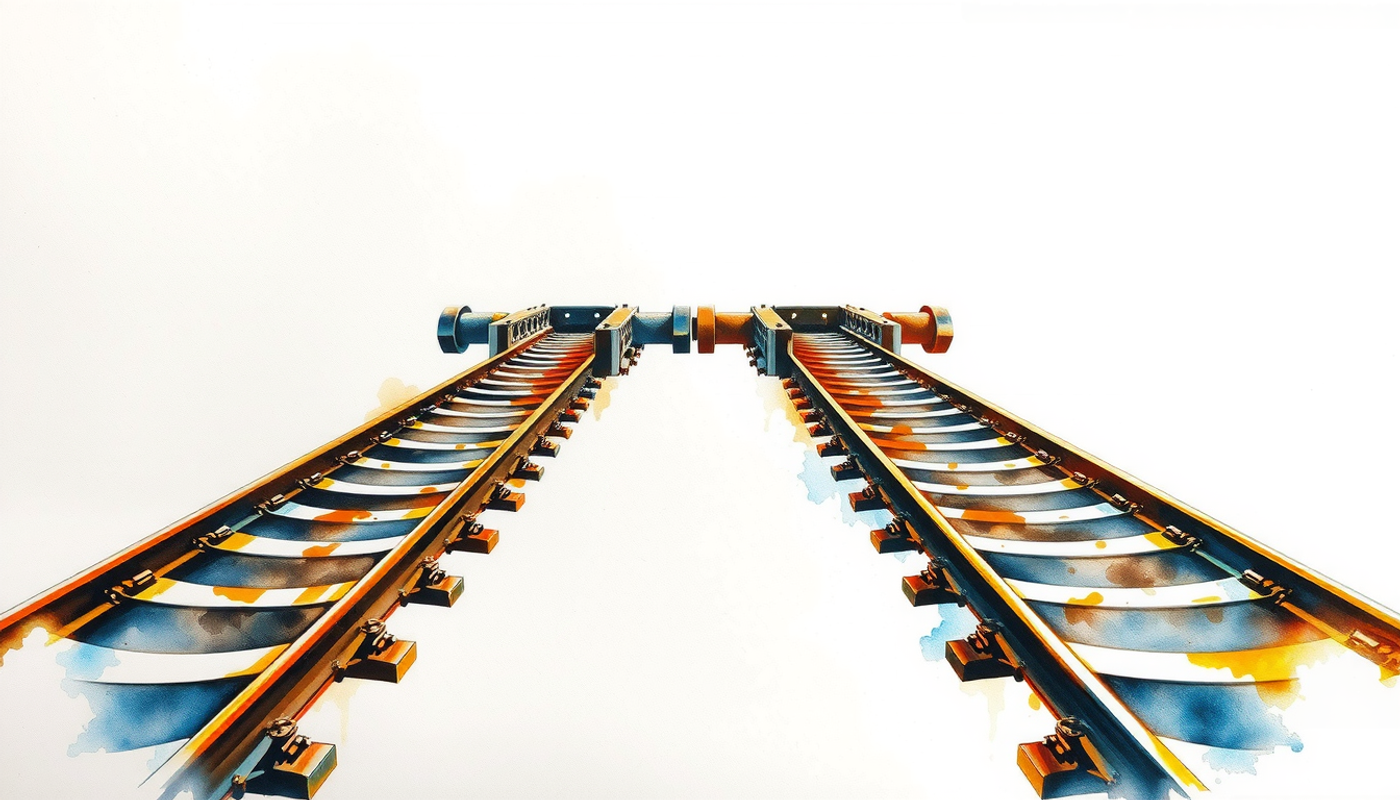
The practical reading of this diagram is worth sitting with. Two separate gates, either of which can dump you into the same state. Fixing the wrong gate does nothing. Making a pointless task more difficult does not make it meaningful. Making a meaningful task easier does not make it engaging.
Bored Enough To Shock Yourself
In July 2014 the journal Science published a paper with a mild title and an alarming result.
Timothy Wilson and a team spanning Virginia and Harvard ran eleven studies asking a straightforward question. How do people handle being alone with their thoughts for six to fifteen minutes, with nothing to do and nothing to look at? The answer was that most disliked it considerably [16].
Then came the study everyone remembers. Participants first sampled a mildly painful electric shock and many reported they would pay money to avoid experiencing it again. They were then left alone to think, with the shock device still available. Among men, 67 percent gave themselves at least one shock during the thinking period, not counting one outlier who administered 190 shocks to himself. Among women the figure was 25 percent.
People who had just paid to avoid a shock chose the shock over their own company.
The result travelled fast and got oversimplified faster. It is worth noting that the study drew a published critique. Kieran Fox, Evan Thompson, Jessica Andrews-Hanna and Kalina Christoff argued in Frontiers in Psychology that the aversiveness of unstructured thinking had been overstated, that the instructions and laboratory setting shaped the outcome, and that plenty of contemplative traditions manage exactly this activity without distress [17]. The disagreement is genuine and unresolved. What survives it is the narrower point: for a substantial number of people in an unstructured setting, a bad stimulus beat no stimulus.
Which is precisely what a functional theory of boredom would predict.
Shane Bench and Heather Lench had argued a year earlier that boredom exists to push organisms off unrewarding goals and toward alternatives. In their account, attention to the current task drops, the experience turns aversive, and autonomic arousal rises to prepare the pursuit of something else [18]. They also noted how thin the literature was. Their own database search found roughly 128 experimental articles per emotion for happiness, sadness, anxiety and anger, against 12 for boredom.
Twelve.
The stimulus seeking prediction held up outside the shock paradigm too. Remco Havermans and colleagues in Maastricht showed that bored participants both ate more and inflicted more pain on themselves than controls, in a study that neatly connects the eating literature and the self administered pain literature under one mechanism [19]. The brain wants input. It is not fussy about the sign.
There is a friendlier version of the same drive. In 2014 Sandi Mann and Rebekah Cadman at the University of Central Lancashire ran what has become the standard boredom and creativity paradigm. One group copied numbers out of a telephone directory for fifteen minutes. Magnificently tedious. Both the bored group and a control group were then asked to generate as many uses as possible for a pair of plastic cups. The bored group produced more creative responses [20].
The proposed mechanism is that boredom loosens focused attention and lets the mind range further, which is the condition divergent thinking needs.
So what should a person actually do with this? The honest answer is that boredom reliably produces a search, and the search does not care whether it lands on something good. Same signal, wildly different destinations. That is why the same state shows up in the literature on creative insight and in the literature on risky behaviour.
Worth noticing what the search is not. It is not a hunt for pleasure. Participants in the shock study were not seeking enjoyment, and participants copying phone numbers were not rewarded for creativity. In both cases the system was pushing for change of state, and change of state is a lower bar than improvement. A negative stimulus qualifies. A pointless one qualifies. Anything that is not the current nothing qualifies.
Which reframes the modern reflex of reaching for a phone the instant boredom appears. That reflex is not weakness. It is the search working exactly as designed, arriving at the nearest available target in under two seconds. The design was built for an environment where the nearest available target was usually a person, a tool or a problem. The target has changed. The mechanism has not.
What The Bored Brain Actually Does
Here is where popular science articles usually go wrong, so it is worth being precise.
There is no consensus brain map of boredom. No replicated whole brain imaging study has identified a boredom centre, and the confident lists of regions that circulate online are largely extrapolated from adjacent literatures on interoception, reward and mind wandering. What does exist is a set of smaller, solid findings that constrain the picture without completing it.
Start with the body, because that evidence is the cleanest. Colleen Merrifield and James Danckert at the University of Waterloo characterised the psychophysiological signature of boredom in a sample of 72 participants, comparing a boredom induction against sadness. Boredom produced rising heart rate, decreased skin conductance and increased cortisol [21].
That combination is not what most people expect. Boredom is not a low arousal shutdown. It looks more like agitation with nowhere to discharge. Barmack's 1939 hunch, confirmed with better instruments seventy five years later.
On the imaging side, Danckert and Merrifield later scanned healthy participants across four conditions: a resting state scan, a sustained attention task, a video induction validated to produce boredom, and a video induction validated to produce interest. Using independent components analysis, they found common correlated activation in posterior regions of the default mode network, the system that comes online when attention turns inward rather than outward. The boredom and sustained attention scans were also differentiated from rest by anticorrelated activity in the anterior insula, the region that monitors internal bodily state [22]. Readers who want the fuller picture of that inward facing system can find it in the piece on the default mode network.
One study, modest sample, careful conclusions. That is the honest scale of the evidence.
It is worth pausing on why boredom imaging is so hard, because the difficulty is not incidental. Boring someone inside a magnetic resonance scanner is a strange proposition. The machine is loud, unfamiliar and physically confining, all of which work against the state a researcher is trying to induce. Boredom needs monotony and low novelty, and a scanner supplies neither. Most inductions therefore rely on video clips validated in advance to produce reported boredom, which is a reasonable compromise and still a compromise.
Then there is the timing problem. Boredom builds. It is not a spike that can be locked to a stimulus onset, which is the design that functional imaging handles best. A state that develops over minutes and intensifies with duration is close to the worst case for a method optimised for events lasting seconds. That mismatch, more than any lack of scientific interest, explains why the regional picture is still incomplete.
The most direct fMRI link to boredom driven behaviour came from a different angle. Dennis Dal Mas and Bianca Wittmann designed a task where boredom shifted purchasing choices, and found that caudate and insula activity tracked the boredom elicited bias [23]. The caudate sits inside the striatum, part of the reward evaluation machinery, which is exactly where a theory about opportunity costs would predict boredom to show up. Anyone interested in how that reward system shapes learning more broadly will find the groundwork in the article on dopamine and learning.

Electroencephalography has been more productive than fMRI here, mostly because you can bore someone properly outside a scanner.
Sammy Perone, Elizabeth Weybright and Alana Anderson at Washington State University tracked frontal EEG asymmetry across a deliberately boring task. Frontal asymmetry compares activity between left and right frontal regions and is conventionally read as an approach versus withdrawal signal. Their finding was that people low in trait boredom showed a leftward shift over the course of the task, consistent with an active attempt to re-engage [24]. The regulation was visible in the signal.
A follow up study manipulated whether participants encountered an easy task or an optimally challenging one, and in which order, across 113 participants. The team measured frontal asymmetry alongside the theta to beta ratio as correlates of attentional control [25].
A caution belongs here. The theta to beta ratio is a correlate, not a cause. It indexes a shift from externally focused processing toward internally focused processing. Writing that a raised ratio causes boredom inverts the relationship, and that inversion appears constantly in popular coverage.
Separately, Ofir Yakobi, James Boylan and Danckert combined behavioural and EEG measures and found evidence for reduced attentional control and weakened performance monitoring during boredom [26]. The bored brain is not merely disengaged. It is worse at noticing its own errors.
One last distinction, because it gets blurred everywhere. Mind wandering and boredom are not synonyms. Jonathan Smallwood and Jonathan Schooler's review of mind wandering describes a self generated thought process that can be pleasant, productive and even adaptive under low external demand [27]. Boredom is aversive by definition and carries a demand for change. Mind wandering is often the response to boredom, not the thing itself. For the related question of why sustained external focus is so effortful, see the discussion of deep focus and sustained attention.
Why The Clock Betrays You
Ask anyone to describe boredom and time shows up in the first sentence. This is the symptom German encoded into the word itself, and it has a mechanism.
John Watt published the early direct test in 1991, showing that people high in boredom proneness perceived time as passing more slowly during a tedious task [28]. Danckert and Ava-Ann Allman followed in 2005 with a temporal estimation study comparing high and low boredom prone individuals, finding systematic differences in how duration was judged [29].
The neural account came from a different research programme entirely.
Marc Wittmann and colleagues used fMRI to track how the brain accumulates a sense of elapsed time, and found ramp like activity in the posterior insula that builds across a duration [30]. Wittmann later developed this into a broader argument in Nature Reviews Neuroscience: the felt passage of time is built out of bodily signals, and the insula, which represents internal bodily state, is where that accumulation happens [31].
Follow the logic. When nothing external captures attention, attention turns toward internal state. Internal state is exactly what the insula tracks. More attention on the internal accumulator means more accumulated signal, which reads as more elapsed time. Boredom does not slow the clock. It removes everything that was distracting you from watching it.
Joanna Witowska, Stefan Schmidt and Wittmann tested this in a real waiting situation rather than a laboratory task, with participants left without devices. Boredom mediated the relationship between self regulation and slowed subjective time [32]. People who regulate attention well were less bored, and being less bored was what kept time moving.
The theoretical scaffolding comes from Sylvie Droit-Volet and Warren Meck, whose account of how emotion colours duration perception explains why arousal and attention distort the felt length of an interval [33]. Attention diverted from timing shortens perceived duration. Attention parked on timing lengthens it.
The picture is not perfectly tidy, and the field is honest about that. Emily Weiss, McWelling Todman and colleagues examined state boredom, trait boredom, time perception and task appraisals together, and found that expectation drove the sense of dragging time while state and trait boredom themselves were not associated with perceived duration in the way the standard account predicts [34]. Anticipating that something will drag may do more work than the boredom itself.
Anyone who has watched a kettle knows the practical version. Attention has to go somewhere. Give it the clock and the clock gets slower.

How To Put A Number On A Feeling
Before boredom could be studied properly, someone had to measure it. That turned out to be harder than it sounds, and the measurement history explains several of the field's arguments.
Richard Farmer and Norman Sundberg built the first serious instrument in 1986. The Boredom Proneness Scale ran to 28 items and aimed at the trait, meaning how susceptible a person is in general rather than how bored they feel right now [35]. It dominated the field for decades and it has a well documented problem.
Stephen Vodanovich reviewed the psychometric literature in 2003 and found the situation unsatisfying. Different research groups extracted different factor structures from the same scale, and the absence of an agreed definition of boredom had left the measurement of it fragmented [36]. You cannot build a stable instrument for a construct nobody has defined. That review is part of why Eastwood's 2012 definitional paper mattered so much.
The state side arrived in 2013. Shelley Fahlman, Kimberley Mercer-Lynn, David Flora and Eastwood published the Multidimensional State Boredom Scale, 29 items across five factors: disengagement, high arousal, low arousal, inattention and time perception [37]. Notice that time perception is baked in as its own dimension. The researchers who built the scale considered slowed time definitional rather than incidental.
Then the trait measure got a haircut. Andriy Struk, Jonathan Carriere, Allan Cheyne and Danckert published a Short Boredom Proneness Scale in 2017, reducing the original to 8 items with a single dimension [38]. Shorter, cleaner and now the standard trait measure in most new work.
Struk also contributed a conceptual reframing worth knowing about. Working with Abigail Scholer and Danckert, he approached boredom proneness as a self regulatory phenomenon rather than a personality quirk, tying it to how people set and pursue goals [39]. Boredom proneness, in that reading, is closer to a difficulty launching than a shortage of interests.
Why does any of this matter to a non researcher? Because measurement decides what gets found. A scale that treats boredom as a stable personality trait will produce studies about the kind of person who gets bored. A scale that treats it as a state will produce studies about the kind of situation that produces boredom. Both exist, and the answers they give differ. The experience sampling evidence suggests situation wins most of the time, which is a considerably more hopeful finding than the trait framing implies.

Bored In The USA
In 2017 a team led by Alycia Chin published the largest study of everyday boredom yet attempted, and the numbers deserve to replace most of what circulates online.
The researchers used experience sampling, meaning participants were pinged at intervals during ordinary life and asked what they were doing and feeling at that exact moment. The dataset covered 1.1 million reports from 3,867 American adults. Boredom appeared in 2.8 percent of sampled moments. Across a ten day window, 63 percent of participants reported being bored at least once [2].
Both numbers matter and they point in opposite directions. Boredom is rare in any given instant and nearly universal across a week.
The study also mapped who and when. Boredom co-occurred with loneliness, anger, sadness and worry. It ran higher among men, among younger people, among the unmarried and among lower income participants. Demographic differences in how people spend their time accounted for a meaningful slice of the variation, which supports a situational reading. Most everyday boredom is about circumstances, not character.
Classrooms are their own category. Ethan Yazzie-Mintz's report on the High School Survey of Student Engagement, covering 81,499 students across 110 schools in 26 states, found that roughly three quarters said they were bored in class because the material was not interesting, 39 percent said it was not relevant to them, and fewer than 2 percent said they were never bored [40].
Now for the part that needs saying plainly, because a handful of numbers get repeated constantly and none of them survive checking.
The pattern here is worth noticing. In every case the fabricated or garbled version is more dramatic than the real one, and in every case a real study exists that says something more interesting but less quotable.
There is a reason this happens repeatedly with boredom specifically. The topic sits at the intersection of universal experience and thin public understanding, which is the exact condition under which a confident number travels further than a careful one. A commissioned poll produces a headline figure in a week. An experience sampling study takes years and returns a percentage that requires a sentence of explanation. Only one of those survives being repeated.
The Classroom Where Attention Goes To Die
If boredom is an attention signal, education is where it does the most damage, and this is the corner of the literature that popular coverage almost entirely ignores.
Reinhard Pekrun spent a career building the framework. His control value theory holds that achievement emotions arise from two appraisals: how much control a person feels over an activity and how much value they place on it. In 2010, Pekrun, Thomas Goetz, Lia Daniels, Robert Stupnisky and Raymond Perry published a five study paper across North American and German samples, and the results were unambiguous. Boredom correlated positively with attention problems and negatively with intrinsic motivation, effort, elaboration strategies, self regulation and subsequent academic performance [41].
Every learning behaviour that matters, pointing the wrong way.
The measurement tool came the following year. Pekrun, Goetz, Anne Frenzel, Petra Barchfeld and Perry published the Achievement Emotions Questionnaire, which separates emotions experienced during class, during private study and during examinations [42]. That separation turned out to matter. Boredom during a lecture and boredom during solitary revision are not the same animal.
Then came the causal question, and this is the finding that should change how people think about a bored student. Pekrun, Nathan Hall, Goetz and Perry ran a longitudinal design across multiple waves and found reciprocal causation. Boredom lowered later achievement, and lower achievement raised later boredom [43].
A loop, not an arrow. Which means treating boredom as the mere by-product of poor performance gets the causality half wrong, and so does treating it as the sole cause.
Now the finding that ties back to MAC. Taylor Acee and colleagues examined academic boredom in under challenging and over challenging situations and found that both produce boredom, but not the same boredom [44]. Under challenge boredom carries restlessness and a search for stimulation. Over challenge boredom carries withdrawal and helplessness. Two distinct profiles, same reported label.
This is the practical heart of the whole article, so it is worth stating directly. A student who says the material is boring may be saying it is beneath them or may be saying they have lost the thread completely. The word is identical. The remedy is opposite. Add difficulty to the first and it re-engages. Add difficulty to the second and it collapses.
That is the optimal challenge problem, and it is the same territory covered in the piece on flow state and optimal difficulty. There is a narrow band where a task is hard enough to occupy attention fully and not so hard that attention slides off. Outside that band in either direction, boredom.
Repetition sits awkwardly inside this framework, and honesty requires saying so. Effective learning demands returning to material after you have partly forgotten it, which is unavoidably repetitive and frequently dull. The research on productive struggle explains why the more tedious approach often outperforms the pleasant one, a tension explored in the article on interleaving versus blocking. Mixing material rather than blocking it keeps difficulty higher and keeps attention working, which is uncomfortable and effective at the same time.
There is a further complication that the AEQ was built to catch. Boredom during a lecture, boredom during private revision and boredom during an examination are separable experiences with different antecedents [42]. A student can be gripped in class and bored to tears alone with the same material an hour later. The variable that changed was not the content. It was control, pacing and the absence of any external structure holding attention in place.
Solitary revision is the harder case and it gets the least attention. In a classroom, the environment supplies pacing, social presence and interruption, all of which prop up engagement whether or not the learner is doing anything. Alone at a desk, the entire attentional burden falls on the person. The MAC model predicts exactly what happens next. If the material is already partly known, the attentional demand drops below what the learner has available, capacity idles, and boredom fires. Familiarity feels like understanding right up until it stops holding attention at all.
That creates the tension at the centre of effective study. Returning to material after partial forgetting is what makes it stick, and it is also what makes it dull, because on the second and third pass the content is no longer novel. The pleasant version of revision, rereading something that already feels familiar, is both the least effective and the most boring, which is an unusually convenient alignment. The boredom is reporting real information. Nothing is being demanded.
One more finding, and it is slightly unnerving. Katy Tam and colleagues ran an experience sampling study in real classrooms measuring teacher boredom and student boredom together. Teacher boredom predicted student boredom and reduced student motivation [45]. The state spreads.
What does this mean for anyone studying or teaching? Mainly that boredom in a learning setting is diagnostic information rather than a discipline problem. It reports a mismatch. The useful next question is never how do I push through, but which mismatch is this.

Fifteen Is Peak Boredom
Boredom is not evenly distributed across a life. It has a peak, and the peak is adolescence.
Elizabeth Weybright, John Schulenberg and Linda Caldwell analysed data from Monitoring the Future, an annual national survey of American 8th, 10th and 12th graders. Their sample ran to 106,784 students, and they tracked boredom from 2008 to 2017. After a non significant dip between 2008 and 2010, boredom rose significantly through 2017 [46]. The increase appeared across grades and was somewhat steeper and earlier among girls.
Why adolescence? Several explanations sit on top of each other and none has been cleanly separated from the others.
The first is structural. Adolescents have unusually little control over how they spend their days, and control is one of the two pillars of Pekrun's model. Low control plus low perceived value is the exact recipe for boredom, and school delivers both to a large number of teenagers simultaneously.
The second is developmental. The adolescent brain is undergoing extensive reorganisation of exactly the systems that regulate attention and evaluate reward, and the prefrontal machinery that supports sustained self regulation is among the last to mature. The elimination of unused connections during this period is covered in the article on synaptic pruning in the adolescent brain. A system in the middle of rewiring its reward thresholds is a system that will find ordinary stimulation less satisfying.
The third is behavioural, and it comes with real stakes. Weybright and colleagues examined leisure boredom in South African adolescents and found associations with substance use, while distinguishing state from trait leisure boredom [47]. When a strong signal to seek stimulation arrives in a person with limited legitimate options, the search finds what is available.
Cross cultural work is thinner than it should be. One of the few direct comparisons came from Norman Sundberg, Carl Latkin, Farmer and Jihad Saoud, who compared boredom in young adults across cultural groups and by gender [48]. The gender picture across the literature is genuinely mixed. The American experience sampling data show more everyday boredom among men [2], while the adolescent trend data show a steeper rise among girls [46]. Those are different measures on different populations, and anyone flattening them into a single claim about men and women is overreaching.
The reassuring part is that the peak passes. Boredom proneness declines across the lifespan, which fits both the control explanation and the developmental one. Adults choose more of their own activities and their reward systems have settled.
Which suggests the adolescent spike is less a defect than a transition artefact. A system recalibrating what counts as sufficiently stimulating will, for a period, find most of what it encounters insufficient. Combine that with a daily schedule almost entirely determined by other people and the result is close to inevitable.
The practical reading matters for anyone dealing with a bored teenager. The complaint is usually treated as an attitude to be corrected. The research suggests it is closer to a status report from a control system with unusually little to control. Restoring some genuine autonomy over how time gets spent addresses the appraisal that generated the signal. Providing more entertainment does not, because entertainment supplies stimulation while leaving the control problem exactly where it was.

Not Sadness, Not Laziness
Boredom keeps company with a set of harder outcomes, and the research on those associations needs careful reading. Correlation is doing most of the work, sample sizes are often modest, and none of this is diagnostic.
The starting point is the separation established earlier. Goldberg, Eastwood, LaGuardia and Danckert demonstrated empirically that boredom is not a variant of apathy, anhedonia or depression [8]. That distinction is what makes the rest of this section coherent rather than circular.
The most instructive line of work came out of brain injury, and it began with a personal observation. Danckert's older brother crashed a car into a tree in 1990 and sustained head trauma. He had been a drummer. After recovery, drumming no longer satisfied him, and the complaint he repeated was not depression or apathy. It was boredom. Deeply frustrating boredom about things he used to love.
Danckert built a research programme around it. With Goldberg he examined boredom and depression after traumatic brain injury, finding the relationship strongest in moderate to severe cases and driven by an unmet need for external stimulation [49]. Julia Isacescu and Danckert later provided objective evidence that brain injury raises boredom proneness, and linked it to reduced self control and elevated aggression and anger [50].
The mechanism proposed is not that injury creates a boredom module. It is that injury degrades the self regulatory capacity that normally converts a boredom signal into productive action. The alarm still fires. The response system that used to answer it is weaker.
Attention regulation is the common thread across the other associations too. Malkovsky's two profiles, the apathetic and the agitated, mapped onto different regulatory failures [11]. Eric Dahlen and colleagues found boredom proneness related to anger and aggression, with the relationship running through impulsiveness and sensation seeking rather than directly [51]. Those mediators are the interesting part. Boredom does not produce aggression. Boredom produces a search, and impulsiveness determines where the search goes.
Ayşenur Kılıç, van Tilburg and Igou demonstrated the same logic experimentally, showing that risk taking increases under boredom [52]. Risk is stimulating. That is the entire attraction.
Read together, these findings describe one mechanism producing wildly different outcomes depending on what is available and how well the person regulates. Same signal in a well resourced environment produces creativity, career changes and curiosity. Same signal in a poorly resourced environment with weak regulation produces something else. The literature on creative benefit and the literature on harmful outcomes are describing the same alarm answered differently.
The Argument That Is Still Open
A good science article should end by admitting what remains unsettled, and boredom research has plenty.
The largest open question is whether the functional account is sufficient. Danckert and Andreas Elpidorou published a paper in Trends in Cognitive Sciences with the pointed title in search of boredom, beyond a functional account [53]. Their argument is that saying boredom is a call to action describes what it does without specifying how it does it. A signal that says change something is not yet a mechanism.
Elpidorou had spent years making the positive case. In the bright side of boredom he argued that boredom is a regulatory state that keeps people connected to what they actually care about [54], and in the good of boredom he developed the case that without it there would be no internal pressure to leave situations that do not serve you [55]. The critique in Trends in Cognitive Sciences is a friendly one, from someone who helped build the position.
Two attempts at a mechanism have followed.
The first is the Boredom Feedback Model from Katy Tam, van Tilburg, Christian Chan, Igou and Hakwan Lau, published in Personality and Social Psychology Review. They model boredom as a feedback loop centred on attention shifts, driven by inadequate attentional engagement, meaning a gap between the level of engagement a person wants and the level they have [56]. The loop framing explains something the earlier models struggled with, namely why boredom intensifies over time rather than staying flat.
The second is the newest and most ambitious. In 2025, Chantal Trudel, Evan Risko, Eastwood, van Tilburg, Elpidorou and Danckert published a perspective in Communications Psychology proposing that boredom signals deviation from a cognitive homeostatic set point [57]. The analogy is to hunger and body temperature. The brain maintains a preferred level of cognitive engagement, and boredom is the error signal when actual engagement drifts away from it in either direction. Chronic boredom then becomes an allostatic problem, where the set point itself has shifted.
If that model holds, it unifies the attention account, the meaning account and the functional account under one control system. If it does not, the field is back to competing partial explanations. It is too new to know.
The digital question is where discipline is most needed, because the confident claims outrun the evidence badly. Katy Tam and Michael Inzlicht argued in Communications Psychology that people are increasingly bored in a digital age, and proposed mechanisms including divided attention and reduced meaning [58]. Their companion experimental work in the Journal of Experimental Psychology examined switching behaviour on digital media directly and found that switching between and within videos made people more bored rather than less [59].
That is a real experimental result and it is worth taking seriously. It is not the same as proving that smartphones caused a boredom epidemic. The trend data from Monitoring the Future show adolescent boredom rising across roughly the same period that smartphones spread [46], and correlated trends are not causal evidence. The honest summary is that there is a plausible mechanism with experimental support and a matching population trend, which together justify concern and do not justify certainty.
Two smaller unsettled points deserve mention. The time perception mechanism is not fully consistent, given the null findings on state and trait boredom in the Weiss study [34]. And the neuroimaging evidence remains too thin to support the confident regional maps that circulate. Small samples, few replications, no consensus.
There is also a definitional argument that has never fully closed. Vodanovich's complaint from 2003, that the absence of an agreed definition had fragmented measurement, was partly answered by Eastwood in 2012 and partly not [36]. Researchers now broadly agree that boredom involves an engagement failure the person notices and dislikes. They agree considerably less on whether meaning belongs inside the definition or sits outside it as a cause, and that disagreement quietly shapes which studies get designed.
That is what an active field looks like from inside.

Conclusion
The most useful thing about boredom is that it is honest.
For most of history it was read as a moral failing, an accusation aimed at the person feeling it. The research of the last fifteen years reverses that. Boredom is not the absence of motivation. It is motivation with nowhere to go, and the state fires precisely because the person wants engagement and cannot find it. That is why bored people are restless rather than sleepy, why their heart rate climbs, why they will accept a painful stimulus over an empty one.
The signal carries specific information, and this is the part that gets lost in most coverage. It reports a mismatch, but it does not say which one. The task may be too easy, leaving capacity idle. It may be too hard, so attention slides off. Or it may be perfectly matched and simply pointless. Three different diagnoses arriving under one label, which is why generic advice about boredom so often fails. The classroom research makes the cost of that ambiguity concrete. A bored student may need harder material or easier material, and treating the complaint as a discipline problem answers neither.
What remains genuinely unresolved is the mechanism. There is no consensus brain map. The physiological signature is solid and the regional picture is not. The homeostatic set point model published in 2025 is the most ambitious attempt yet to unify the pieces, and it is far too recent to call settled.
But the practical implication does not depend on winning that argument. Boredom is an evaluation. It is a system reporting that the current allocation of attention is a poor use of a finite resource, and asking for a better one. The reflex to silence it within seconds, by reaching for the nearest bright rectangle, does not answer the question. It only cancels the notification.
The feeling is not the problem. It is the report.
Frequently Asked Questions
Is boredom the same thing as depression?
No. A 2011 study by Goldberg and colleagues tested boredom directly against apathy anhedonia and depression and found them empirically distinct. Boredom preserves the desire to engage and blames the environment. Depression involves hopelessness and turns inward. Apathy lacks the wanting entirely. They are separate states.
What part of the brain is responsible for boredom?
There is no consensus answer and no replicated brain map. Danckert and Merrifield found posterior default mode network activity during boredom induction along with anterior insula involvement and Dal Mas and Wittmann linked caudate and insula activity to boredom driven choices. The evidence is real but the samples are small.
Why does time feel slower when you are bored?
Attention has to point somewhere. When nothing external holds it attention turns inward toward bodily state which is what the posterior insula accumulates as a sense of elapsed duration. More attention on that accumulator means more perceived time. Watt showed the effect in 1991 and the neural account came later.
Does being bored actually make people more creative?
Sometimes. Mann and Cadman had one group copy numbers from a phone directory before a divergent thinking task and the bored group produced more creative responses. The proposed reason is that boredom loosens focused attention. The same signal can equally drive risk taking so the outcome depends on what is available.
Why are teenagers more bored than adults?
Three explanations overlap. Adolescents have little control over their schedules and control is central to Pekrun's model. Their attention and reward systems are still reorganising. And Weybright and colleagues found adolescent boredom rising across 106,784 students between 2010 and 2017 for reasons still debated.