
Introduction
In 1969, two psychologists at the University of Rochester handed twelve lists of random nouns to a group of college students and asked half of them to do something odd. Instead of memorizing the words, they were told to weave them into stories. The other half studied the lists however they wanted. On an immediate test, both groups scored near perfect. But when asked to recall all twelve lists at once, the storytellers remembered 93 percent of the words. The memorizers remembered 13 percent [1]. Same words. Same time. Seven times the result. The difference was not effort or intelligence. It was a specific cognitive operation that researchers now call elaborative rehearsal.
Elaborative rehearsal is the act of connecting new information to things you already know, giving it meaning, structure, and personal relevance rather than simply repeating it. It is the reason a medical student who builds a mental image of a drug's mechanism remembers it for years, while a classmate who recites the name fifty times forgets it by Thursday. And it is one of the most studied phenomena in the history of memory science, with roots stretching back to the 1960s and branches reaching into modern neuroimaging laboratories where scientists can now watch the process unfold inside a living brain [2].
This is the story of how that discovery happened, why it works at the level of neurons and synapses, where it fails, and what it means for anyone trying to learn anything that matters.

The Model That Started Everything
The story begins with a diagram. In 1968, Richard Atkinson and Richard Shiffrin at Stanford University published what would become the most influential model in memory research. Their paper, tucked inside Volume 2 of The Psychology of Learning and Motivation, proposed that human memory consists of three stores arranged in sequence: a sensory register that holds raw perceptual input for less than two seconds, a short-term store with a capacity of roughly seven items and a lifespan of about thirty seconds, and a long-term store of essentially unlimited capacity [3].
The critical idea was what happened between the short-term and long-term stores. Atkinson and Shiffrin proposed a rehearsal buffer inside the short-term store. Items entered this buffer and competed for limited refresh cycles. The longer an item stayed in the buffer, the more likely it was to transfer into long-term memory. More rehearsal equaled more learning. The equation seemed simple and elegant.
But it was wrong. Or at least, it was dangerously incomplete.
Studies in the late 1960s and early 1970s began chipping away at the rehearsal-quantity hypothesis. Endel Tulving showed in 1966 that repeatedly presenting words did not reliably improve free recall. Fergus Craik and Michael Watkins demonstrated in 1973 that subjects who were forced to maintain words in short-term memory for long periods, keeping them alive by rote repetition, performed no better on a surprise recall test than subjects who held them briefly [4]. Something was missing from the model. Sheer repetition was not enough. The question became: if not quantity of rehearsal, then what?
Two Minutes That Changed Memory Science
The answer arrived in 1972 from an unlikely pair at the University of Toronto. Fergus Craik, a Scottish-born psychologist who had grown frustrated with the box-and-arrow architecture of Atkinson-Shiffrin, teamed up with Robert Lockhart to write a paper that would be cited over ten thousand times. Published in the Journal of Verbal Learning and Verbal Behavior, their paper proposed scrapping the structural metaphor of memory stores entirely [4].
Memory, they argued, is not about where information is stored. It is about how deeply it is processed. They described a continuum running from shallow processing, which extracts only surface features like what a word looks like, through intermediate processing, which captures sound and phonological properties, to deep processing, which engages meaning, associations, and personal relevance. The deeper the processing, the more durable the resulting memory trace. They called it the levels-of-processing framework.
Two embedded concepts made the framework especially powerful. The first was elaboration, the richness and extent of processing at any given level. A word processed semantically could be processed shallowly within that level (does it fit a simple category?) or elaborately (does it fit into a complex sentence with vivid imagery?). The second was distinctiveness, the degree to which a memory trace differs from competing traces. Together, these concepts implied that elaborative rehearsal does not merely maintain information. It actively constructs a memory representation.
But a framework without data is just a hypothesis. The decisive test came three years later.
The Experiment That Proved Depth Matters More Than Time
In 1975, Craik joined Endel Tulving for a paper that would become the empirical backbone of the entire framework. Published in the Journal of Experimental Psychology: General, their ten-experiment series used a beautifully simple design [5].
Participants saw words flashed on a screen for about 200 milliseconds. Before each word appeared, they answered one of three types of orienting questions. Structural questions asked about physical appearance: "Is this word printed in capital letters?" Phonemic questions asked about sound: "Does this word rhyme with WEIGHT?" Semantic questions asked about meaning: "Would this word fit the sentence: 'He met a ___ in the street'?"
After processing many words this way, participants received a surprise recognition test. They had not been told to memorize anything. The results were stark. Recognition accuracy for structurally processed words hovered around 15 to 20 percent. For phonemically processed words, it climbed to around 50 percent. For semantically processed words, it reached 80 to 90 percent [5]. A three-to-four-fold advantage for meaning over appearance.
Critics immediately pointed out an obvious confound. Maybe participants simply spent more time on the semantic questions. More time, more learning. Craik and Tulving had anticipated this. In several experiments, response times for shallow questions were actually longer than for semantic ones. Yet recognition was still worse. Depth and time had been separated. Depth won.
In Experiment 9, they pushed further. Within the semantic level itself, they varied elaboration. Some words were encoded into minimal sentence frames like "She cooked the ___." Others were encoded into rich, complex frames: "The great bird swooped down and carried off the struggling ___." Cued recall for the elaborate condition was roughly double that of the simple condition. Elaboration was not binary. It was graded. The richer the connection, the stronger the memory.

What does this mean for someone sitting down to study? Reading a definition and repeating it is structural or phonemic rehearsal at best. Asking yourself why the definition is true, imagining a concrete example, or connecting it to something you already know is semantic elaboration. The difference in what you will remember next week is not marginal. It is enormous.
Intent Does Not Matter. Processing Does.
Three years before Craik and Lockhart published their framework, an experiment had already hinted at its core truth. In 1969, Thomas Hyde and James Jenkins at the University of Minnesota ran a study across seventeen groups of undergraduates that would quietly become one of the most important findings in encoding research [6].
Participants listened to lists of words while performing orienting tasks. Some tasks were semantic, like rating each word for pleasantness. Others were non-semantic, like checking whether the word contained the letter "e." Crucially, some participants in each group were told they would be tested later (intentional learning), while others were not told (incidental learning).
The results demolished the commonsense belief that trying to learn is what makes learning happen. When the orienting task was semantic, incidental learners performed just as well as intentional learners. When the task was non-semantic, both groups performed poorly, regardless of intent. The type of processing determined the outcome. The desire to learn did not.
This is a finding that has practical implications far beyond the laboratory. A student who highlights a textbook with great determination but never thinks about what the words mean is performing maintenance rehearsal with strong intent. A student who casually explains a concept to a friend over coffee, without any study goal in mind, is performing elaborative rehearsal incidentally. The second student will remember more. Not because of motivation, discipline, or study hours. Because of the cognitive operation performed on the material.
The Brain Regions That Build Lasting Memories
For two decades after Craik and Lockhart, the levels-of-processing framework remained a purely behavioral theory. Scientists could measure its effects in recall scores, but they could not see it happening inside a living brain. That changed in 1994.
Shitij Kapur and colleagues at the University of Toronto used positron emission tomography to scan participants while they performed either a shallow task (detecting the letter "a" in words) or a deep task (deciding whether each word described a living thing). The deep task produced a focal increase in blood flow in the left inferior prefrontal cortex, specifically in Brodmann areas 45, 46, and 47. The shallow task did not [7]. They had found the brain's semantic processing engine.
Four years later, Anthony Wagner, Daniel Schacter, and their colleagues at Harvard published a paper in Science that transformed the field. Using event-related functional magnetic resonance imaging, they showed something no one had demonstrated before: brain activity during a single encoding trial predicted whether that specific item would be remembered or forgotten on a later test [2]. Words that would later be recognized showed greater activation in the left inferior prefrontal cortex and the left medial temporal lobe during encoding. Words that would be forgotten showed less. The brain was stamping some memories with a "keep" signal and others with "discard," and the signal was tied to the depth of semantic engagement.
This subsequent memory effect, as it came to be called, has since been replicated hundreds of times. Otten, Henson, and Rugg extended it in 2001, showing that semantic encoding tasks produce larger subsequent memory effects in the left inferior prefrontal cortex than non-semantic tasks. The neural mechanism behind the behavioral levels-of-processing effect had been found.
But the prefrontal cortex is only half the story. Lila Davachi and colleagues at New York University clarified the other half. In a series of studies published between 2002 and 2003 in the Proceedings of the National Academy of Sciences, they showed that the hippocampus, that seahorse-shaped structure deep in the temporal lobe that serves as the brain's memory binding center, is specifically responsible for linking items into relational associations [8]. Elaborative rehearsal, by its nature, creates exactly these kinds of relational structures: word linked to image, fact linked to personal experience, concept linked to context. It is a quintessentially hippocampal process.
Staresina and Davachi demonstrated this in 2008. Hippocampal activity during encoding scaled directly with the number of features a participant would later remember about an item [8]. More elaboration at encoding meant more hippocampal engagement, which meant more detailed recall later. The brain was not just filing information. It was weaving it into a web.
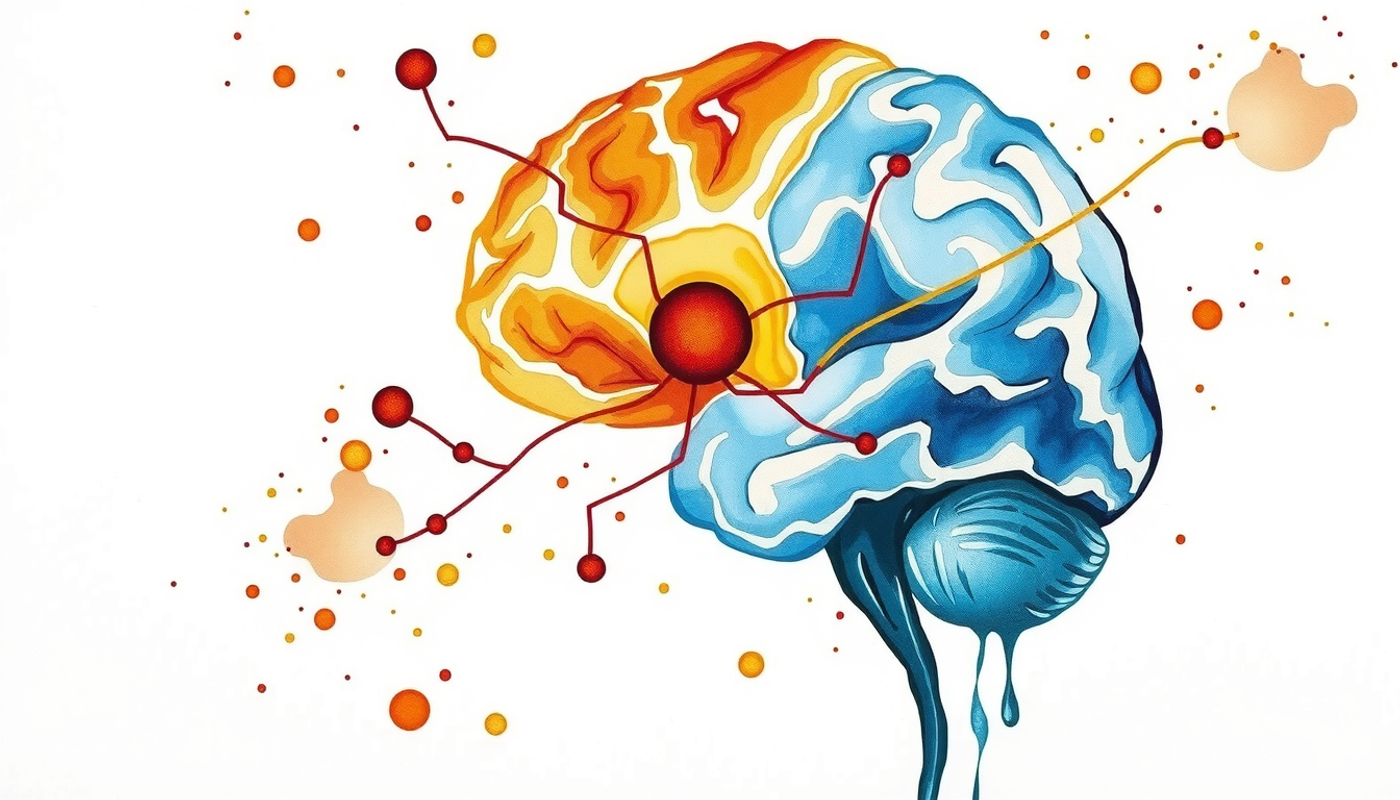
A 2019 study by Amlien and colleagues used graph-theoretic analysis of fMRI data from 113 adults to show that elaborative encoding increases the functional centrality of several brain regions, meaning these areas become more connected to the rest of the brain network during deep processing [9]. And a 2024 meta-analysis by Kim, published in Imaging Neuroscience, confirmed that the left inferior frontal gyrus and lateral temporal cortex show the strongest activation differences between items that are strongly remembered and those that are forgotten [10].
The picture is now clear. When you elaboratively rehearse something, your prefrontal cortex retrieves and selects relevant semantic information, your temporal cortex provides the stored knowledge that new information connects to, and your hippocampus binds all these features into a coherent, distinctive, retrievable trace. When you merely repeat something without thinking about its meaning, this circuit barely activates. The memory trace it leaves is faint, fragile, and soon gone.
The Strategy Family: Six Ways to Elaborate
Elaborative rehearsal is not a single technique. It is a family of strategies that share a common mechanism: forcing the brain to process information at a deeper semantic level. Each strategy has its own evidence base and its own optimal use case.
The keyword method, formalized by Richard Atkinson and Michael Raugh at Stanford in 1975, is designed for vocabulary learning. The learner selects a native-language word that sounds like part of the foreign word, then forms a vivid mental image linking the keyword to the meaning. In their study of Spanish vocabulary, students using the keyword method scored 88 percent correct on a final test, compared to 28 percent for controls who studied freely [11]. A 60-percentage-point gap.
The method of loci, dating back to ancient Greek and Roman orators, asks the learner to visualize a familiar physical space and place items to be remembered at specific locations along a mental walkthrough. It works because spatial memory and object memory are processed through partly independent neural systems, creating redundant traces that are harder to lose.
Dual coding, grounded in Allan Paivio's theory published in 1971, proposes that memory operates through two functionally independent channels: verbal and imaginal [11]. Concrete, imageable material recruits both channels simultaneously, producing redundant traces. This is why a mental picture of a concept is almost always easier to recall than a verbal definition alone.
The self-reference effect was discovered by Rogers, Kuiper, and Kirker in 1977. They showed that judging whether a word describes you produces higher recall than even standard semantic processing [12]. A meta-analysis by Symons and Johnson in 1997 confirmed this as one of the most reliable findings in memory research. Neuroimaging work by Macrae and colleagues in 2004 identified distinct medial prefrontal cortex activation for self-referenced material, suggesting that connecting information to your own identity recruits a neural circuit that standard semantic processing does not.
Elaborative interrogation asks the learner to generate an explanation for why a stated fact is true. "Why does copper conduct electricity?" forces the brain into semantic elaboration even when the learner has no prior knowledge of the answer. The Dunlosky review rated it as moderately effective across age groups and subject areas [13].
Self-explanation asks learners to explain how new information connects to what they already know, typically during worked-example study. A 2018 meta-analysis by Bisra and colleagues across 64 studies found a weighted mean effect size of g = 0.55 [14].
Narrative chaining, the strategy Bower and Clark used in their 1969 study, turns lists of unrelated items into stories. It remains one of the most powerful elaborative techniques ever documented, though it requires significant creative effort.
Where Elaborative Rehearsal Meets Its Limits
No scientific framework survives fifty years without accumulating serious criticism. The levels-of-processing framework is no exception, and understanding where it breaks is just as important as understanding where it works.
The most fundamental objection came from Michael Eysenck in 1978. Writing in the British Journal of Psychology, he identified a circularity at the heart of the theory: depth of processing is defined by its effect on memory, and memory is explained by depth of processing [15]. If there is no independent way to measure depth apart from the memory outcome it is supposed to predict, the framework explains everything and therefore predicts nothing. Eysenck also pointed out that durable memories can form even at shallow levels. People recognize voices on the phone after years of separation, a feat that relies entirely on phonological, not semantic, encoding.
The most powerful empirical challenge came from Morris, Bransford, and Franks in 1977. In their study, words encoded semantically were better recognized on a standard recognition test, as expected. But words encoded by rhyme were better recognized on a rhyme-based test than semantically encoded words were [16]. Memory, they argued, does not depend on absolute depth. It depends on the match between encoding operations and retrieval demands. They called this transfer-appropriate processing, and it remains the most cited limitation of the levels-of-processing framework.
Craik and Lockhart themselves conceded many of these points. In a remarkably honest retrospective published in 1990, Lockhart and Craik acknowledged that there is no strict hierarchy of fixed processing stages, that "depth" lacks an independent index, and that amnesic patients clearly understand material (process it deeply) yet still cannot remember it [17]. They replaced the rigid levels metaphor with a looser concept of "robust encoding" and reframed the theory as a guiding principle rather than a formal model.
There is also the question of maintenance rehearsal. Glenberg, Smith, and Green showed in 1977 that extended maintenance rehearsal does produce reliable long-term memory effects [18]. Naveh-Benjamin and Jonides confirmed this in 1984. The strong claim that rote repetition produces zero long-term benefit is empirically false. The defensible claim is weaker but still important: per unit of time, elaborative rehearsal is far more efficient than maintenance rehearsal.
And then there is cognitive load. Elaborative rehearsal is mentally demanding. It requires existing knowledge to connect to, working memory capacity to manage the connection process, and enough domain familiarity to generate accurate elaborations. Dornisch and Sperling showed in 2006 that prompted elaboration can actually hurt comprehension when learners lack the background knowledge to generate correct explanations [13]. A novice asked "why does mitochondrial DNA follow maternal inheritance?" may generate a plausible but wrong explanation that actively interferes with later learning.
What does this mean in practice? Elaborative rehearsal works best when you already know something about the topic. When you are a true beginner with no prior knowledge to connect to, simpler strategies like repetition, chunking, and basic categorization may be more appropriate first steps. Build a foundation of basic familiarity, then shift to elaboration as your knowledge grows. The common advice to "always study deeply" is well-intentioned but incomplete. Depth requires scaffolding.
Elaboration vs. Retrieval: The Modern Rivalry
The most consequential challenge to elaborative rehearsal's supremacy came not from its critics but from a competing strategy that turned out to be even more powerful in many situations.
In 2006, Henry Roediger and Jeffrey Karpicke at Washington University published a study in Psychological Science that would reshape how cognitive scientists think about learning. Students read a prose passage and either restudied it or took a free-recall test. After five minutes, the restudy group performed better. After one week, the testing group dramatically outperformed the restudy group [19]. Retrieval practice, not additional study, produced durable memory. This was the testing effect in its most striking demonstration.
In 2011, Karpicke and Blunt published a head-to-head comparison in Science that put elaborative study and retrieval practice on a collision course [20]. Students learned about sea otter ecology using one of four strategies: single study, repeated study, elaborative concept mapping (a structured form of elaborative rehearsal), or retrieval practice (studying then testing). One week later, the retrieval practice group outperformed the concept mapping group on both verbatim and inference questions. Students had predicted the opposite, expecting that building elaborate concept maps would be the superior strategy.
The result did not invalidate elaborative rehearsal. What it showed was that the act of retrieving information from memory is itself a powerful form of deep processing, possibly even deeper than construction-based elaboration. Retrieval forces the brain to reconstruct the memory trace, which strengthens and modifies it in ways that passive elaboration does not.
The modern consensus, reflected in the major reviews of the field, treats elaboration and retrieval not as competitors but as complementary processes. The strongest learning regimen combines elaborative encoding during initial study (ask why, form images, connect to prior knowledge) with retrieval practice during review (close the book, try to recall, check your accuracy) and spaced repetition to distribute practice across time [21]. Elaboration builds the initial trace. Retrieval strengthens it. Spacing prevents it from fading.
From Classrooms to Clinics: Where Elaboration Saves Memories
The practical applications of elaborative rehearsal span a remarkable range, from kindergarten classrooms to geriatric memory clinics.
In medical education, where students must learn thousands of technical terms, anatomical structures, and drug names, mnemonic and elaborative strategies are not just useful but ubiquitous. Smith, Atkinson, and Davies reviewed the long history of mnemonic teaching in anatomy in 2019 and concluded that rhyme and imagery-based encoding remains as valid today as it has been for centuries [22]. A 2022 randomized crossover trial published in JAMA Network Open by Berens and colleagues tested whether adding elaboration on common diagnostic errors to clinical reasoning training would improve retention among undergraduate medical students. It did. Students who elaborated on why certain errors occur and received individualized feedback retained clinical reasoning skills significantly better at medium-term follow-up than students who only completed repeated testing [23].
In language learning, the keyword method remains one of the most replicated findings in educational psychology. But more recent work has explored embodied elaboration. Macedonia and colleagues showed in 2011 that pairing new foreign words with iconic gestures, a form of motor-system elaboration, produced significantly better retention at both immediate and 60-day delayed tests compared to verbal-only study [24]. The body, it turns out, is another channel for elaboration.
In special education, the evidence is extraordinary. Scruggs and Mastropieri synthesized 34 experimental investigations in 2000, involving over 1,000 students with learning disabilities or behavioral problems, and reported an overall effect size of d = 1.62 for mnemonic instruction [25]. Students receiving structured mnemonic teaching learned approximately 75 percent of presented material versus 44 percent for controls. A later meta-analysis across 70 studies in secondary content areas reported a weighted d = 1.00 [26]. These are among the largest treatment effects in all of educational research.

For aging populations, elaborative rehearsal holds particular promise. Craik's own research program established that older adults show disproportionate memory deficits when they must generate their own elaborative strategies, but age differences shrink dramatically when the environment provides structured support, such as orienting questions, semantic cues, or guided imagery [27].
This finding motivated the MEMO+ clinical trial led by Sylvie Belleville at the University of Montreal. One hundred forty-five older adults with amnestic mild cognitive impairment were randomized to receive training in semantic encoding, visual imagery, and the method of loci, or to a control intervention. The trained group showed significant improvements in delayed recall at three and six months [28]. Remarkably, a five-year follow-up published in 2024 found sustained benefits [29]. Elaborative encoding training had produced measurable, lasting changes in memory function half a decade after the intervention ended. Au Yeung and colleagues reported similar results in 2023 for a ten-week semantic encoding program in mild cognitive impairment, with significant improvements in both word-list recall and functional daily-life ability [30].
For individuals with ADHD, the picture is less clear. Krauel and colleagues used event-related potentials in 2009 to show that adolescents with ADHD recognize emotional pictures as well as controls but show deficits for neutral material [31], attributing the gap to reduced semantic engagement that emotional salience can compensate for. Knox, Rhodes, and Coane found in 2023 that retrieval practice partially but not fully compensates for encoding deficits in unmedicated college students with ADHD [32]. Elaborative encoding training for ADHD is theoretically plausible but not yet definitively supported by randomized controlled evidence.
The Numbers: How Big Is the Elaboration Advantage?
Scientific claims are only as credible as their effect sizes. Here is what the meta-analytic record shows.
The foundational Dunlosky review in 2013, published in Psychological Science in the Public Interest and covering hundreds of studies, rated elaborative interrogation and self-explanation as moderately effective learning strategies [13]. Both received higher ratings than rereading, highlighting, and summarization, but lower ratings than retrieval practice and distributed practice, which were the only two strategies rated as highly effective.
A 2021 meta-analysis by Donoghue and Hattie in Frontiers in Education placed these strategies on a unified effect-size scale across classroom and laboratory contexts [33]. Elaborative interrogation showed d = 0.56. Self-explanation showed d = 0.54. Mnemonics showed d = 0.50. Rereading showed d = 0.36. Practice testing showed d = 0.74. The pattern is consistent. Elaboration beats passive study by a meaningful margin but falls short of retrieval practice.
Two important caveats apply to these numbers. First, laboratory effect sizes are typically two to three times larger than classroom effect sizes. The 93-versus-13-percent gap Bower and Clark found in 1969 was measured under controlled conditions with motivated undergraduates. Real students studying real courses rarely deploy strategies with that kind of fidelity. Second, the largest effect sizes for elaborative strategies come from special-education research, where structured mnemonic instruction produces effects of d = 1.00 to 1.62. These numbers are exceptional but reflect a specific population with specific needs.

What Half a Century of Research Actually Tells Us
After more than fifty years of research, thousands of experiments, and hundreds of thousands of participants, what does the science of elaborative rehearsal actually tell us about how to learn?
First, the type of processing matters far more than the amount. A single deep engagement with material, where you ask why something is true, connect it to what you already know, form a mental image, or explain it in your own words, produces a memory trace dramatically stronger than dozens of shallow repetitions. This finding has survived every methodological challenge and every attempted replication. It is as close to a settled fact as cognitive psychology gets.
Second, elaboration is not the whole story. Retrieval practice, the act of testing yourself rather than restudying, produces at least equally durable memories and often outperforms purely elaborative study strategies. The strongest learning approach combines both: elaborate when you first encounter material, then test yourself on it during review sessions, and distribute those sessions across time using evidence-based spacing intervals.
Third, elaboration requires prior knowledge. You cannot connect new information to things you already know if you do not know anything yet. For true beginners, simpler encoding strategies like chunking, categorization, and basic repetition build the foundation that later elaboration needs. The transition from novice to competent learner is partly a transition from maintenance to elaborative rehearsal.
Fourth, the brain has a specific neural circuit for deep encoding. The left inferior prefrontal cortex selects and retrieves semantic information, the lateral temporal cortex stores the knowledge base that new information connects to, and the hippocampus binds all features into a coherent trace. When this circuit fires strongly during encoding, the resulting memory is durable. When it fires weakly, the memory fades. This is not a metaphor. It is a measurable, reproducible neuroscientific finding confirmed across dozens of fMRI studies spanning more than twenty-five years.
Fifth, structured elaborative training produces lasting clinical benefits for aging populations and people with mild cognitive impairment. The MEMO+ trial showed sustained memory improvements five years after training ended [29]. This makes elaborative encoding training one of the most evidence-supported cognitive interventions available for early-stage memory decline.
The practical recommendation is not complicated. When you study, do not just read. Ask why. Picture it. Explain it to yourself. Connect it to your life. Then close the book and try to recall what you just learned. Space those recall sessions over days and weeks. The science behind each of these steps is now backed by thousands of experiments and confirmed by brain imaging. The only question that remains is whether you will change how you study.

Frequently Asked Questions
What is the difference between elaborative rehearsal and maintenance rehearsal?
Maintenance rehearsal is the simple repetition of information without adding meaning, like silently repeating a phone number. Elaborative rehearsal connects new information to existing knowledge through meaning, imagery, or personal relevance. Research by Craik and Tulving (1975) showed that semantic elaboration produces three to four times higher recognition rates than shallow repetition.
Does elaborative rehearsal work for all types of learning?
Elaborative rehearsal works best when the learner has some prior knowledge to connect new material to and when later tests require conceptual understanding. Morris, Bransford, and Franks (1977) showed that when tests require shallow features like rhyme recognition, shallow encoding can outperform deep encoding. For most academic and professional learning, however, elaboration produces substantially better outcomes.
Is elaborative rehearsal better than retrieval practice?
Research suggests retrieval practice often outperforms purely elaborative study for long-term retention. Karpicke and Blunt (2011) found that retrieval practice produced better results than elaborative concept mapping on a one-week delayed test. The strongest approach combines both: elaborate during initial study to build a rich trace, then use retrieval practice during review to strengthen and stabilize it.
Can older adults benefit from elaborative rehearsal training?
Yes. Clinical trials such as the MEMO+ study by Belleville and colleagues (2018, 2024) trained older adults with mild cognitive impairment in semantic encoding and imagery techniques. The trained group showed significant improvements in delayed recall that persisted for five years after training ended, making elaborative encoding one of the most evidence-supported cognitive interventions for early memory decline.
What are the best elaborative rehearsal strategies for students?
The most effective strategies include elaborative interrogation (asking "why is this true?"), self-explanation (explaining how new information connects to what you already know), the keyword method for vocabulary, dual coding (converting verbal material into mental images), and the self-reference effect (relating information to personal experience). Dunlosky and colleagues (2013) rated elaborative interrogation and self-explanation as moderately effective, with effect sizes around d = 0.55.


