
INTRODUCTION
Most students still make flashcards by typing each one out. That worked in 2019. It does not scale in 2026, when a single biochemistry module can produce three hundred cards. A new generation of flashcard apps now handles that grunt work automatically. Upload a PDF, paste lecture notes, or drop a YouTube link, and the AI builds a study deck in under two minutes. But speed means nothing without scheduling. According to a landmark review by Dunlosky et al. (2013), only two study methods earned a "high utility" rating across hundreds of experiments: practice testing and distributed practice. Spaced repetition combines both. The six best free flashcard apps 2026 listed below pair that proven science with modern interfaces, generous free tiers, and AI generation that the legacy tools never offered.

1. Knowt - Free Quizlet Replacement With Four Million Users
Knowt has grown fast by offering what Quizlet now locks behind a $35.99/year paywall: free learn mode, free practice tests, and free spaced repetition. Upload notes, PDFs, or lecture videos and the AI generates flashcards and quizzes automatically. A Chrome extension imports existing Quizlet sets with one click. During the May 2025 AP season, roughly 700,000 of the 1.3 million AP test takers used Knowt for exam prep. The August 2025 update added "Call with Kai," a voice-based AI tutor. The honest caveat: Knowt's spaced repetition algorithm is adaptive but basic compared to FSRS or SM-2. It adjusts review frequency without true interval-based scheduling. That makes it stronger for short-term exam prep than long-term retention.
2. StudyGlen - FSRS Scheduling in 37 Languages
StudyGlen is a web-based flashcard generator that supports PDF, text, image input with OCR, and YouTube video URLs. It runs the FSRS algorithm for review scheduling, which uses machine learning trained on real review data to personalize intervals. A unique feature is AI-generated educational images on flashcards for visual memory aids. StudyGlen also claims to preserve SM-2 scheduling state when importing Anki .apkg decks, meaning years of review history carry over intact. The free tier requires no account for quizzes. Credit packs start at $9.99 as a one-time purchase with no subscription. The limitation: there is no native mobile app. Everything runs in the browser.
Download: Web
3. Mindomax - AI Flashcards From PDFs, Audio, and Images
Mindomax addresses the main reason students abandon flashcard study: creating cards takes too long. Upload a PDF, record a lecture, or photograph handwritten notes, and the AI builds a deck in seconds. The app ships with over 400,000 pre-made flashcards covering USMLE, MCAT, and multiple languages. A LaTeX formula editor handles STEM notation. Pronunciation support covers fourteen languages. Free allows one box with unlimited cards and three AI requests daily. Premium at $5.99 per month opens the full AI pipeline. As a late-2025 launch, the user community is still growing, and the proprietary scheduling algorithm has not been independently benchmarked.
4. MintDeck - FSRS Spaced Repetition on iPhone for Free
MintDeck is an iOS-first flashcard app that bundles FSRS scheduling, Anki .apkg import, and AI deck generation into a free package. New users receive ten AI credits to generate their first decks from lecture notes or topic names. The app includes free audio playback in five languages and full offline support once decks are downloaded. FSRS calculates review timing based on the individual forgetting curve rather than fixed intervals, which typically reduces total reviews by twenty to thirty percent at the same retention rate. The honest trade-off: MintDeck is iPhone and iPad only. No Android app. No web version. No desktop client.
5. Flashka - Image Occlusion and Audio Recording Built In
Flashka targets medical and science students who need more than basic text cards. Built-in image occlusion lets users block out labels on anatomy diagrams or chemical structures and quiz themselves on the hidden parts. Record a lecture directly in the app, and the AI transcribes the audio and generates a study deck from the transcript. An AI tutor called "Professor Ka" explains concepts when a card is confusing. The free tier provides roughly fifty AI credits per day. Paid plans start around $4 per month. The limitation is that Android support is still in development, and the spaced repetition algorithm is not publicly disclosed.
6. Retain - German-Built Study Plans With Exam Predictions
Retain is developed by Retain Labs GmbH in Germany and pairs AI card generation with personalized study planning. Upload materials, and the app creates flashcards using what it calls Co-Pilot Mode, then schedules reviews around exam dates and available study time. A standout feature is the predicted knowledge level on exam day, which helps students gauge readiness. The free version includes unlimited Anki deck imports. Premium tiers start at roughly $12.99 per month. Retain supports image occlusion and cloze deletions. The honest caveat: the company was registered in February 2025, and its claim of twenty percent time savings over Anki cites general spacing-effect literature rather than independent testing of its own algorithm.
Why Free Tiers Exploded in 2026
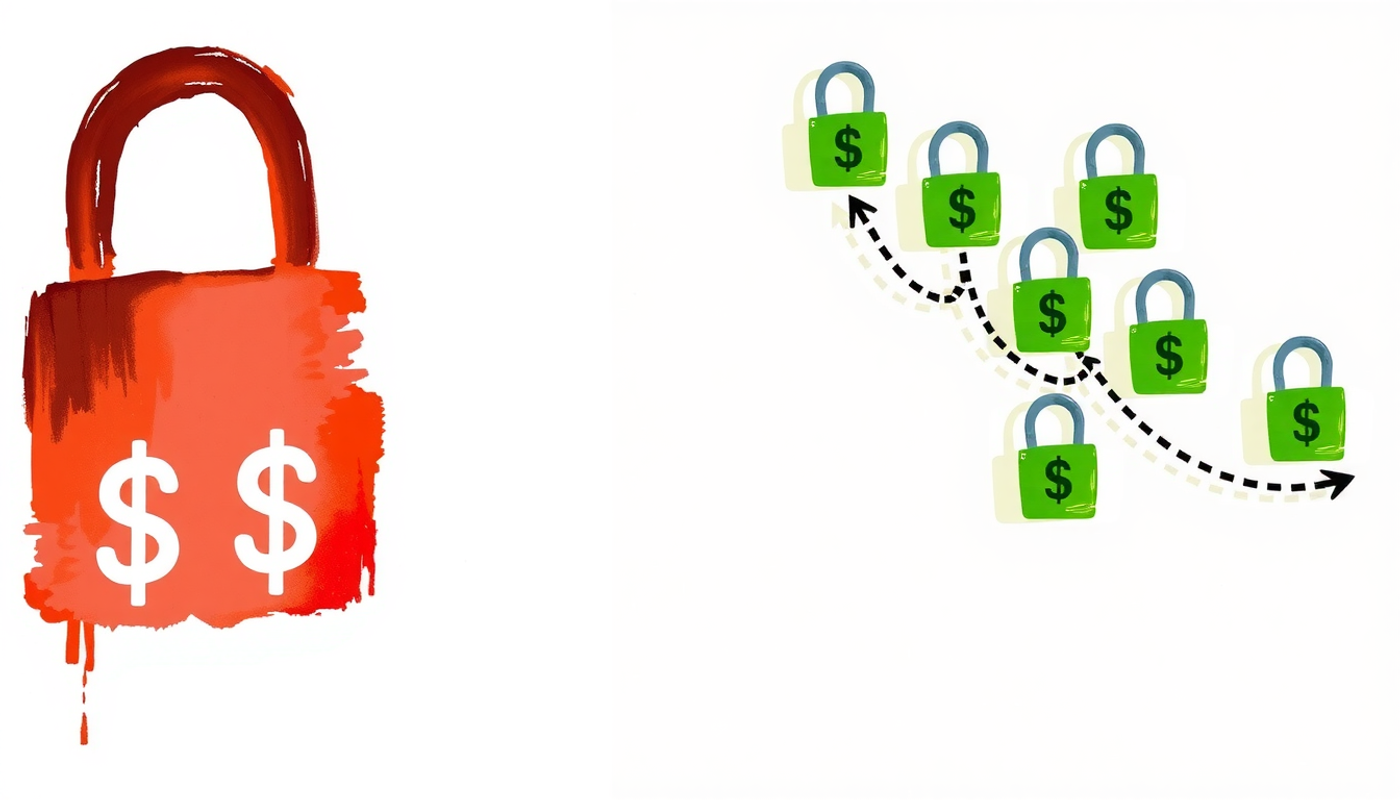
The free flashcard app market looks radically different from two years ago. Quizlet's decision to gate Learn mode, Practice Tests, and offline access behind a $35.99/year subscription pushed millions of students toward alternatives. That paywall shift coincided with a wave of AI-powered newcomers, each offering generous free tiers to capture displaced users.
The numbers tell the story. Knowt grew to four million users. StudyFetch raised $11.5 million in Series A funding from Owl Ventures and College Board in June 2025. Turbo AI claimed five million users within two years. Dozens of smaller tools launched free tiers that match or exceed what Quizlet offered for free in 2022. For students, the result is more choice than ever. The risk is that many of these startups run on venture capital rather than sustainable revenue, and some may not survive eighteen months. Before investing hundreds of hours building a deck on any platform, checking whether the app supports Anki .apkg export is a basic precaution.
The Science That Makes Flashcards Work
Flashcards are not magic. They work because they force two specific cognitive processes that decades of research have confirmed as the most effective study techniques available.
The first is active recall. When a flashcard appears and the learner retrieves the answer from memory before flipping, that retrieval physically strengthens the neural trace. Roediger and Butler (2011) showed in Trends in Cognitive Sciences that this retrieval process is among the strongest methods for building durable long-term memory. A meta-analysis by Rowland (2014) confirmed the effect across hundreds of independent studies. And Smith, Floerke, and Thomas demonstrated in Science (2016) that retrieval practice even protects memory under acute stress, which matters during high-stakes exams.
The second process is spaced repetition. In 1885, Ebbinghaus demonstrated that memory decays steeply in the first hours after learning. A 2015 replication by Murre and Dros confirmed that most people forget fifty to seventy percent of new information within a day without review. Spaced repetition fights this decay by scheduling each review at the moment forgetting is about to begin. Carpenter, Pan, and Butler (2022) synthesized decades of evidence in Nature Reviews Psychology and concluded that the combination of spacing and retrieval practice produces consistently strong learning outcomes across subjects, ages, and contexts.
A 2025 study in Academic Medicine by Price et al. tested spaced repetition against standard study in a large cohort of practicing physicians. The spaced repetition group scored 58.03% versus 43.20% at six months, with a Cohen's d of 0.62. Knowledge transfer to new contexts also improved.
How Scheduling Algorithms Differ
Not every app schedules reviews the same way. The differences matter, even if most students never think about them.
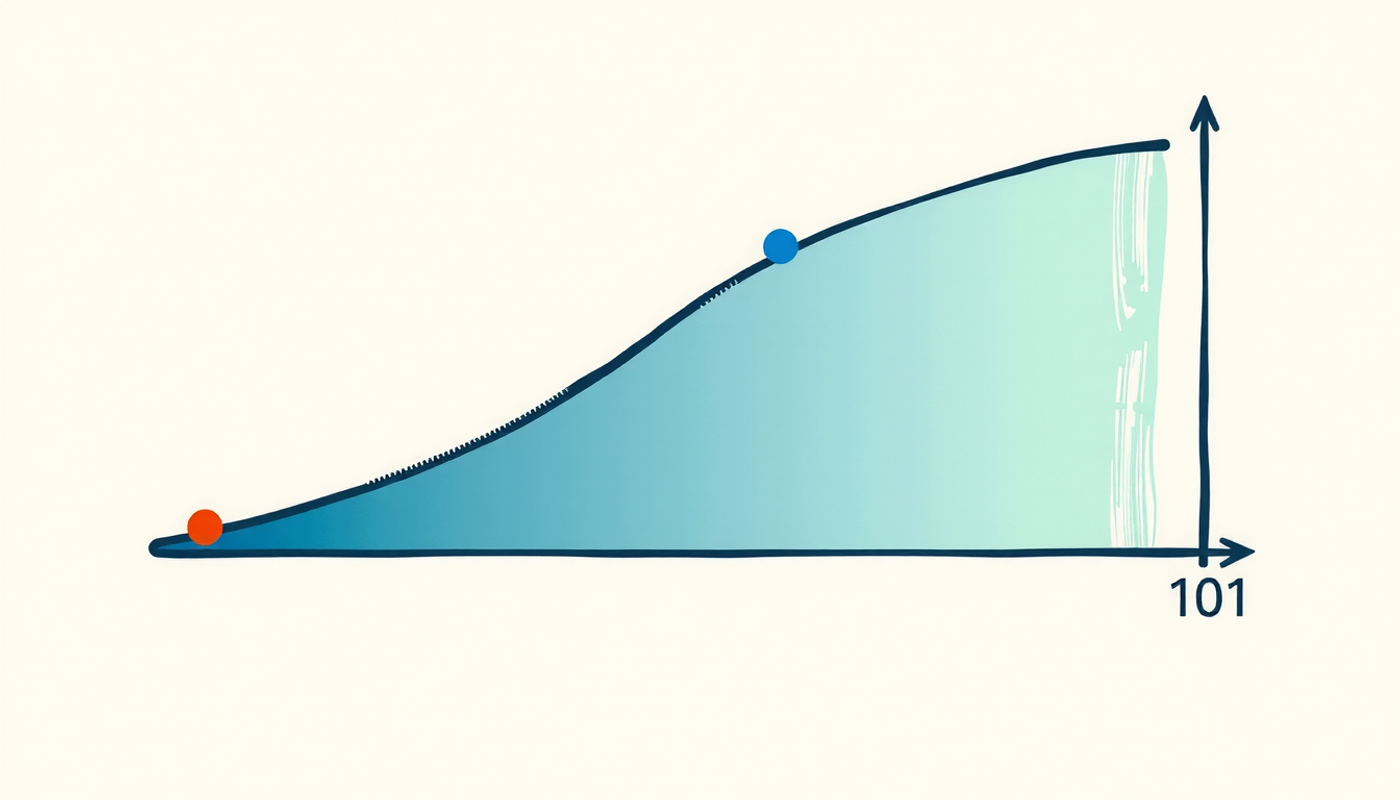
SM-2, created by Piotr Wozniak in 1987, adjusts intervals based on a fixed ease factor that shifts with each review rating. It works. Millions of medical students have used it through Anki for years. But it treats every learner identically.
FSRS, developed by Junyao Ye and colleagues and published at ACM KDD 2022, uses machine learning trained on actual review data. The Open-Spaced-Repetition Benchmark, built from approximately 1.7 billion reviews across 20,000 Anki users, shows FSRS produces more accurate recall predictions than SM-2 for roughly 99.5% of tested users. Anki adopted FSRS as its default scheduler in late 2023. Apps like MintDeck and StudyGlen run FSRS natively.
Other apps take proprietary routes. Knowt uses basic adaptive review. Retain uses an undisclosed custom scheduler. Flashka does not name its algorithm publicly. None of these proprietary systems have been independently benchmarked. That does not mean they perform poorly. It means the evidence stays private. As a detailed comparison of FSRS versus SM-2 explains, the practical takeaway is simple: any spaced system beats no system. The differences between algorithms are real but incremental compared to the massive gain from using spaced repetition at all.

Do AI-Generated Flashcards Actually Work?
Every app on this list offers AI card generation. The marketing promise is compelling: upload your notes and get a perfect study deck instantly. The science is more nuanced.
A May 2025 preprint from Brown University's Warren Alpert School of Medicine tested AI-generated flashcards and summaries in pre-clerkship medical training. The medRxiv preprint found high student engagement. Flashcard usage correlated strongly with perceived helpfulness (r-squared of 0.79). But the key finding: there was no statistically significant improvement in exam scores. High engagement does not automatically translate to better outcomes.
A separate assessment found that roughly 31% of AI-generated cards were not suitable for direct use and required human editing. That tracks with practical experience. AI handles straightforward factual content well. It struggles with nuanced conceptual relationships, multi-step reasoning, and context-dependent clinical scenarios.
The takeaway is not that AI generation is useless. It saves enormous time. But treating AI output as a finished product without review is a mistake. The best workflow is AI generation followed by quick human editing: delete bad cards, reword unclear ones, add missing context.
CONCLUSION
The science is not new. Retrieval practice plus spacing produces better long-term memory than any other study method with empirical backing. What changed in 2026 is the tooling around that science. AI can turn a lecture recording into a flashcard deck in seconds. Open-source algorithms like FSRS personalize review schedules to individual memory patterns. And a wave of new apps, from Knowt to StudyGlen to Mindomax to MintDeck, offers free tiers that would have been unthinkable three years ago. The right choice depends on the learner. But the worst choice is skipping spaced repetition entirely.

Frequently Asked Questions
Are free flashcard apps good enough for serious exam prep?
Several free flashcard apps now include spaced repetition and AI generation that rival paid tools. Knowt handled AP prep for roughly 700,000 students in 2025. Free tiers work well for most use cases, though heavy AI generation and advanced features like image occlusion sometimes require a paid upgrade.
What is the difference between FSRS and SM-2 algorithms?
SM-2 uses a fixed ease factor to schedule reviews identically for every learner. FSRS uses machine learning trained on billions of real reviews to personalize scheduling. Benchmarks show FSRS produces more accurate predictions for about 99.5% of users, typically reducing total reviews by twenty to thirty percent at the same retention rate.
Can AI-generated flashcards replace manually created ones?
AI generation saves significant time but does not replace human judgment. A 2025 Brown University preprint found high engagement with AI-generated cards but no statistically significant exam score improvement. Roughly 31% of AI cards required editing. The best approach combines AI speed with quick human review.
How many flashcards should a student review per day?
Most evidence suggests fifteen to thirty minutes of daily review maintains strong retention across several hundred active cards. Consistency matters more than session length. Short daily sessions outperform occasional long cramming sessions by a wide margin.
Is it safe to build large decks on new flashcard apps?
New apps carry a stability risk since many run on venture funding without proven revenue. Before investing hundreds of hours in a deck, check whether the app supports Anki .apkg export. That ensures the work can be moved to another platform if the original app shuts down.


