Introduction
Try this. Sit perfectly still and think about one thing for sixty seconds. Just one. No drifting. No mental shopping lists. No replaying yesterday's conversation. One thought, held steady.
Most people cannot do it. Not because they lack willpower. Because their brains were not built for it.
The human brain burns roughly twenty percent of the body's total energy at rest, despite accounting for only two percent of body weight [1]. And the region responsible for deep focus, the prefrontal cortex, is the most metabolically expensive real estate in the entire organ. Sustaining attention on a single target is not the brain's natural state. Mind-wandering is. The Default Mode Network, a constellation of brain regions discovered barely two decades ago, activates the moment external demands relax [2]. Your brain, left to its own devices, does not concentrate. It wanders.
This is the paradox of deep focus. The cognitive state most valuable for learning, problem-solving, and creative work is also the state the brain most actively resists. Understanding why requires a journey through brain anatomy, chemistry, electrical oscillations, evolutionary pressures, and the modern distraction economy that exploits every weakness in the system.
Two Networks at War Inside Your Skull
The discovery that changed everything about how neuroscientists think about attention came not from studying focus. It came from studying rest.
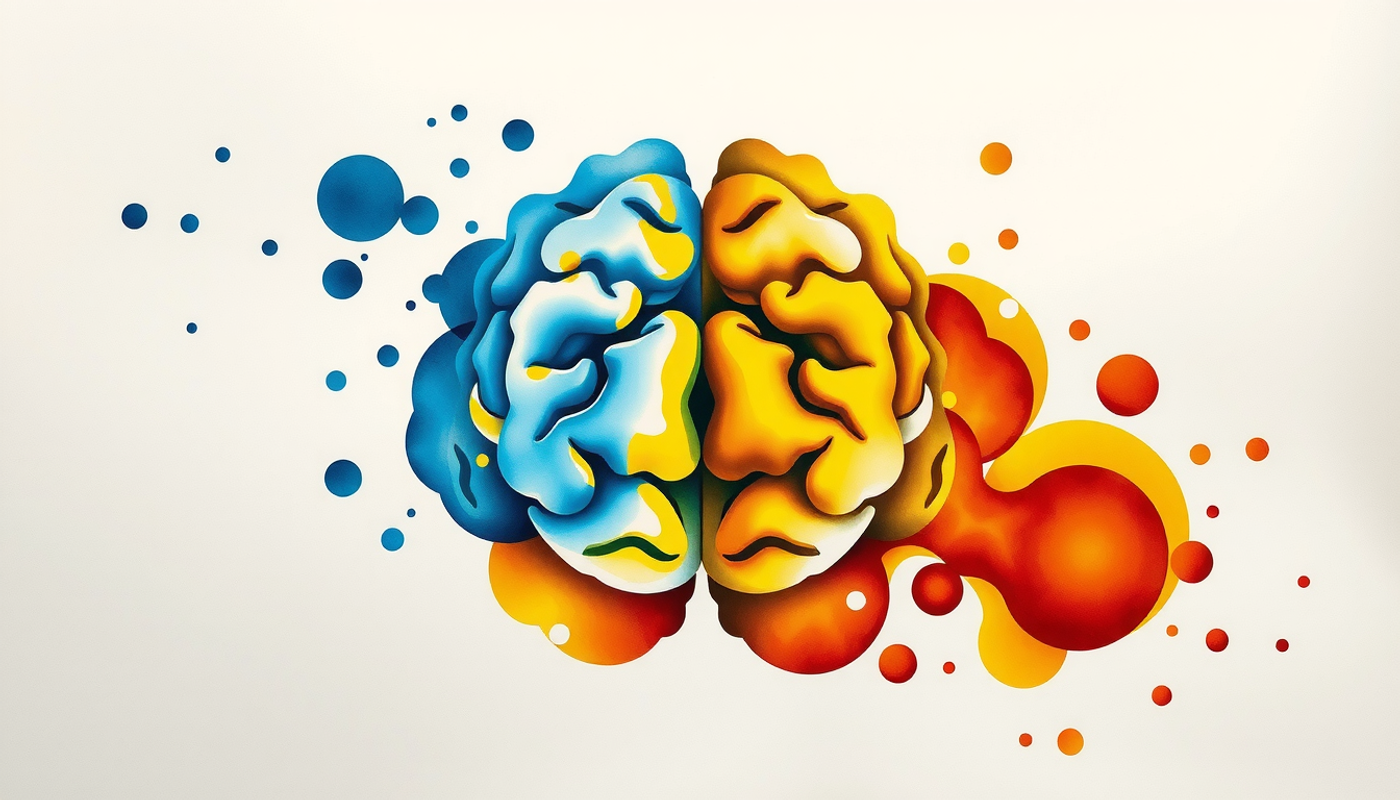
In 2001, Marcus Raichle and his colleagues at Washington University published a paper that redrew the map of the brain [2]. Using positron emission tomography, they noticed something strange. Certain brain regions were more active when subjects were doing nothing than when they were performing cognitive tasks. The medial prefrontal cortex. The posterior cingulate cortex. The angular gyri. Together, these regions formed what Raichle called the Default Mode Network, or DMN.
The DMN was not noise. It was a system. And it was doing something.
Later research showed the DMN handles mind-wandering, daydreaming, autobiographical memory, imagining the future, and thinking about other people's mental states [3]. It is the brain's screensaver. Not idle, but running its own programs when no external task demands attention.
On the other side of this divide sits the Fronto-Parietal Control Network, or FPCN. This is the focus network. It includes the dorsolateral prefrontal cortex, the posterior parietal cortex, and the anterior insula [4]. When you concentrate on solving a math problem, reading a difficult text, or writing code, the FPCN lights up and the DMN goes quiet.
The relationship between these two networks is not cooperative. It is competitive.
Michael Fox at Harvard showed in 2005 that the FPCN and DMN are intrinsically anti-correlated [4]. When one goes up, the other goes down. Like a seesaw. And the depth of this anti-correlation predicts how well someone can sustain attention. People whose FPCN and DMN stay sharply separated perform better on attention tasks. People whose networks blur together make more errors.
Here is where the story gets interesting. In 2024, Dolly Seeburger, Eric Schumacher, and their team at Georgia Tech published a study that added a new dimension to this picture [5]. Using functional magnetic resonance imaging during a serial tapping task, they discovered that the FPCN-DMN seesaw operates on roughly twenty-second quasi-periodic cycles. When subjects were "in the zone," the two networks desynchronized cleanly within these cycles. When attention wandered, they synchronized. The pattern was not unique to humans. The same twenty-second rhythm appears in primates and rodents, suggesting it is a fundamental biological clock of cognitive engagement.
What does this mean? Deep focus is not a switch you flip. It is a rhythm you enter. And the brain oscillates in and out of it on timescales so fast you never notice.
The Executive Hub and Its Bodyguards
The prefrontal cortex does not work alone. It runs a committee.
The dorsolateral prefrontal cortex, or dlPFC, is the chairman. Animal electrophysiology and human neuroimaging agree: this region generates the top-down signals that bias activity across the brain in favor of whatever you are trying to pay attention to [6]. When you decide to focus on a textbook and ignore the television, it is your dlPFC sending inhibitory signals to the sensory regions processing TV audio and excitatory signals to the regions processing text. Brosnan and Wiegand showed in 2017 that the dlPFC dynamically shifts its connectivity patterns depending on what the current task demands [6].
Sitting next to the chairman is the anterior cingulate cortex, or ACC. Think of it as the error detector. When you are writing an email and catch yourself typing the wrong word, your ACC fired. Matthew Botvinick and Jonathan Cohen proposed the conflict-monitoring hypothesis in the early 2000s: the dorsal ACC detects competing response tendencies and signals the dlPFC to increase control [7]. Carter and colleagues at the University of Pittsburgh demonstrated ACC activation during error detection and online performance monitoring using fMRI [8].
Below the cortex, the thalamus acts as a gatekeeper. Not a passive relay. An active filter. The thalamic reticular nucleus, or TRN, decides which sensory information reaches the cortex and which gets blocked [9]. In 2016, Wells and colleagues showed that mice with mutations in a gene called Ptchd1 had dysfunctional TRN neurons and displayed attention deficits and sensory hypersensitivity [9]. The pulvinar, another thalamic nucleus, synchronizes activity across cortical attention regions, acting like a conductor coordinating the orchestra [10].
And deeper still, in the brainstem, sits the locus coeruleus. A tiny cluster of neurons, barely the size of a grain of rice, that controls the entire brain's arousal level through norepinephrine release. More on this in a moment.
The Chemistry of Concentration
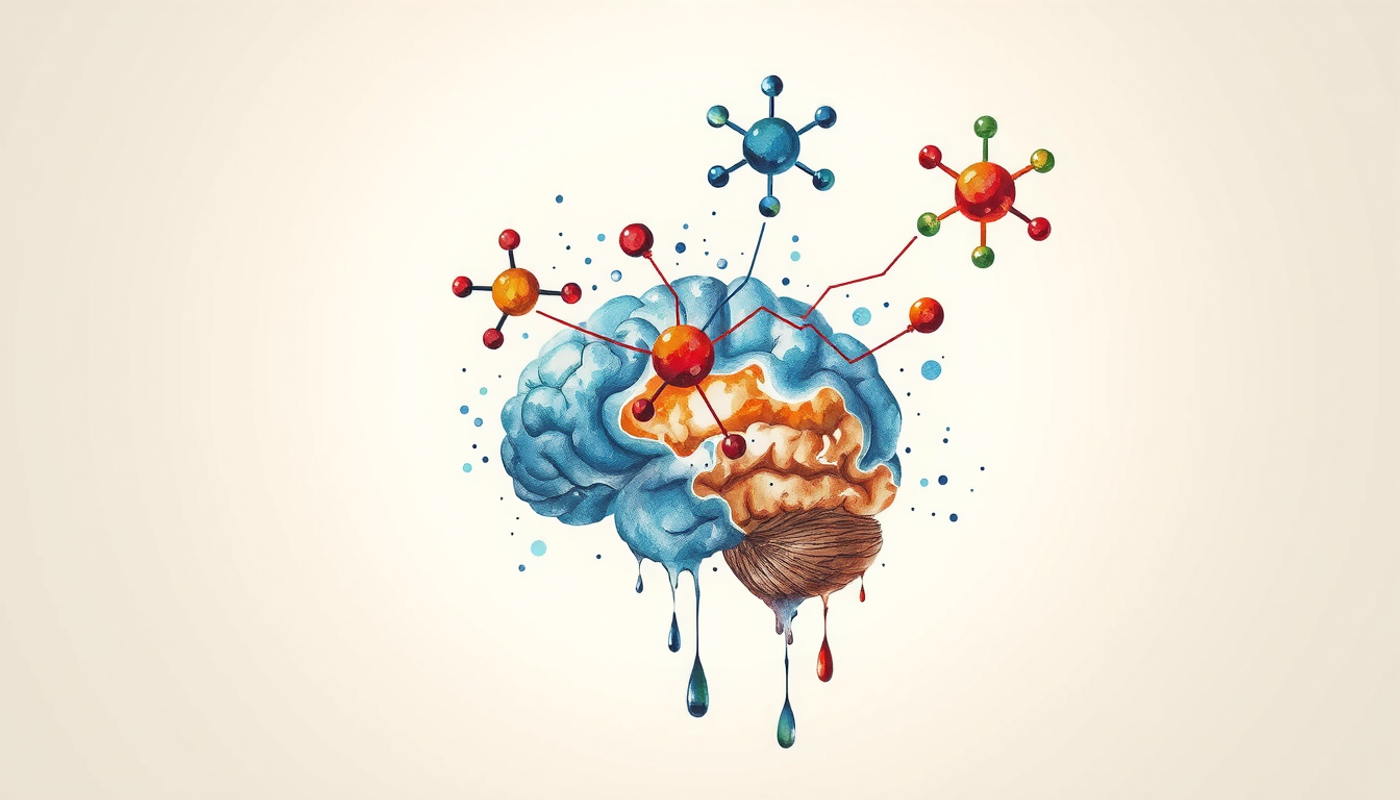
Four molecules run the focus system. Each does something different. And the balance between them determines whether you lock in or drift away.
Start with dopamine. Most people associate dopamine with pleasure. That is a simplification. Dopamine is about anticipation and motivation. The dopaminergic neurons in the substantia nigra and ventral tegmental area fire not when you receive a reward, but when you predict one [11]. When a task feels engaging, dopamine keeps you locked on. When it feels boring, dopamine drops and your brain starts searching for something more interesting. Bunzeck and Düzel showed in 2006 that the midbrain dopamine system responds strongly to novel stimuli [12]. This is useful for exploration. It is terrible for sustained focus on familiar material.
Next, norepinephrine. Released by the locus coeruleus, norepinephrine controls arousal level. Too little and you are drowsy. Too much and you are anxious. The relationship follows an inverted U, first described by Yerkes and Dodson in 1908 [13]. Moderate norepinephrine sharpens attention and improves signal detection. Extreme levels narrow attention too tightly or fragment it entirely. Unsworth and Robison proposed in 2017 that individual differences in locus coeruleus function explain why some people sustain focus easily while others struggle [14]. A 2025 paper in Nature Communications provided direct causal evidence: norepinephrine-mediated arousal fluctuations drive inverted-U functional-connectivity dynamics between brain networks [15].
Then acetylcholine. Less famous than dopamine but arguably more important for attention. Cholinergic neurons in the basal forebrain project widely to the cortex and dramatically improve the signal-to-noise ratio of attended inputs [16]. They boost feed-forward sensory signals while suppressing intra-cortical recurrent noise. Howe and colleagues showed in 2013 that sub-second acetylcholine transients in the prefrontal cortex are time-locked to the moment of attentional cue detection [17]. Think of acetylcholine as the brain's contrast dial. It makes what you are attending to brighter and everything else dimmer.
Finally, adenosine. This is the molecule that makes deep focus self-limiting. Every time a neuron fires, it breaks ATP to extract energy. A byproduct of this reaction is adenosine. Over hours of sustained cognitive work, adenosine accumulates in the brain, binds to inhibitory receptors, suppresses dopamine signaling, and raises the subjective cost of effort [18]. Caffeine works by blocking adenosine receptors. But it does not eliminate adenosine. It only masks the signal. The buildup continues.
This is the adenosine trap. The longer you focus, the more adenosine accumulates. The more adenosine accumulates, the harder focusing becomes. Eventually the system hits a wall. Not because you lack willpower. Because your chemistry has changed.
The Electrical Signature of Being in the Zone
When neuroscientists want to see deep focus in real time, they look at brainwaves. And the signature is unmistakable.
The most reliable marker is frontal-midline theta. These are oscillations at roughly six hertz, generated by the anterior cingulate cortex and medial prefrontal cortex. Theta power scales linearly with working-memory load [19]. The harder you think, the stronger the signal. Zakrzewska and Brzezicka showed in 2014 that this load-dependent theta increase is specific to people with high working-memory capacity [20]. In people with lower capacity, theta saturates earlier and the system breaks down sooner.
Beta oscillations, in the thirteen to thirty hertz range, are the engine of sustained processing. Beta in the prefrontal cortex represents the maintenance of cognitive set. Think of it as the brain holding its current "program" active. When beta drops, the program slips.
Alpha waves, eight to twelve hertz, tell a different story. Alpha suppression over task-relevant cortex signals engagement. Alpha increase over task-irrelevant regions signals active inhibition [21]. When you focus on reading, alpha drops over visual cortex (engagement) and rises over auditory cortex (inhibition). The brain does not just amplify what matters. It actively silences what does not.
And then there is gamma. Fast oscillations above thirty hertz, occurring in brief bursts during moments of intense concentration and insight. Recent work from the University of Alabama analyzed the SEED-IV EEG dataset and found that gamma power and burst duration in frontopolar, temporal, and parieto-occipital regions discriminate high-focus states more reliably than alpha alone [22]. Gamma bursts may represent the brain's highest gear. Brief, intense, and metabolically expensive.
Why Your Brain Was Not Built for This
Everything described so far, the networks, the chemistry, the oscillations, exists in a brain that evolved to do something very different from sustained single-task focus.
Your ancestors did not sit at desks. They scanned savannas. The brain that kept them alive was one that noticed the rustle in the grass, the shadow at the periphery, the change in birdsong that meant a predator was near. Sustained attention on a single target was rarely useful. Broad, flexible, easily redirected vigilance was essential. The Default Mode Network is not a bug. It is the operating system the brain was designed to run [2].
Matthew Killingsworth and Daniel Gilbert at Harvard confirmed this in a landmark 2010 study [23]. Using an iPhone app that randomly pinged 2,250 adults throughout the day, they found that people's minds wander roughly forty-seven percent of waking hours. Nearly half. And mind-wandering predicted unhappiness more than the activity people were doing.
The vigilance decrement adds another layer. Norman Mackworth's classic clock test in 1948 showed that even motivated, well-rested observers begin missing signals after fifteen to thirty minutes of continuous monitoring [24]. The brain simply was not built to sustain uniform attention for long stretches. It fades. It drifts. It looks for something new.
The metabolic argument seals the case. Magistretti and Allaman reviewed the brain's energy budget in 2015 and confirmed that the prefrontal cortex sits at the top of the metabolic hierarchy [1]. Running the focus system at full capacity costs the brain disproportionately. And the brain, like every biological system, conserves resources when it can.
Add the novelty bias. Bunzeck and Düzel's 2006 finding that the dopamine system codes novelty as inherently rewarding [12] means every new stimulus, every notification, every passing thought competes for dopaminergic support against whatever you are currently trying to focus on. The deck is stacked against sustained attention from the start.

The Fragile Machine and What Breaks It
If deep focus is already difficult, modern life has made it nearly impossible.
Sophie Leroy at the University of Washington coined the term "attention residue" in 2009 [25]. In controlled experiments, she showed that when people switch from one task to another, part of their attention remains stuck on the previous task. Performance on the new task drops. Decision quality degrades. The effect is strongest when the first task was left incomplete. Leroy and Glomb later showed that explicit task-closure rituals can reduce residue [26]. But most people do not use them.
Gloria Mark at the University of California, Irvine, quantified the cost of interruption. Her research found that interrupted workers take an average of twenty-three minutes and fifteen seconds to return to the original task [27]. And the average knowledge worker switches tasks every three minutes. Think about what that means. The twenty-three-minute recovery window almost never completes before the next interruption arrives.
Then came the smartphone research. Adrian Ward, Kristen Duke, Ayelet Gneezy, and Maarten Bos at the University of Texas published a study in 2017 that should have made headlines [28]. In two experiments with roughly eight hundred participants, they measured working-memory capacity and fluid intelligence while participants' phones were either on the desk face-down, in a pocket or bag, or in another room. All phones were silent. None were consulted. The result: cognitive capacity was highest when the phone was in another room, lower when in a pocket, and lowest when on the desk. The mere presence of the device drained mental resources. Ward called it "brain drain." The effect was strongest in people most dependent on their phones.
Stothart, Mitchum, and Yehnert showed in 2015 that even receiving a notification, without checking it, disrupts sustained-attention performance to a degree comparable to actually using the phone [29].
The working-memory bottleneck explains why these effects are so devastating. Nelson Cowan revised George Miller's famous "seven plus or minus two" estimate in 2001, showing that actual working-memory capacity under conditions that prevent chunking is closer to three to five items [30]. Cognitive load theory, developed by John Sweller, distinguishes three types of mental load: intrinsic load from task difficulty, extraneous load from distractions and poor design, and germane load from productive learning effort [31]. Distractions are pure extraneous load. They eat working-memory slots without contributing anything to learning.
Evans and Johnson demonstrated this in a controlled experiment in 2000 [32]. Forty clerical workers were randomly assigned to three hours of simulated low-intensity open-office noise or quiet. The noise group showed elevated urinary epinephrine, a stress hormone, reduced motivation on subsequent puzzle tasks, and decreased ergonomic postural adjustments. The remarkable part: they did not report feeling more stressed. The damage was silent.
Focus as the Gateway to Memory
Everything discussed so far, the networks, the chemistry, the vulnerability to distraction, matters enormously for one reason: memory.
The hippocampus, the seahorse-shaped structure deep in the temporal lobe that converts short-term experiences into long-term memories, depends on attentional quality during encoding. Uncapher and Rugg showed that distraction during encoding reduces hippocampal engagement and produces weaker, more fragmented memory traces [33]. What you do not attend to, you do not remember. Not because the information was not present. Because the hippocampus never received a strong enough signal to encode it.
Sleep-dependent memory consolidation adds another dimension. As explored in detail in the neuroscience ofsleep and memory, Born and colleagues established that NREM slow-wave sleep and sleep spindles consolidate hippocampal memories into neocortical storage [34]. But not all memories are consolidated equally. The quality of prior encoding determines which memories get prioritized for replay during sleep [35]. Weak traces from distracted encoding are less likely to be replayed. Strong traces from focused encoding get preferential treatment.
The testing effect demonstrates this from another angle. Roediger and Karpicke showed in 2006 that retrieval practice, actively pulling information from memory, produces dramatically better long-term retention than passive restudy [36]. Retrieval is effortful. It requires sustained attentional engagement. Passive rereading does not. The effort itself is what builds the memory.
Robert Bjork's concept of desirable difficulties connects these threads [37]. Conditions that make learning feel harder in the moment, spacing, interleaving, testing, generation, produce better long-term retention than conditions that feel easy. The key word is "feel." Fluent processing creates an illusion of learning. Effortful processing, which demands deep focus, creates actual learning.
Spaced repetition itself depends on attention quality. Ebbinghaus first reported the spacing effect in 1885, and modern reviews confirm that spaced practice outperforms massed practice across hundreds of studies [38]. One explanation is the deficient-processing account: under massed conditions, the second presentation is semantically primed and receives less attention. Spacing allows priming to decay so each presentation gets full attentional engagement [39]. The spacing effect may partly be an attention effect.
Training the Attention System
The good news. Deep focus is not fixed. The brain's attention networks respond to training.
Tang, Ma, Wang, and Posner published a landmark study in the Proceedings of the National Academy of Sciences in 2007 [40]. They randomly assigned eighty undergraduates to five days of twenty-minute integrative body-mind training or a relaxation control. After just five days, the meditation group showed significantly improved executive attention on the Attention Network Test, reduced cortisol, and improved mood. Five days. Twenty minutes per day.
Bauer and colleagues extended this to children. In a 2020 study published in Human Brain Mapping, they delivered a mindfulness curriculum to sixth-graders and found that it preserved the anti-correlation between the Default Mode Network and the dorsolateral prefrontal cortex, the very pattern that supports sustained attention [41]. Control students showed declining anti-correlation over the school year. The mindfulness group did not.
Physical exercise works through a different mechanism. Aerobic activity raises brain-derived neurotrophic factor, or BDNF, a protein that supports neuron survival and growth, particularly in the hippocampus and prefrontal cortex [42]. Erickson and colleagues showed that a twelve-month walking program increased hippocampal volume and improved memory in older adults. Hwang and colleagues demonstrated in 2019 that high-intensity interval exercise improved executive function on the Wisconsin Card Sorting Test, with BDNF responses predicting prefrontal hemodynamic changes [43].
Environmental design matters too. Evans and Johnson's 2000 noise study showed that even low-level ambient noise silently degrades cognitive function [32]. Reducing extraneous load, quieter spaces, fewer visual distractions, phones in another room, frees working-memory resources for germane processing. Stephen Kaplan's attention restoration theory proposes that natural environments reduce directed-attention fatigue because they engage involuntary attention, giving the executive system time to recover [44].
Circadian alignment adds another tool. Schmidt, Collette, Cajochen, and Peigneux reviewed how circadian phase modulates attention and executive function [45]. Cognitive peaks differ by chronotype. Morning people peak earlier. Evening people peak later. Scheduling deep-focus blocks during one's personal peak exploits the natural arousal rhythm rather than fighting it.
Flow: When Focus Stops Feeling Like Work
Deep focus is hard. But there is a state beyond it where concentration becomes effortless.
Mihaly Csikszentmihalyi first described flow in the 1970s. Complete absorption in an activity. Loss of self-consciousness. Time distortion. Intrinsic reward. The challenge-skill balance is the core trigger: the task must be hard enough to fully engage abilities but not so hard it produces anxiety [46].
What makes flow different from ordinary sustained attention? The neuroscience suggests a surprising answer: parts of the prefrontal cortex may actually quiet down.
In 2024, Rosen, Oh, Chesebrough, Zhang, and Kounios at Drexel University recorded high-density EEG from thirty-two jazz guitarists improvising over backing tracks [47]. Expert musicians rated as being in high creative flow showed decreased activity in the superior frontal gyri, an executive-control region, and decreased posterior DMN activity. Less experienced musicians showed no such pattern.
This is consistent with Arne Dietrich's transient hypofrontality hypothesis [48]. When expertise has automated a skill deeply enough, the prefrontal cortex can back off. The skill runs on implicit, procedural systems that do not require the metabolically expensive executive monitoring that ordinary deep focus demands.
The implication is important. Flow is not available for novel tasks. A medical student encountering biochemistry for the first time cannot flow through it. The material is too new. The task demands too much explicit executive processing. Flow requires a foundation of prior learning that has been consolidated deeply enough to run without conscious supervision. For most academic learning, the more expensive, harder-to-sustain ordinary deep focus is the only option.
This is exactly why distraction-free environments matter most for learners. Experts can sometimes tolerate interruptions because their skills run partly on autopilot. Novices cannot. Every distraction collapses the fragile working-memory scaffolding they need to encode new material.
What Deep Focus Means for How You Study
The science points to a few clear conclusions.
First, the brain's resistance to sustained attention is biological, not moral. Losing focus is not laziness. It is adenosine accumulation, DMN intrusion, vigilance decrement, and dopaminergic novelty-seeking doing exactly what millions of years of evolution designed them to do. Understanding this is the first step toward working with the system instead of against it.
Second, environmental control is not optional. Ward's smartphone study, Stothart's notification research, and Evans and Johnson's noise experiment converge on the same message: the sensory environment directly determines how much working-memory capacity is available for learning. A phone on the desk, even face-down, costs cognitive resources. Background noise costs cognitive resources. Every source of extraneous load subtracts from learning capacity.
Third, attention quality during encoding determines memory durability. Distracted study produces weak hippocampal traces that sleep cannot fully rescue. Focused study produces strong traces that get preferential consolidation. The testing effect, desirable difficulties, and spacing effect all depend on sustained attentional effort as the mechanism that builds durable memory.
Fourth, the system is trainable. Five days of meditation improves executive attention. Twelve weeks of aerobic exercise increases BDNF and hippocampal volume. Environmental design reduces extraneous load. Circadian alignment exploits natural arousal rhythms. None of these are magic. All of them are supported by controlled experiments with measurable neural correlates.
Fifth, respect the limits. The adenosine trap, the vigilance decrement, and the ultradian rhythm all suggest that sustained deep focus has a natural ceiling. Working in focused blocks with genuine recovery periods, not phone-checking breaks, is not weakness. It is alignment with biology.
The brain was not built for deep focus. But it can be trained, supported, and protected to achieve it. And when it does, the results in learning, memory, and understanding are extraordinary.
Frequently Asked Questions
What is deep focus in neuroscience?
Deep focus is a state of sustained attention driven by the Fronto-Parietal Control Network while the Default Mode Network is suppressed. It requires coordinated activity of the prefrontal cortex, anterior cingulate cortex, and thalamus, fueled by dopamine, norepinephrine, and acetylcholine, and limited by adenosine accumulation from metabolic activity.
Why does the brain resist sustained attention?
The brain evolved for broad environmental vigilance, not single-target concentration. The prefrontal cortex is metabolically expensive, adenosine accumulates during extended cognitive effort creating a shutdown timer, and the Default Mode Network constantly competes with the focus network. Mind-wandering is the brain's natural resting state.
How long can a person maintain deep focus?
Research varies, but vigilance decrement studies show attention quality drops within fifteen to thirty minutes of continuous monitoring. Practical deep-focus sessions of sixty to ninety minutes with recovery breaks align with both vigilance research and observed ultradian rhythms, though the exact periodicity is debated.
Does meditation improve the ability to focus?
Yes. Tang and colleagues showed in a 2007 PNAS study that five days of twenty-minute integrative body-mind training produced measurable improvements in executive attention. Longer meditation programs show structural brain changes including increased gray matter in the prefrontal cortex and anterior cingulate cortex.
How do smartphones affect concentration even when not in use?
Ward and colleagues showed in 2017 that the mere presence of a smartphone on the desk reduces working-memory capacity and fluid intelligence, even when silent and face-down. The brain allocates cognitive resources to resisting the urge to check the device, leaving fewer resources for the primary task.