Introduction
A student opens Knowt. Another opens Quizlet. Both create a deck of forty flashcards for tomorrow's biology exam. Both tap through the cards. Both feel prepared.
One week later, neither remembers more than half.
This is not a failure of the apps. It is a failure of how most people use them. And understanding why requires looking past the feature lists, past the pricing pages, past the Reddit arguments about which platform is "better." The real question is not Knowt vs Quizlet. The real question is what the brain needs to retain information over time, and whether any flashcard app actually delivers it [1].
The answer turns out to be more complicated than either company's marketing suggests. Both platforms get certain things right. Both get something fundamental wrong. And the science that explains why has been accumulating for over a century, from a German psychologist memorizing nonsense syllables in 1885 to machine learning engineers in 2023 building algorithms that can predict, to the hour, when you will forget a specific fact.
This article traces that science. Not to declare a winner between two apps, but to give you the tools to evaluate any study method you encounter. By the end, you will understand the forgetting curve, the testing effect, the generation effect, and why the scheduling algorithm behind your flashcard app matters more than almost any other feature it offers. You will also understand where both Knowt and Quizlet stand relative to the gold standard, and what that means for your next exam [2].
The Curve That Started Everything
In 1885, Hermann Ebbinghaus did something no one had done before. He turned memory into a measurable quantity.
Working alone in his apartment in Berlin, Ebbinghaus memorized lists of nonsense syllables, consonant-vowel-consonant combinations like DAX, BUP, and ZOL, that carried no prior meaning. He tested himself at intervals ranging from twenty minutes to thirty-one days. Then he plotted the results. The graph he drew, the forgetting curve, became one of the most recognizable shapes in psychology [3].
The curve is steep. Within twenty minutes of learning, roughly 40% of the material is already gone. After one hour, about 55% has faded. After one day, around 67%. After thirty-one days, roughly 79%. The loss is not linear. It is exponential at first, then it flattens. What survives the first day has a much better chance of surviving the first week.
For 130 years, nobody replicated Ebbinghaus's original experiment using his exact method. Then in 2015, Jaap Murre and Joeri Dros at the University of Amsterdam finally did. Their results, published in PLOS ONE, confirmed the curve's shape with one interesting addition: there appeared to be a small upward jump at the 24-hour mark [3]. The most likely explanation? Sleep. A night of sleep-dependent memory consolidation appears to rescue some of the fading traces, consistent with what we now know about how the hippocampus replays memories during slow-wave sleep [2].
This curve is the reason flashcard apps exist. It is also the reason most people use them wrong.
If you study forty cards once and never return to them, the curve wins. You forget. But if you return at the right moment, just as the memory is about to slip away, you can reset the curve. And each time you do, the curve flattens. The memory becomes more resistant to decay. This is the spacing effect, and it is one of the most replicated findings in all of experimental psychology [4].
Why Testing Beats Re-Reading (and Both Apps Get This Right)
Here is something that surprises most students: the act of trying to remember something is itself a powerful learning event. More powerful, in fact, than studying the same material again.
Henry Roediger and Jeffrey Karpicke demonstrated this in a landmark 2006 study. Participants read prose passages, then either restudied them or took a recall test. Five minutes later, the restudy group performed slightly better. But one week later, the testing group outperformed the restudy group by a wide margin [5]. The harder act of retrieval, the effortful pulling of information from memory, strengthened the memory trace in a way that passive review could not.
Karpicke and Blunt sharpened this finding in 2011 in a study published in Science. They compared retrieval practice against elaborative concept mapping, a technique often recommended by education researchers. Retrieval practice produced roughly 50% better retention, with an effect size of d = 1.50 [6]. Perhaps more striking: 84% of students performed better with retrieval practice, yet 75% predicted concept mapping would be superior. Our intuitions about what works are backwards.
A massive meta-analysis by Adesope, Trevisan, and Sundararajan in 2017, covering 272 independent comparisons, confirmed that practice testing produces a weighted mean effect size of g = 0.60 compared to re-reading [7]. Dunlosky and colleagues, in what is probably the most cited review of study techniques ever written, gave practice testing one of only two "high utility" ratings across ten techniques [1]. The other high-utility technique? Distributed practice. Spacing.
This is where both Knowt and Quizlet genuinely serve their users well. Both platforms, in their Learn and Practice Test modes, force active retrieval. You see a prompt. You produce an answer. The app tells you if you were right. This is retrieval practice, and both platforms implement it competently. Where the science gets more demanding, and where the two platforms diverge in important ways, is in what happens next. How does the app decide when to show you that card again? That question, the scheduling question, is where the real cognitive stakes lie.
The Scheduling Problem: Where Both Platforms Fall Short
The spacing effect is not just about reviewing again. It is about reviewing at the right time.
Cepeda, Pashler, Vul, Wixted, and Rohrer published a massive meta-analysis in 2006 in Psychological Bulletin, covering 839 assessments from 317 experiments across 184 articles. Their conclusion: distributed practice significantly and reliably outperforms massed practice, and the optimal inter-study interval depends on how long you need to remember the material [8]. If your test is in one week, a gap of one day is roughly optimal. If your test is in one year, a gap of several weeks works better. The ratio is not fixed, but the principle is: wider gaps for longer retention targets.
This means a good flashcard app needs to do something specific. It needs to track each individual card, estimate when you are likely to forget it, and schedule a review just before that moment. This is what spaced repetition systems (SRS) do. And the difference between a good SRS and a bad one can mean studying 20-30% less for the same retention.
So what do Knowt and Quizlet actually use?
Quizlet's story is revealing. In 2017, Quizlet machine learning engineer Shane Mooney published a detailed blog post describing the platform's approach. He wrote that Quizlet had built a "Long-Term Learning" mode based on standard SRS principles, "similar to SuperMemo or Anki." But he also admitted a problem: "the majority of Quizlet users only study a set on a single day; 95% study a set over four days at most, which is still too few for the Long-Term Learning algorithm to be effective." So Quizlet pivoted. Instead of building for long-term retention, they built their Learning Assistant Platform around how students actually behave: cramming. The current Learn mode uses machine learning to prioritize within-session practice, repeating missed items more frequently during a single study session. It is adaptive. It is well-engineered. But it is not cross-session SRS [9].
Knowt takes a different marketing approach. The platform explicitly advertises "spaced repetition based on the Ebbinghaus Forgetting Curve" and lets users enter a test date to auto-generate review intervals. This sounds closer to real SRS. But there is a transparency gap: no published technical specification confirms whether Knowt implements SM-2, FSRS, Leitner, or a proprietary heuristic. The claim of SRS is prominent. The verifiable implementation details are not public.
Meanwhile, the gold standard has moved forward. In 2022, Jarrett Ye published the Free Spaced Repetition Scheduler (FSRS), an algorithm that models three variables per card: difficulty, stability, and retrievability. Anki integrated it natively in version 23.10 in November 2023. On a benchmark of nearly 10,000 Anki collections covering roughly 350 million reviews, FSRS outperformed SM-2 in 99.6% of collections and reduced the number of required reviews by approximately 20-30% for the same retention level [10]. Neither Knowt nor Quizlet's default modes are documented to approach this level of scheduling precision.
The practical implication is clear. If you are studying for a test next Tuesday, both Knowt and Quizlet's Learn modes will serve you reasonably well. They force retrieval practice. They adapt to your errors. For short-term cramming, they work. But if you need to remember material for months or years, for board exams, for a language, for cumulative medical knowledge, neither platform's default mode gives you what the spacing effect research says you need: carefully timed, cross-session, expanding-interval review.
Making Cards vs Finding Cards: the Generation Effect
There is another dimension to the Knowt-Quizlet comparison that gets surprisingly little attention: who makes the cards?
Quizlet's greatest asset is its library. With over 500 million user-generated study sets, you can almost certainly find premade flashcards for your specific course. Knowt's pitch is different: upload your notes, and AI converts them into cards automatically. Both approaches save time. Both may cost you learning.
The generation effect, first documented by Slamecka and Graf in 1978, is the finding that information you produce yourself is remembered better than information you passively receive [11]. A meta-analysis by Bertsch, Pesta, Wiscott, and McDaniel in 2007 across 86 studies found an average effect size of d = 0.40 [12]. McCurdy and colleagues' later meta-analysis of 126 articles and 310 experiments confirmed the effect's reliability.
For flashcards specifically, Pan and colleagues ran six experiments in 2022 and found that user-generated digital flashcards outperformed premade ones with effect sizes of d = 0.45 for definition questions and d = 0.29 for application questions [13]. Interestingly, self-makers often spent less total study time. The act of creating the card, deciding what goes on the front and what goes on the back, is itself a form of deep processing that strengthens the memory.
This creates an awkward truth for both platforms. Quizlet's premade library, its crown jewel, may actually undercut learning for many users. And Knowt's AI generation, while impressive as a time-saver, may forfeit the generation benefit entirely. When a machine writes your cards, you skip the cognitive work that makes card creation valuable in the first place.
The practical takeaway from the research is not that premade or AI-generated cards are useless. They are useful as starting points. But treating them as finished products, studying them without editing, rephrasing, or restructuring them, leaves learning gains on the table.
The Neuroscience of Spacing: Why Sleep Is Part of the Algorithm
Understanding why spaced repetition works requires looking at what happens inside the brain between study sessions. The answer, increasingly, is sleep.
Diekelmann and Born published a foundational review in Nature Reviews Neuroscience in 2010 showing that during slow-wave sleep, the brain actively consolidates memories. The mechanism involves a coordinated dance between three types of neural oscillation: slow oscillations in the cortex, sleep spindles in the thalamus, and sharp-wave ripples in the hippocampus. Together, these oscillations "coordinate the re-activation and redistribution of hippocampus-dependent memories to neocortical sites" [2]. In plainer terms: the hippocampus replays the day's experiences during sleep, and each replay transfers some of the memory burden to the cortex for long-term storage.
Mazza and colleagues demonstrated the practical implications of this in a 2016 study in Psychological Science. They showed that inserting a night of sleep between two learning sessions roughly halved the amount of practice needed to reach the same level of retention [14]. The sleep group needed an average of 3.27 relearning trials versus 5.09 for the group that studied twice in the same day. And after one week, the sleep group still remembered more.
A 2019 study in the Journal of Neuroscience used EEG pattern analysis to show that spaced learning improves memory by "increasing retrieval effort and enhancing the pattern reinstatement of prior neural representations" [15]. When you space your study sessions, the brain has to work harder to retrieve the memory at each session, and this harder retrieval builds a stronger trace. A 2025 study in Communications Biology went further, showing that spaced learning promotes "neural integration and replay in the cortex rather than in the hippocampus," consistent with systems-level consolidation, the gradual transfer of memories from hippocampal dependence to cortical independence [16].
This is the biological reason that session-only adaptive practice, however cleverly engineered, is not the same as cross-session spacing. The consolidation that happens overnight is not a bonus. It is a core mechanism. Any study method that keeps all practice within a single session is working without one of memory's most powerful allies.
Desirable Difficulties: When Harder Feels Worse but Works Better
Robert Bjork's framework of "desirable difficulties" adds another layer to the picture. The core idea: conditions that make learning feel harder during practice often produce more durable long-term retention [17].
Spacing is a desirable difficulty. So is retrieval practice. So is interleaving, the practice of mixing different types of problems within a single study session rather than blocking them by type. In Kornell and Bjork's 2008 study, participants who studied paintings by different artists in interleaved order performed significantly better on a later identification test than those who studied each artist's work in blocks [18]. Most participants predicted the opposite. In a study of volume formulas, interleaved groups scored 63% on a delayed test versus 20% for blocked groups [19].
The crucial distinction Bjork draws is between performance during practice and learning measured on a delayed test. These two things can move in opposite directions. Conditions that make practice feel fluent, like massing practice on one topic, boost performance in the moment but impair long-term retention. Conditions that make practice feel difficult, like spacing and interleaving, temporarily reduce performance but dramatically improve retention.
Neither Knowt nor Quizlet strongly enforces interleaving or spacing by default. Both platforms let you study one deck at a time in a single session, which is the blocking and massing pattern that feels productive but the research says is suboptimal. The desirable difficulties framework suggests that the apps could serve their users better by making study feel harder, not easier. But that is a hard sell in consumer software, where ease and comfort drive downloads.

What AI Gets Right and Wrong About Flashcards
Both Knowt and Quizlet have made AI a central feature. Knowt's AI converts notes, PDFs, and lecture videos into flashcards. Quizlet's Magic Notes and Q-Chat do similar work. The promise is simple: less time making cards, more time studying them.
The technology works. In practical terms, both platforms can take a page of lecture notes and produce a reasonable set of flashcards in seconds. The accuracy is good enough that most cards are usable. But "good enough" is not perfect, and the imperfections matter more than they might first appear.
Large language models, the technology behind these features, hallucinate. They produce outputs that are fluent, confident, and wrong. In education, this is particularly dangerous because students may absorb false information without knowing it. Multiple reviews put the accuracy of AI-generated flashcard content at roughly 90%, which means that in a deck of fifty cards, five may contain errors [20]. A 2025 medRxiv study on AI-generated medical flashcards from GPT-4o and Claude 3.5 Sonnet found that producing reliable educational content from LLMs required an explicit pipeline to minimize hallucinations, measure learning-objective coverage, and control information density. Quality control was non-trivial even for researchers who understood the technology.
There is also the generation-effect problem mentioned earlier. When AI writes your cards for you, you skip the cognitive effort of deciding what is important, formulating a question, and composing an answer. That effort is not wasted time. It is learning time. The 2022 Pan et al. finding that self-generated cards outperform premade ones by d = 0.29 to 0.45 [13] suggests that fully automated card generation may trade study preparation time for retention quality.
The pragmatic recommendation from the research is straightforward. Use AI generation as a draft. Let the machine handle the first pass. Then review every card, edit for accuracy, rephrase in your own words, and delete cards that test trivial details. This hybrid approach preserves some of the generation benefit while still saving time. Neither platform explicitly encourages this workflow, but it is what the evidence supports.
The Premade Library Problem
Quizlet's library of over 500 million user-generated study sets is its defining advantage. For many students, this is the entire value proposition: search for your textbook or course, find a deck someone already made, and start studying.
The science here is more complicated than it appears.
First, the generation effect: as discussed above, using someone else's cards forfeits the learning benefit of creating your own. But there is a second problem that is specific to community-generated content: quality control. Anyone can create and publish a Quizlet set. There is no review process. A deck titled "AP Biology Chapter 12" may contain errors, outdated information, idiosyncratic interpretations, or cards that test the wrong things. A 2022 UCLA survey by Zung and colleagues found that while college students who used digital flashcards reported benefits, those who used premade decks were more likely to study incorrect or poorly formatted information [13].
Knowt's approach, converting your own notes into cards, sidesteps the quality-control problem because the source material is your own course content. But it introduces the AI accuracy issue described above. Neither approach is perfect. The safest option, according to the research, remains the oldest one: making your own cards by hand, from your own notes, in your own words. It is slower. It is harder. And it works better.
Pricing, Paywalls, and the Economics of Studying
The Knowt-Quizlet rivalry is not purely scientific. It is also economic.
Quizlet was founded in October 2005 by fifteen-year-old Andrew Sutherland, who built it to study French vocabulary. It grew into the dominant flashcard platform, reaching over 60 million monthly active users and 500 million study sets by 2021. On August 1, 2022, Quizlet moved its Learn and Test modes behind the Quizlet Plus paywall, priced at roughly $35.99/year. The decision triggered significant student backlash [21].
Knowt was founded in 2019 by Abheek Pandoh and grew rapidly during COVID, fueled by viral TikTok marketing and a simple pitch: the features Quizlet charges for, Knowt gives you free. By 2025-2026, Knowt reported 5-7 million users. Its free tier includes Learn mode, Practice Test, Match, and basic AI generation. Premium features, including unlimited AI, an AI chatbot called Kai, and advanced study tools, require a paid tier.
Both platforms rely on a freemium model, but they have drawn the line in different places. Quizlet charges for the study modes most students consider essential. Knowt gives those modes free but monetizes advanced AI features and ad removal. For a budget-conscious student, Knowt's free tier is more generous today. For a student willing to pay, Quizlet's annual pricing is lower. Neither pricing structure changes the underlying cognitive science, but access matters. If a paywall prevents a student from doing retrieval practice, the learning cost is real.
What Would a Scientifically Ideal Flashcard App Look Like?
If you could design a flashcard app based purely on what the cognitive science supports, it would have several features that neither Knowt nor Quizlet currently provides by default.
It would use a verified, open SRS algorithm (like FSRS) that tracks each card individually across sessions and schedules reviews based on personal forgetting curves, not session-scoped cramming. It would require users to make or meaningfully edit their own cards, preserving the generation effect, while offering AI as a draft tool rather than a finished product. It would enforce spacing across days with sleep between sessions, and it would make this the default behavior rather than an opt-in feature that most users never discover.
It would implement interleaving by mixing cards from different decks rather than letting users study one deck in isolation. It would provide honest metacognitive feedback, telling users when their subjective sense of mastery is likely to overestimate their actual retention. And it would not paywall the features that matter most for learning, because the science does not care about subscription tiers.
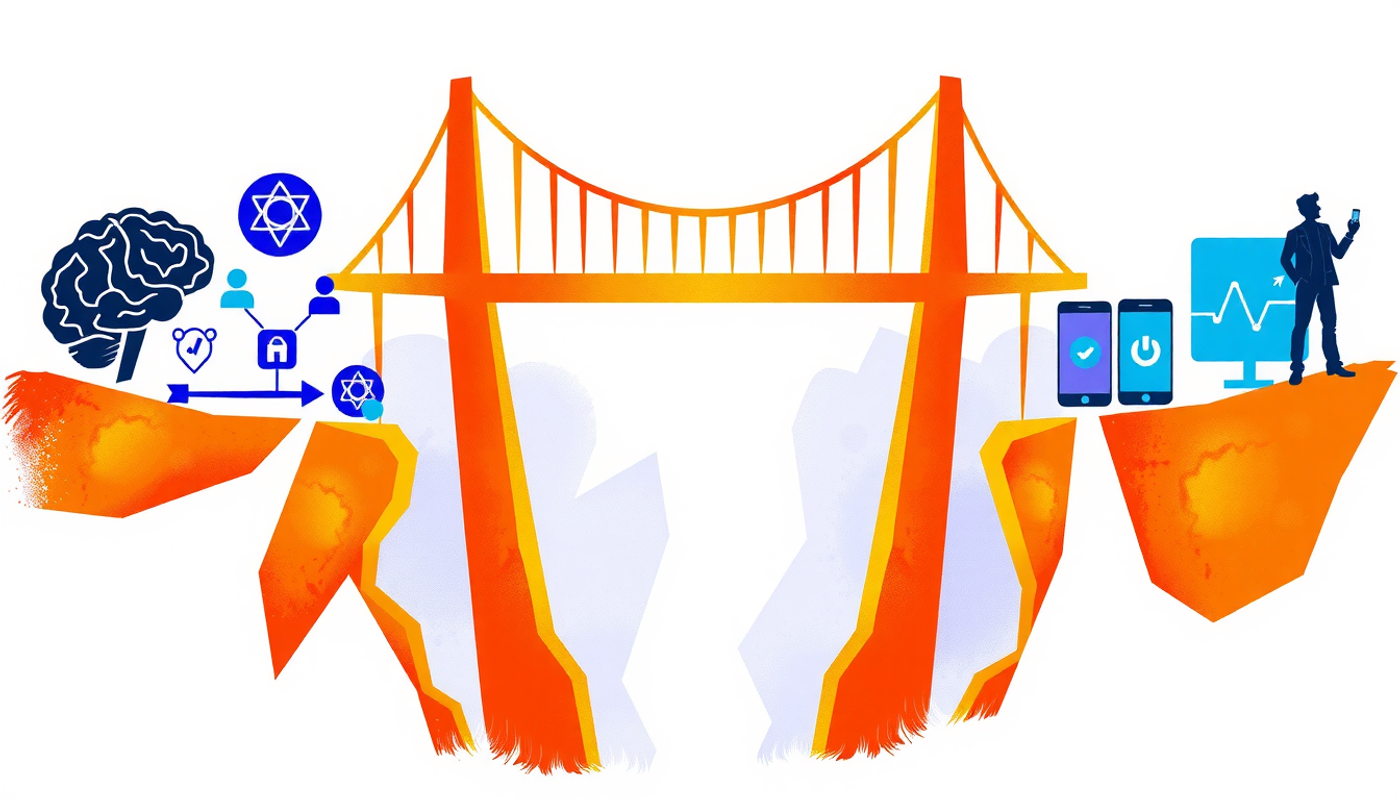
No app on the market does all of these things. Anki with FSRS comes closest on the algorithm side but has a steep learning curve. Knowt comes closest on the note-to-card workflow. Quizlet comes closest on library size and app polish. The gap between what the science recommends and what consumer products deliver remains wide. And the students who close that gap, by manually adding spacing, by editing their AI-generated cards, by mixing decks, are the ones who will remember more.
Practical Recommendations From the Research
What should you actually do? Here is what the combined evidence from over a century of memory research recommends.
Study across multiple days. Never cram everything into one session. The Mazza et al. finding that sleep between sessions halved the practice needed [14] is one of the most practical results in the entire literature. Three twenty-minute sessions spread across three days will produce more lasting retention than one sixty-minute session, even though the total time is the same.
Test yourself, do not re-read. Whether you use Knowt, Quizlet, Anki, or paper flashcards, the critical act is retrieval. Flip the card over. Try to produce the answer before checking. This is the testing effect, and its benefit is large and reliable [5].
Make or edit your own cards. If you use premade decks from Quizlet's library or AI-generated cards from Knowt, treat them as drafts. Rephrase definitions in your own words. Delete trivial cards. Add examples from your own lectures. The generation effect rewards this effort [13].
If long-term retention matters, use a real SRS. For board exams, language learning, medical school, or any situation where you need to remember material for months or years, a true spaced repetition algorithm makes a measurable difference. Anki with FSRS is the best-documented option. Neither Knowt nor Quizlet's default modes currently match this standard for long-term scheduling, though Knowt's test-date-based spacing is a step in the right direction.
Mix your decks. Do not study one subject in isolation for an hour. Mix cards from different topics within a single session. Interleaving feels harder. It works better [18].
Verify AI-generated content. If either platform's AI generated your flashcards, check every card against your original source material. At roughly 90% accuracy, a fifty-card deck will likely contain several errors [20].
Conclusion
The Knowt vs Quizlet debate, as it appears on Reddit threads and comparison blogs, is mostly about features and pricing. Which app is free. Which has better AI. Which has more premade decks. These are reasonable consumer questions. But they are not the questions that predict whether you will remember what you studied.
The questions that matter are these. Did you test yourself or just re-read? Did you space your sessions across days with sleep between them? Did you engage with the material deeply enough to create or edit your own cards? Did the app schedule your reviews based on your individual forgetting curve, or did it just repeat missed items within a single session?
Both Knowt and Quizlet deliver well on retrieval practice. Both fall short on long-term scheduling. The generation effect argues for making your own cards. The spacing effect argues for studying across days. The interleaving literature argues for mixing topics. None of these principles belong to any one app. They belong to the biology of the brain, a biology that has been the same since Ebbinghaus sat alone in his Berlin apartment, memorizing syllables that meant nothing, and discovering something that means everything about how we learn.
The tool matters less than the method. The brand matters less than the timing. And the best flashcard app is the one that makes you do the things the brain actually needs, even when they feel harder.
Frequently Asked Questions
Is Knowt better than Quizlet for studying?
Neither platform is categorically better. Knowt offers more free study modes and AI-powered note conversion. Quizlet has a larger premade library and more polished mobile apps. The cognitive science suggests the study method matters more than the platform: retrieval practice, spaced repetition across days, and self-generated cards improve retention regardless of which app you use.
Does Knowt have real spaced repetition?
Knowt markets a spaced repetition feature tied to test dates and the Ebbinghaus forgetting curve. However, no public technical specification confirms the underlying algorithm. True SRS systems like Anki's FSRS track individual card stability, difficulty, and retrievability across sessions. Whether Knowt's implementation matches that standard cannot be independently verified from available documentation.
Why did Quizlet stop being free?
On August 1, 2022, Quizlet moved Learn mode and Practice Tests behind the Quizlet Plus paywall at approximately $35.99 per year. The company framed the change as necessary to fund development, including AI features. Many students criticized the decision, and competitors like Knowt grew rapidly by offering those same features for free.
Do AI-generated flashcards actually work?
AI-generated flashcards save time and produce usable content in most cases. However, accuracy is approximately 90%, meaning roughly one in ten cards may contain errors. The generation effect research also suggests that manually creating cards produces better retention than studying premade or AI-generated ones. The recommended approach is to use AI as a draft and edit cards before studying.
What is the most effective way to study with flashcards?
Research supports four principles: use active retrieval by testing yourself rather than re-reading, space sessions across multiple days with sleep between them, create or edit your own cards to engage the generation effect, and use a true spaced repetition algorithm that schedules reviews based on individual card performance over time. Interleaving cards from different subjects within sessions provides additional benefit.