Introduction
Picture this. A university library, ten p.m., exam week. Forty students sit at long wooden tables. Half have laptops open. The other half have paper notebooks and printed textbooks. From the outside, both groups look equally focused. But inside their skulls, two very different things are happening.
The laptop group is fighting a war on two fronts. Part of their prefrontal cortex is engaged with organic chemistry. Another part is actively suppressing the urge to check Instagram, to glance at the group chat notification that just lit up the corner of their screen, to open a new tab and look up that song stuck in their head. That suppression costs real cognitive resources. It is not free. And it leaves less brainpower for the actual studying [1].
The paper group has no war to fight. Their phones are in their bags. Their notebooks do not ping. The information flows in through one channel, gets processed, and sticks. No competition. No interruption tax.
This is not a metaphor. It is measurable neuroscience. And the gap between offline and online study is wider than most people realize.
Over the past two decades, researchers across cognitive psychology, neuroscience, sleep science, and education have assembled a remarkably consistent picture. The human brain encodes information more deeply when screens are absent. It consolidates memories more effectively when evening screen exposure is minimized. And it retrieves stored knowledge more accurately when the original learning happened in a stable, distraction-free physical environment [2].
This article traces that evidence across ten distinct research domains. From the "brain drain" caused by a phone sitting silently on your desk, to the theta waves that fire when you write by hand but go quiet when you type. From the dopamine hijack that makes checking social media feel more rewarding than studying, to the slow-wave sleep disruption that erases what you learned today before tomorrow arrives.
No product recommendations. No app reviews. Just the science of why your brain learns better when it is disconnected.
Your Phone Is Draining Your Brain (Even When It Is Off)
In 2017, Adrian Ward and colleagues at the University of Texas at Austin published a study that should have changed how every student in the world prepares for exams. They called it "Brain Drain" [1].
The setup was simple. Nearly 800 participants completed two cognitive tests: one measuring working memory capacity and another measuring fluid intelligence. The twist was where their smartphones were placed during the test. One group had phones face-down on the desk. Another group had phones in their pocket or bag. A third group left phones in a completely different room.
The results followed a clean linear pattern. The closer the phone, the worse the performance. Participants with phones on the desk scored lowest. Phones in another room scored highest. And here is the part that makes this finding so unsettling: participants had no awareness of the effect. They believed they performed equally well regardless of phone location.
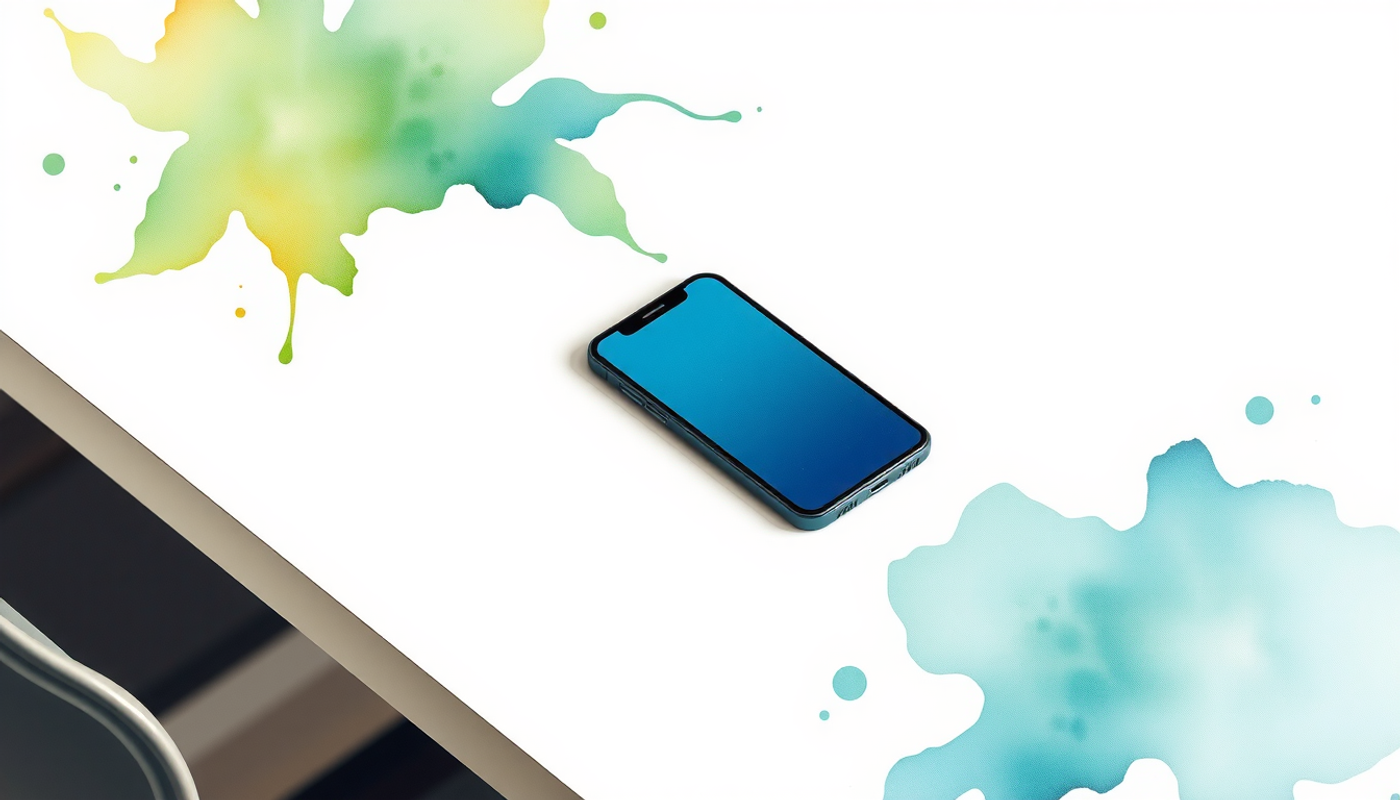
Ward's explanation centered on attentional control. The mere presence of a smartphone, even when silent and face-down, occupies cognitive resources. Your brain is spending effort not thinking about the phone. That effort is invisible to you but measurable in your test scores [3].
Now, a fair reading of this literature requires a caveat. A 2022 pre-registered replication by Ruiz Pardo and Minda failed to reproduce the original brain drain effect [4]. The scientific community has not reached full consensus. But a 2023 meta-analysis synthesizing data across multiple studies did find a small but reliable negative effect of smartphone presence on cognition [5]. The effect may be smaller than the original headline suggested, but it is real. And for students trying to encode complex material, even a small drain matters.
What about notifications specifically? Cary Stothart, Ainsley Mitchum, and Courtney Yehnert tested this at Florida State University in 2015 [6]. Participants worked on a sustained attention task while their phones occasionally buzzed or chimed. They were told to ignore the notifications. Most of them did. But their performance dropped anyway. The disruption was statistically comparable to actually picking up and using the phone.
Think about that. You do not need to check the notification. You do not need to read the message. The mere awareness that something arrived is enough to fracture your attention.
The 23-Minute Recovery and the Attention Residue Problem
Gloria Mark at the University of California, Irvine, spent years shadowing knowledge workers with a stopwatch. She timed every task switch, every interruption, every return to the original work. Her finding has become one of the most cited statistics in productivity research: after a single interruption, it takes an average of 23 minutes and 15 seconds to fully return to the original task [7].
Twenty-three minutes. For a single ping. Now multiply that by the average number of times a student checks their phone during a study session. Research suggests young adults reach for their phones roughly 86 times per day. Even if only a fraction of those happen during study time, the cumulative attention loss is enormous.
Sophie Leroy at the University of Washington Bothell gave this phenomenon a name: attention residue [8]. When you switch from Task A to Task B, part of your mind stays stuck on Task A. The residue is stronger when Task A was unfinished or felt urgent. And it directly reduces your performance on Task B.
For students, this creates a vicious cycle. You are reading a chapter on neuroanatomy. A notification arrives. Even if you do not check it, your brain registers it. You now have residue from the notification competing with the neuroanatomy content. Your encoding suffers. When you sit down for the exam, the material feels vaguely familiar but you cannot retrieve the details. You studied for three hours but encoded maybe ninety minutes' worth of material.
Offline study eliminates this entire problem. Not by giving you better willpower. By removing the source of interruption entirely.
What Happens to Heavy Multitaskers Over Time
The damage from digital distraction is not limited to individual study sessions. Chronic media multitasking appears to change how the brain processes information over time.
Eyal Ophir, Clifford Nass, and Anthony Wagner at Stanford published a landmark paper in 2009 in the Proceedings of the National Academy of Sciences [9]. They developed the Media Multitasking Index to categorize people as heavy or light multitaskers, then tested both groups on filtering, task-switching, and working memory.
Heavy multitaskers performed worse on every measure. They were more distracted by irrelevant stimuli. They switched tasks more slowly. Their working memory held less information. The researchers expected heavy multitaskers to be better at switching, since they practiced it constantly. They were worse.
Subsequent work by Uncapher and Wagner extended these findings to long-term memory [10]. Heavy media multitaskers showed reduced working memory capacity even in distraction-free testing environments, and this deficit predicted poorer long-term memory formation. The pattern suggests that chronic multitasking does not just impair performance in the moment. It may degrade the underlying cognitive machinery.
One important nuance: the effect sizes are not uniform across all students. Beland and Murphy's 2016 analysis of phone bans in English schools found that lower-achieving students benefited most from phone-free environments. Their test scores improved by an amount equivalent to adding five extra days to the school year. Higher-achieving students, who presumably had stronger self-regulation, showed smaller gains [11]. This means offline study is not equally beneficial for everyone. But it is most beneficial for exactly the students who need the most help.
Your Hand Knows Something Your Keyboard Does Not
The offline advantage is not only about removing distractions. It is also about what happens when you engage with material through physical, analog tools.
In 2021, a team at the University of Tokyo led by Kuniyoshi Sakai published an fMRI study that compared three ways of recording information: paper notebook with pen, tablet with stylus, and smartphone with touchscreen keyboard [2].
Forty-eight university students memorized fictional schedules using one of these three methods. One hour later, they entered an MRI scanner and answered recognition-memory questions. The paper-notebook group showed significantly stronger activation in the hippocampus, in language-related frontal regions, and in visual cortex areas. They also completed the note-taking task about 25% faster than the digital groups.
Sakai's interpretation was elegant. Paper provides rich spatial cues: the position on the page, the feel of the paper, the irregular shapes of handwriting, the physical location of the notebook. These cues create a contextual scaffold that the brain uses later during retrieval. Digital screens, by contrast, are uniform. Content scrolls and disappears. There are no fixed spatial landmarks [12].
A separate line of evidence comes from the Norwegian University of Science and Technology. Audrey van der Meer and Ruud van der Weel used 256-channel high-density EEG to record brain activity while students handwrote or typed words [13]. The results were striking. Handwriting produced widespread connectivity in the theta and alpha frequency bands across parietal and central brain regions. These are exactly the frequencies associated with memory encoding and learning. Typing produced minimal activity in the same regions.

An earlier study from the same lab found identical patterns in twelve-year-old children [14]. The brain's preference for handwriting over typing is not a cultural artifact. It appears to be a fundamental property of how motor engagement supports memory formation.
The most famous study in this area remains Mueller and Oppenheimer's 2014 paper, "The Pen Is Mightier Than the Keyboard" [15]. Across three experiments, students who took handwritten notes outperformed laptop note-takers on conceptual exam questions, even when laptops had internet access disabled. The proposed mechanism is generative encoding: because handwriting is slower than typing, writers must select, compress, and rephrase information. This forces deeper processing at the moment of encoding.
A replication attempt by Morehead, Dunlosky, and Rawson in 2019 found smaller, non-significant effects [16]. The scientific picture is not perfectly clean. But the neural evidence from fMRI and EEG studies provides a mechanistic explanation that stands regardless of behavioral replication debates. Handwriting activates memory-encoding brain networks that typing does not.
Paper Beats Screens for Reading Too
The handwriting story has a parallel in reading comprehension. In 2018, Delgado, Vargas, Ackerman, and Salmerón published a meta-analysis of 54 studies covering more than 170,000 participants [17]. They compared reading comprehension on paper versus screens.
Paper won. The effect size was g = -0.21, meaning screen readers scored about a fifth of a standard deviation lower than paper readers on comprehension tests. The advantage held specifically for informational and expository texts, the kind that fill textbooks and study materials. For narratives, the difference disappeared.
The effect was strongest under time pressure. When students had unlimited time, they could compensate for the screen disadvantage by re-reading. But when time was limited, as it is on most exams, screen readers fell further behind.

Why? Several mechanisms have been proposed. Screens may trigger a shallower processing mode because they are associated with casual browsing. Physical books provide spatial landmarks (the thickness of remaining pages, the position on the page) that aid memory. And screens introduce micro-distractions, even without notifications, through the temptation to scroll faster or skip ahead.
A 2025 network meta-analysis confirmed and refined these findings, showing that the reading medium effect persists across devices, though tablets with e-ink displays show smaller disadvantages than backlit LCD screens [18].
How Your Phone Hijacks Your Motivation to Study
Even when you manage to keep your phone silent and out of sight, the hours spent on social media before and after your study sessions create a subtler problem. They change what your brain considers rewarding.
Social media platforms are engineered around variable-ratio reinforcement schedules, the same reward pattern used in slot machines. You scroll through a feed and most posts are uninteresting. But occasionally, unpredictably, something delights you. A funny meme. A message from a friend. A post that gets a hundred likes. Fiorillo, Tobler, and Schultz showed in 2003 that dopamine neurons fire most intensely not during predictable rewards but during uncertain ones [19].
Clark and Zack extended this analysis to digital platforms in 2023, arguing that infinite scroll, algorithmic feeds, and notification cadences create multiple overlapping variable-ratio schedules [20]. Every check of your phone is a pull of the slot machine lever.
The problem for studying is straightforward. Reading a textbook chapter offers slow, uncertain, distant rewards. Checking Instagram offers fast, reliable, immediate dopamine hits. Your brain is not stupid. Given a choice, it will gravitate toward the cheaper reward. This is not a willpower failure. It is a neurochemical mismatch.
Chronic overexposure to variable-ratio digital rewards may also downregulate dopamine receptor sensitivity over time. When that happens, activities that require sustained effort, like studying organic chemistry for two hours, feel subjectively flatter. The textbook has not changed. Your reward circuitry has.
Studying offline, without the phone in the room, removes the cheaper alternative. It does not make studying more exciting. But it makes the brain more willing to engage with the only source of stimulation available: the material itself.
Sleep, Screens, and the Overnight Memory Machine
Everything discussed so far concerns what happens during study sessions. But the story does not end when you close the textbook. What happens afterward, specifically during sleep, determines whether today's studying becomes tomorrow's knowledge.
Memory consolidation during sleep is one of the most well-established findings in neuroscience. During slow-wave sleep, the hippocampus replays newly encoded memories in coordination with cortical slow oscillations and thalamocortical spindles. This replay transfers information from short-term hippocampal storage to long-term cortical networks [21]. REM sleep contributes additional consolidation, particularly for emotional and procedural memories.
And here is where screens cause a second wave of damage.
Anne-Marie Chang and colleagues at Harvard published a study in PNAS showing that reading from a light-emitting screen for four hours before bed suppressed evening melatonin secretion, delayed circadian phase by approximately 1.5 hours, reduced REM sleep duration, and impaired next-morning alertness [22]. Compared to reading a printed book, the screen readers took longer to fall asleep and felt groggier the next day. Even after eight hours in bed.
A 2024 polysomnographic study by Höhn and colleagues measured sleep architecture in adolescents and young adults after 90 minutes of smartphone reading versus reading a printed book [23]. Adults showed reduced N3 deep sleep during the first quarter of the night after smartphone use. N3 is the stage where the critical slow-wave oscillations drive memory consolidation.
The chain is direct. Screen use before bed suppresses melatonin. Melatonin suppression delays sleep onset and reduces deep sleep. Reduced deep sleep impairs the hippocampal replay that consolidates the day's learning. The material you studied at eight p.m. is less likely to be remembered at eight a.m. Not because you did not study hard enough. Because you used a screen afterward and disrupted the biological machinery that was supposed to lock it in.
How Offline Encoding Optimizes the Full Memory Cycle
Everything discussed so far describes individual mechanisms. But the real power of offline study emerges when you see how these mechanisms reinforce each other across the full memory cycle.
Memory is not a single event. It unfolds across three stages: encoding, consolidation, and retrieval. Each stage has specific biological requirements. And each stage is vulnerable to specific kinds of digital interference.
During encoding, the brain must allocate working memory resources to process incoming information. Ward's research shows that smartphone presence taxes these resources even when the phone is untouched [1]. Stothart's work shows that notifications impose the same tax as active phone use [6]. And Ophir's findings suggest that chronic multitasking degrades the filtering mechanisms that protect encoding from irrelevant input [9]. Remove the phone and you restore working memory capacity. Restore working memory and encoding gets deeper.
The encoding advantage compounds when the study medium is physical rather than digital. Paper activates richer hippocampal circuits than screens [2]. Handwriting generates theta-alpha connectivity that typing does not [13]. And the generative processing forced by slow handwriting produces stronger semantic traces than verbatim laptop transcription [15]. These are not marginal effects layered on top of each other. They are three independent neural pathways — spatial, sensorimotor, and semantic — all feeding stronger signals into the same hippocampal memory system.
During consolidation, the hippocampus replays encoded traces in coordination with cortical slow oscillations and thalamocortical spindles during deep sleep [21]. Screen-emitted blue light suppresses the melatonin that initiates this sleep architecture [22]. Höhn and colleagues showed measurable reductions in N3 deep sleep after smartphone use [23]. The material you encoded beautifully during an offline afternoon session gets partially erased if you spend the evening on screens. The encoding and consolidation stages are linked. Protecting one without protecting the other yields less than the sum of its parts.
During retrieval, the brain reconstructs stored memories using contextual cues that were present during encoding. This is the encoding specificity principle formalized by Smith, Glenberg, and Bjork [25]. Physical study environments provide stable, multimodal cues: the weight of the book, the smell of the room, the spatial position of information on the page. Digital environments are contextually impoverished and constantly changing. Notifications alter emotional state. App interfaces update. Content scrolls infinitely with no fixed landmarks. The retrieval advantage of offline study is not mystical. It is the predictable consequence of richer encoding cues being available at test time.
The three stages form a cascade. Deeper encoding feeds stronger traces into consolidation. Better consolidation produces more durable cortical representations. And richer contextual encoding creates more reliable retrieval pathways. When all three stages operate without digital interference, the compound effect is substantially greater than what any single mechanism would predict.
This is why a single hour of genuinely offline study, with paper notes, no phone in the room, and no screen use afterward, likely produces more durable learning than two or three hours of digitally fragmented studying. The biology is not subtle about this. Every stage works better when disconnected.
Context, Consistency, and the Retrieval Advantage
One final piece of the puzzle explains why offline study environments produce better recall. The principle of context-dependent memory has been known since Godden and Baddeley's famous 1975 underwater experiment [24]. Divers who learned word lists underwater recalled them better underwater. Those who learned on land recalled better on land. Memory retrieval is enhanced when the retrieval environment matches the encoding environment.
Smith, Glenberg, and Bjork formalized this in 1978 as the encoding specificity principle [25]. Retrieval success depends on the overlap between cues present during learning and cues present during recall. Physical environments provide rich, stable cues: the smell of the library, the weight of the textbook, the scratch of pen on paper, the particular chair you always sit in.
Digital environments are contextually impoverished. Apps update their interfaces. Screens scroll endlessly. Notifications change the emotional context from moment to moment. There are no fixed spatial landmarks. The encoding-specificity principle predicts exactly what the research shows: digital study environments produce weaker retrieval cues and therefore weaker recall.
This is one reason why the University of Tokyo study found stronger hippocampal activation in the paper-notebook group. The hippocampus is the brain's primary organ for binding contextual cues to memories. Paper provides more cues. More cues mean more hippocampal engagement. More hippocampal engagement means stronger, more retrievable memories.
Caveats and What the Science Does Not Say
Scientific honesty requires acknowledging what this evidence does not prove.
First, not all digital tools are inferior to analog ones. Well-designed spaced repetition software produces learning gains that no paper system can match for efficiency. The issue is not that all screens are bad. The issue is that screens come bundled with distraction, and that distraction has measurable costs.
Second, effect sizes in this literature are often small to moderate. The screen-reading disadvantage (g = -0.21) is real but not catastrophic. The brain drain effect may be smaller than originally reported. Individual results vary enormously based on self-regulation ability, subject matter, and study context.
Third, much of the evidence on digital distraction and academic performance comes from observational studies. Students who choose to use phones during lectures may differ from those who do not in ways that affect grades independently of phone use. The randomized experiments are smaller and sometimes show null effects.

Fourth, the handwriting advantage may be partly task-specific. EEG studies show clear neural differences, but behavioral replication attempts have been mixed. The strongest version of the claim is that handwriting activates brain networks associated with memory encoding, not that handwriting guarantees better grades.
What the science does say, consistently across multiple research domains, is this: the human brain evolved for focused, embodied, contextually rich engagement with information. Offline study provides these conditions naturally. Connected digital environments systematically undermine them. The offline advantage is not about nostalgia or technophobia. It is about aligning your study practice with your biology.
For students interested in how active recall strengthens memory through retrieval practice, the offline principle applies there too. Retrieval practice is most effective when performed in a focused, distraction-free state where the brain can fully engage the effort of reconstruction.
The Bottom Line
Your brain is not broken. It is not lazy. It is not failing you during exam prep. It is doing exactly what it evolved to do: responding to the most salient stimuli in its environment. When that environment is full of notifications, variable-ratio reinforcement, and glowing screens, the brain responds to those. When the environment is quiet, physical, and focused, the brain responds to the material in front of it.
Every stage of learning benefits from disconnection. Encoding is deeper when working memory is not taxed by phone-related inhibition. Consolidation is stronger when evening screen exposure does not disrupt slow-wave sleep. Retrieval is more accurate when stable physical cues match the encoding context.
None of this requires rejecting technology entirely. It requires being intentional about when technology is present and when it is not. The most evidence-backed study strategy is also the simplest: put the phone in another room, open a paper notebook, and give your brain the offline environment it was built to learn in.
Frequently Asked Questions
Does the mere presence of a smartphone affect cognitive performance?
Research by Ward et al. (2017) found that having a smartphone on your desk reduces working memory capacity and fluid intelligence compared to leaving it in another room. A 2023 meta-analysis supports a small but reliable negative effect. The mechanism involves attentional resources spent suppressing phone-related thoughts, leaving fewer resources for the primary task.
Is handwriting better than typing for learning?
EEG studies from NTNU Norway show that handwriting activates widespread brain connectivity in theta and alpha frequencies linked to memory encoding, while typing does not. An fMRI study from the University of Tokyo found stronger hippocampal activation during recall after paper-based note-taking. Behavioral evidence is more mixed, but the neural evidence for a handwriting advantage is consistent.
How does screen use before bed affect memory?
Research published in PNAS shows that reading from light-emitting screens for four hours before bed suppresses melatonin, delays circadian phase by about 1.5 hours, and reduces REM sleep. Since memory consolidation depends on deep sleep stages, evening screen use can impair retention of material studied earlier that day.
Does phone presence affect test scores in classrooms?
A 2016 study of English schools found that phone bans improved test scores by an amount equivalent to adding five extra school days per year. The largest gains occurred among lower-achieving students. In controlled classroom experiments students without phones wrote 62% more notes and scored significantly higher on recall tests than students who had phones present.
Is reading on paper better than reading on a screen?
A meta-analysis of 54 studies covering over 170,000 participants found a small but reliable comprehension advantage for paper over screens, particularly for informational and expository texts read under time pressure. The effect size was approximately g = -0.21. The advantage likely stems from spatial cues in physical books and a tendency toward shallower processing on screens.