
INTRODUCTION
A simple experiment. Ask people: how does a zipper work? How does a flush toilet drain water? How does a cylinder lock open? First, have them rate their understanding on a scale of one to seven. Most people give themselves a five or six. Now ask them to explain the mechanism step by step. This is where it happens. The ratings collapse. Leonid Rozenblit and Frank Keil at Yale University ran twelve studies and saw this pattern again and again [1]. When forced to explain, people were shocked by how little they actually knew. Rozenblit and Keil called it the illusion of explanatory depth — the belief that our understanding of things runs deep, when in reality it barely scratches the surface. But this is only one corner of a much larger picture. The human brain has a structural problem: the system responsible for evaluating our own knowledge systematically gets it wrong. This problem has a name. Metacognition — cognition about cognition — and when it malfunctions, the result is what psychologists call the "illusion of knowing" [2]. This article tells the story of how that malfunction was discovered. From Greek philosophers to brain imaging laboratories. From students who believe they are ready for exams but are not, to physicians who make incorrect diagnoses and are convinced they got it right.

The Oldest Idea in Psychology Was Born 2,400 Years Ago
The idea we now call metacognition has roots that stretch back to ancient Athens.
In Plato's Apology, Socrates declared something that became the foundation of Western philosophy: I know that I know nothing. This was not an expression of humility. It was a cognitive claim. Socrates was saying he could evaluate the state of his own knowledge — and the evaluation came back empty. Plato pushed further in the Charmides, explicitly asking whether "knowledge of knowledge" — epistēmē epistēmēs — is even possible. Aristotle in De Anima described the mind as capable of taking "thought as an object" and analyzed "perceiving that we perceive" — what Victor Caston in 2002 called the first philosophical description of metacognitive monitoring [3].
John Flavell — a developmental psychologist at Stanford University — coined the word "metacognition" in 1976. In a chapter of The Nature of Intelligence, he defined it as "one's knowledge concerning one's own cognitive processes and products, and the active monitoring and consequent regulation and orchestration of these processes" [4]. Three years later he published a paper in American Psychologist that laid out his four-component model: metacognitive knowledge, metacognitive experiences, goals, and strategies. In that paper he described an experiment he had conducted with Friedrichs and Hoyt in 1970 — older children could accurately predict when they were ready to recall information, but younger children claimed readiness and then failed at recall. The child's brain did not yet have a reliable monitoring system.
Flavell had opened the door to an entire field. But the bigger question remained unanswered: what happens when this monitoring system malfunctions in adults?
The First Time Science Proved the Brain Lies to Itself
The answer arrived in 1982, from Arthur Glenberg's laboratory at the University of Wisconsin-Madison.
Glenberg, together with Alex Wilkinson and William Epstein, published a paper with a title that remains a landmark to this day: "The illusion of knowing: Failure in the self-assessment of comprehension" [2]. Published in Memory & Cognition. The experiment was straightforward but the results were unsettling. Participants read expository texts that deliberately contained contradictions between adjacent sentences. They were explicitly told to search for those contradictions. Then they were asked to rate how well they had understood the text.
The result was paradoxical. Participants who had failed to detect the contradictions — meaning they had not actually understood the text — simultaneously gave their comprehension high ratings. The illusion of knowing: a dual failure of monitoring and self-assessment. They did not understand, and they did not understand that they did not understand.
Glenberg noticed the illusion grew stronger when texts were longer — it occurred more frequently in three-paragraph texts than in single-paragraph ones. The greater the distance between contradictory sentences, the more easily the brain ignored the contradiction and maintained the feeling of comprehension. As if the cognitive monitor had a limited working memory buffer, and when information exceeded its capacity, instead of signaling an error, it sent an "all clear" signal.
This paper introduced the term "illusion of knowing" into the scientific literature and opened a path that decades later would lead to one of the most famous effects in the history of psychology.
Cornell University, 1999: When the Least Skilled Are the Most Certain
In 1999, Justin Kruger and David Dunning at Cornell University published what is probably the most cited paper in the history of metacognition research: "Unskilled and unaware of it" [5]. The subtitle was the real thesis: how difficulties in recognizing one's own incompetence lead to inflated self-assessments.
They ran four studies. Each tested a different skill.
Study 1 was about humor. Sixty-five Cornell undergraduates rated thirty jokes for funniness, then estimated their own percentile ranking relative to peers. Bottom-quartile performers — those who were genuinely poor at recognizing good humor — estimated themselves at roughly the 58th percentile. Their actual performance placed them at the 12th. A fifty-point overestimation.
Study 2 tested logical reasoning. Forty-five participants answered twenty LSAT-style syllogisms. The same pattern emerged: bottom-quartile participants estimated themselves at the 68th percentile despite actual 12th-percentile performance. Study 3 tested grammar — eighty-four participants, twenty grammar items. The bottom quartile overestimated by approximately fifty percentile points. Even seeing other people's tests did not help them recalibrate.
Study 4 was the most revealing. One hundred and forty participants completed a logic test, and half of them received brief training in logical reasoning afterward. The result was striking: training not only improved performance but also made self-assessments more accurate. Low performers who received training could suddenly recognize their own limitations. Dunning argued this training effect could not be explained by regression to the mean alone.
The central argument was what Dunning and Kruger called the "dual burden": low performers carry two problems simultaneously. First, their performance is poor. Second, the very skill needed to distinguish good performance from bad — metacognitive ability — is the same skill they lack. They cannot see that they cannot see.
But the story did not end there. It actually got more interesting.
The Biggest Statistical Debate of the Twenty-First Century
Twenty years after the original paper, the earthquake arrived.
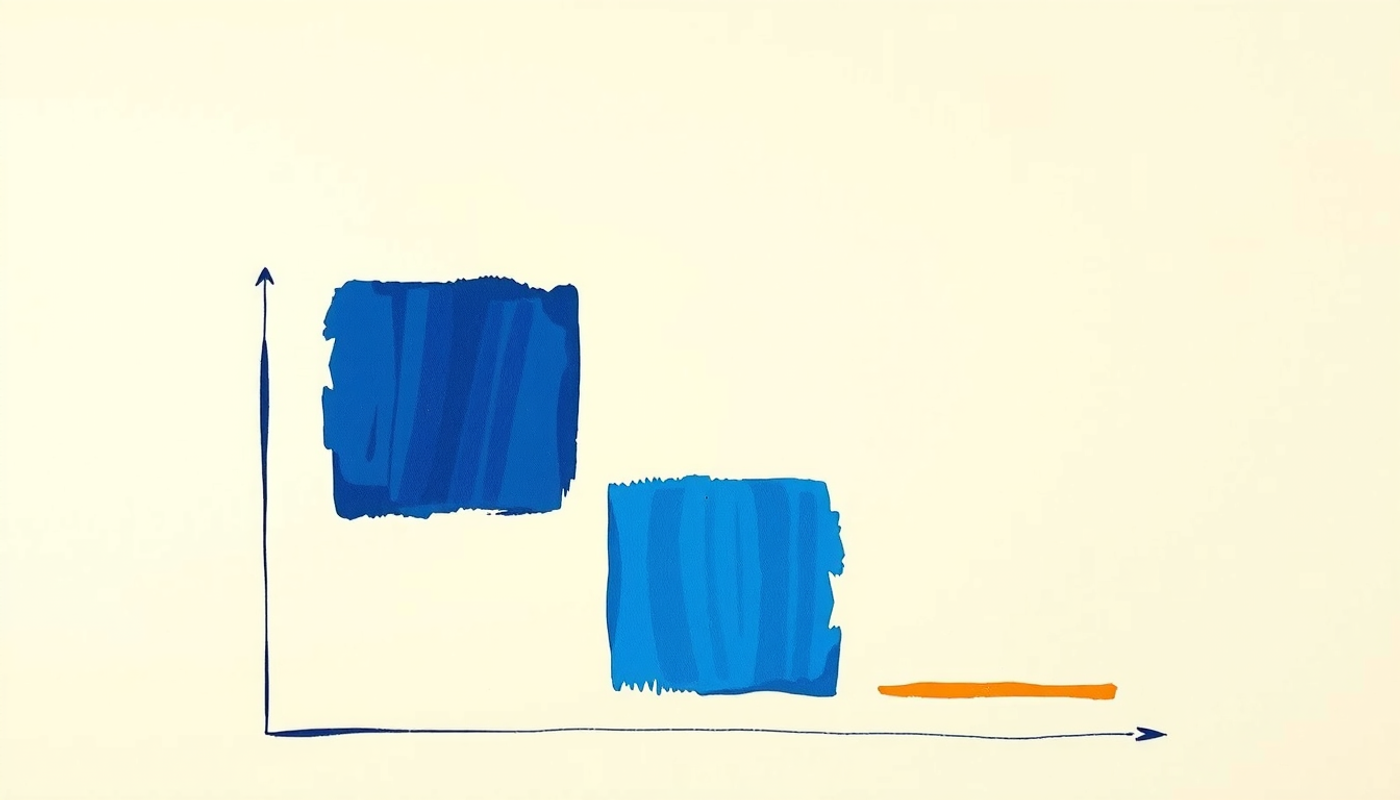
Grzegorz Gignac and Marcin Zajenkowski published a paper in 2020 in the journal Intelligence with a provocative title: "The Dunning-Kruger effect is (mostly) a statistical artefact" [6]. With 929 community participants — not just college students — they showed that the misprediction correlation was only −0.05. Essentially zero. The relationship between objective and self-assessed intelligence was fundamentally linear, not the U-shaped curve that the famous Dunning-Kruger graph suggests.
Before that, Edward Nuhfer and colleagues in 2016 had demonstrated that the Dunning-Kruger graphical pattern could be reproduced using entirely random simulated data [7] — as long as the correlation between two variables is less than 1.0, regression to the mean produces a similar pattern on its own. In actual data from the Science Literacy Concept Inventory, only about five to six percent of individuals genuinely fit the "unskilled and unaware" description. Magnus and Peresetsky in 2022 provided a formal statistical model — a censored tobit model — showing the entire effect is explicable by boundary constraints and regression to the mean [8].
So is the Dunning-Kruger effect not real? The answer is more nuanced than yes or no. Critics have proven that the famous graph — the one shared millions of times on social media — is largely a statistical artifact. But the underlying idea — that people systematically err when evaluating their own knowledge — still stands on decades of independent evidence. The problem is not that the illusion of knowing does not exist. The problem is that a more general mechanism than what Dunning and Kruger proposed drives it.
That more general mechanism has a name: the fluency illusion.
Why Things That Are Easy to Read Feel Like Things You Have Learned
Think of it this way. You read a chapter of a textbook. The sentences flow smoothly. The concepts seem logical. Nothing confusing. You close the book and feel you understood it. The next day, sitting in front of a blank exam question, nothing comes. What happened?
Your brain used a cognitive shortcut called processing fluency — if information is processed easily, the metacognitive system concludes that learning has occurred. But this conclusion is wrong. Ease of processing has no reliable relationship with depth of learning. Alter and Oppenheimer in 2009 provided the first comprehensive taxonomy of fluency types [9]: perceptual fluency — when visual stimuli are clear, retrieval fluency — when information comes from memory quickly, and conceptual fluency — when concepts have been semantically primed. All three types are interpreted as signals of "knowing," even when no actual knowledge is present.
Rhodes and Castel in 2008 designed an elegant experiment [10]. They showed words in two font sizes — large and small. Participants predicted which words they would remember later. The result: words in larger fonts received higher learning predictions. But in the actual recall test, there was no difference between font sizes. The brain had interpreted font size — a feature entirely irrelevant to learning — as a signal of learning.

Now take it one step further. Diemand-Yauman, Oppenheimer, and Vaughan in 2011 asked the reverse question: if fluency creates the illusion of learning, can disfluency improve actual learning? [11]. They used hard-to-read fonts like Comic Sans Italic in sixty-percent gray. In the lab and in real classrooms. The initial results were exciting — disfluent fonts improved performance. But subsequent replication attempts largely failed. Rummer and colleagues in 2016 found no effect across three experiments. A meta-analysis of seventeen studies showed an effect size of d = 0.01 — effectively zero. But here is the interesting part: the metacognitive effect of disfluency held up robustly. Hard-to-read fonts reliably lowered learning predictions, even without improving actual learning. Disfluency breaks the illusion of knowing — even if it does not strengthen learning itself.
This leads to a more important discovery. Nelson and Dunlosky in 1991 found something almost magical [12]. When people are asked immediately after studying, "How well did you learn this material?", their answers are inaccurate. But if you wait a few minutes and then ask the same question, their prediction accuracy becomes nearly perfect. The Goodman-Kruskal gamma correlation approached 1.0. Every single one of forty-five participants showed this effect [13].
Why? Because when you judge immediately after study, the material is still in working memory and feels "fluent." But when you wait a few minutes, the material has left working memory and you are forced to actually attempt retrieval from long-term memory. If retrieval succeeds, you give a high rating. If it fails, you give a low one. And this time your rating is accurate.
What does this mean for you? Never judge whether you have learned something immediately after reading it. Wait at least a few hours. Then try to recall the material without looking at the book. Whatever does not come is exactly what you have not learned.
The Experiment That Proved Students Think the Worst Study Method Is the Best
Jeffrey Karpicke and Henry Roediger III published a paper in Science in 2008 that is perhaps the most striking paper on learning in the past two decades [14].
The design was simple. Forty Swahili-English word pairs. Four study conditions. The only difference was whether items were dropped from subsequent study rounds or from subsequent testing rounds after initial correct recall. One week later, a final test.
The results were stunning. Conditions with repeated testing produced approximately eighty percent recall. Conditions where testing was dropped produced approximately thirty-six percent. An effect size of d = 4.03 — so large that the distributions of the two main groups did not overlap at all. Repeated testing had literally doubled learning.

But the metacognitive part was even more important. Students were asked to predict how much they would remember in each condition. Their predictions were virtually identical across all four conditions — roughly fifty percent. No differences at all. Predictions were completely uncorrelated with actual performance. Students were entirely blind to which method actually worked.
Nate Kornell in 2009 confirmed this with another experiment [15]. Using GRE-type flashcards, he showed that spacing between study sessions was more effective for ninety percent of participants, boosting recall by approximately thirty-one percent. But seventy-two percent of participants believed cramming had been more effective. Their brains were sending the wrong signal.
Why? Because cramming produces a stronger feeling of fluency — the material is still fresh and processes easily — and this fluency is mistakenly interpreted as learning. Spacing feels harder — retrieval after a time gap is more effortful — and this difficulty is mistakenly interpreted as failure.
Robert Bjork at UCLA gave this a name: desirable difficulties [16]. Conditions that make learning harder — spacing, interleaving, retrieval practice, varying conditions — often produce a worse subjective feeling but build better learning. Bjork drew a critical distinction between "retrieval strength" and "storage strength." Retrieval strength is current accessibility — how easily information comes to mind right now. Storage strength is the robustness of learning — how long it will last. The problem is that our metacognitive system tracks retrieval strength, not storage strength. So methods that boost current retrieval — like rereading — feel good but do not last. And methods that build storage — like self-testing — feel bad but endure.
Dunlosky and Rawson in 2012 demonstrated the complete causal chain [17]: overconfidence → premature termination of study → poor learning. Students who thought they knew the material stopped studying too early, and as a direct consequence, performed worse. This was the first study to show that the illusion of knowing is not just a judgment error — it has real consequences for learning outcomes.

Where Does the Metacognitive Brain Live?
So far we know metacognition malfunctions. But does the physical location of metacognition in the brain have an identifiable address?
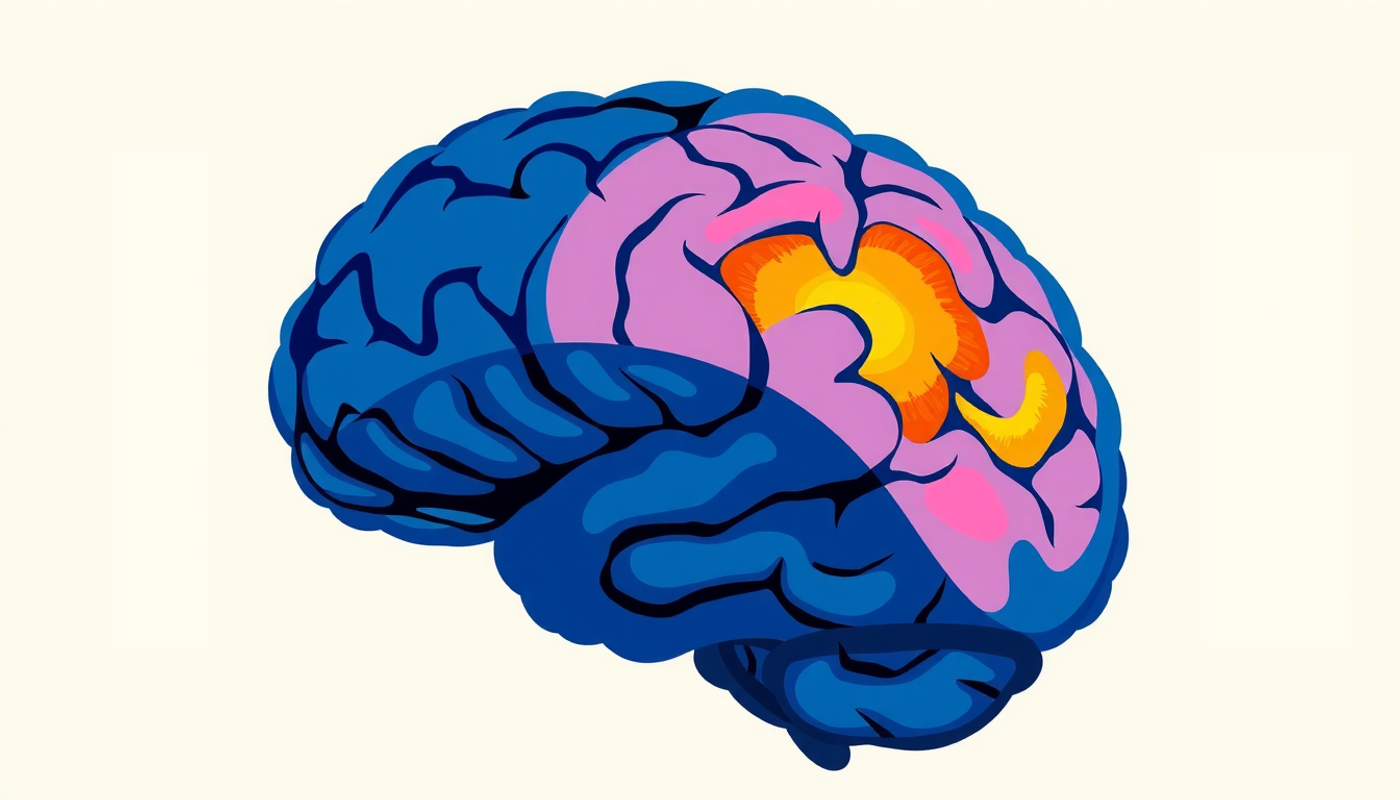
Stephen Fleming at University College London found the answer. In 2010 he published a paper in Science that for the first time linked individual differences in metacognitive accuracy to brain structure [18]. Thirty-two healthy participants performed a visual contrast discrimination task and reported their confidence after each decision. Fleming measured metacognitive accuracy using the type 2 area under the ROC curve — a metric that captures whether a person's confidence actually tracks the correctness of their responses.
The result: gray matter volume in the right anterior prefrontal cortex — Brodmann Area 10 — positively correlated with metacognitive accuracy, even after controlling for task performance. White matter microstructure in a callosal fiber tract connecting this region also correlated with metacognitive ability. Some people literally have brains that are physically better equipped for cognitive self-awareness.
In 2012, Fleming used functional brain imaging — fMRI — to take the next step [19]. Twenty-three people performed a face-versus-house discrimination task in the scanner and reported confidence after each decision. The right rostrolateral prefrontal cortex simultaneously satisfied three criteria: greater activity during metacognitive self-report compared to control conditions, a negative correlation with reported confidence — meaning it activated more when confidence was lower — and a relationship between this activity-confidence coupling and metacognitive ability across individuals. Critically, metacognitive ability did not correlate with fluid intelligence. Cognitive self-awareness is something separate from being smart.
In 2014, Fleming provided causal evidence through a lesion study [20]. Seven patients with anterior prefrontal cortex lesions, eleven patients with temporal lobe lesions, and nineteen healthy controls. Anterior prefrontal patients showed a selective deficit in perceptual metacognitive accuracy — their meta-d'/d' ratios ranged from 0.28 to 0.64 — despite equivalent task performance. Their memory metacognition remained intact. This was the first causal evidence: a specific brain region is responsible for metacognition, and when damaged, a person loses the ability to accurately evaluate their own performance — without any change in the performance itself.
Rounis and colleagues in 2010 confirmed this using transcranial magnetic stimulation — TMS [21]. Theta-burst stimulation of bilateral dorsolateral prefrontal cortex disrupted metacognitive sensitivity — meta-d' — without affecting task performance — d'. Prefrontal activity is not a byproduct. It is a direct cause of metacognition.
Alongside the prefrontal cortex, another structure plays a key role: the anterior cingulate cortex — a strip of brain tissue along the midline that functions like a conflict detector. Carter and colleagues in 1998 showed in Science that this region activates not only during errors but during correct responses under high response competition [22]. Botvinick and colleagues in 2001 proposed the conflict monitoring theory: the anterior cingulate cortex monitors information-processing conflict and triggers compensatory cognitive control adjustments [23].
What does this mean for everyday life? When you feel a sense of "something is not right" or "this does not add up" while reading or listening, your anterior cingulate cortex is sending a conflict signal. If you pay attention to that signal and re-examine the material, your metacognition has worked correctly. If you ignore it and move on, the illusion of knowing is preserved.
When the Illusion of Knowing Costs Lives
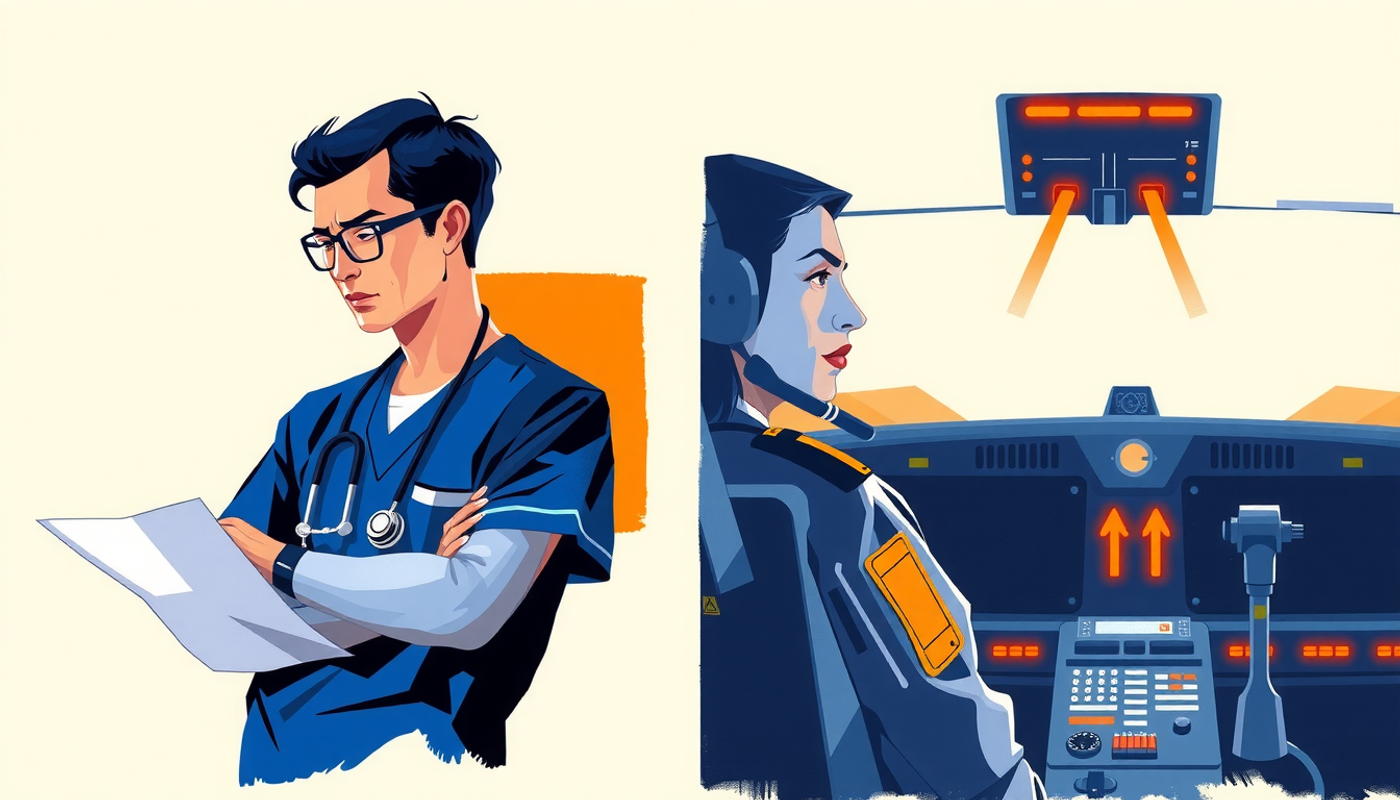
So far we have discussed students and exams. But the illusion of knowing in certain professions carries consequences measured in lives lost.
Berner and Graber in 2008 published a paper titled "Overconfidence as a cause of diagnostic error in medicine" [24]. Diagnostic error rates range from less than five percent in perceptual specialties like radiology to fifteen percent in most other areas. Yet only one percent of physicians admit to having made a diagnostic error in the past year. The gap between actual error rates and perceived error rates is staggering.
The more unsettling finding: medical residents — physicians in training — showed the greatest confidence-accuracy mismatch. Their confidence exceeded that of attending physicians, but their accuracy was lower. Exactly the Dunning-Kruger pattern, but this time in operating rooms and emergency departments. Lakhlifi and colleagues at Sorbonne University in 2025 confirmed this with fifty-two physicians and acute headache case-vignettes: median confidence was 83.3 percent, but forty-six of fifty-two physicians were overconfident, and metacognitive bias correlated negatively with accuracy at r = −0.69.
In aviation, the story is similar. Orasanu and colleagues found that approximately seventy-five percent of tactical decision errors in NTSB-analyzed accidents were plan-continuation errors — decisions to continue with an original plan despite cues suggesting a change was needed. The pilot feels they understand the situation. They are certain their decision is correct. Warning signals are dismissed. The illusion of knowing at thirty thousand feet.
The Community of Knowledge: Why We Think We Know More Than We Do
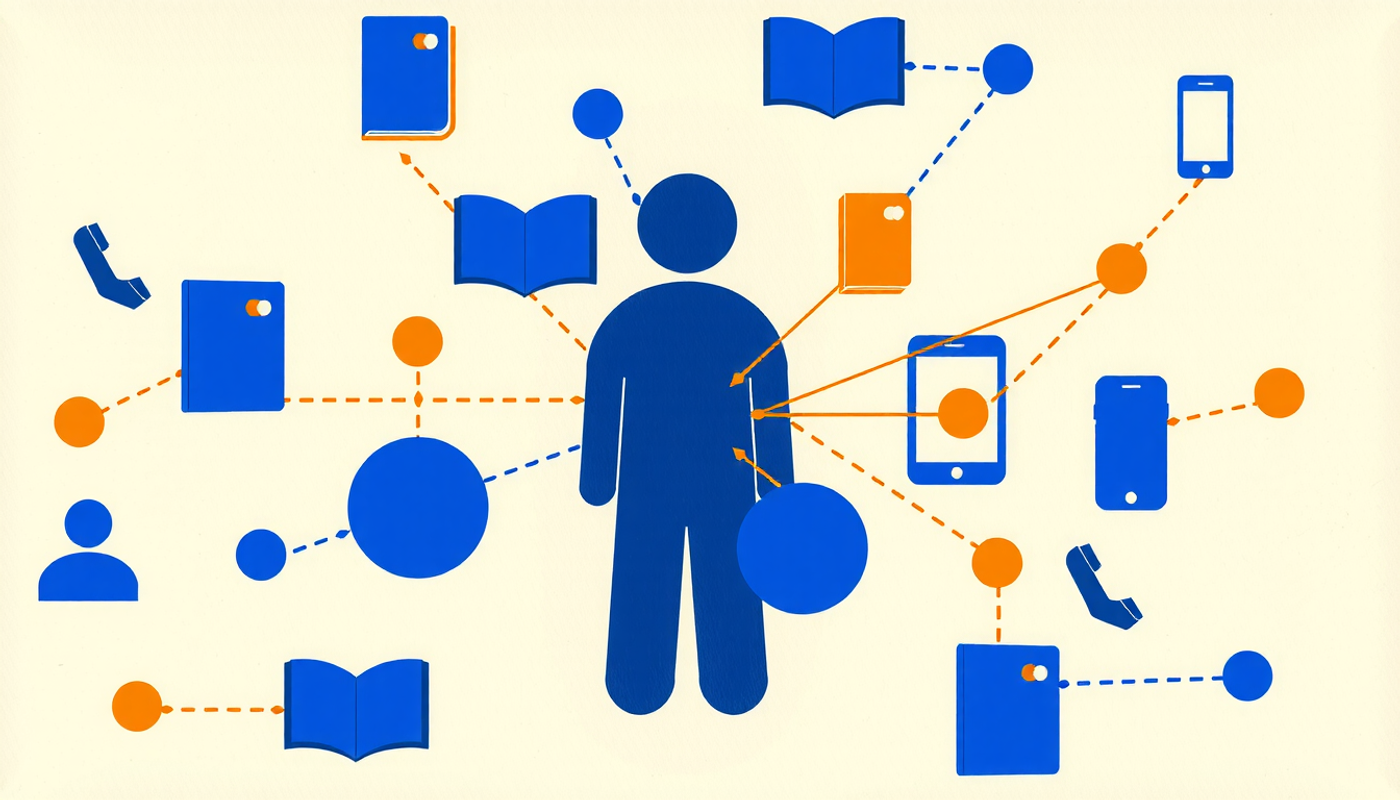
Steven Sloman at Brown University and Philip Fernbach at the University of Colorado raised the entire discussion one level higher in their 2017 book The Knowledge Illusion. Their argument: humans constantly draw on information stored outside their own heads — in other people's minds, in tools, in their environment — but they fail to distinguish between external knowledge and internal knowledge. When your colleague knows something, your brain partially counts that knowledge as your own.
Fernbach and colleagues in 2013 connected this to politics in Psychological Science [25]. When people were asked to explain how policies like carbon taxes or sanctions actually work — not just state their opinion but explain the mechanism — both their self-rated understanding and their attitude extremity decreased. Simply requesting a mechanistic explanation was enough to make people realize they knew less than they thought, and as a result, their more extreme positions softened.
This finding has a profound implication. A significant portion of political polarization may be rooted in the illusion of knowing — people take extreme positions because they believe they understand the issue, when in reality they possess only a shallow feeling of familiarity.
AI Makes You Smarter but None the Wiser
In 2024, a paper published in Nature sent a new wave of concern through the research community. Lisa Messeri and Molly Crockett argued that artificial intelligence tools exploit human cognitive vulnerabilities and create "illusions of understanding" — states in which scientists believe they comprehend more than they actually do [26]. They warned these illusions could foster "scientific monocultures" — a narrowing of research approaches driven by false confidence in AI-generated results.
In 2025, Fernandes and colleagues provided empirical evidence [27]. Two hundred and forty-six participants used ChatGPT-4o to solve LSAT problems. AI users scored approximately three points higher than no-AI norms — but they overestimated their own performance by approximately four points. They estimated they had answered roughly seventeen out of twenty correctly, when reality was around thirteen. The most striking finding was a reverse Dunning-Kruger effect: higher AI literacy correlated with lower metacognitive accuracy — the more skilled you were at using AI, the more overconfident you became.
Cash and Oppenheimer in 2025 compared humans with ChatGPT-4 and Gemini 1.5 Flash across several tasks. Humans adjusted their retrospective confidence after poor performance — they recognized their mistakes. Large language models did not — they actually became more overconfident retrospectively. AI lacks the corrective metacognitive mechanism that humans, at least partially, possess.
What does this mean? The more we rely on AI without maintaining habits of self-evaluation, the more vulnerable we become to the illusion of knowing. The tool makes us smarter — but it does not make us wiser.
Does Culture Shape the Illusion of Knowing?
An important question remains. Is overconfidence universal, or does culture play a role?
Van der Plas and colleagues in 2022 compared students in Beijing and London — matched on age, intelligence, and demographics [28]. The result was surprising. Chinese participants showed more efficient metacognitive evaluation — better post-decisional processing following errors. They were better at detecting when they had made a mistake. First-order performance — the task itself — showed no differences.
Heyes and colleagues in 2020 in Trends in Cognitive Sciences argued that some forms of metacognition have social and cultural origins rather than being purely genetic [29]. Students from Western, individualistic cultures express more confidence than those from East Asian, group-oriented cultures — and brain imaging suggests this is not solely due to expression norms but reflects genuine differences in processing.
Ordin and colleagues in 2024 compared three societies — Saudi Arabia, Portugal, and China [30]. The finding: lower individualism and greater uncertainty avoidance were associated with higher metacognitive abilities.
These results carry a deep implication. In cultures where intellectual humility is valued as a social norm, social structures may themselves provide a form of protection against the illusion of knowing. Socrates' insistence that wisdom begins with recognizing one's own ignorance may not just be a philosophical ideal — it may describe a trainable cognitive skill that some cultures cultivate more effectively than others.
Can Metacognition Be Improved?
Yes. And this may be the most important message of this entire article.
Self-testing — actively retrieving information from memory — not only strengthens learning but also improves metacognitive accuracy. When you try to recall something and fail, your metacognitive system receives honest feedback. Miller and Geraci in 2014 showed that retrieval failure is even more beneficial than success — because failure reduces overconfidence more effectively [31].
Thiede, Anderson, and Therriault in 2003 demonstrated the complete causal chain: delayed keyword generation → improved monitoring accuracy → improved study regulation → improved reading comprehension [32]. Improving metacognition directly led to improved learning.
Metcalfe and Kornell in 2005 proposed the "region of proximal learning" model [33]. Across eight experiments they showed that when people have freedom to allocate study time, they invest in items that are neither too easy nor too hard — items in the zone where learning is possible. More skilled individuals devoted more time to harder items. Better metacognition means better allocation of cognitive resources.

From a developmental perspective, metacognition follows a clear trajectory. Perceptual metacognition emerges around age three. Memory metacognition appears around ages four to five. And domain-general metacognition consolidates between ages eight and fifteen. Van Loon and colleagues in 2025, using latent profile analysis, showed that approximately fifteen percent of children are at risk for severely lagging metacognitive development [34].
Stephen Fleming in his 2021 book Know Thyself argued that metacognition is "the ultimate human trait" — neither other animals nor current AI possess it in its most sophisticated forms. But this trait is not fixed. The neural machinery of metacognition can be improved.
CONCLUSION
The human brain is a living paradox. The same apparatus that can comprehend general relativity and compose symphonies cannot reliably tell whether it has actually learned a chapter of a textbook. This failure is not random. It is structural. It is rooted in how cognitive monitoring works — a system that, instead of directly measuring learning, relies on shortcuts like processing fluency and familiarity. Shortcuts that work well most of the time but fail catastrophically under pressure — during exams, in diagnostic medicine, in the cockpit.
Twenty-four hundred years ago, Socrates said that true wisdom is knowing the limits of your own ignorance. Modern science has proven he was right — and has even shown that this wisdom has a physical basis in Brodmann Area 10 of the prefrontal cortex. But science has also added something Socrates did not know: that brain region can be strengthened. Self-testing, retrieval practice, delayed judgments of learning, and building the habit of asking yourself — "Do I really know this or does it just feel familiar?" — are tools that break the illusion of knowing.
Perhaps the most important lesson is this: the feeling of understanding is not understanding. And understanding that is where real understanding begins.
Frequently Asked Questions
What exactly is metacognition and why does it matter?
Metacognition is the ability to think about your own thinking — to evaluate how much you know and how much you do not know. It matters because without accurate metacognition, you cannot effectively manage your learning and may believe you are prepared when you are not.
Is the Dunning-Kruger effect real or a statistical artifact?
Recent research shows the famous Dunning-Kruger graph is largely explainable by statistical regression to the mean. However, the underlying idea — that people systematically err when evaluating their own knowledge — is supported by decades of independent research using different methodologies.
How can I tell whether I have actually learned something or am experiencing the illusion of knowing?
The most effective method is self-testing without looking at your source material. Several hours after studying, try to retrieve the material from memory. Whatever fails to come is precisely what you have not learned — the apparent fluency of study was hiding the gap.
Does AI like ChatGPT make the illusion of knowing worse?
Empirical evidence suggests yes. AI users show better performance but also greater overestimation of their abilities. AI raises scores but lowers cognitive self-awareness — smarter but not wiser.
Is metacognition innate or can it be developed?
Both. Brain structures associated with metacognition vary between individuals, but research has shown these structures can be strengthened. Practicing retrieval, using delayed judgments of learning, and building a habit of honest self-assessment measurably improves metacognitive accuracy.