

INTRODUCTION
AnkiMobile Flashcards costs $24.99. That makes it one of the most expensive education apps on the App Store. And yet it consistently ranks among the top ten paid iOS apps in the United States, generating an estimated $700,000 per month according to Sensor Tower data. So what exactly determines the AnkiMobile Flashcards App Store ranking in March 2026, and is the app still worth its price when newer alternatives are entering the market every month? This article breaks down the current ranking data, examines five modern alternatives worth knowing about, and explains the science behind the scheduling algorithms that separate serious study tools from glorified digital index cards.

1. Mochi Cards — Markdown Meets Modern Spaced Repetition
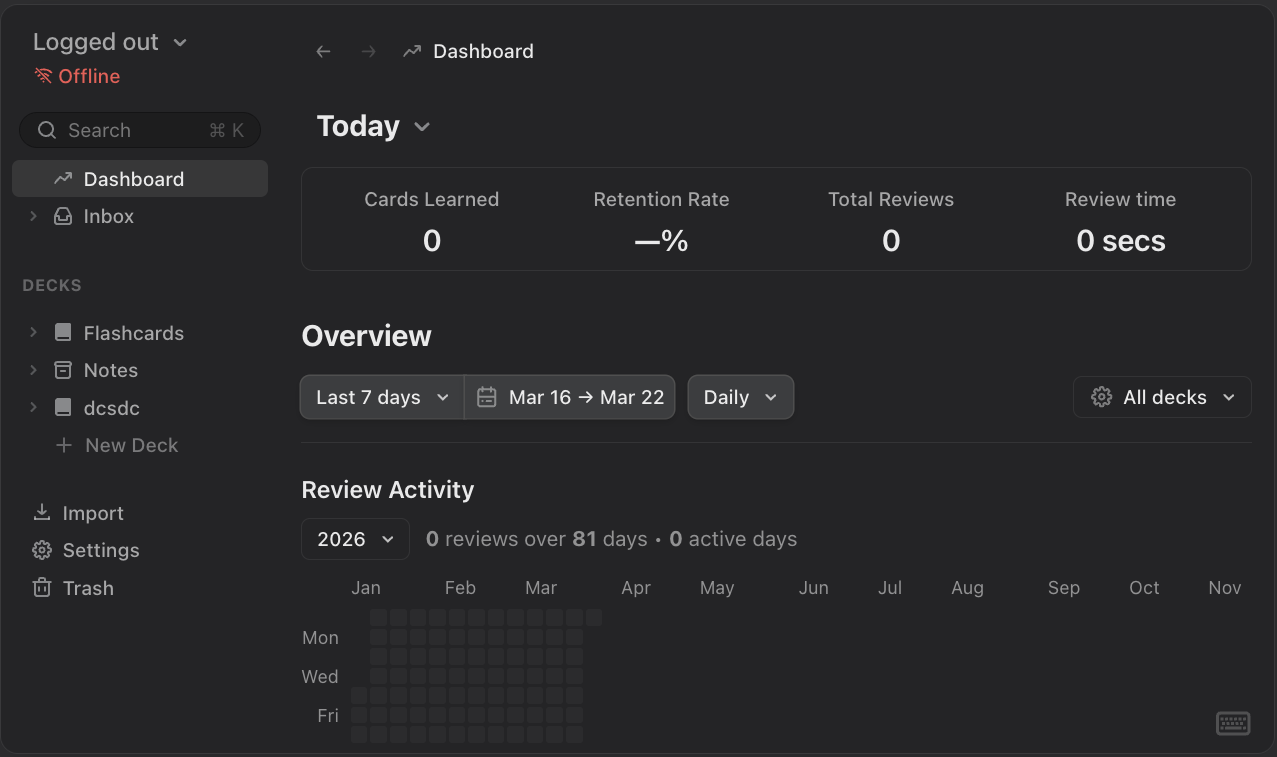
Mochi Cards has been in active development since 2019 and quietly built a loyal following among students who want the power of Anki without the dated interface. Cards are written in Markdown, which makes formatting fast for anyone comfortable with plain text. The app added FSRS algorithm support in mid-2025, putting it on par with Anki's own scheduling engine. It runs on iOS, Android, Mac, Windows, Linux, and the web. The free tier covers unlimited offline usage on a single device, though syncing across devices requires the $5/month Pro plan. That sync restriction is the main drawback for students who switch between phone and laptop throughout the day.
2. Knowt — The Post-Quizlet Migration Wave
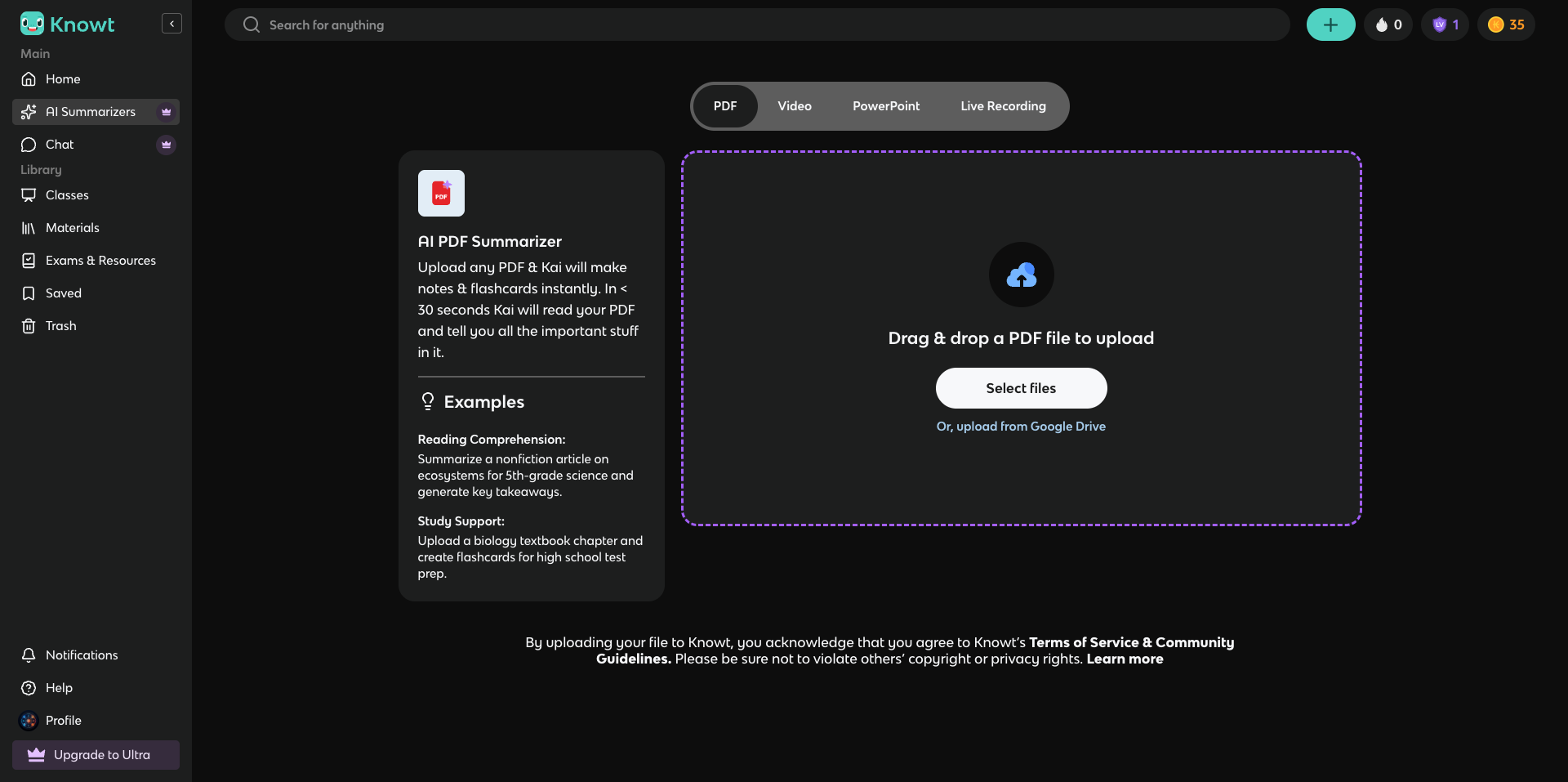
Knowt exploded in 2024 and 2025 as millions of students left Quizlet after it paywalled previously free features. The app now has over four million registered users and offers free unlimited Learn mode, AI flashcard generation from PDFs and lecture videos, spaced repetition, and access to over five million community-created study sets. It works on iOS, Android, and the web. The free tier is genuinely generous. The downside is that Knowt's spaced repetition algorithm is less transparent and less configurable than FSRS-based tools, and the Ultra subscription recently jumped to $149.99 per year, which raised eyebrows in the student community.
3. Mindomax — AI-Powered Cards From Any Source
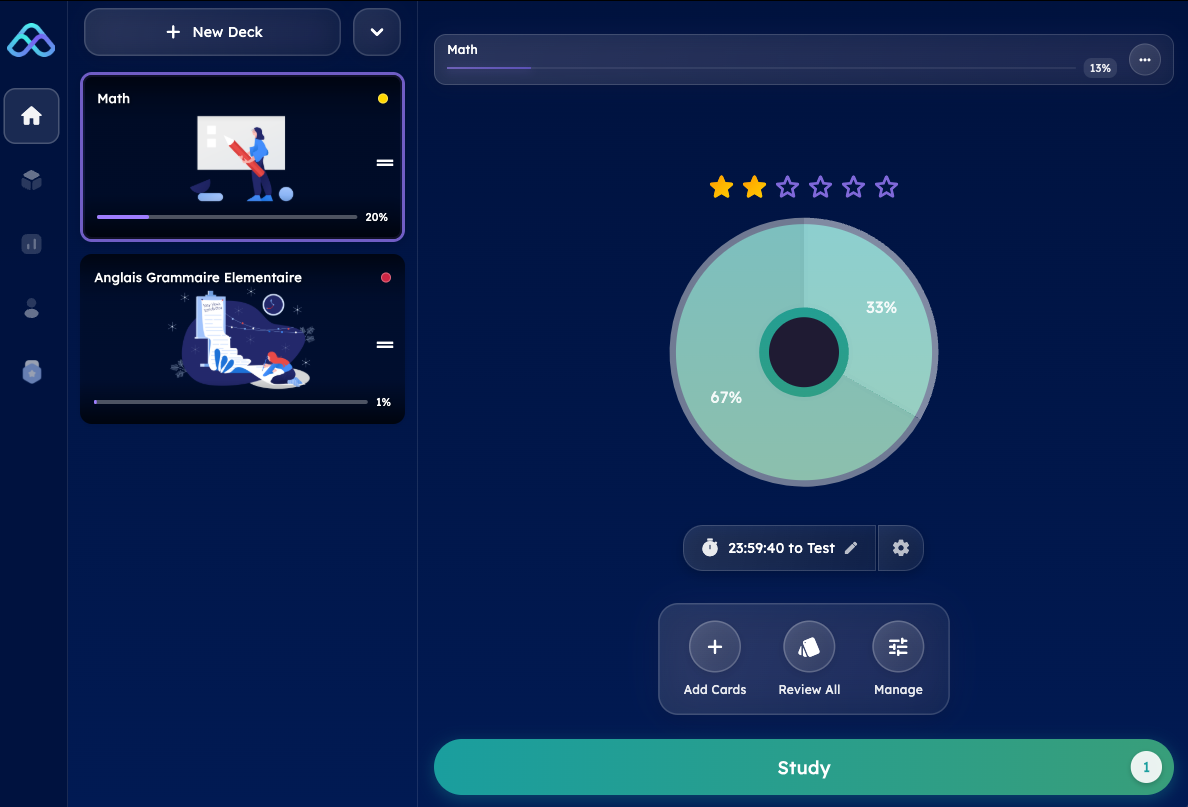
Mindomax takes a different approach by focusing on AI-driven content creation. Students can upload PDFs, audio recordings, images, or raw text, and the AI generates flashcards automatically. The app includes AI tutor for every single cards and a library of over 450,000 pre-made flashcards covering USMLE, MCAT, GRE, and language topics. It works on iOS, Android, Mac, and the web. The free plan is limited to one box with three AI requests per day, which is restrictive for heavy users. Premium runs $5.99 per month and unlocks unlimited boxes, 90 AI requests per day, and pronunciation support in 14 languages. The platform is still relatively new and lacks the community size of established tools.
4. Noji — The Controversial Anki Name Clone
Noji deserves mention in any discussion about AnkiMobile's App Store ranking because it directly competed for the same search terms under its former name, "Anki Pro." The app rebranded to Noji in July 2025 after trademark pressure from the official Anki project. It offers AI card generation, multiple study modes, handwriting support, and 50,000 pre-made decks. Pricing ranges from free to $4.99 per month or $74.99 for a lifetime plan. But the history matters here. In May 2025, the app suffered a ten-day complete outage during exam season, and users who attempted to export their own data were met with a Rick Roll video instead of their cards. The App Store reviews reflect this trust erosion. Anyone considering Noji should be aware that it is not affiliated with the official Anki ecosystem.
5. MintDeck — Free FSRS From Day One
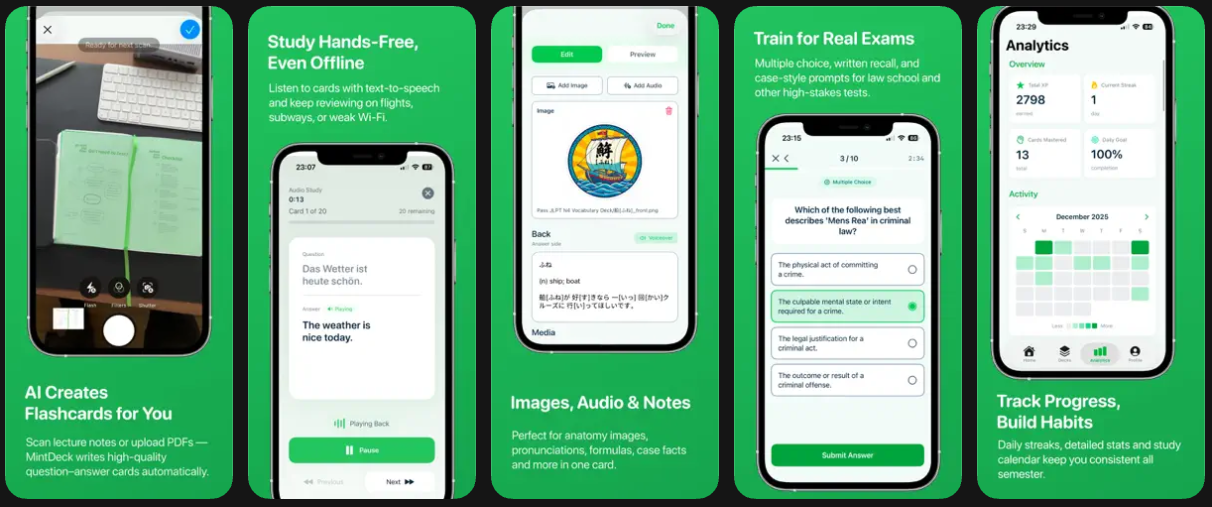
MintDeck is the newest app on this list, launched in late 2024 by designer Sergiu Puscas. What makes it notable is the pricing model: all core study features are completely free, including the FSRS scheduling algorithm, iCloud sync, quizzes, and audio study mode. There is no subscription. The only paid element is AI-powered deck generation, which uses a pay-per-use credit system at $4.99 for 400 credits. Full Anki .apkg import with scheduling data preserved is supported. The major limitation is platform availability. MintDeck runs only on Apple devices and requires iOS 18.0 or later, which excludes older iPhones entirely. There is no Android app and no web study interface.
Download: iOS
What Actually Determines App Store Rankings in Education?
Apple does not publish its ranking algorithm. But years of App Store Optimization research have identified the factors that matter most. Download velocity is the strongest signal. Apple evaluates installs over roughly a four-to-seven day moving window, and downloads from users who keep the app installed count more than downloads followed by quick uninstalls. This is where AnkiMobile has an unusual advantage: at $24.99, buyers are pre-committed. People who spend that much on an app rarely delete it the next day.
Ratings and reviews carry significant weight. Apps rated above 4.4 stars see measurably better search visibility according to AppTweak analysis. AnkiMobile currently sits at 4.8 out of 5 stars across all versions, which is exceptional for a paid app in a competitive category.
User retention and engagement became more important in 2025 after Apple began incorporating post-install quality signals into its algorithm. High session frequency, low crash rates, and sustained daily usage all contribute to ranking stability. For a spaced repetition app like AnkiMobile, where users return every single day to review cards, this is a natural advantage that social-media-style study apps struggle to match.
The biggest algorithm change in 2025 came in June, when Apple started indexing text visible in App Store screenshots as keyword metadata. This means screenshots now function as a secondary keyword field. At WWDC 2025, Apple also introduced AI-generated auto-tags and allowed Custom Product Pages to appear in organic search, both of which expanded the surface area for ASO.

Why the FSRS Algorithm Changed Everything
The real story behind AnkiMobile's enduring position is not marketing. It is the scheduling algorithm. Anki originally used SM-2, a formula from 1987 that calculates review intervals using static ease factors. It worked, but it had a well-known problem: the "ease hell" spiral, where pressing "Hard" too often caused intervals to shrink until a card appeared every other day regardless of how well the student actually knew the material.
In November 2023, Anki integrated FSRS as an opt-in alternative. FSRS, or Free Spaced Repetition Scheduler, was created by Jarrett Ye at Harbin Institute of Technology. Unlike SM-2, FSRS uses machine learning to model three properties of each card: difficulty, stability, and retrievability. It predicts exactly when a student's recall probability will drop below a target threshold and schedules the review at that moment.
The practical difference is significant. Benchmark data from the open-spaced-repetition project, covering roughly 350 million reviews across nearly 10,000 users, shows FSRS produces more accurate recall predictions than SM-2 in 99.6 percent of cases. Students using FSRS report 20 to 30 percent fewer daily reviews while maintaining the same retention rate. That is not a marginal improvement. For a medical student reviewing 500 cards per day, cutting 100 to 150 reviews while remembering just as much is transformative.
Research by Kang (2016) in Policy Insights from the Behavioral and Brain Sciences confirms that spacing practice over time produces substantially better long-term learning than cramming. And a 2025 study by Price et al. in Academic Medicine tested spaced repetition with over 26,000 practicing physicians and found retention rates of 58 percent versus 43 percent for the control group.
The AnkiHub Transition and What It Means
The biggest Anki news in nearly two decades broke in February 2026. Damien Elmes, who built and maintained Anki single-handedly since 2006, announced he is transitioning stewardship to AnkiHub, the collaborative deck platform founded by medical educators Nick Flint and Andrew Sanchez. Elmes cited burnout after 19 years of solo development. He made clear commitments: Anki stays open-source, pricing stays the same, no venture capital, and AnkiDroid remains independently governed. But the transition raises questions about how quickly AnkiMobile will receive updates going forward, whether the closed-source iOS codebase will be shared with the AnkiHub team, and whether new features like AI card generation might finally arrive natively. For now, AnkiMobile's App Store ranking remains strong. Whether that holds depends on how smoothly the transition unfolds.
CONCLUSION
AnkiMobile Flashcards holds its App Store ranking for reasons that go deeper than brand recognition. High retention rates, a loyal daily-use audience, strong ratings, and the scientific credibility of its FSRS algorithm create a combination that newer apps struggle to replicate. But the market is shifting. Tools like Mochi Cards, Knowt, Mindomax, and MintDeck each address real limitations that AnkiMobile still has: dated interface, no AI card generation, and a $24.99 price that excludes budget-conscious students. The question for 2026 is not whether AnkiMobile will stay relevant. It is whether the AnkiHub transition will bring the modernization that users have requested for years, or whether the next generation of FSRS-powered, AI-enhanced flashcard apps will quietly take its place.
Frequently Asked Questions
Why does AnkiMobile cost $24.99 on the App Store?
AnkiMobile is priced as a one-time purchase because sales fund the entire Anki ecosystem, including the free desktop and Android versions. Apple takes roughly 30 percent of each sale. The developer has tested lower prices and found they reduce total revenue due to the niche audience.
Is AnkiMobile the same as AnkiApp or Noji?
No. AnkiMobile is the only official iOS companion to the open-source Anki project, built by its original developer. AnkiApp (now AlgoApp) and Anki Pro (now Noji) are unaffiliated third-party apps that adopted similar names independently.
Does AnkiMobile support the FSRS algorithm?
Yes. AnkiMobile added native FSRS support in version 25.07, released in July 2025. Users can enable FSRS in the deck settings as an alternative to the older SM-2 scheduling algorithm.
What are the best free alternatives to AnkiMobile in 2026?
Mochi Cards offers unlimited offline flashcards with FSRS for free on desktop. Mindomax provides free spaced repetition and AI features across all platforms. MintDeck gives free FSRS-based studying with iCloud sync on Apple devices. Each has trade-offs in platform support and advanced features.
Will AnkiMobile still be updated after the AnkiHub transition?
Damien Elmes announced in February 2026 that AnkiHub will take over business operations and open-source stewardship. He committed that Anki remains open-source and pricing stays unchanged. The pace and direction of future AnkiMobile updates will depend on the AnkiHub team.