
INTRODUCTION
The MCAT covers 230 questions across biology, chemistry, physics, psychology, and sociology. Most students spend three to six months preparing. And most of that time goes to content review, which raises a simple question: how do you actually remember it all?
MCAT flashcards are the most common answer. A 2013 review by Dunlosky et al. in Psychological Science in the Public Interest rated practice testing and distributed practice as the only two "high utility" study methods out of ten evaluated. Flashcards combine both. They force retrieval from memory instead of passive rereading. And when paired with a scheduling algorithm, they space reviews at intervals that match the brain's natural forgetting curve.
But not all flashcard tools work the same way. Some offer thousands of pre-made MCAT cards written by test-prep experts. Others generate cards from uploaded PDFs or lecture notes with AI. A few use advanced scheduling algorithms. And some do none of that well. The six tools below represent the current range. After the list, the article covers the science that makes flashcards effective for MCAT prep and the specific strategies that separate a 510 from a 520.

1. Blueprint Prep: 1,600 Free MCAT Cards With Analytics
Blueprint Prep offers the largest free MCAT flashcard set from a major test-prep brand. The 1,600 cards cover high-yield topics across all six science disciplines, with terms on the front and explanations, structures, or diagrams on the back. Cards are customizable: students can edit existing ones, create new cards, add mnemonics, and tag by MCAT section. A built-in spaced repetition system rates each card by confidence level, and progress analytics track weak areas in real time. Blueprint also bundles a half-length diagnostic exam, a full practice test, and ten learning modules with the free account. The limitation is that the flashcards exist inside Blueprint's ecosystem. There is no export to Anki or other platforms, and the mobile app launched only recently.
2. UWorld: Expert-Authored Cards Inside a Full Prep Course
UWorld bundles over 4,000 MCAT flashcards within its full Prep Course, written by 23 PhD- and MS-level authors with 222 academic publications. Cards are tied directly to UBook lessons and the QBank, so reviewing a flashcard on enzyme kinetics links back to the full content chapter. The spaced repetition algorithm adjusts frequency based on self-rated understanding, and progress syncs across devices through a mobile app. The quality of explanations is consistently praised by pre-med communities. The trade-off is price. Flashcards are not available separately. Accessing them requires a QBank subscription starting around $249, and the full course runs over $1,199.
3. Mindomax: AI Flashcards From PDFs, Audio, and Images
Mindomax automates the most time-consuming part of MCAT prep: making the cards. Upload a biochemistry PDF, record a lecture, or photograph handwritten notes, and the AI generates flashcards in seconds. The app includes a LaTeX formula editor for physics equations, pronunciation in fourteen languages, and a library of pre-made cards covering MCAT, USMLE, and GRE content. Scheduling uses a proprietary algorithm called the Windcatcher Theory. The free plan allows one box with unlimited cards and three daily AI requests. Premium costs $5.99 per month. As a late-2025 launch, the user community is still growing, there is no Anki import feature, and the proprietary algorithm has not been independently benchmarked.
4. RemNote: Notes and Flashcards in One System
RemNote merges note-taking and spaced repetition into a single workflow. A keyboard shortcut turns any bullet point into a flashcard linked to its original context. The app supports both the classic SM-2 and the newer FSRS algorithm, PDF annotation with highlight-to-card conversion, image occlusion for anatomy diagrams, and a knowledge graph that connects concepts across documents. Pro costs $8 per month, with a student discount to $6. RemNote is used at medical schools including Weill Cornell and Johns Hopkins. The learning curve is steeper than single-purpose flashcard apps, and AI credits on the standard plan can run out fast during heavy MCAT review periods.
5. Knowt: Free Spaced Repetition Without the Paywall
Knowt has grown past four million users by keeping features free that competitors lock behind subscriptions: learn mode, practice tests, and spaced repetition all work without paying. Upload notes, PDFs, or lecture videos and the AI creates flashcards and quizzes automatically. A Chrome extension imports existing Quizlet sets with one click. The free tier is unusually generous for exam prep on a budget. Ultra costs roughly $10.99 per month and adds the Kai AI tutor plus voice study sessions. The honest caveat: Knowt's spaced repetition algorithm is simpler than SM-2 or FSRS. It adapts review frequency but does not use true interval-based scheduling, which makes it better for short-term cramming than six-month MCAT timelines.
6. Mochi: Minimalist Markdown Cards With FSRS
Mochi strips flashcard apps to their core. Cards and notes are written in Markdown with full LaTeX support for physics and chemistry formulas. Image occlusion is built in without plugins. The interface avoids gamification, social features, and visual clutter. Since version 1.19.0, Mochi uses the FSRS scheduling algorithm, the same machine-learning scheduler available in Anki. The app runs natively on macOS, Windows, and Linux, with mobile apps for iOS and Android. The free tier works offline with unlimited local cards. Syncing across devices requires Pro at $5 per month. The trade-off is no pre-made MCAT content and no shared deck library. Every card must be created from scratch or imported.
Download: iOS | Android | Desktop / Web

Why MCAT Flashcards Work Better Than Rereading
Most pre-med students still default to rereading chapters and highlighting passages. Both methods feel productive. Neither produces durable memory. The Dunlosky et al. (2013) review rated highlighting and rereading as "low utility" techniques across the full body of evidence.
Flashcards work because they force active recall. When a card asks "What is the rate-limiting enzyme of glycolysis?" and the learner retrieves "PFK-1" from memory before flipping the card, that retrieval strengthens the memory trace far more than rereading the same sentence in a textbook. Roediger and Karpicke (2006) showed that testing beats restudying at every delay beyond five minutes. After one week, the tested group recalled roughly 56% of material while the study-only group retained just 42%.
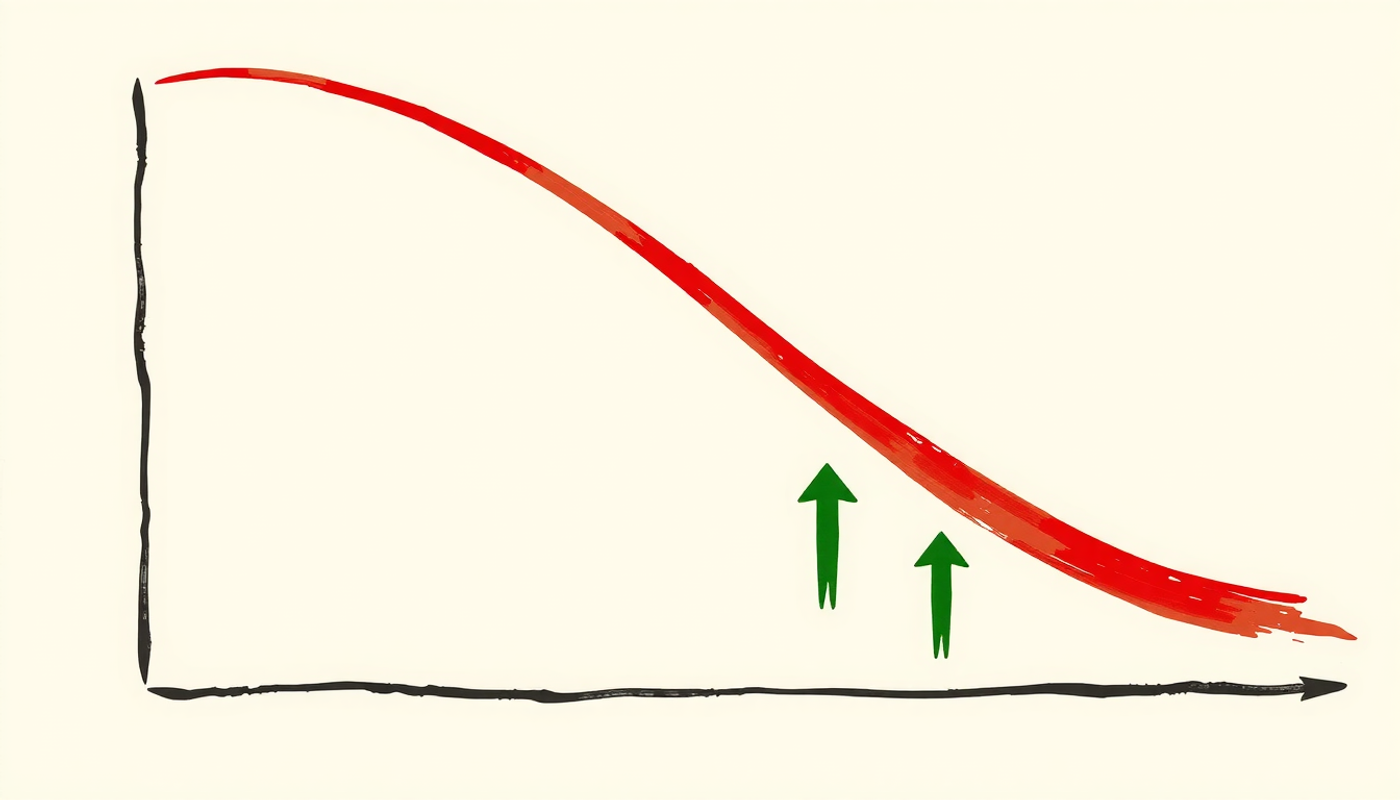
The second mechanism is spacing. In 1885, Hermann Ebbinghaus discovered that memory decays steeply in the first hours after learning. A 2015 replication by Murre and Dros confirmed: most people forget fifty to seventy percent of new information within twenty-four hours without review. But each correctly timed retrieval flattens the curve. Cepeda et al. (2006) found that the optimal gap between reviews scales to roughly ten to twenty percent of the total retention window. For a six-month MCAT prep period, that translates to review intervals measured in weeks, not hours.
When flashcards combine retrieval practice with algorithmic spacing, the result outperforms every other study method with empirical support.
Which MCAT Subjects Benefit Most From Flashcards
Not every MCAT section responds equally to flashcard study. The exam is roughly twenty percent content recall and eighty percent reasoning and data interpretation. That ratio matters when deciding where to invest flashcard time.
Psychology and sociology is the highest-return section for flashcards. It accounts for 59 questions, and roughly 65% of that section tests vocabulary and definitions from psychology, with 30% from sociology. The terms are specific, the definitions are testable, and the Kornell (2009) finding that one large flashcard stack outperforms multiple small stacks applies directly to psych/soc vocabulary.
Biochemistry pathways rank second. Glycolysis, the TCA cycle, the electron transport chain, gluconeogenesis, fatty acid metabolism, and the urea cycle all require exact sequences that lend themselves to image occlusion cards. Amino acid structures, one-letter and three-letter codes, pKa values, and charges at physiological pH are pure memorization targets.
Physics equations are a close third. A typical MCAT physics section demands rapid recall of formulas for kinematics, circuits, optics, and fluid mechanics. These are short, precise, and perfectly suited to the front-back flashcard format.
CARS (Critical Analysis and Reasoning Skills) is the one section where flashcards provide almost no benefit. It tests reading comprehension and argument analysis, not content knowledge. Every high-scoring study guide warns against making CARS flashcards.

How Scheduling Algorithms Affect MCAT Retention
The algorithm behind a flashcard app determines when each card reappears. This matters more than most students realize.
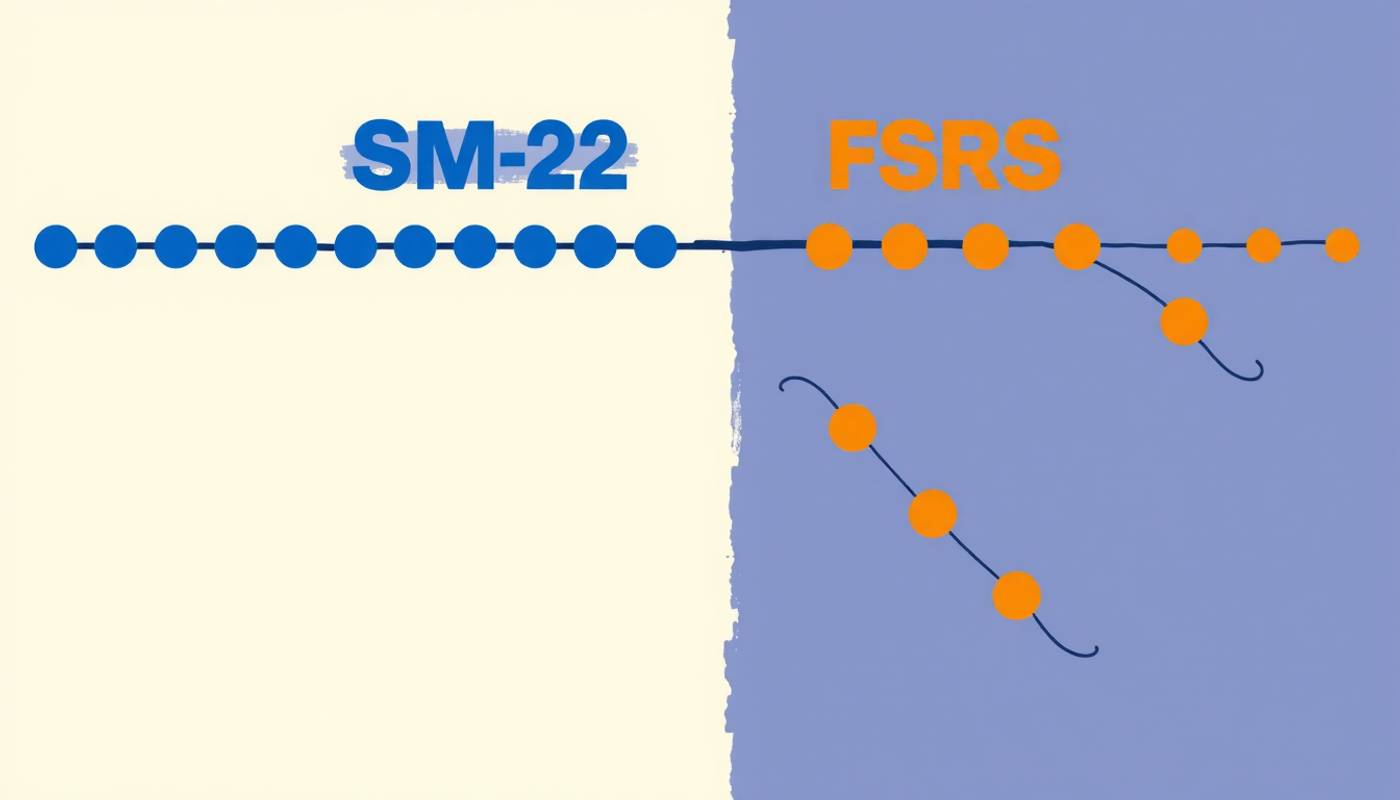
SM-2, created by Piotr Wozniak in 1987, is the foundation that Anki and most competitors build on. It assigns each card an "easiness factor" that adjusts with each review. Easy cards space out quickly. Hard cards return sooner. The system works, but it treats every learner identically.
FSRS, introduced in a 2022 KDD paper by Ye et al., uses machine learning trained on millions of real review sessions to personalize scheduling to individual forgetting patterns. Early data suggests it reduces total review load by twenty to thirty percent at equivalent retention levels. FSRS is now available in Anki (since late 2023), RemNote, and Mochi.
Other apps take proprietary approaches. Mindomax uses the Windcatcher Theory. Wooflash builds on neuroeducation research. Blueprint and UWorld use custom adaptive systems. None of these proprietary algorithms have been published or independently tested. That does not mean they fail. It means the evidence stays private.
The practical bottom line: any spaced system beats no system. The differences between algorithms are real but small compared to the massive gain from using spaced repetition at all. A 2016 review by Kang confirmed that spacing produces substantially better long-term learning than massed practice across every subject tested.
CONCLUSION
The science behind MCAT flashcards is settled. Active recall plus spaced repetition produces better long-term memory than any other study method with empirical support. What has changed in 2026 is the tooling. AI can turn a recorded lecture into flashcards in seconds. Algorithms like FSRS personalize review schedules to individual memory patterns. And credible tools from Blueprint, UWorld, Mindomax, RemNote, Knowt, and Mochi now offer modern interfaces and free tiers that make the science accessible without requiring a manual.
The right tool depends on the student, the timeline, and the budget. But the evidence is clear on one point. The worst approach to MCAT content review is the one most students still default to: rereading the same chapter twice and hoping it sticks.
Frequently Asked Questions
Are MCAT flashcards enough to score a 520?
Flashcards help with content recall, which accounts for roughly twenty percent of MCAT scoring. A 520 requires strong passage-based reasoning, data interpretation, and CARS performance that flashcards cannot address. Most 520+ scorers combine a pre-made deck with self-made cards from missed practice questions and full-length exams.
Should MCAT flashcards be started before or during content review?
Most high scorers start flashcards alongside content review from day one. Making cards from material as it is learned produces better retention than waiting until content review is finished. The spaced repetition system ensures early cards stay in rotation throughout the full prep period.
How many new MCAT flashcards should be added per day?
The community consensus from 520+ scorers is twenty to forty new cards per day, capped near fifty. Adding more creates an unsustainable daily review burden within weeks. Consistency matters more than volume. Fifteen minutes of daily review maintains retention across several hundred active cards.
Do MCAT flashcards work for the CARS section?
CARS tests reading comprehension and argument analysis, not factual recall. Flashcards have almost no measurable impact on CARS performance. Time spent making CARS flashcards is better invested in practicing AAMC CARS passages and refining passage-reading strategy.
What is the difference between SM-2 and FSRS for MCAT prep?
SM-2 adjusts review intervals using a fixed ease factor that shifts with each rating. FSRS uses machine learning trained on real user data to personalize scheduling. FSRS typically reduces total reviews by twenty to thirty percent at the same retention level. Both work well. FSRS is more efficient.


