
INTRODUCTION
It is two in the morning. You have an exam tomorrow. The textbook is open, your eyes are half-shut, and a voice in your head says go to sleep. Another voice says no, one more chapter. Which voice is right? Neuroscience has a clear answer: the first one. Over a century of research has shown that sleep is not just rest. Sleep is where real learning happens [1]. While you are awake, your brain collects information. But when you fall asleep, something more important occurs: the brain decides what is worth keeping, strengthens it, and discards the rest [2]. Skip sleep, and this process does not happen. That chapter you read until two in the morning? Gone by sunrise.
This article tells the story of one of the biggest discoveries in brain science: that sleep is an active, structured process the brain uses to build long-term memory. Not biological silence. A nightly workshop.
The Experiment That Started Everything
The year was 1924. Two psychologists at Cornell University — John Jenkins and Karl Dallenbach — had a simple question: does sleep reduce forgetting, or does wakefulness just increase it?
Their experiment was elegant. Two participants — just two, that was how things worked back then — memorized lists of nonsense syllables. Then they either slept or stayed awake. The result? After sleep, they remembered far more [3]. Sounds simple. But this experiment planted an idea that took a hundred years to fully harvest: sleep is not just rest. Sleep does something to memory.
The problem was this: Jenkins and Dallenbach thought sleep merely protected memories. Like a refrigerator keeping food fresh — it does not do anything, it just prevents spoilage. This "protective" view persisted for decades. And it made sense: when you are asleep, there are no external stimuli to distract you and crush freshly formed memories. So naturally you remember more after sleep.
But the truth was far more interesting. And understanding it required a discovery that came twenty-nine years later in Chicago.

The Discovery of Sleep With Moving Eyes
In 1953, Eugene Aserinsky — a PhD student at the University of Chicago — was monitoring his eight-year-old son's sleep with a brainwave recording device. In the middle of the night, he noticed something strange. The boy's eyes were darting rapidly beneath closed lids, and his brain waves looked like he was awake. At first, Aserinsky thought the machine was broken. It was not [4].
Aserinsky and his supervisor Nathaniel Kleitman had discovered REM sleep — a stage in which the brain is intensely active, despite the body being nearly paralyzed. REM stands for Rapid Eye Movement. When people were woken during this stage, most reported dreaming.
This changed everything. Before this, sleep looked like a single uniform state — the brain switches off at night and switches back on in the morning. Now it was clear that sleep is not uniform. It has distinct stages. The brain is quiet in some and wildly active in others. The next question was obvious: what does each stage do?
Answering that question took decades. But when the answer came, it revealed a picture no one had expected: the brain replays the day's memories during sleep. Like a filmmaker editing raw footage at night.
The Brain Replays the Day's Film at Night
In 1994, Matt Wilson and Bruce McNaughton at the University of Arizona ran an experiment on rats that changed the history of neuroscience.
Rats were running through a maze. The researchers had implanted dozens of tiny electrodes in their hippocampus — a seahorse-shaped structure deep in the brain whose job is building new memories — and were recording neuronal activity. Each neuron in the hippocampus was responsible for a specific location in the maze. When the rat passed point A, neuron A fired. When it passed point B, neuron B fired. The pattern of neuronal firing was like a map.
Now here is the fascinating part. When the rats fell asleep after running the maze, the same firing pattern reappeared. Neuron A, then B, then C — the same sequence, only compressed and faster [5]. The brain was replaying the day's experience during sleep. Not randomly. Not jumbled. In the exact same order.
This was called "replay," and it became one of the most important concepts in sleep science. Think of it this way: during the day, the brain works like a video camera recording information. At night, it rewatches the footage, edits it, and archives the final cut. Skip this stage — by not sleeping — and the raw footage gets erased before it can be saved.
What does this mean for you? It means that when you study for three hours and then go to sleep, your brain compresses and replays those three hours during the night. The neural connections tied to what you learned get stronger. But if you stay awake instead and keep studying, not only do you learn the new material worse, but the earlier material does not get consolidated either.
Three Brain Waves That Build Your Memories
Sleep is not uniform. Every night the brain cycles through several stages: light sleep, deep sleep, and REM sleep. Each cycle takes about ninety minutes and repeats four to six times per night. But not all stages are equal. The core memory consolidation happens during deep sleep — also called slow-wave sleep [6].
Three types of brain waves coordinate during deep sleep, and it is their coordination that makes memory consolidation possible.
The first is slow oscillations. These are large, slow waves generated by the cortex — the wrinkled outer layer of the brain that handles thinking and information processing. Their frequency is below one hertz, meaning they rise and fall less than once per second. These oscillations act like a conductor — they synchronize everything else [6].
The second is sleep spindles. These are brief bursts of electrical activity — about half a second to two seconds long — generated by the thalamus. The thalamus is a relay station in the center of the brain that filters and routes sensory information. Sleep spindles play a critical role in transferring information from temporary to permanent storage [7]. A comprehensive 120-page review published in 2026 showed that the number and strength of sleep spindles is one of the best predictors of individual learning ability [8].
The third is hippocampal sharp-wave ripples. These are ultra-fast bursts — about fifty to one hundred milliseconds — generated in the hippocampus. The memory replay we discussed? It happens precisely inside these ripples [9].
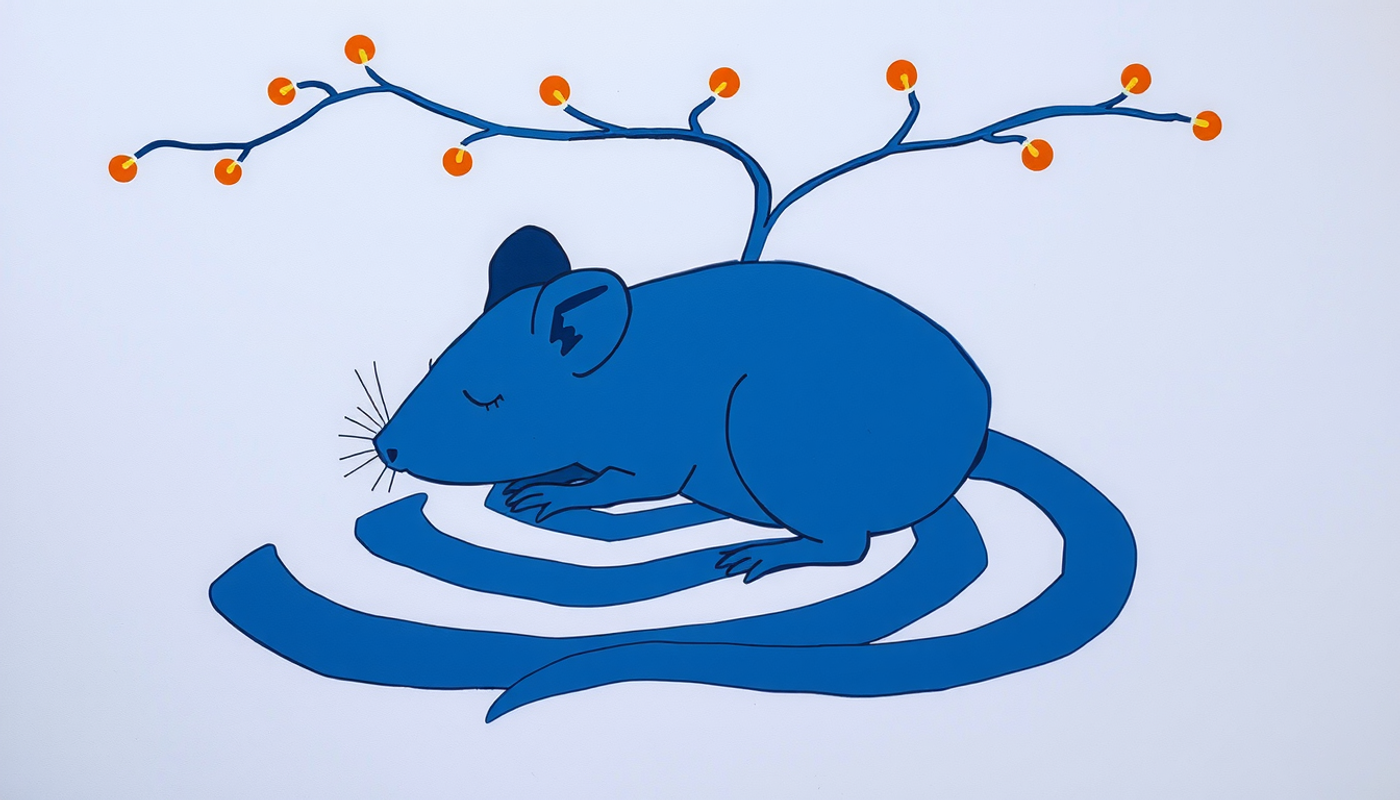
Now here is where the magic starts. In 2015, Staresina's team at the University of Birmingham used electrodes implanted in the brains of epilepsy patients — patients who had electrodes placed in their brains to treat drug-resistant epilepsy — and showed that these three waves nest hierarchically inside one another during human sleep. Ripples sit inside spindles, and spindles sit inside the up-phase of slow oscillations [10]. Like a system of interlocking gears. Three different clocks that must tick in perfect synchrony for the machine to work.
In 2017, Latchoumane's team used optogenetics — a technique that uses light to switch specific neurons on or off — in mice and showed that when this trio synchronizes, memory is strengthened. When synchrony breaks down, memory weakens [11].
What does this mean? It means sleep quality is not just about sleep duration. Six hours of sleep starting at ten PM might be far better than eight hours starting at three AM, because the structure of sleep stages — the ratio of deep sleep to light sleep — is richer in the first half of the night.
How the Brain Moves Memories From Temporary to Permanent
Here we need to explain an important model: active systems consolidation. The name sounds intimidating. The idea is simple.
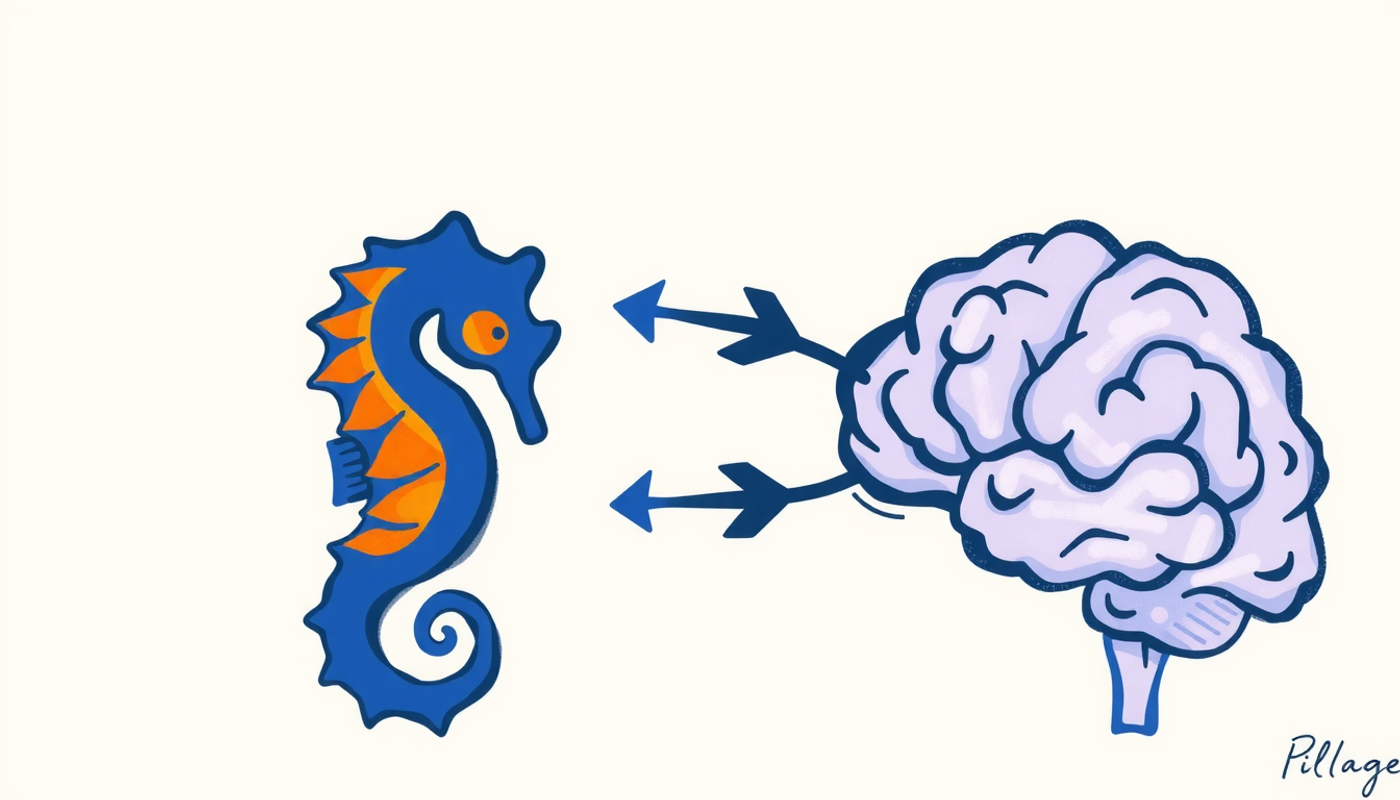
The hippocampus — that seahorse-shaped structure — acts like the brain's temporary workbench. New information is stored here first. Quickly and temporarily. But its capacity is limited. The cortex — the outer layer — acts like a hard drive. Massive capacity, long-term storage, but writing to it is slow.
The question is: how does information get transferred from the temporary workbench to the permanent hard drive?
The answer: during sleep.
The active systems consolidation model — developed primarily by Jan Born and his team at the University of Lübeck in Germany — says that during deep sleep, the hippocampus reactivates the day's memories and sends them to the cortex for long-term storage [1], [12]. Slow oscillations from the cortex open a time window, sleep spindles carry the information, and hippocampal ripples encode the memory content. Three waves, one operation.
But it is not just transfer. It is transformation. Freshly formed memories are packed with specific details — where you were, what you were wearing, what the room smelled like. But after consolidation during sleep, memories become more "compressed." Contextual details fade and the core information remains [13]. Like converting a raw audio file to MP3. The file gets smaller but the essential content survives.
This has an important practical implication for learning. When you study the night before an exam and then sleep, your brain strips away unnecessary details and strengthens core concepts. In the morning you might not remember trivial specifics, but your overall understanding of the subject has improved. That is not an accident. That is system design.
Recent work from Born's team, published as a comprehensive review in Neuron in 2023, updated the model and showed that sleep does not just transfer memories from the hippocampus to the cortex — it integrates them into existing knowledge networks [14]. The new memory gets connected to older memories and forms a semantic web. That is what we call "understanding" — when a new concept connects to what you already know.
The Brain Chooses What to Keep at Night
An important question: does the brain consolidate all of the day's memories during sleep, or does it pick and choose?
Answer: it picks and chooses. And the selection is not random.
In 2024, Buzsáki's team at New York University published a landmark paper in Science. Using simultaneous recordings of hundreds of neurons in the hippocampus of freely behaving mice, they showed that sharp-wave ripples do not replay all experiences equally. Experiences that were more behaviorally relevant — locations where rewards were found or new information was encountered — were replayed more often [15].
In other words, the brain during sleep acts like an editor. It watches all of the day's raw footage but only keeps the important scenes. The rest gets weakened or erased.
Another study that same year showed that the hippocampus has a balancing mechanism that prevents excessive replay of any single memory [16]. The brain does not just choose what to remember — it makes sure no single memory becomes too dominant. Balance.
The practical takeaway matters: if something carries emotional or practical significance for you, it is more likely to be consolidated during sleep. But if you flip through pages the night before an exam with no real engagement, your brain finds little reason to keep that information overnight.
REM Sleep: The Other Side of the Coin
So far we have mostly discussed deep sleep. But REM sleep — the same stage Aserinsky discovered in 1953 — plays a different and equally important role.
In 2016, Adamantidis' team at the University of Bern ran an elegant optogenetic experiment. They used light to silence the hippocampal theta rhythm during REM sleep in mice. Theta is a slower oscillation than ripples that dominates during REM. The result? The mice lost their contextual memory — they could no longer link a fearful memory to the environment where it had occurred [17]. This was the first causal evidence — not just correlation — that REM sleep is necessary for memory consolidation.
But REM does not just consolidate. It transforms.
A fascinating 2025 paper in Neuron showed that NREM and REM sleep play antagonistic roles. NREM consolidates memories and preserves neuronal firing patterns. But REM subtly alters those patterns — something the researchers called "reactivation drift" [18]. A memory after a night of sleep is not exactly the same thing it was before sleep. It has shifted slightly. Become a bit more abstract. Moved away from specific details.
Why does this matter? Because if the brain only kept exact copies of memories, it could never generalize. It could never extract a general rule from a specific example. REM may be the stage where the brain steps back from details and arrives at broader patterns.
REM sleep also plays a special role in emotional memory. Research has shown that REM helps the brain reduce the emotional charge of memories while preserving their factual content [19]. Think of it this way: something upsetting happened. The first day you recall it, your whole body reacts. But after a few nights of good sleep, you still remember the event but the emotional reaction has faded. REM does that. A 2025 study showed that both stages — deep sleep and REM — each make independent contributions to emotional memory consolidation [20].
When a Scent or Sound During Sleep Strengthens Your Memory
One of the most exciting branches of sleep and memory research is something called Targeted Memory Reactivation, or TMR. The idea is simple but powerful: if the brain replays memories during sleep, can we tell it from the outside which memory to replay?
In 2007, Björn Rasch and Jan Born at the University of Lübeck designed an experiment that was both simple and beautiful. Participants learned the locations of objects on a grid while smelling the scent of roses. Then they slept. Half of them were re-exposed to the same scent during deep sleep. The next morning, those who received the scent during sleep remembered the object locations significantly better [21]. The paper was published in Science.
Two years later, Paller's team at Northwestern University showed the same thing works with sound. Participants learned each object paired with a specific sound. During sleep, only some sounds were played. In the morning, precisely the objects associated with the played sounds were better recalled [22].
A 2020 meta-analysis reviewing ninety-one TMR experiments — over two thousand participants total — confirmed the effect is real and replicable, with a moderate effect size [23]. And recent papers are testing TMR for clinical applications — including modifying traumatic memories in PTSD patients [24].
But before you rush out to buy headphones and play your lectures while you sleep, there is an important caveat: TMR only works when the signal — scent or sound — is delivered during deep sleep and is gentle enough not to disrupt it [25]. If it is too loud and wakes you up, the effect reverses. The technology is still in the lab, but its potential is enormous.
The Brain Shrinks Its Synapses During Sleep — Or Does It?
Here is where one of the hottest debates in modern neuroscience begins.
In 2003, Giulio Tononi and Chiara Cirelli at the University of Wisconsin proposed a hypothesis called synaptic homeostasis. Their idea was this: during the day, every time you learn something, synapses — the connection points between neurons — get stronger. But if synapses only ever get stronger and never weaken, the system saturates. Like a blackboard that is full and has no room for new writing. Sleep, they proposed, acts like an eraser — it globally weakens synapses so that tomorrow there is room for new learning [26], [27].
In 2017, Tononi's team provided structural evidence. Using electron microscopy, they measured thousands of synapses in the mouse cortex — six thousand nine hundred and twenty synapses, to be precise — and showed that synapses were on average eighteen percent smaller after sleep than after wakefulness [28]. The paper was published in Science. In the same issue, an independent team at Johns Hopkins identified a protein called Homer1a that drives this synaptic downscaling during sleep [29].
But the story does not end there.
Other researchers have shown that some synapses do not weaken during sleep — they actually get stronger [30]. Synapses tied to important new learning work in the opposite direction. Global weakening happens, but the important synapses are exempt and even get reinforced.
A 2025 computational model attempted to reconcile both sides: it proposed that the brain runs a "selective filter" during sleep — most synapses weaken, but those activated by memory replay are strengthened [31]. Sleep is both an eraser and a highlighter. Eraser for noise, highlighter for signal.
What does this mean for you? It means your brain at night not only strengthens the important stuff, but actively deletes irrelevant information so that tomorrow you can learn better. Good sleep is not just for consolidating last night's study session. It is for preparing for tomorrow's.
When You Do Not Sleep: The Disaster That Shuts Down Your Brain
So far we have seen what sleep does. Now let us see what happens when sleep is absent.
In 2007, Matt Walker's team at Harvard (now at Berkeley) ran a straightforward experiment. They kept one group awake for an entire night. The other group slept normally. The next morning, both groups learned a list of new words while their brains were scanned with fMRI. The result? The sleep-deprived group learned forty percent less. And fMRI showed their hippocampus was nearly shut down [32]. The brain without sleep loses the ability to form new memories.
It is not just encoding. The physical structure takes damage too. In 2016, Havekes' team showed that five hours of sleep deprivation in mice caused dendritic spines in the hippocampus to disappear [33]. Dendritic spines are tiny protrusions on the branches of neurons — the sites where synapses form. Sleep deprivation literally destroys the physical connections in the brain.
A comprehensive 2017 review in Nature Reviews Neuroscience painted a fuller picture: sleep deprivation simultaneously impairs memory, attention, decision-making, and emotional regulation [34]. The sleep-deprived brain does not just record new information worse — it retrieves old information worse too.
And perhaps the most frightening finding is this: sleep deprivation produces false memories. A 2014 study showed that sleep-deprived individuals were significantly more likely to claim they had seen or heard information that had never actually been presented [35]. The tired brain does not just learn less — it "learns" things that are not real.
Real-world statistics confirm this. Thirty-five percent of American adults sleep less than seven hours per night [36]. Seventy-eight percent of American high school students do not get enough sleep. And insufficient sleep is estimated to cost the US economy 411 billion dollars annually [37].
The message is clear: not sleeping does not just make you tired. It shuts down your brain. And no amount of coffee fixes that.
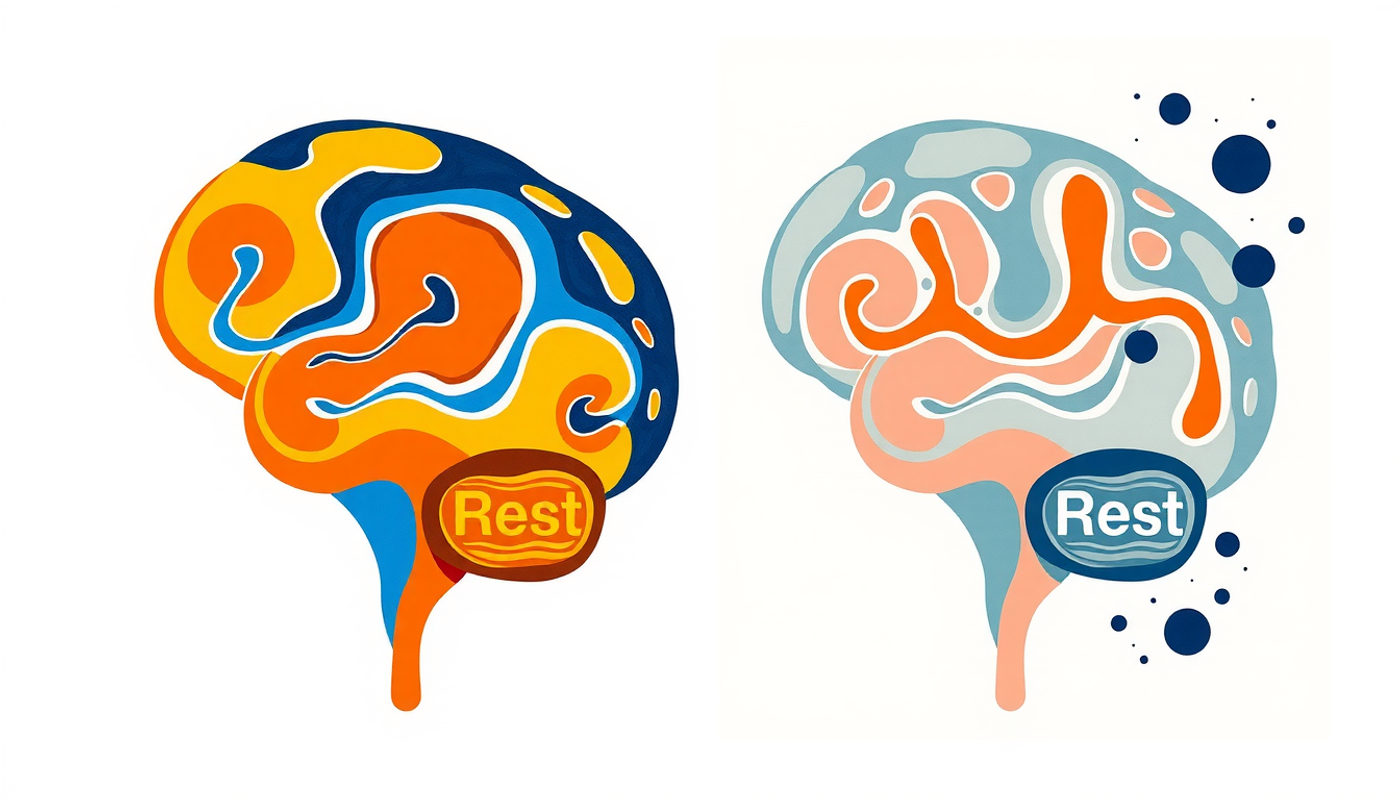
Aging, Alzheimer's, and the Brain's Nightly Cleaning System
In 2013, a paper in Science discovered that the brain has its own waste disposal system. They called it the glymphatic system — a combination of "glia" (the brain's support cells) and "lymphatic" (the body's waste drainage system). This system pushes cerebrospinal fluid through the spaces between cells and washes away waste proteins and metabolic toxins. And here is the critical point: this system operates sixty percent more actively during sleep than during wakefulness [38]. The spaces between brain cells actually expand during sleep, allowing fluid to flow more freely.
One of the proteins this system clears is beta-amyloid — the same protein that accumulates in the brains of Alzheimer's patients. Walker's team has shown that beta-amyloid preferentially accumulates in regions of the prefrontal cortex responsible for generating the slow oscillations of deep sleep. The result? A vicious cycle: amyloid disrupts slow oscillations, disrupted oscillations weaken memory consolidation, and the cleaning system works less effectively [39]. In 2019, the same team showed that sleep disturbance predicts amyloid and tau accumulation years before Alzheimer's symptoms appear [40].
A 2019 paper in Science completed the picture: it showed that during deep sleep, brain waves and blood flow change first, and then waves of cerebrospinal fluid surge into the brain [41]. This was the first time neural oscillations and the physical washing of the brain during sleep were directly linked.
Aging makes everything worse. As we age, deep sleep declines. Slow oscillations become smaller and sleep spindles weaken [42]. The coordination between slow oscillations and spindles breaks down [43]. And this disruption directly correlates with worsening memory in older adults.
What does this mean? It means protecting sleep quality is not just important for tomorrow's exam. It is important for brain health decades from now. Every night of good sleep is a maintenance and cleaning session for the brain.
Has the Role of Sleep in Memory Been Overstated?
Any good science article should honestly present the other side. And there is another side here.
In 2022, a review paper in Neuroscience & Biobehavioral Reviews asked the question directly: has the role of sleep in memory consolidation been overstated [44]? The authors argued that some studies lack adequate controls for the stress effects of sleep deprivation — meaning when we show that not sleeping damages memory, the problem may not be the lack of sleep itself but the stress caused by being forcibly kept awake.
There is also evidence that some types of memory consolidate without sleep — for instance, very strong emotional memories that may persist independently. And a 2024 review in Nature Reviews Psychology pointed to methodological problems in sleep and memory research and suggested that experimental designs need to become more rigorous [45].
But the overwhelming majority of evidence — over a century of research, thousands of studies, from behavioral to molecular — shows that sleep plays an active, causal role in memory consolidation. The real debate is not whether sleep matters. The debate is exactly how much it matters, which stages are most critical for which types of memory, and whether it is "necessary" or "facilitating." A subtle but important distinction.
Children Who Learn More in Their Sleep Than Adults
Here is a surprising finding: children benefit more from sleep for memory consolidation than adults do.
In 2013, Born's team showed that children aged six to eight could convert implicit knowledge into explicit knowledge during sleep — something adults do not do [46]. In other words, children can discover hidden patterns during sleep that they were not aware of while awake. The child's brain operates more creatively during sleep than the adult brain.
The same holds for infants. A study showed that ten- to fifteen-month-old babies could generalize new words to new objects of the same category only after a nap [47]. Without the nap, they had only learned the specific word. With the nap, they had grasped the general rule.
And in preschool children, sleep spindles during afternoon naps were directly linked to memory improvement [48].
The message for parents and teachers is important: naps are not a luxury for children. They are an inseparable part of their learning process. Eliminating afternoon naps in daycare centers and preschools may directly harm learning.
CONCLUSION
A century ago, two psychologists thought sleep was just a refrigerator for memory — it prevents spoilage and nothing more. Now we know sleep is an active workshop. The brain during sleep replays the day's memories, selects and strengthens the important ones, discards the irrelevant, connects new information to existing knowledge, regulates the emotional charge of memories, and even physically washes away cellular waste.
Three types of brain waves — slow oscillations, sleep spindles, and hippocampal ripples — work like a coordinated orchestra to make this process possible. When this coordination breaks down — whether from insomnia, aging, or disease — memory suffers.
There are still many open questions. The precise role of each sleep stage for each type of memory is still being clarified. The debate between global synaptic weakening and selective strengthening remains unresolved. And whether techniques like targeted memory reactivation can be used in the real world still requires more research.
But one thing is clear. If you want to learn better, it might be wiser to sleep an hour earlier than to study an hour longer. Your brain is not idle at night. It is doing real work. You just need to give it the chance.
Frequently Asked Questions
Are daytime naps useful for memory consolidation?
Yes. Research has shown that even a short twenty-minute nap can improve memory for recently learned information. The effect is strongest when the nap includes deep sleep and sleep spindles. For students and professionals who need to retain large amounts of information, an afternoon nap is a genuine learning tool.
Why is pulling an all-nighter bad if I get more study time?
Because the brain needs sleep to convert temporary information into long-term memory. Without sleep, the hippocampus loses up to forty percent of its capacity to encode new information. The material you studied before the all-nighter also fails to consolidate. The net result is worse than sleeping earlier and studying less.
Does listening to lectures during sleep actually work?
Research on targeted memory reactivation has shown that playing gentle cues associated with prior learning — specific scents or sounds — can strengthen memory during sleep. But only during deep sleep and only if the cue does not disrupt sleep. Playing new content during sleep does not work — the brain only strengthens memories that were already encoded while awake.
Can sleep deprivation increase the risk of Alzheimer's disease?
Growing evidence links chronic sleep disruption to the accumulation of amyloid and tau proteins in the brain. The brain's cleaning system operates more actively during deep sleep to clear these proteins. Sleep disturbance may accelerate protein accumulation years before Alzheimer's symptoms appear.
What is the best time to sleep after studying?
Research shows that the most critical sleep period for memory consolidation is the first sleep after learning. The shorter the gap between studying and sleeping, the better the consolidation. Studying in the evening followed by a normal night's sleep is better than studying in the morning when the gap until nighttime sleep is long.