
INTRODUCTION
You made a deck of 200 flashcards last semester. You reviewed them twice, maybe three times, and then forgot about them until the night before the exam. Sound about right? A large-scale survey of 901 college students at UCLA found that most digital flashcard users cram right before tests instead of spacing their reviews over time, according to Zung et al. (2022) published in the journal Memory. The problem isn't the flashcards. The problem is how most people use them. Digital flashcards are one of the most research-backed study tools available today, but the gap between how students actually use them and how the science says they should use them is enormous. This article breaks down what decades of cognitive science research reveal about digital flashcards — what works, what doesn't, and what most study guides get wrong.
The Science Behind Why Flashcards Work
Flashcards don't work because they help you read information again. They work because they force you to remember it. That difference sounds small. It's not.
Psychologists call this retrieval practice — the act of pulling information out of memory rather than putting it back in. Some researchers also call it active recall, and the terms are often used the same way. In a now-famous experiment, Karpicke and Roediger (2008) published in Science asked students to learn Swahili vocabulary using different study strategies. After one week, the group that kept testing themselves remembered about 80% of the words. The group that stopped testing after getting the answers right? They remembered only about 36%. The students who just re-read their notes did even worse.
That's not a small difference. That's the difference between passing and failing.
A meta-analysis by Rowland (2014) in Psychological Bulletin looked at 159 comparisons across dozens of studies and found a consistent effect size of g = 0.50 for testing versus restudying. When feedback was included, the effect jumped to g = 0.73. Another large meta-analysis by Adesope et al. (2017) in the Review of Educational Research confirmed these findings with a mean effect size of g = 0.61. In classroom settings specifically, the benefit was even larger.
Here's what makes this relevant to digital flashcards. Every time you flip a card and try to recall the answer before checking, you're doing retrieval practice. Every single flip. The flashcard format naturally turns passive review into active testing, which is exactly what the research says you should be doing.
What Makes Digital Better Than Paper?
This is where things get interesting — and where most articles oversimplify.
The honest answer is: it depends. A study by Ashcroft et al. (2018) published in The EuroCALL Review compared Quizlet with paper flashcards among 139 language learners. Students with lower proficiency levels showed significantly higher vocabulary gains with digital flashcards. But students at higher proficiency levels performed equally well with either format.
A more recent study by Najafi Karimi et al. (2025) in Cogent Education tested three groups of Iranian EFL learners. Only the digital flashcard group showed a statistically significant improvement in both vocabulary learning and retention. The paper flashcard group and the word list group did not reach significance.
So digital flashcards aren't magic. But they have three practical advantages that paper can't match. First, they can track your performance and schedule reviews automatically using spaced repetition algorithms. Paper can't do that. Second, they can include audio, images, and interactive elements that activate more encoding pathways in the brain. Third, they travel with you — your phone is always in your pocket. That UCLA survey found that 77.8% of students had used digital flashcards and 60.1% of those who tried both formats preferred digital.
But here's what matters more than the format. The same UCLA study revealed that only about half of students always checked the correct answer after attempting recall. Many students flipped through cards passively without genuinely testing themselves. Whether you use paper or a screen, the retrieval attempt is what creates the learning. Skip that step and the flashcard becomes just another thing to stare at.
The Forgetting Curve and Spaced Repetition
In 1885, German psychologist Hermann Ebbinghaus discovered something that still shapes how learning tools work today. He memorized lists of nonsense syllables and tested himself at different time intervals. His findings showed that memory fades rapidly after learning — savings scores dropped from roughly 58% at 20 minutes to about 34% after one day.
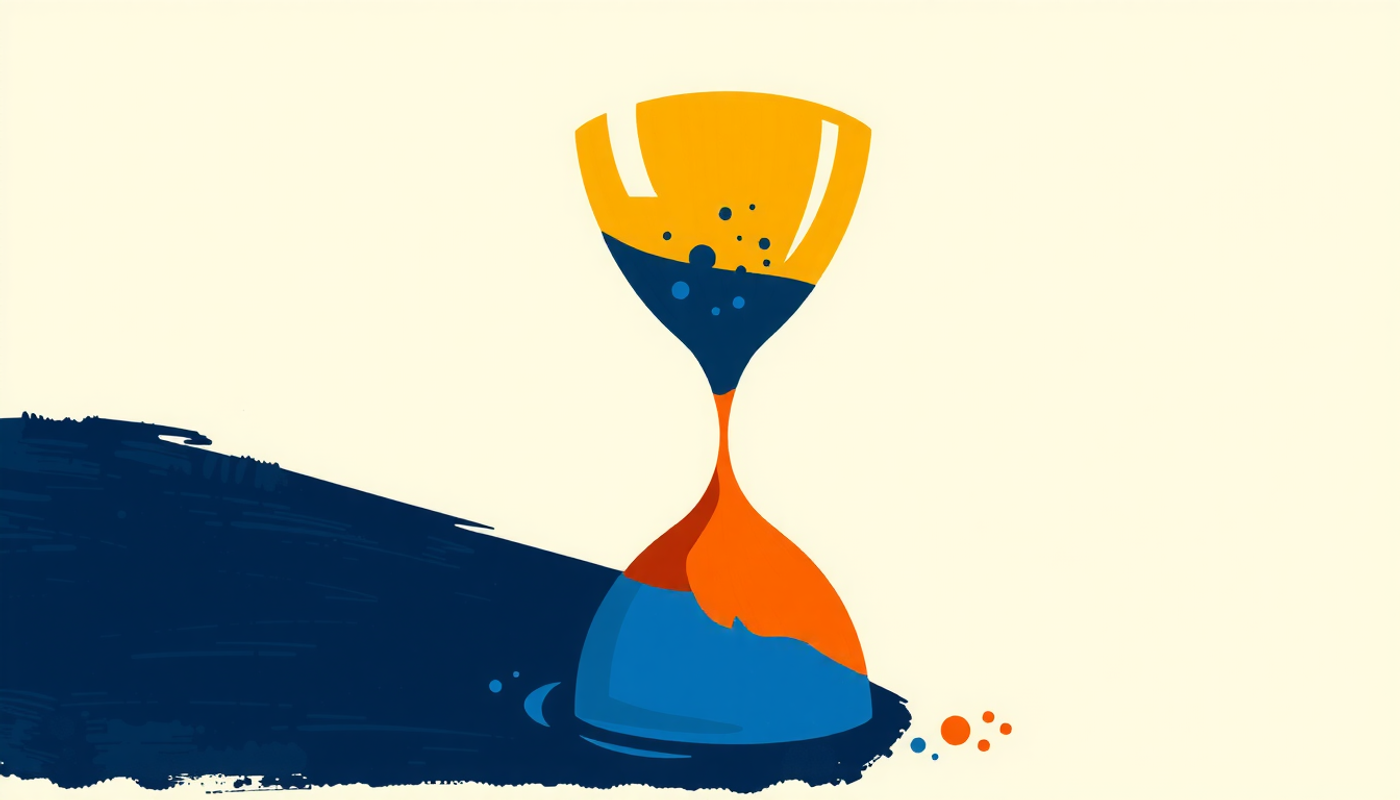
Murre and Dros (2015) successfully replicated this forgetting curve in PLOS ONE more than a century later and found strikingly similar results.
The solution to the forgetting curve isn't studying more. It's studying at the right time. This is the idea behind spaced repetition — reviewing information at gradually increasing intervals instead of cramming everything into one session.
Kang (2016) reviewed the evidence in Policy Insights from the Behavioral and Brain Sciences and concluded that hundreds of studies confirm spacing produces substantially better long-term retention than massed practice. A meta-analysis of 839 assessments across 317 experiments by Cepeda et al. (2006) in Psychological Bulletin found that the optimal gap between study sessions depends on how long you need to retain the material. And a focused meta-analysis by Latimier et al. (2021) in Educational Psychology Review found that spaced retrieval practice — testing yourself at spaced intervals, which is exactly what flashcard apps automate — showed an effect size of g = 0.74.
Most digital flashcard apps use some version of a spaced repetition algorithm to decide when to show you each card again. The older ones use SM-2, a system created in 1987. Newer approaches like FSRS (Free Spaced Repetition Scheduler) use machine learning to adapt to individual learners and have been shown to reduce unnecessary reviews by 20 to 30 percent while maintaining the same level of retention.
Should You Make Your Own Cards or Use Pre-Made Decks?
This might be the most practical question in the entire flashcard debate. And the research gives a clear answer.
Pan et al. (2022) published in the Journal of Applied Research in Memory and Cognition ran six experiments comparing user-generated digital flashcards with pre-made ones. On tests given 48 hours later, students who created their own cards performed significantly better, with an effect size of d = 0.45. The researchers linked this to the generation effect — a well-documented phenomenon first described by Slamecka and Graf in 1978 showing that information you produce yourself is remembered better than information you simply read.
Yet despite this evidence, 56% of undergraduates in the study preferred pre-made flashcards. This is a perfect example of what psychologists call a metacognitive illusion — students choose the strategy that feels easier, not the one that actually works better. Kornell and Bjork (2007) found that 72% of students believed cramming was more effective than spacing, even though spacing produced better outcomes for 90% of participants in their study.
Does this mean pre-made decks are useless? No. They save time, especially for subjects with standardized content like board exams. But using them passively — just clicking through without genuinely trying to recall — removes most of the learning benefit. The best approach? Use pre-made decks as a starting point, but actively engage with each card by attempting recall before checking the answer. And when time allows, creating your own cards adds a powerful extra layer of encoding.
The Two Most Effective Study Techniques — And Digital Flashcards Use Both
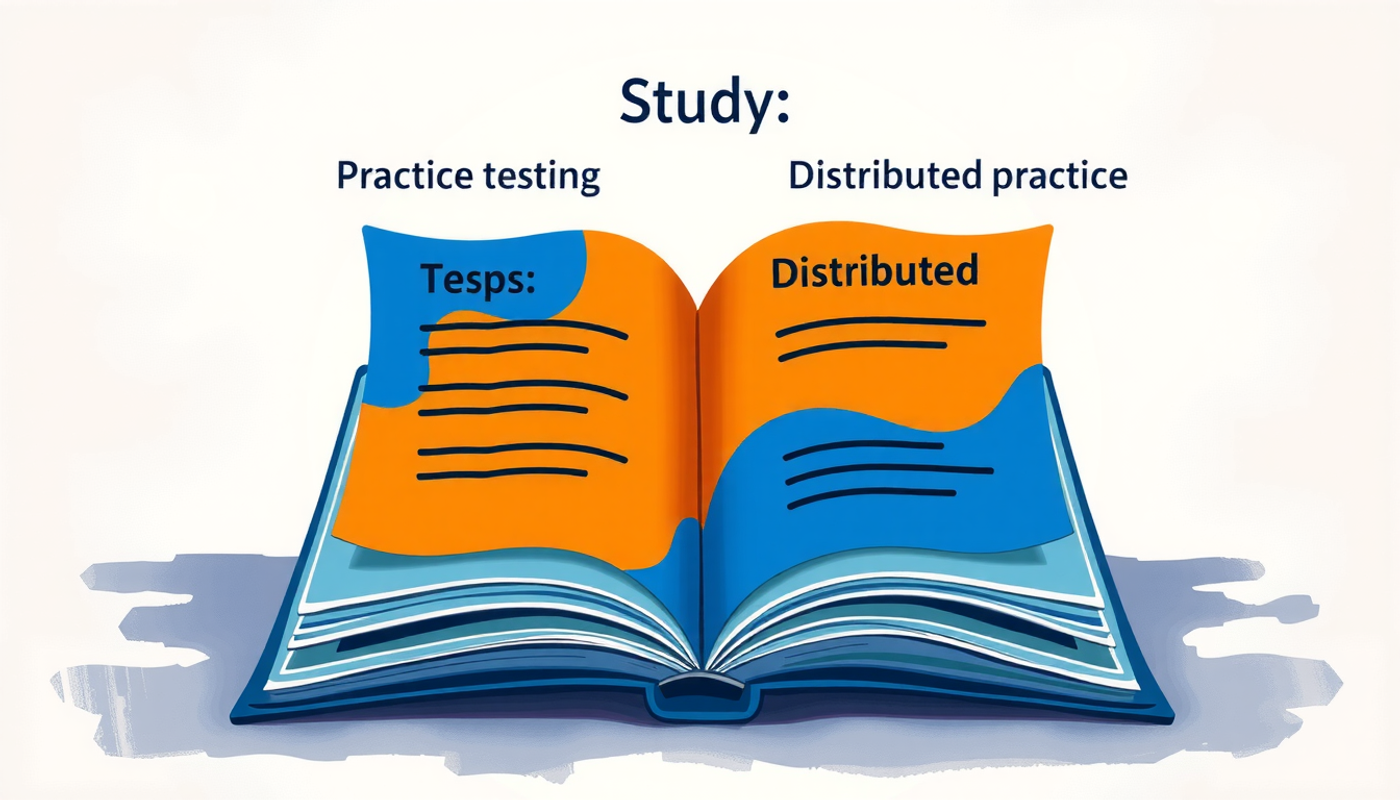
In 2013, a team led by Dunlosky et al. published one of the most cited reviews in educational psychology in Psychological Science in the Public Interest. They evaluated ten popular study techniques and rated each one for effectiveness. Only two received a "high utility" rating: practice testing and distributed practice. Highlighting, rereading, and summarization — the techniques most students rely on — were rated low utility.
Digital flashcards are one of the few study tools that naturally combine both high-utility techniques. The card format forces practice testing (retrieval practice), and the spaced repetition algorithm forces distributed practice (spacing). This is why Carpenter et al. (2022) in Nature Reviews Psychology describe the combination of spacing and retrieval practice as "successive relearning" and highlight it as one of the most powerful evidence-based learning strategies available.
It's a rare case where convenience and science actually align. The tool that's easiest to use also happens to match exactly what the research recommends.
What About Images, Audio, and Multimedia on Flashcards?
Adding pictures to flashcards isn't just decoration. Clark and Paivio (1991) introduced dual coding theory in Educational Psychology Review, which proposes that the brain processes verbal and visual information through separate channels. When you encode something in both channels — seeing a word AND an image — the memory trace becomes stronger and easier to retrieve.

Mayer (2009) expanded this into a full framework called the Cognitive Theory of Multimedia Learning. His research established that people learn more effectively from words and pictures together than from words alone. This directly supports the use of images, diagrams, and even audio on digital flashcards. Medical students studying anatomy, for example, benefit enormously from image occlusion cards where parts of a diagram are hidden and must be recalled. Language learners who hear pronunciation while reviewing vocabulary are using the picture superiority effect and auditory encoding together.
Paper flashcards can include hand-drawn images, of course. But digital flashcards make multimedia integration effortless — photos, audio clips, LaTeX formulas for STEM subjects, even video. Each additional encoding channel makes the memory more distinctive and harder to forget.
Digital Flashcards in Medical Education — The Data
Medical students may be the single largest user group of digital flashcard tools. And the research from this population is striking.
Deng et al. (2015) at Washington University found that the number of unique Anki flashcards a student reviewed was a significant predictor of their USMLE Step 1 score. This was one of the first studies to establish a dose-dependent relationship between flashcard use and board exam performance.
Then Gilbert et al. (2023) studied 130 medical students and found that Anki users scored 6.2 to 12.9 percentage points higher across all four exams measured. The biggest difference was on the CBSE (a predictor of Step 1), where Anki users scored 12.9% higher on average.
Santos-Ferreira et al. (2024) in Advances in Physiology Education studied 685 students at the University of Porto and found that for every 100 flashcards reviewed, grades increased by 0.44 to 0.75 points on a 20-point scale. The effect was consistent and dose-dependent — more cards reviewed meant higher scores.
Medical student adoption of digital flashcards has grown rapidly. Levy et al. (2023) found that roughly 70% of first-year medical students at their institution used Anki. A 2025 study at the same institution reported adoption rates above 90%.
Common Mistakes Students Make With Digital Flashcards
The UCLA survey by Zung et al. uncovered several patterns that help explain why many students don't get the full benefit from their flashcard apps. First, most students use flashcards only for low-level content like vocabulary and definitions. They rarely create cards that test deeper understanding — application, analysis, or connections between concepts.
Second, many students don't actually do the retrieval step. They look at the front of the card, immediately flip to the back, and think "oh yeah, I knew that." That's not retrieval practice. That's recognition, which is a much weaker form of memory.
Third, students overwhelmingly cram before exams rather than spacing their reviews. The algorithms in digital flashcard apps are specifically designed to prevent this. But students override them by only opening the app the week before a test.
Hartwig and Dunlosky (2012) in Psychonomic Bulletin and Review found that 83.6% of students massed their study sessions and 66% relied on rereading as their primary strategy. The gap between what the science recommends and what students actually do remains large.
And fourth, many students drop cards from their deck too early. Kornell and Bjork (2008) published in Memory showed that removing flashcards after just one correct answer had small but consistently negative effects on learning. The temptation to shrink the deck feels productive, but it removes opportunities for the spaced retrieval that builds durable memory.
The Role of Interleaving in Flashcard Study
Most students organize their flashcards by topic — all the biology terms together, all the history dates together. Research suggests mixing them up might be more effective.
Rohrer et al. (2015) in the Journal of Educational Psychology ran a nine-week study in real classrooms and found that interleaved practice — mixing different problem types together — produced dramatically better results on a test two weeks later. Students scored 72% with interleaved practice versus 38% with blocked practice, an effect size of d = 1.05.
Why does this work? When topics are mixed, the brain has to identify which strategy or concept applies to each card. That extra step of discrimination strengthens memory and builds more flexible knowledge. It feels harder in the moment, which is exactly why it works. Bjork and Bjork (2020) call this a "desirable difficulty" — a challenge that slows learning down temporarily but produces stronger retention over time.
Digital flashcard apps make interleaving easy. Most apps shuffle cards by default across different topics and subjects. This is one advantage that paper flashcard systems struggle to replicate at scale.
CONCLUSION
Digital flashcards are not a shortcut. They are a study method backed by more than a century of cognitive science research — from Ebbinghaus in 1885 to the latest meta-analyses in 2025. The evidence consistently shows that retrieval practice and spaced repetition are the two most effective study techniques available, and digital flashcards naturally combine both.
But the tool alone is not enough. How you use it matters more than which app you choose. Test yourself honestly. Space your reviews. Create your own cards when possible. Mix topics together. Use images and multimedia. And don't drop cards from your deck too early.
The research is clear. The question is not whether digital flashcards work — it's whether students will use them the way the science says they should. Tools like Mindomax and other flashcard platforms make this easier by automating spaced repetition scheduling, but the real power comes from understanding and applying these principles yourself.
Frequently Asked Questions
Are digital flashcards better than paper flashcards?
Research shows mixed results depending on proficiency level and subject. A 2025 study found digital flashcards produced statistically significant vocabulary gains while paper flashcards did not. The main advantage of digital is automated spaced repetition scheduling, which paper cannot replicate.
How many flashcards should you study per day?
There is no universal number. Medical students often review 100 to 300 cards daily. Research by Santos-Ferreira et al. (2024) showed that more cards reviewed correlated with higher grades in a dose-dependent pattern. Start with a manageable number and increase gradually to avoid review debt.
Is it better to make your own flashcards or use pre-made ones?
Research by Pan et al. (2022) found that students who created their own digital flashcards performed significantly better on delayed tests than those using pre-made decks. Making your own cards activates the generation effect, which strengthens memory encoding beyond retrieval practice alone.
How does spaced repetition work with flashcards?
Spaced repetition algorithms schedule each flashcard review at increasing intervals based on how well you remember it. Cards you struggle with appear more often. Cards you know well appear less frequently. This matches the brain's natural forgetting curve and produces stronger long-term retention than cramming.
Can digital flashcards help with medical board exams?
Yes. Multiple peer-reviewed studies show that medical students who use digital flashcards with spaced repetition score 6 to 13 percentage points higher on board exams like USMLE Step 1. The effect is dose-dependent — more consistent daily review correlates with stronger exam performance across all subjects tested.


