AI personalized learning tools for students reshape education through adaptive technology.
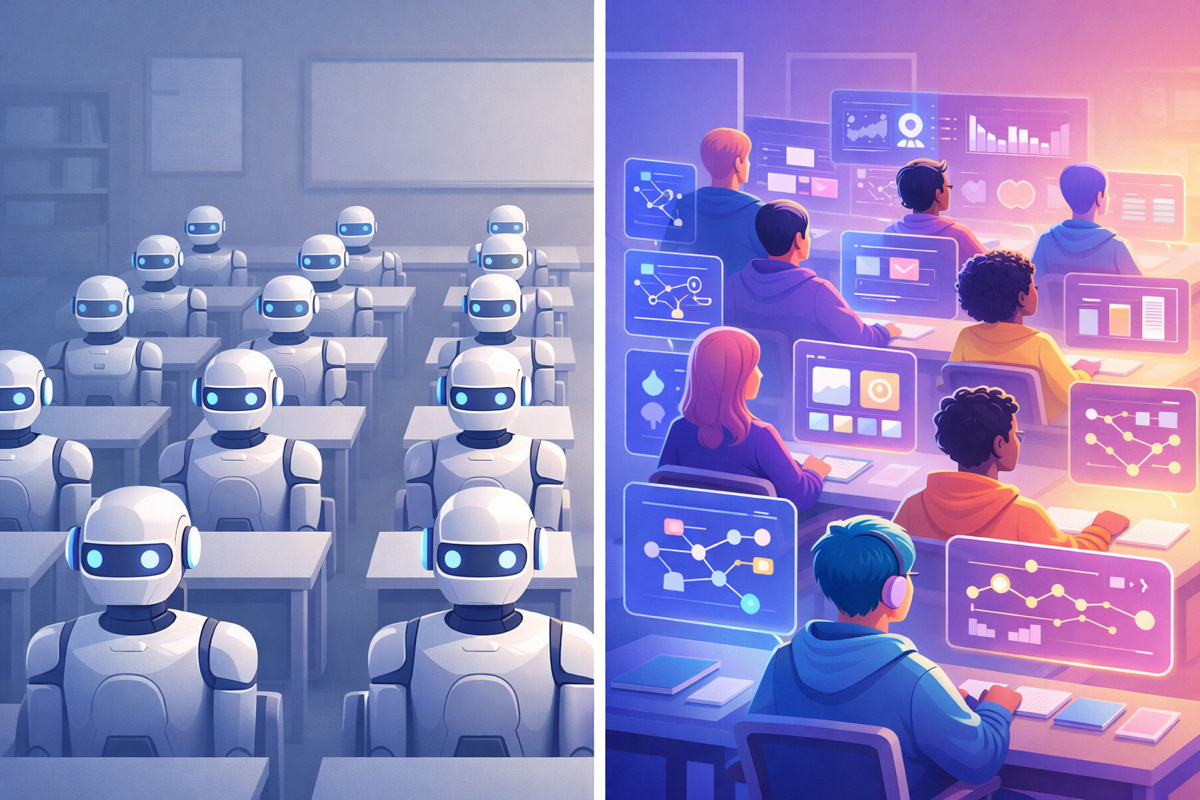
For most of modern history, education systems were designed for scarcity. Teachers were limited resources, information was hard to distribute, and schools grouped students by age because it was the most feasible way to organize limited instructional capacity. The result was standardization: one curriculum for all, one pace for all, one classroom for a hundred different minds.
Today we do not live in a world of scarcity when it comes to information, prediction, or even individualized feedback. Artificial intelligence has changed what is economically feasible. From my perspective, the real opportunity AI presents in education is not automation, but personalization. This is exactly why AI personalized learning tools for students have become essential in modern education.
Why Education Must Change?
Current educational practice assumes that students should all pass through the same stages at the same time, with teachers delivering a single style of instruction that works best for the average learner. This means students who learn quickly are bored, and students who struggle fall further behind. Most educational innovation to date still tries to patch this model, adding AI tools as assistants rather than rethinking the structure itself.
But what if we redesigned education around individuals instead of averages? What if learning was truly tailored to each person's pace, interests, and cognitive profile?
In Power and Prediction: The Disruptive Economics of Artificial Intelligence, the authors sketch a vision that aligns with this idea. They imagine a system where students are no longer grouped solely by age, but where AI helps tailor instruction to individual needs. As the book describes: "Each student could receive an education personalized to their learning needs and style. Students who learn fast in one subject and slow in others could be accommodated. Students who need to focus on particular skills would have teachers who specialize in those areas."
This resonates with my view that AI should not simply speed up old teaching methods, but enable a fundamentally different and more humane pedagogy.
How AI Personalized Learning Tools for Students Transform Education
Research supports the notion that AI-enabled personalization is not just hype. Studies have shown that AI systems can adapt instruction based on real-time learner data, improving outcomes such as engagement and comprehension. For example, adaptive learning systems powered by AI can tailor content to individual strengths and weaknesses, making learning more efficient and responsive than traditional methods.
Another systematic review of AI in education finds that personalized learning, backed by AI technologies, consistently improves knowledge acquisition, satisfaction, and learning efficiency across different educational settings. These findings suggest that the traditional one-size-fits-all model is no longer the best educational default.
Modern AI learning tools go beyond simple automation. They can make instruction learner-centric, contextual, and dynamic in ways that were previously impractical. Whether through intelligent flashcard systems that adapt to memory patterns, AI tutors that explain concepts in multiple ways, or adaptive learning platforms that adjust difficulty in real-time, these tools represent a fundamental shift in how students can approach their education.
The Rise of Adaptive Learning Technology
One of the most promising applications of AI in education is adaptive learning technology. Unlike traditional educational software that presents the same content to every user, adaptive systems continuously analyze student performance and adjust accordingly. This means a student struggling with calculus receives additional practice and alternative explanations, while a student excelling in the same subject moves forward without unnecessary repetition.
AI-powered study tools have evolved significantly in recent years. Modern platforms can now create personalized study materials from various sources including PDFs, audio recordings, and images. This capability is particularly valuable for students who need to process large amounts of information efficiently. Instead of spending hours manually creating flashcards or study guides, students can leverage AI to generate these materials automatically, freeing up time for actual learning and comprehension.
The integration of spaced repetition algorithms with AI creates an even more powerful combination. Spaced repetition, a learning technique that involves reviewing information at gradually increasing intervals, has been proven effective for long-term retention. When combined with AI that can predict optimal review times and adapt to individual memory patterns, the result is a highly efficient personalized learning experience.
AI Tools for Students: Beyond Traditional Tutoring
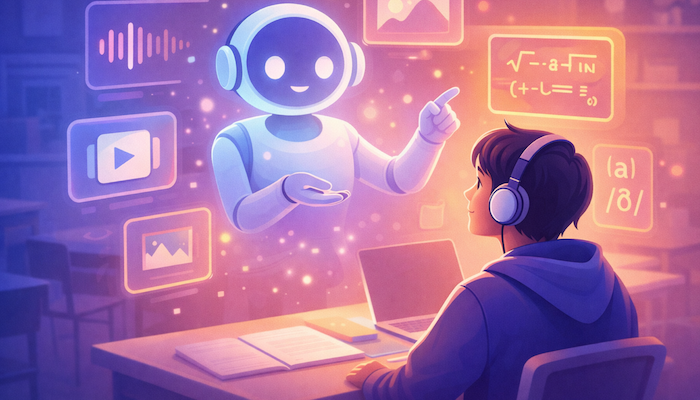
The concept of AI tutoring has expanded far beyond simple question-answering systems. Today's AI learning assistants can engage in meaningful educational dialogues, provide step-by-step explanations, and even adapt their teaching style based on how a student learns best. For visual learners, AI can generate diagrams and images. For those who learn better through practice, AI can create unlimited practice problems tailored to specific weak areas.
This level of personalization was once only available through expensive one-on-one tutoring. AI personalized learning tools for students democratize access to high-quality, individualized instruction. A student in a rural area with limited educational resources can now access the same adaptive learning technology as a student at an elite institution.
Furthermore, AI tools for students now support multiple modalities of learning. Text-to-speech capabilities help auditory learners, while image recognition allows students to photograph handwritten notes or textbook pages and convert them into searchable, organized study materials. Language learning benefits from pronunciation feedback in multiple languages, making authentic accent practice accessible to anyone with a smartphone.
A Shift in the Role of Teachers
Critically, this vision does not mean replacing teachers with machines. Instead, AI can free human educators to focus on what machines cannot do well: mentorship, emotional support, creative guidance, and nuanced human judgment. The book's example of specialized teachers for particular roles reflects this shift: humans focus on strengths that machines cannot replicate, while AI handles real-time adaptation and feedback.
This shift mirrors broader research on AI in education, which consistently emphasizes that AI is most effective when it augments human instruction, not replaces it. Teachers become facilitators and mentors rather than mere content deliverers. They can spend more time understanding each student's unique challenges and providing the kind of support that only human connection can offer.
Personalized learning technology handles the repetitive aspects of education such as drilling vocabulary, practicing math problems, and reviewing factual content, while teachers focus on higher-order skills like critical thinking, creativity, and emotional intelligence.
Challenges and the Path Forward
Redesigning education around AI-enabled personalization is not without challenges. Issues such as data privacy, equitable access, and ethical use of AI must be addressed if this future is to benefit all students rather than only those with privileged access. A thoughtful approach requires policymakers, educators, and technologists to collaborate on systems that are inclusive and pedagogically sound.
There are also questions about screen time and the importance of human interaction in education. The goal of AI learning tools should not be to isolate students behind screens, but to enhance their learning experience in ways that ultimately lead to better educational outcomes and more time for meaningful human connection.
Cost remains another consideration, though many AI study tools now offer affordable or even free tiers that provide substantial functionality. The democratization of these tools means that personalized education is increasingly accessible regardless of economic background.
Conclusion: Embracing AI Personalized Learning Tools for Students
We stand at a moment where the constraints that defined twentieth-century schooling no longer apply. AI gives us the tools not just to improve education incrementally, but to rethink it fundamentally. By embracing individualized learning paths, as envisioned in Power and Prediction and supported by contemporary research on adaptive learning, we can create an educational system that nurtures each learner rather than forcing them into a uniform mold.
The future of education should not be faster answers or standardized tests delivered with smarter software. It should be a system that recognizes each student as unique, supports their growth where they are, and trains them to thrive in an ever-changing world. AI personalized learning tools for students make this vision not only possible but practical.
For students looking to take control of their education, the time to explore these tools is now. Whether through AI-powered flashcard apps, adaptive tutoring systems, or intelligent study assistants, the technology exists to create a truly personalized learning experience. This is not only possible with AI, it is necessary if education is to fulfill its highest purpose.
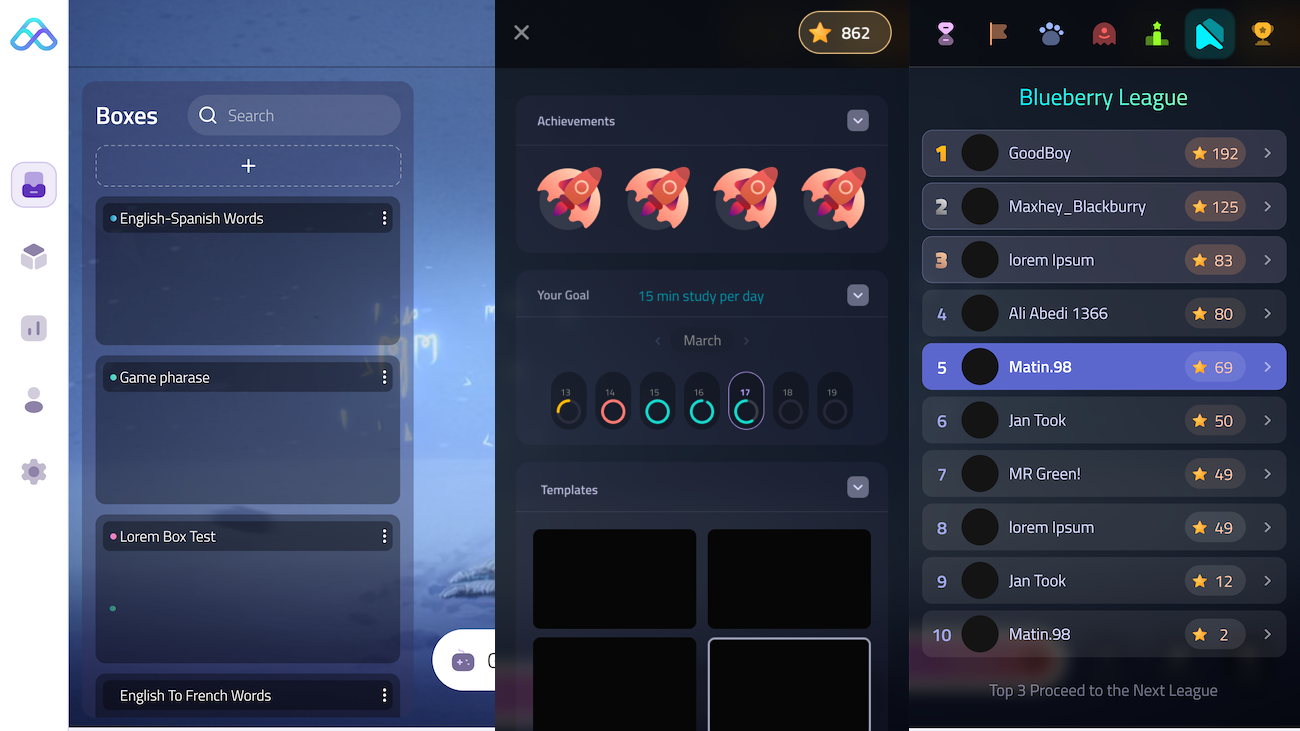
If you're ready to experience AI personalized learning tools for students firsthand, Mindomax offers exactly what modern learners need. With AI-powered flashcard creation from PDFs, audio files, and images, combined with intelligent spaced repetition and an adaptive AI tutor, Mindomax brings the future of personalized education to your fingertips. Start your free trial today and discover how AI can transform the way you learn. Mindomax